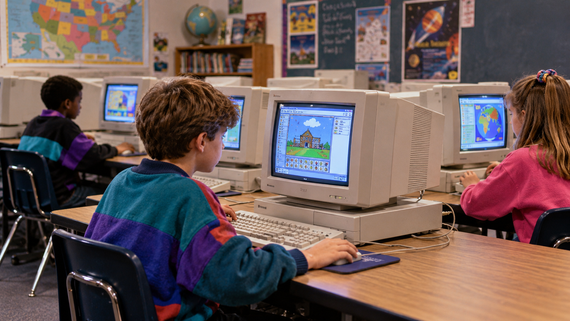
Growing up in the ’90s meant living through a decade when childhood was becoming more digital but still remained surprisingly hands-on. As U.S. Census Bureau data on computer and internet use shows, home computer access expanded considerably during the decade, even as everyday life still revolved around landlines, video stores, malls, film cameras, and playing outside. These 12 images capture what childhood was like in the 1990s, from sharing one family computer to spending afternoons with friends without a smartphone in sight.
Kids Playing Outside Until Dinner
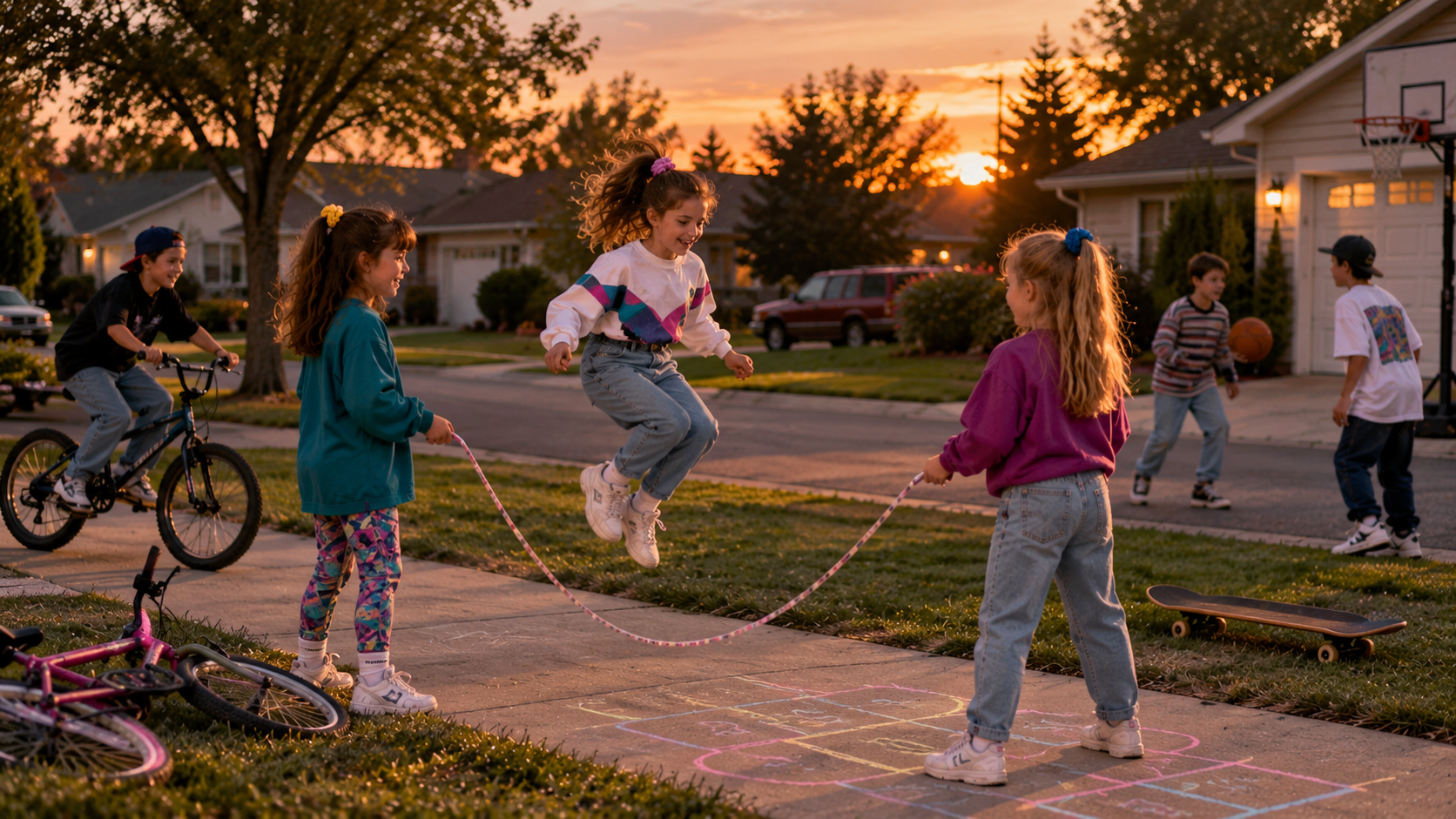
A typical neighborhood afternoon could involve bikes scattered across somebody’s lawn, rollerblades, basketball, jump rope, or a group of kids figuring out what to do next. Without smartphones keeping everyone constantly connected, meeting up often meant knocking on a friend’s door or heading outside to see who was around. Parents couldn’t simply send a text when it was time to come home, either. It’s the kind of wonderfully ordinary scene that rarely seemed worth photographing then but now immediately dates a childhood snapshot.
A Bedroom With a Bulky CRT Television
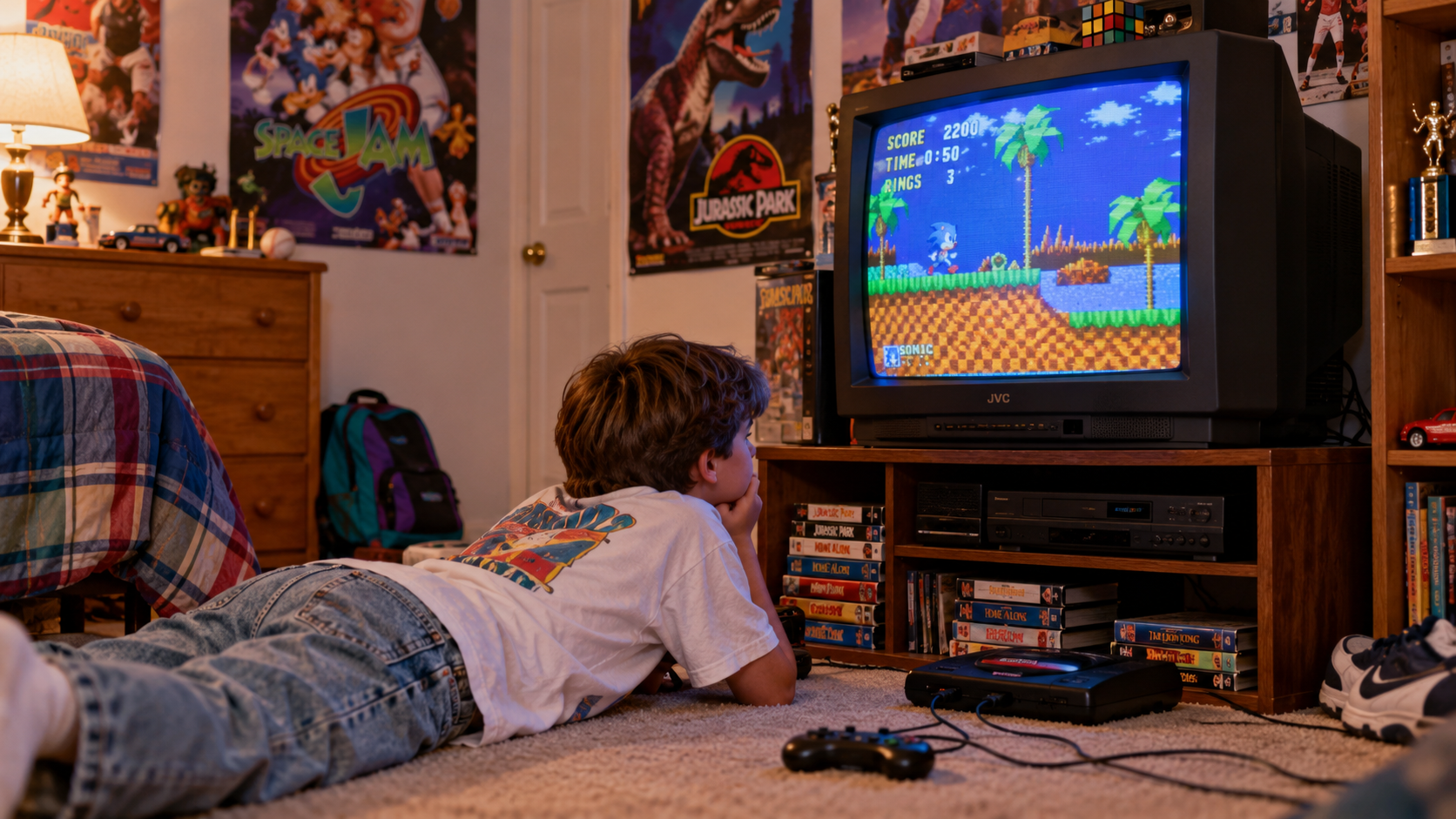
The ’90s kid’s bedroom could double as a miniature entertainment center, although almost nothing about it was sleek. A small CRT television might share space with VHS tapes, CDs and cassettes, a boom box, alarm clock, posters, toys, and perhaps a game console with cords trailing across the carpet. There was no endless streaming menu waiting on the television. What you watched depended on what was airing, what the family owned on VHS, or what somebody had remembered to rent for the weekend.
Nintendo or Sega With Everyone in the Same Room
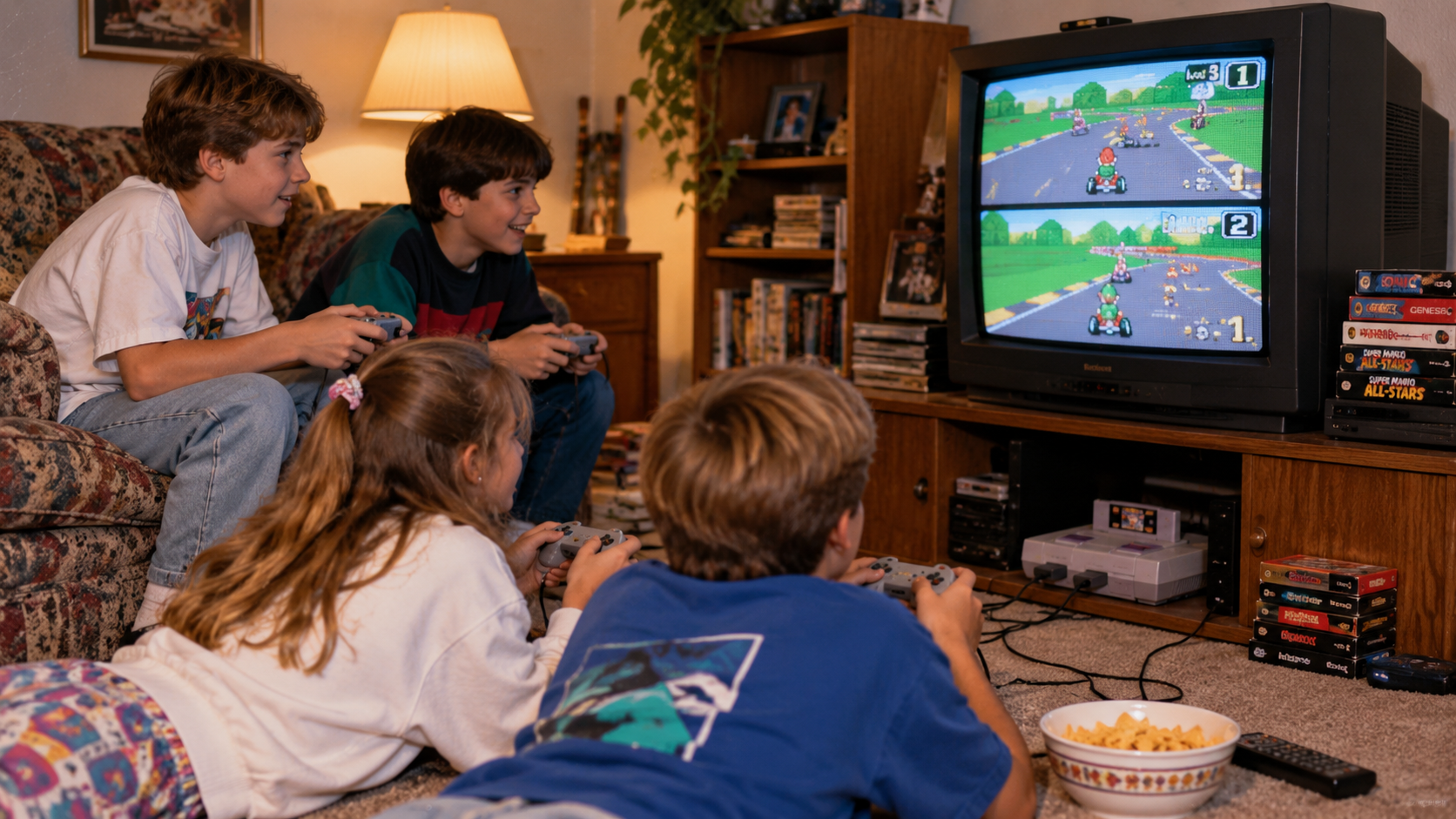
Multiplayer gaming could be surprisingly social because the other players were usually sitting a few feet away. Friends and siblings gathered around a CRT television, controllers tethered to the console by cords, while cartridges and game cases accumulated nearby. The Super Nintendo and Sega Genesis helped define the decade’s famous console rivalry, but the scene itself mattered just as much: cross-legged kids on the carpet, somebody waiting impatiently for a turn, and everyone watching the exact same screen.
The Family Computer Everyone Had to Share
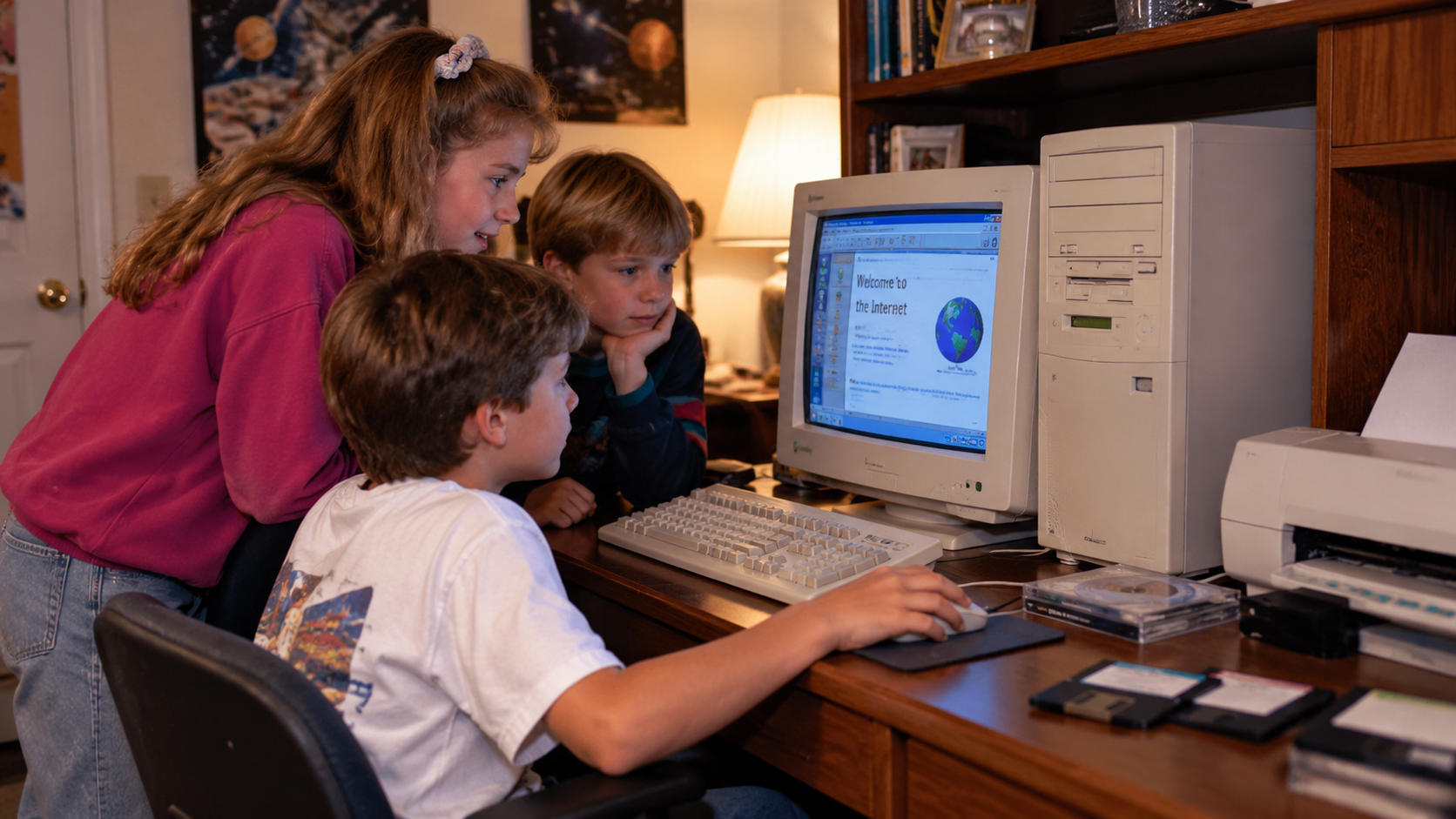
Before laptops followed people around the house, many families that owned a computer had one substantial machine sitting on a dedicated desk. The beige tower, bulky CRT monitor, mouse pad, printer, floppy disks, and stacks of software could occupy an impressive amount of space. Home computer ownership expanded substantially during the decade, but access was far from universal. For kids who did have one at home, computer time might mean homework, CD-ROM games, early internet sessions, or negotiations with siblings over whose turn it was.
The School Computer Lab
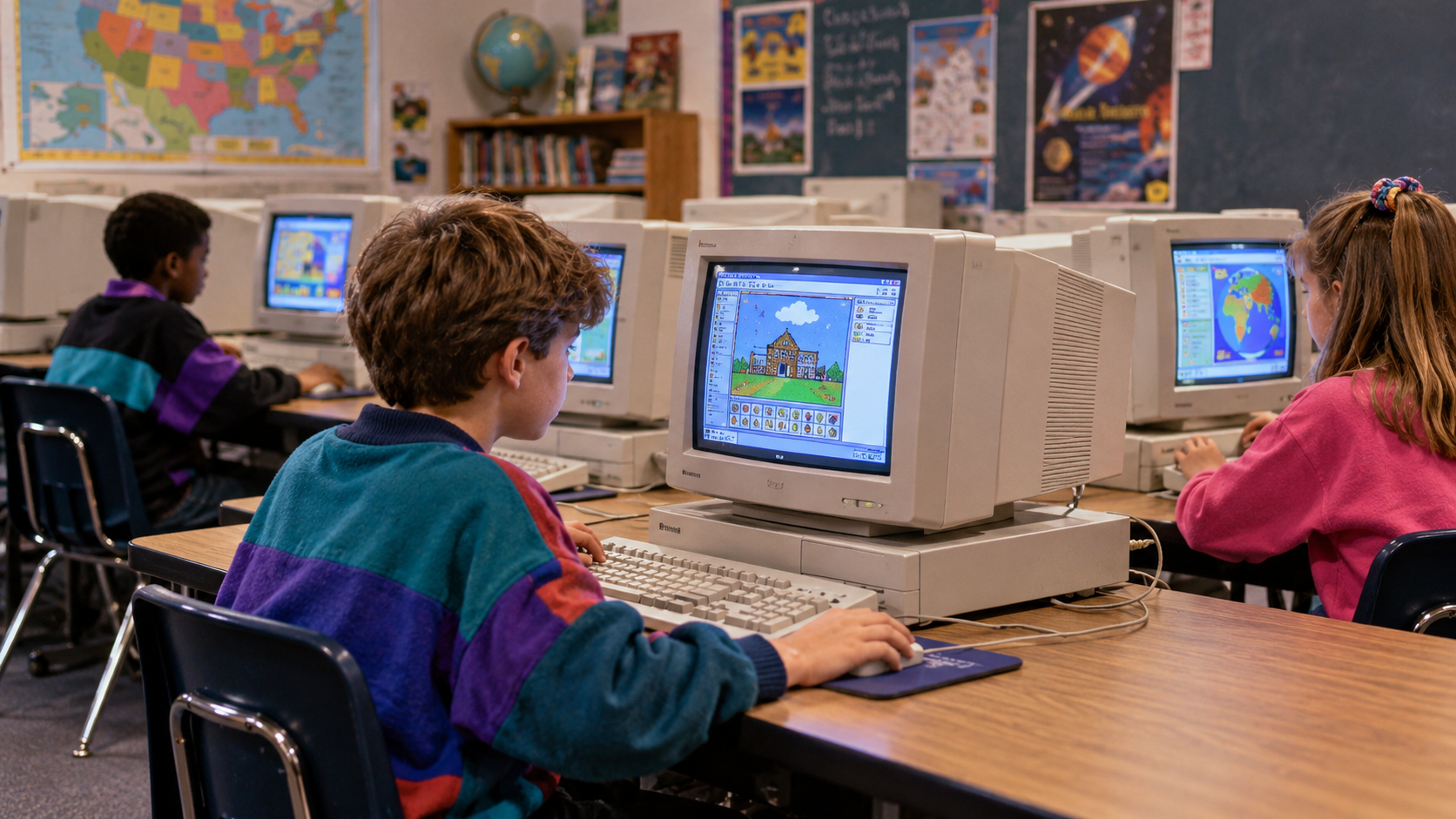
Few announcements could brighten a school day quite like finding out the class was heading to the computer lab. Rows of bulky machines offered something different from worksheets and textbooks, whether students were typing, playing educational games, or eventually exploring the internet. School technology changed dramatically over the decade: only about a third of public schools were connected to the internet in 1994, compared with nearly all of them by 1999. Even then, computers were commonly shared resources rather than something sitting on every student’s desk.
Trending on Cheapism

Choosing a Movie at the Video Store
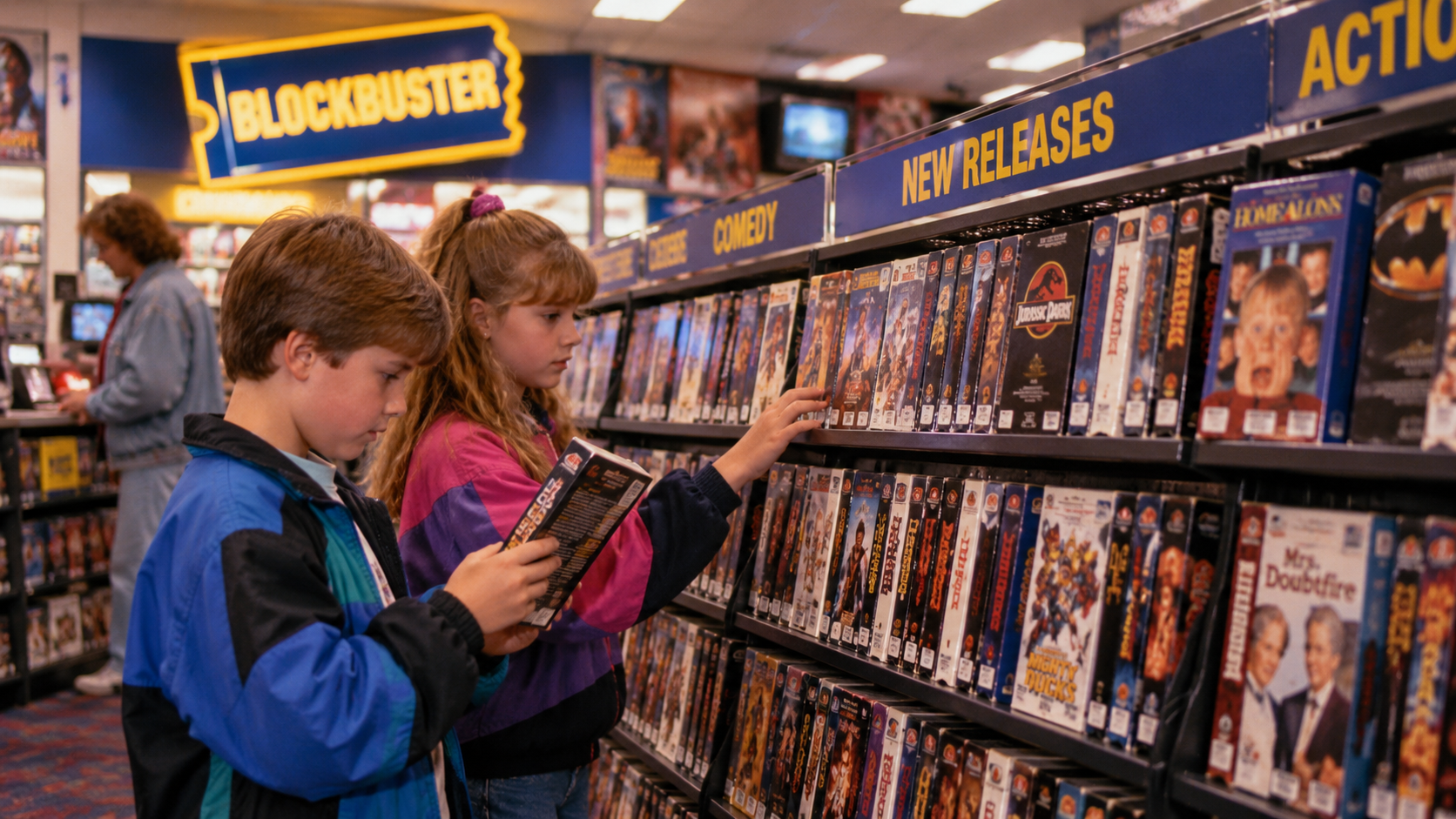
Friday-night entertainment could begin under fluorescent lights, wandering aisles covered in VHS boxes. Instead of scrolling through hundreds of streaming thumbnails from the couch, families physically went out and debated what to rent. Kids headed toward cartoons, comedies, and new releases while parents tried to get everyone to agree on something. Popular titles could already be gone by the time you arrived, which meant choosing a backup. And after movie night came another responsibility today’s kids never encounter: remembering to return the tape.
Trading Snacks in the School Cafeteria
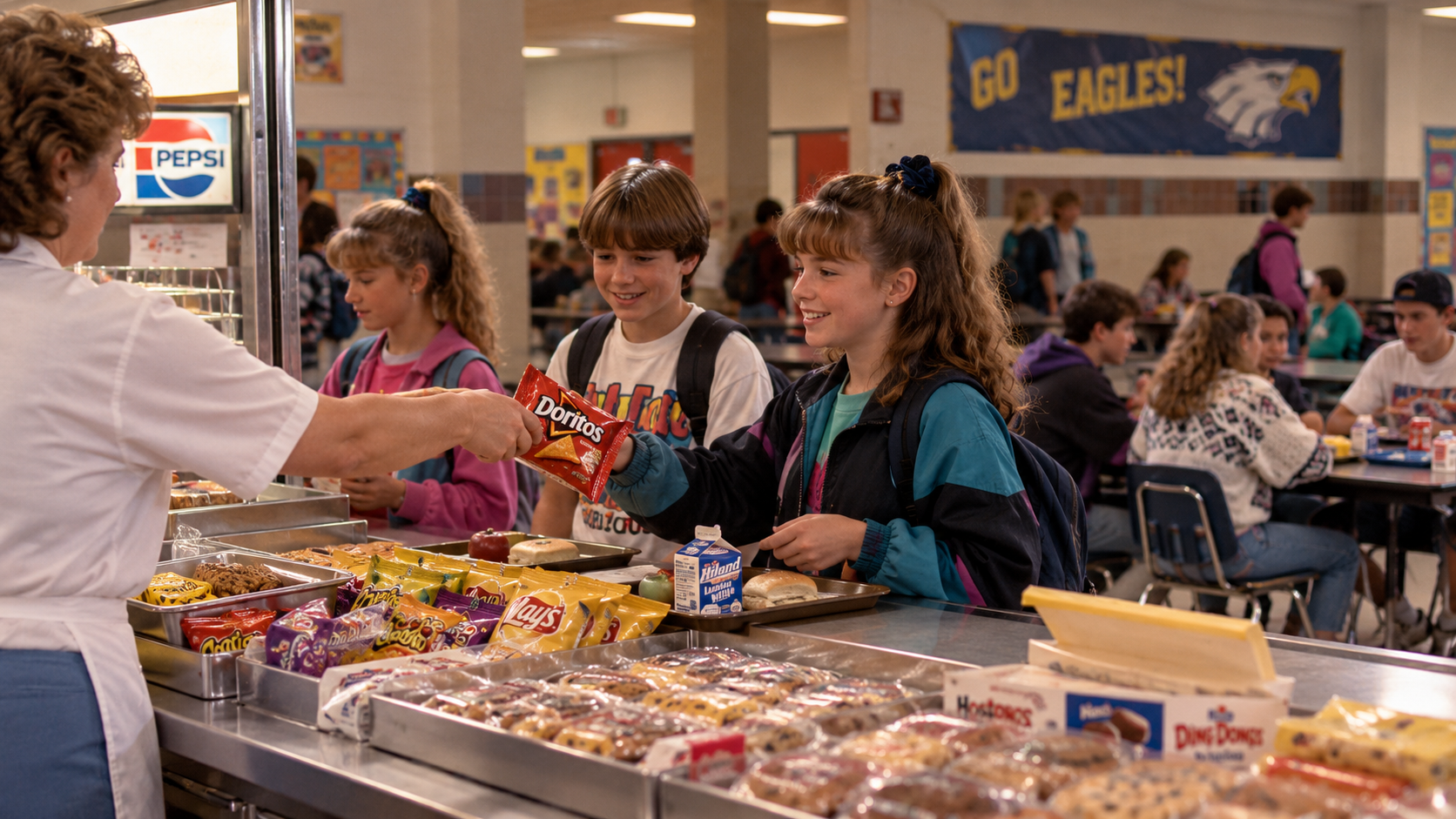
A crowded school cafeteria had its own soundtrack and its own unofficial economy. Lunch boxes, brown paper bags, plastic trays, milk cartons, juice boxes, cafeteria pizza, chips, cookies, and homemade sandwiches covered the tables while kids compared what everyone else had brought. A particularly desirable snack could suddenly become bargaining material. The food varied tremendously between schools and families, of course, but the ritual was familiar: find your friends, claim a seat, eat quickly, and see whether anyone had something worth trading.
Hanging Out at the Mall
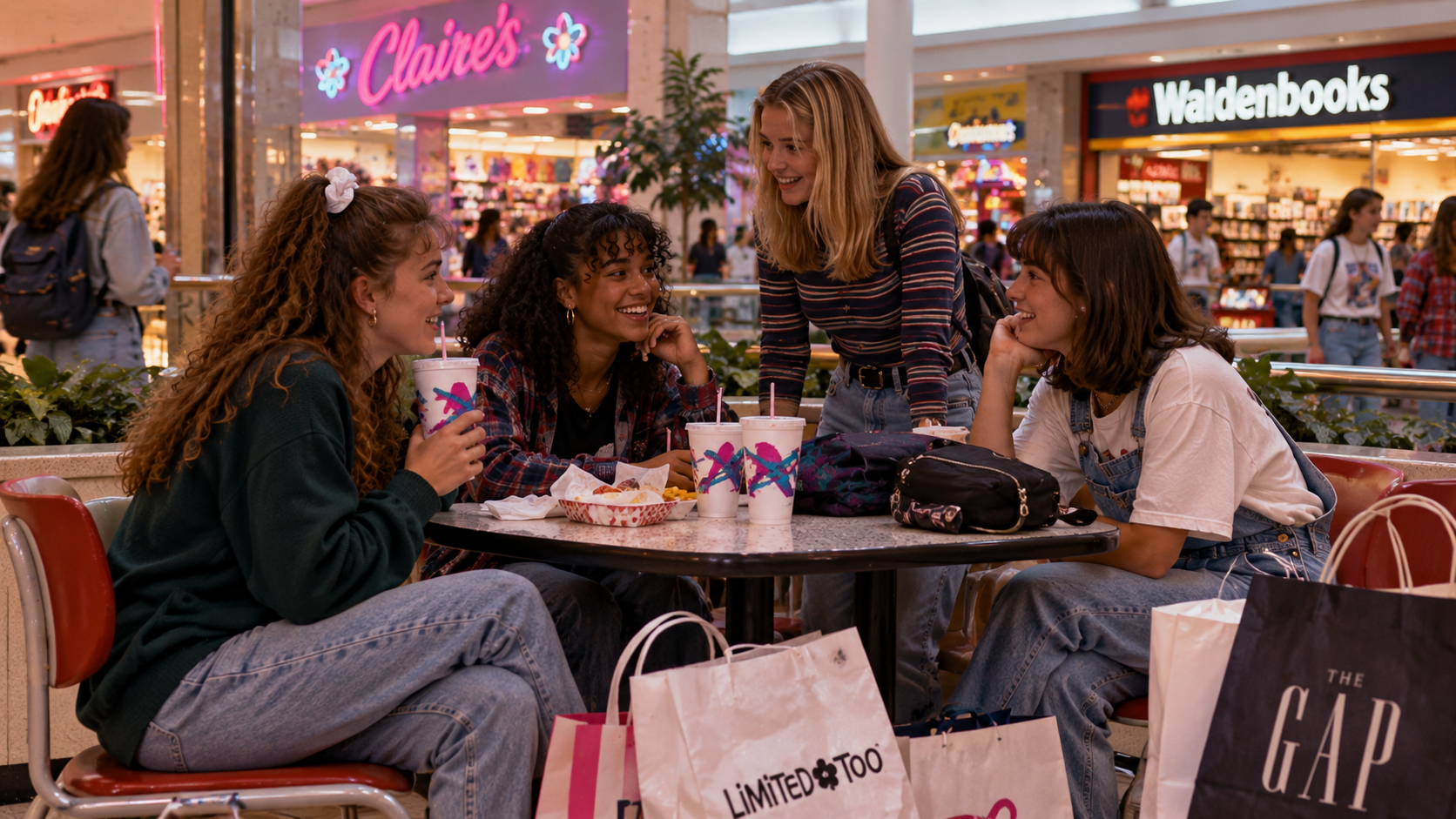
Going to the mall didn’t necessarily mean anybody needed to buy something. For many teenagers, it was somewhere to wander with friends, eat at the food court, visit the arcade or record store, and hope to run into somebody interesting. Contemporary accounts from the decade described malls as major gathering places for teenagers, and that social role is what makes old mall photos so evocative today. Before group chats and location sharing, “meet us at the mall” could genuinely constitute the afternoon’s entire plan.
Sign up for our newsletter
A Birthday Party With Pizza and Arcade Tokens
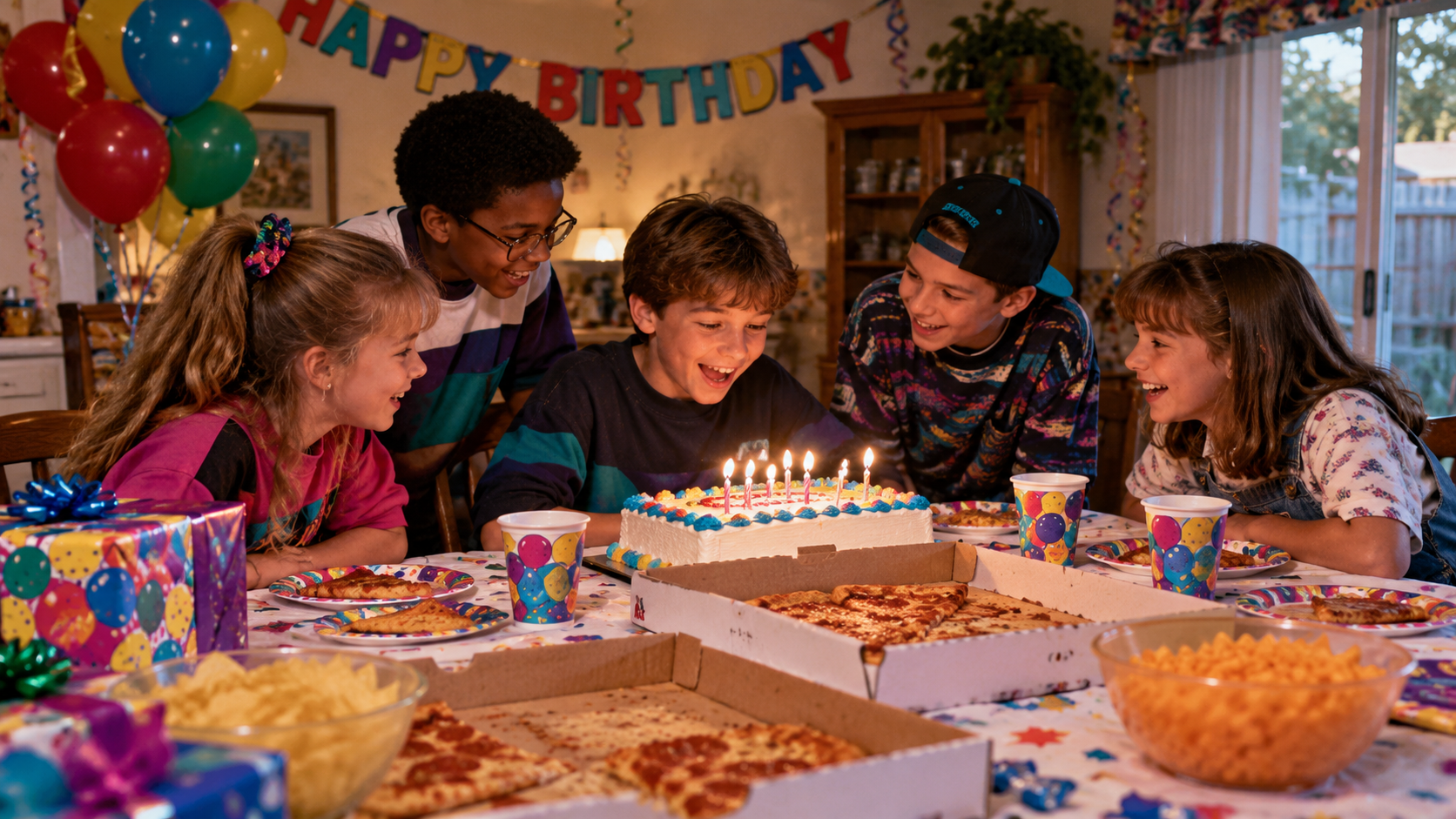
For a ’90s kid, a table covered with pizza, paper cups, birthday cake, presents, and plastic tokens could signal a very good afternoon. Pizza restaurants and arcades offered an easy party formula: eat, play games, compare ticket totals, and eventually exchange an absurd number of tickets for a very small prize. The exact venue varied from town to town, but the combination became a recognizable childhood scene. Photos from these parties often capture something even better than the games: a dozen kids squeezed together and completely absorbed in the occasion.
Calling a Friend on the Family Landline
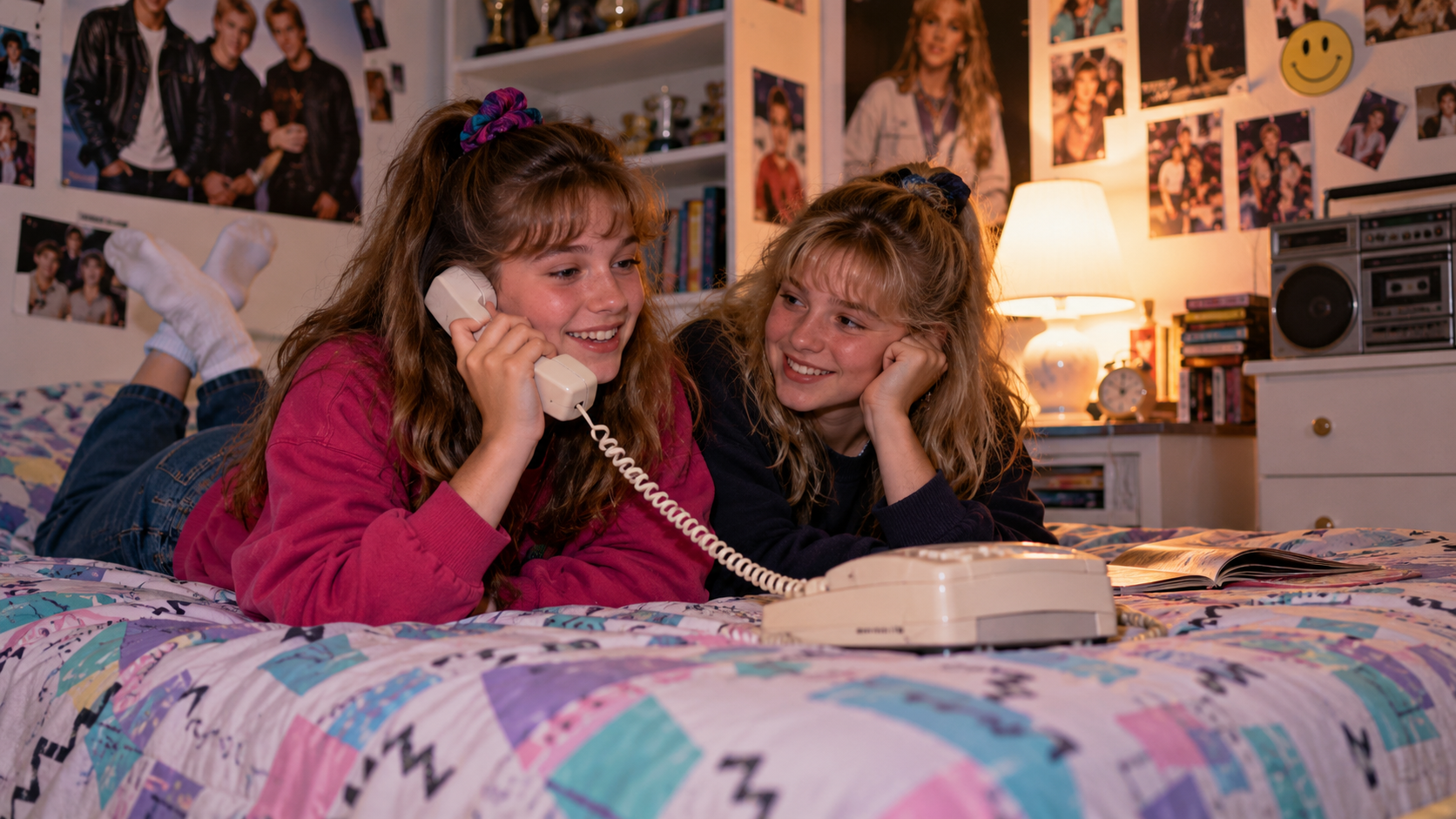
Calling a friend involved a small social risk that younger generations largely escaped: somebody else’s parent might answer. You dialed the household number, politely asked whether your friend was home, and hoped nobody else picked up another extension during the conversation. Teenagers fortunate enough to have a phone in their bedroom could stretch an extra-long cord across the room and talk in relative privacy. Otherwise, the kitchen or hallway phone might be the family’s communication center, with everybody nearby able to hear at least half the conversation.
Waiting to See How the Photos Turned Out
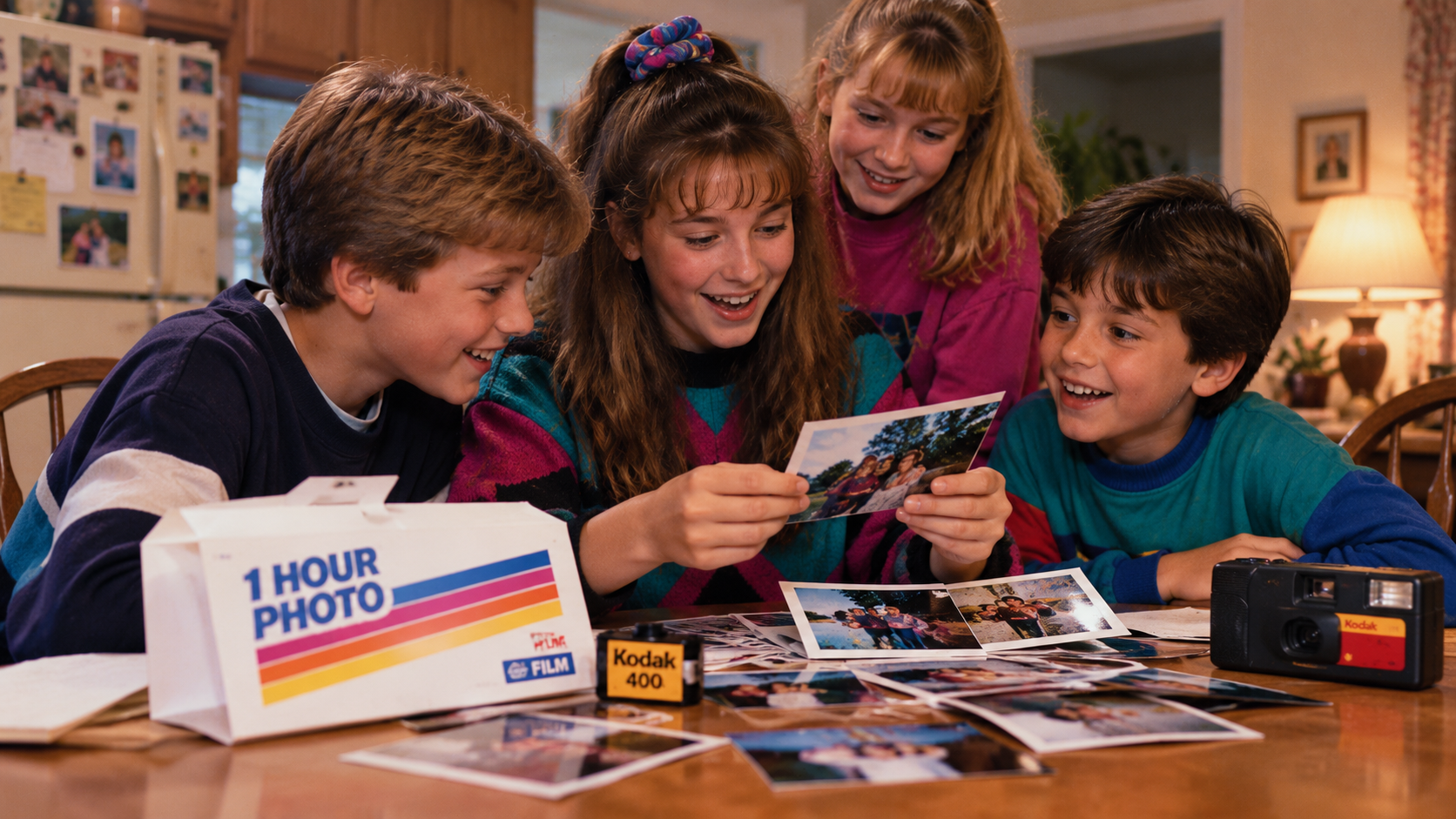
Taking the picture was only the beginning. Film had to be finished, dropped off for processing, and collected before anyone knew whether the vacation, birthday, or school-event photos had actually worked. Point-and-shoot and one-time-use cameras made casual photography easy, but there was still no screen for checking the shot. Red eyes, closed eyes, bad exposure, crooked framing, and the occasional finger over the lens simply became part of the permanent record. Somehow, those imperfect prints now make old family albums feel even more authentic.
Hanging Out Without Everyone Holding a Phone
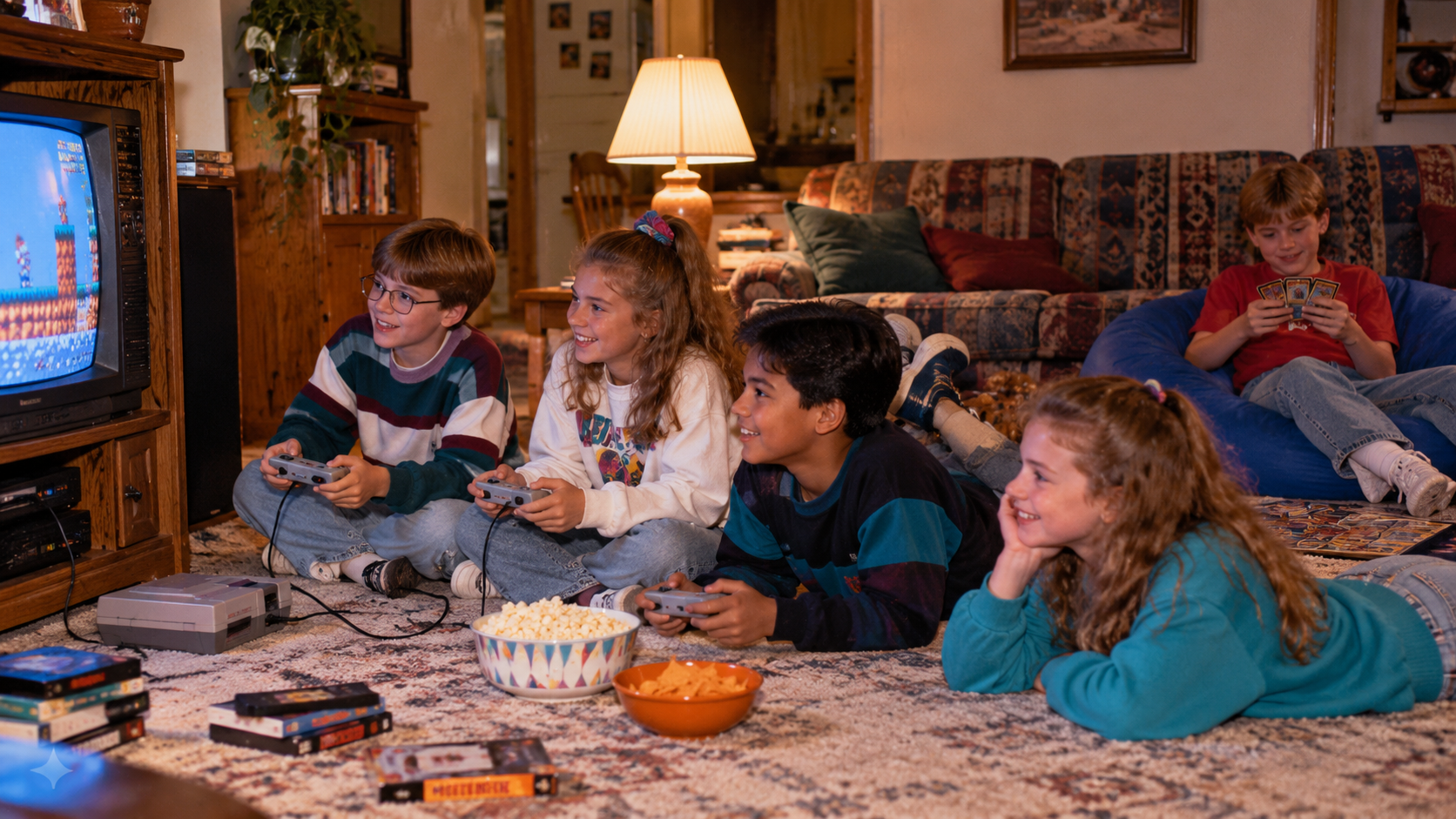
Kids certainly had technology in the 1990s, but it didn’t yet occupy every spare moment in quite the same way. Friends might end up sprawled across a living-room floor playing cards or a board game, reading magazines, drawing, building with LEGO, listening to music, or simply talking. Even electronic entertainment often meant gathering around one shared television or computer. That’s what makes an ordinary group photo from the decade so striking now: nobody needed to be doing anything particularly special for spending time together to fill an afternoon.