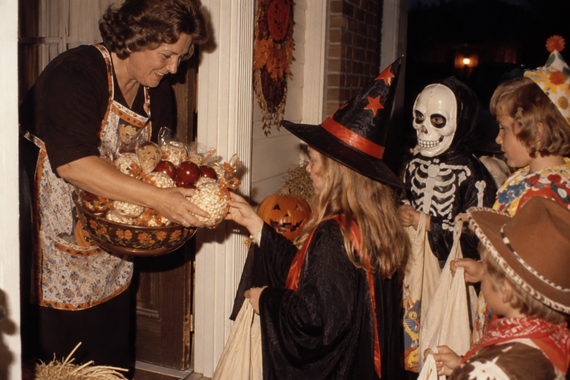
Halloween night in the 1970s was a whole different kind of adventure. There were no elaborate animatronic decorations on every lawn, no GPS apps tracking your trick-or-treating route, and certainly no expensive, movie-quality costumes. Instead, kids squeezed into flimsy plastic masks, grabbed an old pillowcase from the linen closet, and headed out into the neighborhood with their friends, hoping to collect as much candy as humanly possible.
For many children, the excitement started the moment school let out on October 31. There were costumes to put on, friends to meet, and important decisions to make about which streets had the best houses for trick-or-treating. And while parents might have offered a few warnings before sending everyone outside, Halloween was often a night when kids enjoyed a little more freedom than usual.
From those suffocating plastic masks to the thrill of discovering a full-size candy bar at the bottom of your bag, here are 12 things every ’70s kid remembers about Halloween in the 1970s.
Those Plastic Halloween Masks You Could Barely Breathe Through
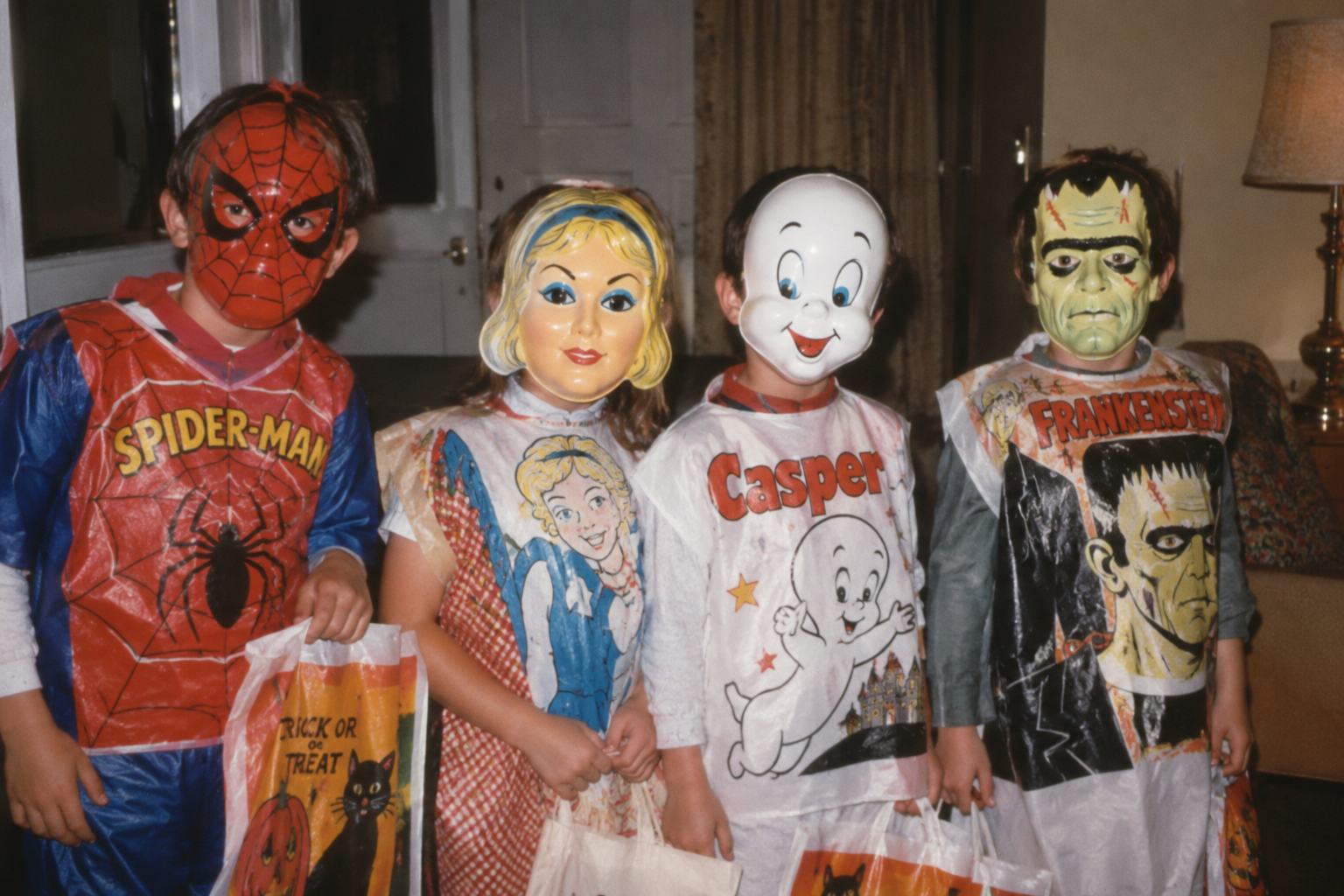
If you grew up in the ’70s, there’s a good chance your Halloween costume came in a cardboard box with a cellophane window. Companies like Ben Cooper sold inexpensive costumes featuring thin plastic masks held in place by flimsy elastic bands, usually accompanied by a vinyl smock with a picture of the character printed across the front. The masks had tiny eyeholes, barely any ventilation, and sharp edges that could dig into your face. Within minutes, the inside would be damp from your breath, and you’d probably end up pushing the mask onto your forehead just to see where you were going. But whether you were dressed as Spider-Man, Casper the Friendly Ghost, or your favorite cartoon character, you probably thought you looked fantastic.
Carrying a Pillowcase That Seemed Impossible to Fill
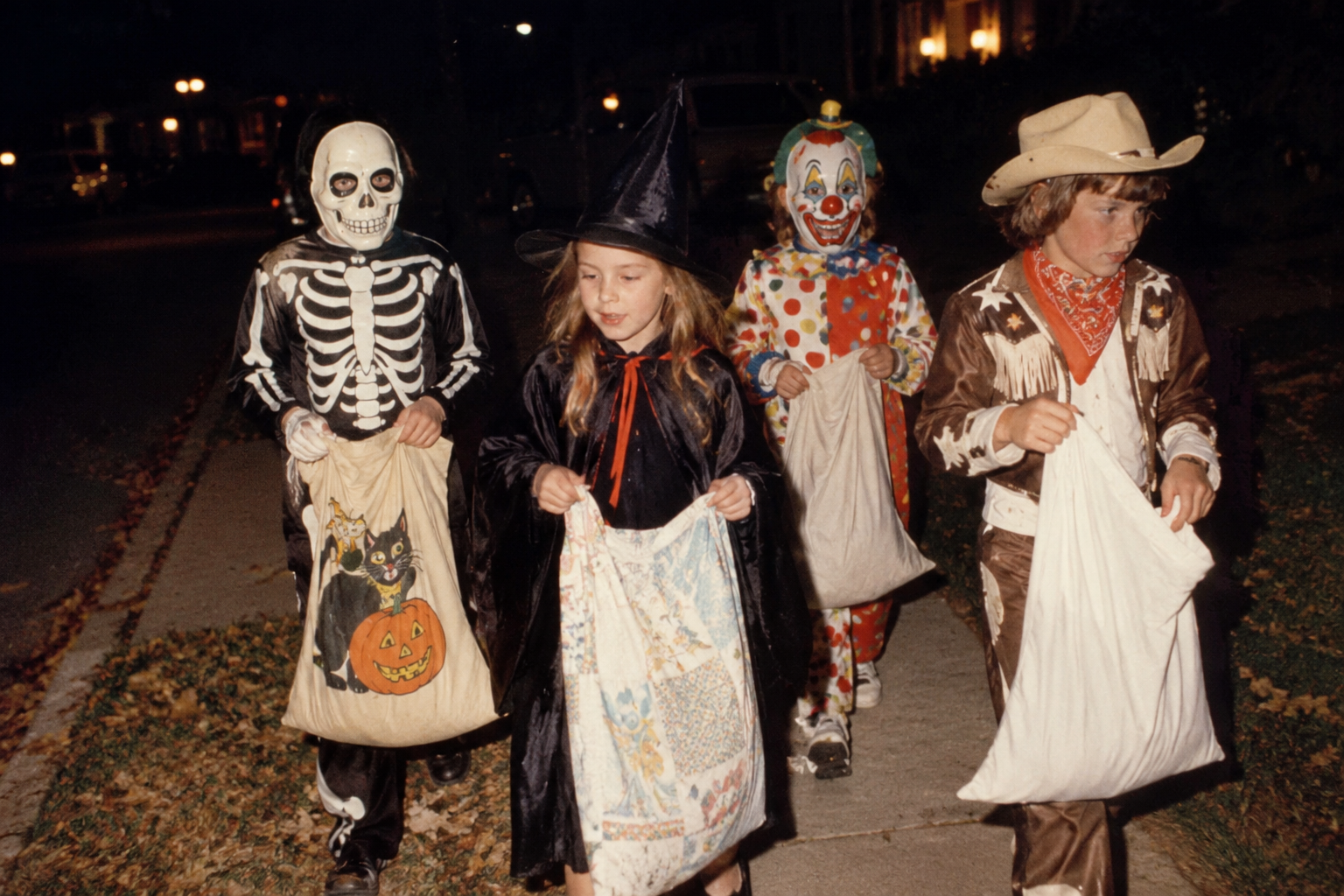
Forget those cute little Halloween buckets sold in stores today. For plenty of kids in the 1970s, the ultimate trick-or-treating accessory was an old pillowcase borrowed from the linen closet. It was cheap, practically indestructible, and, most importantly, big enough to hold what seemed like an unlimited supply of candy. Some kids used paper grocery bags or plastic jack-o’-lantern buckets, but nothing quite matched the ambition of carrying an entire pillowcase around the neighborhood. Of course, the more houses you visited, the heavier it became. By the end of the night, you might be dragging it along the sidewalk, determined to squeeze in just a few more stops before heading home.
Making a Costume From Whatever Was Around the House
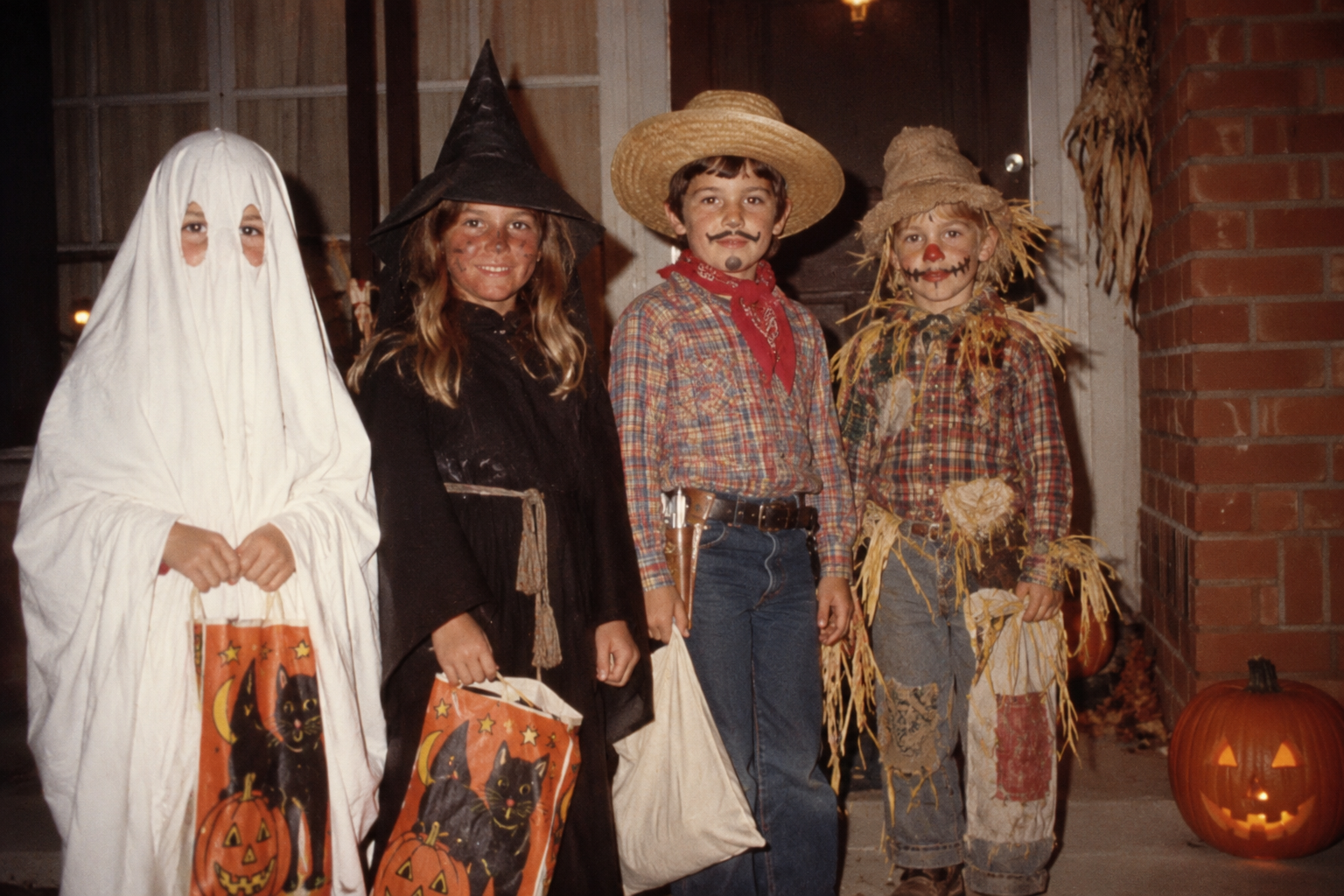
Not every family bought a Halloween costume, and plenty of ’70s kids went trick-or-treating in disguises assembled from whatever happened to be lying around the house. An old bedsheet became a ghost, a pair of overalls and some straw made a scarecrow, and a little face paint could transform an ordinary kid into a clown or a vampire. Parents raided closets for oversized jackets, old hats, and forgotten accessories, while cardboard boxes and construction paper supplied the finishing touches. The results weren’t always particularly convincing, but that was part of the charm. And if your ghost costume had uneven eyeholes or your homemade robot outfit made it impossible to bend your knees, you simply had to make it work.
Heading Out With a Group of Neighborhood Kids
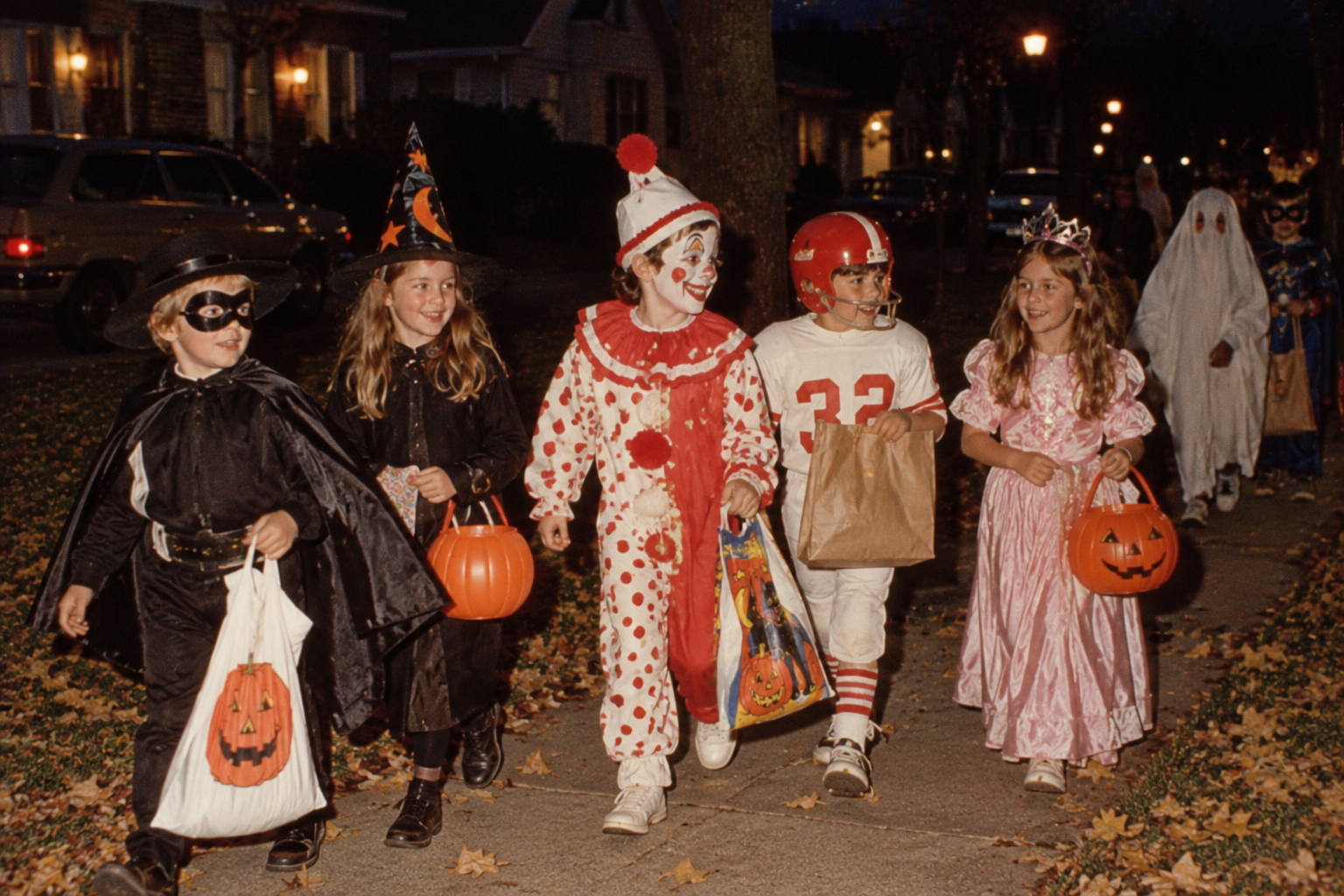
For many children growing up in the 1970s, Halloween meant meeting up with a group of neighborhood friends and making the rounds together, sometimes without an adult accompanying them to every doorstep. Older siblings might be put in charge of younger ones, and groups often grew as classmates joined along the way. Everyone seemed to know which neighbors gave out the best candy, which houses had the scariest decorations, and which streets were worth the extra walking. There was plenty of running between houses, shouting across the sidewalk, and comparing candy hauls under the nearest streetlight. Of course, how much freedom kids had depended on their age and where they lived, but for many, that feeling of independence was one of the best parts of the night.
Getting Popcorn Balls, Apples, or Homemade Cookies
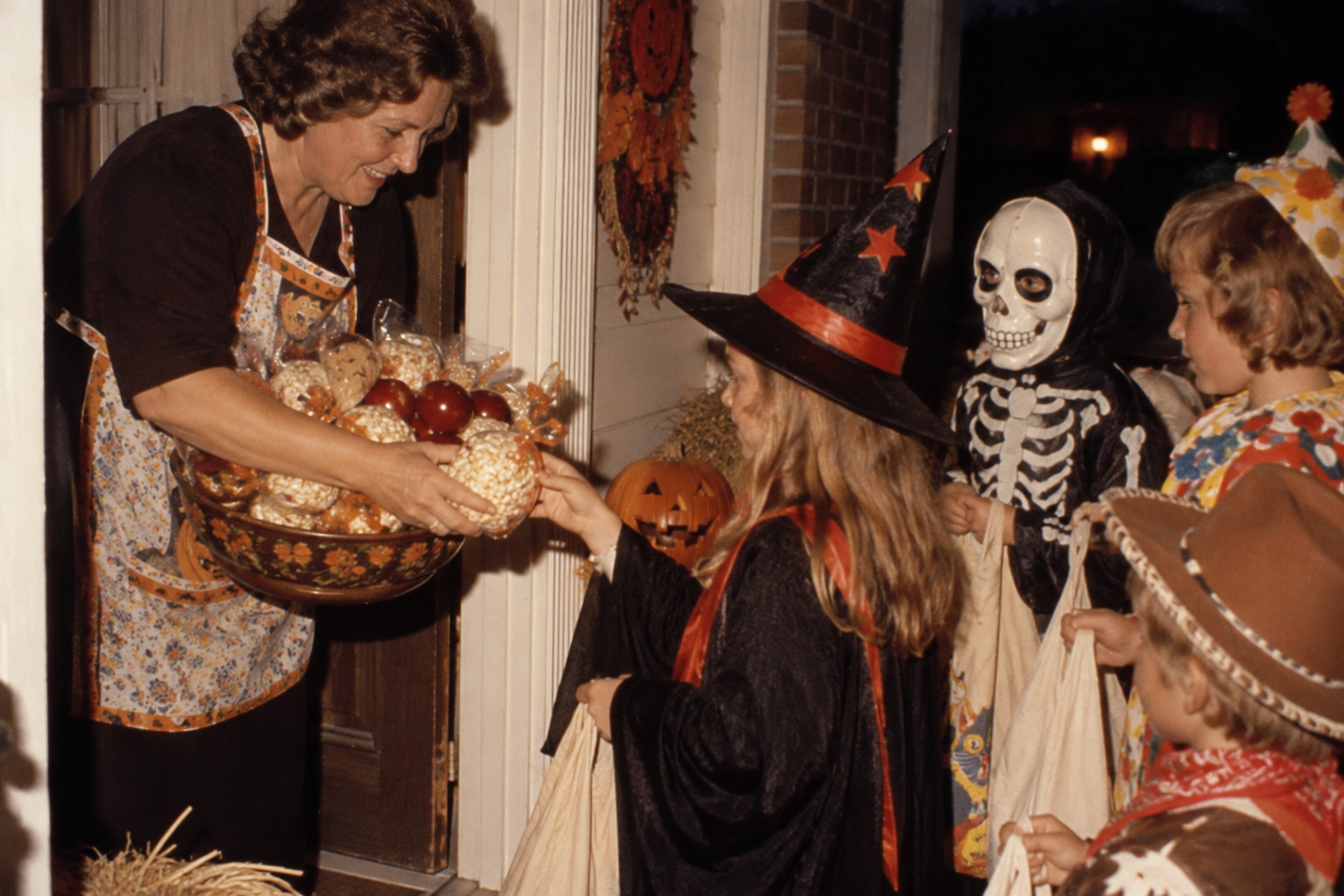
Halloween treats weren’t always the individually wrapped candy bars we’re accustomed to today. During the 1970s, it wasn’t unusual for some neighbors to hand out homemade popcorn balls, freshly baked cookies, apples, or little bags of nuts. If you were lucky, you might even visit a house where someone had spent the afternoon preparing special Halloween goodies for the neighborhood children. Not every kid appreciated receiving a piece of fruit when they were hoping for chocolate, but these homemade offerings were still part of the holiday tradition. As concerns about candy tampering became more widespread during the decade, however, families increasingly favored commercially packaged treats, and those homemade Halloween snacks gradually became less common.
Trending on Cheapism


Hoping Someone Would Hand Out a Full-Size Candy Bar
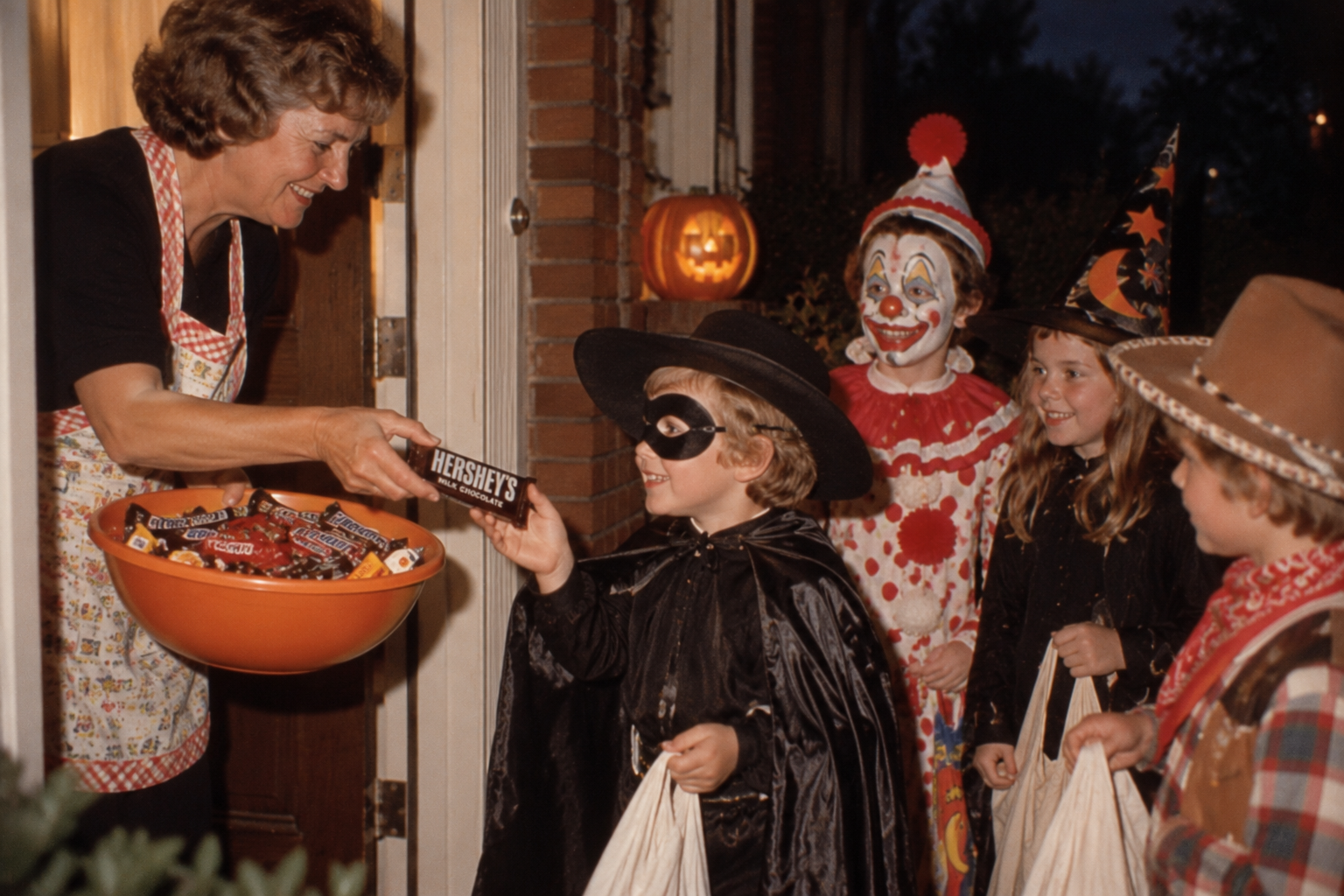
Every neighborhood seemed to have at least one legendary house that handed out something better than the usual handful of small candies. Maybe it was a full-size Hershey’s bar, a generous Snickers, or another chocolate treat that seemed enormous compared with everything else in your bag. Finding that house was practically a Halloween victory, and word traveled quickly among the neighborhood kids. Of course, not everyone could afford to hand out large candy bars, and plenty of houses offered smaller sweets, candy corn, or whatever happened to be available. But discovering a full-size chocolate bar among your Halloween haul was enough to make you feel like you’d hit the jackpot. You might even save it for last, assuming your siblings didn’t convince you to trade it away first.
Collecting Pennies in a Little Orange UNICEF Box
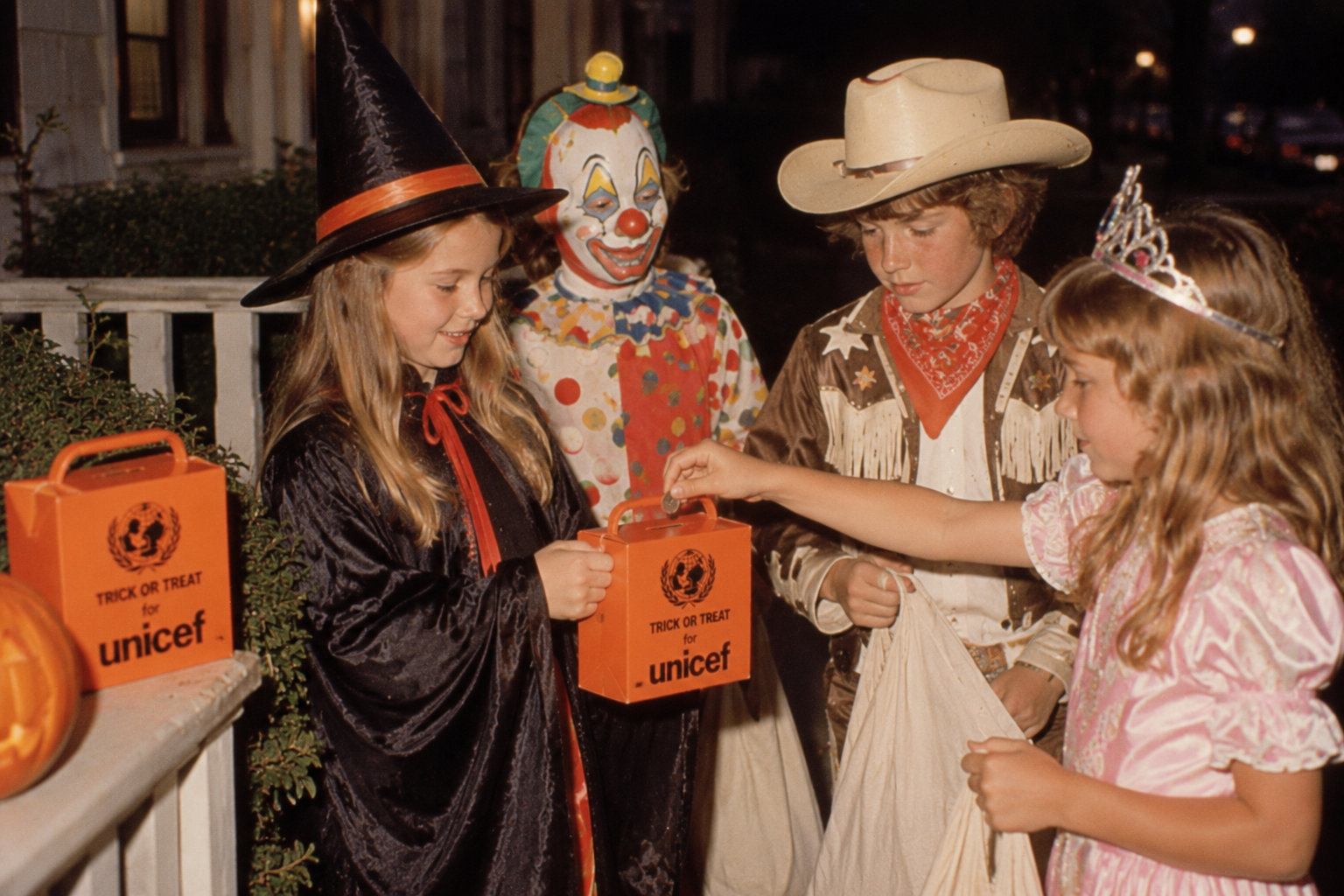
Some ’70s kids went trick-or-treating with two containers: one for candy and another for spare change. Those little orange cardboard UNICEF boxes were a familiar Halloween sight, and children carried them from house to house asking neighbors to donate pennies, nickels, and dimes to help children around the world. The Trick-or-Treat for UNICEF campaign had begun in 1950, but by the 1970s, it had become a major Halloween tradition, with millions of children participating each year. Even celebrities and television personalities helped promote the cause, including members of The Brady Bunch cast. For kids, there was something satisfying about hearing coins rattle around inside the box as the night went on, knowing they were collecting something besides candy.
Knowing Which Houses Had the Best Halloween Decorations
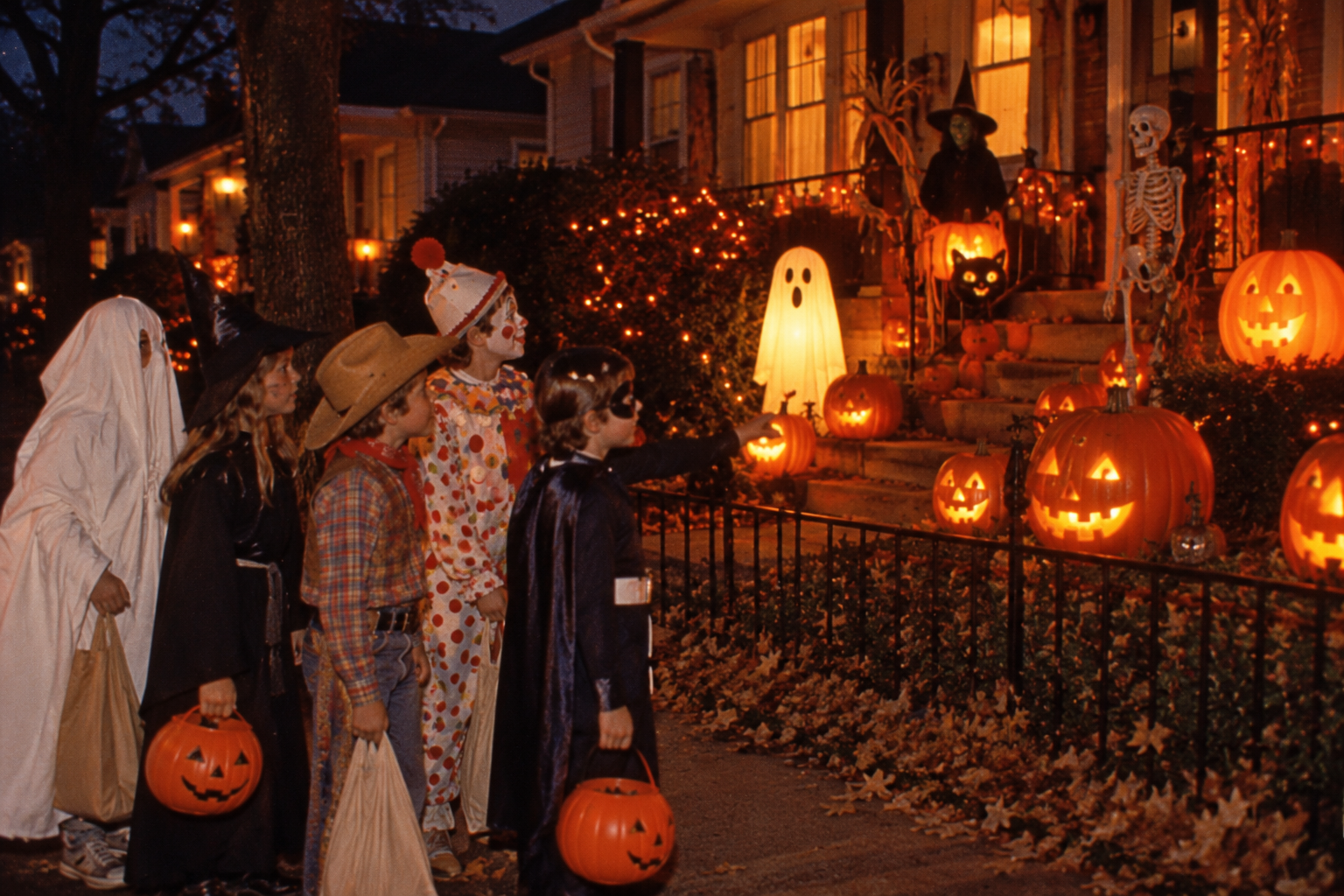
Long before elaborate inflatable displays and synchronized light shows became common, Halloween decorations were often delightfully simple. A carved jack-o’-lantern with a candle flickering inside might sit on the front steps, while paper skeletons, homemade ghosts, and fake cobwebs decorated the porch. Some families went a little further, turning their yards into spooky scenes with old sheets, cardboard tombstones, and whatever decorations they could make themselves. But the most memorable houses weren’t necessarily the fanciest. Sometimes it was the neighbor who answered the door wearing a terrifying mask or jumped out from behind a bush just as you approached. Those were the houses kids talked about for the rest of the night, even if they were a little nervous about going back the following year.
Sign up for our newsletter
Going Trick-or-Treating With a Flashlight
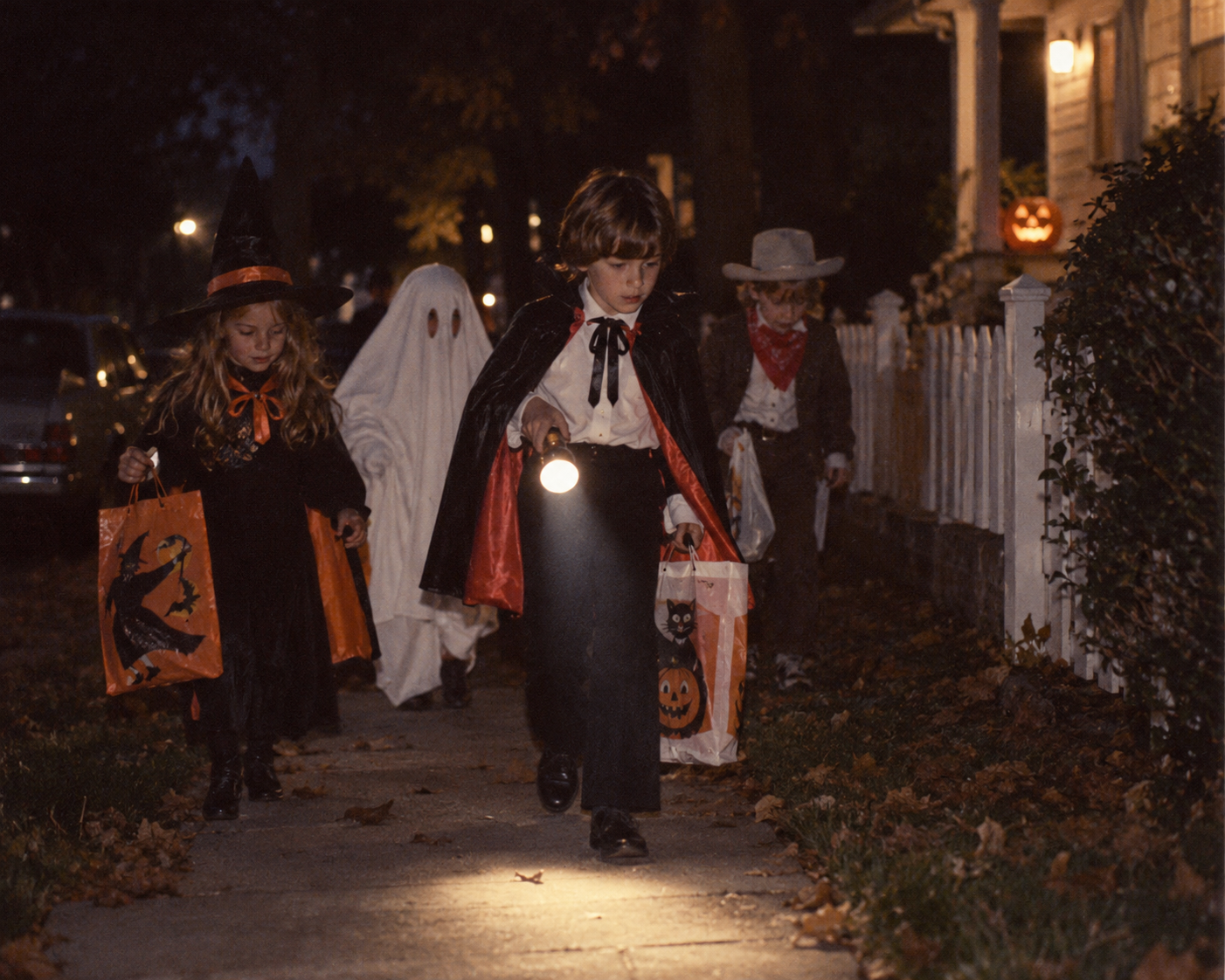
Before smartphones could illuminate a dark sidewalk with the tap of a button, trick-or-treaters relied on good old-fashioned flashlights. Plenty of kids carried bulky models powered by large batteries, while others depended on streetlights, porch lights, and whatever moonlight happened to be available. A flashlight came in especially handy when navigating uneven sidewalks, crossing dark driveways, or trying to figure out what candy someone had just dropped into your bag. The tricky part was juggling it alongside your pillowcase, costume accessories, and a plastic mask that kept slipping over your eyes. And if the batteries started dying halfway through the night, you might find yourself walking a little closer to your friends until you reached the next brightly lit porch.
Having to Wear a Coat Over Your Halloween Costume
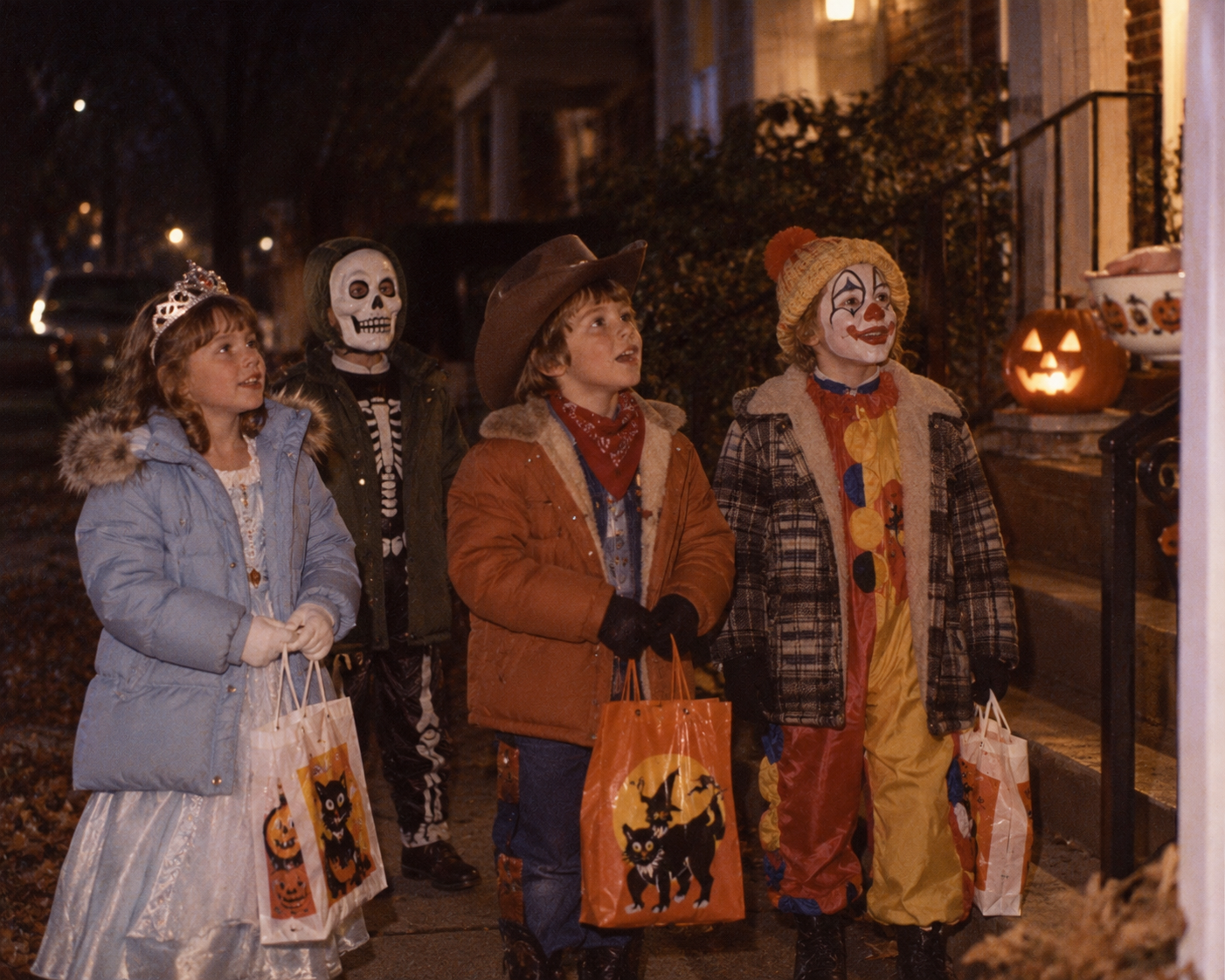
Few things were more disappointing than spending days looking forward to showing off your Halloween costume, only to have your mother insist that you wear a coat over it. In colder parts of the country, late October evenings could be downright freezing, and those thin vinyl costumes offered practically no protection against the weather. Suddenly, your carefully assembled princess, superhero, or witch outfit was hidden beneath a bulky winter jacket, complete with mittens and a scarf. Some kids tried squeezing extra layers underneath their costumes instead, although that wasn’t always possible with those flimsy store-bought outfits. Either way, the important thing was getting outside and collecting candy, even if nobody could tell what you were supposed to be dressed as.
Hearing Stories About Razor Blades Hidden in Halloween Candy
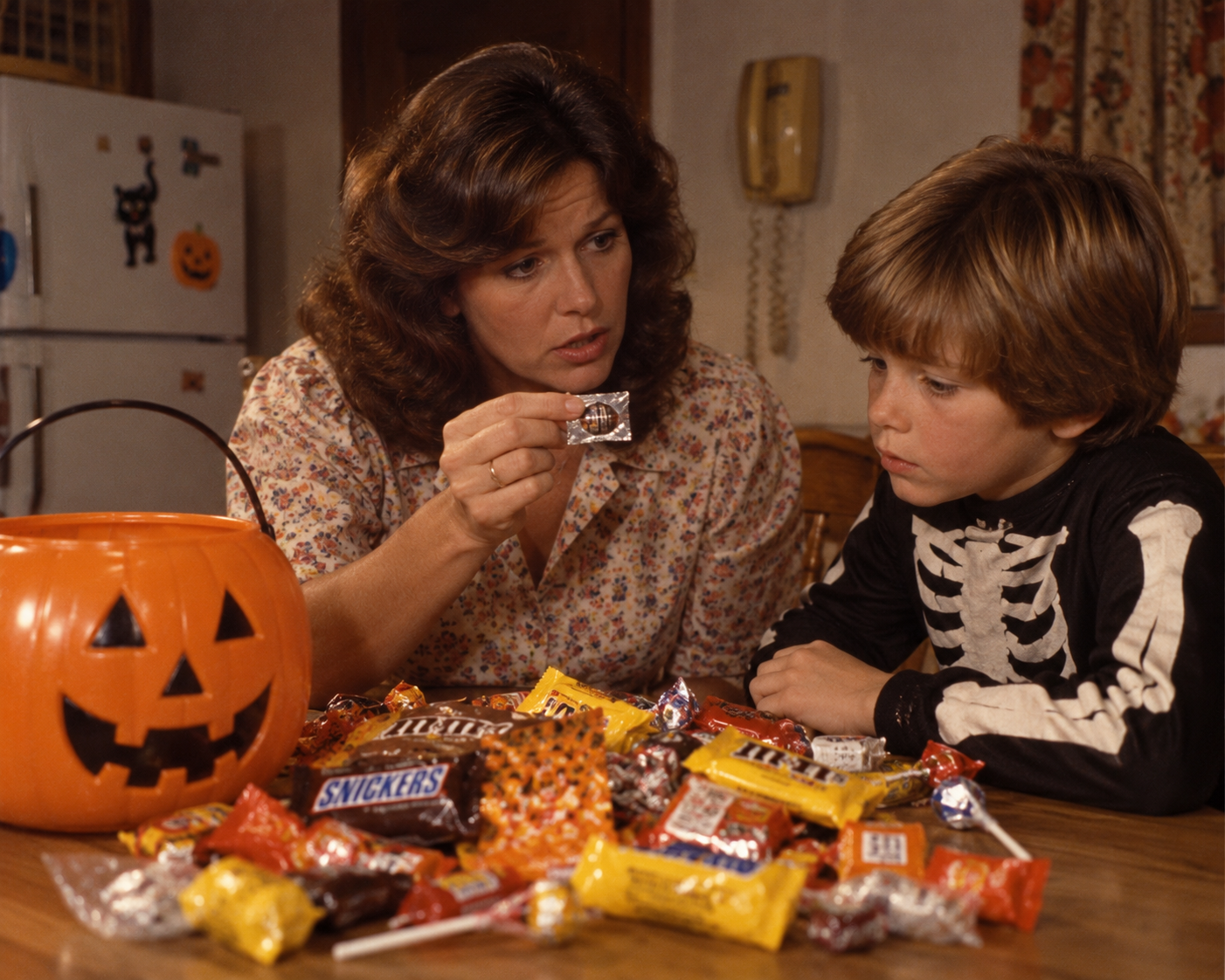
By the 1970s, Halloween came with a particularly unsettling warning: Be careful, because someone might have hidden razor blades in apples or tampered with candy. Stories about poisoned treats and dangerous objects concealed inside Halloween goodies circulated widely, prompting some parents to inspect everything their children brought home. You might remember having to spread your candy across the kitchen table while a parent checked the wrappers or warned you not to eat anything homemade. Although these frightening stories became a major part of Halloween culture, the supposed epidemic of strangers deliberately harming trick-or-treaters was largely an urban legend. Nevertheless, the fear helped change the holiday, making factory-sealed candy increasingly preferable to homemade treats.
Dumping All Your Candy on the Floor and Trading With Your Siblings
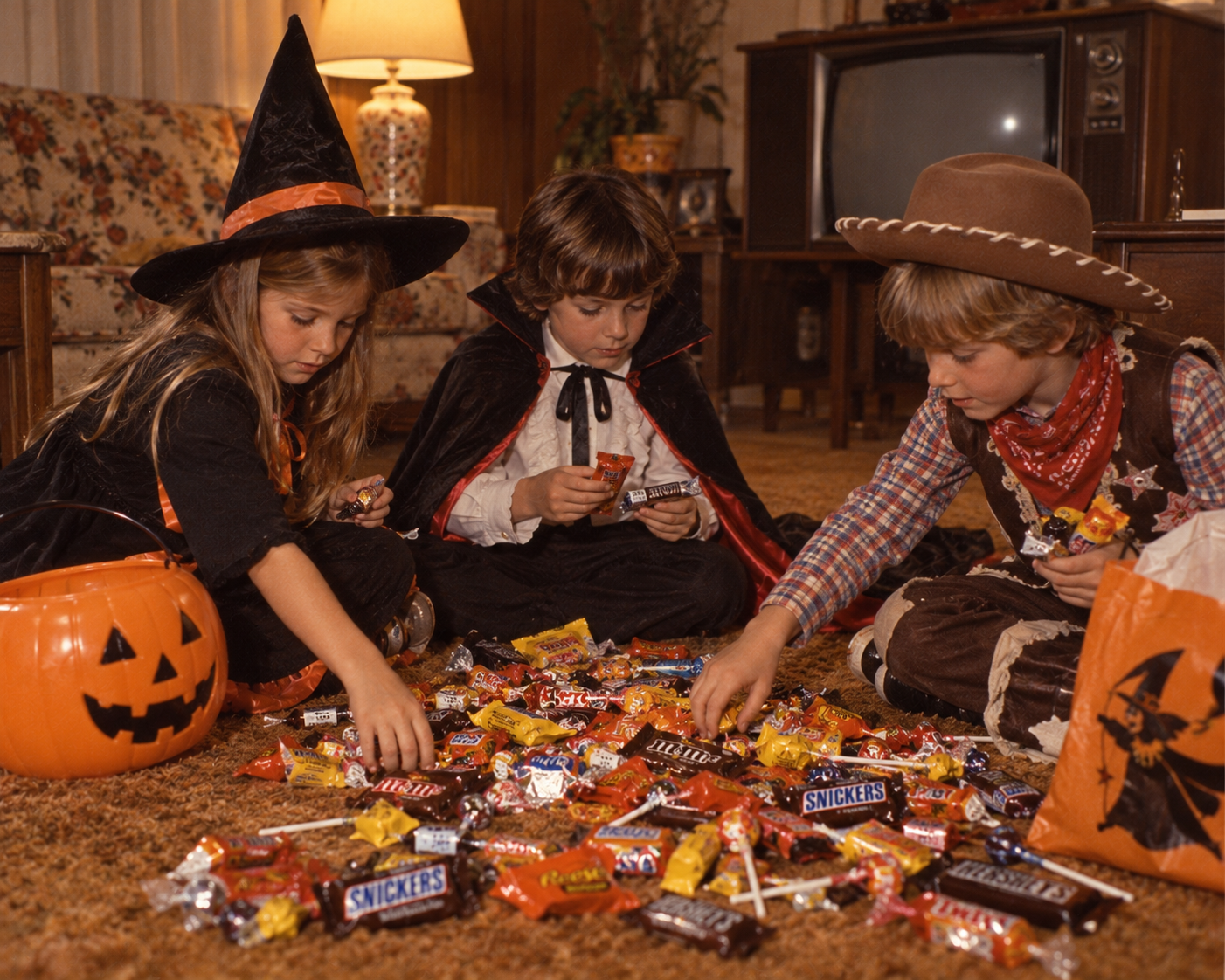
For many ’70s kids, the fun didn’t end when trick-or-treating was over. Once everyone got home, it was time for one of Halloween’s most important rituals: dumping the entire candy haul onto the living room floor and seeing exactly what you’d collected. Chocolate bars went into one pile, hard candies into another, and less exciting treats were usually pushed off to the side. Then came the negotiations. Maybe your brother would trade two pieces of candy for your favorite chocolate bar, or your sister would happily take all the candy corn you didn’t want. There was counting, comparing, bargaining, and occasionally a little arguing over who had gotten the better haul. And discovering one last forgotten candy bar at the bottom of your pillowcase? That was the perfect way to end Halloween night.
When Halloween Night Was Its Own Kind of Adventure
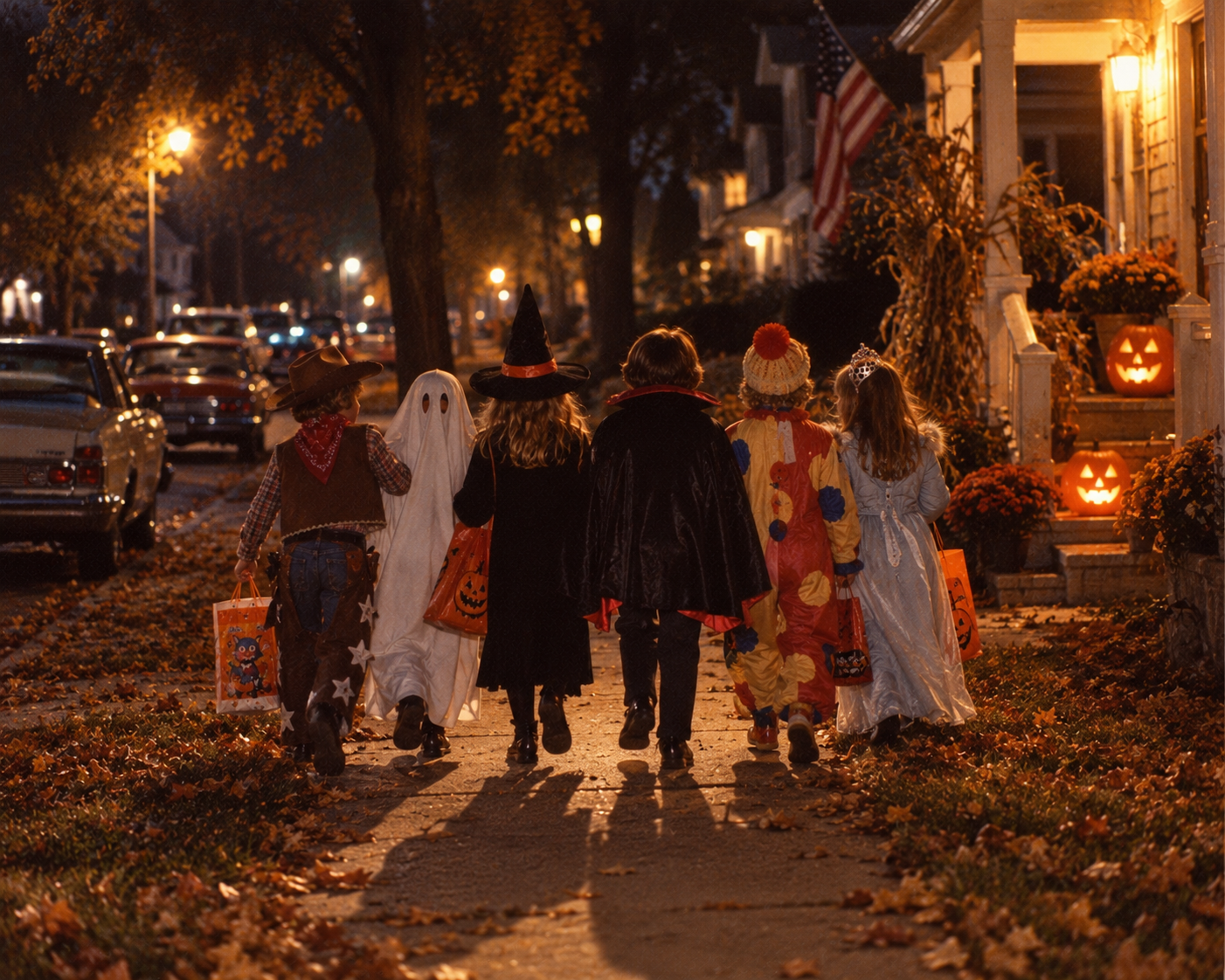
Halloween in the 1970s didn’t require elaborate costumes, expensive decorations, or carefully planned activities to feel special. Sometimes all it took was a homemade disguise, an old pillowcase, a group of neighborhood friends, and a few hours of going door to door. Sure, the plastic masks were uncomfortable, the weather didn’t always cooperate, and not every house handed out the candy you wanted. But those little imperfections were part of what made the night memorable. For anyone who grew up trick-or-treating in the ’70s, the sight of a glowing jack-o’-lantern or the sound of candy rattling around in a pillowcase can still bring back the excitement of being a kid on Halloween night.