Family road trips in the 1980s came with paper maps, cassette tapes, packed coolers, and plenty of opportunities to get a little lost. The National Park Service’s Route 66 guide looks back at the classic family road trip as an experience without smartphones or handheld devices, when travelers relied on paper maps and made their own entertainment along the way. From roadside motels to fast-food stops and back-seat games, family road trips in the 1980s had a character that today’s connected drives can’t quite replicate.
A Rand McNally Atlas Spread Across the Front Seat
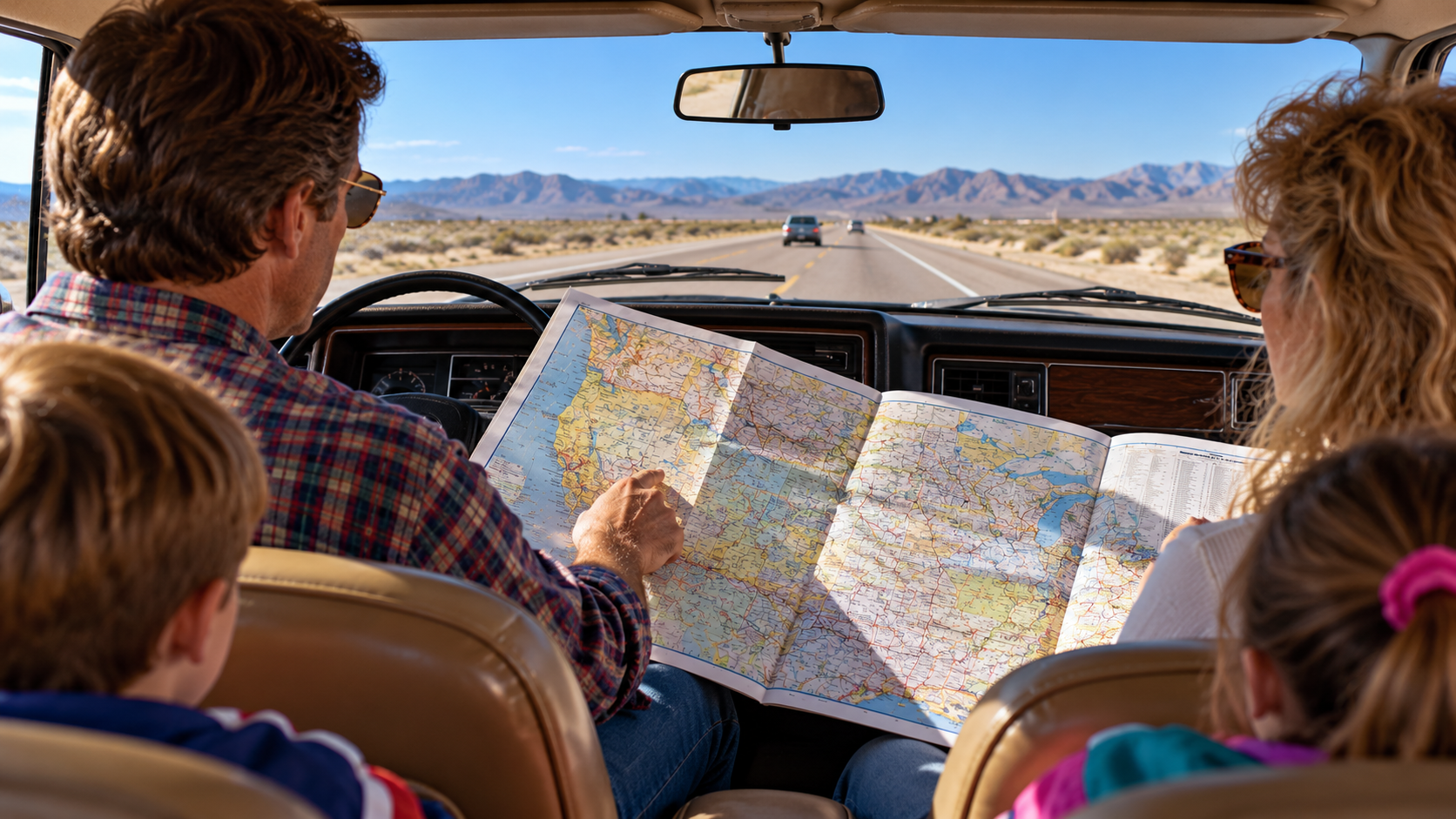
Before a glowing screen announced every turn, somebody had to actually read the map. Rand McNally’s road atlas was already a fixture of American car travel by the 1980s, with pages of highways that required a navigator to follow the route from state to state. A missed exit could mean pulling over, unfolding another map, or figuring out how to circle back. And once a giant folding map came out, getting it neatly folded again sometimes seemed harder than reaching the destination.
Kids Packed Into a Station Wagon or Minivan
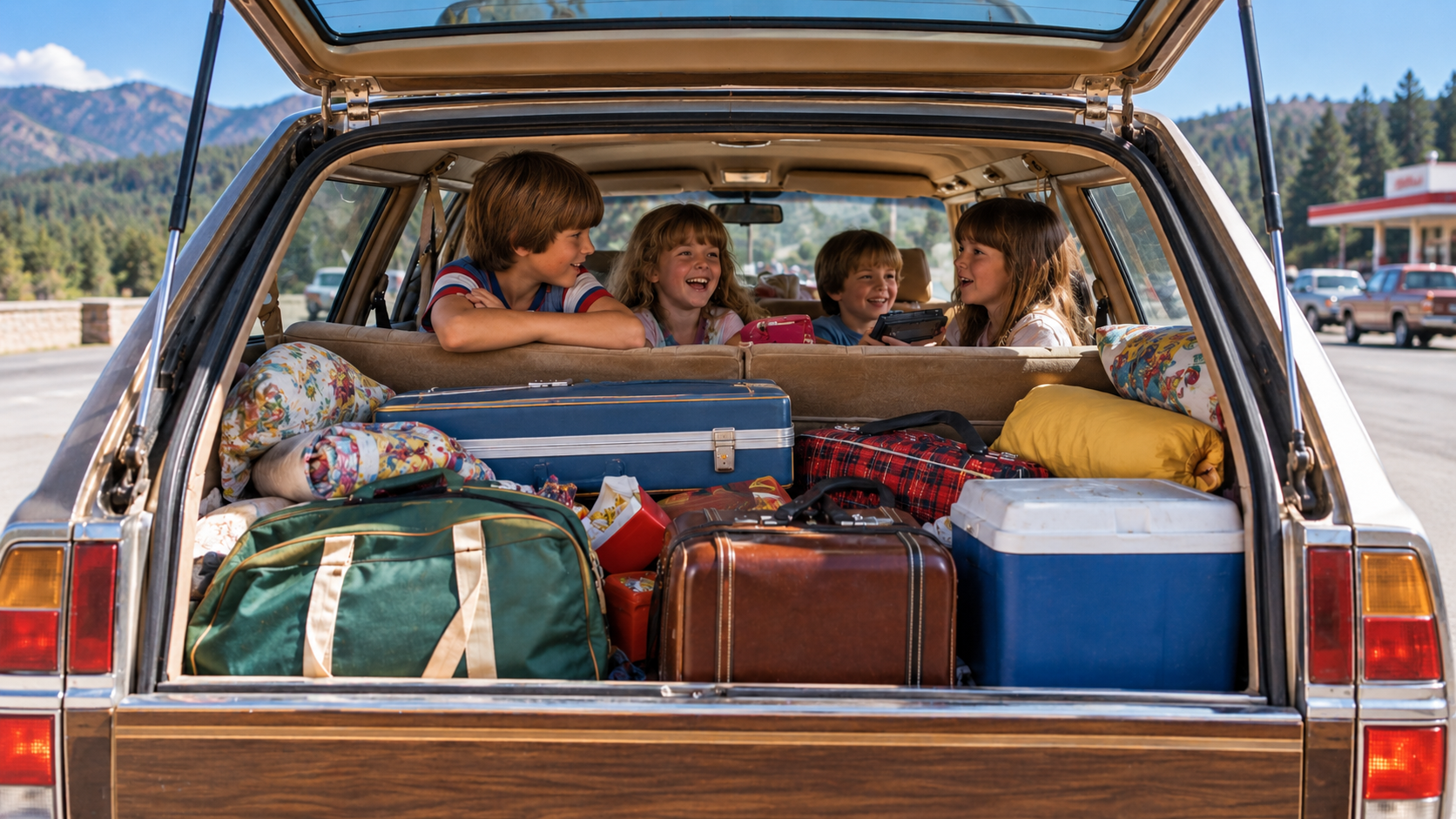
Few images say family vacation quite like a station wagon loaded with suitcases, pillows, snacks, and siblings arguing over territory in the back. Then came a major change: Chrysler launched the Dodge Caravan and Plymouth Voyager for the 1984 model year, helping make the minivan a new family-road-trip staple. Either way, personal space was negotiable. Kids stretched out with whatever entertainment they’d brought along, while luggage seemed to occupy every remaining inch of the vehicle.
A Cooler Full of Sandwiches and Drinks
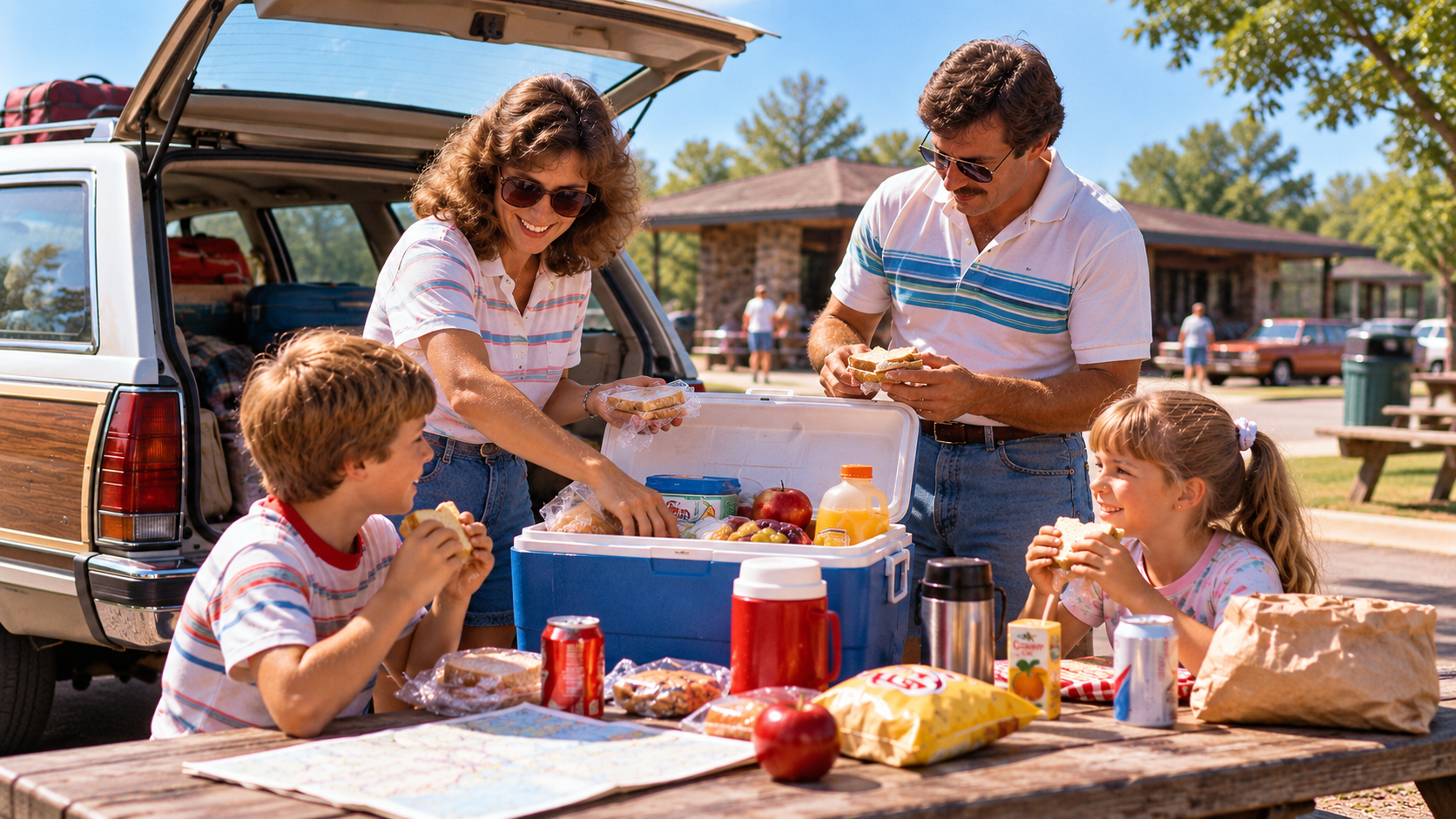
Stopping at a restaurant for every meal could quickly eat into the family vacation budget, so the cooler earned its place among the luggage. Sandwiches wrapped at home, fruit, sodas, juice boxes, and snacks could turn a highway rest area into the day’s lunch stop. It wasn’t glamorous, but it was practical, particularly for larger families trying to make vacation money last. By afternoon, the real challenge was finding what you wanted beneath melting ice and increasingly soggy food packaging.
A Cassette Collection Everyone Had to Share
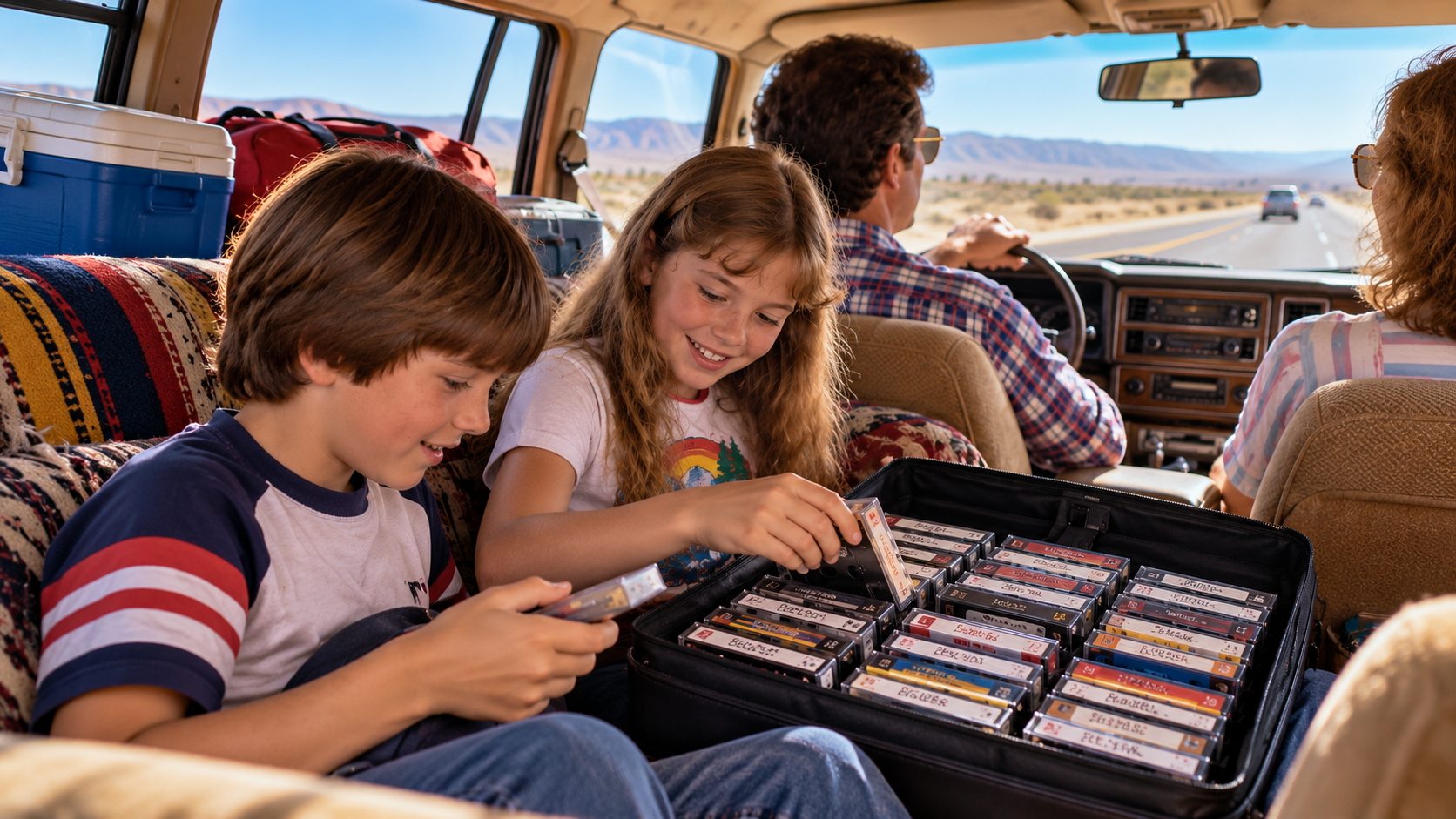
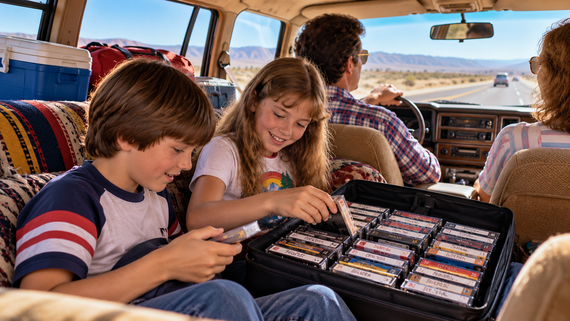
The person controlling the stereo had considerable power. By 1983, prerecorded cassettes had surpassed vinyl LPs in annual sales dollars, and tapes were perfectly suited to the car. Families could bring favorite albums, children’s recordings, or homemade mixtapes instead of depending entirely on whatever radio station happened to reach the highway. Of course, everyone in the vehicle had to hear the same thing. There were no individual playlists, and changing albums meant physically digging through the cassette case.
License Plate Games and I Spy
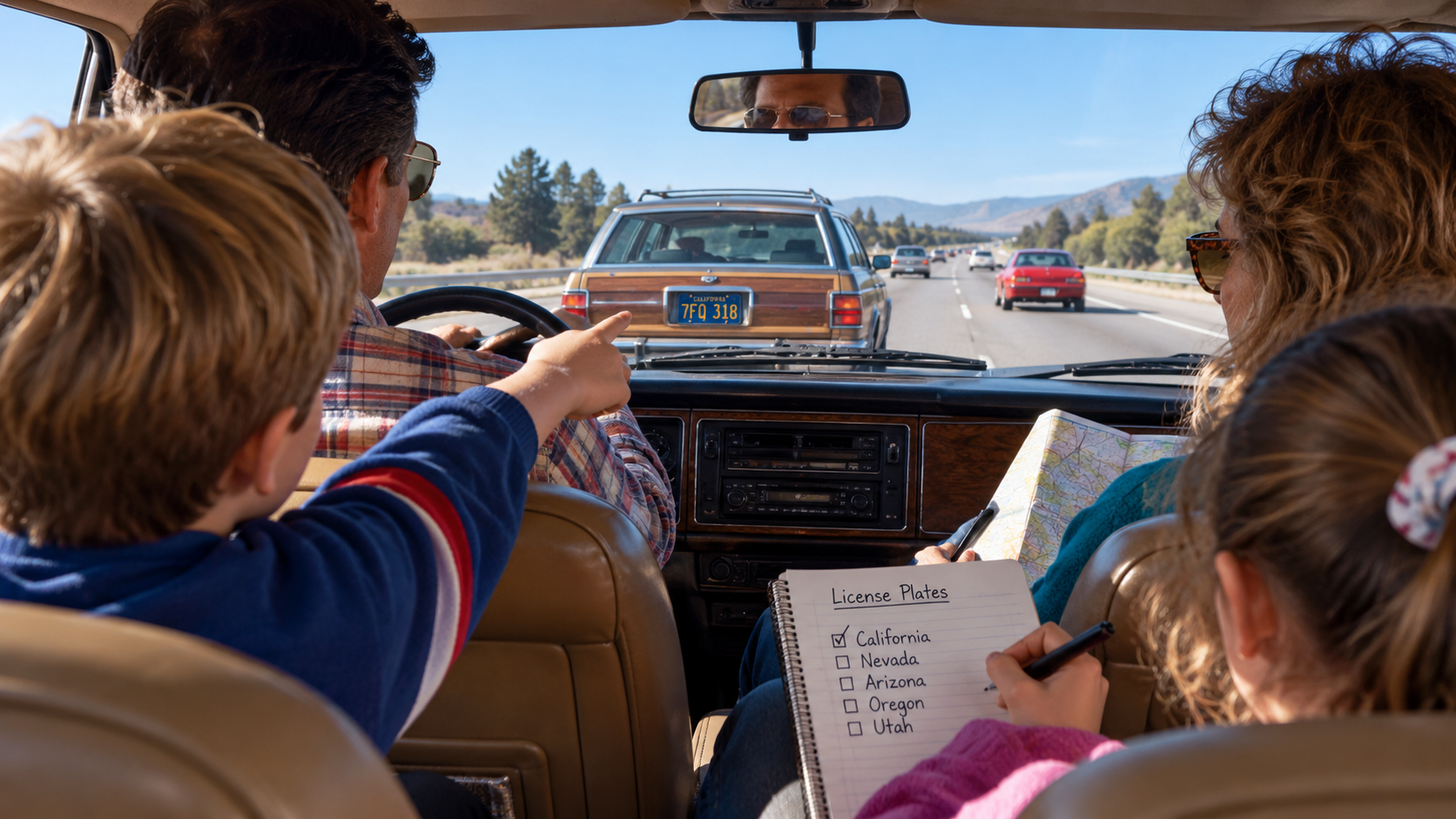
Long before every kid could disappear into an individual screen, boredom produced its own entertainment. Families played I Spy, searched for license plates from different states, worked through the alphabet using roadside signs, or invented games that required little more than looking out the window. The reward was mostly bragging rights, although spotting a plate from Alaska or Hawaii could suddenly become the most exciting event of the afternoon. On a really long drive, even counting cars could become surprisingly competitive.
Trending on Cheapism


AAA TripTiks and Directions Written on Paper
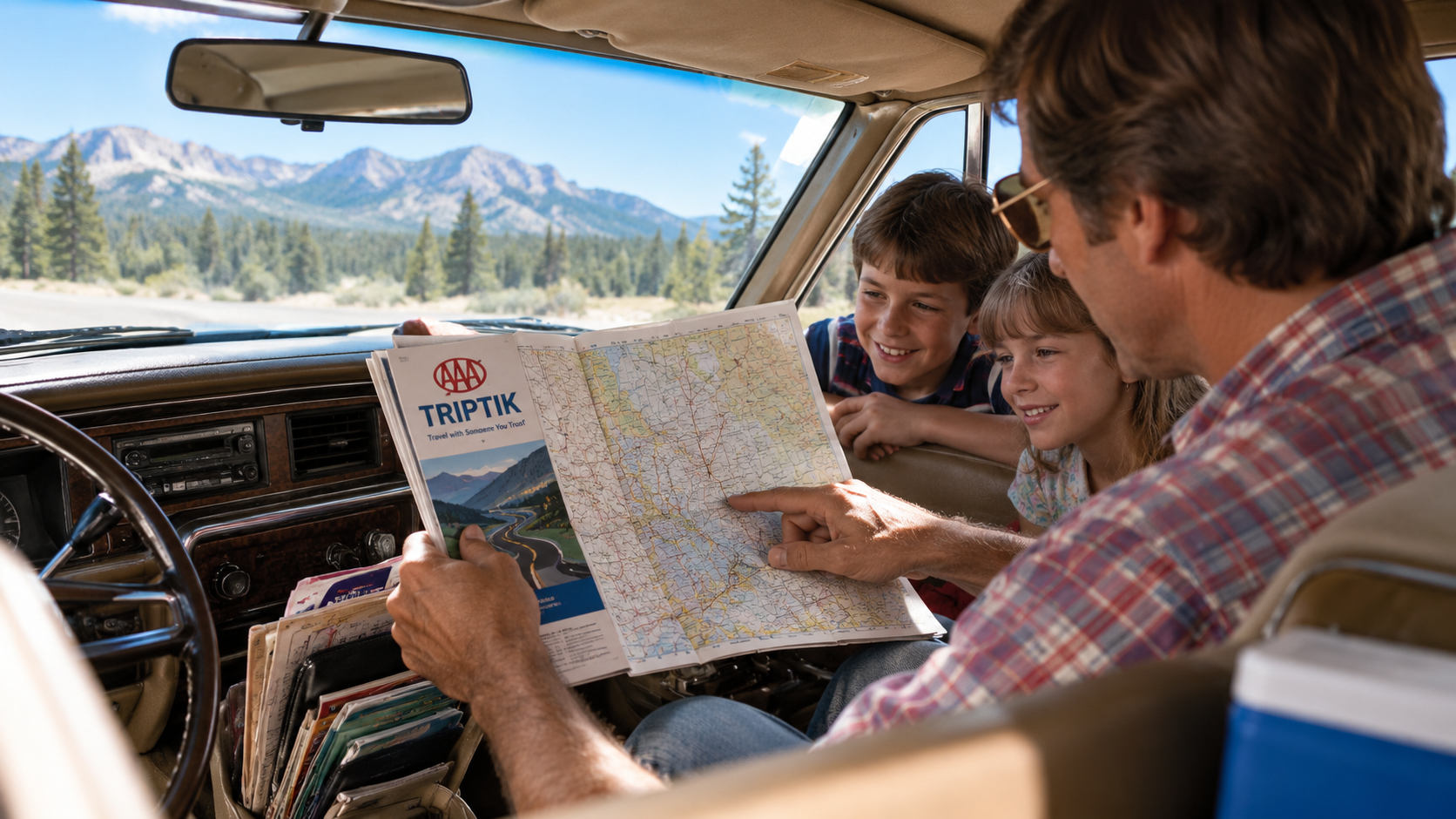
Some families planned routes with an atlas; others arrived armed with an AAA TripTik, maps, guidebooks, or directions somebody had written down before leaving home. Once you were on the highway, those pieces of paper were what you had. If the directions said to turn after the gas station and nobody spotted the gas station, there wasn’t an app quietly recalculating the route. Sometimes the solution was pulling over at a service station and asking a complete stranger how to get back on track.
Fast-Food Stops That Felt Like Part of the Vacation
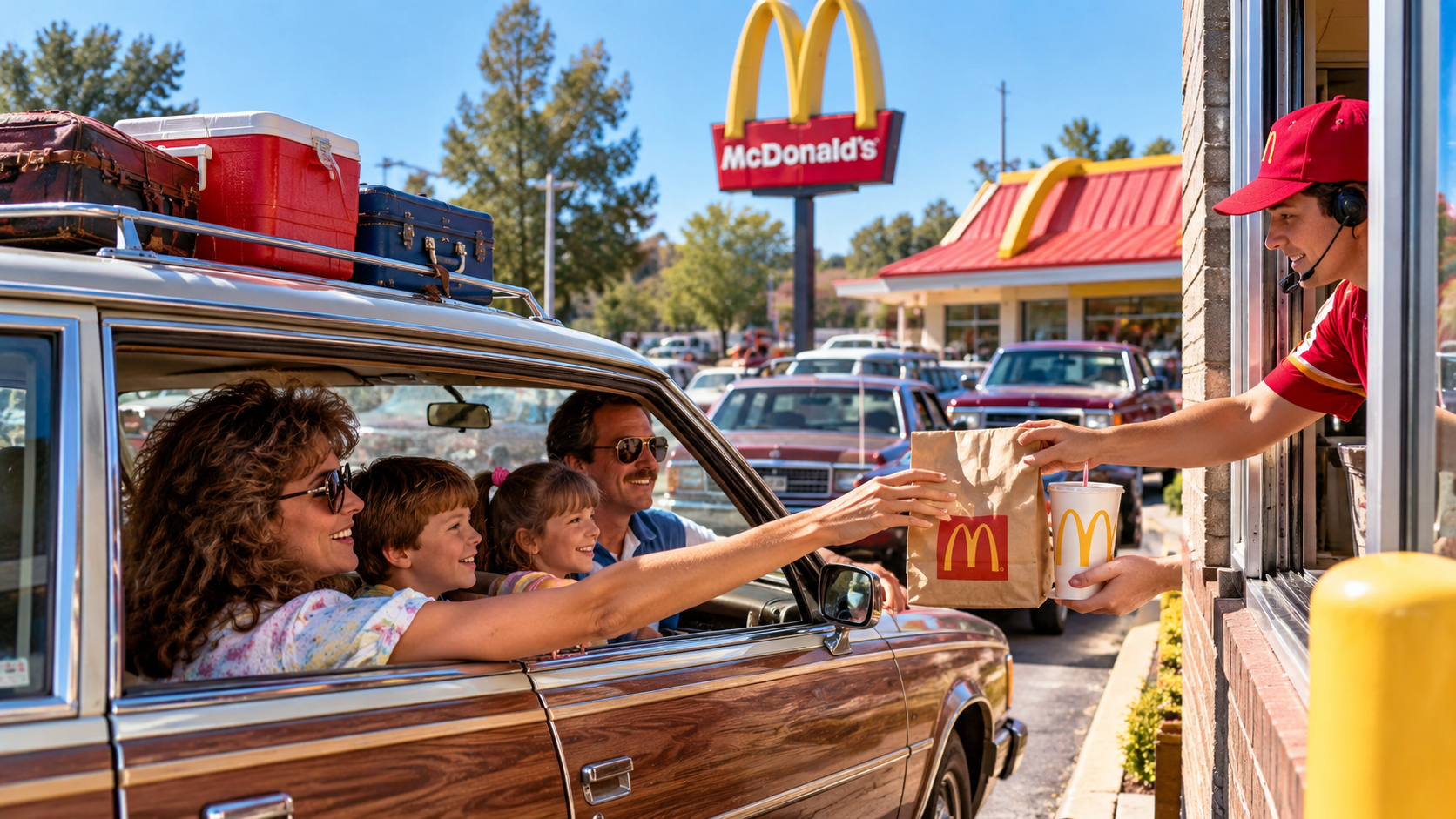
For kids who had been staring out a car window for hours, a familiar fast-food sign could feel like a roadside attraction. McDonald’s, Burger King, Wendy’s, Pizza Hut, and other chains offered recognizable food in unfamiliar towns, along with a chance to finally escape the back seat. Even the packaging looked different, with foam clamshell containers, colorful boxes, plastic trays, and other details that immediately date old vacation photos. Sometimes choosing where to stop became another family debate all its own.
A Roadside Motel With a Pool
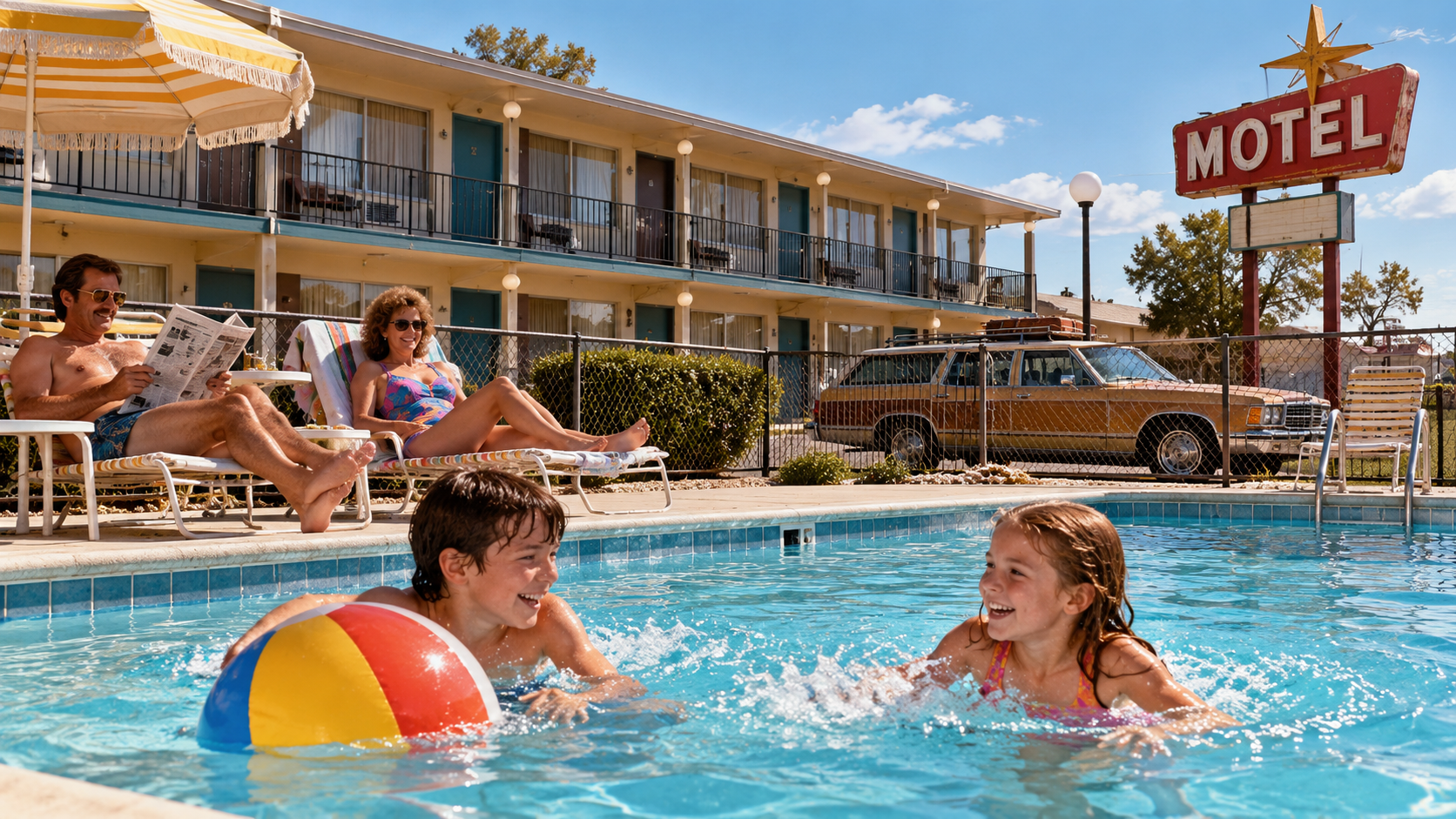
The roadside motel didn’t need a luxury spa or elaborate breakfast buffet to impress kids. It just needed a swimming pool. Motels had become a fixture of American automobile travel, giving families convenient places to stop without venturing far from the highway. For parents, the attraction was often a reasonably priced bed and parking nearby. For children, that small rectangle of blue water could become the highlight of the day, even if the family arrived near bedtime and planned to leave again first thing in the morning.
Sign up for our newsletter
A Film Camera and No Idea How the Pictures Turned Out
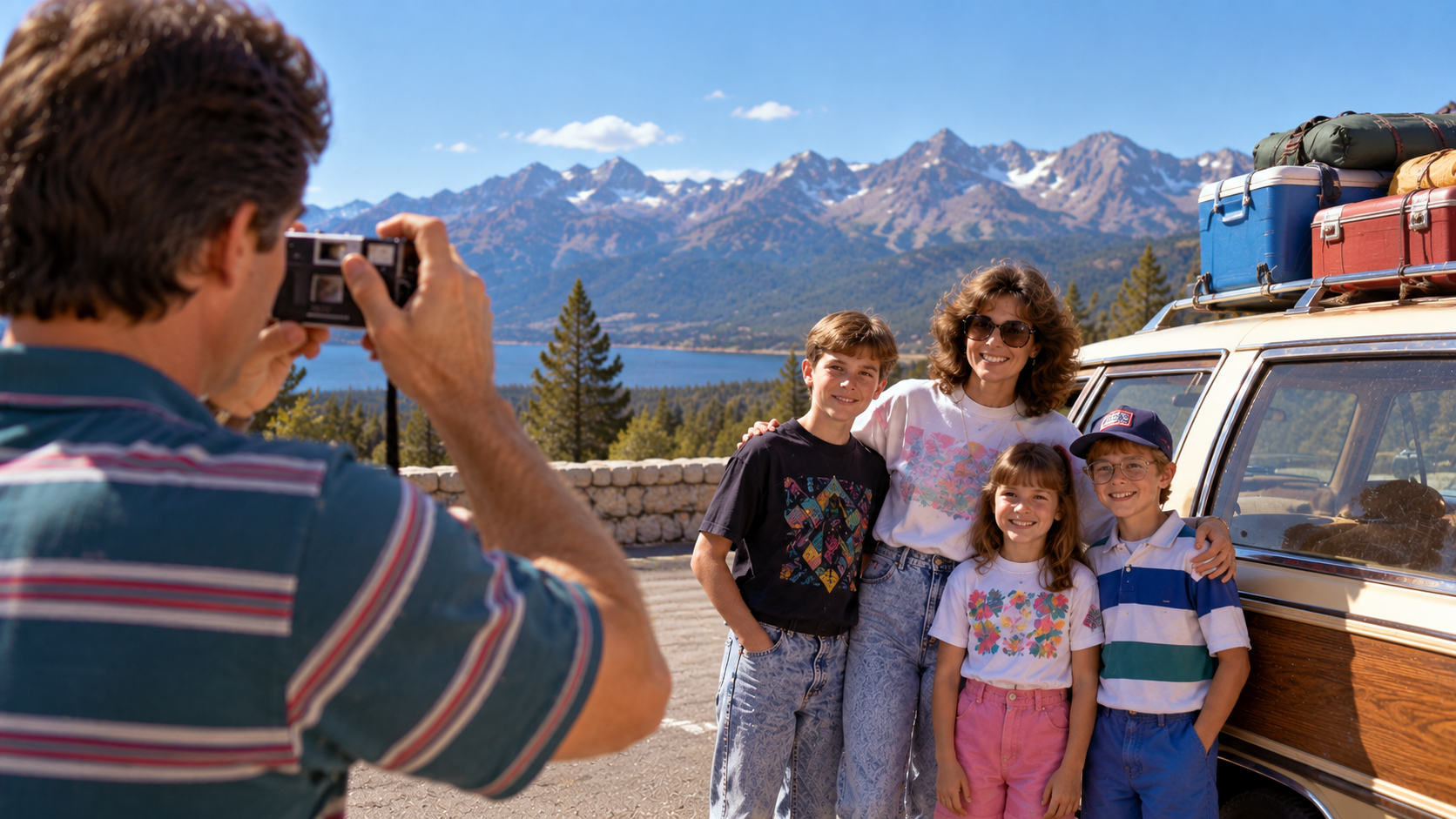
Vacation photos required faith. Families snapped pictures without seeing the results and waited until the film was developed to discover the closed eyes, crooked horizons, bad lighting, and fingers creeping into the frame. Simple point-and-shoot cameras made vacation snapshots easy, while Kodak introduced its first one-time-use camera, the Fling, in 1987. There was also an incentive not to waste shots, which helps explain why some family albums contain exactly one photograph from an otherwise memorable roadside stop.
Roadside Attractions Discovered From a Billboard
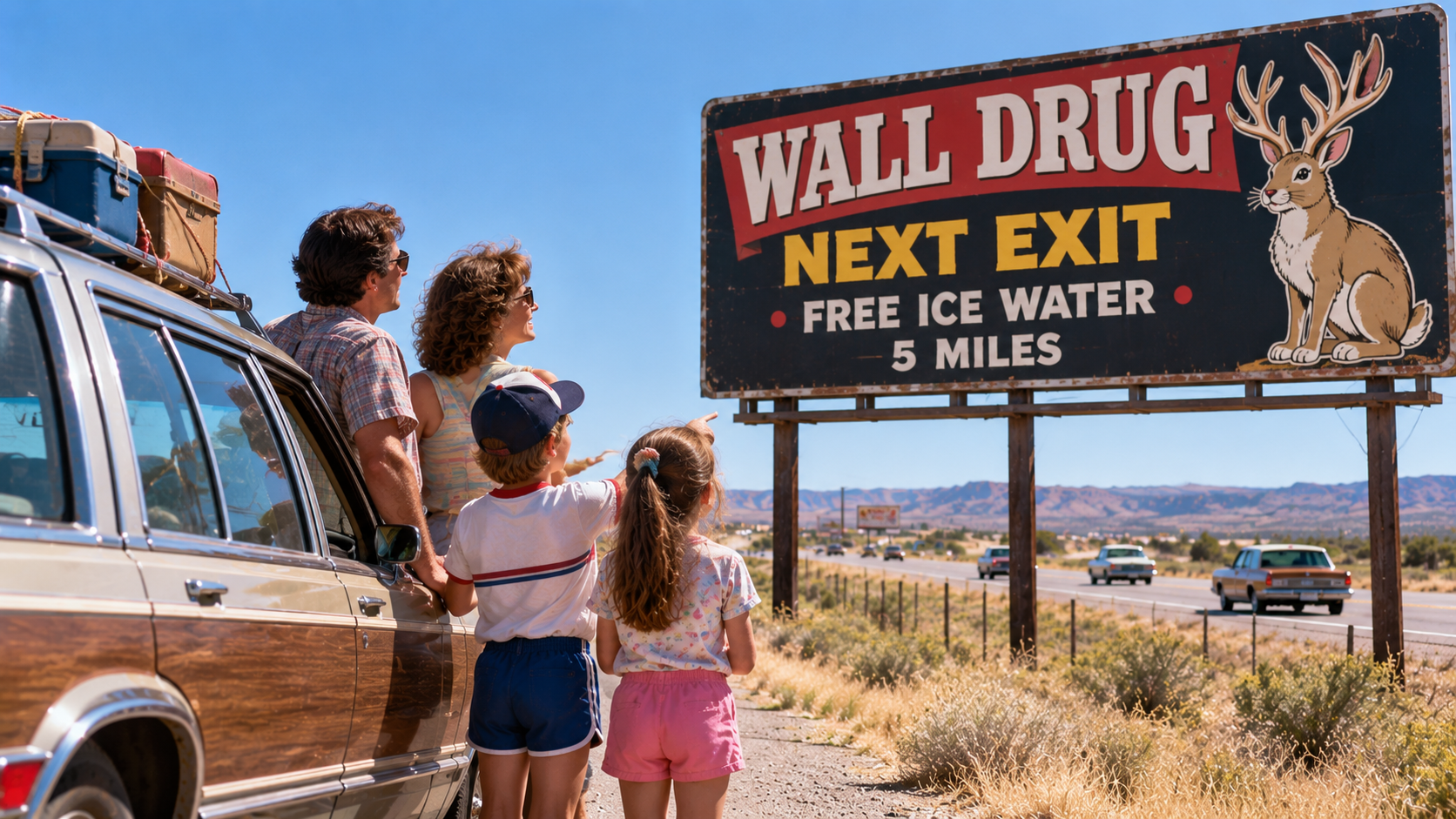
Nobody in the passenger seat was scrolling through reviews to decide whether the giant dinosaur 20 miles ahead was worth stopping for. Roadside attractions advertised themselves through billboards, brochures, maps, visitor centers, and increasingly dramatic signs along the highway. Giant statues, caves, trading posts, unusual museums, and “world’s largest” objects could turn into completely unplanned detours. Sometimes the attraction was genuinely memorable. Sometimes the family spent the next hour wondering why Dad had believed all those billboards.
A Back Seat Full of Pillows, Snacks, and Travel Junk
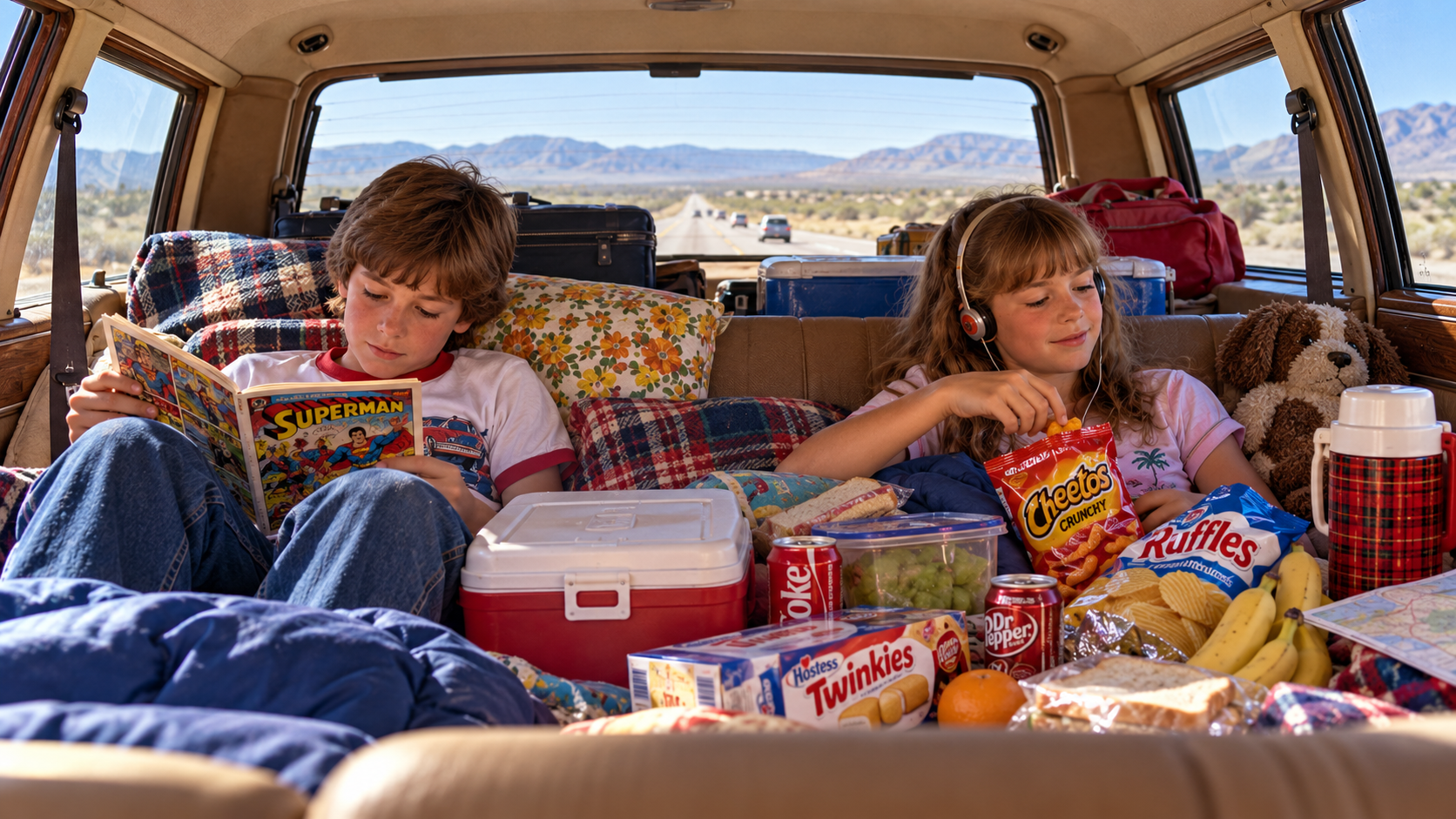
A long drive required turning the family car into a temporary home. Pillows and blankets competed with grocery bags, cassette cases, comic books, activity books, cameras, maps, snack wrappers, and whatever souvenirs had accumulated along the way. There was no carefully curated carry-on strategy when everything could simply be stuffed somewhere in the car. By the return trip, even a spacious station wagon or minivan could feel considerably smaller, especially after everyone had acquired T-shirts, brochures, postcards, and assorted roadside treasures.
At Least One Argument About Directions
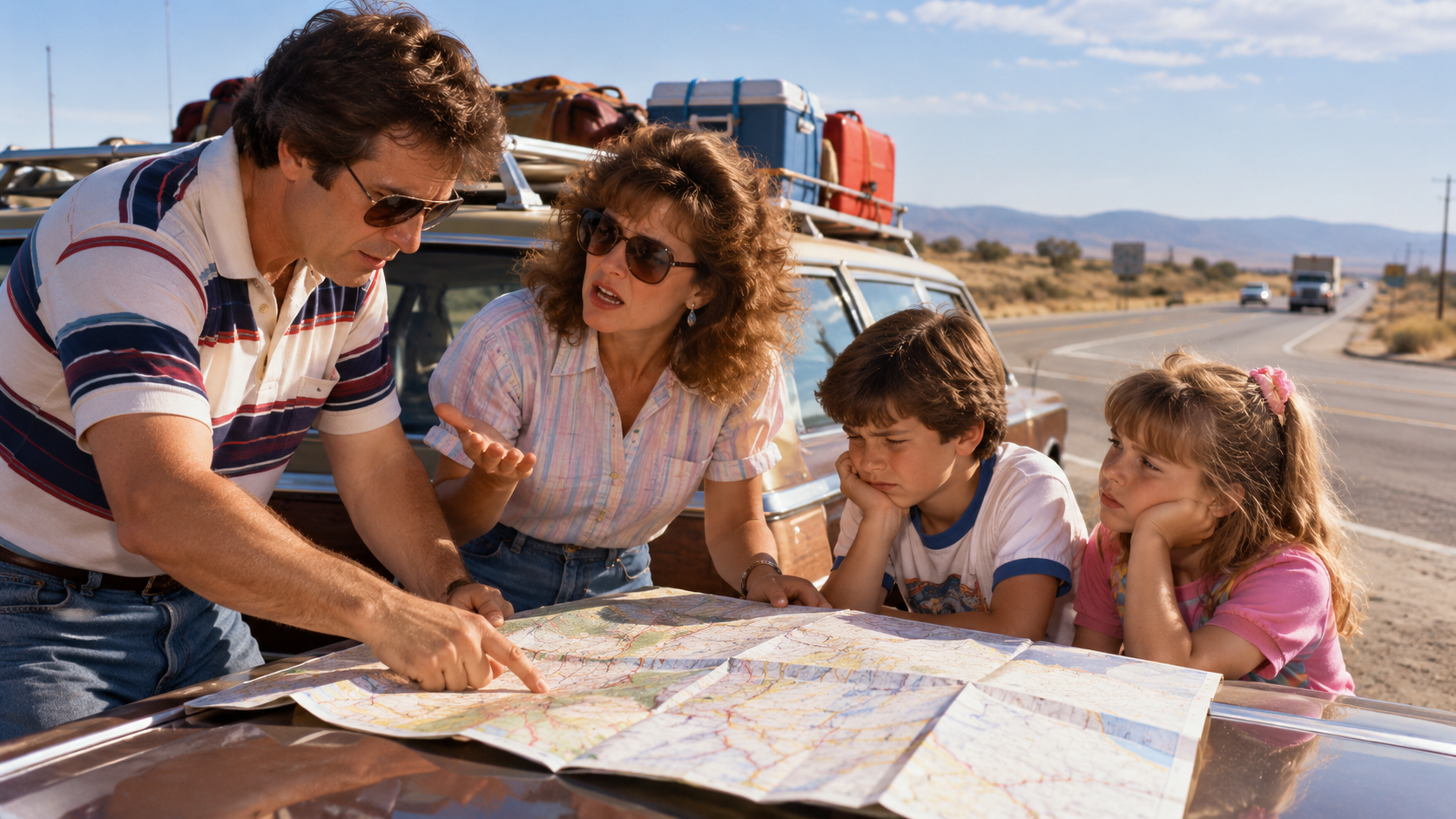
No 1980s navigation system could calmly announce that it was rerouting. When somebody missed an exit, the solution involved a paper map, a discussion of increasing intensity, and perhaps a stop at a gas station to ask a stranger how to get back to the highway. There was no GPS voice to settle who was right, either. In the 1980s, getting a little lost wasn’t necessarily a disaster. Sometimes it was simply another part of the family road trip.