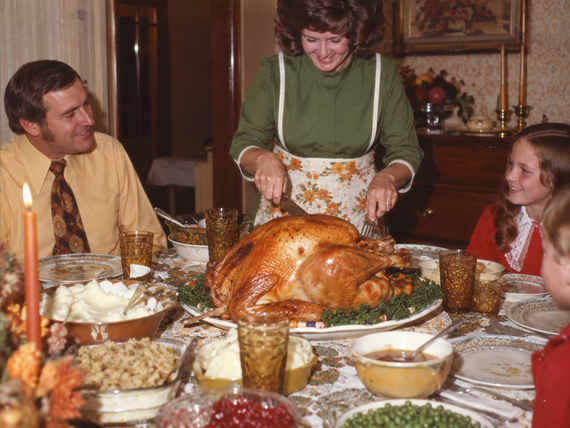
Thanksgiving dinner in 1971 probably wouldn’t look all that different from the holiday feast Americans enjoy today. There would still be a golden-brown turkey in the middle of the table, mountains of mashed potatoes, plenty of stuffing, and at least one pumpkin pie waiting for dessert. But look a little closer, and you’d notice some unmistakably ’70s touches.
We’re talking wobbly gelatin salads, cranberry sauce served straight from the can, sweet potatoes buried under miniature marshmallows, and casseroles made with enough condensed soup to stock a pantry. And, of course, everything might be served in harvest-gold dishes, avocado-green bowls, and patterned glassware that looked right at home in a 1970s dining room.
Convenience foods had already become a fixture in American kitchens, but Thanksgiving was still an occasion for pulling out family recipes and spending hours preparing a feast. From old-fashioned sides to colorful table settings, here’s a glimpse of what a typical middle-class American Thanksgiving dinner might have looked like in 1971.
A Golden-Brown Turkey in the Center of the Table
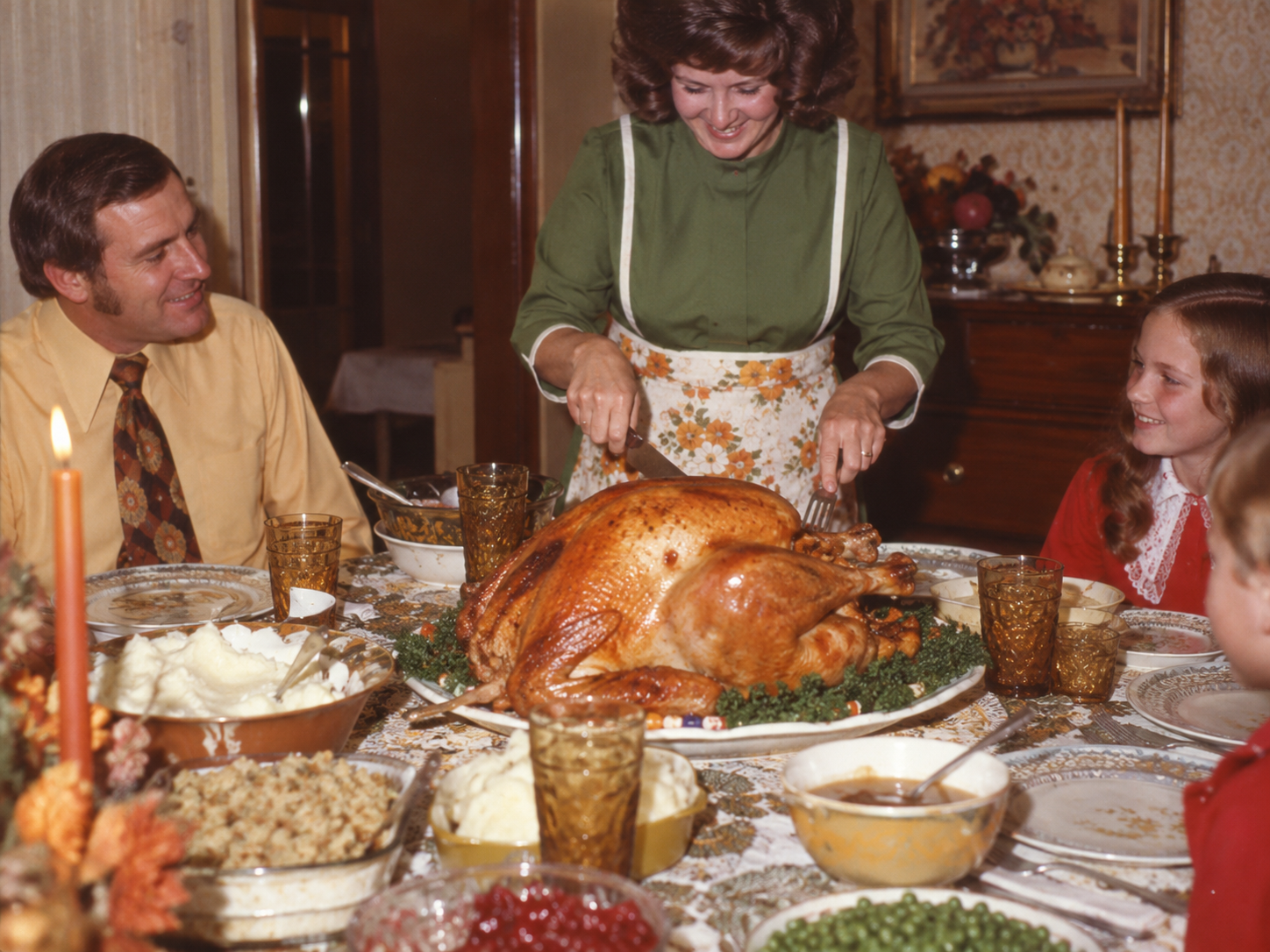
Some Thanksgiving traditions never change, and the enormous roasted turkey is one of them. In 1971, the bird would likely have arrived at the table on a large serving platter, surrounded by parsley or fruit, with someone in the family assigned the important job of carving it. Home cooks often basted their turkeys with butter or pan drippings, and plenty made giblet gravy from scratch. A Thanksgiving Day newspaper from 1971 even included detailed turkey-roasting instructions, proving that getting the centerpiece just right was as much of a holiday concern then as it is now.
A Big Bowl of Homemade Bread Stuffing
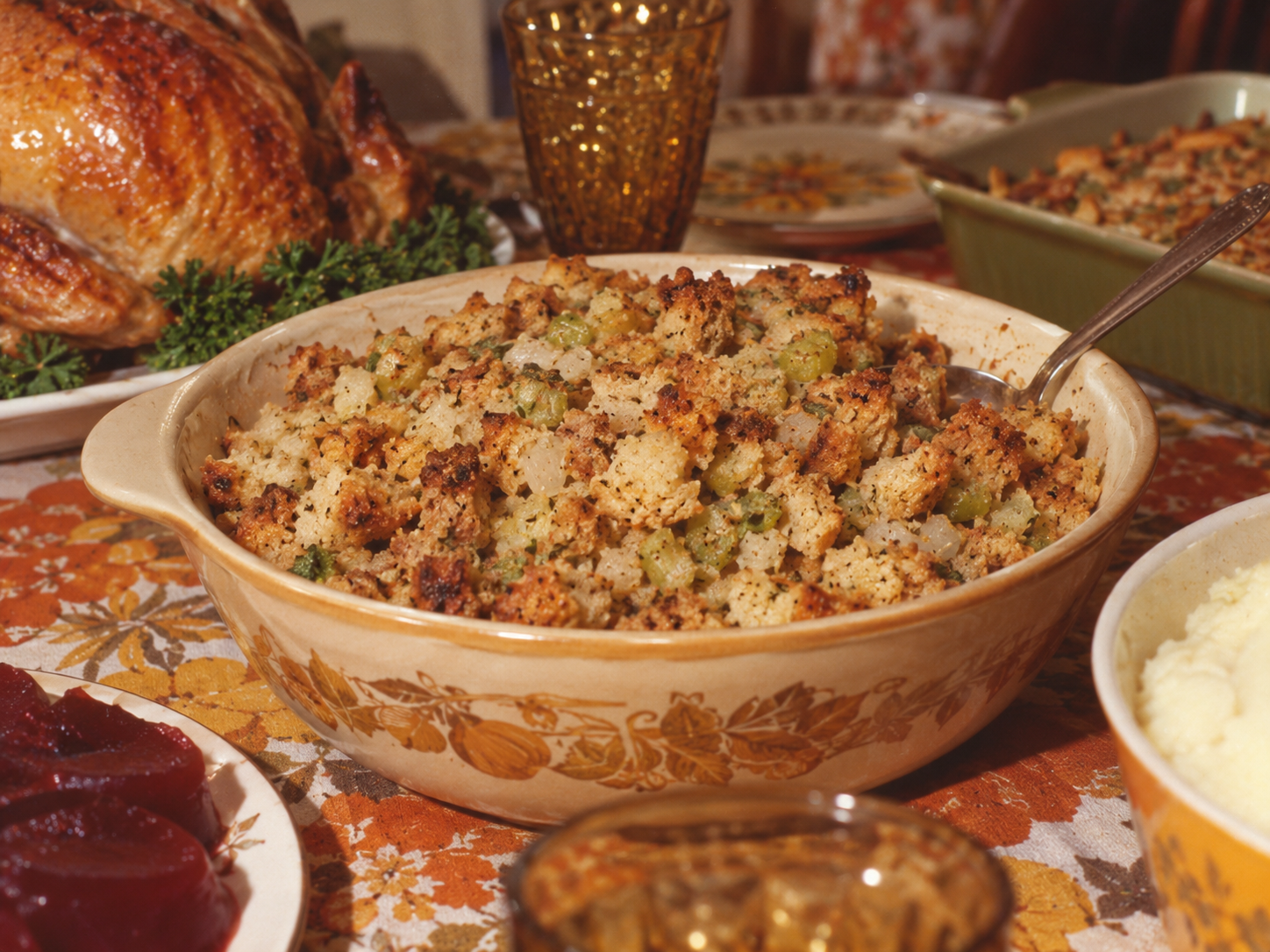
Long before grocery stores offered seemingly endless varieties of boxed stuffing, many families made theirs with day-old bread, chopped celery, onions, sage, and whatever seasonings Grandma swore by. Some packed the mixture directly into the turkey, while others baked it separately as dressing. Regional variations were already well established, too, including cornbread dressing in the South and oyster stuffing in some coastal households. A 1971 newspaper recipe called for bread crumbs, celery, onion, nuts, and seasonings. Nothing particularly fancy, but exactly the kind of familiar side dish people looked forward to all year.
Mashed Potatoes With a Gravy Boat
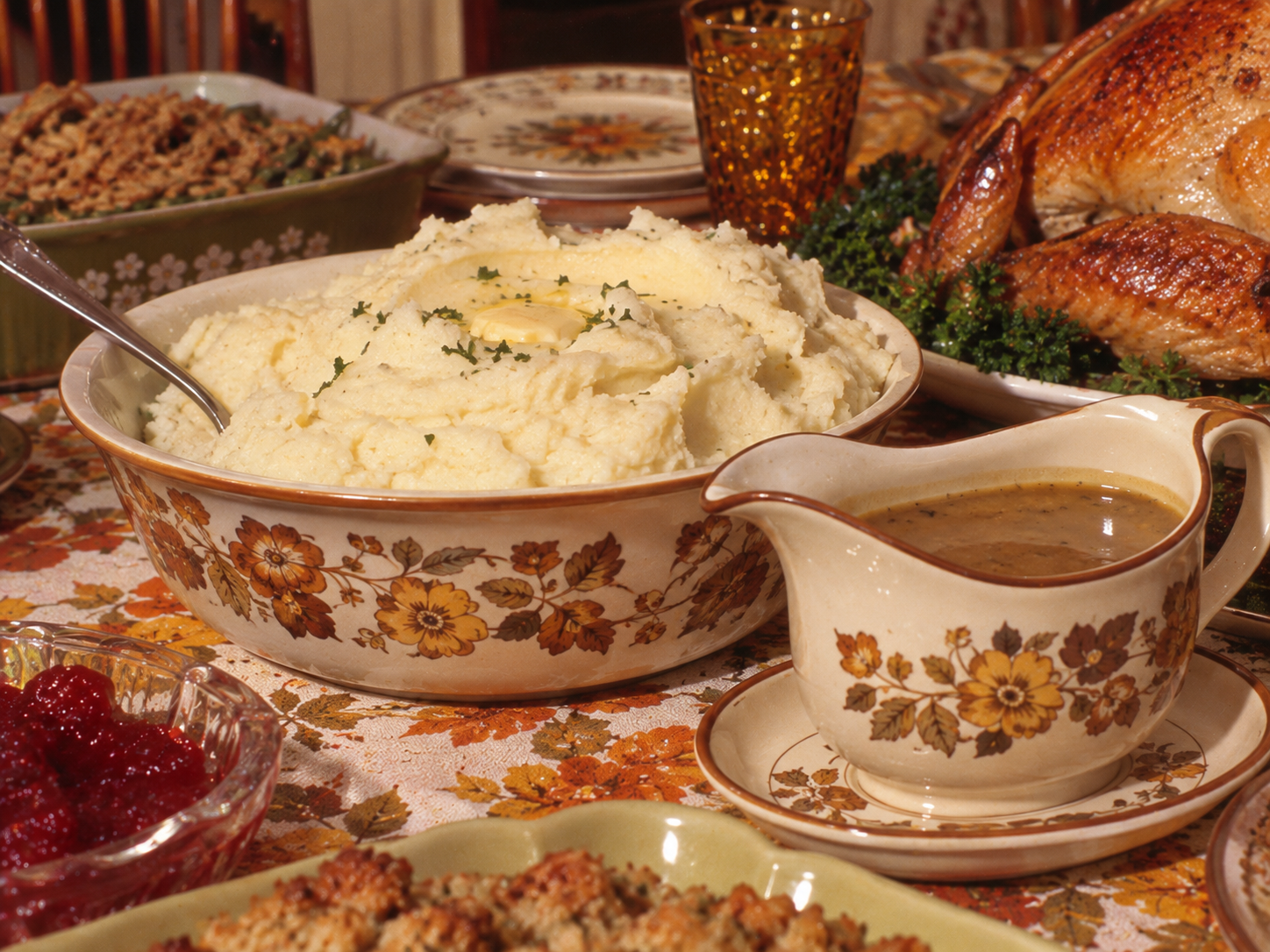
No respectable Thanksgiving spread would have been complete without an enormous bowl of mashed potatoes and enough gravy to cover practically everything on the plate. In 1971, some home cooks used electric hand mixers to whip their potatoes into fluffy perfection, while others stuck with a trusty potato masher. The gravy, often made from turkey drippings and sometimes giblets, would typically arrive in its own ceramic or glass gravy boat. And because this was a special occasion, families might bring out their nicest serving dishes, even if the potatoes themselves were as simple as butter, milk, and salt.
Green Bean Casserole With Crispy Onions
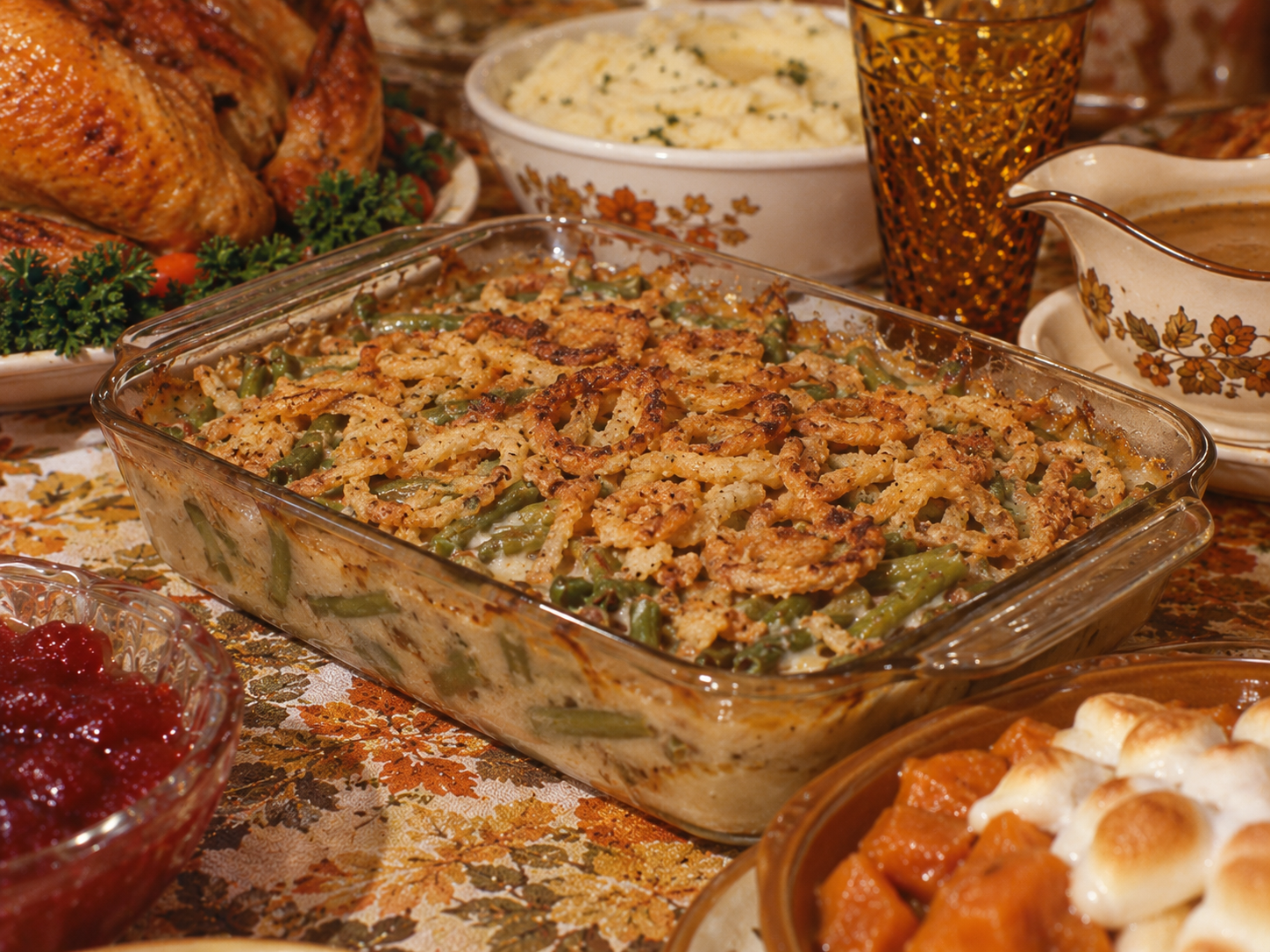
If there’s one dish that captures America’s love affair with convenience cooking, it’s green bean casserole. Campbell’s originally developed the recipe in 1955, and by 1971, it had become a familiar holiday side. The appeal was obvious: Mix green beans with condensed cream of mushroom soup, top everything with crispy fried onions, and let the oven do the rest. A recipe published in the Arizona Daily Star in November 1971 used canned French-cut green beans, mushroom soup, and canned fried onion rings. It was creamy, crunchy, inexpensive, and easy to prepare while juggling several other dishes. No wonder it’s still around.
Sweet Potatoes With Marshmallows or Pecans
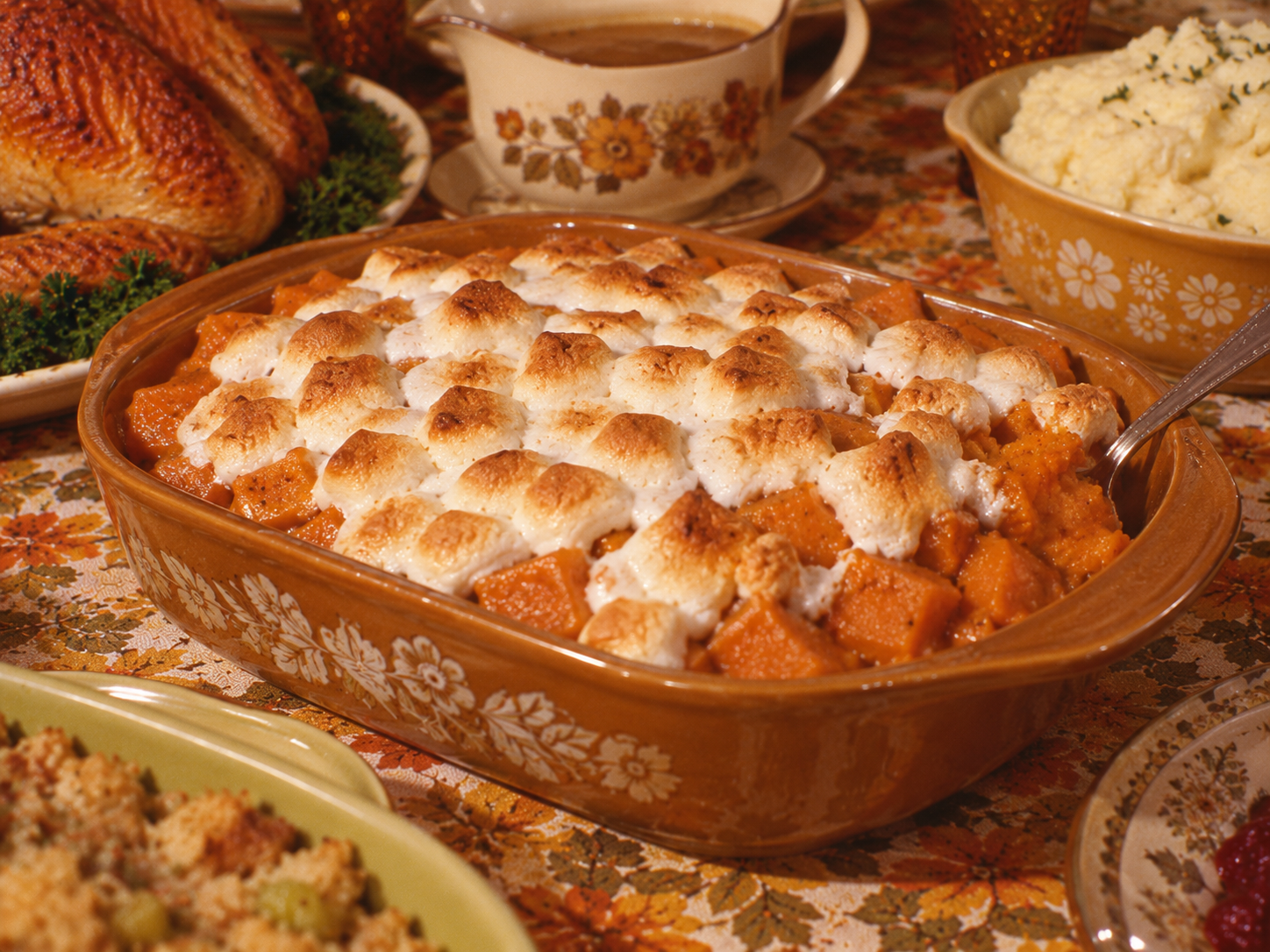
Thanksgiving sweet potatoes in 1971 often blurred the line between side dish and dessert. Depending on the household, they might have been baked with brown sugar and butter, glazed with syrup, or topped with miniature marshmallows that turned golden and gooey in the oven. Other families preferred a slightly less sugary version with pecans and warm spices. In fact, a November 1971 Thanksgiving recipe collection included a sweet potato casserole featuring pecans, nutmeg, and even a splash of rum. Either way, it was the kind of dish that made children wonder why they couldn’t have marshmallows with their vegetables every day.
Trending on Cheapism
Canned Cranberry Sauce Still Holding Its Shape
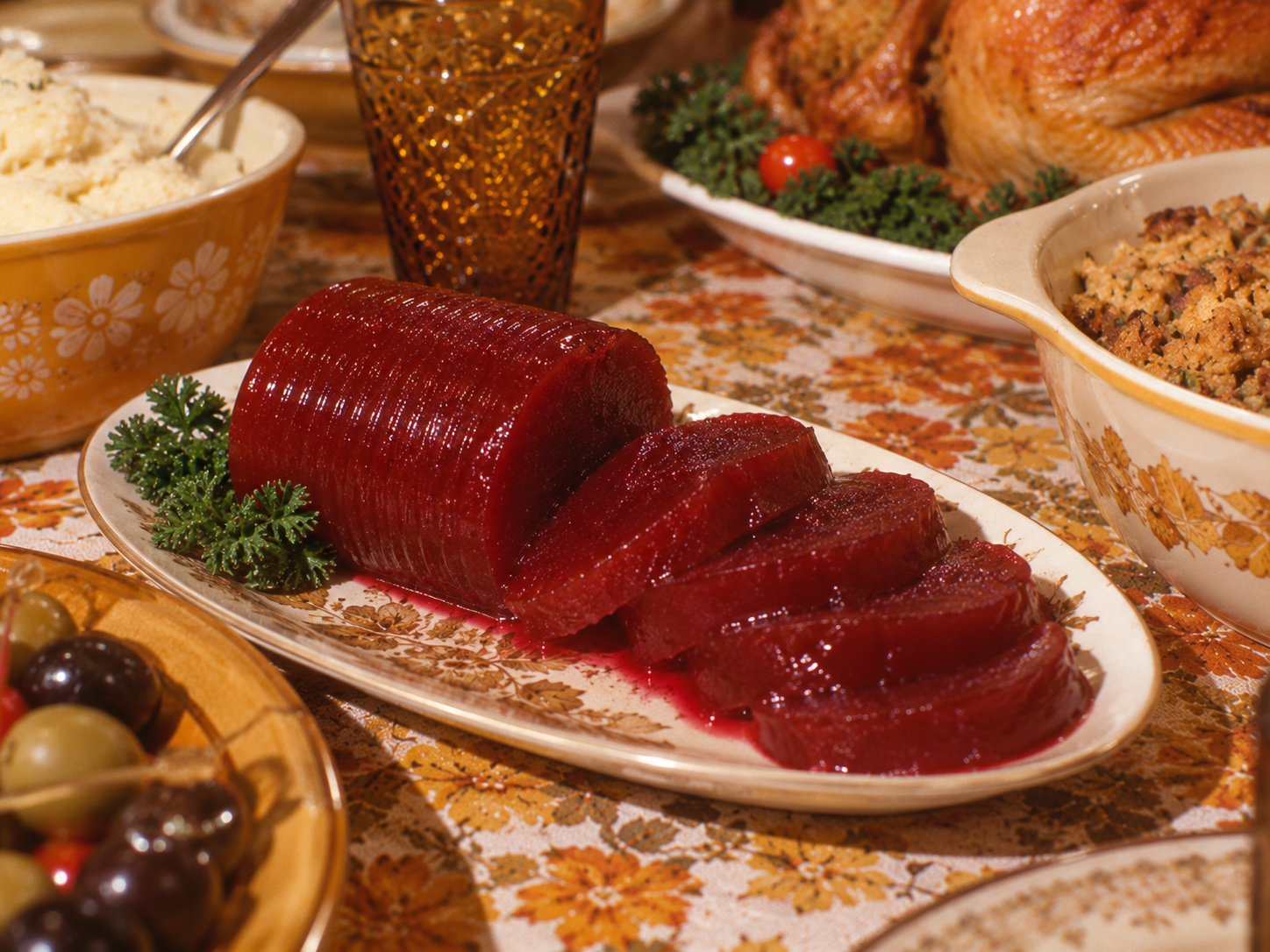
Few Thanksgiving foods are quite as recognizable as that deep-red cylinder of cranberry sauce, complete with the ridges from the can. And in 1971, plenty of American families were already serving it exactly that way. Ocean Spray sold both jellied and whole-berry cranberry sauce, as evidenced by Thanksgiving grocery advertisements from the year. Some households preferred homemade cranberry relish, but the canned version offered an unbeatable combination of convenience and familiarity. Slice it into neat rounds, arrange it on a glass serving plate, and call it a day. Honestly, some Thanksgiving tables still look exactly like this.
A Wobbly Cranberry or Fruit Gelatin Mold
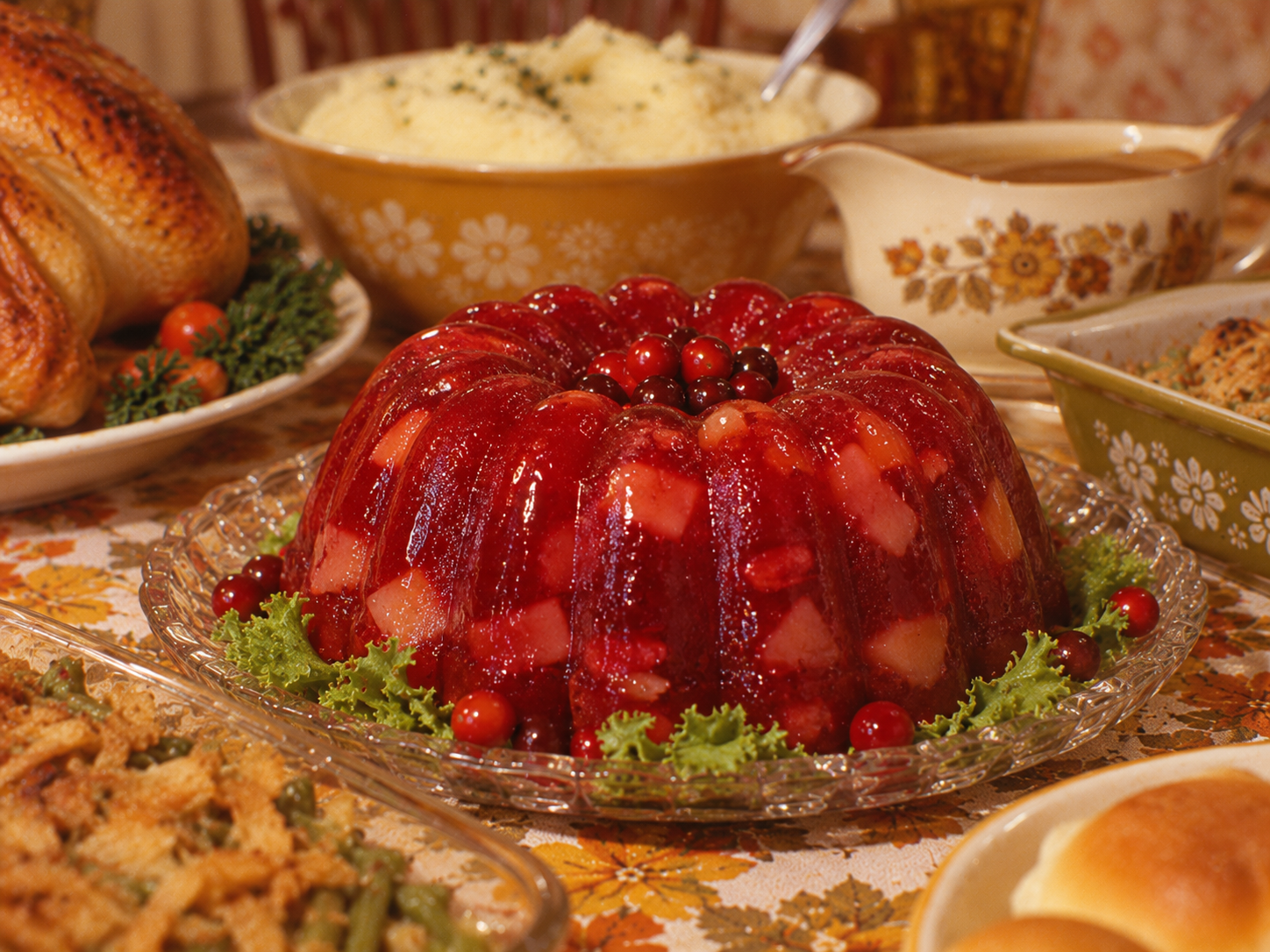
Nothing says early-1970s entertaining quite like a gelatin mold filled with ingredients that probably had no business being suspended together. These colorful creations had been popular for decades, and Thanksgiving offered another excuse to bring out the decorative ring molds. Cranberries, chopped nuts, fruit, and sometimes even celery could find their way into a shimmering red or orange gelatin salad. The strangest part for modern diners? These weren’t necessarily desserts. A cranberry gelatin mold might sit right alongside the turkey, stuffing, and vegetables. As Bon Appétit’s look back at vintage Thanksgiving recipes illustrates, holiday entertaining in this era could get pretty creative.
A Relish Tray Filled With Olives, Pickles, and Celery
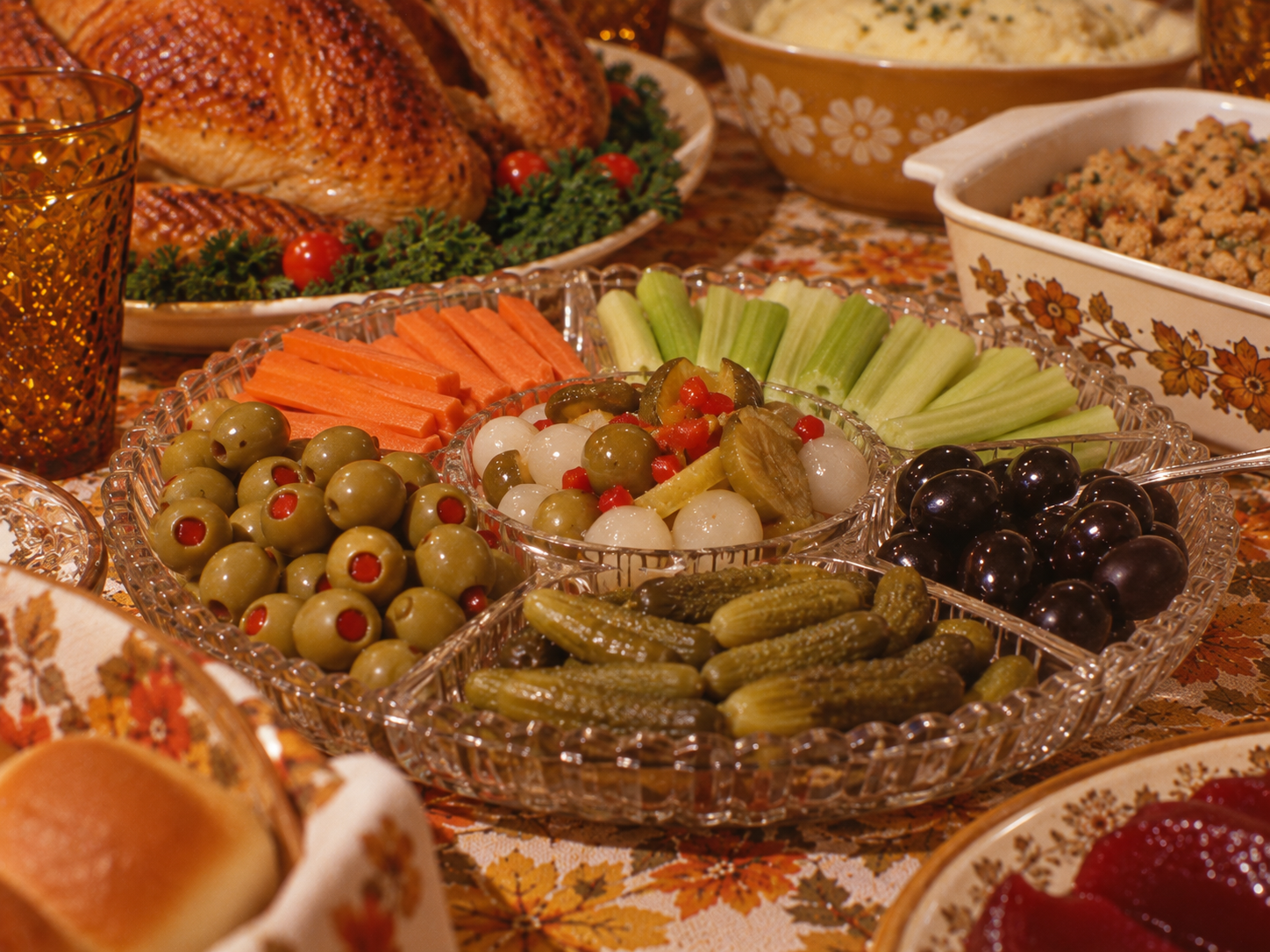
Before charcuterie boards became a party staple, there was the humble relish tray. At a 1971 Thanksgiving gathering, guests might have found a divided glass dish filled with green olives, black olives, sweet pickles, celery sticks, and carrot sticks waiting on the table before dinner. These little appetizers didn’t require much preparation, which made them particularly appealing when the oven was already occupied and the kitchen counters were overflowing. They also gave hungry relatives something to nibble on while waiting for the turkey. The tray itself was often a decorative piece of cut glass that only came out for holidays and special occasions.
Sign up for our newsletter
Warm Dinner Rolls With Plenty of Butter
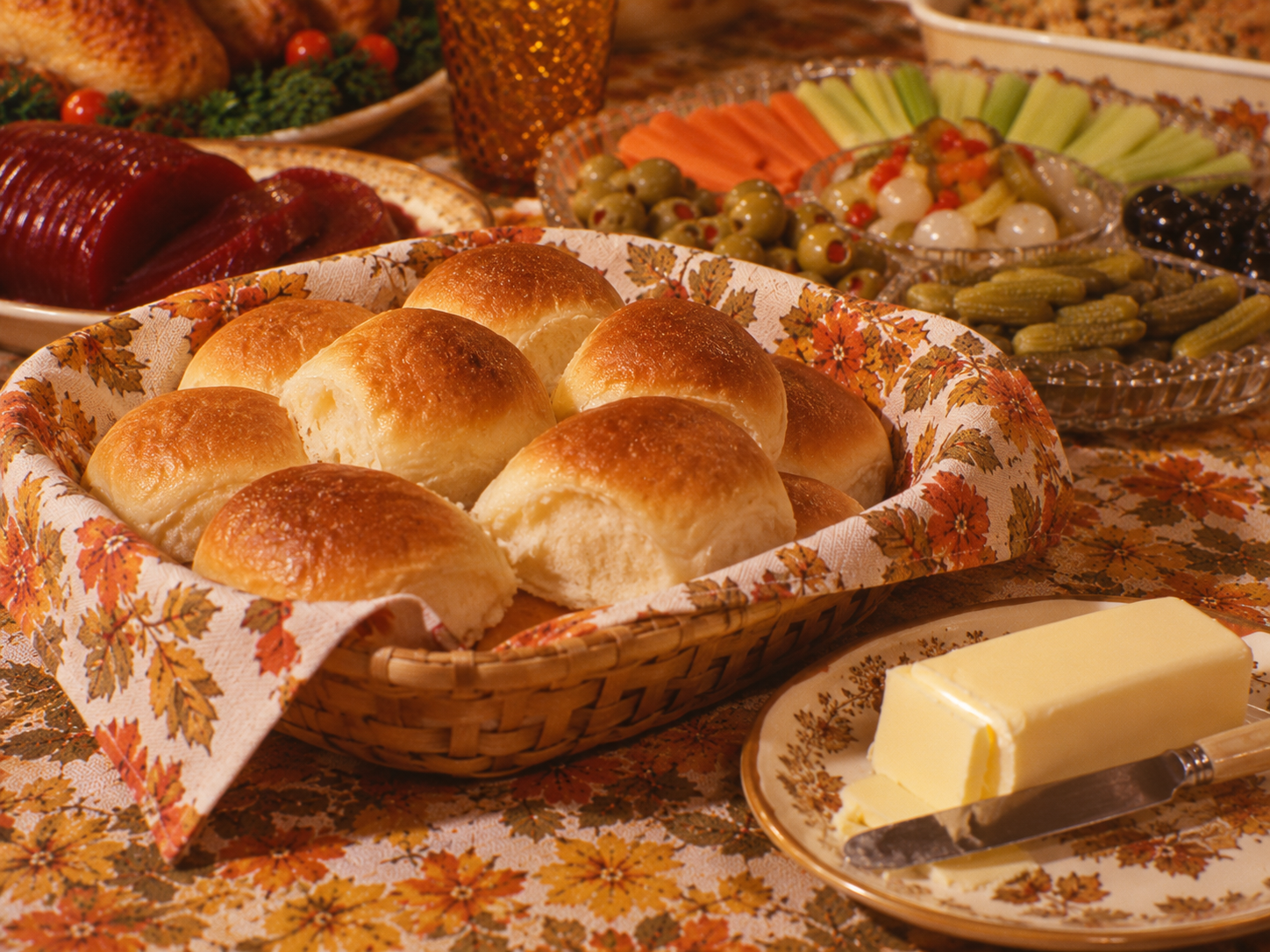
With all those rich casseroles, mashed potatoes, and stuffing, you’d think Thanksgiving guests in 1971 would have had enough carbohydrates. Apparently not, because a basket of warm dinner rolls was another familiar addition to the table. Some families made their own yeast rolls from scratch, while others relied on refrigerated dough, packaged mixes, or bakery-bought bread to save time. The rolls might arrive in a basket lined with a cloth napkin, accompanied by a covered butter dish. And naturally, they were perfect for soaking up whatever gravy remained on the plate after the main event.
Pumpkin Pie With a Generous Spoonful of Whipped Cream
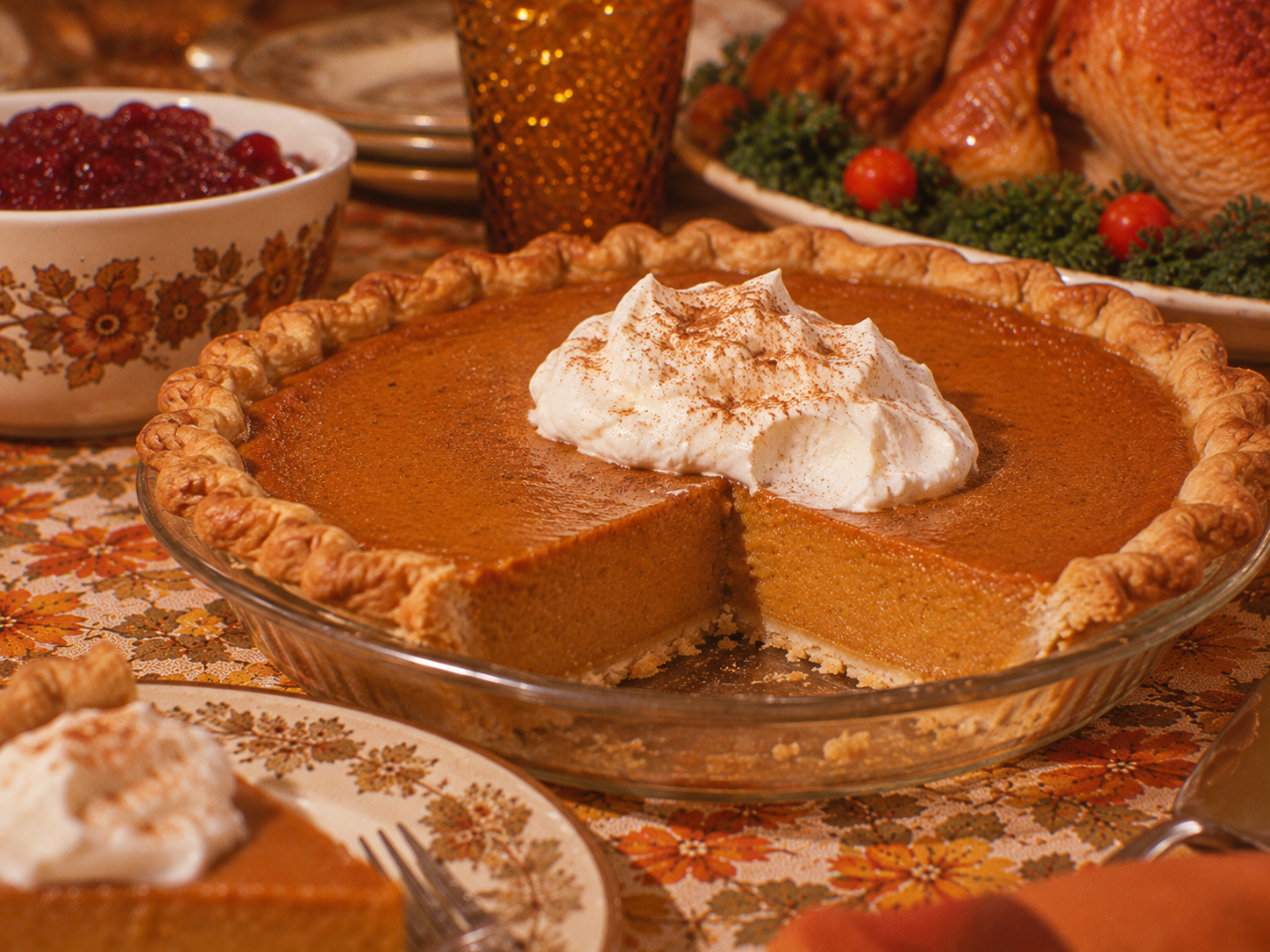
Pumpkin pie was already practically synonymous with Thanksgiving by 1971, and the classic combination of canned pumpkin, evaporated milk, eggs, and warm spices was a familiar holiday formula. Of course, every family had its own preferred recipe, with some adding extra cinnamon, ginger, or cloves. Even celebrities got in on the action: A pumpkin pie recipe attributed to actor Rod Steiger in 1971 included molasses, brown sugar, and half-and-half or evaporated milk. After the dinner dishes were cleared, slices of pie would appear with whipped cream and coffee, assuming anyone still had room for dessert.
Pecan Pie, Apple Pie, or Another Family Favorite
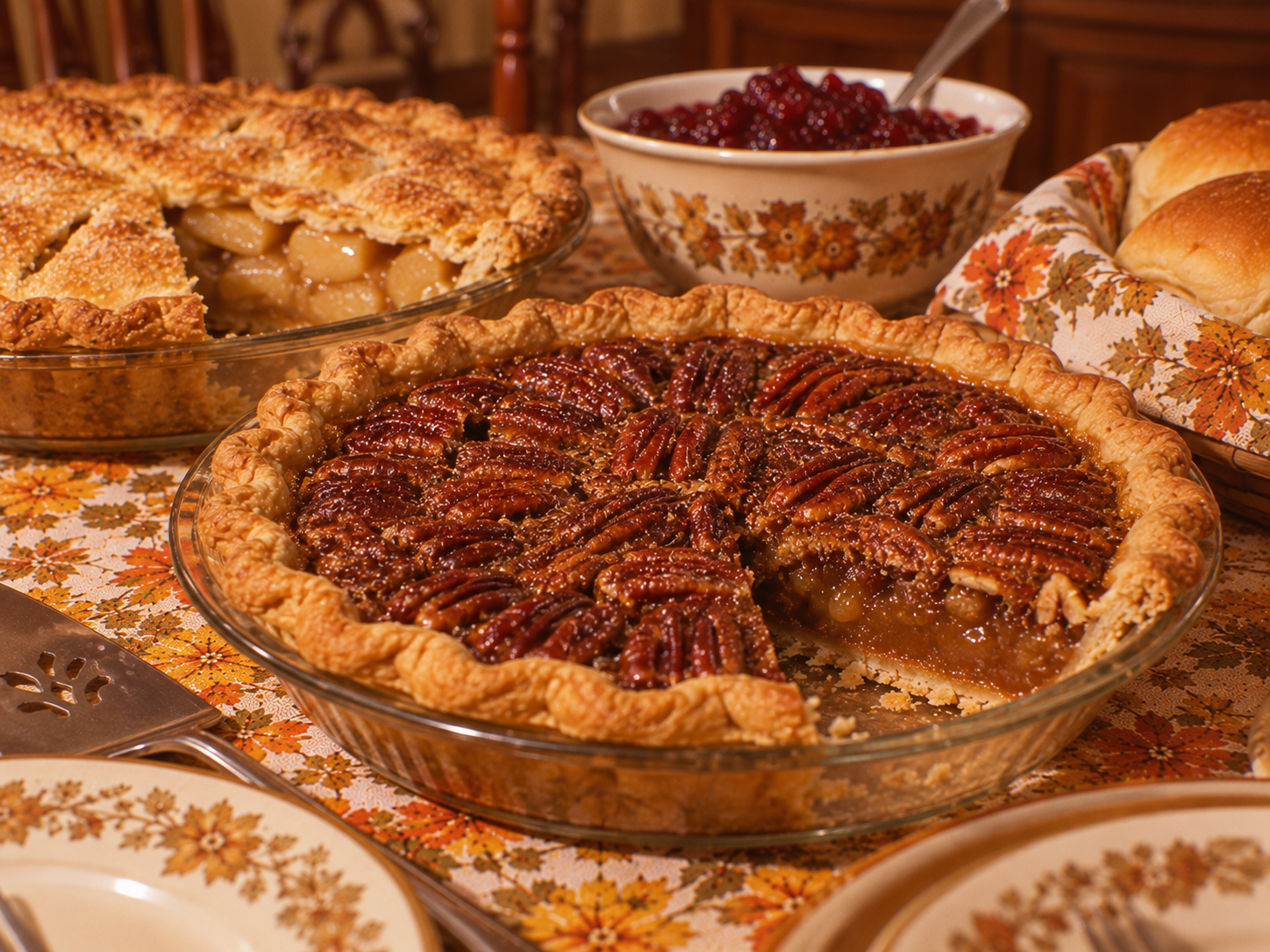
One pie was rarely enough for a big Thanksgiving gathering, especially when different relatives had strong opinions about which dessert belonged on the table. Alongside pumpkin pie, a 1971 holiday spread might have included apple pie, pecan pie, mincemeat pie, or a regional specialty. Pecan and sweet potato pies were particularly familiar in Southern households, while apple and other fruit pies were popular elsewhere. Families often relied on recipes passed down through generations, and the dessert table could become a showcase of everyone’s favorites. Naturally, someone would insist that their grandmother’s version was the best, just as families do today.
A Crowded Table With Harvest-Colored Dishes and Decorations
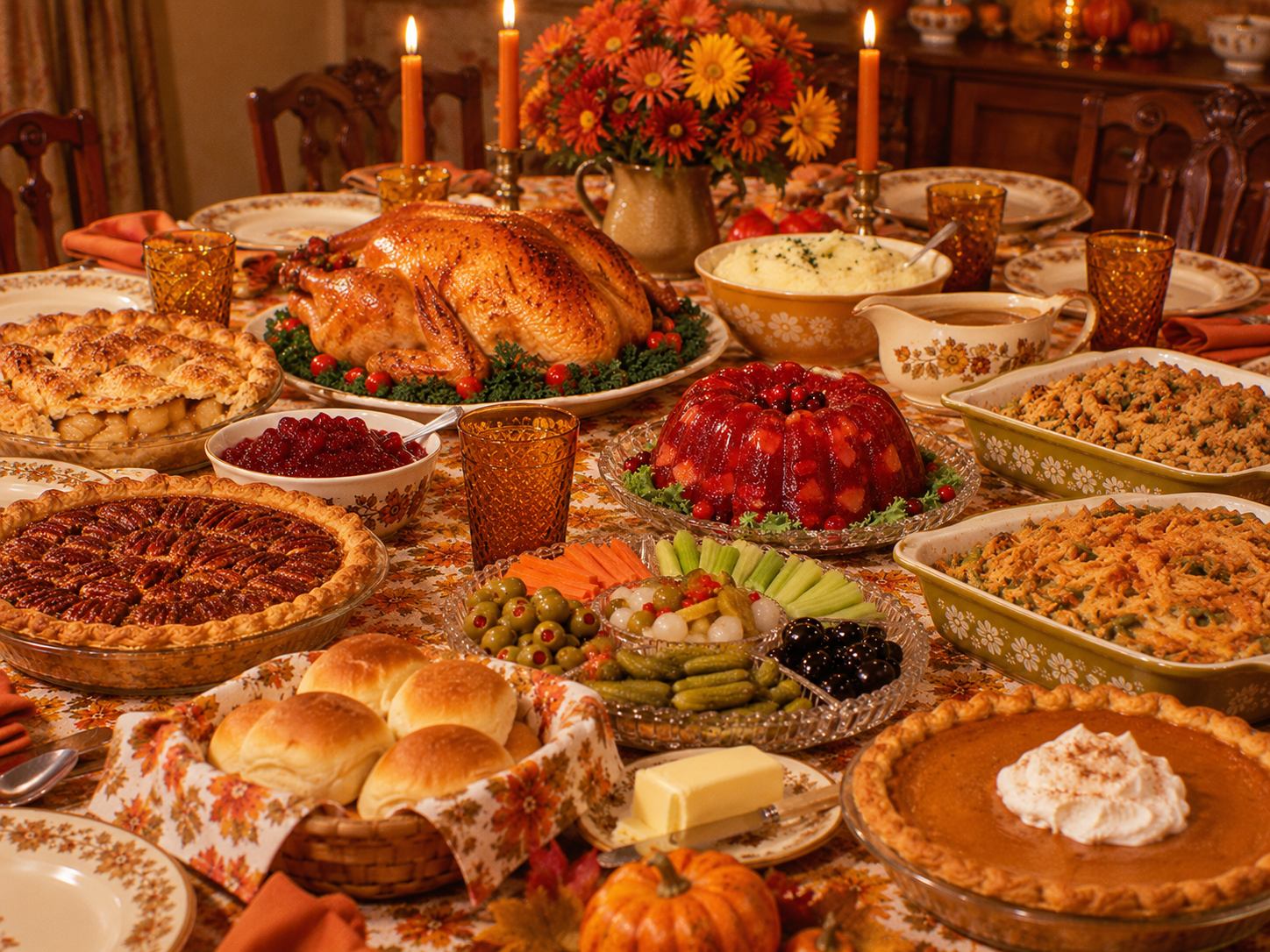
The food might have been familiar, but the table setting could immediately give away the decade. A Thanksgiving dinner in 1971 might have featured avocado-green serving bowls, harvest-gold dishes, orange or brown table linens, and patterned glassware. Ceramic turkeys, candles, artificial autumn leaves, and seasonal fruit could serve as decorations, while Pyrex and CorningWare casserole dishes sat alongside inherited china. And unlike today’s carefully coordinated holiday tablescapes, plenty of families simply used whatever serving pieces they had collected over the years. The result was a crowded, colorful table that felt unmistakably like the early ’70s.
Thanksgiving Was Familiar, Just With a Little More Gelatin
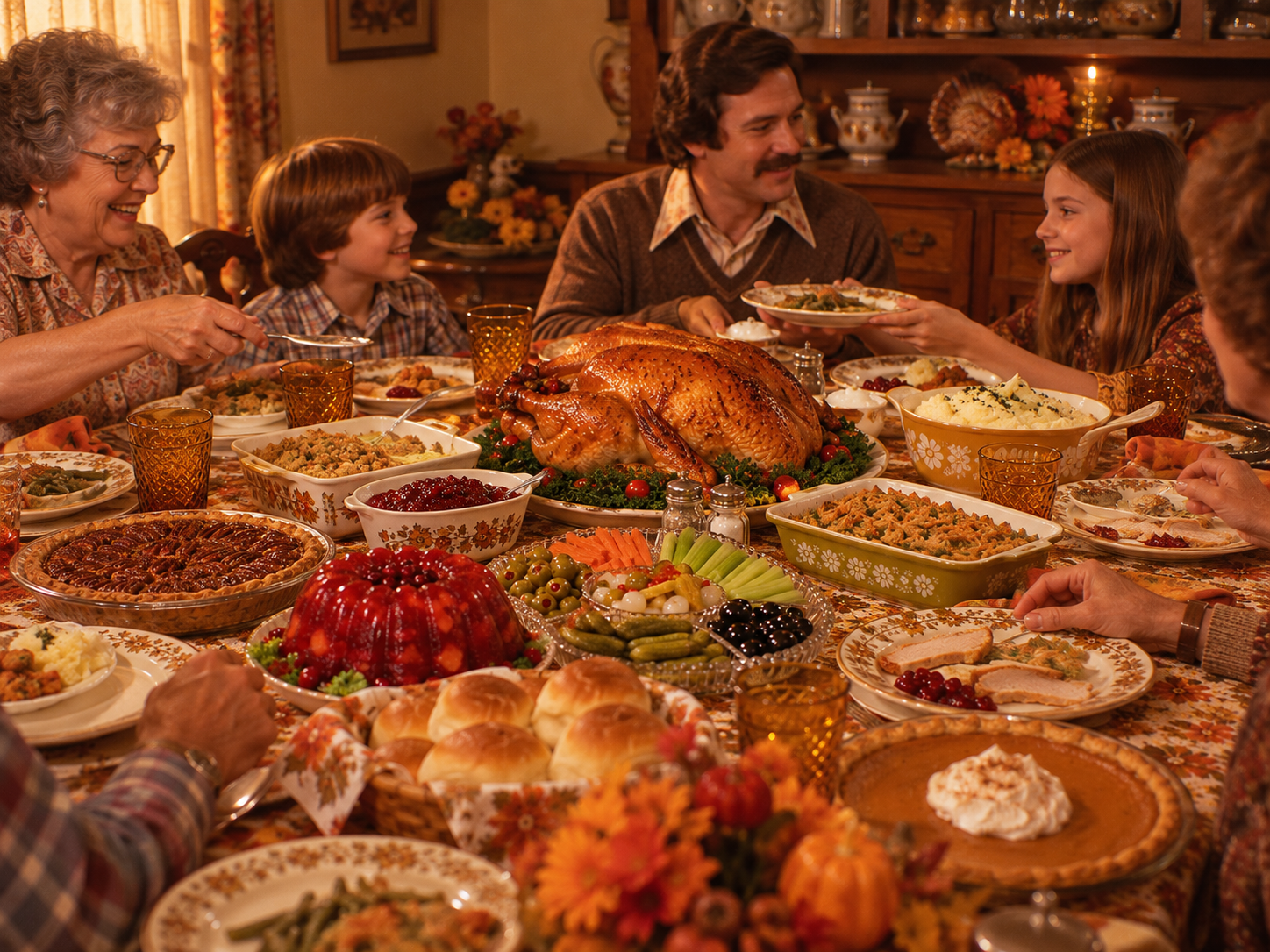
For all the unusual casseroles, colorful serving dishes, and questionable gelatin combinations, Thanksgiving in 1971 wasn’t so different from the holiday Americans celebrate today. The turkey still took center stage, everyone had a favorite side dish, and somebody probably ate too much before dessert even arrived.
What made the era distinctive was the combination of old family traditions and newer grocery-store conveniences. Canned soup, packaged ingredients, and ready-made shortcuts shared the table with recipes that had been handed down for generations. And while the avocado-green dishes and cranberry gelatin molds may have disappeared from many households, the best part of Thanksgiving hasn’t changed much: gathering around a crowded table with people you love and eating far more than you intended.