The economy, on paper, looks fine. (Is anyone else sick of hearing that?) Unemployment is low. Inflation is “cooling.” GDP is expanding. We’re told everything is stabilizing. And yet, millions of Americans are struggling with affordability issues — staring at grocery receipts, mortgage calculators, and insurance premiums, wondering where exactly this “roaring economy” is hiding.
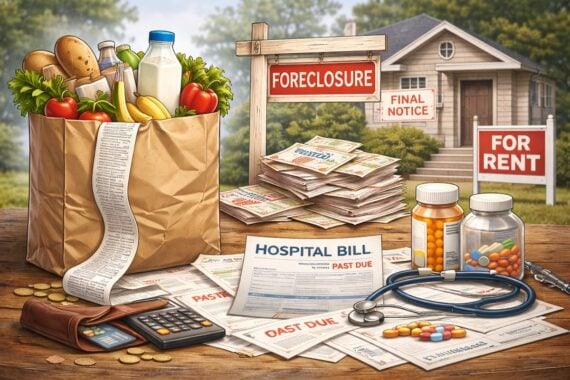
A recent survey from the Pew Research Center makes it obvious: People aren’t obsessing over abstract economic indicators. They’re worried about three very specific things: food, housing, and health care.
Not exactly luxury concerns, guys.
Groceries, Get A Hold of Yourselves
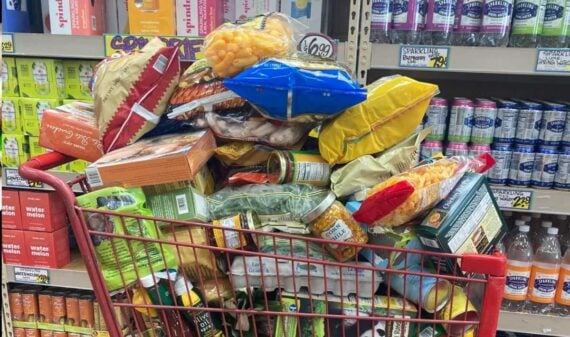
Food inflation isn’t what it was in 2022. That much is true. But shoppers don’t experience “rates of change.” They experience the total at checkout.
And before you turn into a keyboard warrior in the comments section, we’re not complaining about Doritos and Oreos. Those have simply priced themselves right on out of our shopping carts. Some everyday staples are still climbing fast. Ground beef is up more than 17% from a year ago. Coffee rose by more than 18%. Yes, there have been tariff tweaks and import adjustments aimed at cooling prices. But economists have been blunt: Marginal policy shifts don’t move the needle much when supply chains, labor costs, and global demand are all in play.
Shoppers, for their part, are even more blunt. One Redditor described their own experience, commenting, “I’m in Massachusetts, our family spends minimum $350/week on groceries for a family of 4 – nothing fancy, just regular groceries. And I don’t live in Boston. ETA: this is an increase of a minimum of $100/week from prior years.”
So while the inflation chart may look calmer, the groans at the grocery checkout are still pretty loud.
Housing Headaches
If groceries feel frustrating, housing feels borderline impossible. And if you bought a house in 2021 when mortgage rates were astonishingly low, we offer our sincere congratulations (okay, and maybe a little jealousy).
More than 8 in 10 Americans say it’s harder to buy a home today than it was for earlier generations. And the income gap tells the story. According to data from the Federal Reserve Bank of Atlanta, today’s homebuyer needs to earn roughly 43% more than the average worker to afford a typical home while staying under the standard 30% income threshold for housing costs.
That gap didn’t appear overnight. Construction slowed dramatically after the 2008 crash and never fully caught up. Now there simply aren’t enough homes. Some proposals focus on restricting institutional investors from buying single-family homes. Others involve federal mortgage-backed securities purchases to help ease borrowing costs.
But supply remains the elephant in the room. Without millions of additional homes entering the market, affordability doesn’t magically reset. Low unemployment doesn’t help much if your paycheck still can’t clear the housing hurdle.
It Sort of Feels Like Health Care Doesn’t Care About Us Anymore
Raise your hand if you’ve ever felt personally victimized by health care premiums. Oh good, we’re not alone. Premiums for employer-sponsored insurance are expected to rise another 6% to 7% in 2026. Since 2008, private health insurance costs have roughly doubled, according to data from health policy organization KFF.
And that’s before deductibles. Millions of Americans who relied on enhanced Affordable Care Act subsidies saw those expire, leading to sharp premium spikes. Some are opting out of coverage entirely because they simply can’t make the numbers work. One Redditor shared their own astounding numbers, commenting, “$1,700 for a single 60 y/o. It’s past time for a revolution.”
There are new initiatives aimed at lowering prescription drug prices for out-of-pocket buyers. But those don’t help insured Americans hit their deductibles any faster. And they don’t solve premium growth.
Are food, housing, and health care your biggest affordability concerns? Let us know in the comments.
More From Cheapism

- New Trump Accounts Give $1,000 to Newborns. Now How About Money for Groceries? — Trump unveiled new bank accounts granting newborns $1,000, leaving Americans wondering how that helps the parents.
- GLP-1 Users Spend Less Money on Fast Food and Groceries, According to Studies — On GLP-1s? You might be spending less money on fast food and groceries than those who aren’t.
- Beef, Coffee Prices Soar in Latest Inflation Data, But Some Groceries Are Getting Cheaper — Certain staples are rising in cost, while others are evening out or even going down.