The U.S. is importing more beef from Argentina this year, and if your first thought was, “Finally, ground beef prices can calm down,” you’re not wrong for hoping. You are, however, about to get your feelings hurt.
A new executive order tied to a trade deal with Argentina allows an additional 80,000 metric tons of beef to enter the U.S. tariff-free in 2026. That sounds like more beef than 50 Cent has with … well, lots of people. But David Ortega, a food economist and professor at Michigan State University, told CBS News that the amount of beef we’re getting is only 0.6% of the overall U.S. beef supply, which isn’t enough to drastically impact prices. Womp womp.
Breaking Down the Math
80 metric tons of beef sounds impressive until you look at the scale. Economists say the imports won’t hurt, but they also won’t help in any way you’ll notice at the checkout line. The beef coming in is mostly lean trimmings used to bulk up ground beef, which is convenient since that’s exactly what most people buy.
Unfortunately, the volume is so small it’s basically whispering into a very loud market. For perspective, the U.S. produced nearly 27 billion pounds of beef in 2024. Against that number, this import bump is like getting a little nibble of a prime rib slab.
Why Your Ground Beef Is Still Expensive
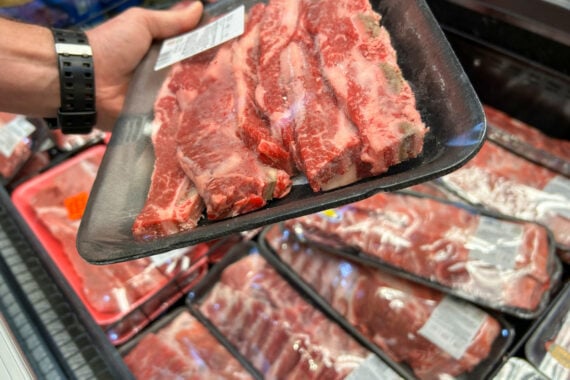
Ground beef prices hit $6.69 per pound in December, up nearly 20% from a year earlier. Five years ago, you could grab the same cut for under $4. This isn’t because Americans suddenly discovered burgers in 2025 (obviously). It’s because the cattle supply quietly fell apart. Years of drought made pasture land worse and feed more expensive. Wildfires wiped out grazing areas. Ranchers responded the only way they could: by selling off cattle, including breeding cows, just to stay afloat. That solved immediate cash-flow problems but created a long-term mess. Because once you sell the cows that make more cows, you don’t just bounce back next season. The circle of life will get you every time.
The Cattle Herd Is Historically Small
As of January 1, the U.S. beef cow herd stood at 27.6 million, down again from last year. Total cattle inventory is now at a 75-year low, which is not exactly the kind of stat that screams “cheap burgers incoming.” Fewer cows mean fewer calves. Fewer calves means fewer cattle reaching market weight down the line. Meanwhile, beef demand stayed stubbornly strong even as prices climbed. Imbalance leads to instability.
This is also why beef doesn’t behave like chicken or eggs. When avian flu drove prices up in 2022, they eventually came back down once supply recovered. Cattle don’t work that way. You can’t fast-track a herd.
What Would Actually Bring Prices Down
There’s no lever to pull (if there was, we’d be yanking it) and no executive order that fixes this in the short term. Rebuilding the cattle supply means holding back heifers for breeding instead of sending them to slaughter, which actually tightens supply even more at first. It’s necessary, it’s slow, and it’s deeply unexciting. Imports can help fill gaps and keep ground beef flowing. They can prevent shortages and smooth things out at the edges. What they can’t do is reverse a decade of supply problems or magically reset prices.
Prices will eventually come down, but they’ll do it on the cattle industry’s timeline, not a political one. Until then, the sticker shock at the meat counter has far less to do with Argentina and far more to do with the fact that there just aren’t enough cows left to go around.
More From Cheapism

- ‘This Is Criminal’: $60 Steak at Publix Sparks Heated Debate — A price tag at Publix sparked a discussion about how much a steak is worth.
- These Are the Cuts I Avoid to Get the Best Bang for My Buck on Freezer Beef — Buying in bulk can save a lot over time — as long as you’re smart about which beef cuts you choose.
- If You Bought Beef Between 2014 and 2019, You Might Be Owed Money — Customers who bought beef products between 2014 and 2019 in one of 26 states could be eligible for a share of an $87.5 million class action settlement.