My family is heading on a road trip in a couple of weeks from Michigan all the way to Florida. We’re packing four kids and all of our luggage in our Chevy Suburban and attempting to drive straight there, swapping drivers along the way. As if the inevitable arguing, whining about needing more snacks, and “Are we there yet” groans aren’t going to be stressful enough, it’s now looking like gas prices will be shooting up just in time for us to hit the road … in our Chevy Suburban.
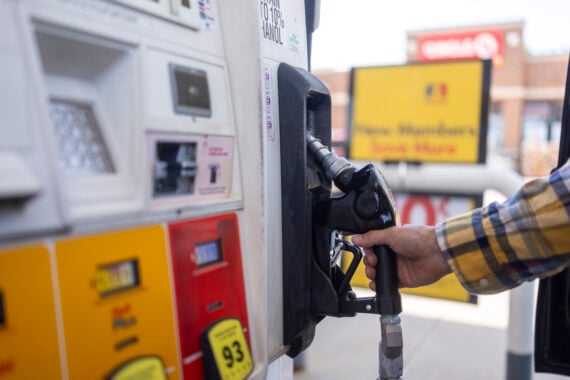
Oil prices jumped sharply after U.S. strikes in Iran escalated tensions in the region, sending shockwaves through global energy markets. U.S. crude surged more than 6%, while Brent crude jumped about 7% in a single day. That’s not subtle. And when oil moves like that, the pump eventually follows. GasBuddy analyst Patrick De Haan said the national average has already climbed to $2.96 per gallon — with $3 looking likely as stations adjust. Retail gas prices typically move about 2.5 cents for every $1 increase in crude oil. Oil just moved nearly $5 per barrel. The writing is on the wall, guys.
What Does the Conflict in Iran Have to Do With the Price at the Pump?
Iran accounts for less than 5% of global oil production, so at a glance, you might not register how this is necessarily a catastrophe. The bigger issue is the Strait of Hormuz — a narrow passage that handles more than 20% of the world’s daily oil supply. If traffic through that corridor slows or shuts down, global markets could feel the impact.
Several major shipping companies are already halting or rerouting vessels. Qatar temporarily paused liquified natural gas production after military attacks hit energy facilities. U.S. natural gas prices jumped. European natural gas futures spiked dramatically. Energy markets hate uncertainty. And right now, uncertainty is doing laps.
It’s Not Just About Your Tank
Every time gas prices rise, the same debate ignites online.
One Reddit commenter summed up the frustration bluntly: “The fact that gas prices is such a big part of so many Americans’ lives & drives policy as a result is nuts.”
Another shot back with the obvious reminder that oil isn’t just about cars. It’s plastics. Machinery. Electronics. Fertilizer. Getting your food to the grocery store and growing your food in the first place. Energy runs everything. Yes, roughly 10% of crude oil goes toward manufacturing and about 4% toward asphalt. The majority is still used as combustible fuel. But that fuel powers trucks. And trucks move basically the entire economy.
As one commenter put it: “… gas prices will raise the cost of everything else that goes on a truck.” That’s the part people forget when they say, “Just drive less.”
The EV Debate Isn’t Going Anywhere
The spike also revived the EV discourse. Some argue that electric vehicles should have been framed as a national security issue years ago. Others point out the reality: EVs remain out of reach for many Americans due to price, charging access, or lack of off-street parking. And look, it’s certainly not the solution to Spring Break road trip woes.
“EVs require significant sacrifice for those that can’t charge at home,” one user wrote. Another cut straight to it: “I don’t fear EVs. I don’t have the income level necessary to own one.”
But here’s the thing: Even people driving 50-mpg hybrids still feel it when oil spikes. Energy costs ripple outward.
What Happens Next?
OPEC+ nations say they plan to increase production by more than 200,000 barrels per day starting next month in an attempt to calm markets. Whether that meaningfully offsets tensions depends on how long this conflict drags on — and whether supply disruptions worsen.
Analysts say oil prices now hinge on four variables:
- How much supply is disrupted
- How long disruptions last
- Whether other producers can ramp up quickly
- What escalates next
If tensions ease, prices could settle. Historically, many geopolitical oil shocks do fade.
If they don’t, expect higher volatility — and higher pump prices — sticking around longer than your spring break tan.
More from Cheapism
- Finally, Some Good News: Gas Prices Could Hit Their Lowest Level Since 2020 — Recently, gas prices were plummeting. Fingers crossed we can salvage them.
- 10 Foods You Should Never Eat on a Road Trip — If you’re gearing up for a Spring Break road trip, you’ll want to avoid eating these foods while you’re on the highway.
- 11 Historic Route 66 Gas Stations Worth a Pit Stop — Don’t forget to check out these iconic stops along Route 66 if you’re passing by.