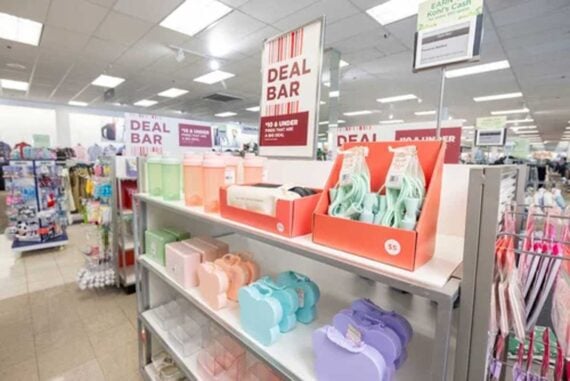
Kohl’s isn’t exactly known for being the most affordable store to shop, although Kohl’s Cash is a welcome perk. However, in order to keep pace with its competitors, Kohl’s is officially entering its under-$10 era. The department store chain just rolled out something it’s calling the “Deal Bar” to all locations — a front-of-store section stocked with gifts, seasonal decor, and everyday basics priced below $10.
If that setup sounds familiar, that’s because it is. For years, Target’s front-of-store “Dollar Spot” — technically known as Bullseye’s Playground — has functioned as a retail honey trap. You go in for toothpaste. You leave with $27 worth of ceramic bunnies and throw pillows you didn’t need. Kohl’s appears to be testing whether it can recreate that magic for its own foot traffic.
The Placement Is the Point
This isn’t buried in housewares or wedged between clearance racks. The Deal Bar lives right up front — the highest-visibility real estate in the store. That placement matters. Retailers don’t put things there unless they want them seen immediately and often.
The pricing strategy is equally intentional. Under $10 feels safe. It feels small. It feels like, “Fine, I’ll grab it.” Especially for shoppers who are watching their budgets but still want the little dopamine hit of buying something new.
Is This a Real Play — or Just a Bandage?
Kohl’s has been in turnaround mode for what feels like forever. Leadership and strategies have shifted. Coupons disappeared and then quietly returned. Private labels expanded, then got reconsidered. Now value is back in the spotlight. The company has seen pockets of improvement recently, but analysts remain cautious. The bigger challenge isn’t whether Kohl’s can create a cute impulse section. It’s whether its core customer — often middle- to lower-income households — has enough discretionary spending left to make that impulse buy in the first place.
A $7 candle only works if you feel like you can spare the $7.
Target’s Model Is Hard to Copy
Target’s Dollar Spot works because it’s built into the brand identity. It feels curated. It rotates constantly. It thrives on the treasure-hunt effect.
Kohl’s Deal Bar, at least on paper, hits similar notes: seasonal refreshes, small-ticket items, front-of-store placement. The real question is whether shoppers will view it as fun and fresh — or just another clearance-adjacent table. Impulse sections can boost basket size, but they rarely fix structural retail problems.
More From Cheapism

- 14 Sneaky Grocery Store Tricks That Turn ‘Just One Thing’ Into $120 — From the store scents to the positioning of items, these 14 tricks might just seem like a typical part of the shopping experience, but they’re actually driving up your grocery bill.
- Target Opening Almost 40 New Stores in 2026 — Here’s what we know about the openings, including the list of new store addresses.
- 10 Things You Should Never Buy at Target — Despite the retail giant’s many strengths, there are certain items you might be wise to pass over, experts and shoppers advise.