There’s a specific kind of frustration that hits when you’re standing at the pump, watching the total climb faster than the gallons. It feels arbitrary. It feels personal. It feels like someone, somewhere, is just making up numbers.
Apparently, they’re not — but it’s also not as simple as “gas prices went up.”
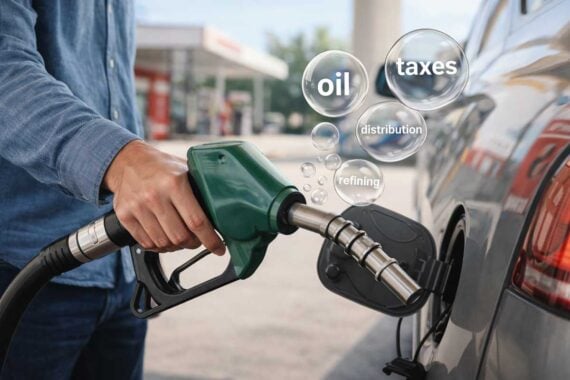
When you pay for a gallon of gas, you’re not just buying fuel. You’re paying for a layered, behind-the-scenes system that starts in global oil markets and ends at the station down the street. And only about half of what you’re paying actually comes from the oil itself.
The Biggest Chunk: Oil (But Not Just Any Oil)
Roughly half the price of a gallon of gas comes from crude oil. But here’s where it gets a little maddening: Even though the U.S. produces a ton of oil, gas prices here still follow global pricing, especially Brent crude oil. So when something happens halfway across the world — like geopolitical conflict or supply disruptions — your local gas station feels it almost immediately, and you’re the one who gets the ricochet.
That’s why prices can jump overnight without anything changing in your town. The cost is reacting to a global market, not your local one.
Refining: Turning Oil Into Something You Can Actually Use
About 20% of what you pay goes toward refining, which is the process of turning crude oil into gasoline, diesel, jet fuel, and everything else we rely on. As you’d expect, this isn’t a quick or cheap step. Refineries have to process, separate, and treat crude oil into usable fuel, and that cost gets baked right into the price per gallon.
It’s also one of the reasons prices creep up in warmer months. Refineries switch to a more expensive “summer blend” of gasoline designed to handle heat and reduce emissions. Even though it feels like the gas station is just trying to make a quick buck as people ramp up road trips.
Getting It to You (and Keeping the Lights On)
Another slice — about 10% — covers distribution and marketing. That includes pipelines, storage terminals, tanker trucks, and everything it takes to move gasoline from a refinery to your neighborhood station. It also covers the basics of running that station, including things like electricity, maintenance, and payroll — the very unglamorous reality of keeping the pumps working.
Gas stations themselves aren’t necessarily raking it in on fuel. On average, they make somewhere around 30–35 cents per gallon, and even that can shrink when oil prices spike.
Taxes: The Part You Can Actually Point To
Then there are taxes (they seem to touch everything, don’t they?), which are one of the few pieces of the price that are straightforward. The federal government takes 18.4 cents per gallon, and states layer on their own taxes, averaging around 34 cents, but varying widely depending on where you are. That’s why crossing a state line can suddenly make gas noticeably cheaper (or painfully more expensive). It’s the same fuel with different rules.
More From Cheapism
- Where Gas Prices Are Rising the Fastest — and the Slowest — Find out if you’re in an area where gas prices are creeping up the fastest or slowest.
- Oil Hits $100 a Barrel — Here Comes Another Gas Price Jump — Gas prices keep climbing.
- Spring Break Road Trip Coming Up? Buckle Up: Higher Gas Prices Are Likely Coming — Plan accordingly for Spring Break travels, because gas is going to keep going up.