For plenty of kids growing up in the 1970s, a 1970s dad workshop was practically a world of its own. Whether it occupied an entire garage, a corner of the basement, or a cramped shed out back, it was usually filled with sawdust, mysterious spare parts, and tools that seemed to have been around forever. There was probably a half-finished project sitting on the workbench, too, along with a stern warning not to touch anything.
Back then, fixing things yourself wasn’t just a hobby. Before YouTube tutorials, cordless drills, and online shopping made home repairs more convenient, dads relied on heavy-duty tools, printed instruction manuals, and whatever spare screws they could dig out of an old coffee can. A trip to Sears might mean coming home with a new Craftsman tool, while an entire Saturday could disappear into repairing a lawn mower or building a set of shelves.
Some of those workshop staples are still around today, while others have become nostalgic reminders of a time when almost everything seemed worth trying to repair. Here are 12 things dads in the 1970s always seemed to have in their workshops.
A Heavy Metal Craftsman Toolbox
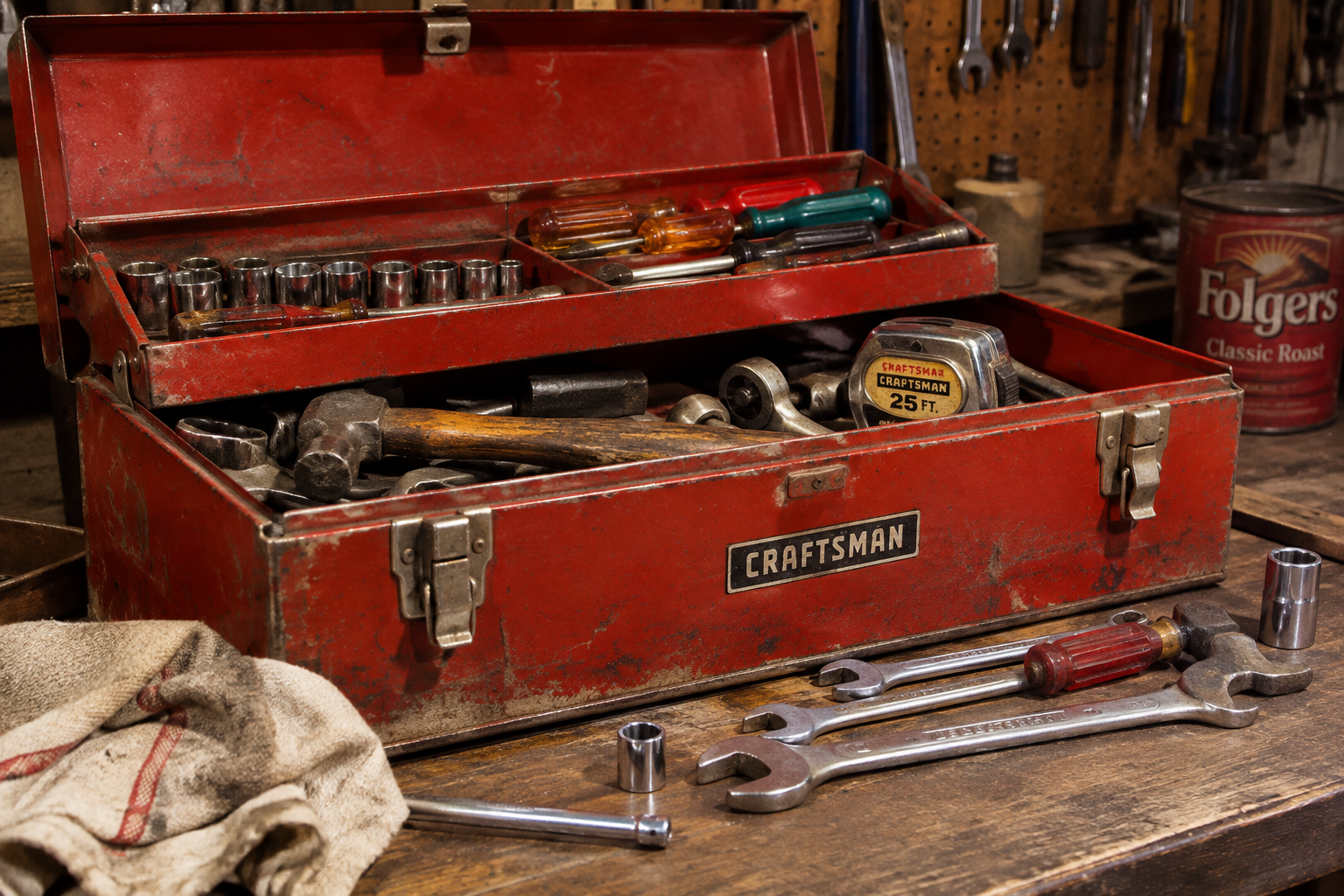
Before lightweight plastic toolboxes became commonplace, a sturdy steel toolbox was often Dad’s most prized workshop possession. The classic Craftsman models sold through Sears came with metal latches, removable trays, and enough room for an ever-growing collection of wrenches, screwdrivers, and other essentials. They were heavy even before you filled them, and opening one usually meant hearing tools clatter against each other. By the 1970s, Craftsman was already a household name, producing its 100 millionth screwdriver in 1976. And while the toolbox might have been scratched, dented, and covered in decades of grime, there was a good chance Dad wouldn’t have traded it for anything newer.
A Pegboard Wall Covered in Tools
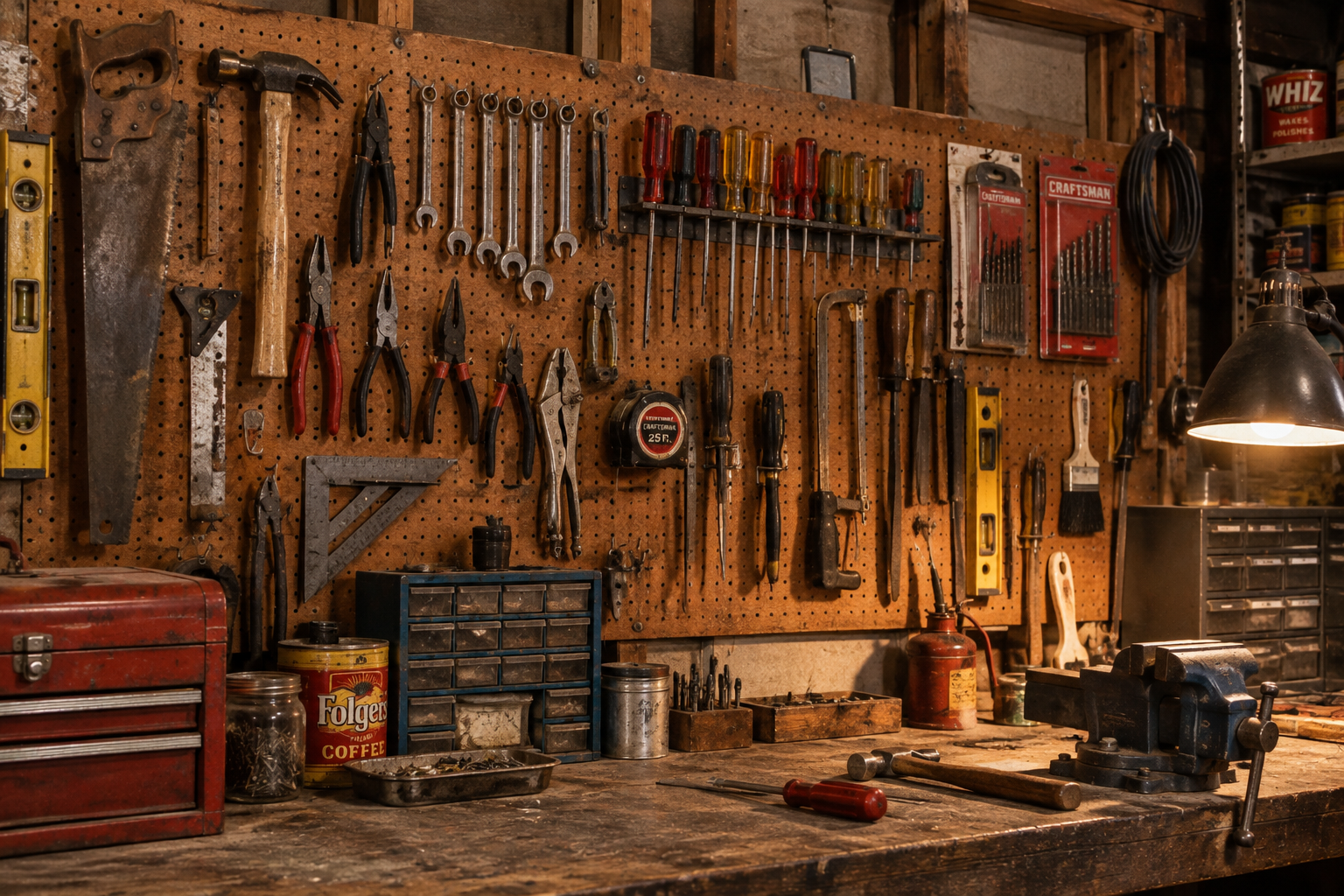
If Dad took his workshop organization seriously, there was probably a big sheet of brown pegboard hanging above his workbench. Metal hooks held everything from hammers and pliers to screwdrivers, measuring tapes, and wrenches, supposedly keeping every tool within easy reach. Of course, the system only worked if everything went back where it belonged. Some dads even traced the outlines of their tools so they could immediately tell when something was missing. Others simply kept adding hooks until the whole wall looked like a hardware store display gone slightly wrong. Either way, the pegboard was practically part of the workshop’s personality.
An Old Coffee Can Filled With Random Nails and Screws
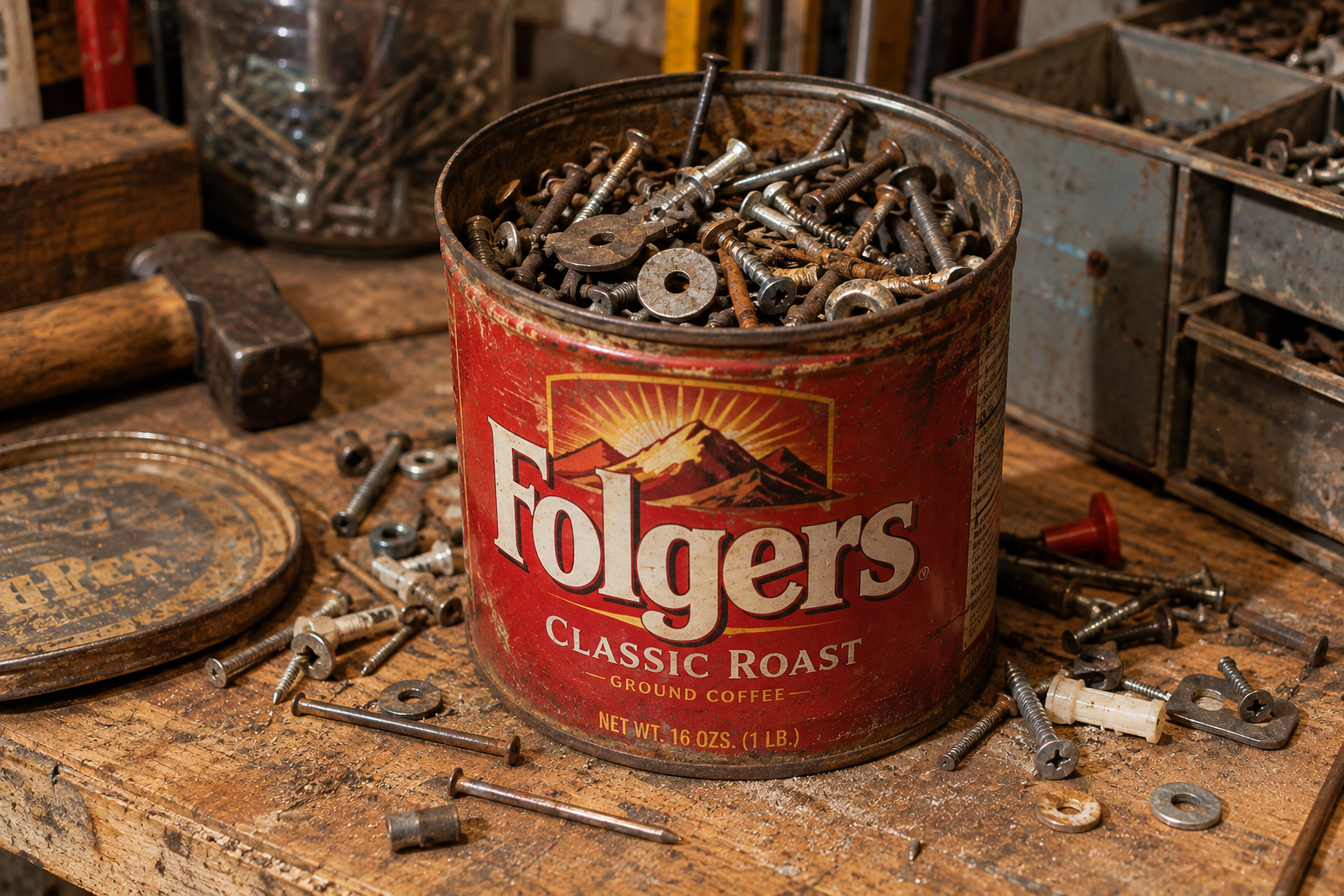
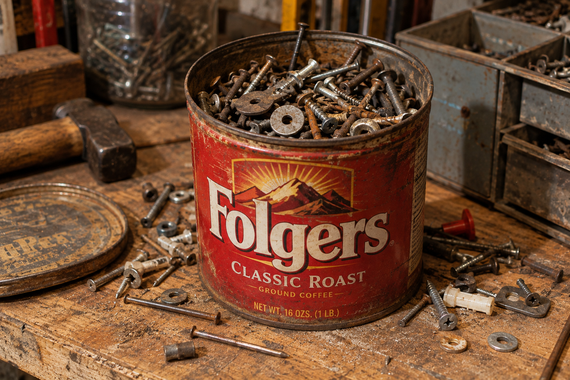
Throwing away an empty coffee can? Not if Dad had anything to say about it. Metal Folgers and Maxwell House cans often found second lives as storage containers for nails, screws, nuts, bolts, washers, and other mysterious bits of hardware. There was rarely any real organization involved, either. A single can might contain everything from rusty roofing nails to tiny screws left over from a project completed years earlier. Whenever Dad needed a particular piece, he’d dump the contents onto the workbench and start sorting through the pile. Somehow, the exact screw he needed always seemed to be buried at the bottom.
A Heavy Bench Vise Bolted to the Workbench
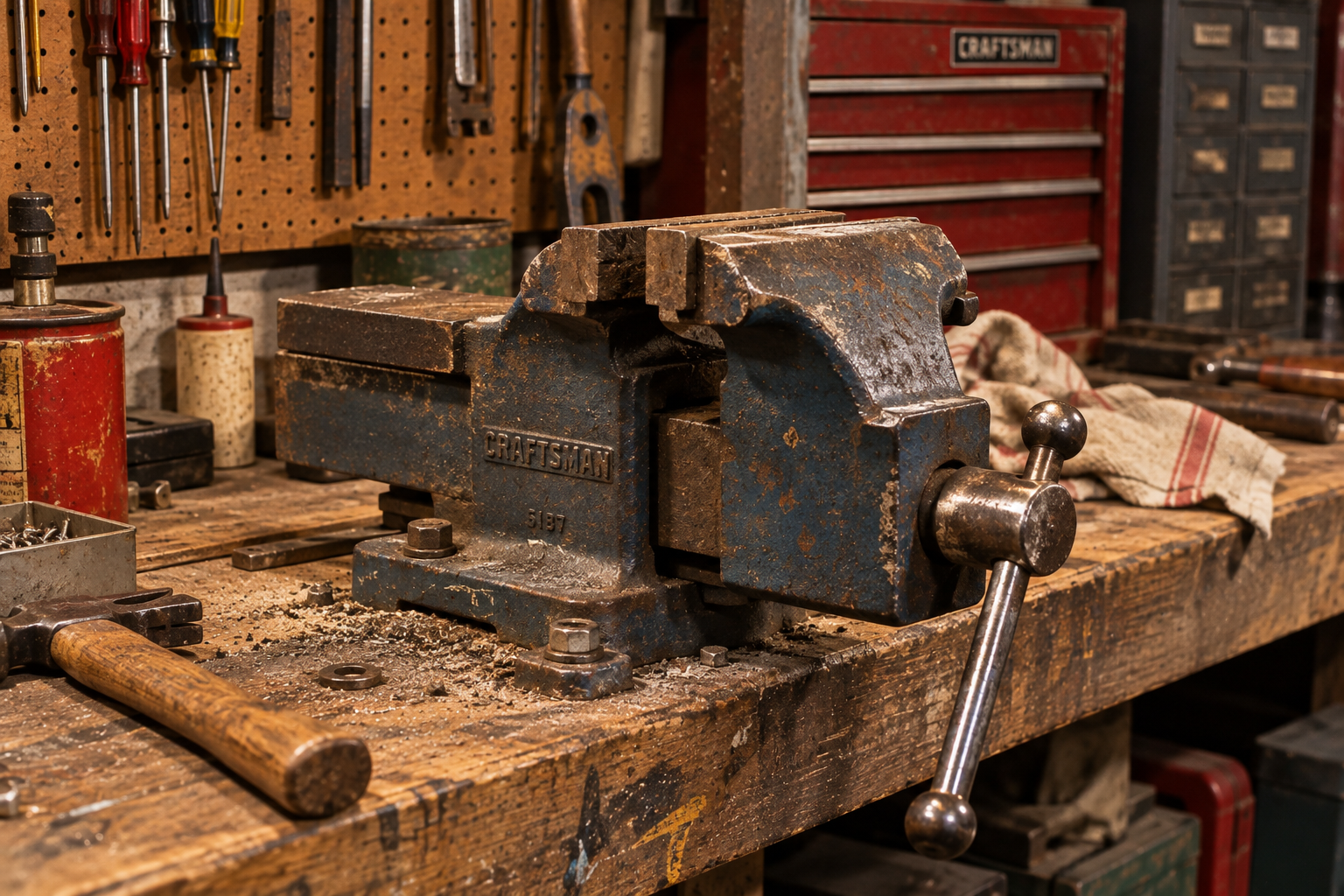
A proper 1970s workshop wasn’t complete without a massive cast-iron vise permanently attached to the edge of a wooden workbench. These heavy-duty fixtures were useful for holding pipes, pieces of lumber, and stubborn mechanical parts steady while Dad sawed, filed, hammered, or attempted another repair. Many were painted blue, gray, or green, although years of use usually left the finish chipped and worn. Unlike portable tools that could disappear into drawers, the vise had a permanent home. It was also one of those workshop objects that seemed completely indestructible, which explains why plenty of old examples are still doing their jobs decades later.
A Corded Black & Decker Electric Drill
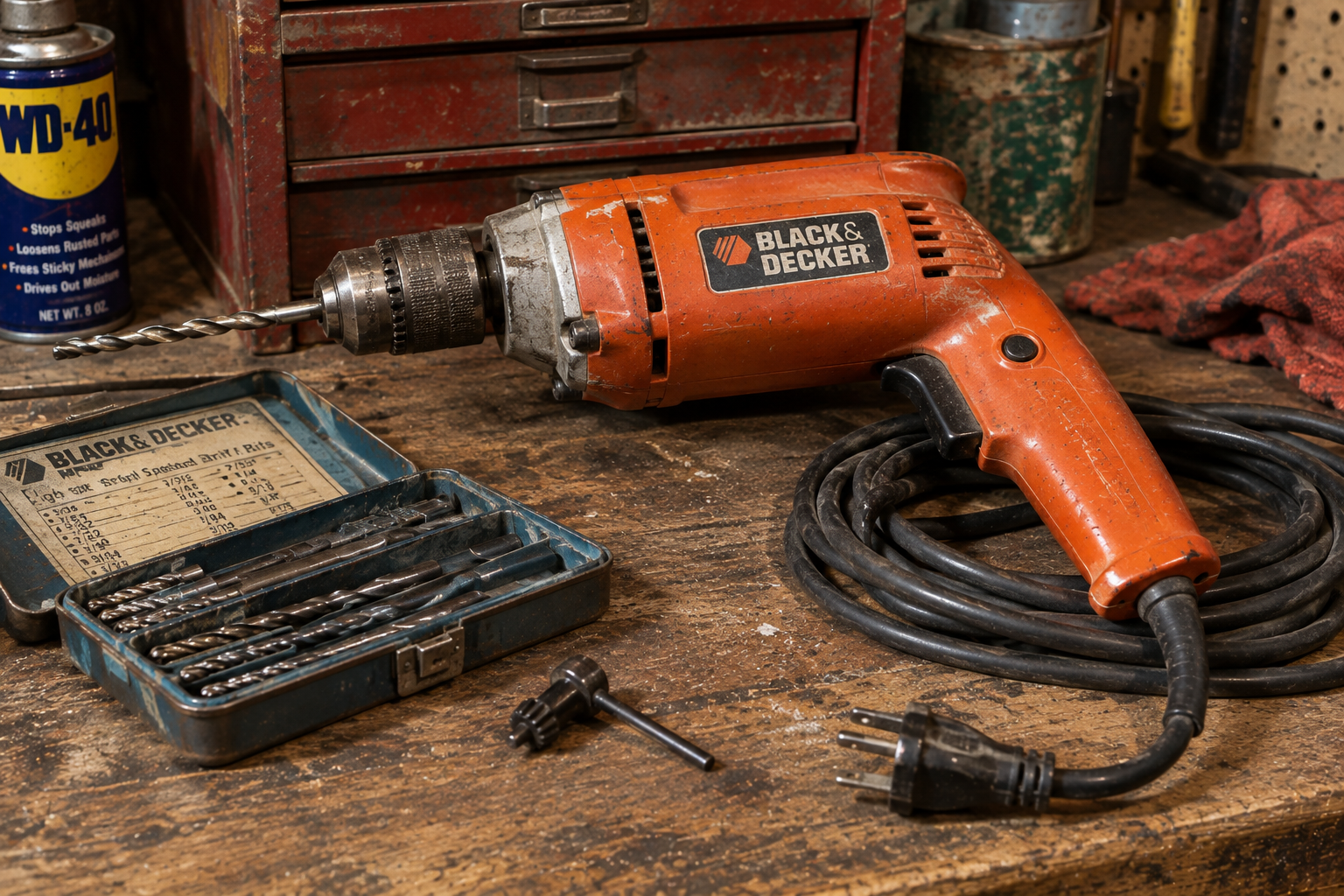
Long before cordless drills became the default, Dad’s electric drill came with a power cord that always seemed to be tangled around something. Black & Decker was already a familiar name in American workshops, and its 1975 catalog featured a variety of electric drills for household and professional jobs. Many models had chunky pistol-grip handles, substantial metal components, and a separate chuck key for tightening drill bits. Naturally, that little key had a habit of disappearing precisely when it was needed. Using the drill also meant finding an available outlet or dragging an extension cord across the garage. It wasn’t particularly convenient by today’s standards, but it could handle plenty of weekend projects.
Trending on Cheapism


A Socket Wrench Set With One Piece Always Missing
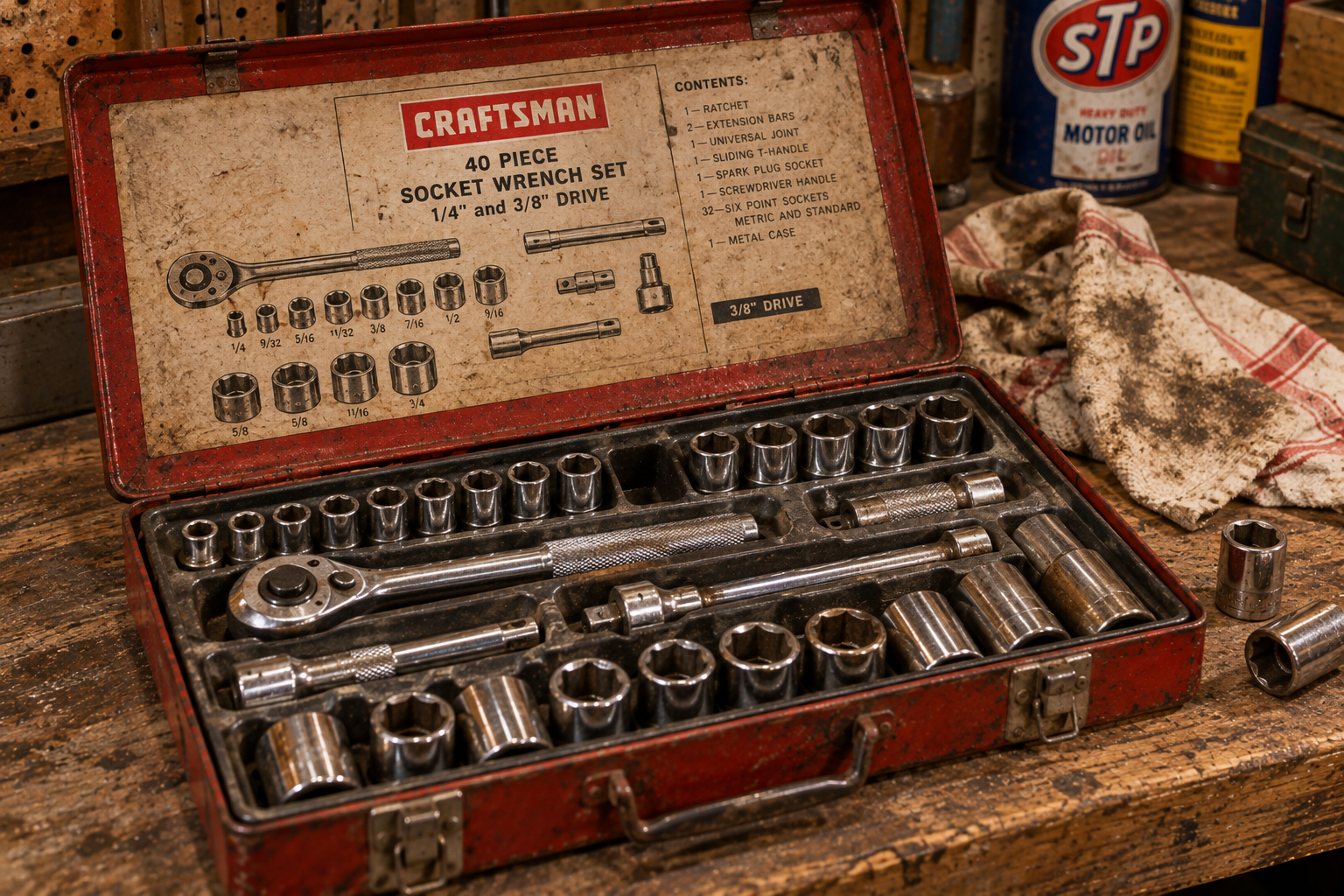
Whether Dad was working on the family car, tightening something on the lawn mower, or attempting to repair a bicycle, a socket wrench set was one of the most useful things he owned. Craftsman socket sets were especially recognizable, with their shiny chrome pieces arranged neatly inside metal cases. The trouble was keeping them that way. Somehow, one socket always seemed to disappear, usually the exact size needed for the job. Craftsman had introduced its quick-release ratchet back in 1966, making socket changes easier, but no clever design could prevent a missing piece from vanishing into the depths of the garage.
A Circular Saw That Sounded Like It Could Cut Through Anything
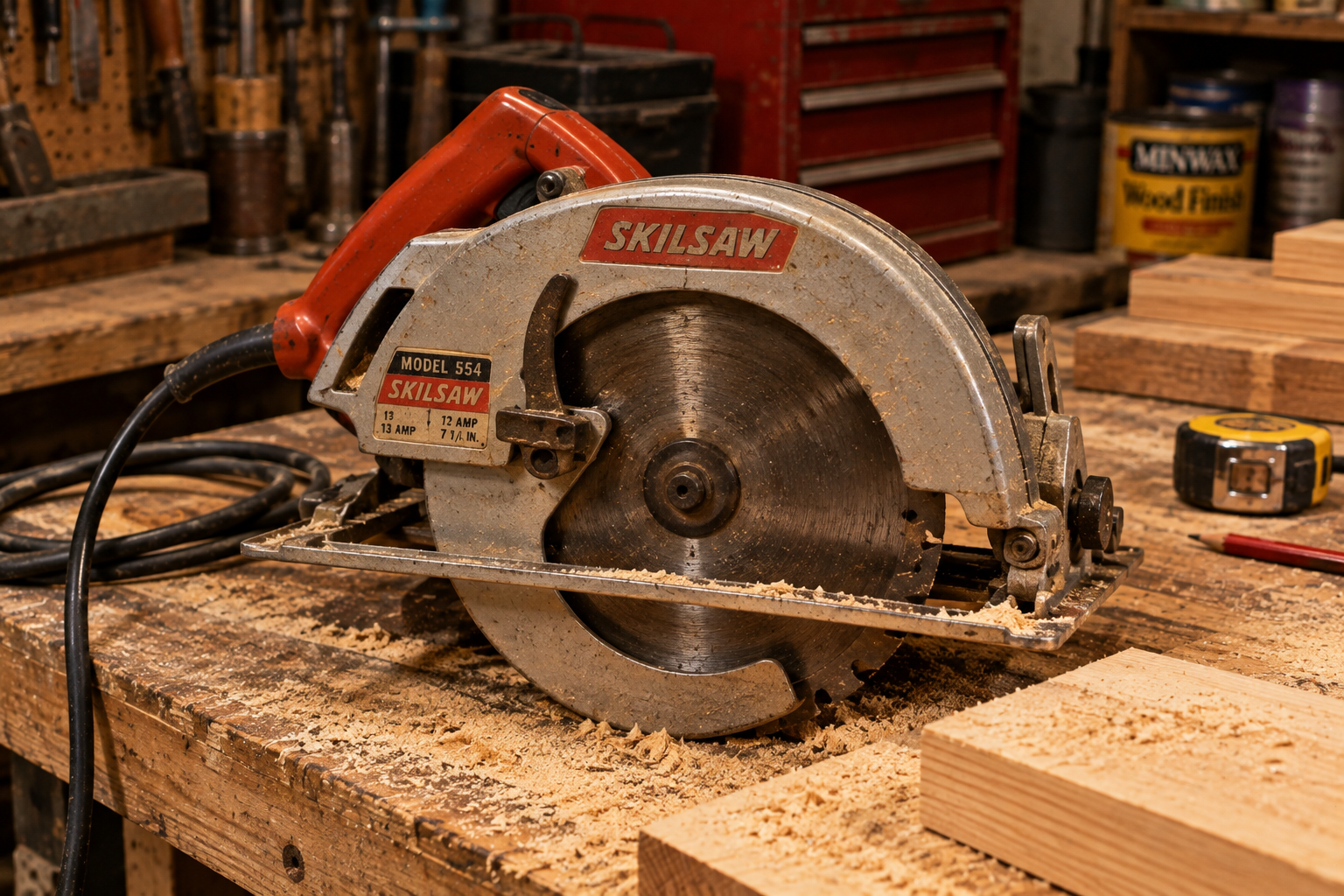
Few tools announced that Dad was working on a serious project quite like a roaring circular saw. These bulky, corded machines were a major upgrade from cutting everything by hand, especially when building shelves, repairing fences, or tackling home improvement projects. Skil and Craftsman were among the familiar brands, and a 1973 Skil catalog advertised a Model 554 circular saw with a powerful 13-amp motor for just under $100. That was a considerable investment for a household tool at the time. Between the loud motor, flying sawdust, and stacks of freshly cut lumber, it was usually pretty obvious when the circular saw came out for the afternoon.
A Can of WD-40 or 3-IN-ONE Oil
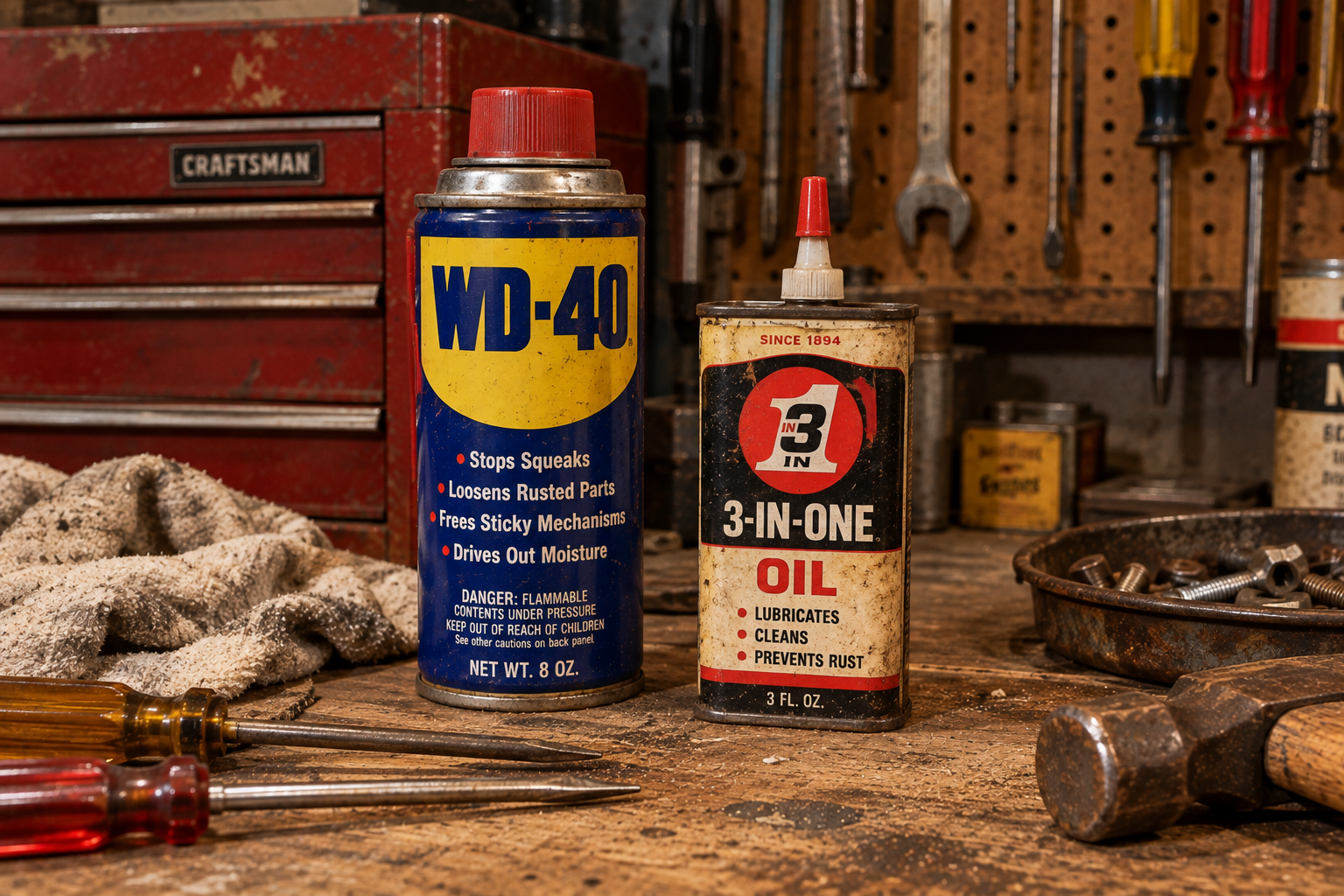
Every workshop seemed to have at least one small can that Dad reached for whenever something squeaked, stuck, or refused to move. WD-40 and 3-IN-ONE oil were already established maintenance products by the 1970s, with WD-40 reaching consumer shelves in 1958 and 3-IN-ONE dating all the way back to the 1890s. A rusty bolt, squeaky hinge, or stubborn mechanical part could send Dad rummaging through his supplies for one of them. The cans usually lived on a shelf beside old paintbrushes, jars of screws, and other half-used products. And judging by how long some dads kept them around, a single can was apparently supposed to last forever.
Sign up for our newsletter
A Folding Wooden Workbench or Black & Decker Workmate
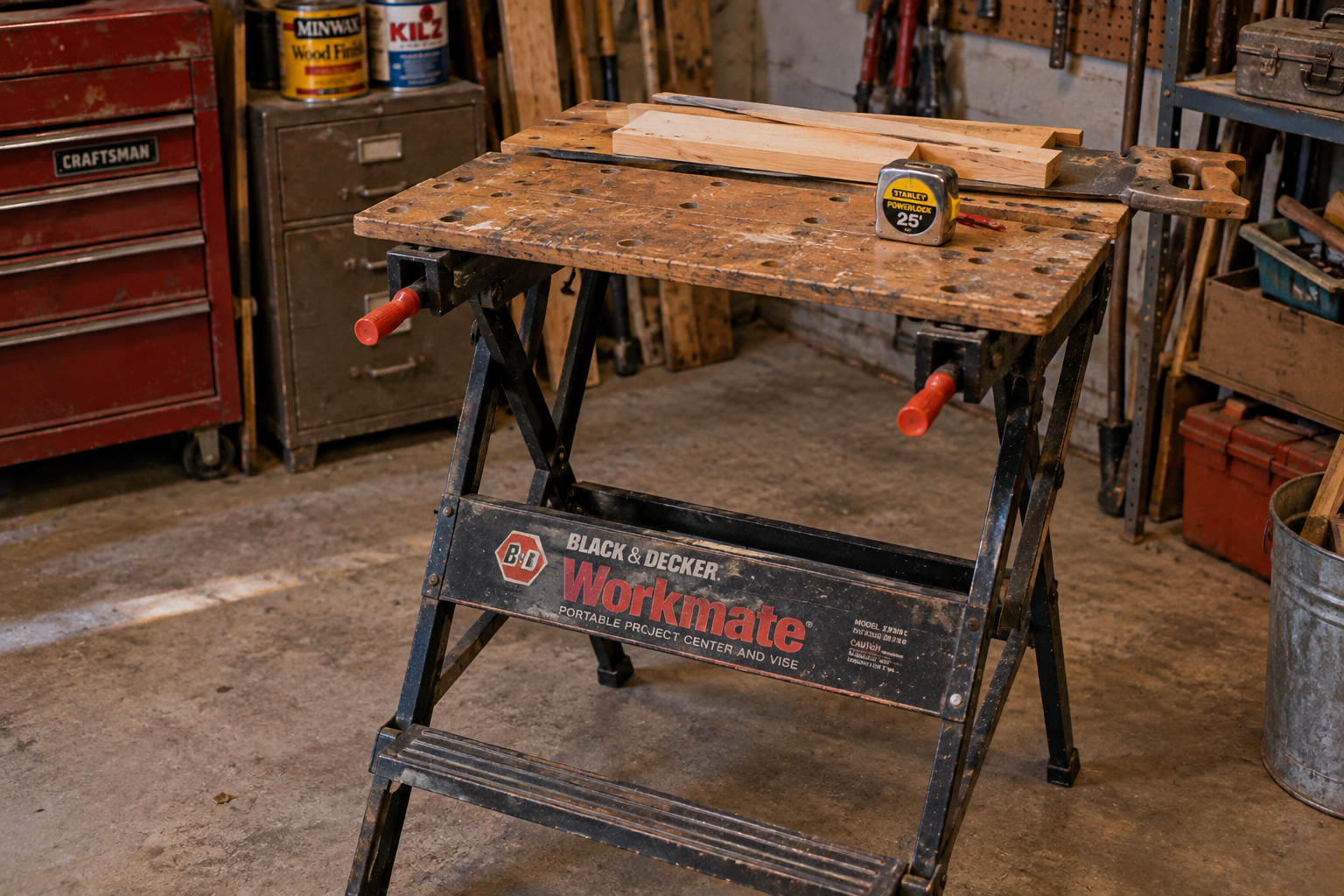
Not every dad had room for a sprawling workshop, which made portable workbenches particularly useful. While plenty of families relied on homemade wooden benches, the Black & Decker Workmate offered a clever alternative during the 1970s. Its folding design combined a work surface with built-in clamping jaws, allowing users to hold pieces of wood steady while sawing, sanding, or drilling. When the project was finished, the whole thing could be folded up and stored away. For dads working in crowded garages or small basement corners, that was a pretty appealing arrangement. Of course, it also meant there was one more piece of equipment to unfold every Saturday morning.
A Collection of Hand Saws, Files, and Woodworking Clamps
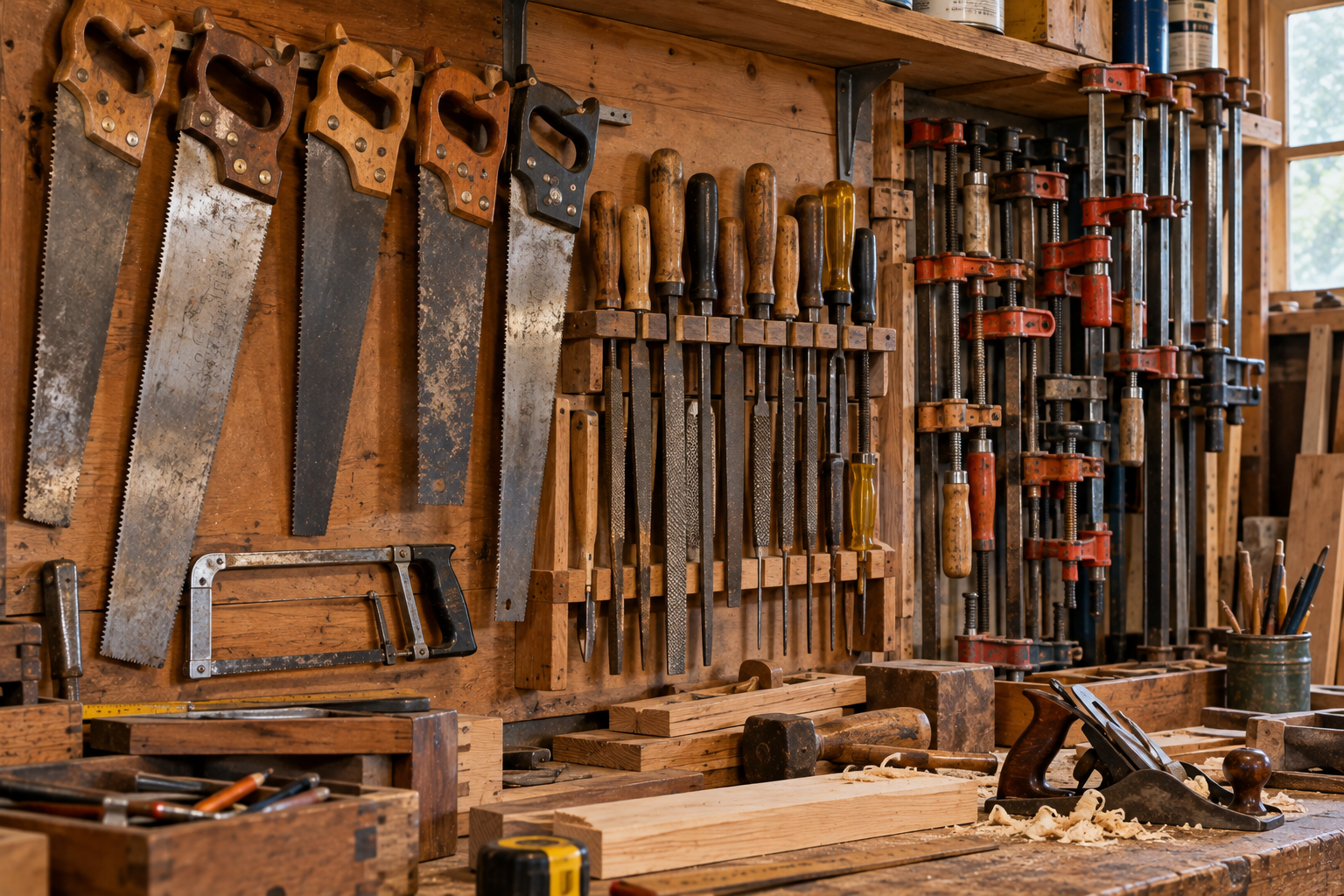
Even with electric tools becoming increasingly common, Dad’s workshop still depended on plenty of old-fashioned equipment. Wooden-handled handsaws, metal files, C-clamps, and miter boxes were useful for everything from trimming a piece of lumber to smoothing a rough edge. Sears Craftsman catalogs from the decade continued to devote considerable space to these traditional tools alongside newer electric models. Some dads had carefully arranged collections hanging from the wall, while others kept everything piled in a drawer. Either way, there was something satisfying about watching a project take shape with nothing more complicated than a handsaw, a clamp, and a little patience.
An Extension Cord and a Cage-Style Trouble Light
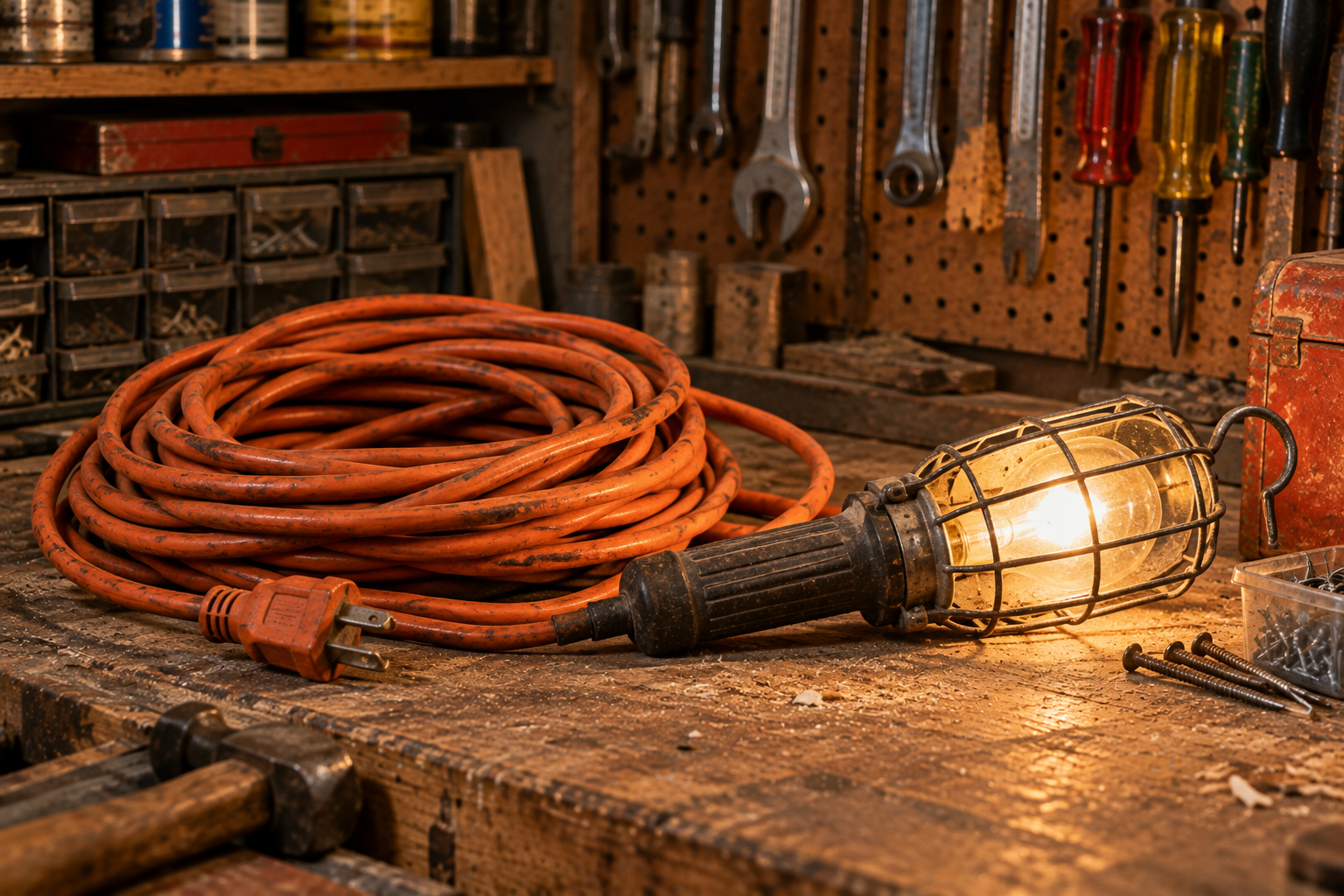
Working in a 1970s garage often meant dealing with limited outlets and lighting that wasn’t exactly ideal. That’s where the trusty extension cord and trouble light came in. The latter typically consisted of an incandescent bulb surrounded by a protective metal wire cage, with a hook that allowed Dad to hang it beneath the car hood or under a workbench. An orange or yellow extension cord usually trailed across the floor, powering whichever tool was needed. The light could get surprisingly hot, and the cord was practically guaranteed to end up tangled around something. Still, these simple accessories made it possible to keep working long after the sun went down.
A Stack of Sears Catalogs and Well-Worn Repair Manuals
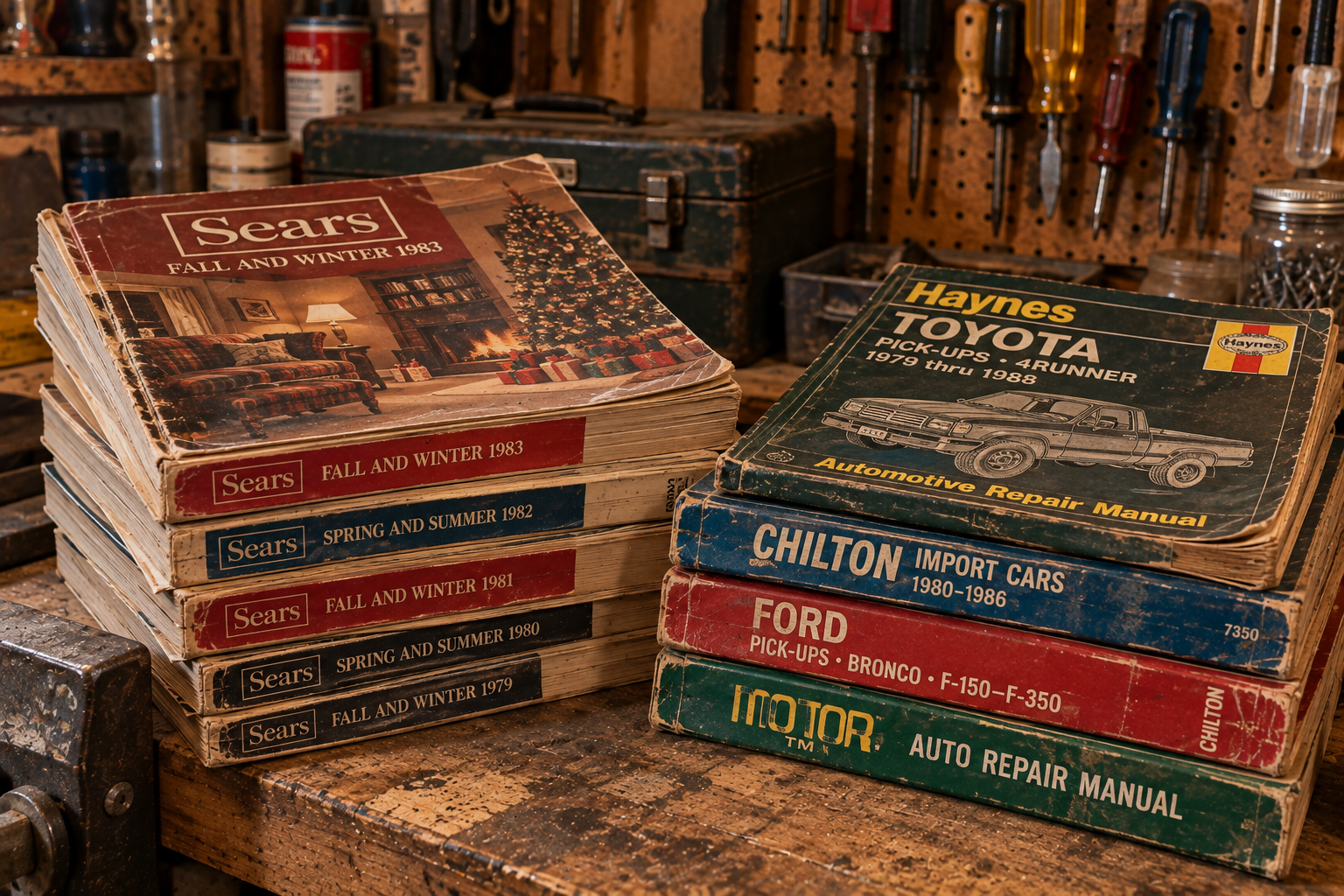
Before anyone could search YouTube for a five-minute repair tutorial, figuring out how to fix something often involved flipping through a printed manual and hoping the instructions made sense. Dad’s workshop might have contained dog-eared Sears catalogs, equipment manuals, woodworking guides, and notebooks filled with measurements. Sears even sold specialized Craftsman instructional books covering everything from sharpening tools to operating bench saws and drill presses. A 1972 educational reference listed the Craftsman Master Shop Guide for $3.49. These books weren’t just useful references; they were often covered in handwritten notes, greasy fingerprints, and folded corners marking projects Dad intended to tackle someday.
Dad’s Workshop Was Built to Make Things Last
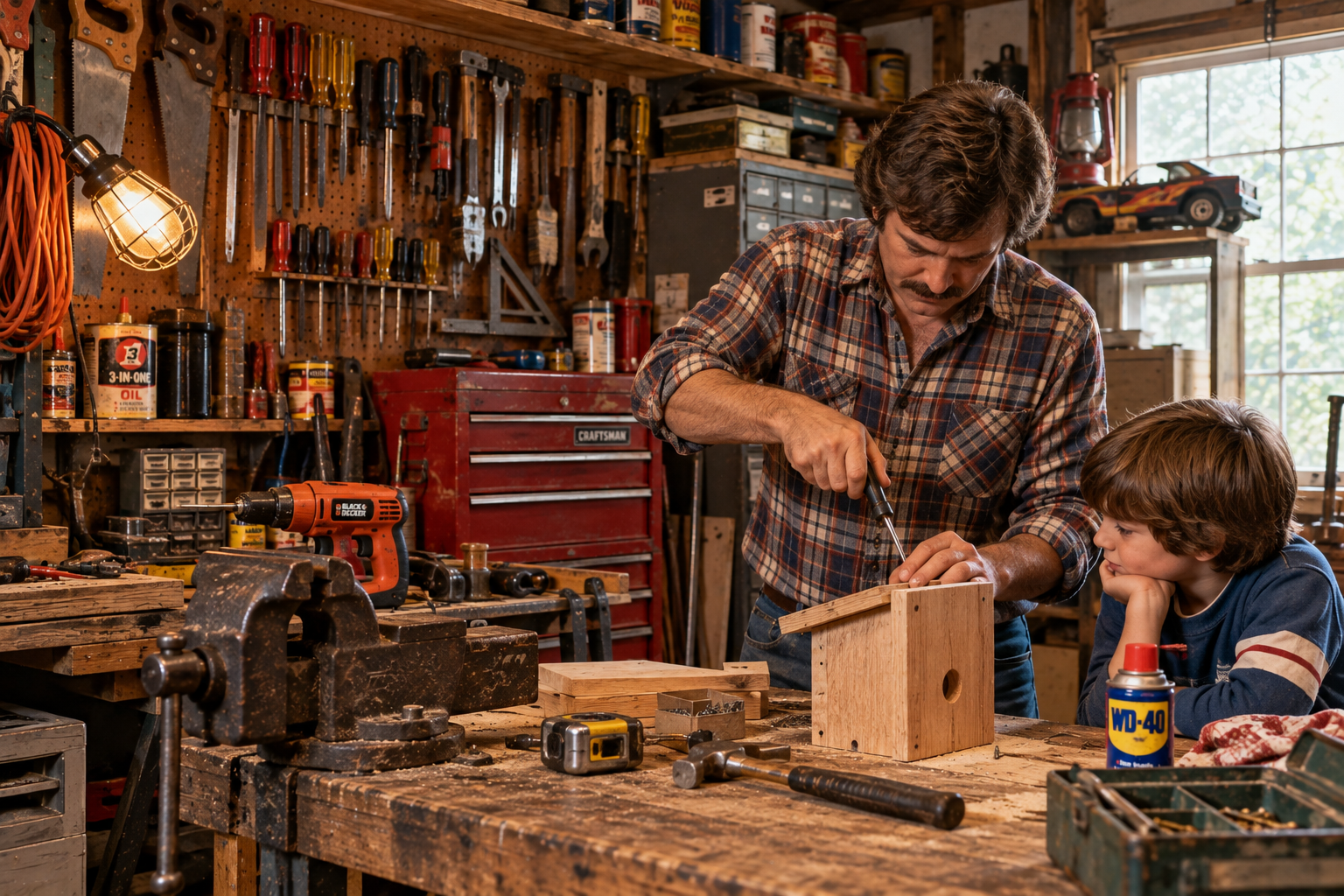
Looking back, what made a 1970s workshop memorable wasn’t necessarily how expensive or impressive the tools were. It was the way everything seemed to have a purpose, even the rusty screws sitting in an old coffee can or the broken appliance waiting for another repair attempt. Hand tools shared space with increasingly popular electric equipment, and a sturdy metal toolbox or cast-iron vise could remain in service for decades.
For kids who grew up wandering into the garage to see what Dad was building, those workshops also came with familiar sounds and smells: buzzing saws, clanking wrenches, fresh sawdust, and the occasional frustrated muttering when something didn’t go according to plan. The tools might have changed, but the memories of those long weekend projects have a way of sticking around.