Walk into an American classroom in the 1970s and you probably wouldn’t find a computer, interactive whiteboard, or tablet anywhere in sight. Instead, there was chalk dust in the air, a globe sitting somewhere within reach, heavy desks lined up in rows, and enough analog equipment to make today’s classroom technology look almost futuristic by comparison.
Even the “high-tech” moments involved a fair amount of machinery. Teachers rolled projectors into the room, pulled maps down from above the chalkboard, and handed out freshly duplicated worksheets covered in unmistakable purple ink. A movie required reels and a screen, while a geography lesson might involve a wooden pointer and a map of countries that no longer exist.
For anyone who went to school during the decade, though, these objects were simply part of an ordinary school day. Here are 12 things that could make a 1970s classroom instantly recognizable.
A Huge Chalkboard
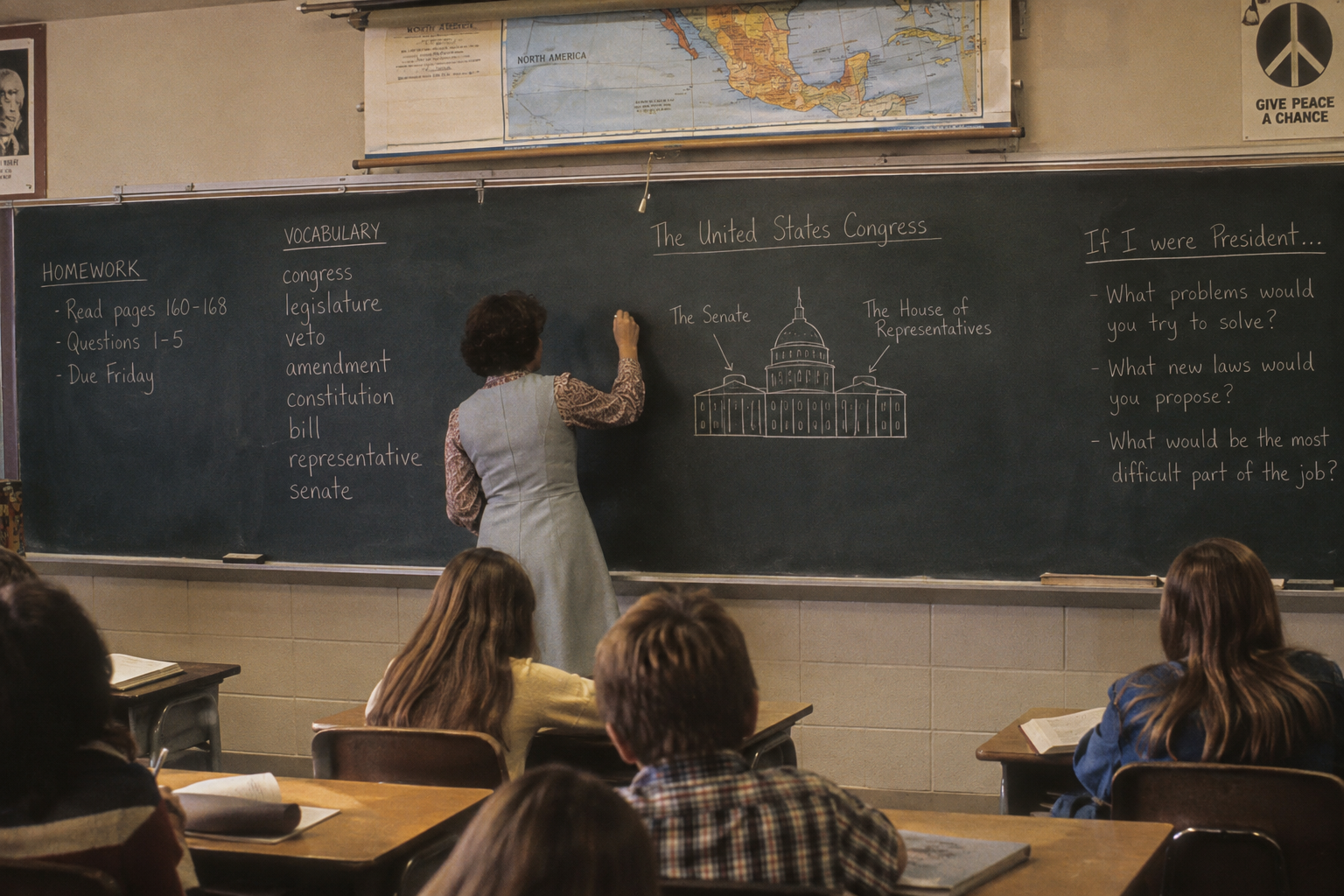
Before whiteboards and digital displays took over classroom walls, there was the chalkboard. Usually stretching across much of the front of the room, it was where teachers worked through math problems, wrote spelling words, drew diagrams, posted homework assignments, and occasionally left a student’s name as an ominous warning. By the end of the day, the ledge could be coated in white dust and the erasers thoroughly gray. And few classroom experiences were quite as nerve-racking as hearing your name followed by a request to come solve something at the board.
A Ditto Machine and Purple Worksheets
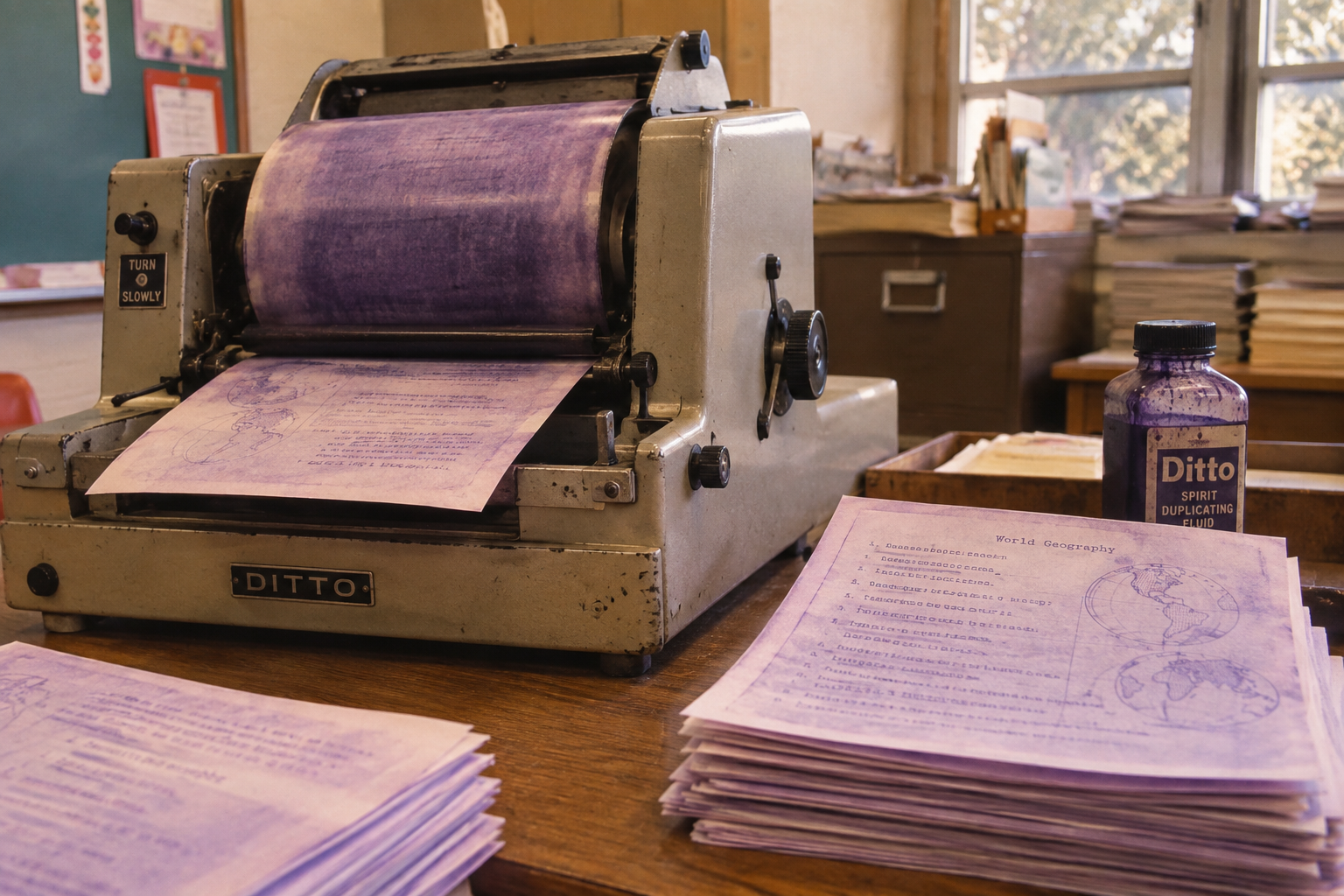
Long before teachers could hit “print” and produce 30 perfect copies, there was the Ditto machine. Spirit duplicators were widely used to reproduce worksheets, quizzes, maps, and assignments, creating copies recognizable by their purple or bluish ink. But former students may remember the smell just as clearly as the color. Fresh Ditto pages had such a distinctive solvent aroma that getting a newly printed worksheet could practically become a sensory experience of its own. Some kids even lifted the warm-ish pages toward their faces for a sniff before getting around to the actual assignment.
A Filmstrip Projector
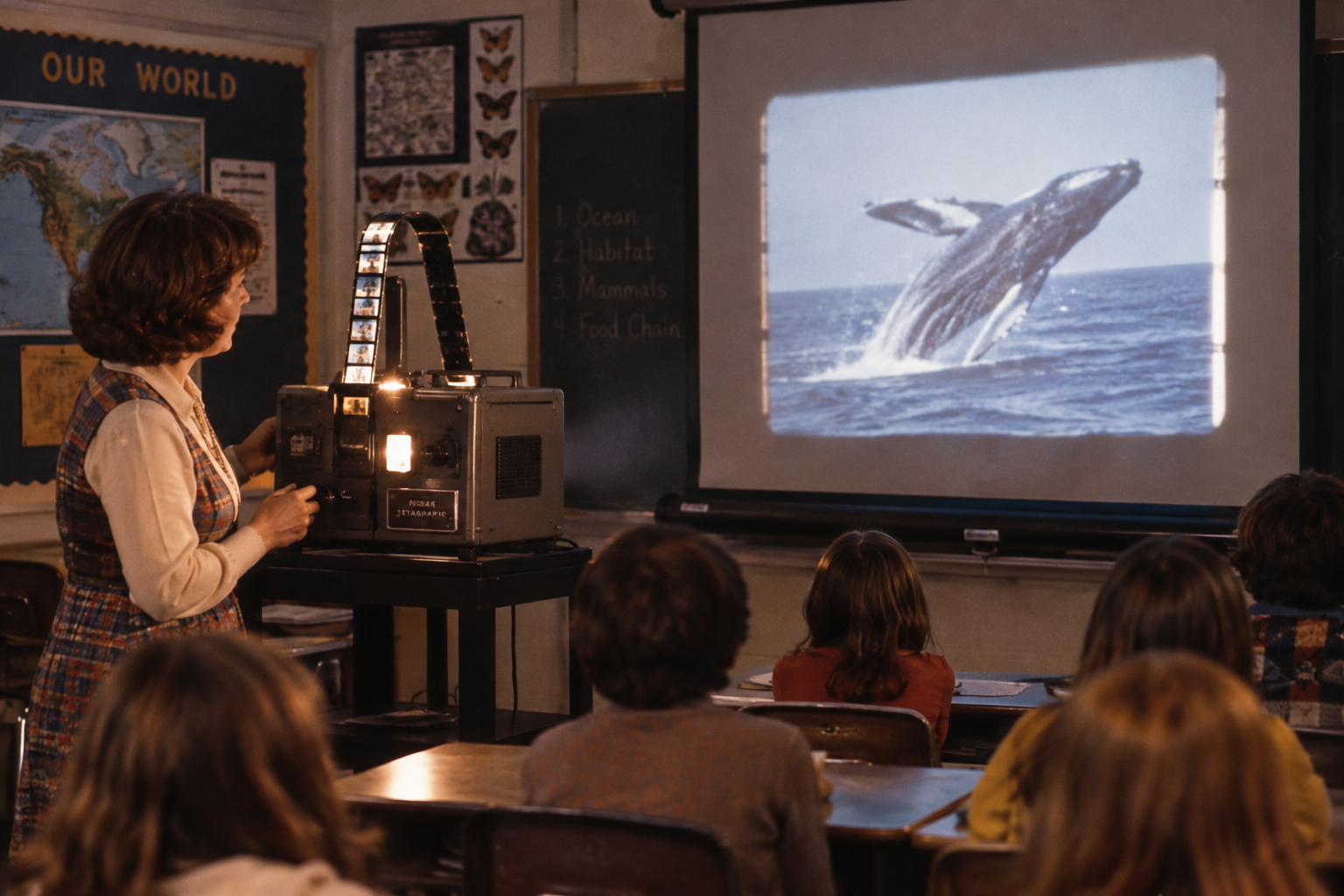
A teacher turning off the classroom lights was often a very good sign. Filmstrips presented lessons as a sequence of projected still images, usually accompanied by narration on a record or cassette. A beep told whoever was operating the projector when it was time to advance to the next frame. Compared with streaming a video today, the whole operation was remarkably complicated, but getting selected to turn the projector knob when the beep sounded could feel like a genuine classroom promotion.
An Overhead Projector
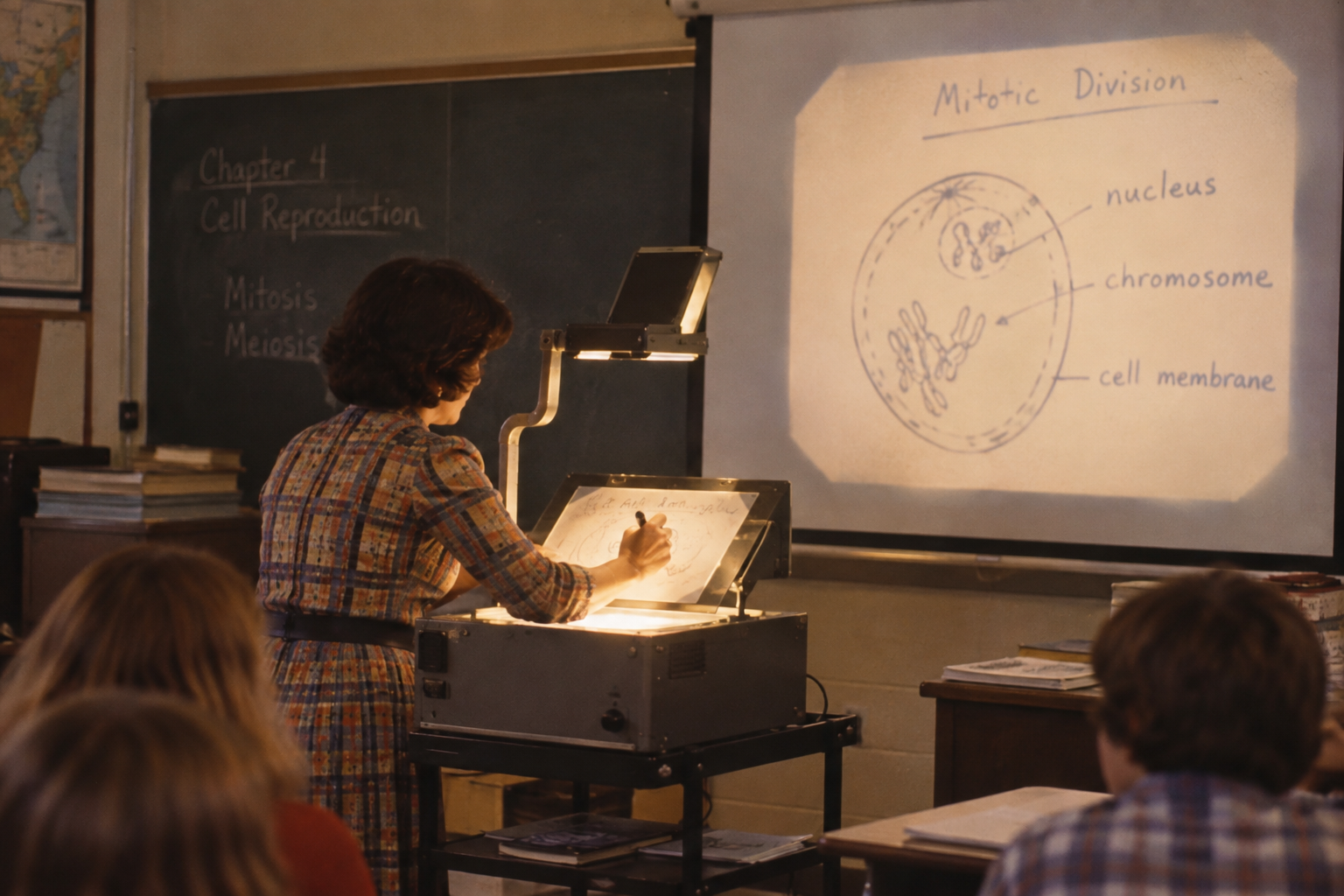
The overhead projector was about as close as many 1970s classrooms came to an interactive display. Teachers could place transparent sheets on its illuminated surface and write directly on them while the material appeared enlarged on a screen or wall behind them. The machine had its own collection of memorable quirks: the bright glass, humming fan, hot bulb, long projection arm, and the occasional teacher’s hand suddenly appearing enormous on the screen. It wasn’t exactly sleek, but for its time, it could feel impressively high-tech.
Pull-Down Maps Above the Blackboard
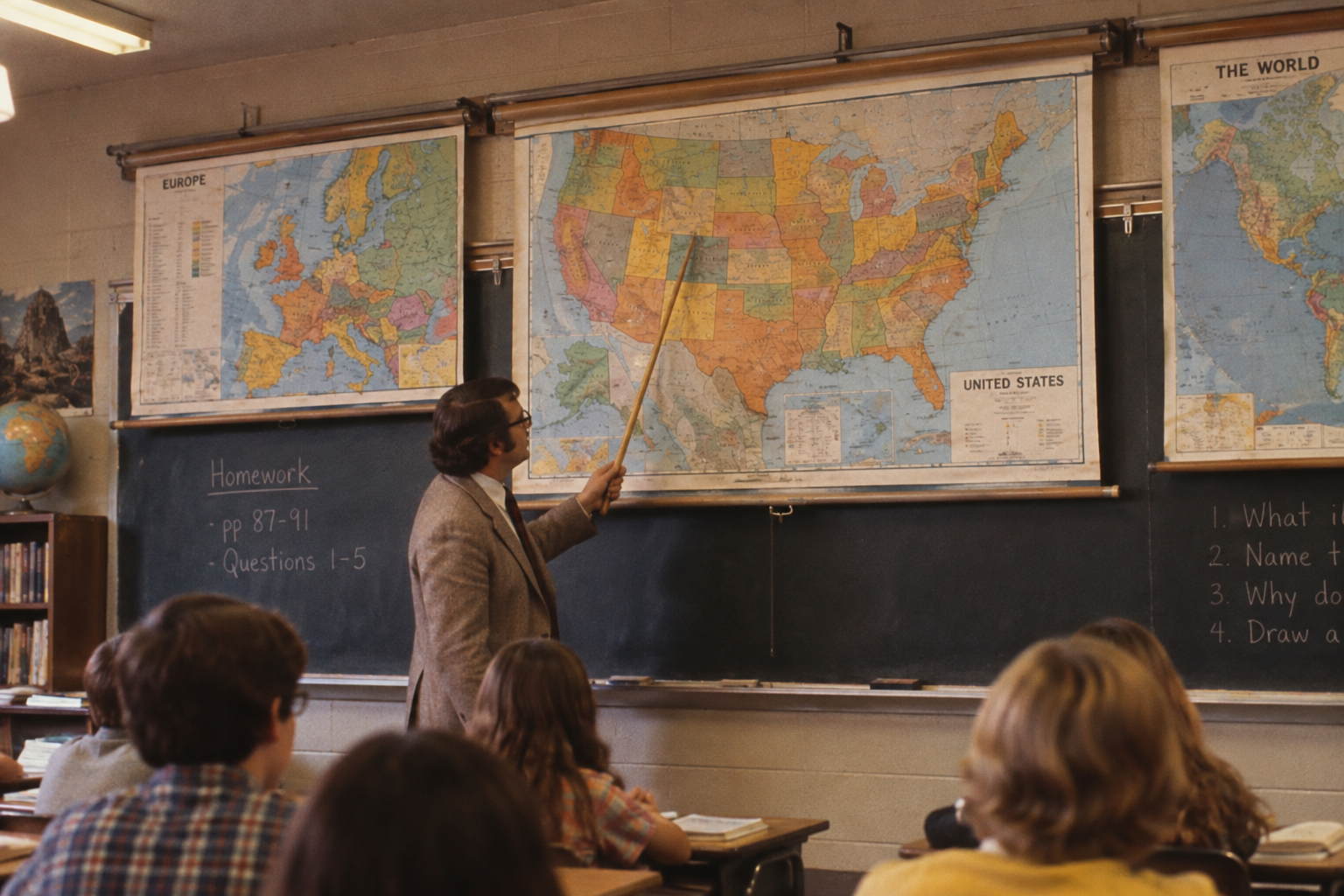
Maps didn’t require clicking, zooming, or waiting for anything to load. Many classrooms had several enormous maps mounted on spring-loaded rollers above the chalkboard, allowing teachers to pull down whichever part of the world the day’s lesson required. The most memorable part may have been what happened afterward: Release one carelessly and it could shoot upward with a loud snap. Those maps also captured a very different political world, with names such as the Soviet Union, East Germany, West Germany, and Yugoslavia appearing where today’s maps look considerably different.
Trending on Cheapism

Heavy Wood-and-Metal Desks
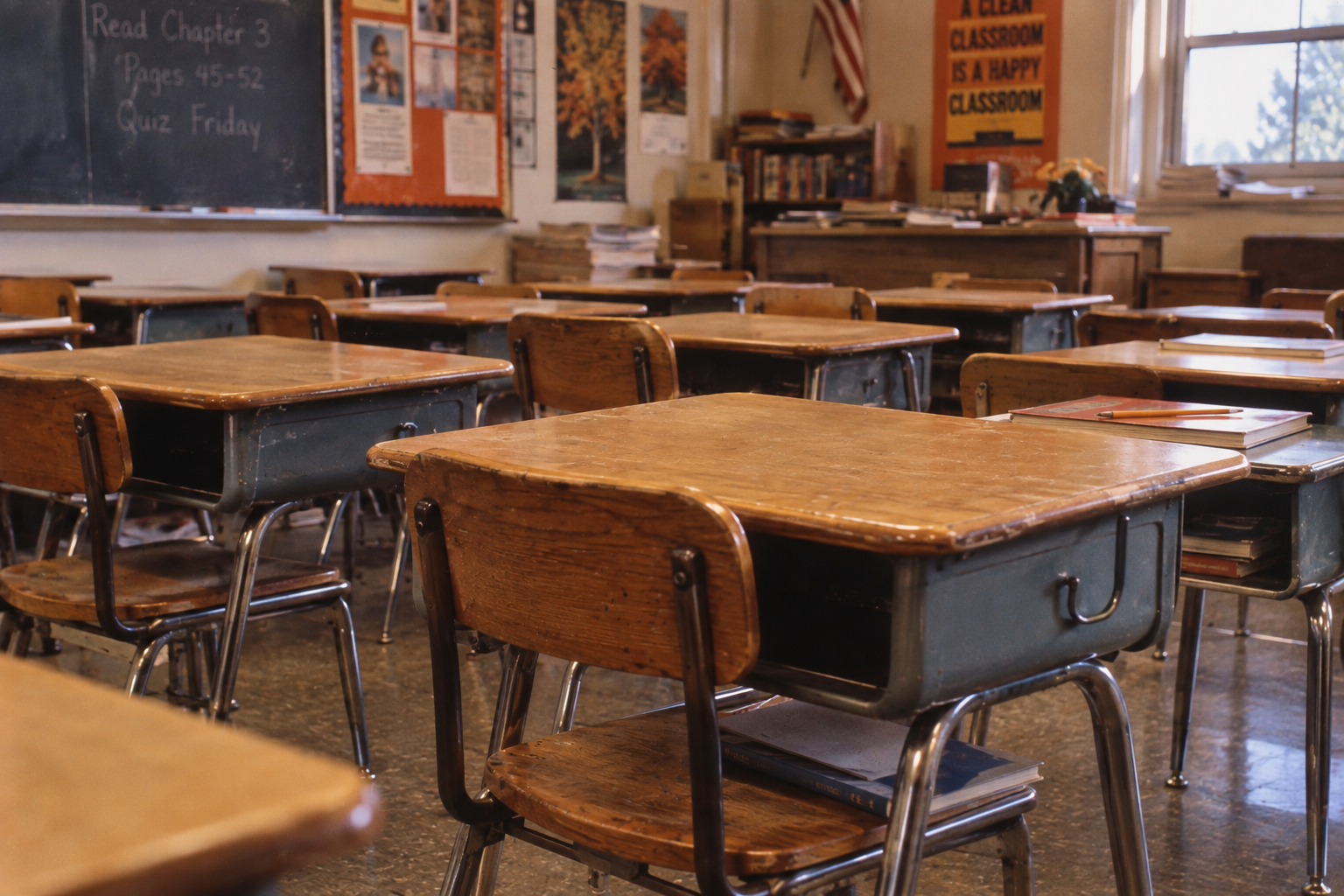
Forget lightweight furniture that can be rearranged for group activities. Plenty of students spent their school days sitting in sturdy individual desks with metal frames and heavy wooden or laminate surfaces. Older versions sometimes had lift-up lids, turning the inside into a miniature archaeological site filled with broken pencils, crumpled worksheets, crayons, eraser bits, and whatever else had vanished during the semester. The desks themselves often carried evidence of previous generations, too, from carved initials and scratches to dried glue and the inevitable piece of old gum stuck underneath.
Felt Chalkboard Erasers
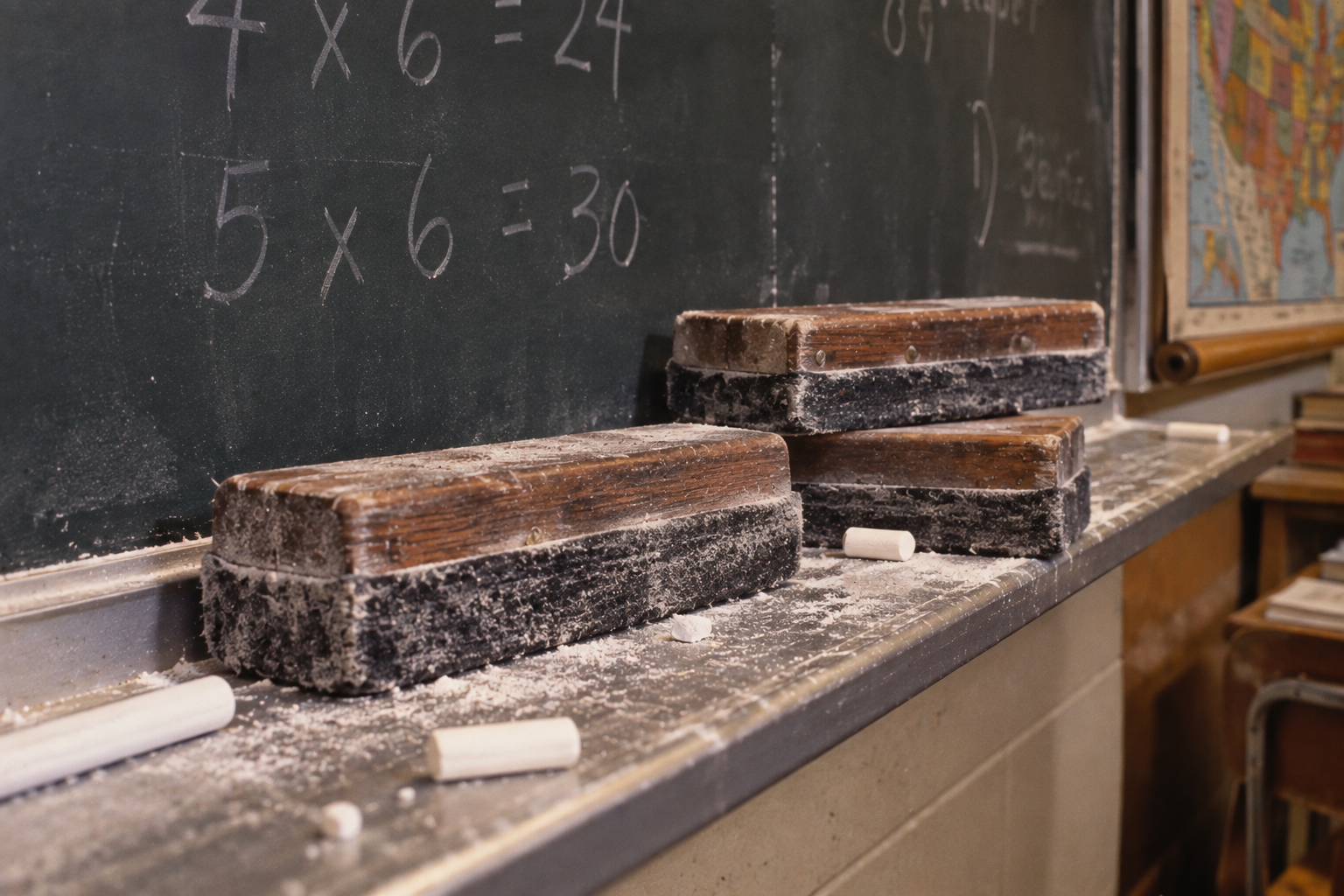
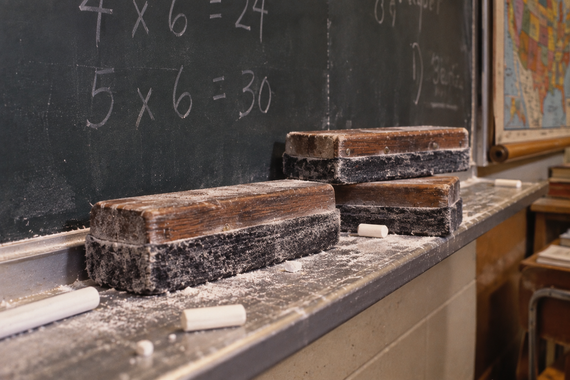
Where there were chalkboards, there were thick felt erasers slowly absorbing an entire day’s worth of chalk dust. Eventually, somebody had to clean them, and that job sometimes fell to students. Taking a pair outside and smacking them together could produce a spectacular white cloud that suggested the erasers were getting cleaner while the student doing the cleaning definitely wasn’t. It was one of those tiny classroom chores that could somehow feel like a privilege when it meant getting out of your seat.
A Big Classroom Globe
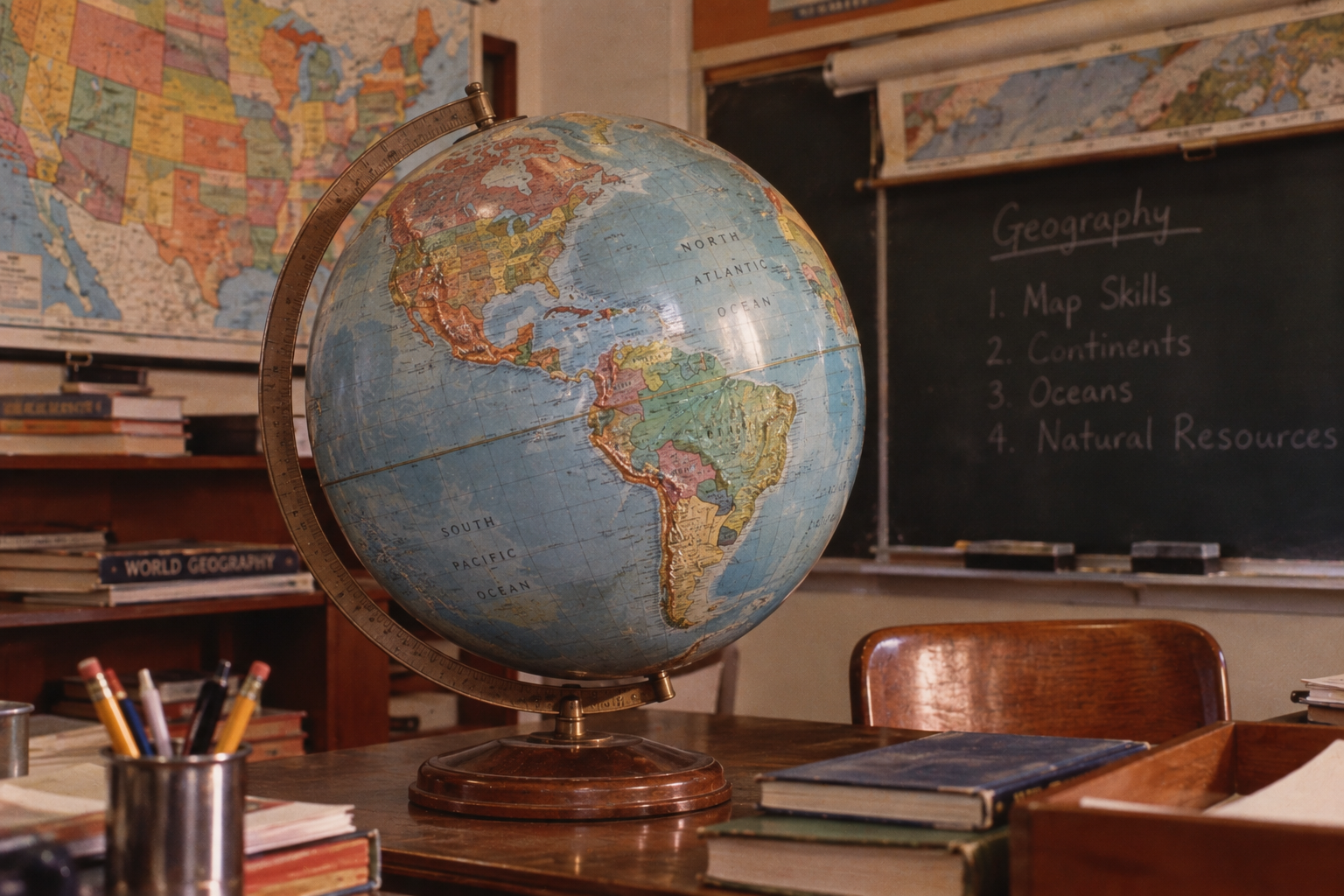
There was usually a globe somewhere in the room, whether it sat on a bookshelf, occupied a corner of the teacher’s desk, or emerged specifically for geography lessons. Many were substantial objects with metal stands and raised mountain ranges that students could actually run their fingers over. Of course, the globe had another unofficial purpose: spinning it as fast as possible, dropping a finger onto the surface, and declaring that wherever it landed was where you were going to live someday. The Pacific Ocean ruined a surprising number of imaginary relocation plans.
Sign up for our newsletter
A Pull-Down Projection Screen
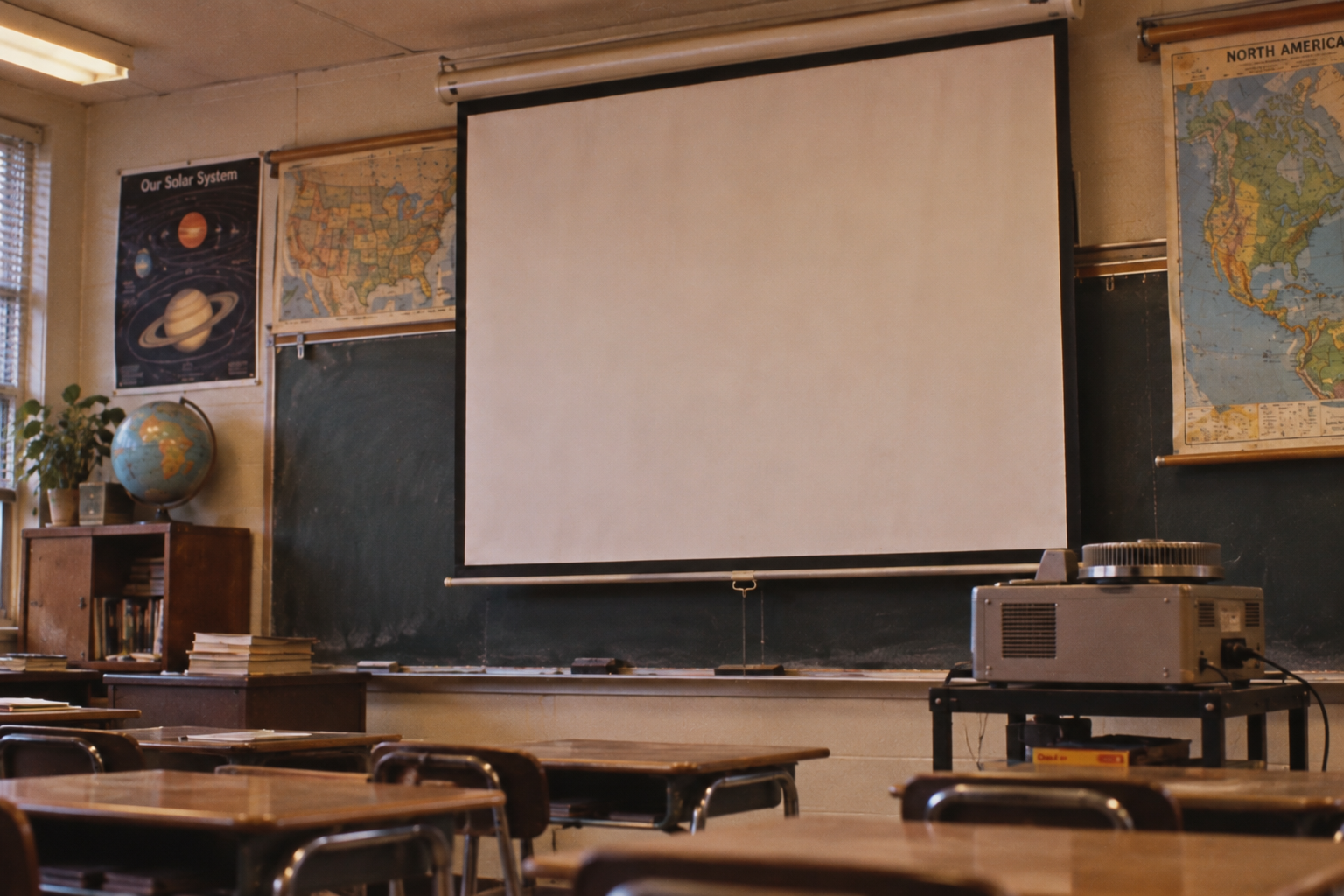
A classroom projector wasn’t much use without something to project onto, so many rooms also had a white screen mounted near or above the chalkboard. Most of the time, it stayed rolled tightly out of the way. But when the teacher reached for its little metal handle and pulled it down, students knew the regular routine might be changing. Whether it meant a filmstrip, slides, or an actual educational movie, the appearance of the projection screen could instantly make an ordinary school period more interesting.
A Wooden Pointer
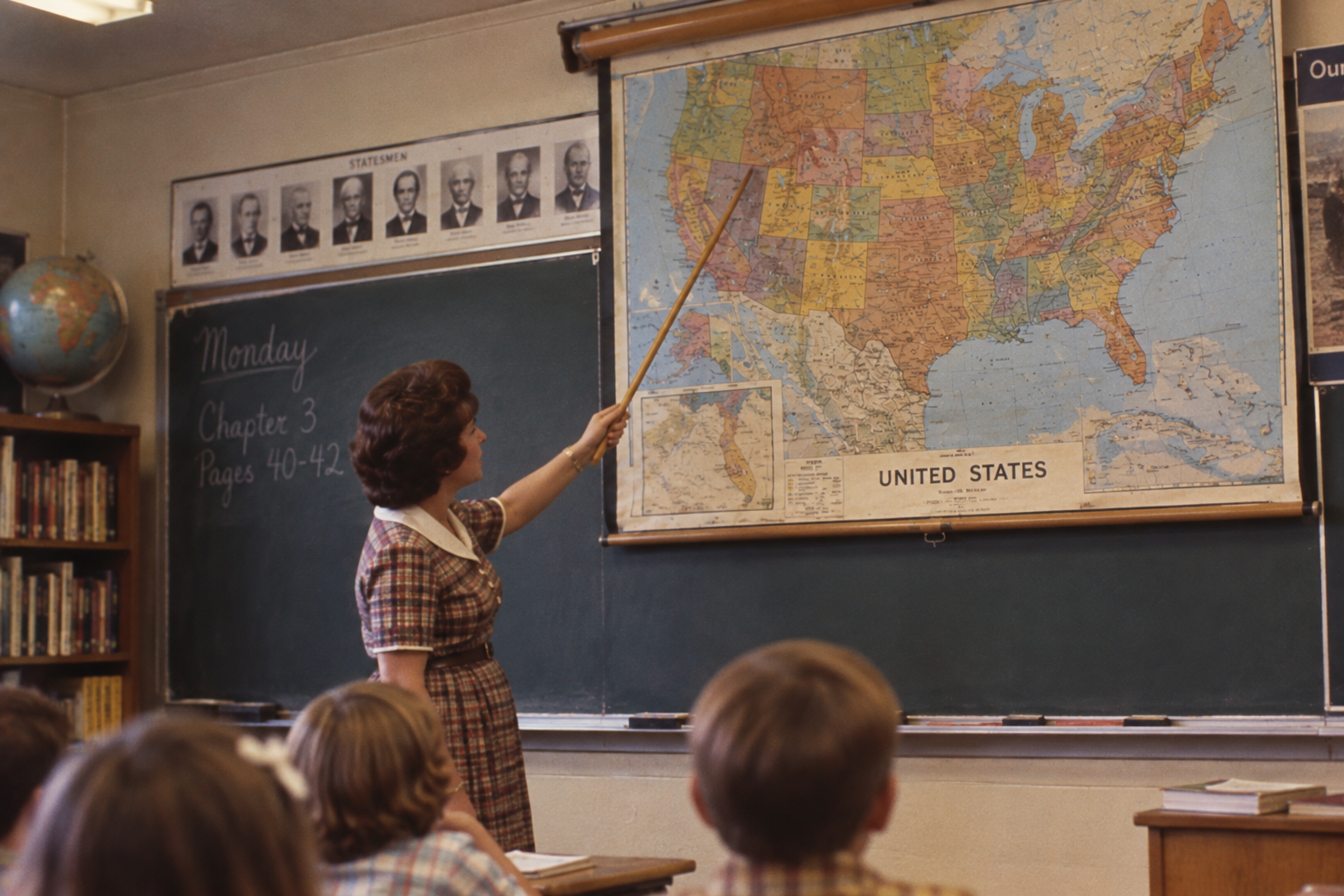
Laser pointers weren’t necessary when a long wooden stick could do the job perfectly well. Teachers used wooden pointers to direct attention toward states on a map, sentences on the chalkboard, diagrams, charts, or whatever else students were supposed to be looking at. There was something especially effective about the sharp tap of wood against a pull-down map when everyone’s attention started wandering. When it wasn’t in use, the pointer might simply rest along the chalk tray or lean against the wall near the board.
A Film Projector on a Rolling AV Cart
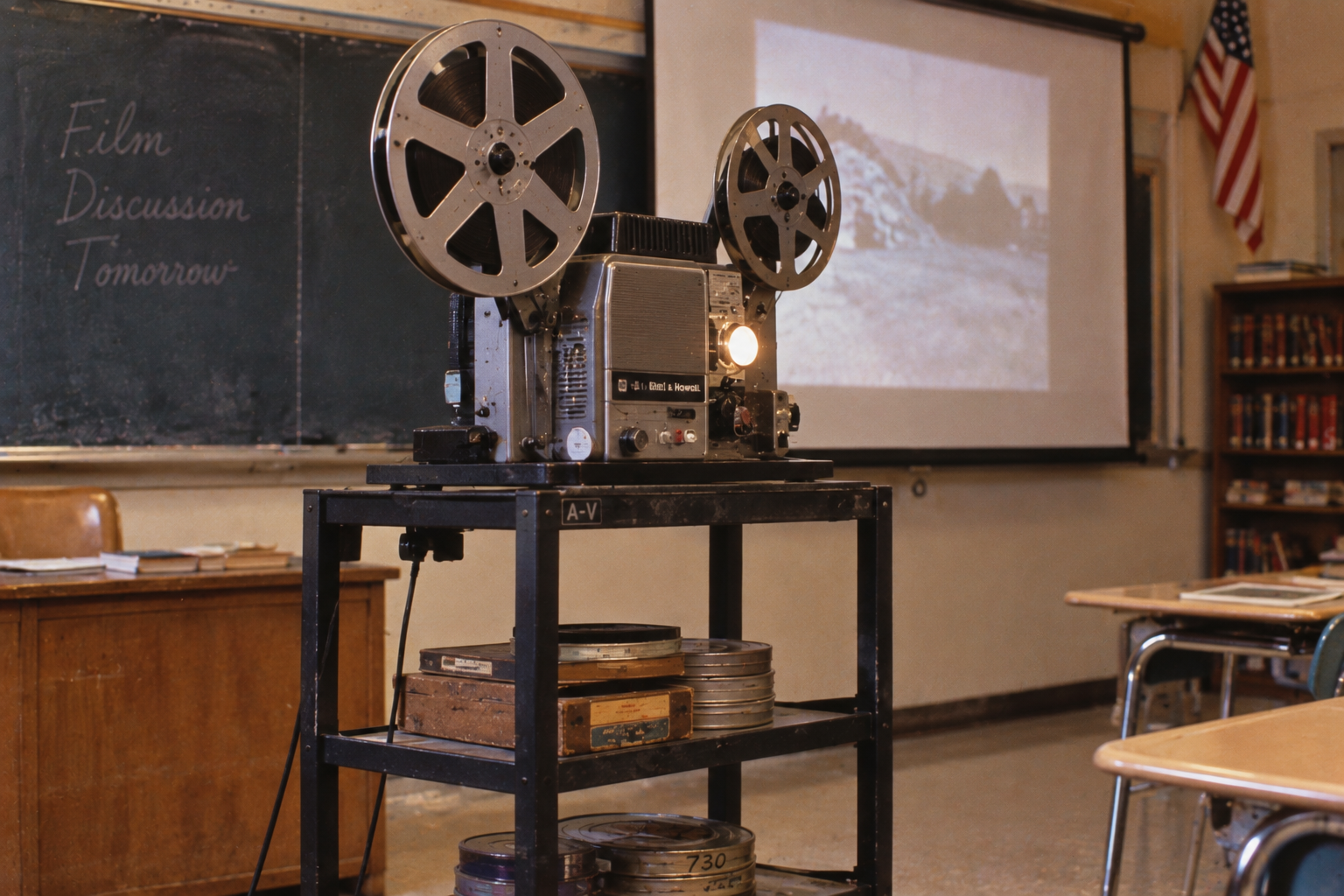
Few sights inspired more classroom optimism than an audiovisual cart appearing in the hallway. Film projectors, reels, speakers, and all the necessary cords could be wheeled from room to room, turning an ordinary lesson into something that felt almost like a special event. The setup wasn’t always seamless — threading film and getting everything running could take time — but students generally weren’t going to complain if it meant fewer minutes spent on regular classwork. Spotting that cart before class could make you feel like you’d just been handed a tiny unexpected vacation.
The Teacher’s Massive Desk
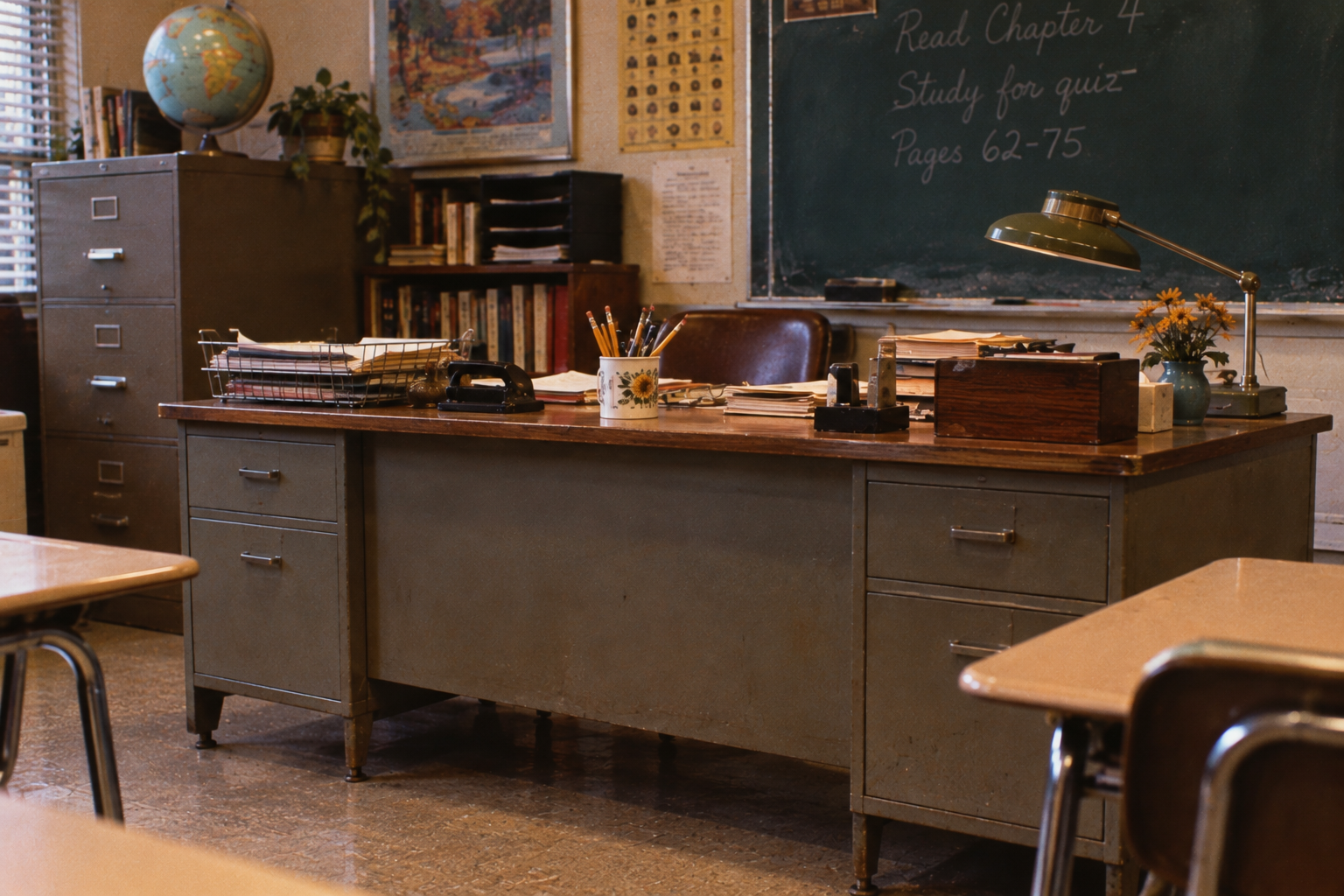
The teacher’s desk wasn’t simply a place to sit. It was classroom headquarters. Papers, attendance books, pencils, staplers, lesson plans, coffee cups, folders, and mysterious objects students weren’t supposed to touch could accumulate across its surface and inside its drawers. Without laptops, digital gradebooks, and classroom apps consolidating so much paperwork, teachers needed actual physical space for the materials that kept the school day moving. Unfortunately for students, being called over to that imposing desk rarely seemed to mean anything good.
The Classroom Was Almost Entirely Analog
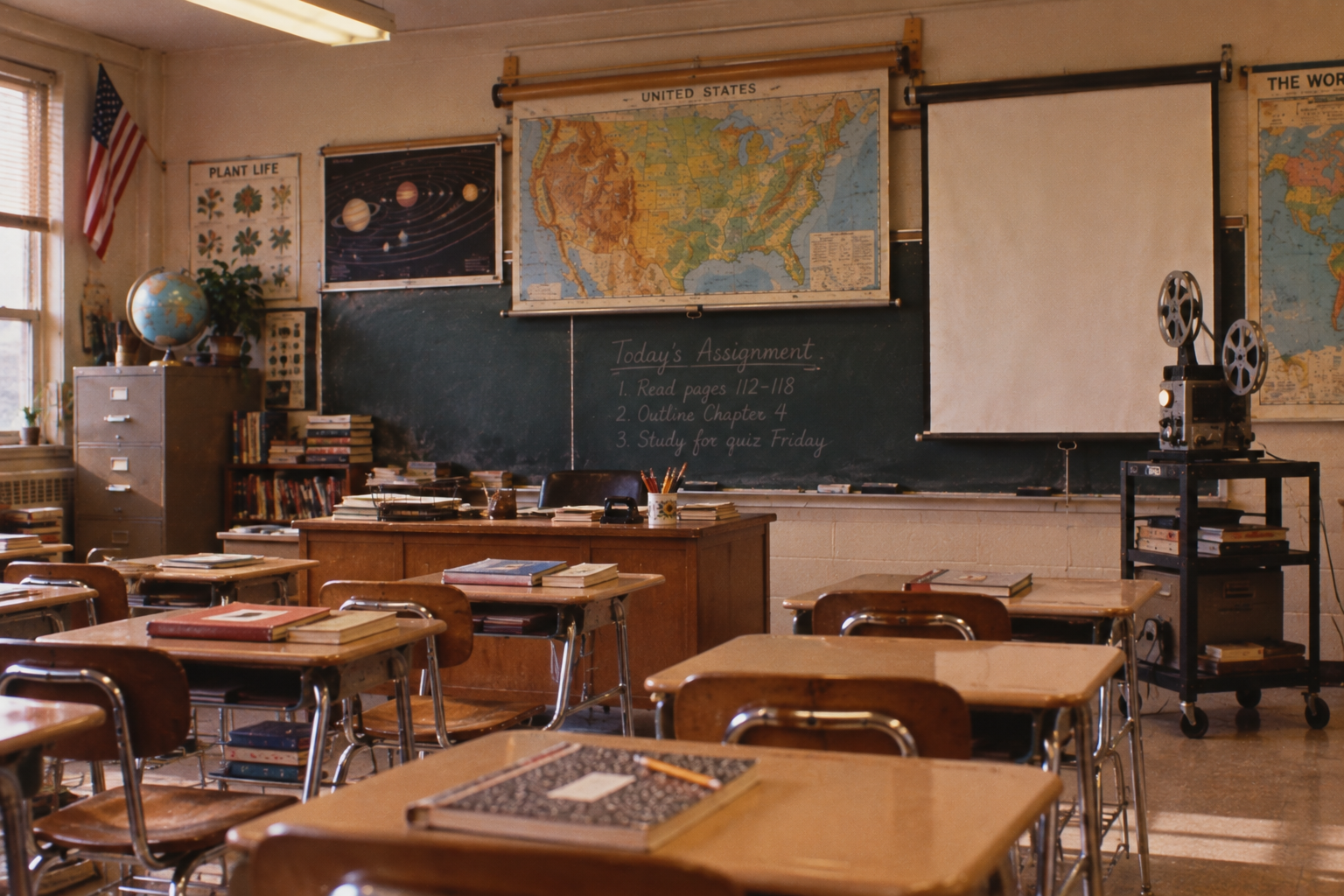
What makes a 1970s classroom feel so distinctive today isn’t just any one object. It’s how physical almost everything was. Lessons involved chalk, paper, transparencies, maps, film, reels, switches, screens, and machines that had to be rolled across the room before anyone could use them.
And those objects created sensory memories that are difficult for modern technology to reproduce: the smell of a fresh Ditto sheet, the beep of a filmstrip, the snap of a retracting map, the cloud from two chalkboard erasers, or the hum of a projector after the lights went down. Put a chalkboard, a few metal desks, a giant globe, and a stack of purple worksheets together today, and plenty of former students would probably know exactly which decade they’d walked into.