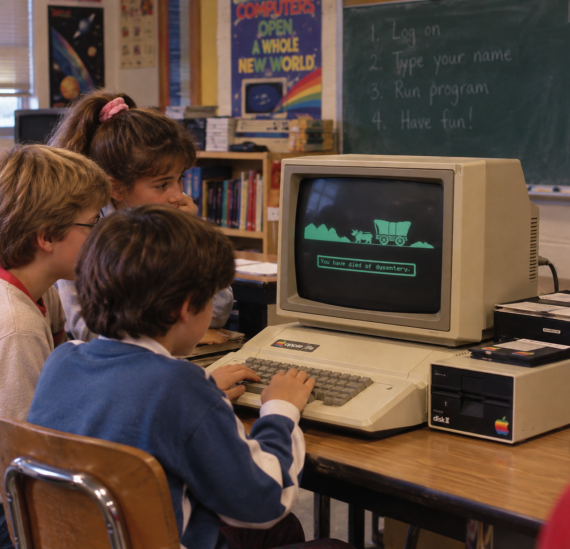
Walk into a 1980s elementary school in America and you could probably identify the decade before the first bell rang. There were dusty chalkboards at the front of the classroom, pull-down maps hanging above them, metal playground equipment outside, and at least one piece of audiovisual technology that required a rolling cart.
It was also an oddly transitional time to be a student. Schools were still handing out purple ditto worksheets and showing filmstrips, even as VCRs and computers began making their way into classrooms. By fall 1984, more than 82% of public elementary schools reported using at least one microcomputer for instruction, though there were still nearly 80 students for every computer.
Plenty of these school staples survived well into the 1990s, but put them all together and the result is unmistakably ’80s. Here are 12 things that could make former elementary school students feel like they’re back at their desks.
A Rolling TV and VCR Cart
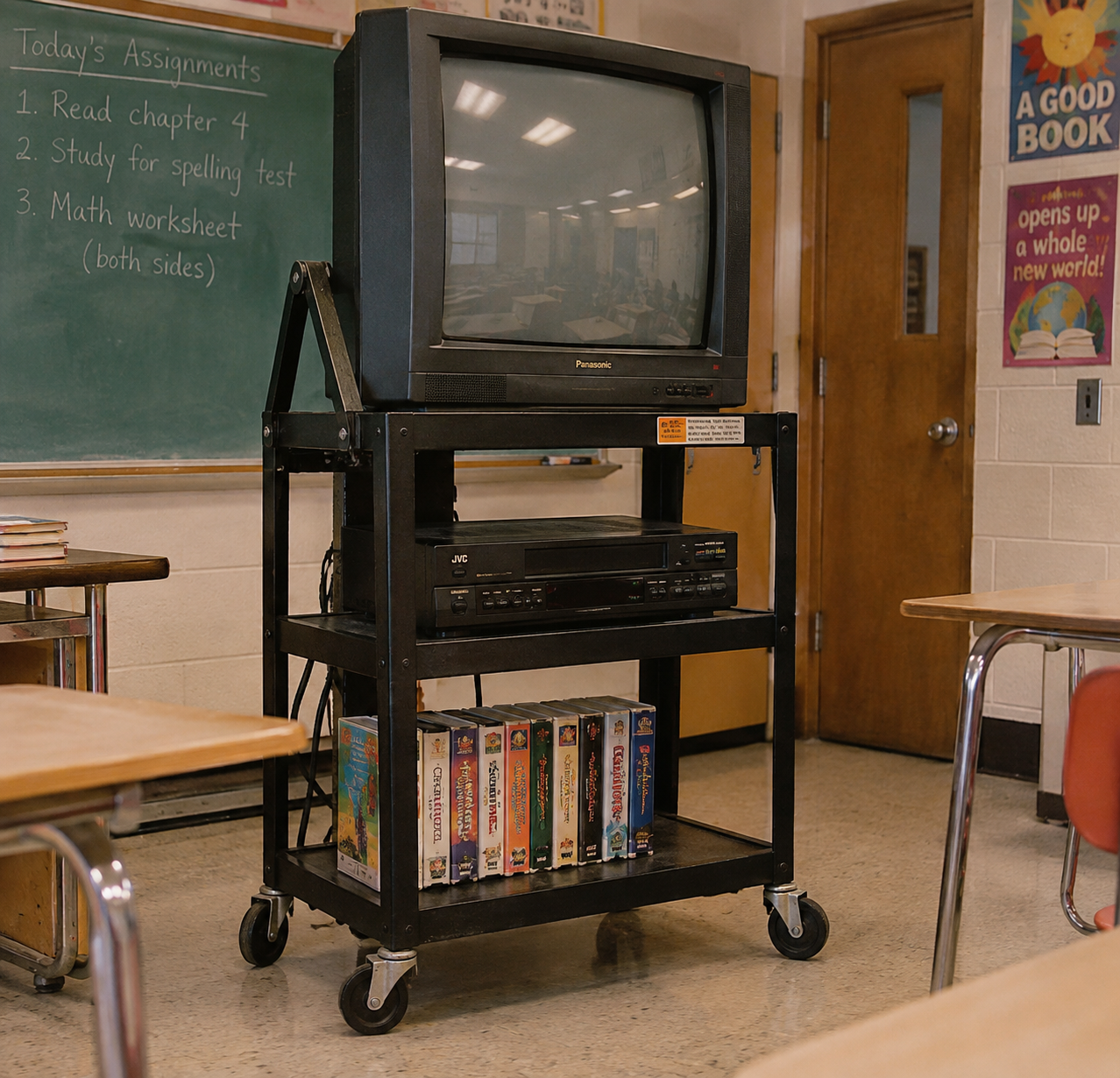
Few sights could improve an ordinary school day faster than a television rolling through the classroom door. The TV itself was usually enormous, perched precariously high on a metal cart, while a VCR occupied one of the shelves underneath. Once the blinds were closed and the teacher popped in a tape, regular class had effectively been suspended. Of course, there was always the possibility that the first few minutes would be spent adjusting the tracking, rewinding the tape, or trying to figure out why the picture wasn’t appearing.
An Overhead Projector
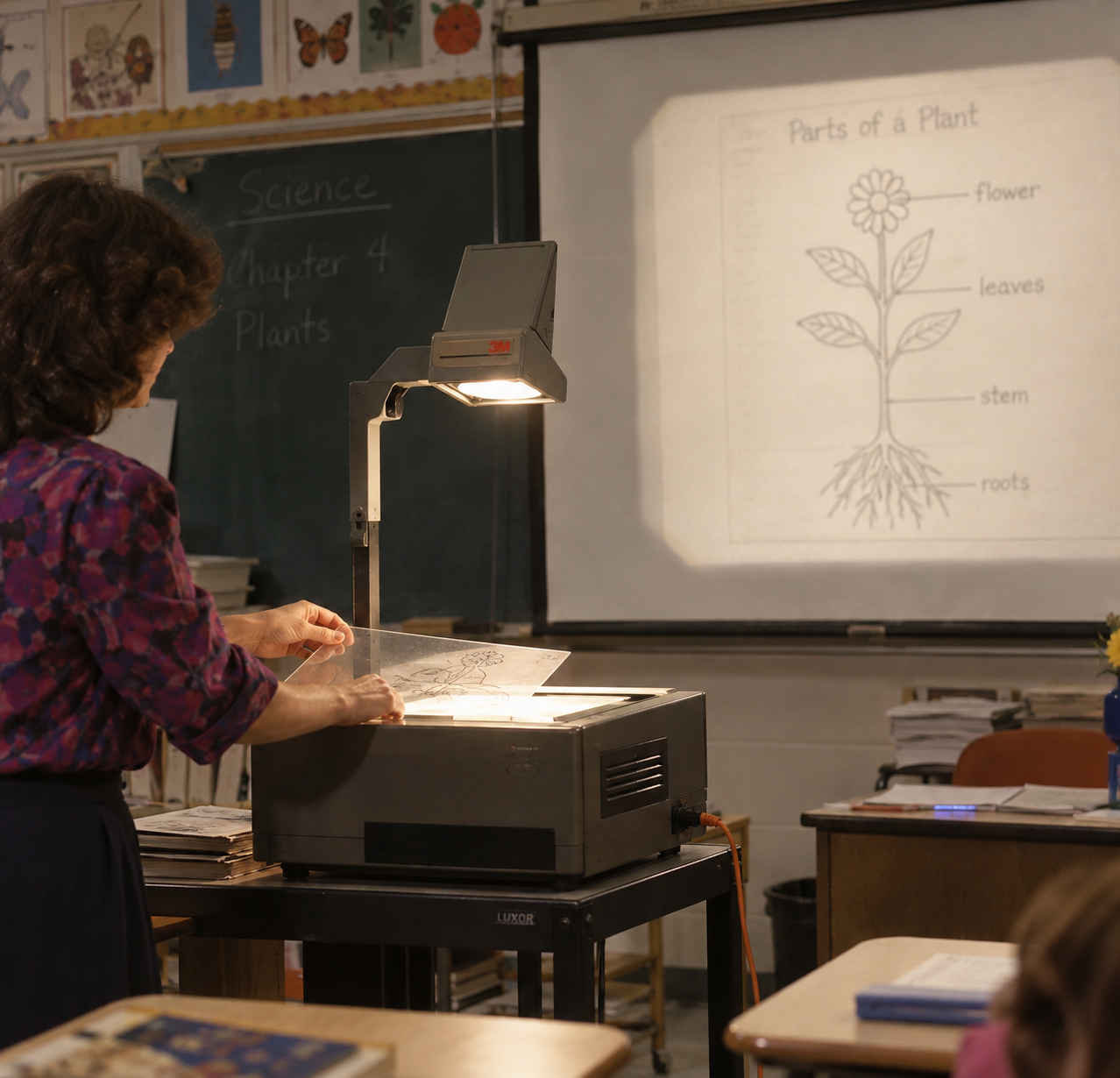
Long before teachers could pull up a presentation on a smartboard, there was the overhead projector. Teachers wrote on transparent plastic sheets while a bright lamp projected their notes onto a screen or wall, sometimes strategically covering part of the transparency with a piece of paper before dramatically revealing the next answer. The humming fan, stacks of transparencies, and teacher’s colorful transparency markers were all part of the experience. At the time, it felt impressively high-tech.
A Classroom Computer Everyone Had to Share
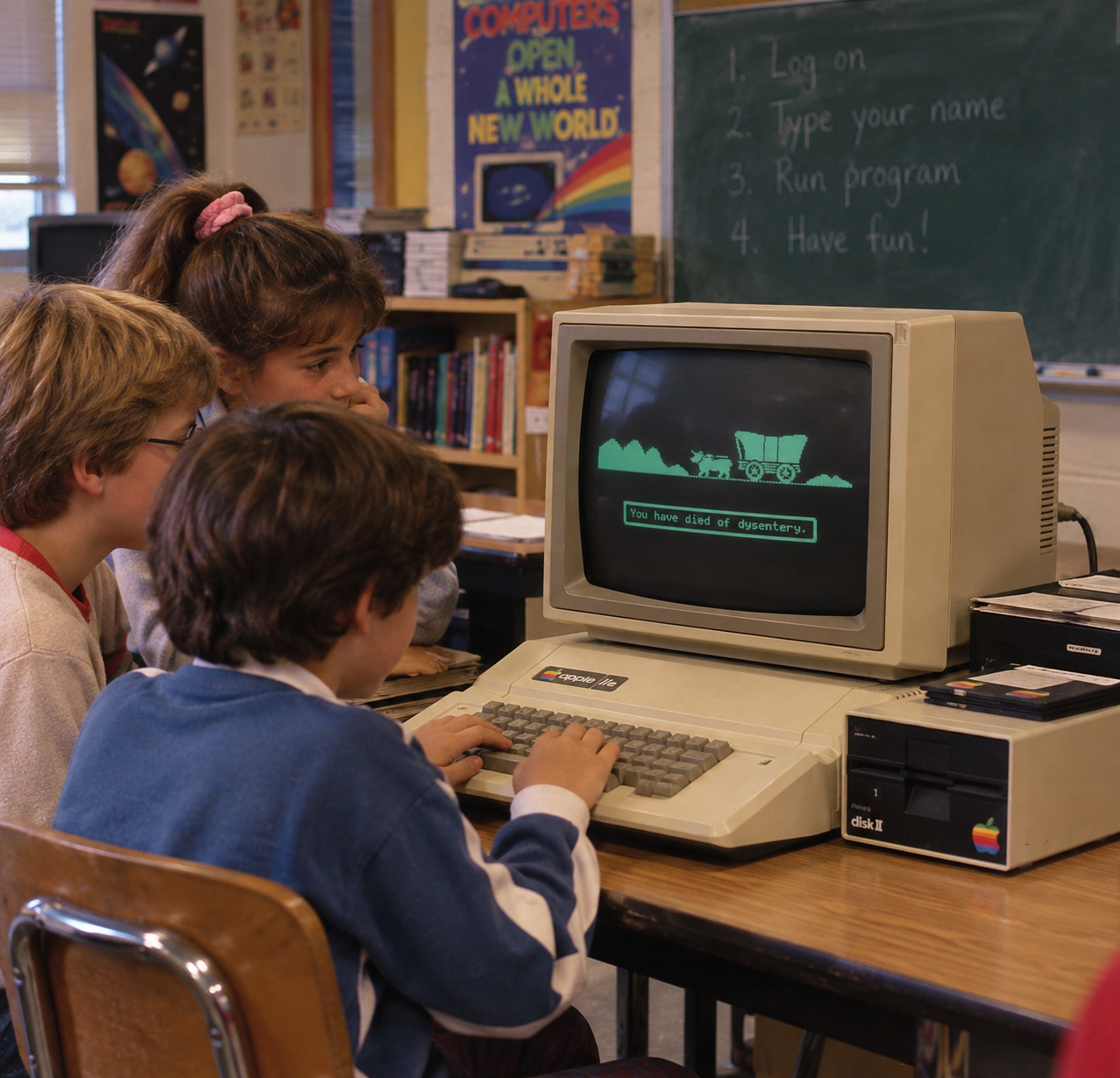
Having a computer at school was exciting partly because there weren’t enough to go around. Apple became particularly dominant in education during the decade; in 1984, Apple computers accounted for roughly half of the school microcomputer market. A class might share a machine or make occasional trips to a small computer lab, where chunky keyboards, 5¼-inch floppy disks, blinking cursors, and programs such as The Oregon Trail made computers feel like something halfway between schoolwork and a glimpse of the future. The hardest part was usually waiting for your turn.
Chalkboards Covered in Dust
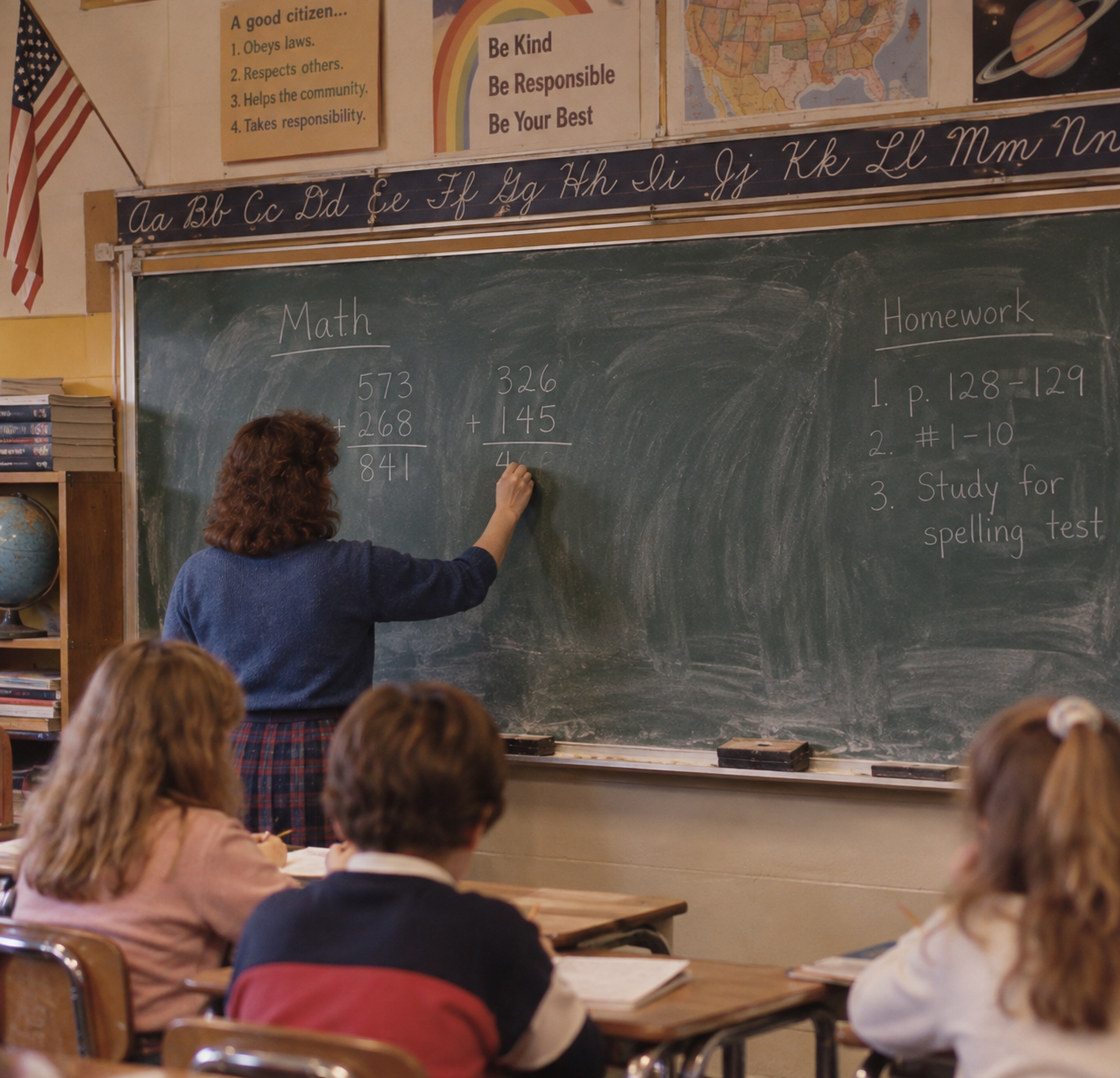
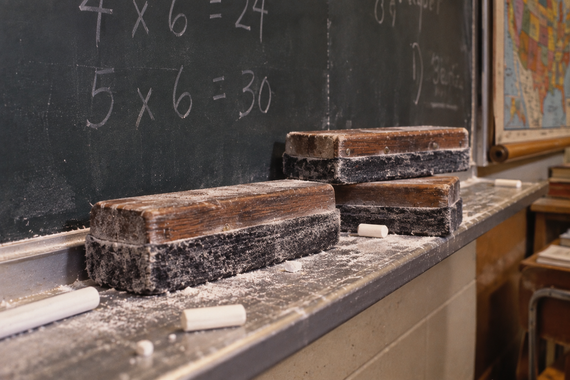
Whiteboards weren’t yet the default, which meant teachers spent their days filling enormous black or green chalkboards with spelling words, multiplication problems, homework assignments, and diagrams. By the end of class, the tray underneath could be coated in chalk dust, along with the teacher’s hands and anything else unfortunate enough to be nearby. For certain lucky students, cleaning the board or taking the erasers outside to clap the dust out of them counted as an actual classroom responsibility.
Purple Ditto Worksheets
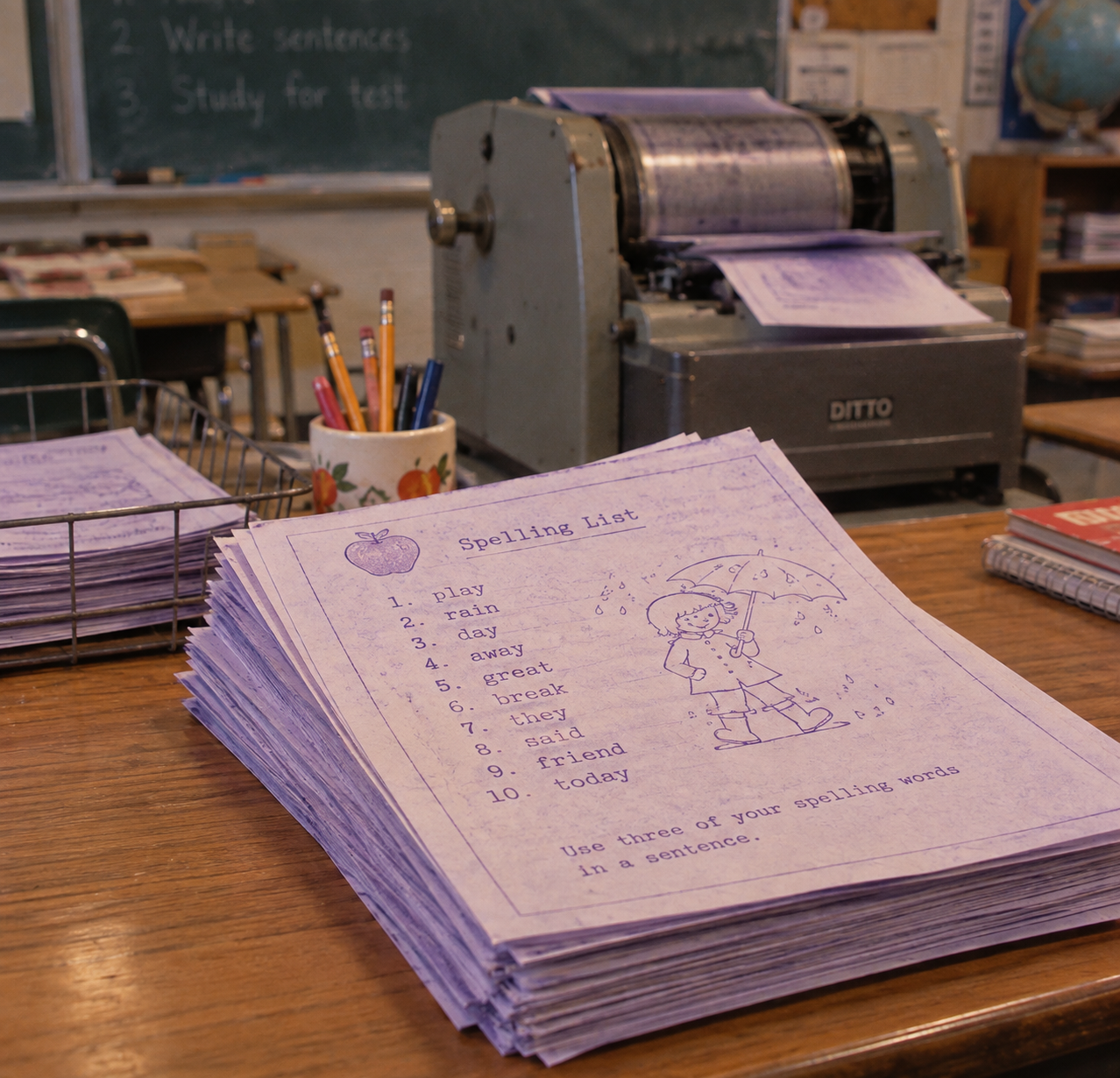
Some school memories aren’t visual at all. Anyone who encountered a freshly duplicated ditto worksheet may remember its strangely distinctive smell before remembering what was printed on it. Spirit duplicators produced copies with recognizable purple or blue-purple ink, and the pages could still feel slightly damp or cool when they reached students’ desks. Photocopiers eventually made the machines obsolete, but for kids who attended school while dittos were still hanging on, a purple worksheet can be an instant trip back to the classroom.
Trending on Cheapism


Metal Jungle Gyms
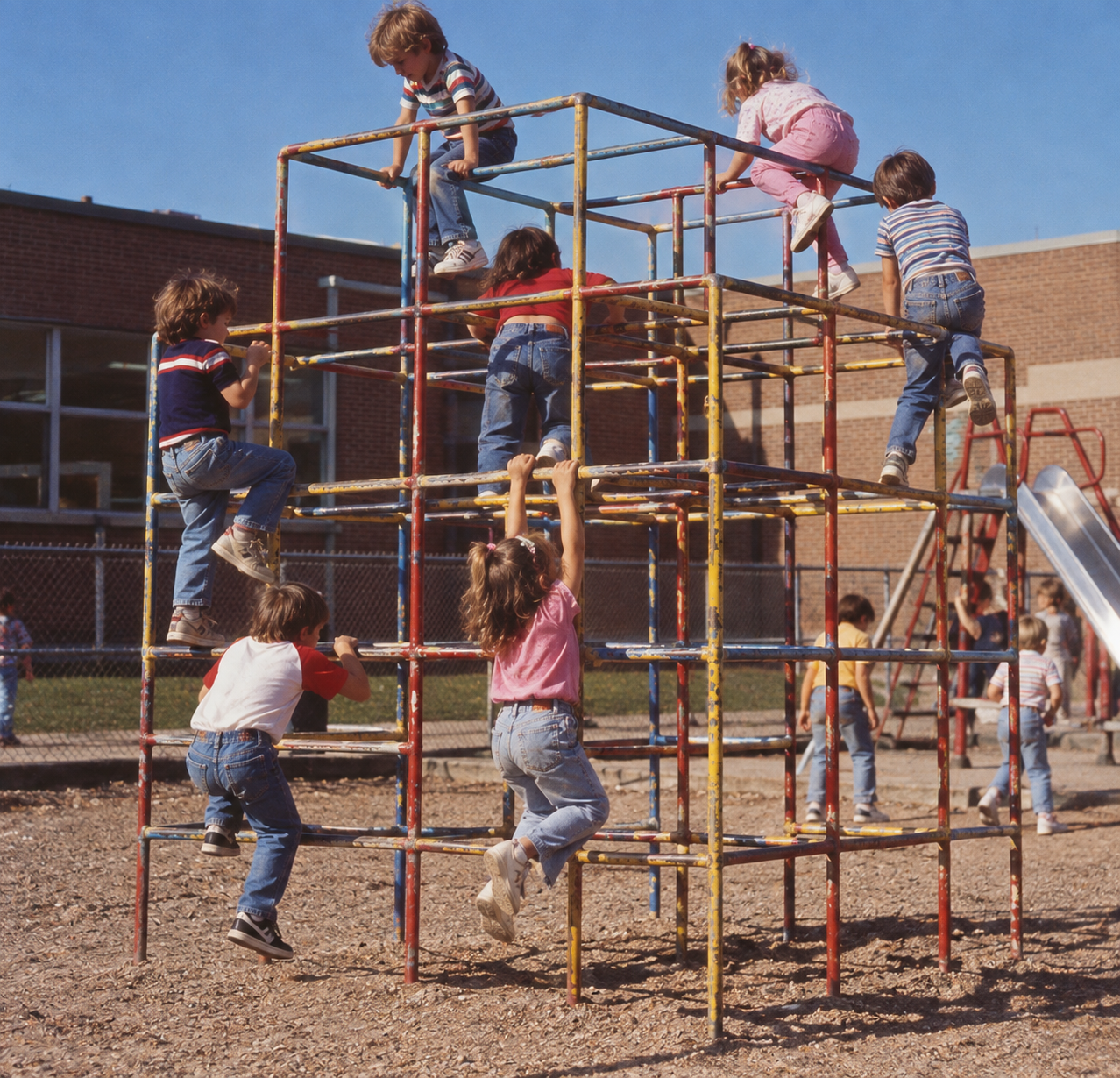
The playground could feel considerably less forgiving in the 1980s. Metal monkey bars, climbing frames, tall slides, and other equipment could become scorching in the sun, freezing in cold weather, and remarkably painful after a badly timed fall. Today’s federal playground-safety guidance recommends protective surfacing around equipment, but many older playgrounds are remembered for surfaces such as asphalt, packed dirt, gravel, or grass. The upside, at least from a kid’s perspective, was that the equipment often seemed enormous — and reaching the top of the jungle gym felt like a genuine accomplishment.
A Library Card Catalog
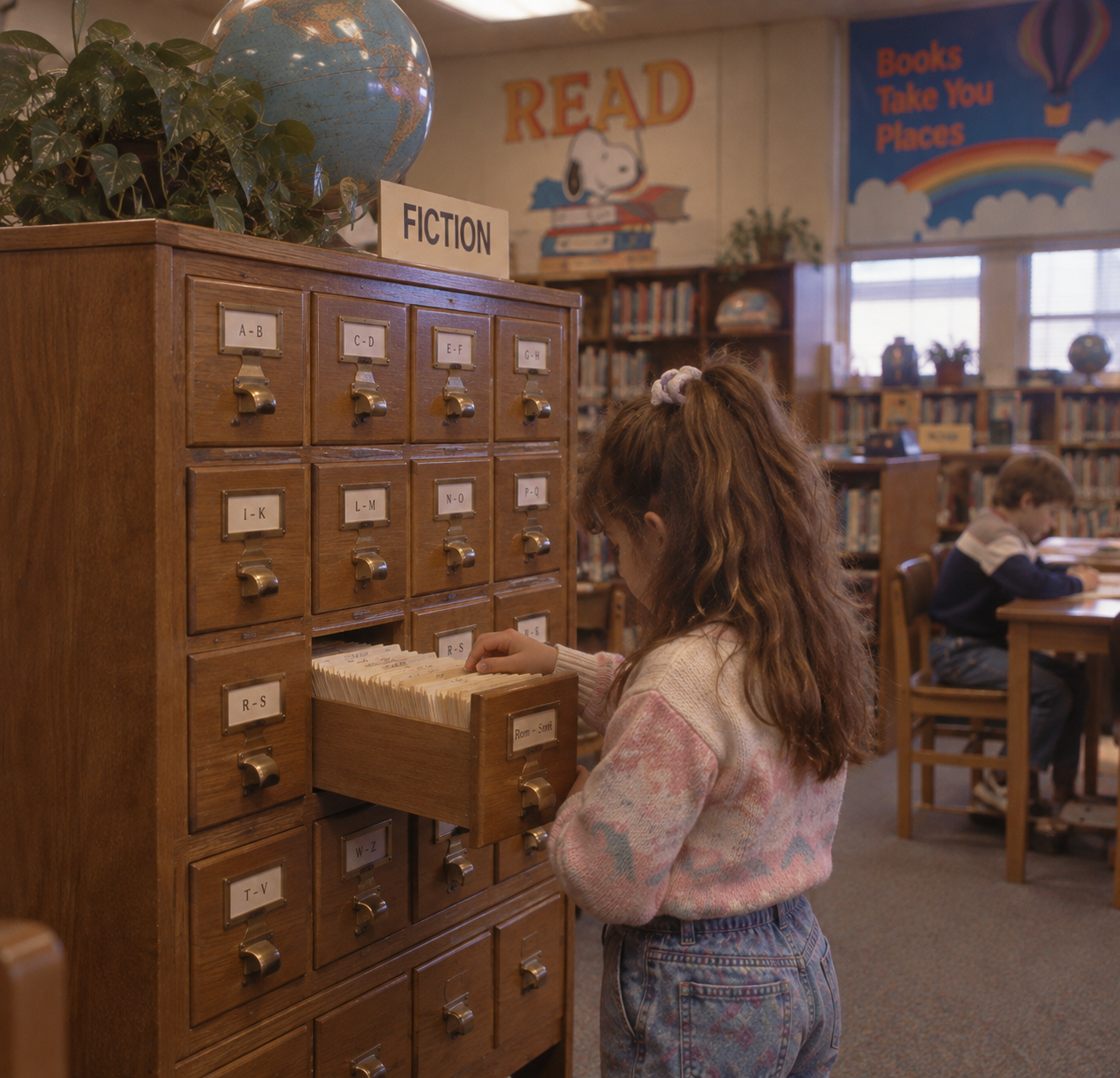
Research required considerably more drawer-opening. Instead of typing a title or keyword into a computer, students searched a card catalog, flipping through typed cards organized by author, title, or subject before copying down the call number and heading toward the shelves. The cabinets themselves seemed to contain hundreds of mysterious little drawers — and pulling one out farther than intended could suddenly turn a quiet library visit into a minor emergency.
Filmstrip Projectors
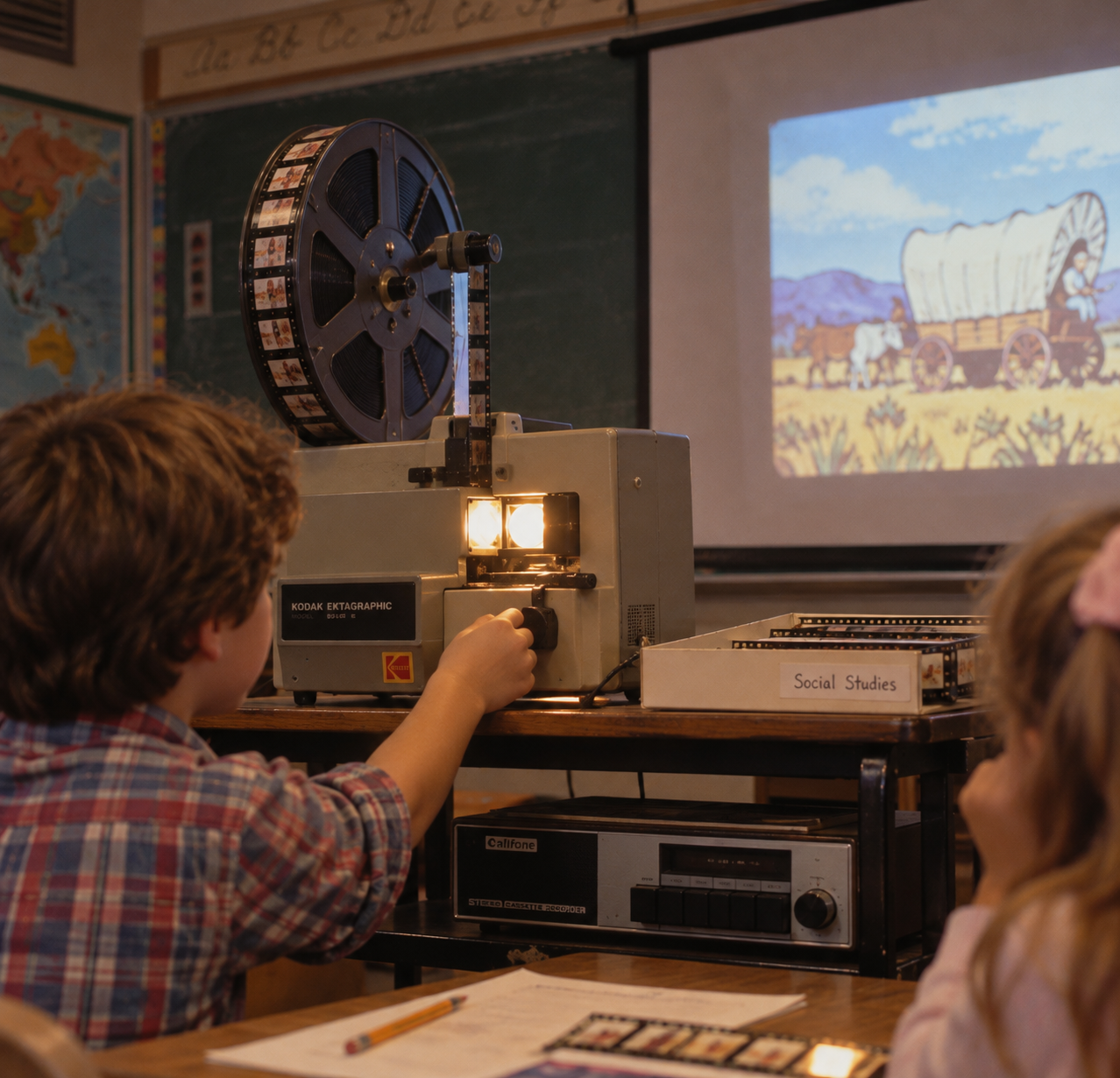
A filmstrip could transform an ordinary lesson into an event, particularly if the teacher selected a student to operate the projector. Still images appeared one after another while narration played from a record or cassette, with a beep signaling when it was time to advance to the next frame. Miss the signal and the entire presentation could fall out of sync. Filmstrips were already facing competition from newer video technology by the 1980s, but they hung around long enough to become part of the decade’s peculiar mix of old and new classroom technology.
Sign up for our newsletter
Cafeteria Trays With Separate Compartments
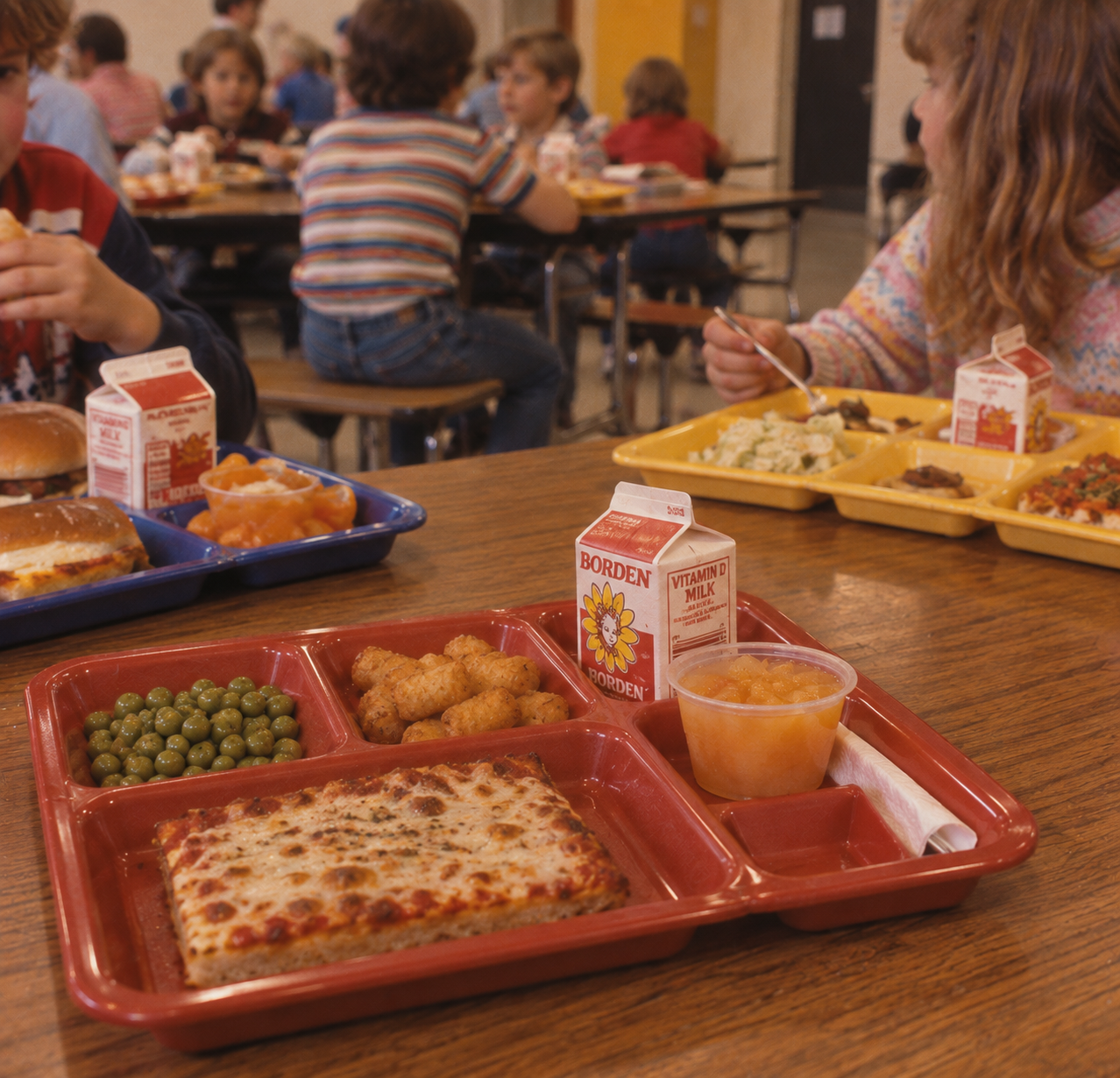
School lunch came with its own organizational system: a sturdy plastic tray divided into compartments so the entrée, vegetables, fruit, and dessert theoretically stayed in their assigned territories. Whether they actually did was another matter. Rectangular pizza, sloppy joes, fish sticks, tater tots, canned fruit, and tiny cartons of milk were among the foods generations of students encountered in school cafeterias. The National School Lunch Program itself had already been operating for decades by the time ’80s kids arrived with their lunch money. And in some schools, lunch ended with long cafeteria tables and attached stools being folded right back into the wall.
Pull-Down Maps and a Giant Globe
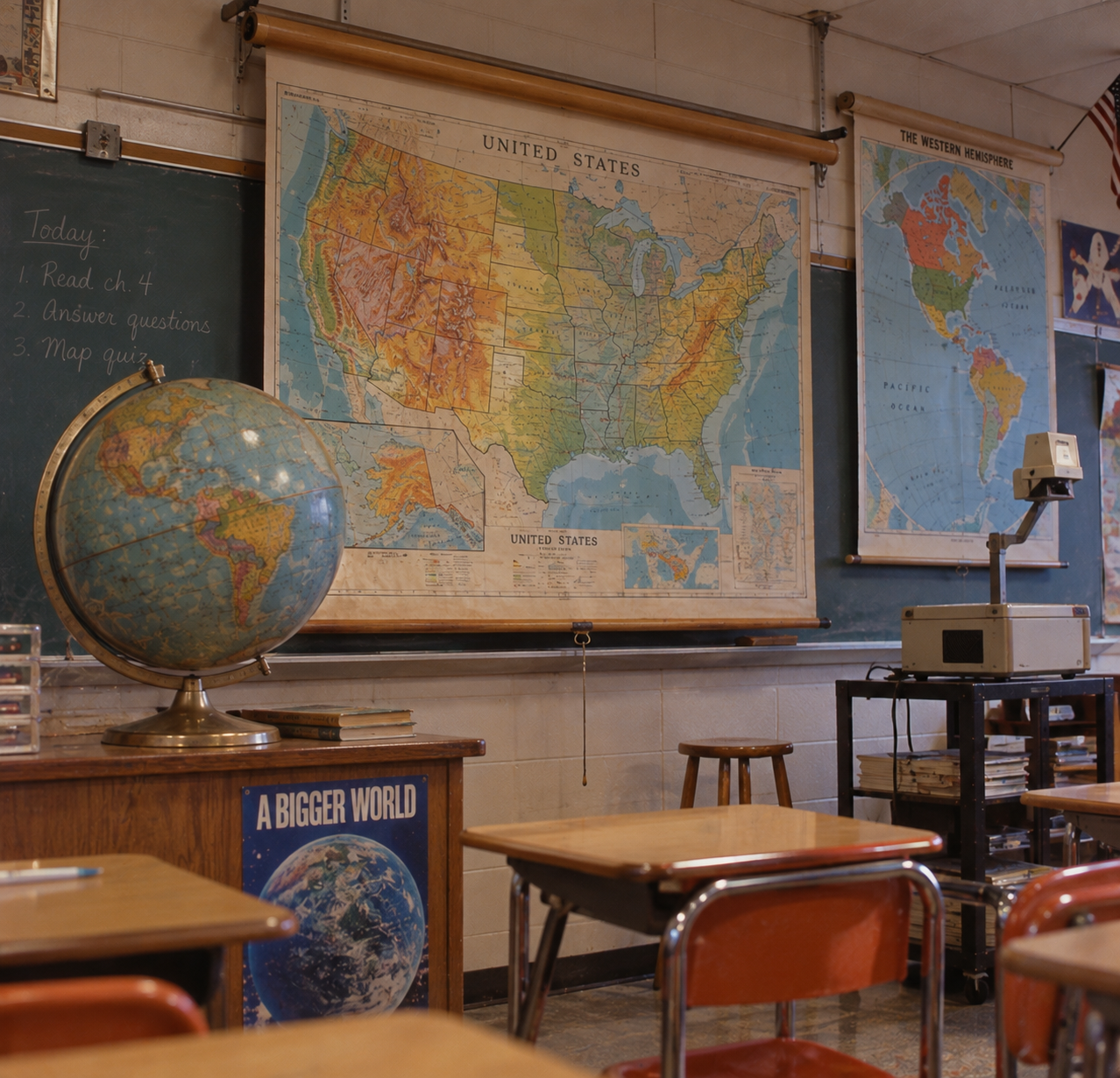
Before Google Earth could put practically anywhere on the planet on a classroom screen, geography was considerably more physical. Teachers pulled giant maps down from rollers above the chalkboard, while a globe sat somewhere in the room tempting students to give it a spin. The best part today is that those old maps can immediately reveal their age: An authentic ’80s classroom map might show the Soviet Union, East and West Germany, Czechoslovakia, and Yugoslavia. And anyone who got to operate the pull-down map probably remembers the risk of letting go and watching the whole thing violently snap back toward the ceiling.
A Pencil Sharpener Bolted to the Wall
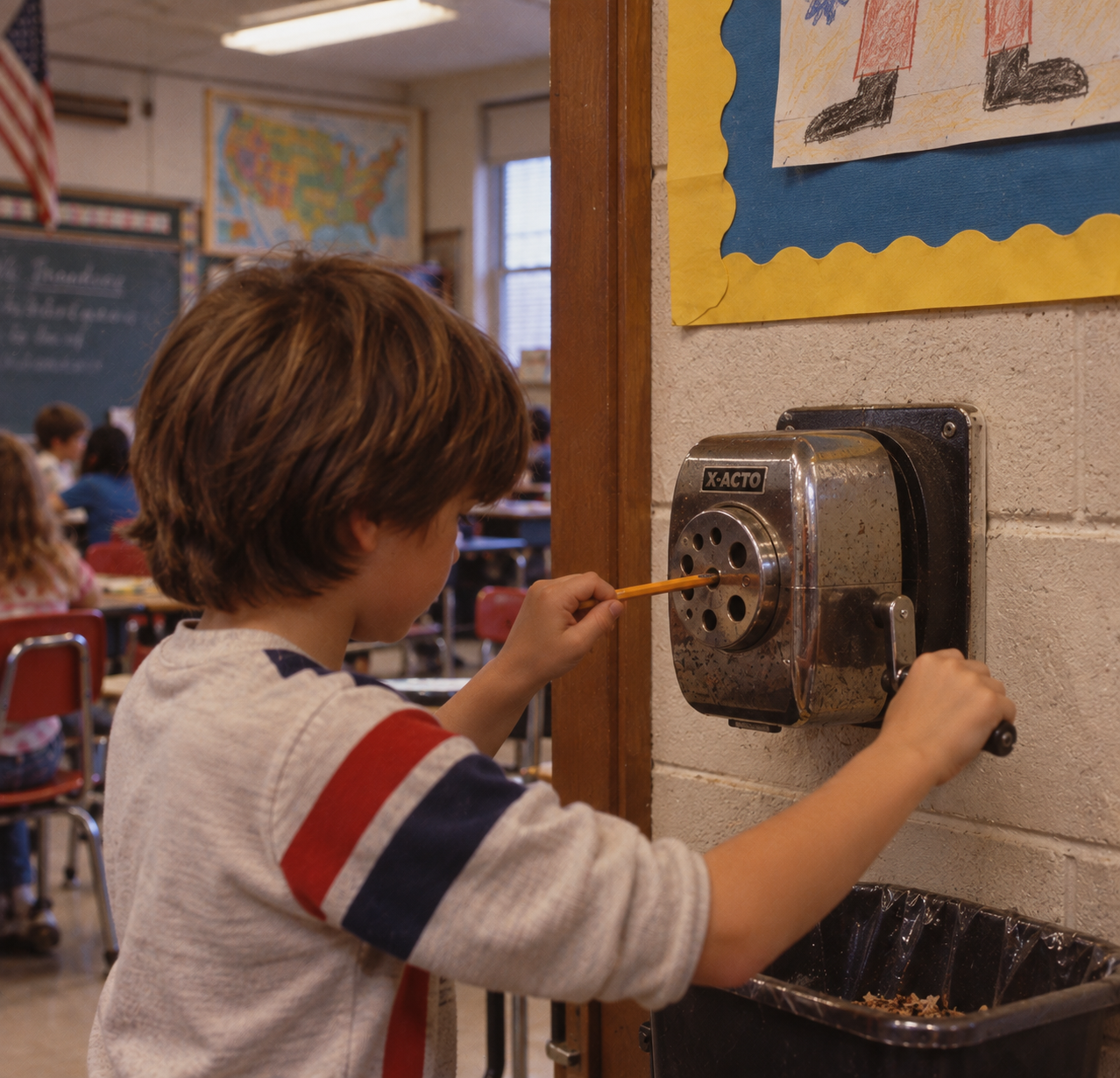
A dull pencil provided one of the most reliable ways to legally leave your desk. Manual pencil sharpeners were mounted to classroom walls, cabinets, or bookshelves, requiring students to stick a pencil into the opening and crank the handle until they had either produced a perfect point or accidentally reduced their pencil by several inches. The transparent or metal shaving compartment always seemed dangerously close to overflowing, but that didn’t stop a line from occasionally forming whenever one student reminded everyone else that their pencils could use sharpening, too.
A Giant Parachute in Gym Class
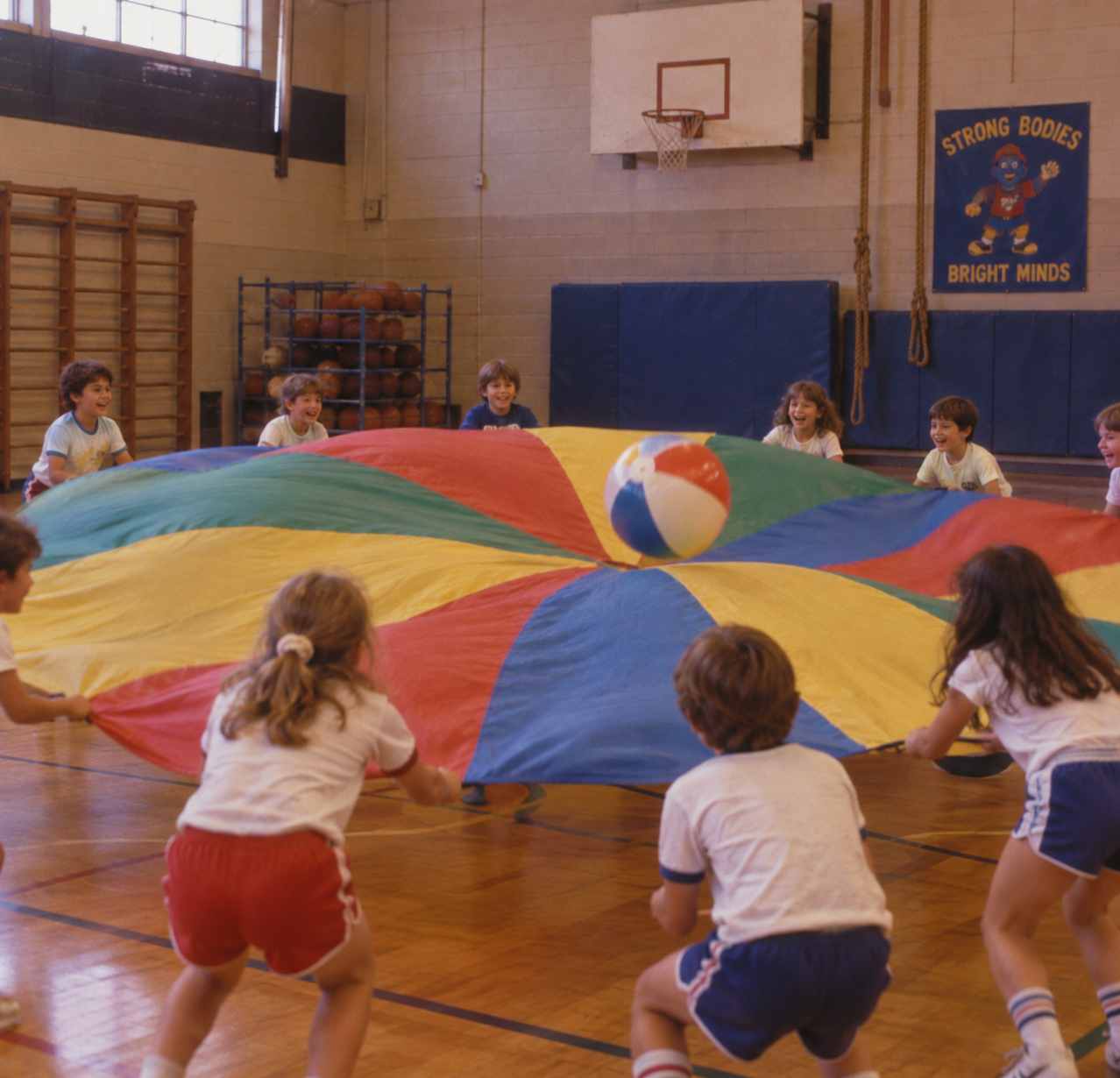
Few pieces of elementary school equipment could generate excitement quite like the enormous rainbow parachute. The moment the gym teacher brought it out, regular PE suddenly felt like a special occasion. Everyone grabbed an edge and worked together to send the fabric billowing toward the ceiling, bounce balls across its surface, create waves, or race underneath before it collapsed. The ultimate achievement was lifting it high enough for the entire class to duck underneath and sit around the edge, temporarily creating a colorful inflated dome. For many former students, seeing one today requires no explanation whatsoever.
The ’80s Classroom Was Caught Between Two Eras
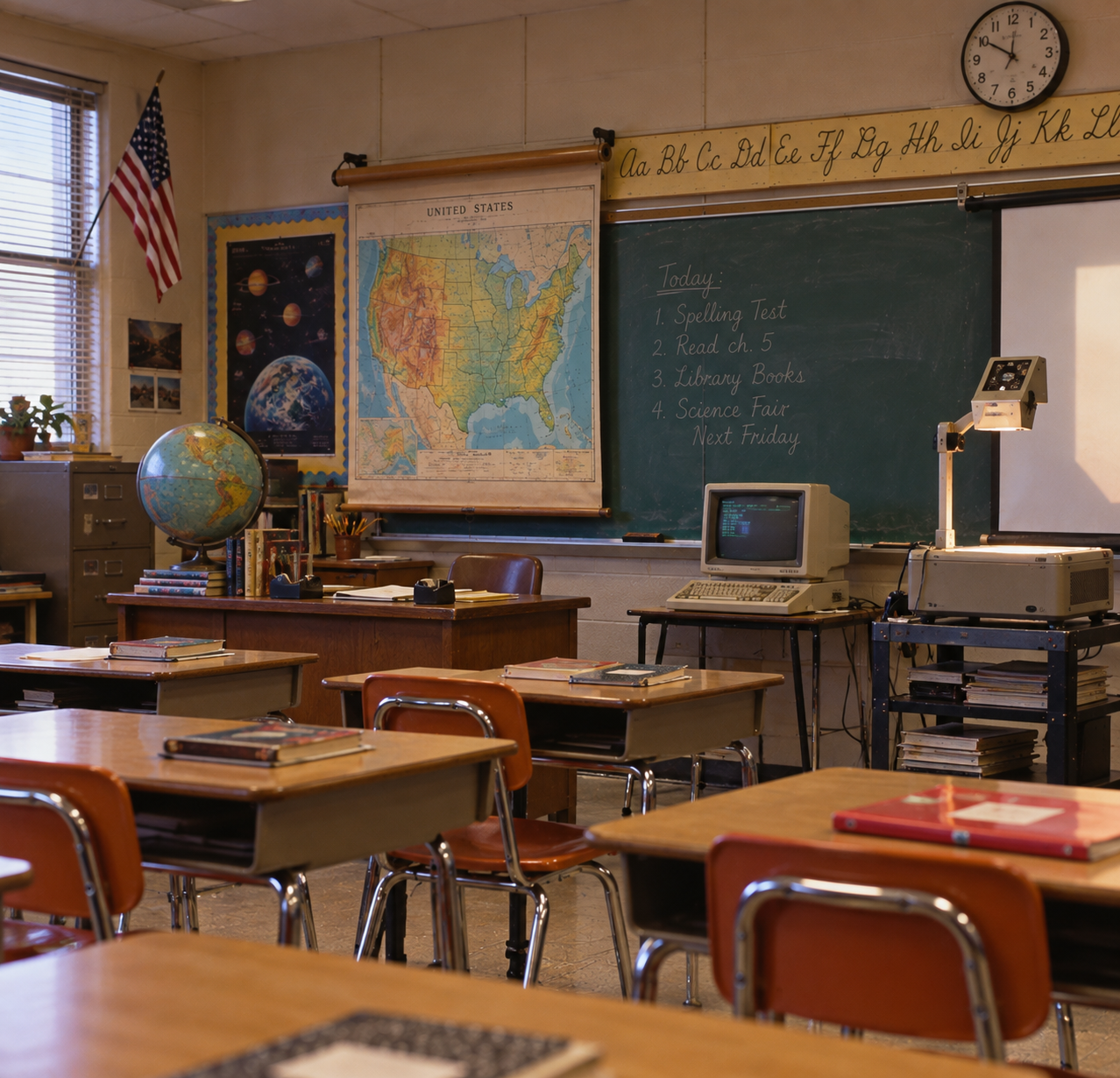
What made an elementary school in the 1980s so distinctive wasn’t simply that everything was old-fashioned. It was that old and new existed side by side. A teacher could hand out a purple ditto worksheet, write the lesson on a chalkboard, and then send students to work on an Apple computer. In fact, the number of microcomputers in public schools jumped dramatically during the first half of the decade as educators tried to figure out what role the new machines should play.
The technology has changed, playgrounds have changed, and the card catalog is mostly a museum piece. But put a wall-mounted pencil sharpener, rolling TV cart, overhead projector, pull-down map, and rainbow parachute in the same building, and an entire generation would probably know exactly where they were.