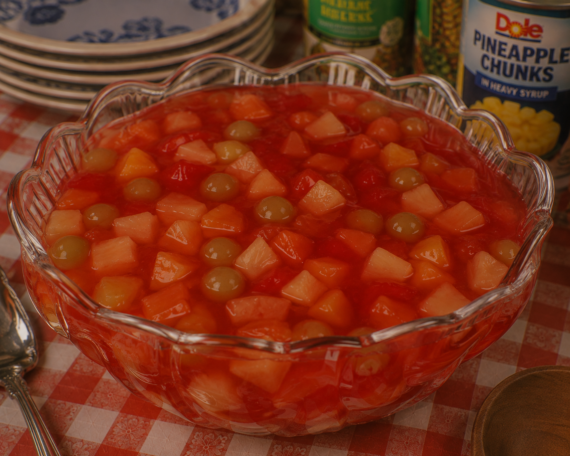
Backyard barbecues in the 1980s didn’t require a built-in outdoor kitchen, Bluetooth thermometer, or $1,000 smoker. All you really needed was a grill, a cooler full of drinks, enough burgers and hot dogs to feed a crowd, and a few big bowls of homemade sides.
Of course, most of these foods weren’t invented in the ’80s. They were cookout classics passed down through families and served at Fourth of July parties, reunions, graduation celebrations, and neighborhood get-togethers. Convenience was also key: bottled barbecue sauce, packaged buns, canned beans, disposable plates, and other grocery-store shortcuts kept things easy.
Add charcoal smoke, folding chairs, and a boombox playing somewhere nearby, and you’ve got a pretty convincing 1980s backyard barbecue.
A Kettle Grill Full of Charcoal
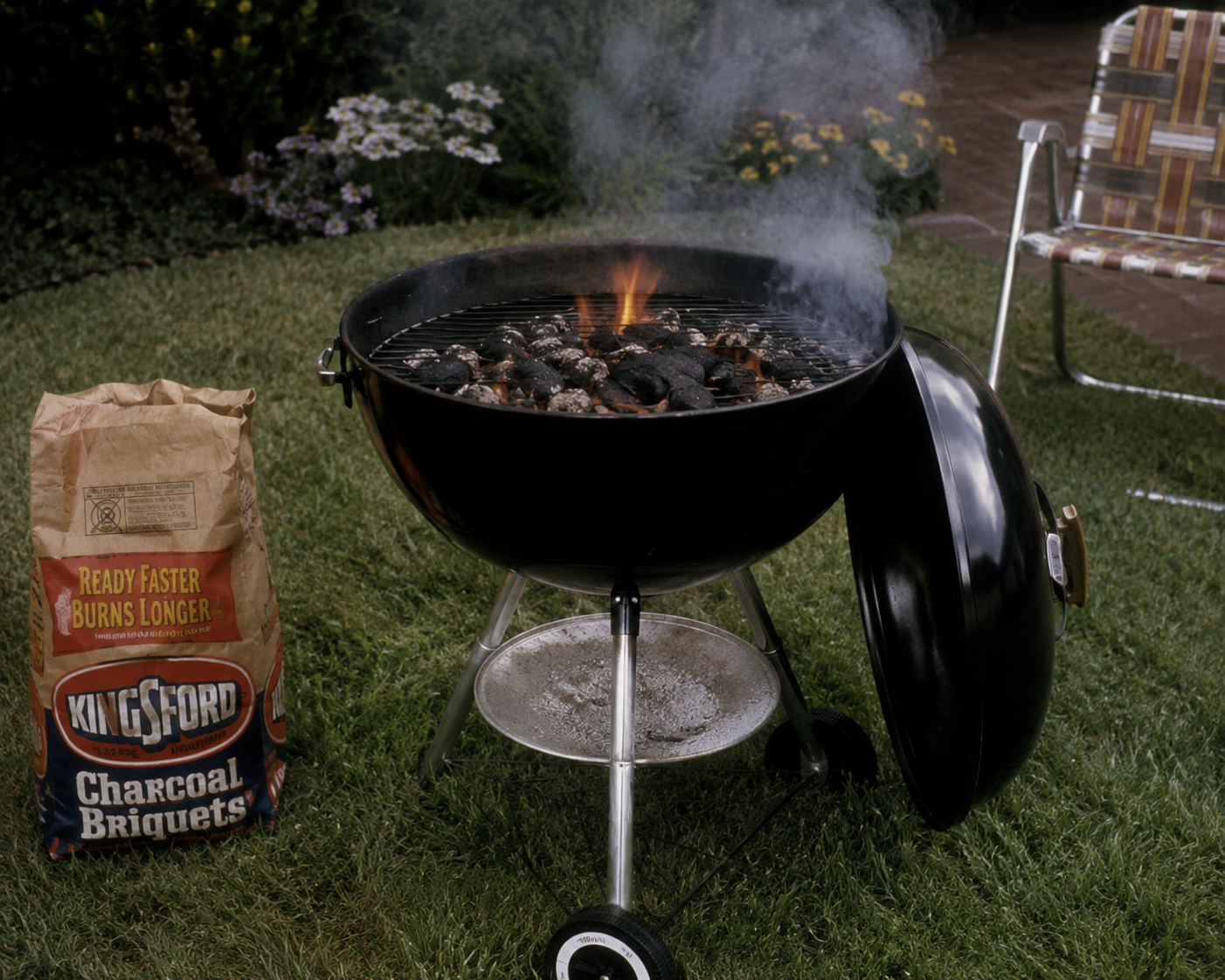
Before pellet smokers and Wi-Fi-connected grills, there was the trusty charcoal kettle. Weber’s now-iconic kettle grill had been around since the 1950s, and by the early ’80s the company was even selling One-Touch models in different colors. Gas grills were gaining ground — Weber introduced the Genesis in 1985 — but charcoal remained a backyard staple. That meant bags of briquettes, long metal tongs, smoke blowing directly into someone’s face, and at least one person repeatedly lifting the lid to ask, “Are they done yet?”
Cheeseburgers With American Cheese
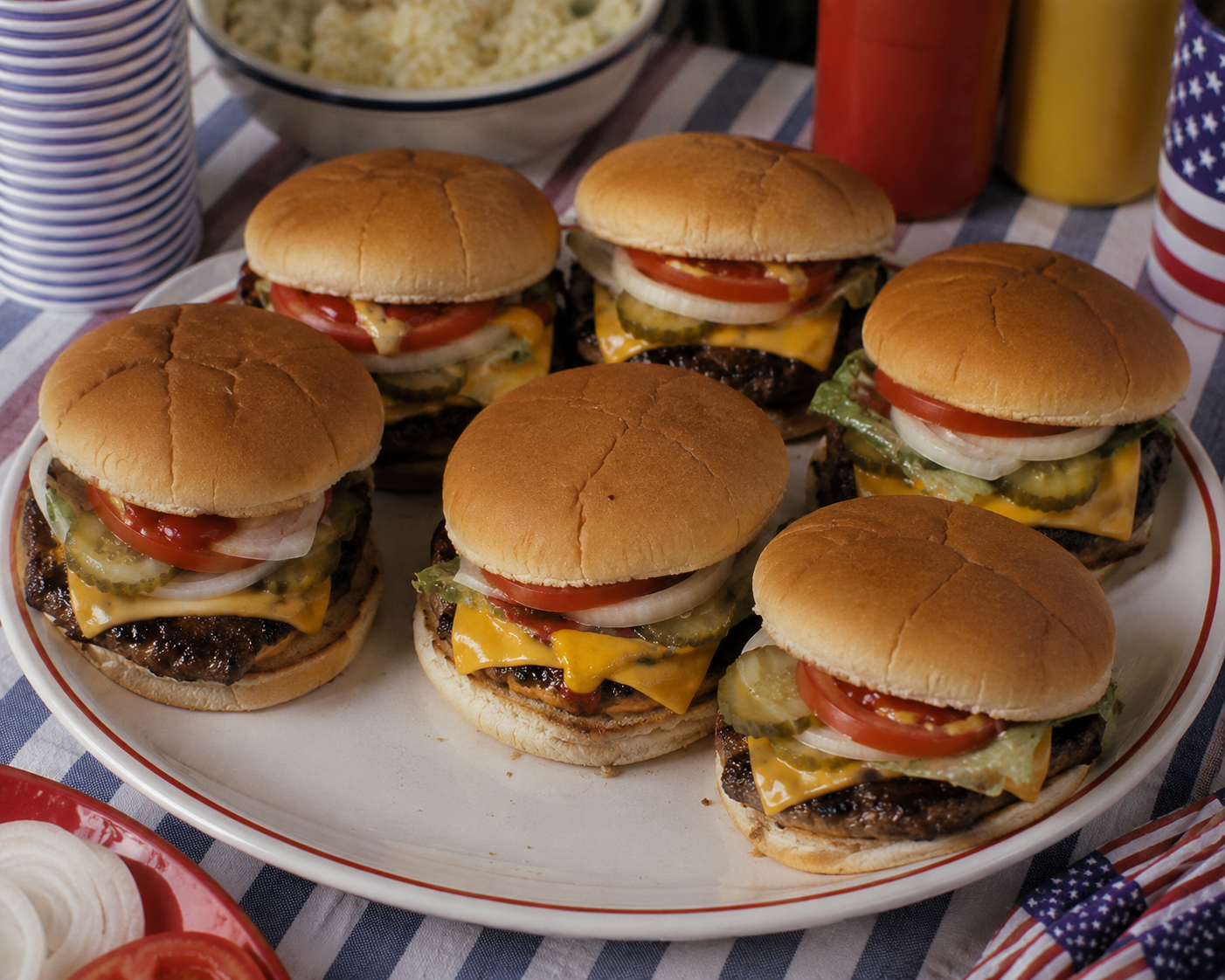
No brioche buns, truffle aioli, or elaborate topping combinations required. The quintessential backyard cheeseburger was refreshingly straightforward: a beef patty topped with a square of American cheese and tucked into a supermarket bun. Ketchup, mustard, pickles, onions, lettuce, and tomato could be set out for everyone to help themselves. Burgers were inexpensive, easy to cook several at once, and customizable enough to satisfy a crowd, which helps explain why they remain inseparable from the classic American cookout.
A Grill Packed With Hot Dogs
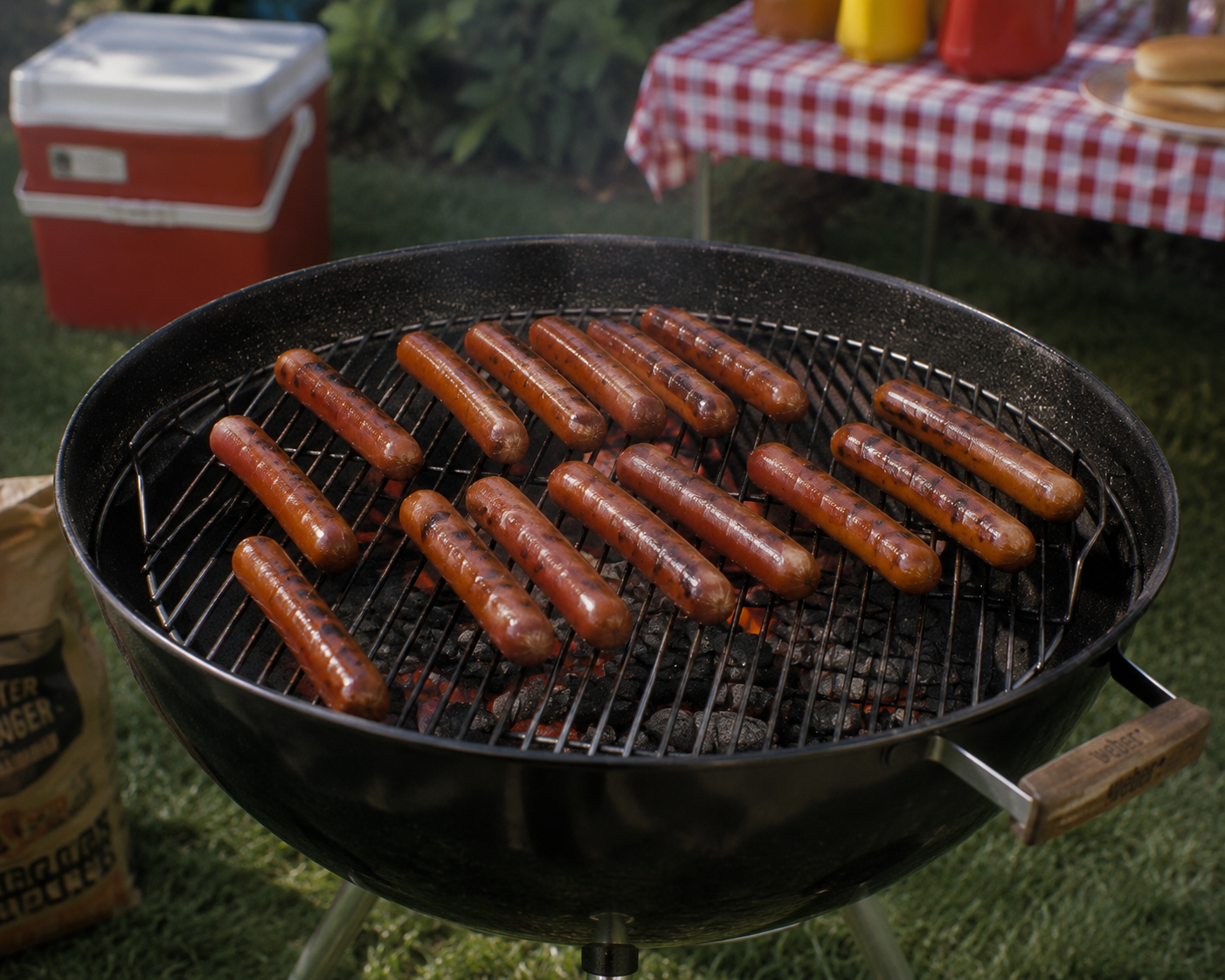
If burgers were on the grill, chances are hot dogs weren’t far behind. They cooked quickly, didn’t cost much, and were an especially easy option when a backyard was full of hungry kids. The toppings tended to stay simple: yellow mustard, ketchup, relish, chopped onions, and maybe sauerkraut. An open package of buns beside the grill and a row of slightly over-charred hot dogs rolling around the grate might not look like today’s perfectly styled barbecue spread, but that’s precisely what makes it nostalgic.
Barbecue Chicken Covered in Sauce
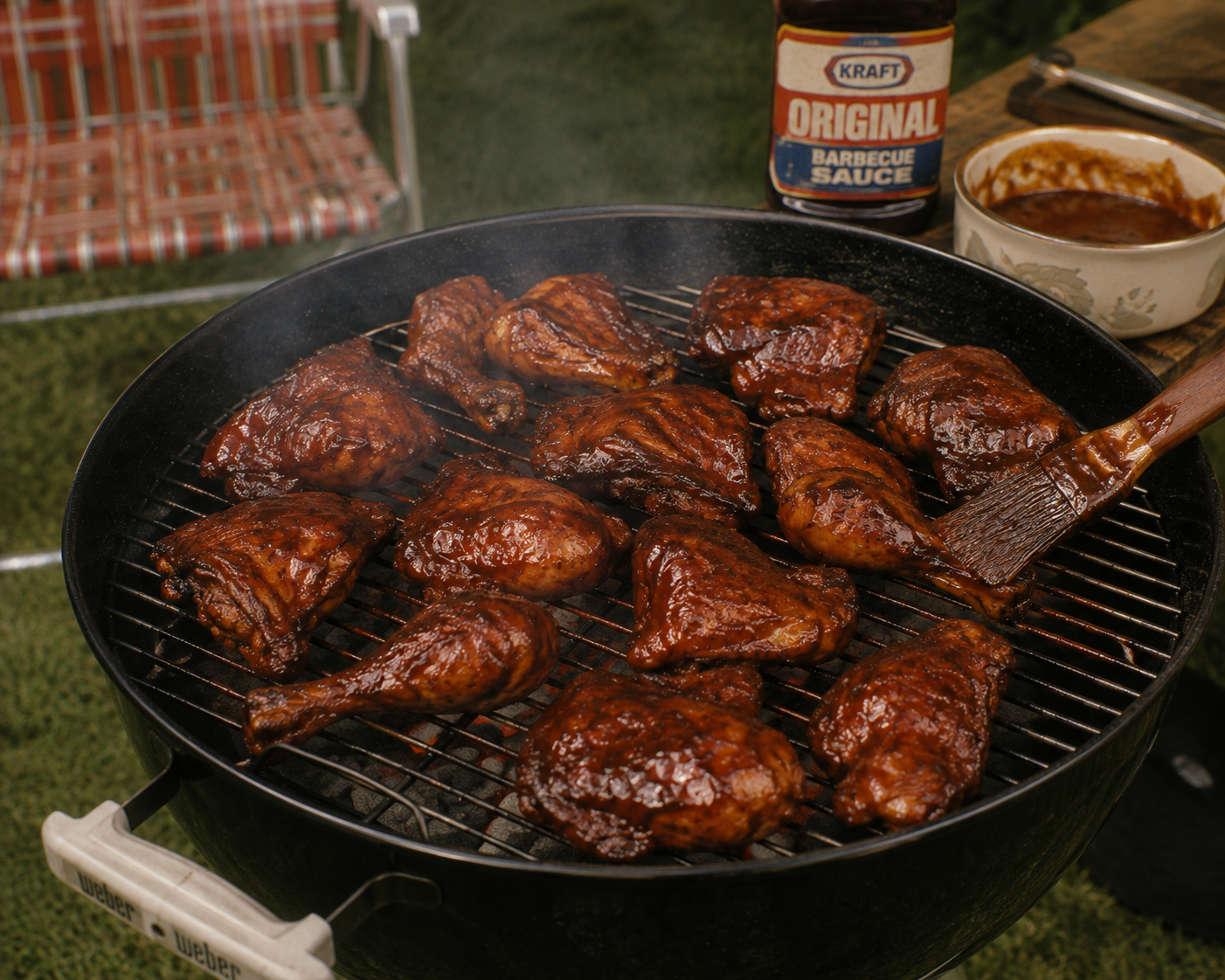
Not every ’80s backyard cookout involved hours of carefully tending a smoker. Sometimes barbecue chicken meant exactly what it sounded like: pieces of chicken grilled over the fire and repeatedly brushed with bottled barbecue sauce. Drumsticks and thighs were an economical way to feed a crowd, and the sugary sauce created those dark, sticky edges that inevitably left some pieces considerably more charred than others. It wasn’t competition barbecue, but nobody standing around the picnic table seemed particularly concerned about that.
Corn on the Cob Drenched in Butter
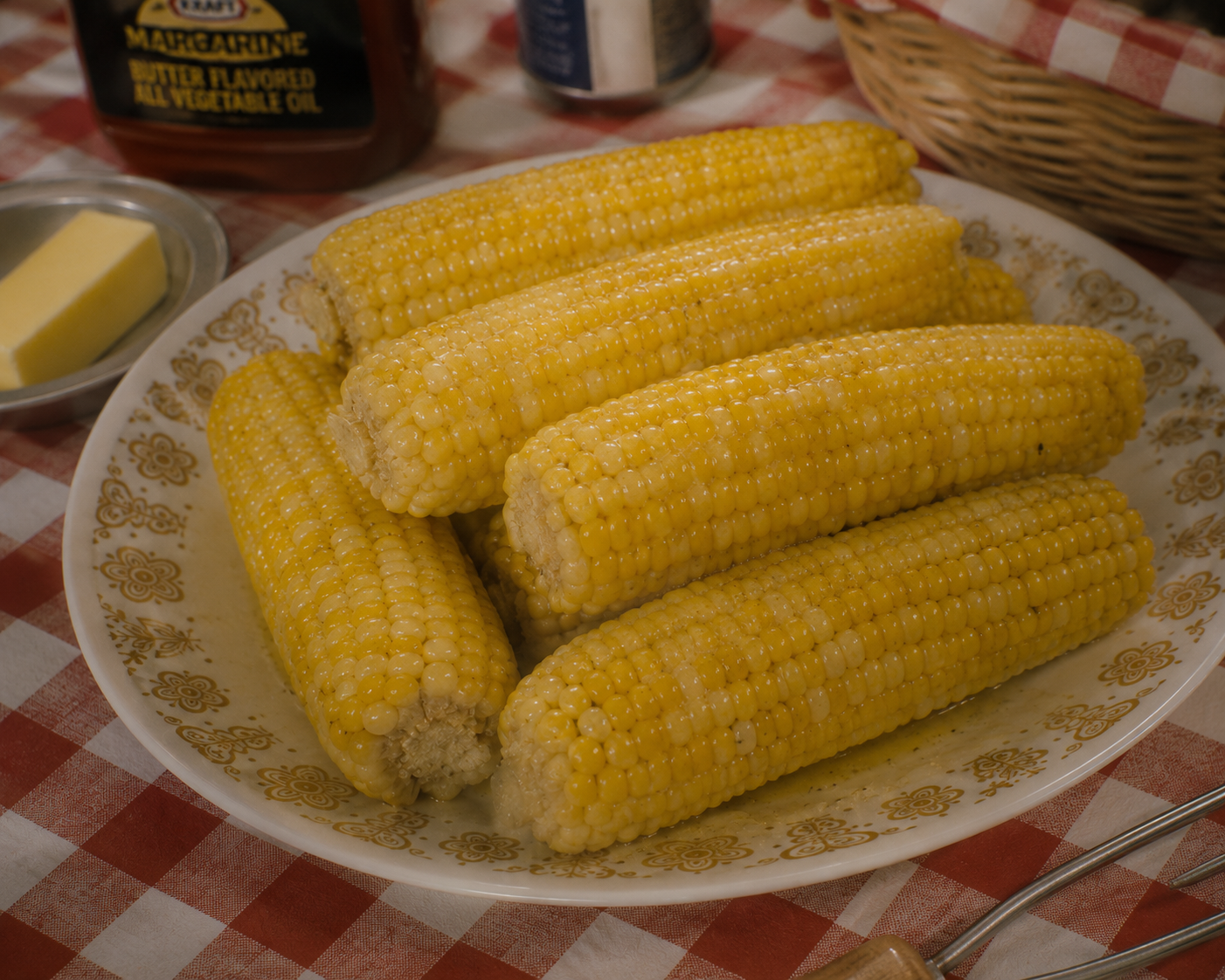
There wasn’t much need to reinvent corn on the cob. Sweet summer corn was inexpensive, easy to prepare in large quantities, and an obvious partner for burgers, hot dogs, and chicken. Plenty of families simply boiled it rather than grilling it, then passed around butter and salt at the table. Forget elaborate seasonings or street-corn-inspired toppings: The real challenge was eating a steaming ear covered in melting butter without getting it all over your hands.
Trending on Cheapism

A Huge Bowl of Creamy Potato Salad
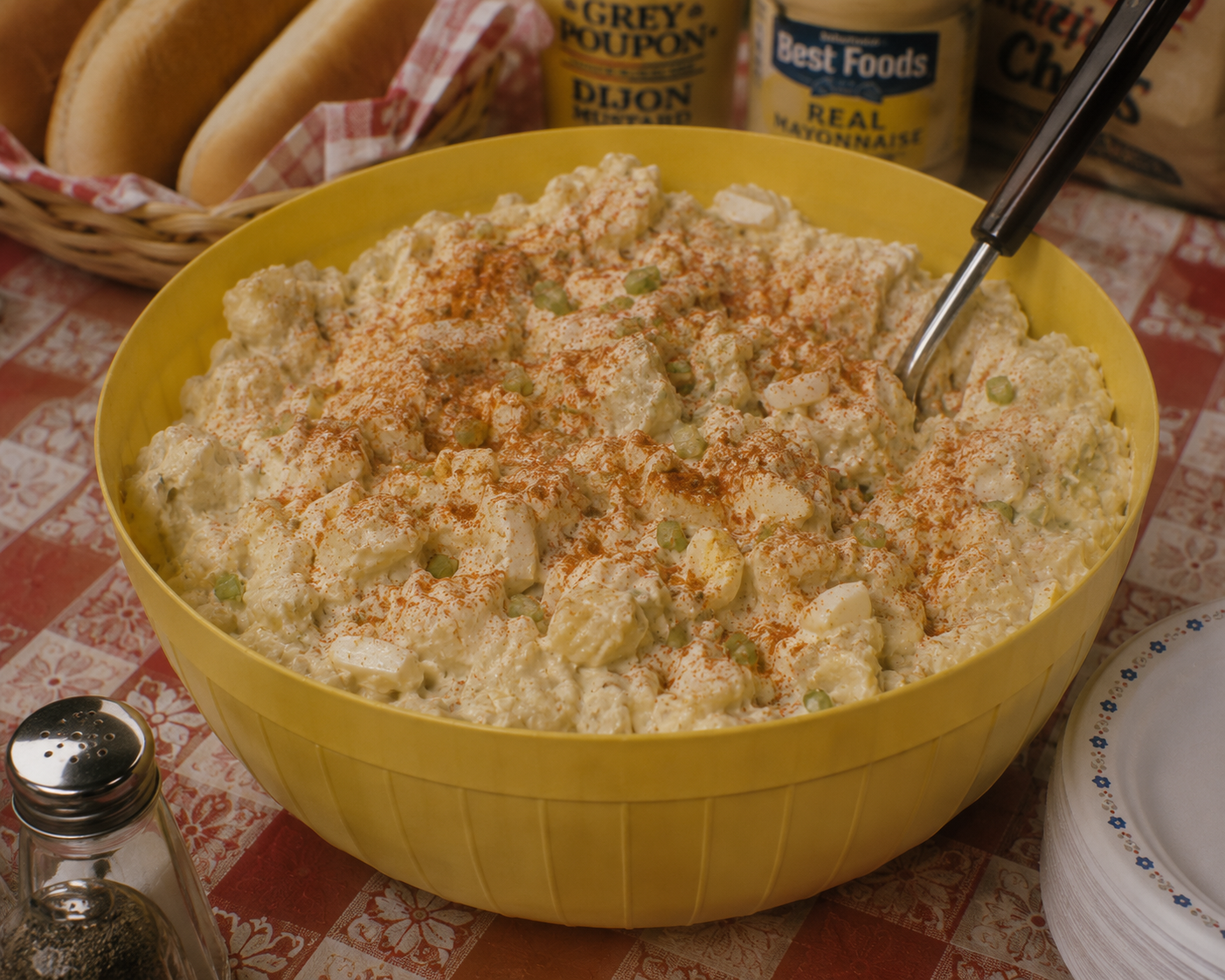
Every family seemed to have its own opinion about what belonged in potato salad. Mayo and potatoes were a starting point, but mustard, celery, onions, pickles, hard-boiled eggs, and other additions could inspire surprisingly strong loyalties. Whatever the recipe, the end result usually arrived outside in one enormous serving bowl, sometimes with a dusting of paprika on top. It was cheap, could be prepared before everyone arrived, and stretched easily enough to feed a backyard full of relatives.
Macaroni Salad
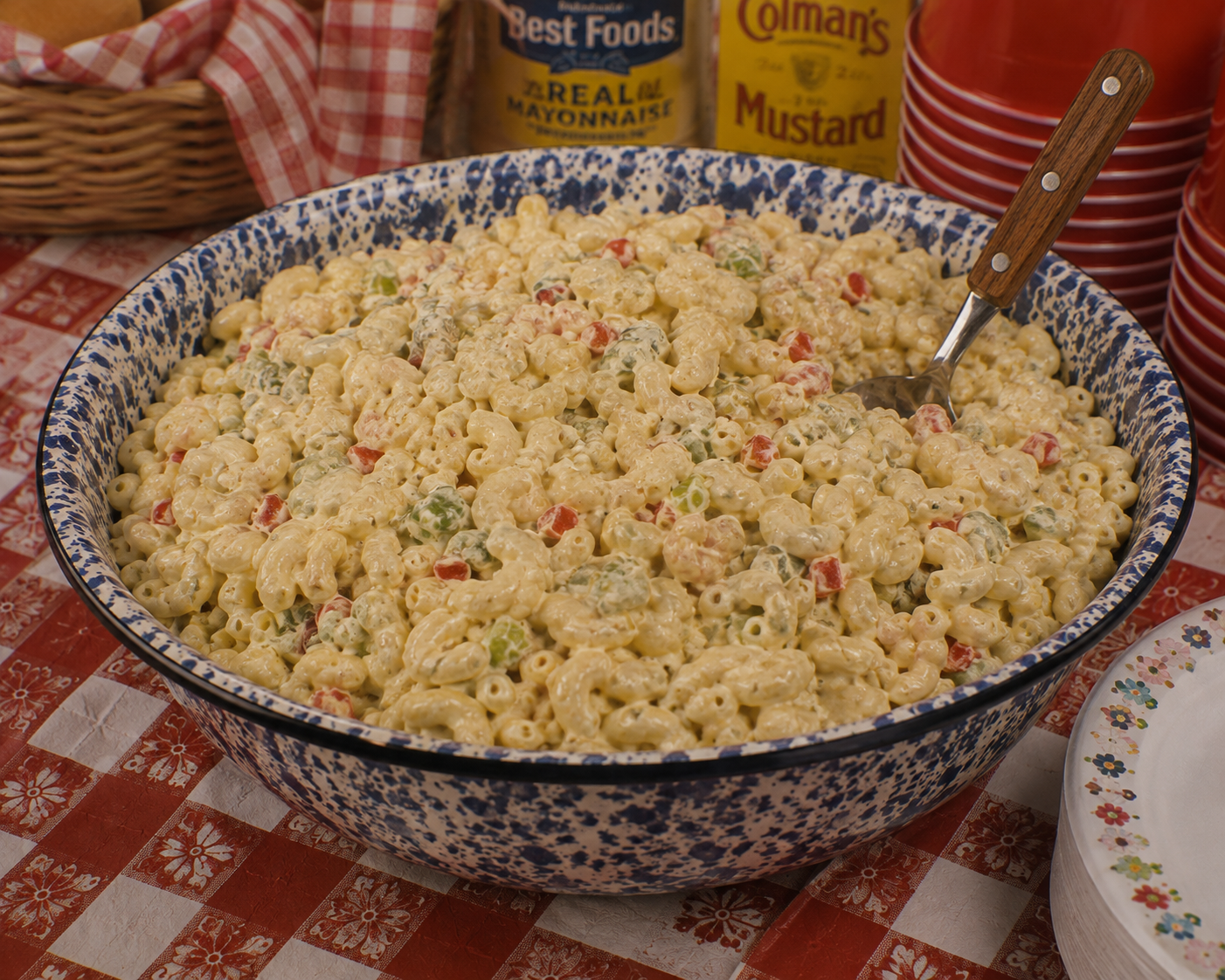
Sitting somewhere near the potato salad was its equally creamy cousin. Old-fashioned macaroni salad typically combined elbow macaroni with mayonnaise and ingredients like celery, peppers, relish, mustard, or chopped eggs. Some households reached for Miracle Whip for an even sweeter version. It wasn’t plated delicately or garnished with microgreens. It came in a giant bowl with a serving spoon stuck in it, ready for everyone to pile onto their plates alongside burgers, beans, and whatever else came off the grill.
Sweet Baked Beans
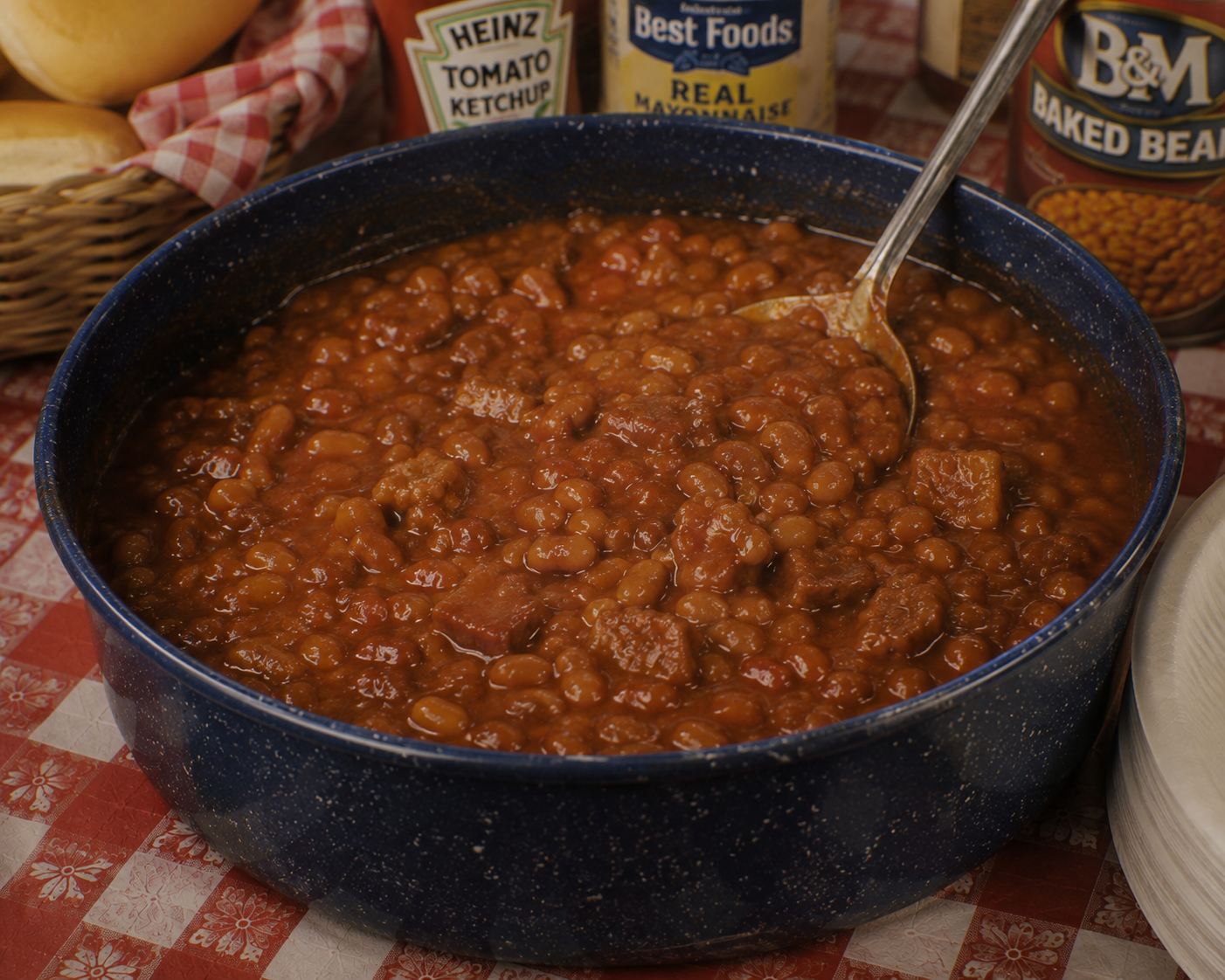
Baked beans were another easy way to make sure nobody left hungry. Hosts could start with canned beans and doctor them up with brown sugar, molasses, bacon, onions, ketchup, mustard, or barbecue sauce. The result was sweet, smoky, sticky, and ideal alongside hot dogs and grilled meat. More importantly for anyone feeding an entire extended family, beans were relatively inexpensive and could make a cookout spread feel considerably more substantial without requiring another pile of meat on the grill.
Sign up for our newsletter
Deviled Eggs With Paprika on Top
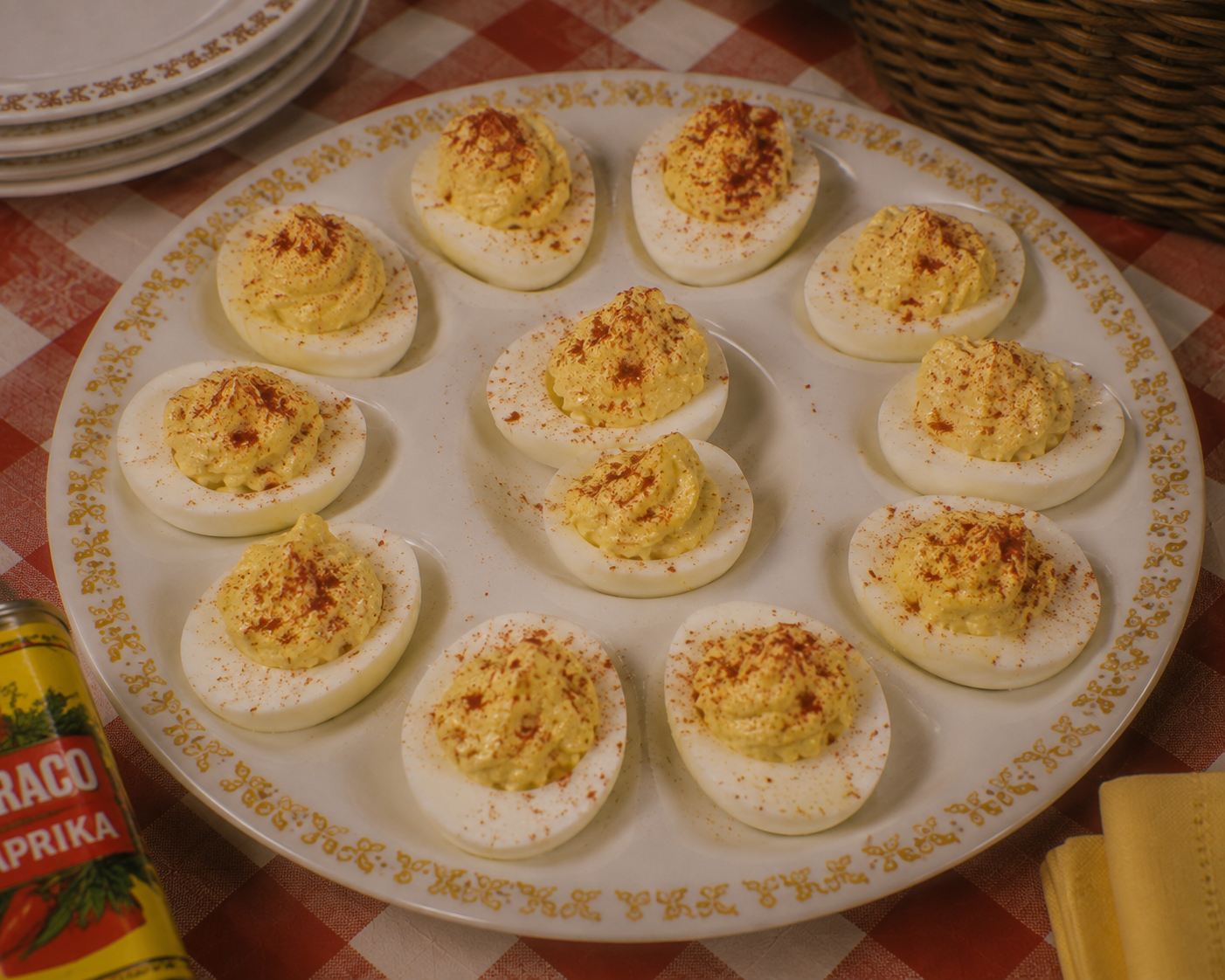
Long before people started topping deviled eggs with everything from bacon jam to hot honey, the classic version kept things simple. Hard-boiled yolks were mixed with mayonnaise and mustard, spooned or piped back into the whites, and finished with the obligatory sprinkle of paprika. Some families even owned those distinctive serving platters with individual indentations designed to stop the slippery little egg halves from sliding around. They were particularly at home at the potlucks and family gatherings that frequently accompanied backyard barbecues.
Potato Chips and French Onion Dip
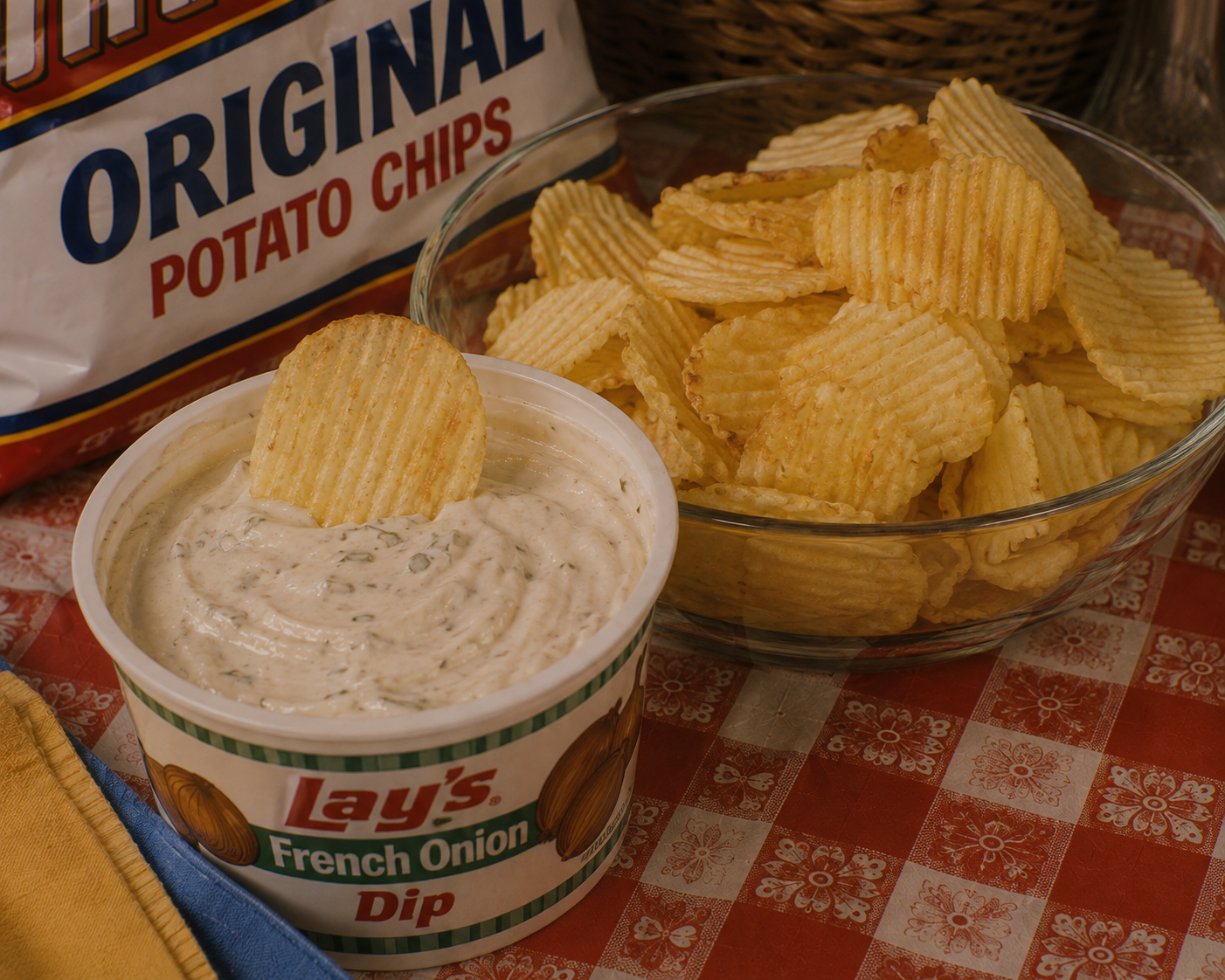
It would be difficult to find an easier party appetizer. Pour some ridged potato chips into a bowl, combine sour cream with dry onion soup mix, and you’re basically done. The famous two-ingredient “California Dip” made with Lipton onion soup mix actually dates to the 1950s, but it had remarkable staying power as an American entertaining staple. By the ’80s, chips and thick onion dip were the kind of simple snack that felt right at home on a backyard table while everyone waited for the grill to heat up.
A Jell-O Fruit Salad
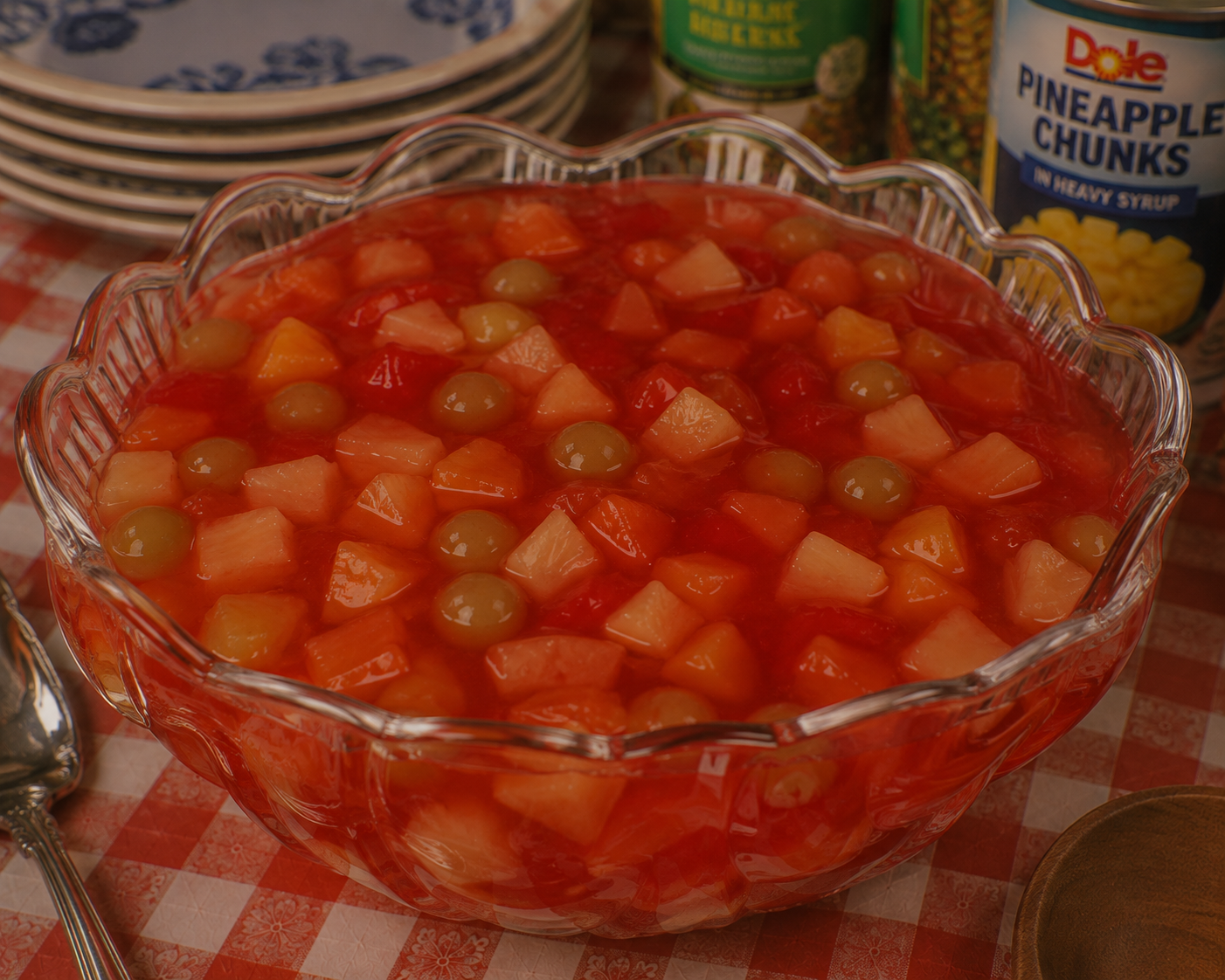
By the 1980s, gelatin salads were already past their midcentury heyday. That didn’t mean Grandma had stopped bringing one to the family barbecue. Older recipes continued showing up at reunions, church gatherings, picnics, and potlucks, combining brightly colored gelatin with ingredients like canned pineapple, mandarin oranges, cherries, marshmallows, whipped topping, cottage cheese, or nuts. Was it a salad? A side? Dessert? Somehow, it could be all three — and everyone in the family probably knew exactly who was responsible for bringing it.
Cold Watermelon Cut Into Big Wedges
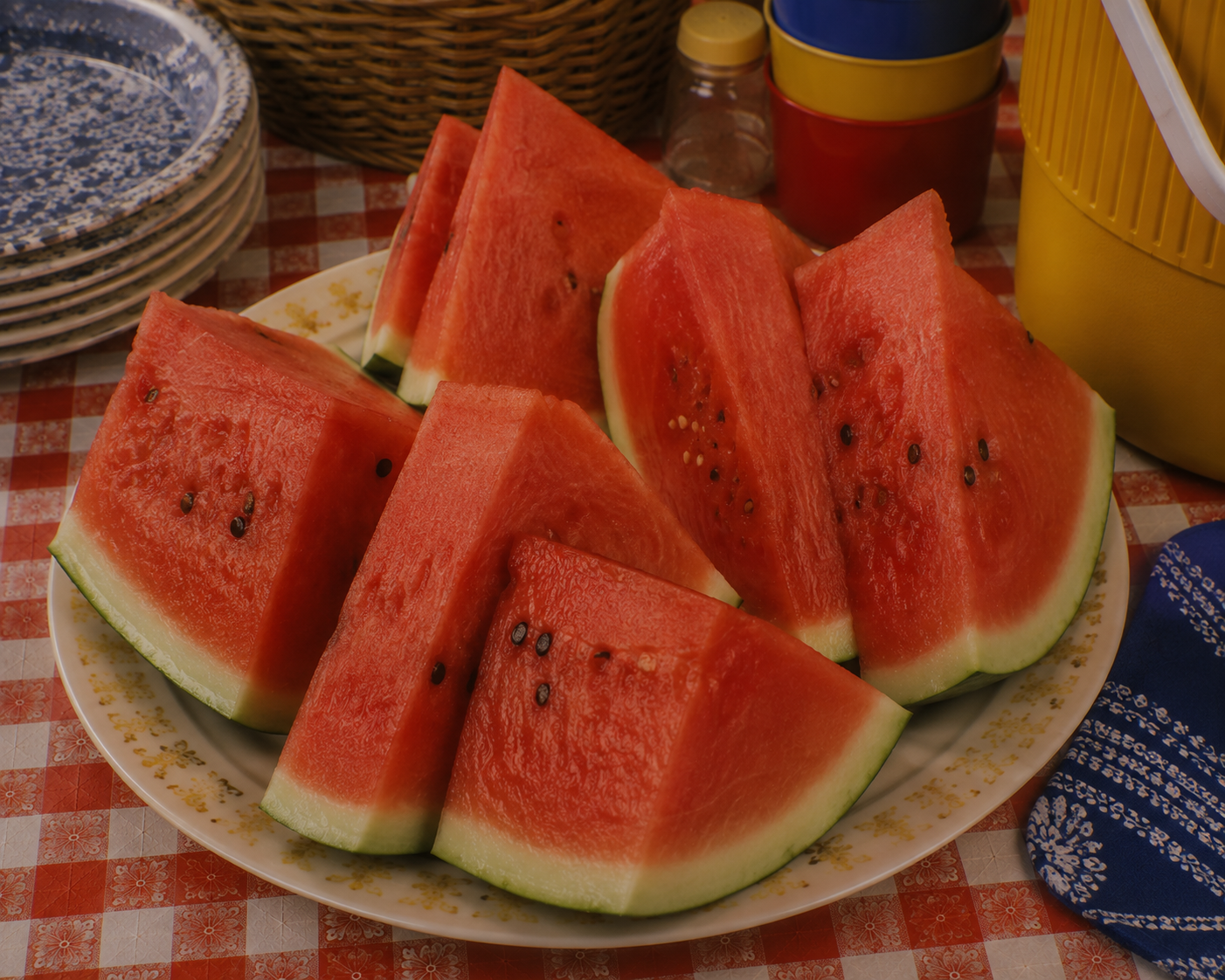
No fancy fruit salad required. A watermelon could feed half the neighborhood with practically zero preparation: slice it into enormous wedges, pile them onto a platter, and send the kids outside. Watermelon was particularly well suited to a hot-weather cookout because it provided a cold, juicy contrast to salty grilled meats and heavy, mayo-based salads. And if juice ran down your arms or seeds went flying? That’s what the grass was for.
A Hard-Sided Cooler Packed With Soda
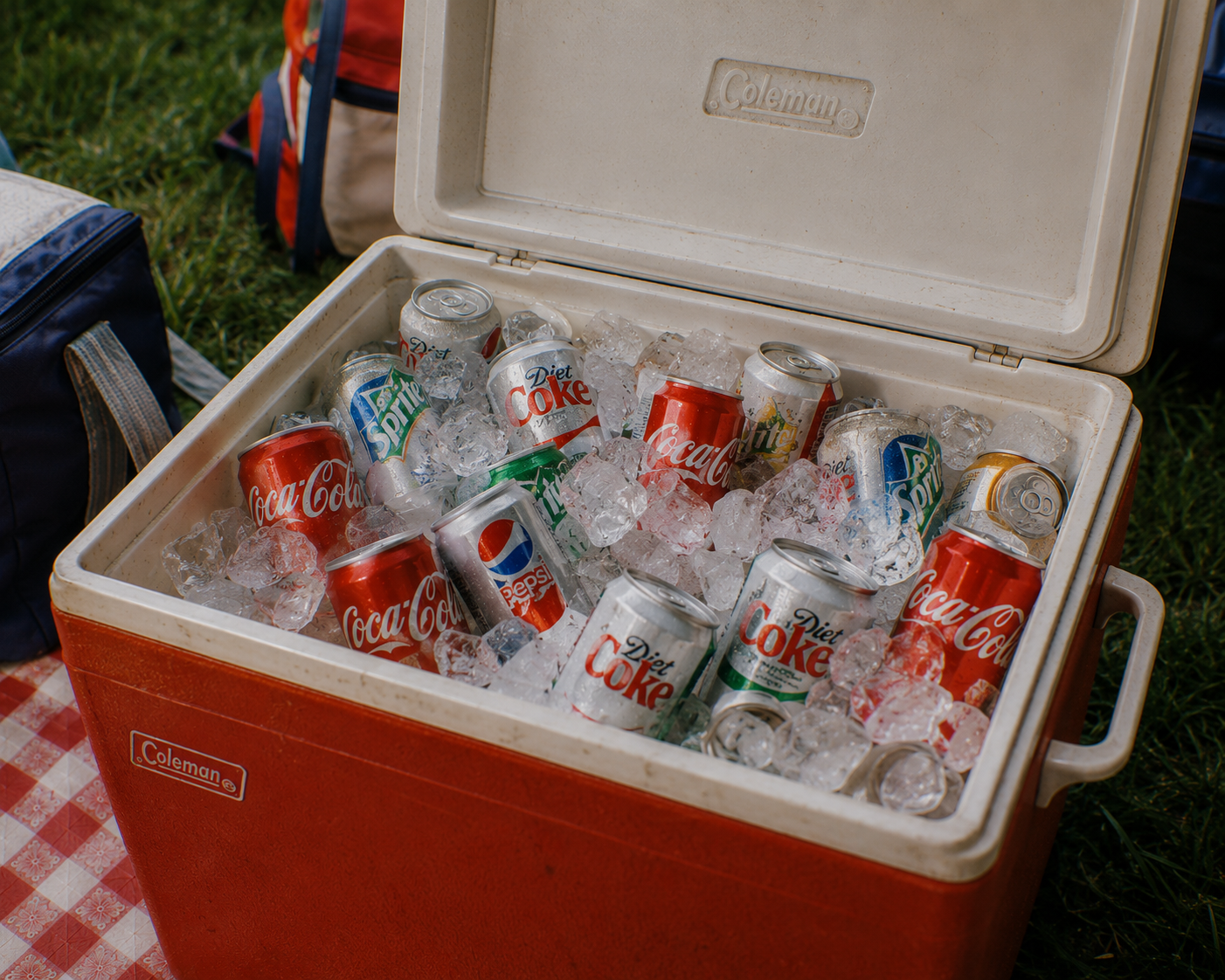
The backyard beverage station was often just a cooler sitting on the ground. Coleman had been making coolers since the 1950s, and hard-sided models had become familiar companions for camping trips, picnics, road trips, and backyard gatherings long before the ’80s. Fill one with ice, bury cans of cola, root beer, and lemon-lime soda inside, and drinks were handled. Of course, finding your favorite meant plunging your hand into freezing water and rummaging around beneath half-melted ice cubes until you finally grabbed the right can.
Disposable Plastic Cups and Paper Plates
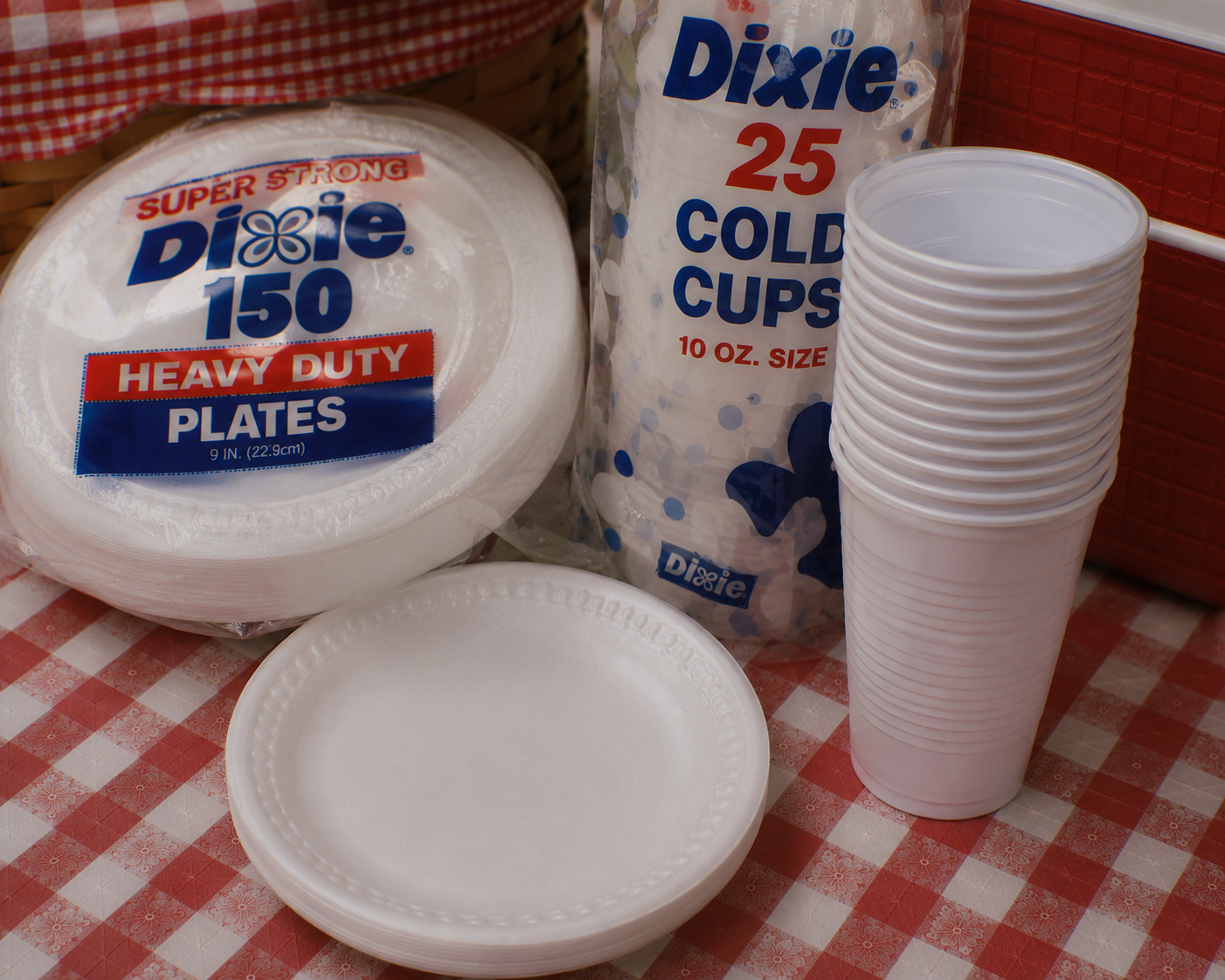
Nobody wanted to spend the end of a barbecue washing dishes. Disposable paper plates, napkins, plastic utensils, and party cups made feeding a large group much easier. Solo says its plastic party cups debuted in the 1970s and became increasingly common in households over the following decades. And they weren’t exclusively red: Earlier cups came in colors including blue, yellow, and peach. Pair one with a flimsy paper plate sagging under a burger, baked beans, potato salad, and corn, and you’ve got a pretty convincing old-school cookout setup.
A Boombox Playing Cassette Tapes
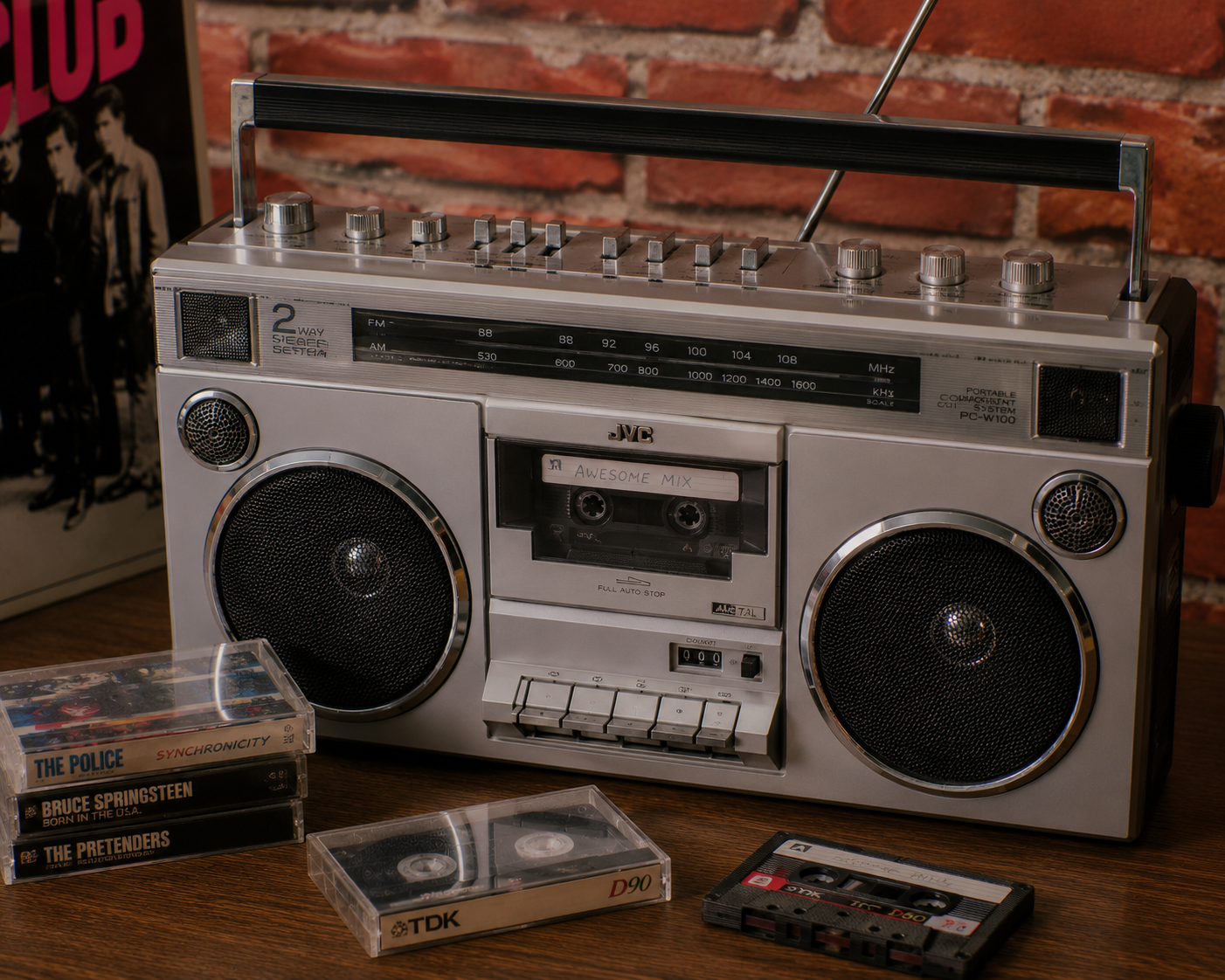
You had the charcoal smoke, cold soda, folding chairs, and overflowing paper plates. All that was missing was music. Boomboxes became ubiquitous in the U.S. during the 1980s, making it easy to bring an AM/FM radio and cassette player straight into the backyard. The soundtrack might have come from a local radio station or someone’s carefully assembled mixtape — at least until Side A ended and somebody had to walk over and flip the cassette. It was one more piece of technology that helped turn dinner outside into an actual party.