A dinner party in the 1970s wasn’t complete without at least a little bit of culinary theater. This was the decade of bubbling fondue pots, carefully arranged shrimp cocktails, gelatin molds that somehow counted as salad, and desserts designed to earn a reaction when they reached the table.
Convenience was part of the appeal, too. Hosts weren’t afraid to combine canned pineapple, packaged pudding mix, cream cheese, or frozen ingredients with dishes that sounded sophisticated and vaguely European. French, Swiss, Asian-inspired, and “continental” cooking all found their way onto American dinner tables, sometimes with decidedly American interpretations.
Not every household served the same menu, of course. But if you were invited over for dinner sometime around 1975, these 14 classic 1970s dinner party foods wouldn’t have looked out of place.
Cheese Balls and Cheese Logs
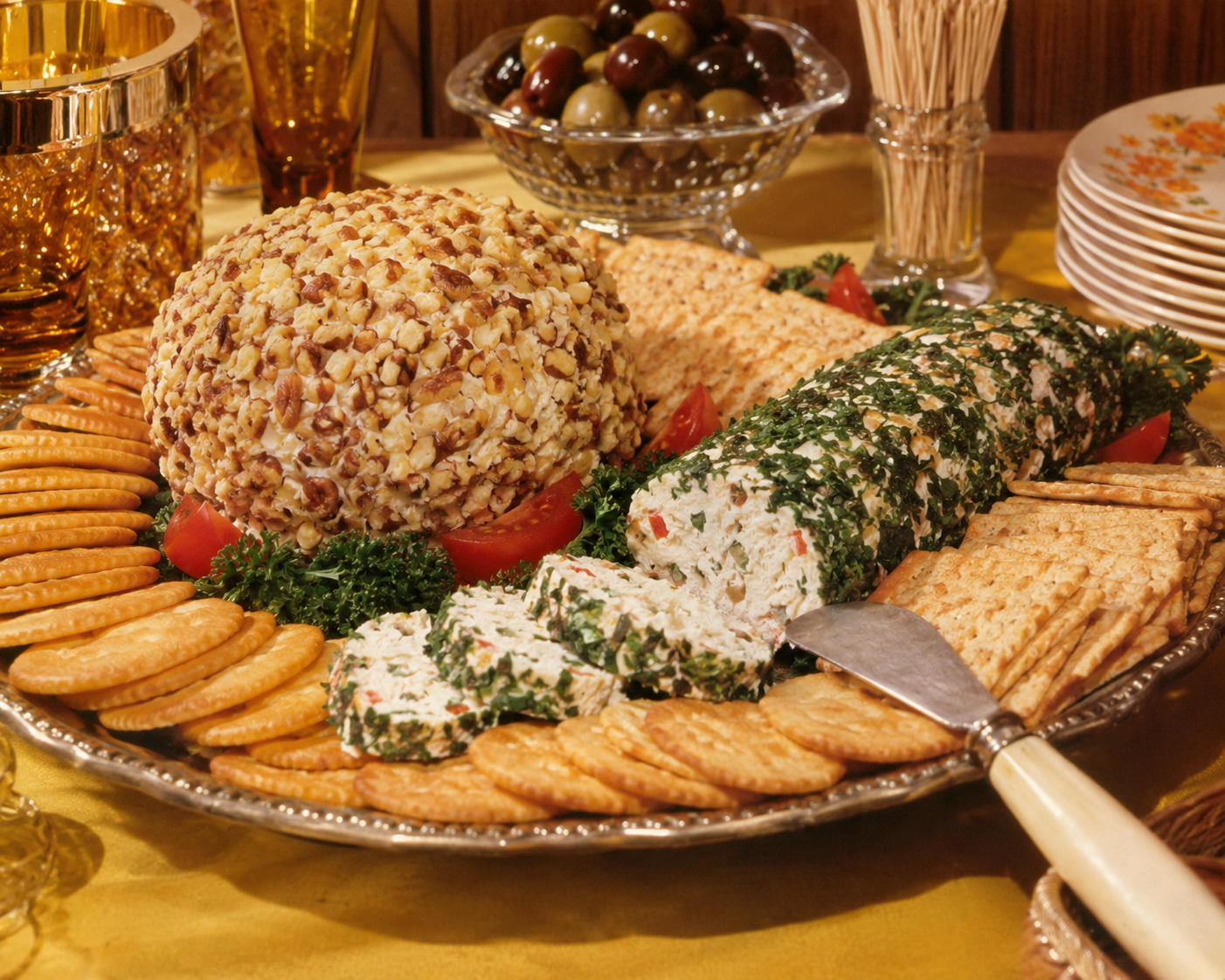
Nothing said “the guests are coming over” quite like turning cheese into a ball, rolling it in chopped nuts, and surrounding it with crackers. Hosts could combine cream cheese with cheddar, olives, dried beef, herbs, Worcestershire sauce, or whatever else went into the family’s supposedly secret recipe. Cheese balls and logs were easy to prepare ahead of time, looked suitably festive on a serving platter, and gave everyone something to snack on while the cocktails were poured.
Shrimp Cocktail
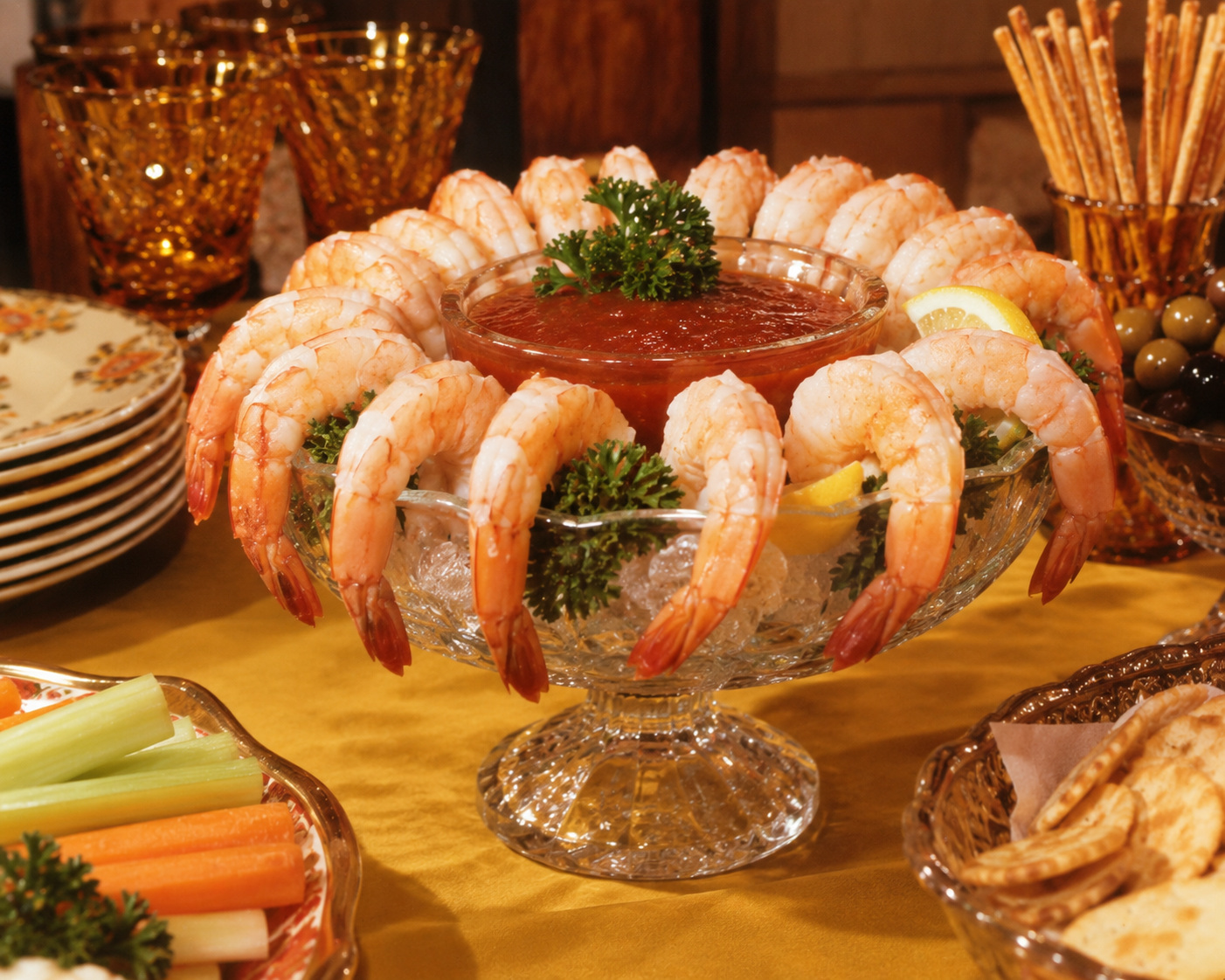
Shrimp cocktail had the advantage of being relatively simple while looking much fancier than the effort required to make it. Chilled shrimp could be arranged around a glass or serving dish with a generous helping of tangy cocktail sauce in the middle. It worked just as well as a seated first course as it did an appetizer, and its appearance on 1970s dinner menus helped give an ordinary gathering a distinctly special-occasion feel.
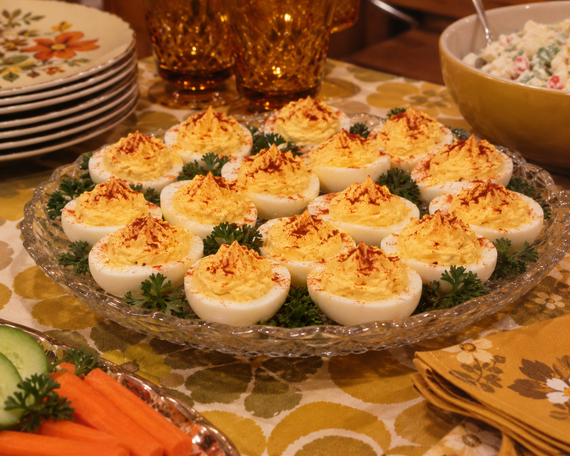
Deviled Eggs
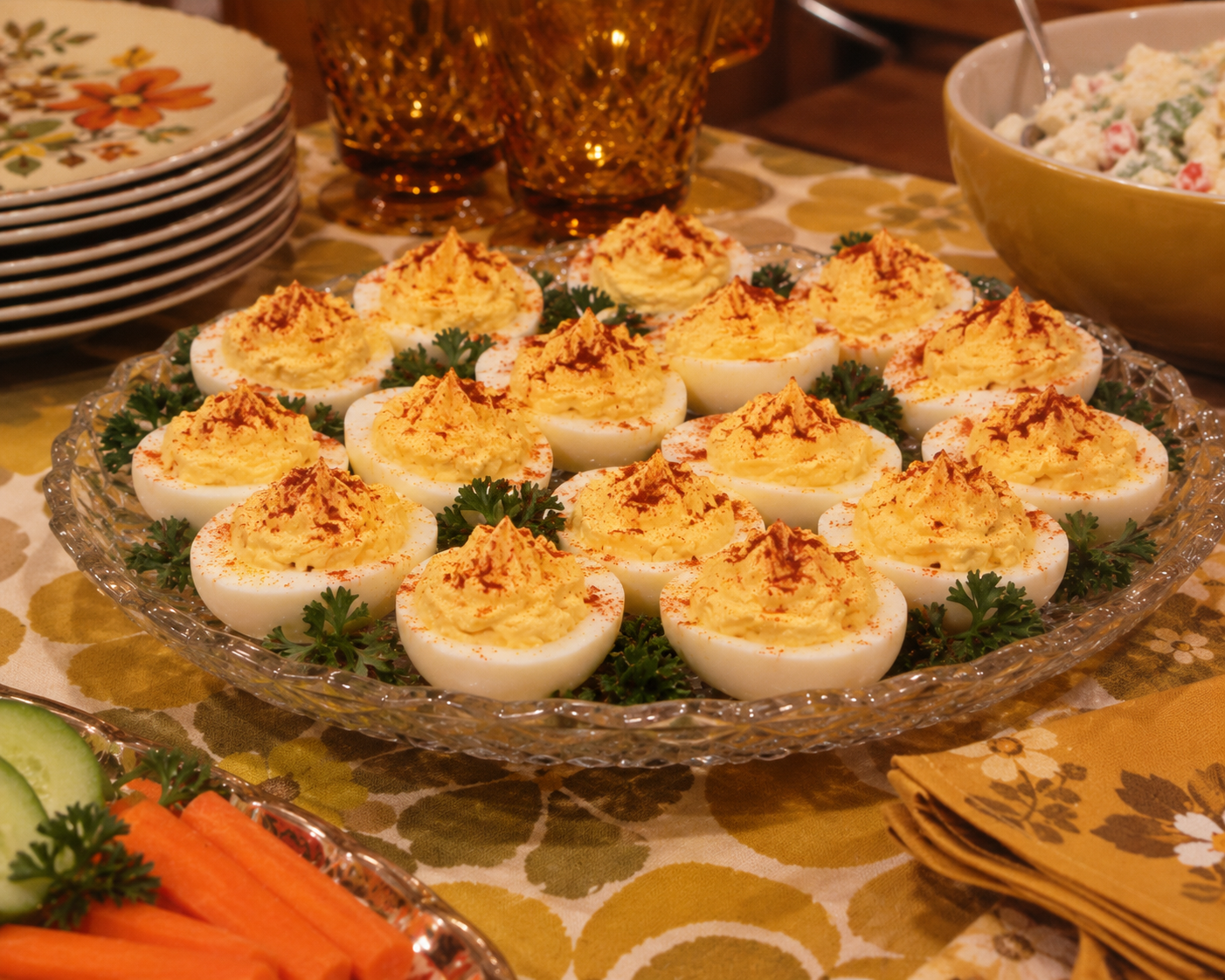
Deviled eggs weren’t exactly exotic, but put them on a dedicated serving tray, sprinkle some paprika over the top, and suddenly they were ready for company. The familiar combination of hard-boiled eggs and creamy yolk filling was inexpensive, easy to prepare ahead, and endlessly customizable. Period recipes didn’t always stop at mustard and mayonnaise, either, with variations incorporating ingredients such as curry, ham, and cream cheese.
Cheese or Meat Fondue
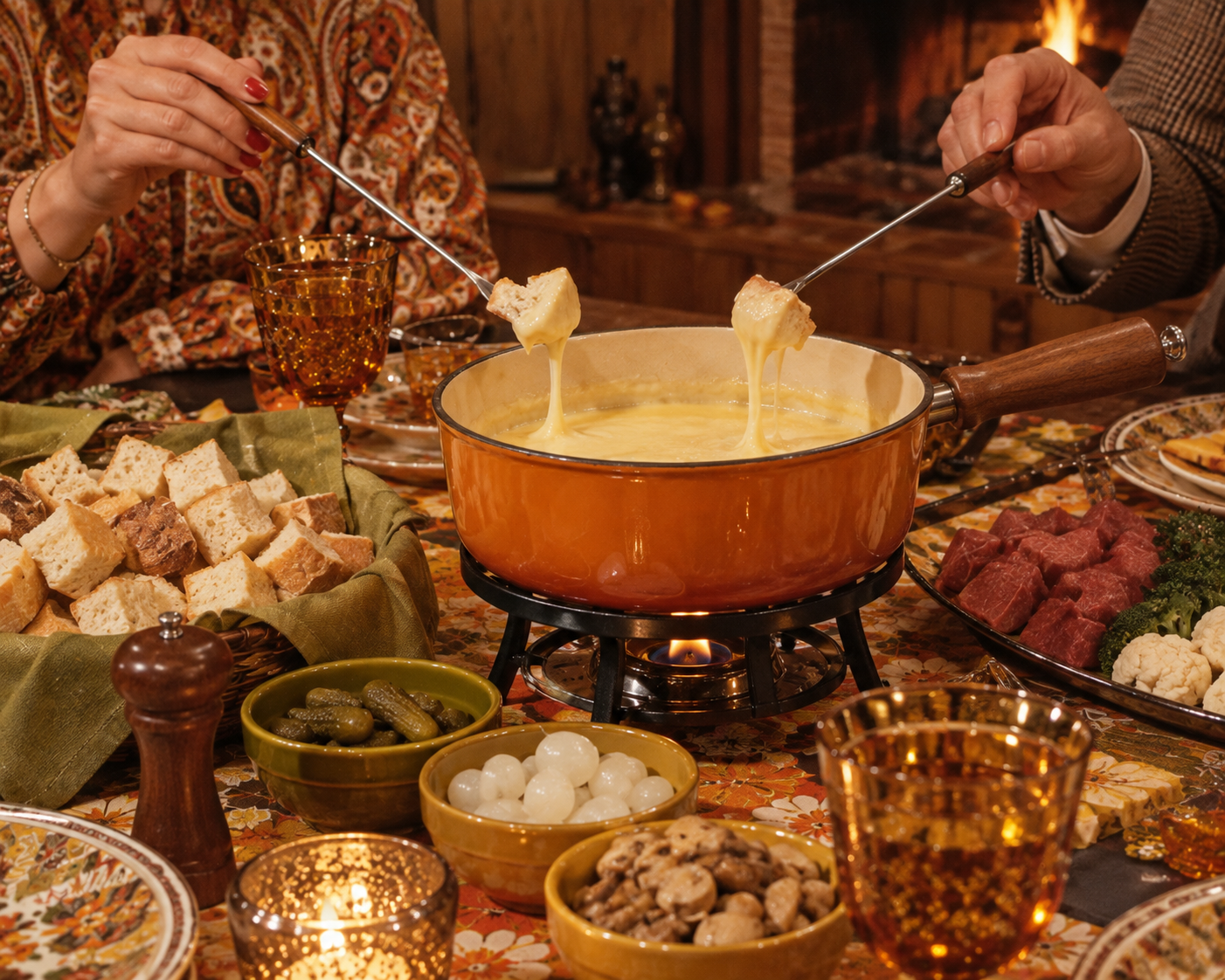
Few dishes capture 1970s entertaining quite like a fondue pot sitting in the middle of the table. Cheese fondue turned cubes of bread into dinner-party fare, while fondue bourguignonne let guests cook pieces of meat themselves in a communal pot of hot oil. Half meal and half activity, fondue also kept everyone gathered around the table — although keeping track of whose fork was whose could become its own challenge.
Cocktail Meatballs
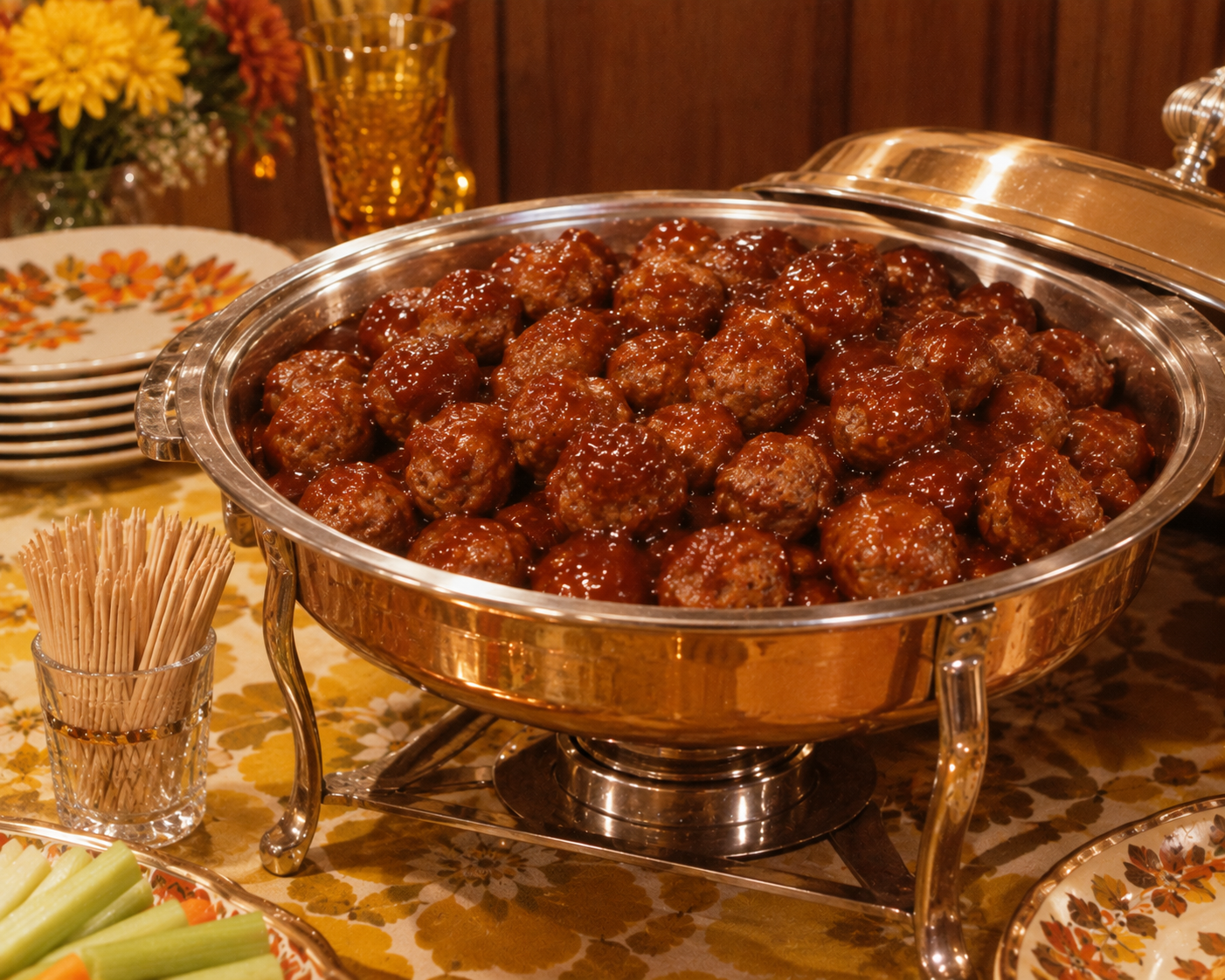
Cocktail meatballs were practically engineered for a party. They could sit warm in a chafing dish while guests helped themselves with toothpicks, which meant the host didn’t have to spend the entire evening plating food. Swedish-style versions were popular, but perhaps the most nostalgically American preparation involved the famously unlikely combination of chili sauce and grape jelly, creating the sticky sweet-and-savory glaze that still turns up at parties today.
Trending on Cheapism
Rumaki
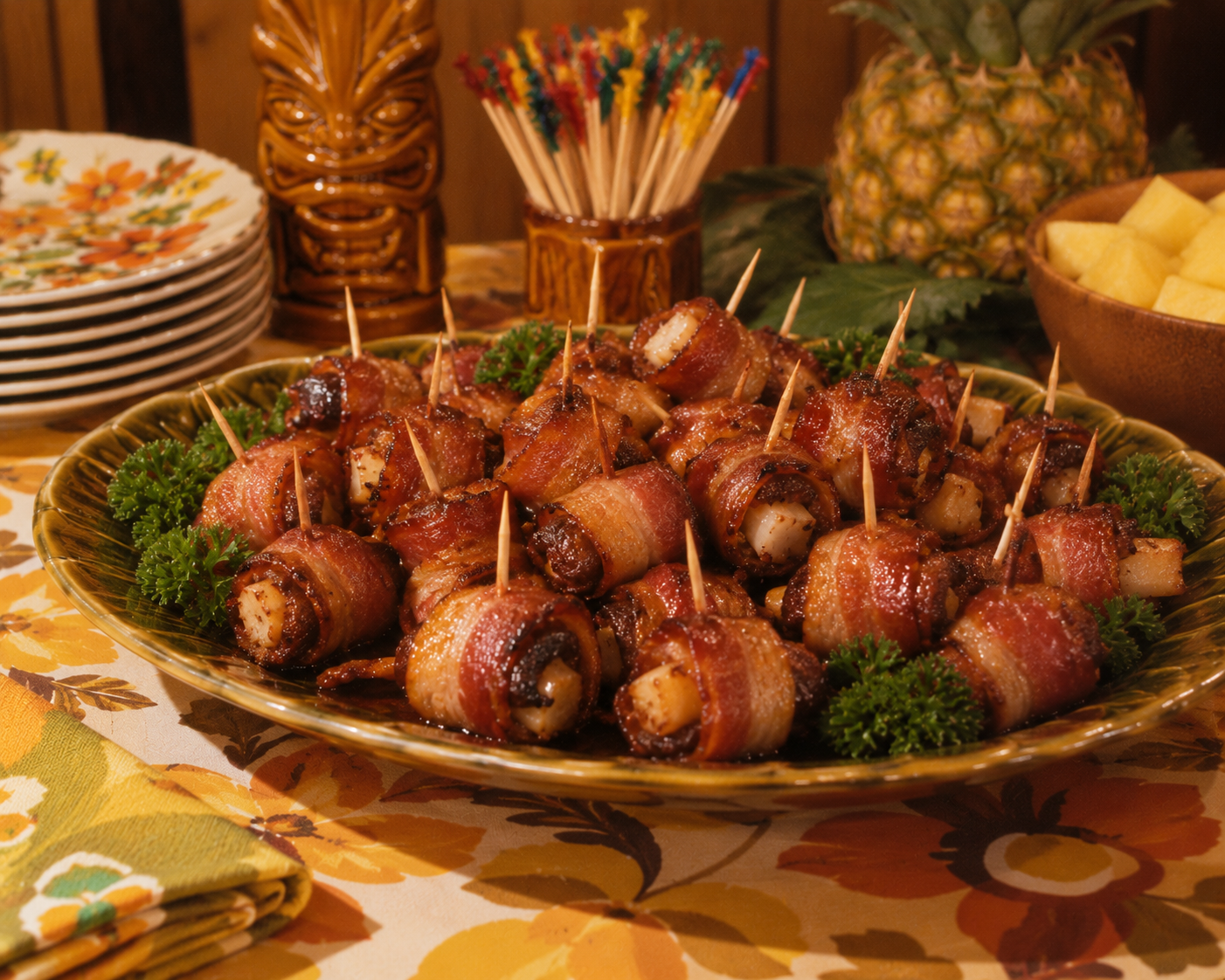
Bacon-wrapped appetizers were already off to a strong start, but rumaki took things in a distinctly 1970s direction. Typically made with chicken liver and water chestnuts wrapped in bacon and coated in a sweet, teriyaki-style glaze, the appetizer reflected America’s fascination with Polynesian and Asian-inspired party foods. Served on cocktail picks, the little bites fit right alongside the era’s tiki drinks and elaborate appetizer spreads.
Stuffed Mushrooms
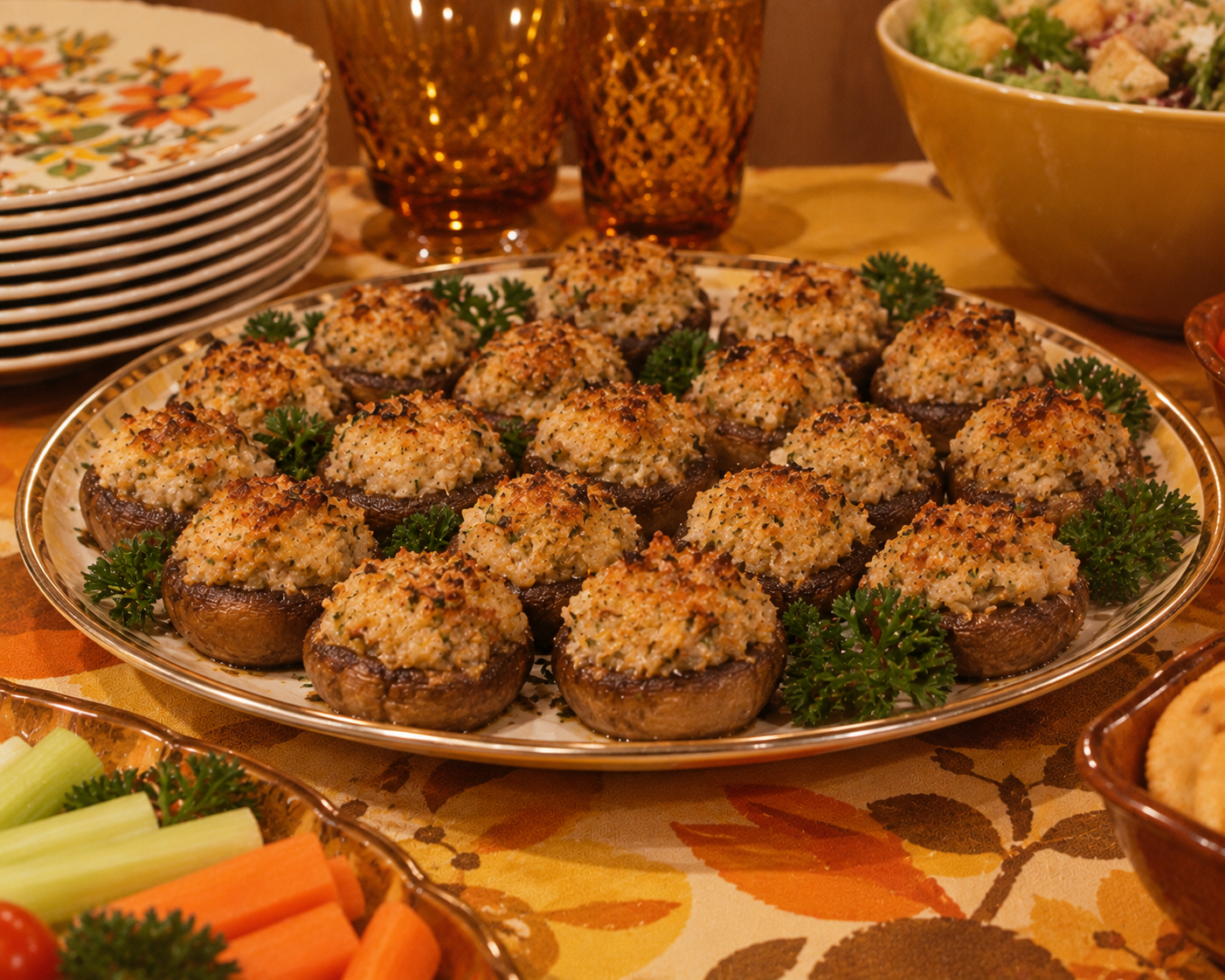
Stuffed mushrooms managed to look sophisticated without requiring a restaurant kitchen to make them. Mushroom caps could be filled with breadcrumbs, cheese, seafood, seasoned meat, or richer ingredients like Roquefort. They were small enough to eat in a bite or two and could be prepared before guests arrived, making them exactly the kind of vaguely “continental” appetizer that worked particularly well at a cocktail party.
Quiche Lorraine
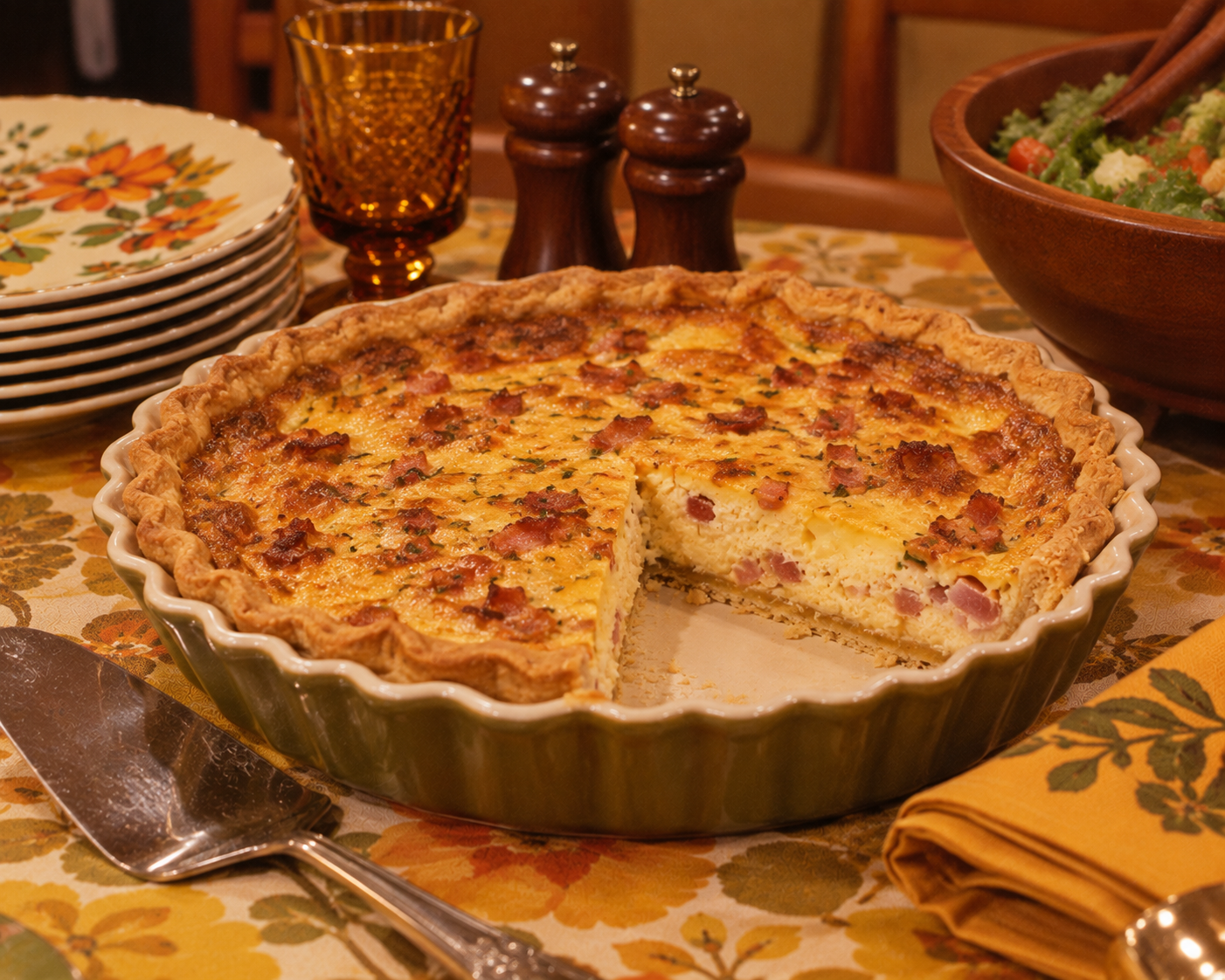
Quiche Lorraine offered American hosts a little taste of French sophistication without being impossibly complicated to prepare. The combination of pastry, eggs, cream, bacon, and cheese could be made ahead and served warm or at room temperature, which was especially convenient when entertaining. Quiche became particularly fashionable in America during the decade and could appear as anything from a luncheon dish to a buffet item or lighter dinner-party main course.
Sign up for our newsletter
Beef Wellington
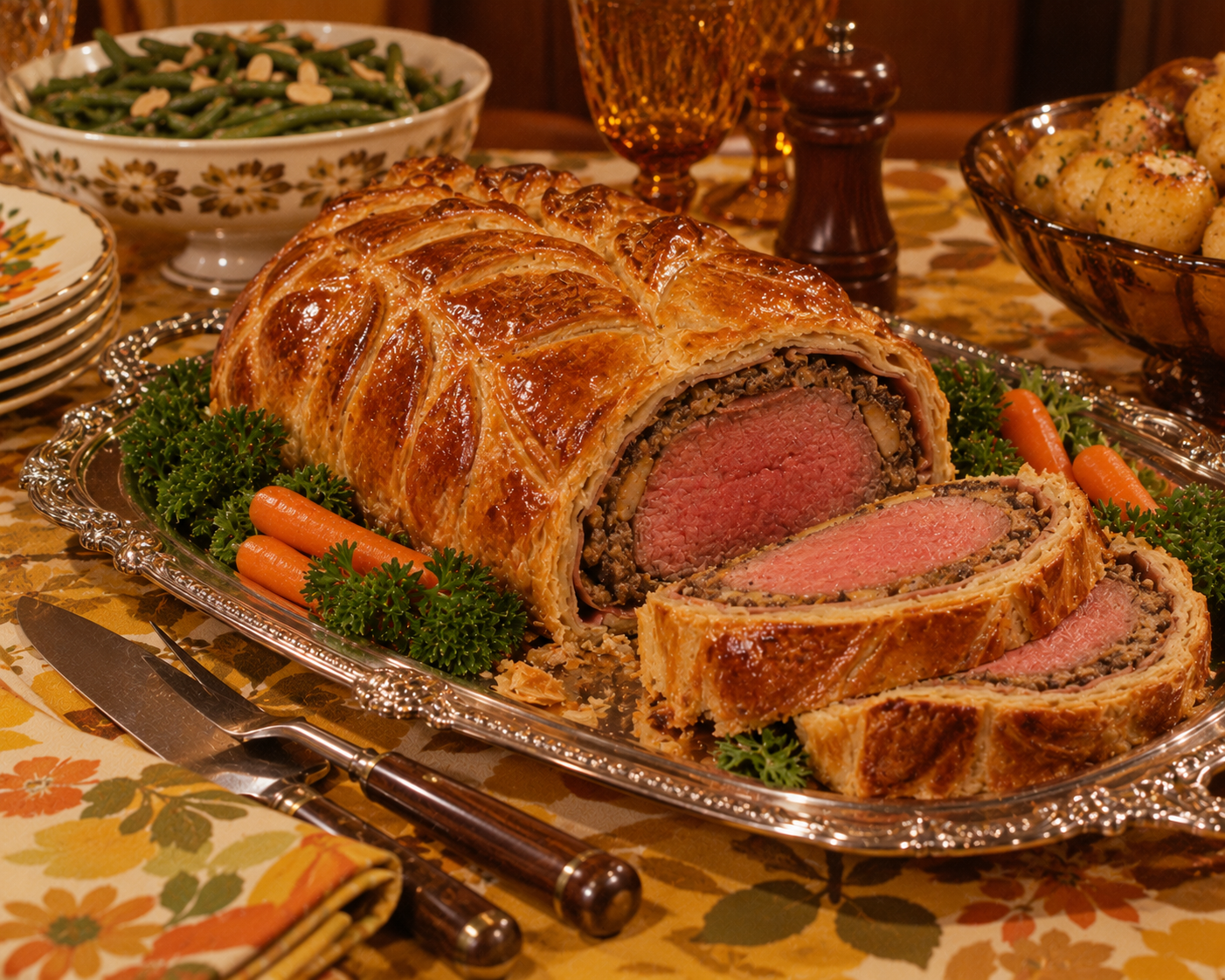
If the appetizers hadn’t already made it clear that this wasn’t an ordinary Tuesday night, Beef Wellington certainly did. Wrapping an entire beef tenderloin in pastry created the kind of dramatic centerpiece that practically demanded to be presented whole before it was sliced. With versions incorporating pâté, bacon, mushrooms, or other rich fillings, it delivered the elaborate European-inspired presentation that made a home cook look especially ambitious.
Beef Stroganoff
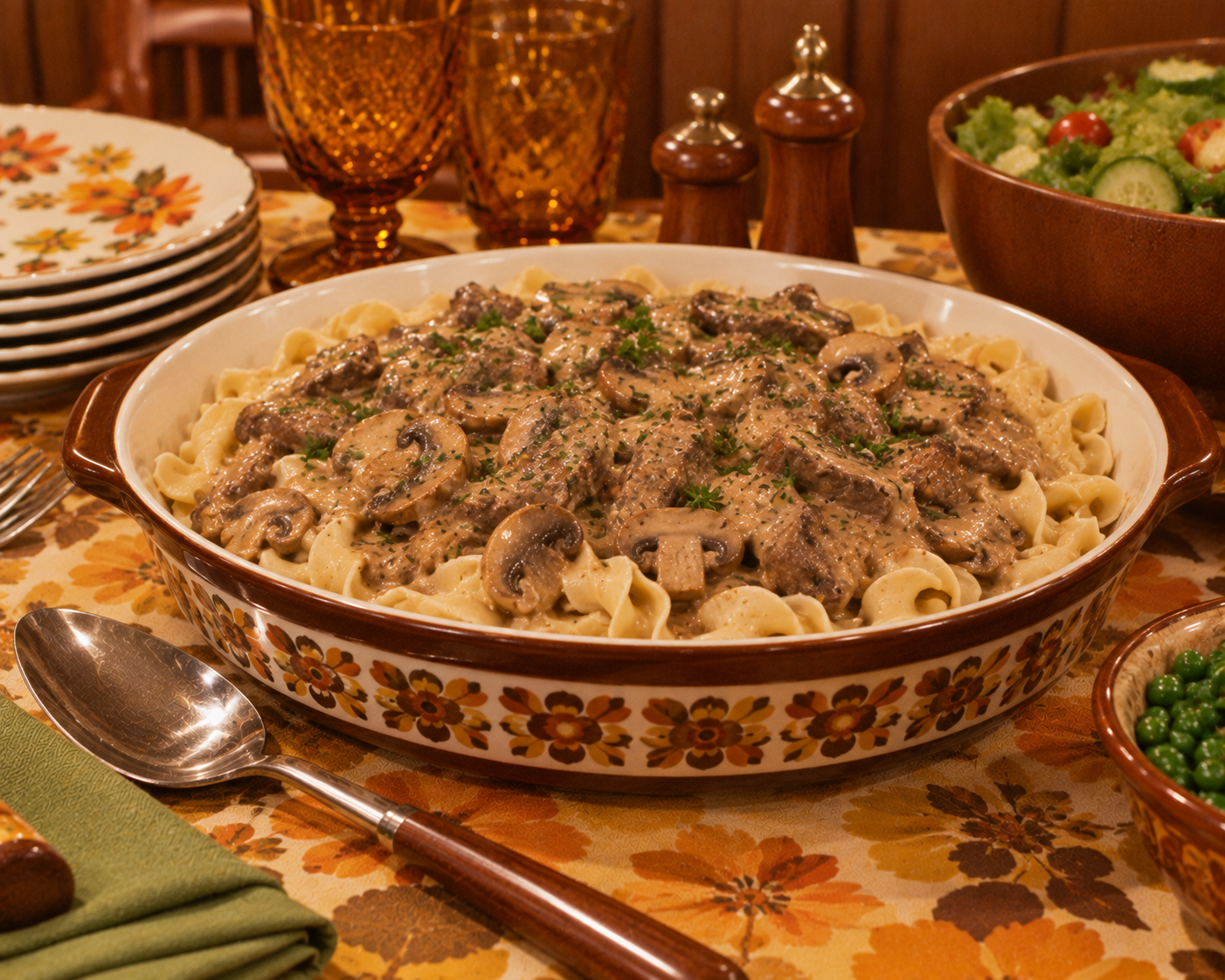
Beef Stroganoff had the useful ability to be both comforting and impressive-sounding. Strips of beef and mushrooms covered in a rich, creamy sauce could be spooned over noodles or rice, making the dish relatively easy to serve to a table full of people. Its international pedigree also helped elevate it beyond everyday beef-and-noodles territory, even if plenty of Americanized recipes made the dish considerably easier to prepare.
Molded Gelatin Salad
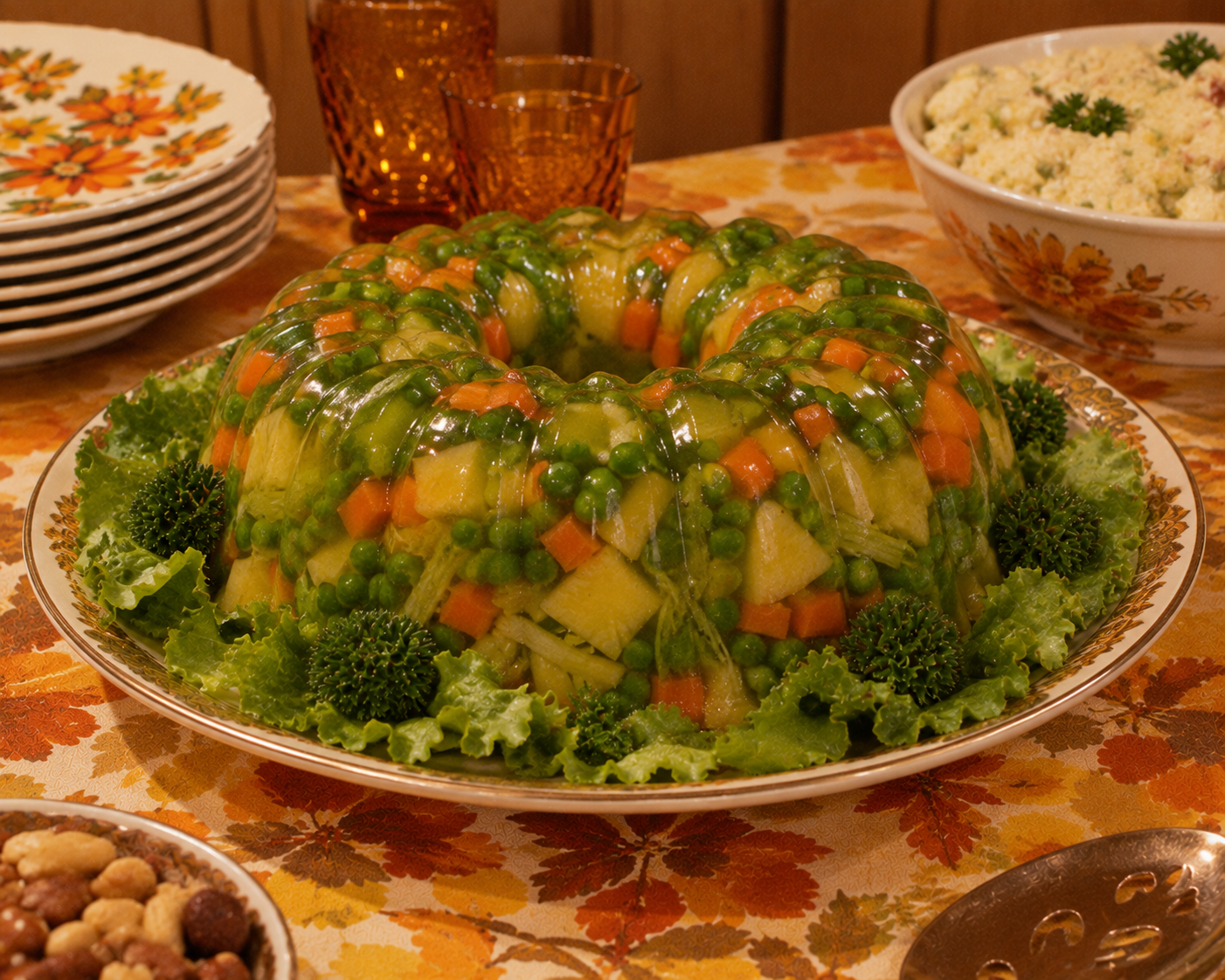
No 1970s food spread would look quite right without something suspended in gelatin. Fruit was only the beginning. Depending on the recipe, a gelatin mold might contain vegetables, nuts, creamy ingredients, or combinations that are considerably harder to imagine appearing at a modern dinner party. The appeal wasn’t only the flavor: These creations could be prepared hours ahead, unmolded onto a serving platter, surrounded by lettuce, and displayed as an edible centerpiece.
Watergate Salad
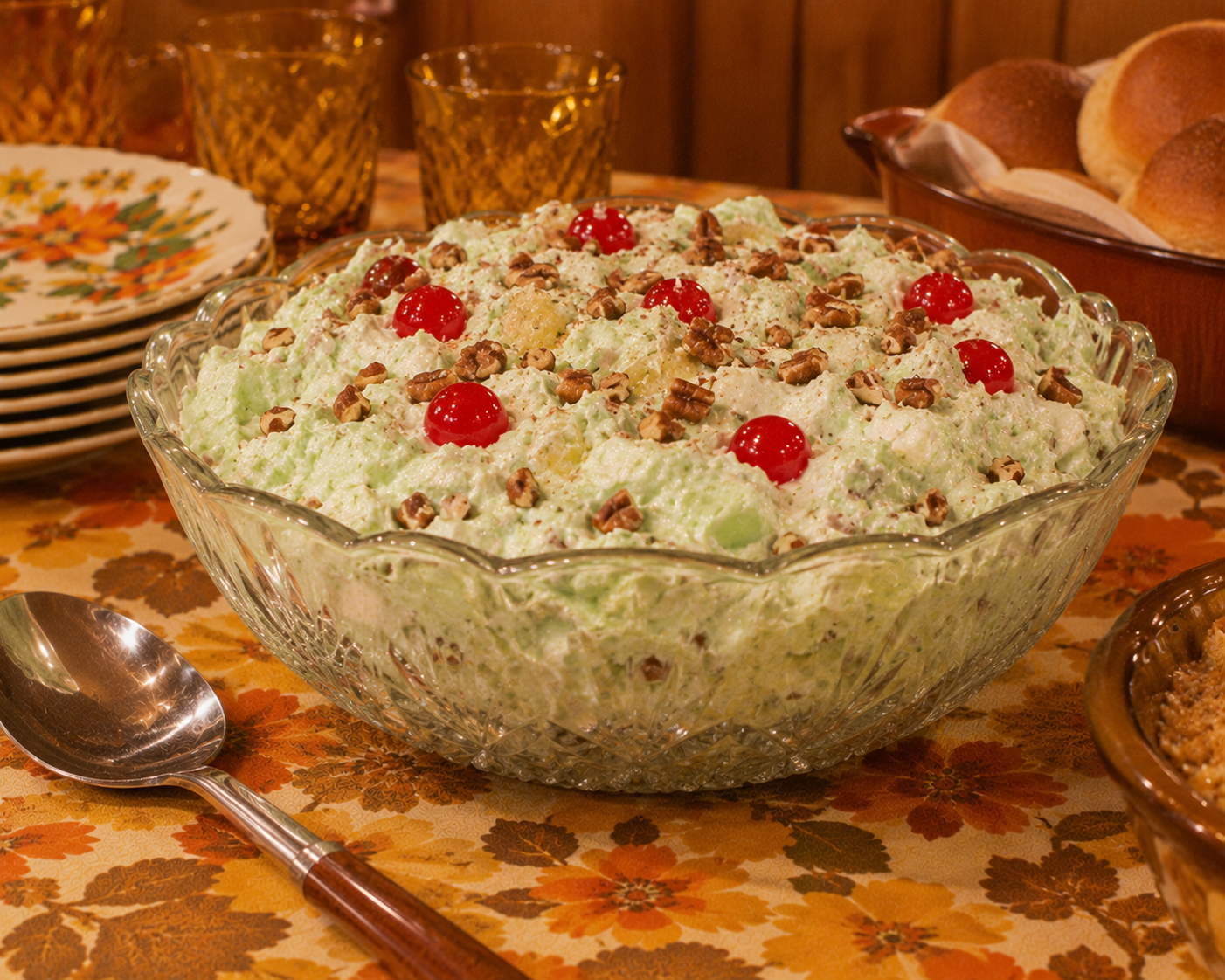
Calling Watergate salad a “salad” requires a fairly generous definition of the word. The famously green dish combines pistachio pudding mix, canned pineapple, whipped topping, miniature marshmallows, and nuts into something closer to dessert. Originally known as Pistachio Pineapple Delight, it was a perfect example of the era’s enthusiasm for turning packaged convenience foods into colorful creations worthy of a party table.
Baked Alaska
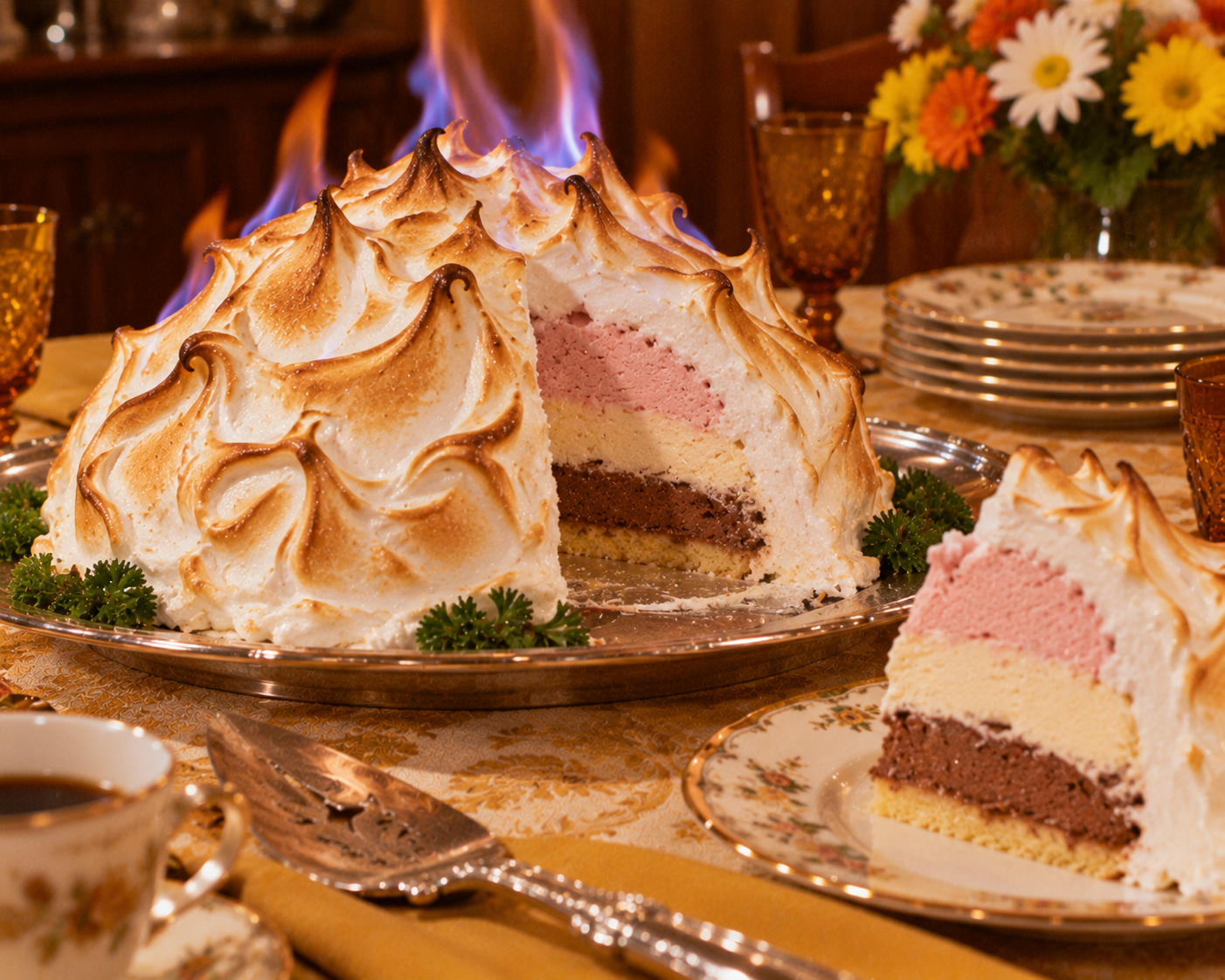
Baked Alaska was the sort of dessert that made people look up when it entered the room. Cake and ice cream were covered with a thick layer of meringue, then browned on the outside while the ice cream somehow remained frozen inside. It was dramatic, slightly improbable, and impressive enough to finish a formal dinner party on exactly the theatrical note a 1970s host might have wanted.
Pineapple Upside-Down Cake
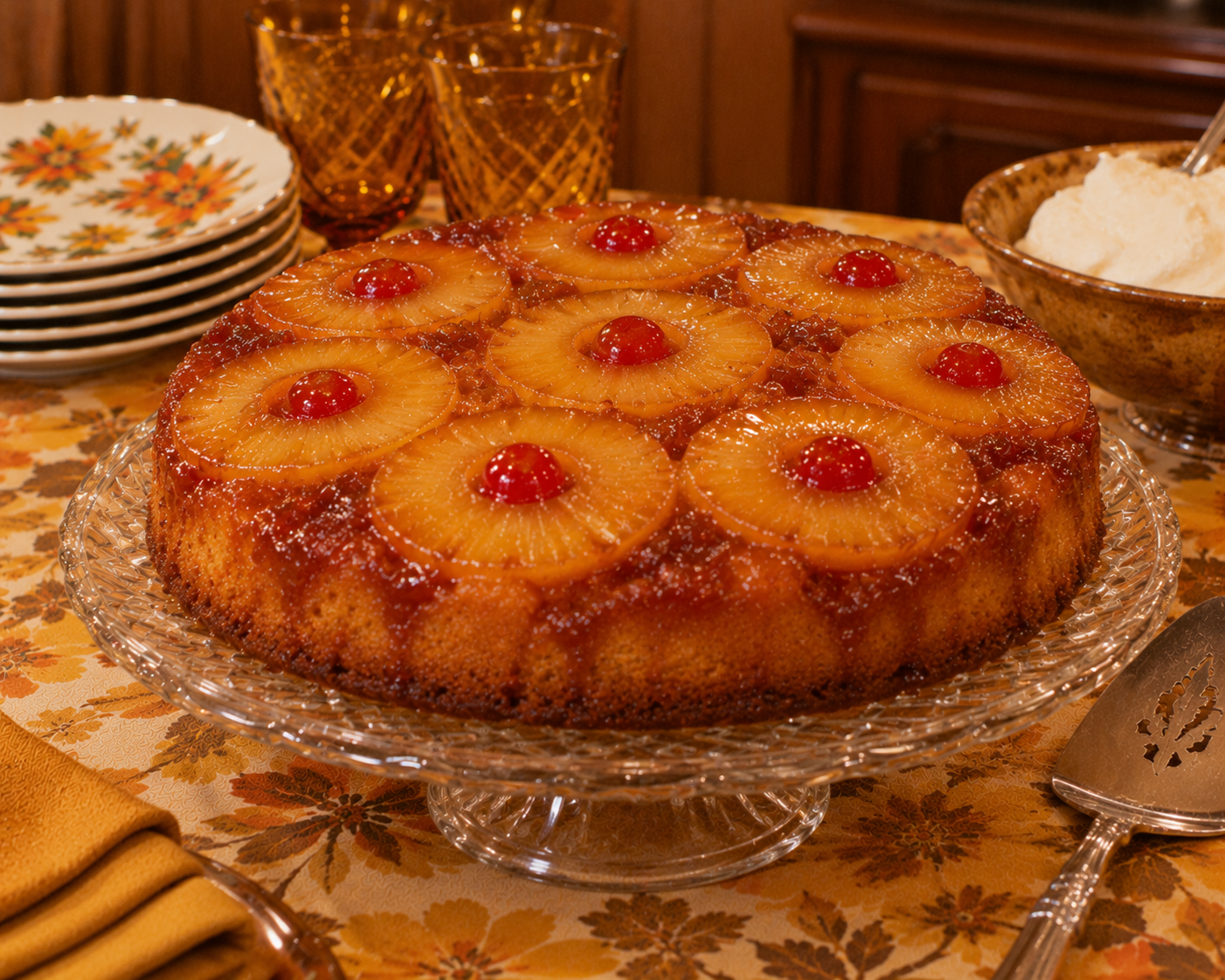
Few desserts offered as much visual payoff for relatively little decorating work as pineapple upside-down cake. Pineapple rings, brown sugar, and bright red maraschino cherries created the decoration automatically when the cake was flipped out of its pan. Canned pineapple also made it conveniently achievable, giving hosts a dessert that combined the decade’s love of packaged ingredients with something that still looked festive when placed in the middle of the table.
Dinner Was Supposed to Be a Little Bit of a Show
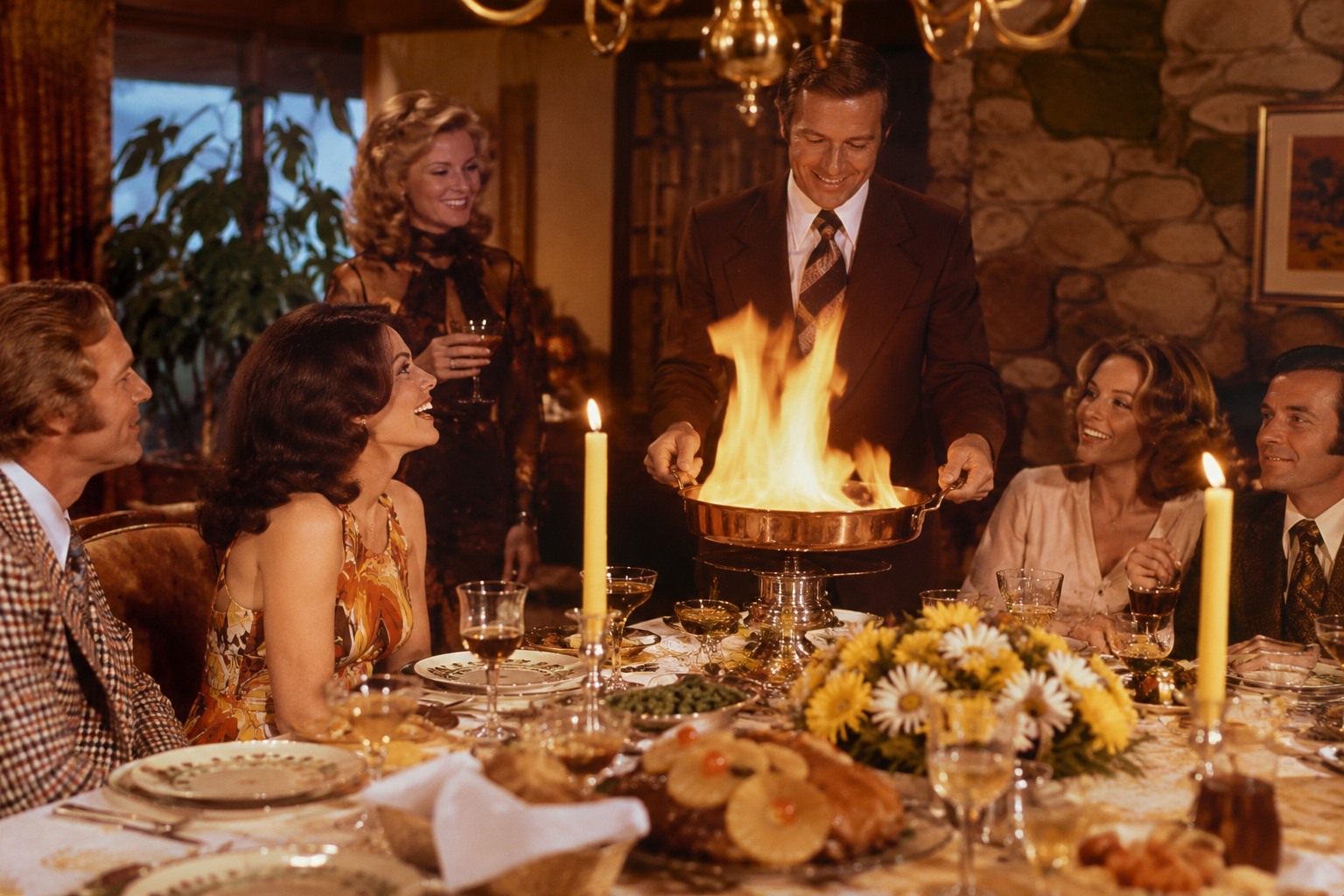
The quintessential 1970s dinner party wasn’t necessarily about making everything from scratch. It was about making dinner feel like an occasion. A fondue pot turned eating into an activity, a gelatin mold transformed ordinary ingredients into a centerpiece, and a pastry-wrapped piece of beef could make a home dining room feel considerably more sophisticated.
Many of these foods never completely disappeared. But put the cheese ball, shrimp cocktail, fondue, Watergate salad, and pineapple upside-down cake on the same table — preferably beside a stack of cocktail picks and a chafing dish — and it wouldn’t take much imagination to feel like it’s 1975 again.