If you spent time in a 1980s grandma kitchen, chances are you can still picture it. Maybe there was a Crock-Pot bubbling away on the counter, a handwritten recipe box tucked into a cabinet, or a decorative cookie tin that hadn’t contained an actual cookie in years.
Of course, plenty of the things in an ’80s grandma’s kitchen weren’t actually new. Cookware, dishes, appliances, and storage containers were kept for decades, which meant ’50s, ’60s, and ’70s staples lived happily alongside newer gadgets. Add in a few homemade touches and Grandma-specific rituals, and you had a kitchen unlike anyone else’s. Here are 15 things that might instantly take you back.
A CorningWare Casserole Dish With a Familiar Pattern
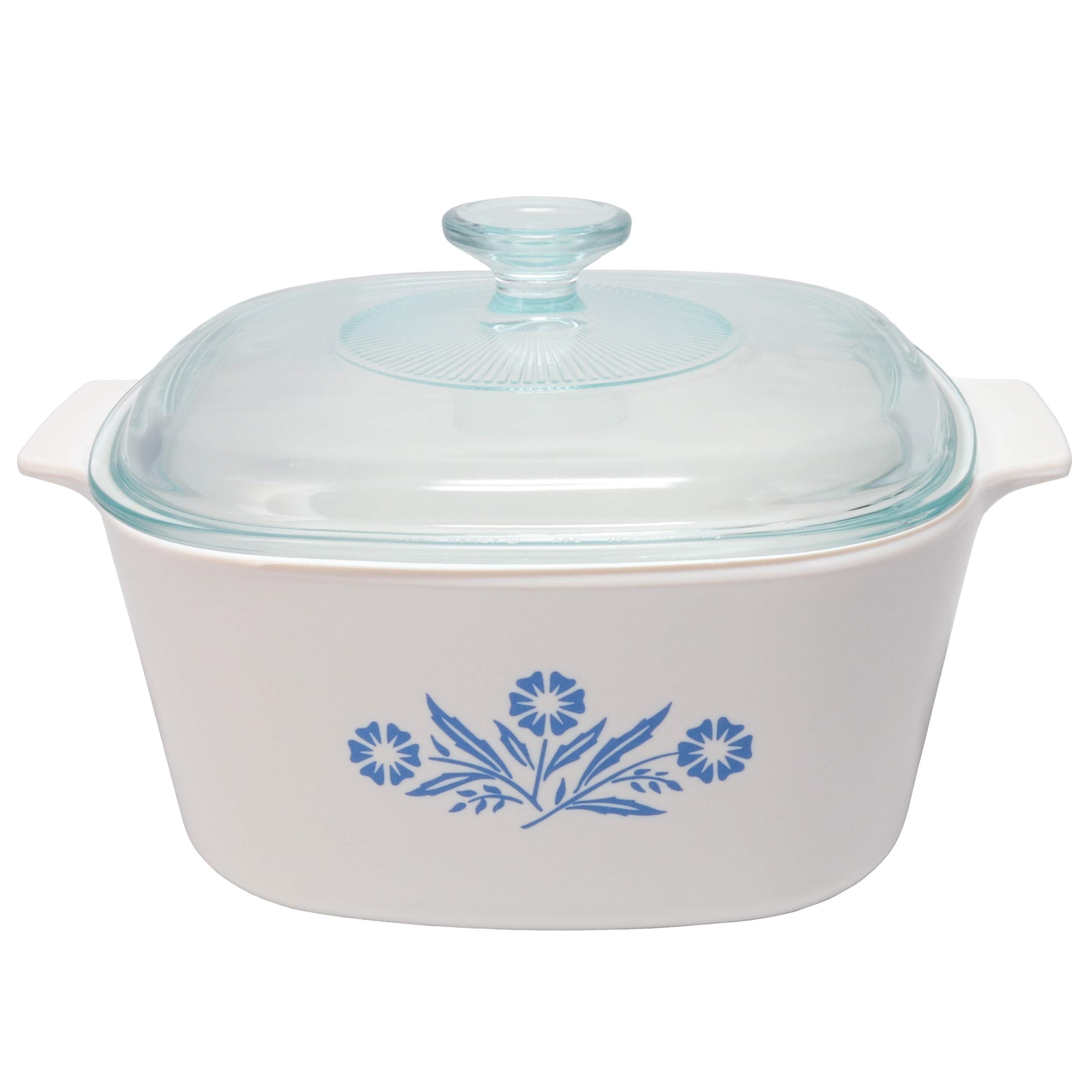
There was rarely just one CorningWare dish. Grandma seemed to have an entire cabinet of them, complete with glass lids that clattered every time you tried to pull one out. By the 1980s, CorningWare had already been around for decades, so many of those dishes had survived countless casseroles, Sunday dinners, and holidays. French White debuted in 1978, while the transparent Visions line arrived in 1980, giving Grandma even more options for taking dinner straight from the oven to the table.
A Cookie Tin That Definitely Didn’t Contain Cookies
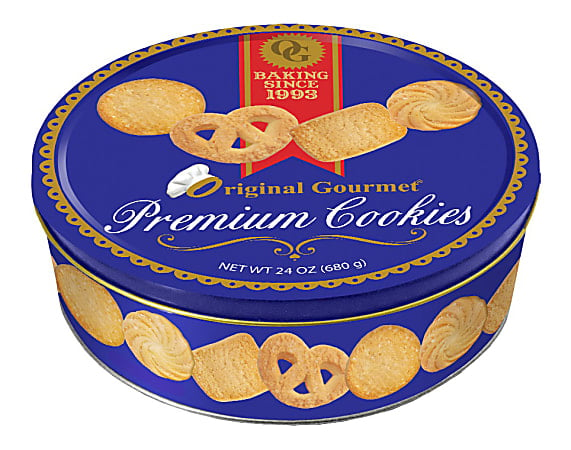
Few childhood betrayals compare to spotting a beautiful tin of Danish butter cookies, opening it, and discovering a pile of thread and buttons. Grandma wasn’t about to throw away a perfectly good container just because the cookies were gone. Those sturdy tins got repurposed for sewing supplies, recipes, coupons, twist ties, loose change, and whatever other tiny objects needed a home. The picture on the lid had absolutely no relationship to what you’d find inside.
A Handwritten Recipe Box
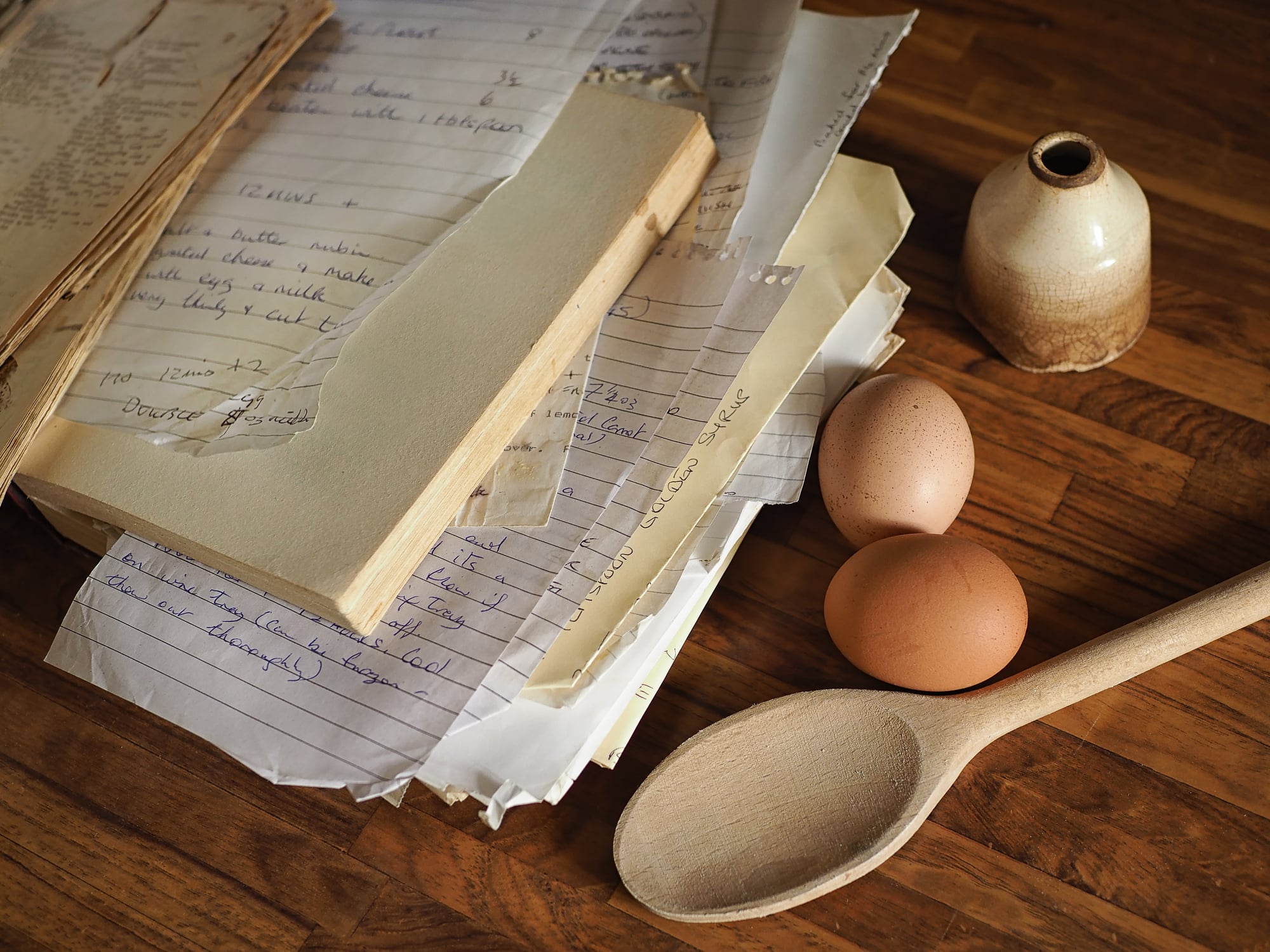
Before you could pull up thousands of recipes on your phone, Grandma had a box of stained index cards. The best ones weren’t pristine, either. They had substitutions squeezed into the margins, ingredients crossed out, grease spots from years of cooking, and names like “Aunt Betty’s Pie” written across the top. Some instructions were frustratingly vague because apparently everyone was simply expected to know what “bake until done” meant.
A Bacon Grease Jar Beside the Stove
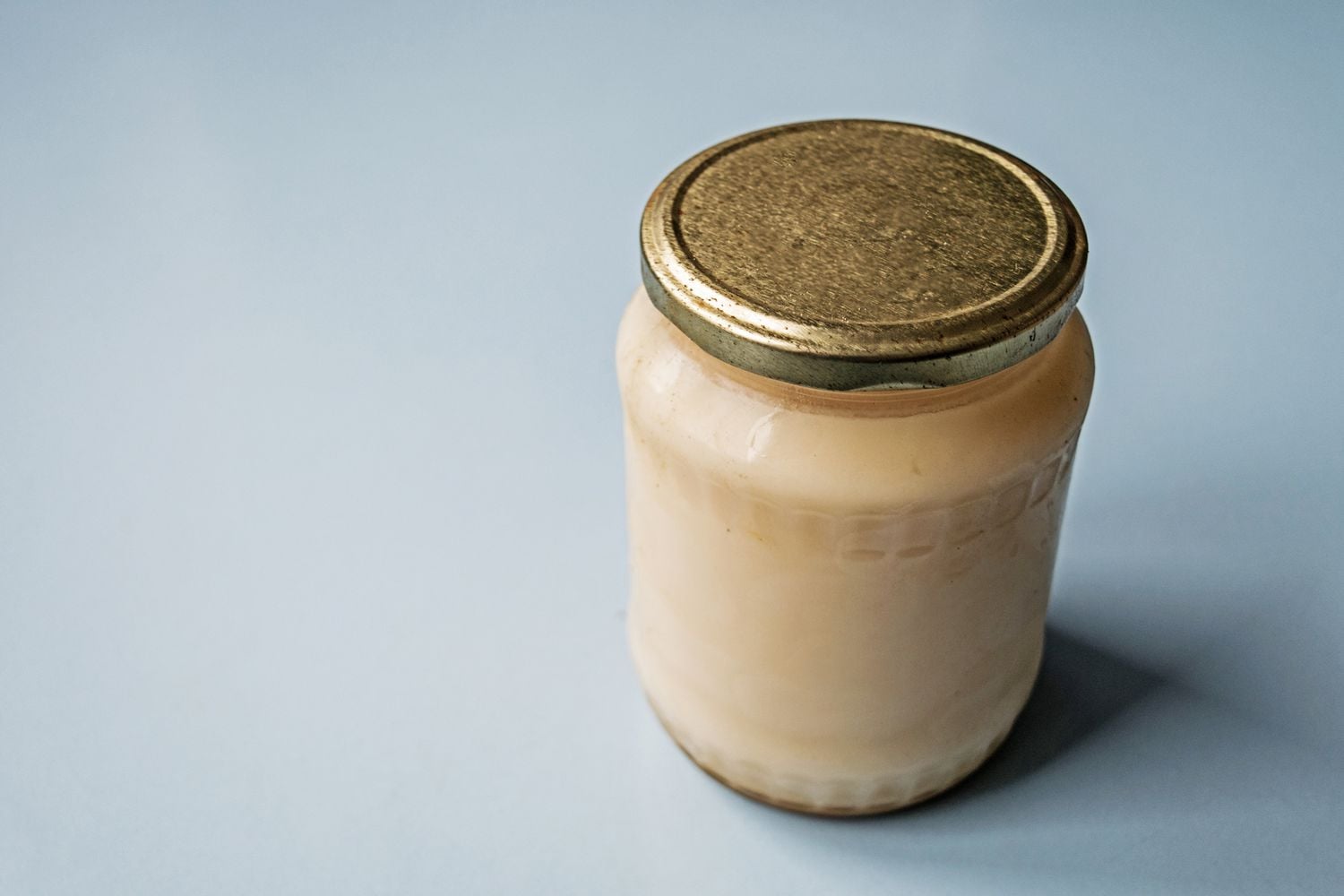
Bacon grease wasn’t necessarily waste in Grandma’s kitchen. Many home cooks saved rendered bacon fat and reused it for frying eggs, seasoning vegetables, or adding a little extra flavor to dinner. Sometimes it lived in a proper grease crock; other times, an old coffee can or glass jar did the job perfectly well. For grandchildren unfamiliar with the practice, learning what was actually inside that mysterious container beside the stove could be quite the revelation.
Matching Flour, Sugar, Coffee, and Tea Canisters
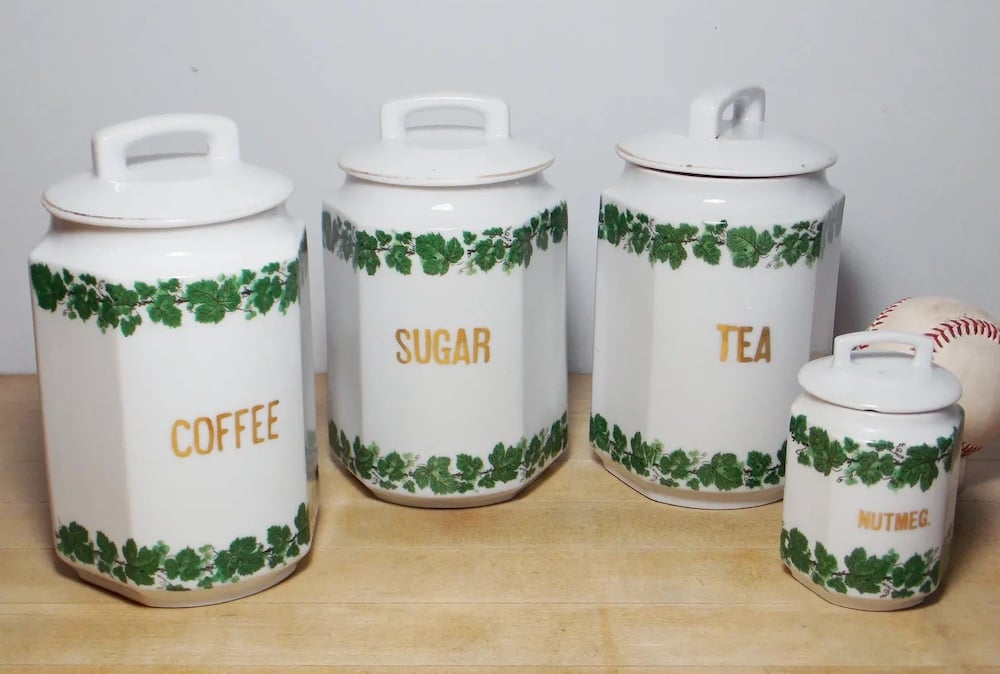
Why put flour in an ordinary container when it could live inside an enormous ceramic canister decorated with flowers, fruit, geese, or ivy? Matching countertop sets labeled “Flour,” “Sugar,” “Coffee,” and “Tea” were as much decoration as storage. They typically lined up from largest to smallest, often coordinating beautifully with the rest of the kitchen. And somehow the sugar canister was always conveniently located within reach of the coffee maker.
Trending on Cheapism


A Corelle Dinnerware Set That Seemed Indestructible
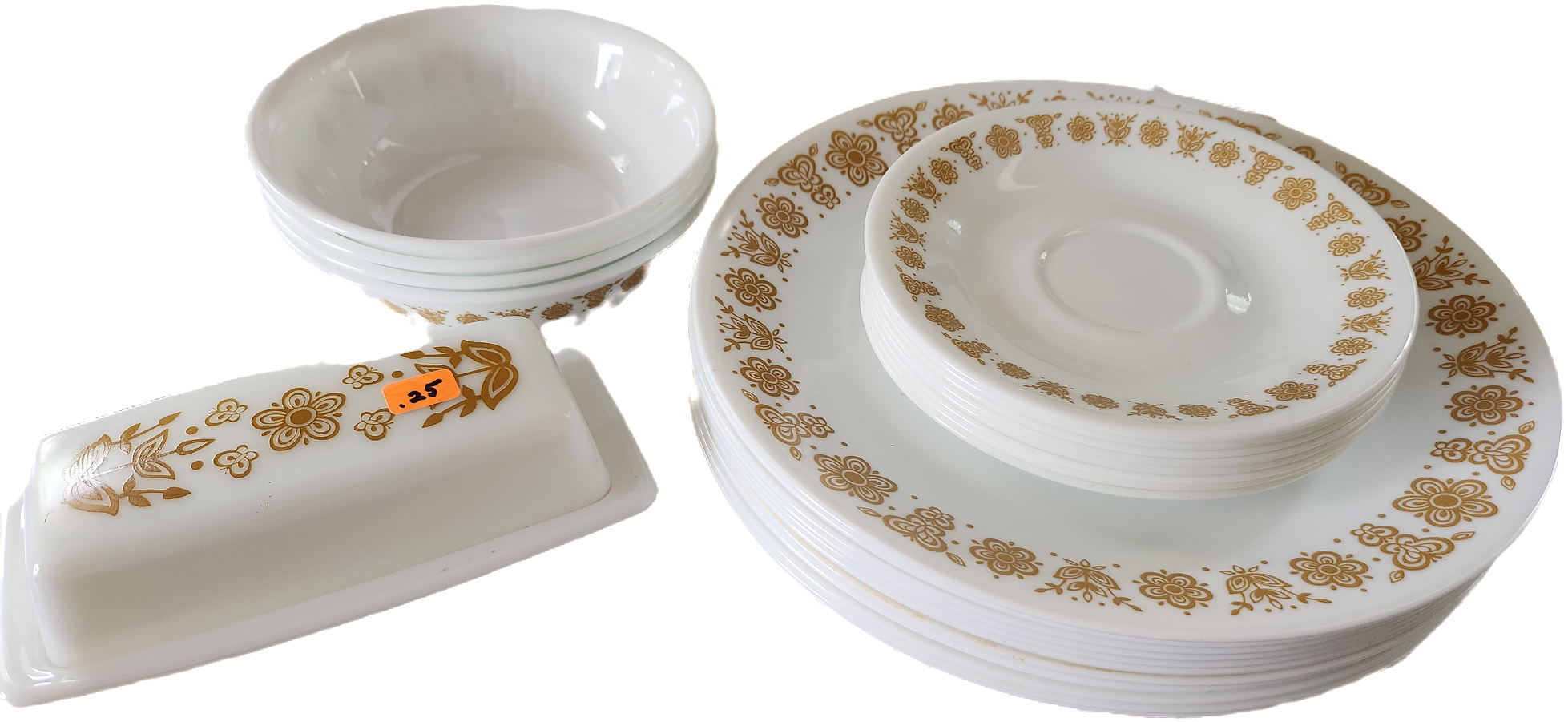
Grandma may have had “good dishes” tucked away for company, but Corelle was ready for everyday duty. The thin, lightweight plates were remarkably durable, which made them especially useful when grandchildren were involved. Patterns like Butterfly Gold and Spring Blossom Green became so recognizable that seeing one today can immediately transport people back to a childhood dinner table. Plenty of those vintage sets are still hanging around decades later.
A Pyrex Measuring Cup With Red Lettering
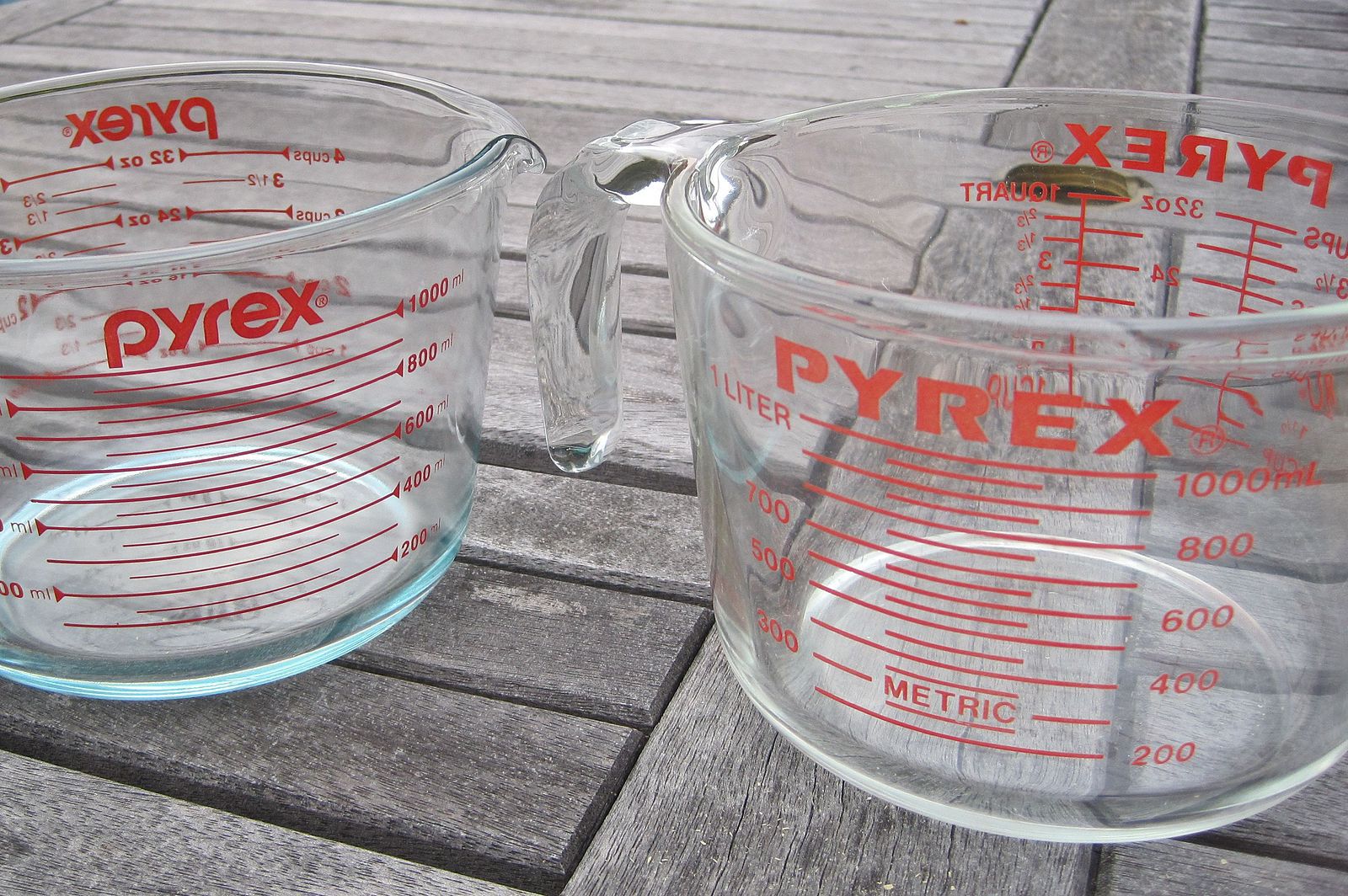
It wasn’t particularly fancy, but that glass measuring cup might have been the hardest-working object in the kitchen. Pyrex cups with their familiar red markings handled everything from pancake batter and cake mixes to gravy and hot liquids. Pyrex redesigned its measuring cups in 1983 to make them stackable and improve the handles, and according to the Corning Museum of Glass, sales jumped 150% over the previous year. Apparently Grandma wasn’t the only one who needed one.
A Crock-Pot That Had Been Cooking Since Breakfast
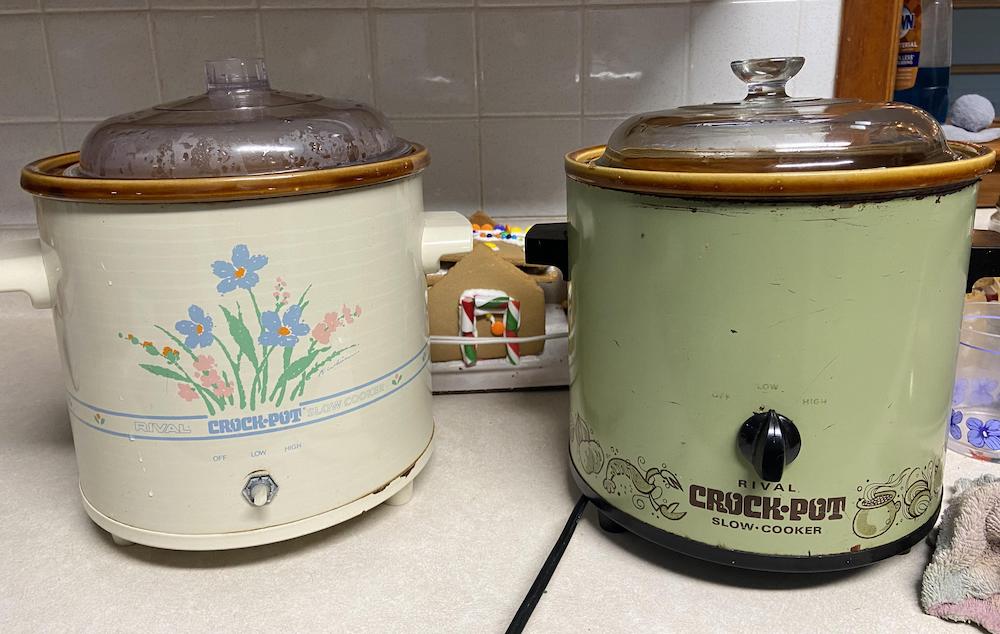
You arrived at Grandma’s house at noon, and whatever was in the Crock-Pot had seemingly already been cooking for six hours. By the 1980s, slow cookers were well established as a convenient way to make roasts, stews, beans, chili, and other meals that could simmer with minimal supervision. Vintage models weren’t exactly subtle, either, with plenty of brown, beige, and floral designs. The hardest part was resisting the urge to lift the lid every 20 minutes to see if dinner was ready.
Sign up for our newsletter
An Electric Can Opener Taking Up Counter Space
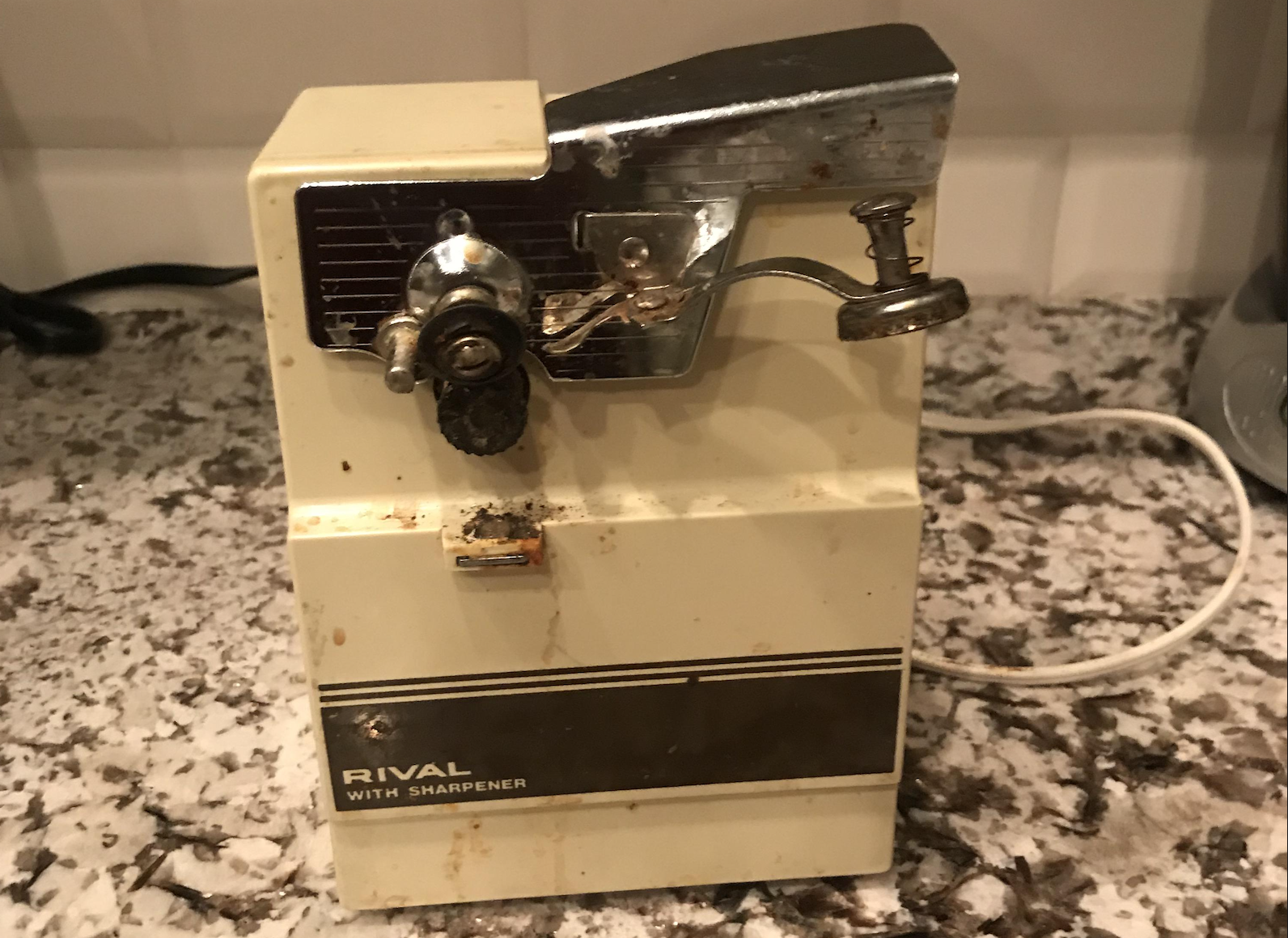
Opening a can manually apparently wasn’t futuristic enough for the 1980s. Electric can openers occupied permanent real estate beside coffee makers and toasters in kitchens across the country. You attached the can, the machine loudly ground its way around the top, and a little magnet caught the lid when it finished. Some even included built-in knife sharpeners, making them the multitasking countertop gadget Grandma never knew she needed.
A Mr. Coffee Machine — and Maybe an Old Percolator
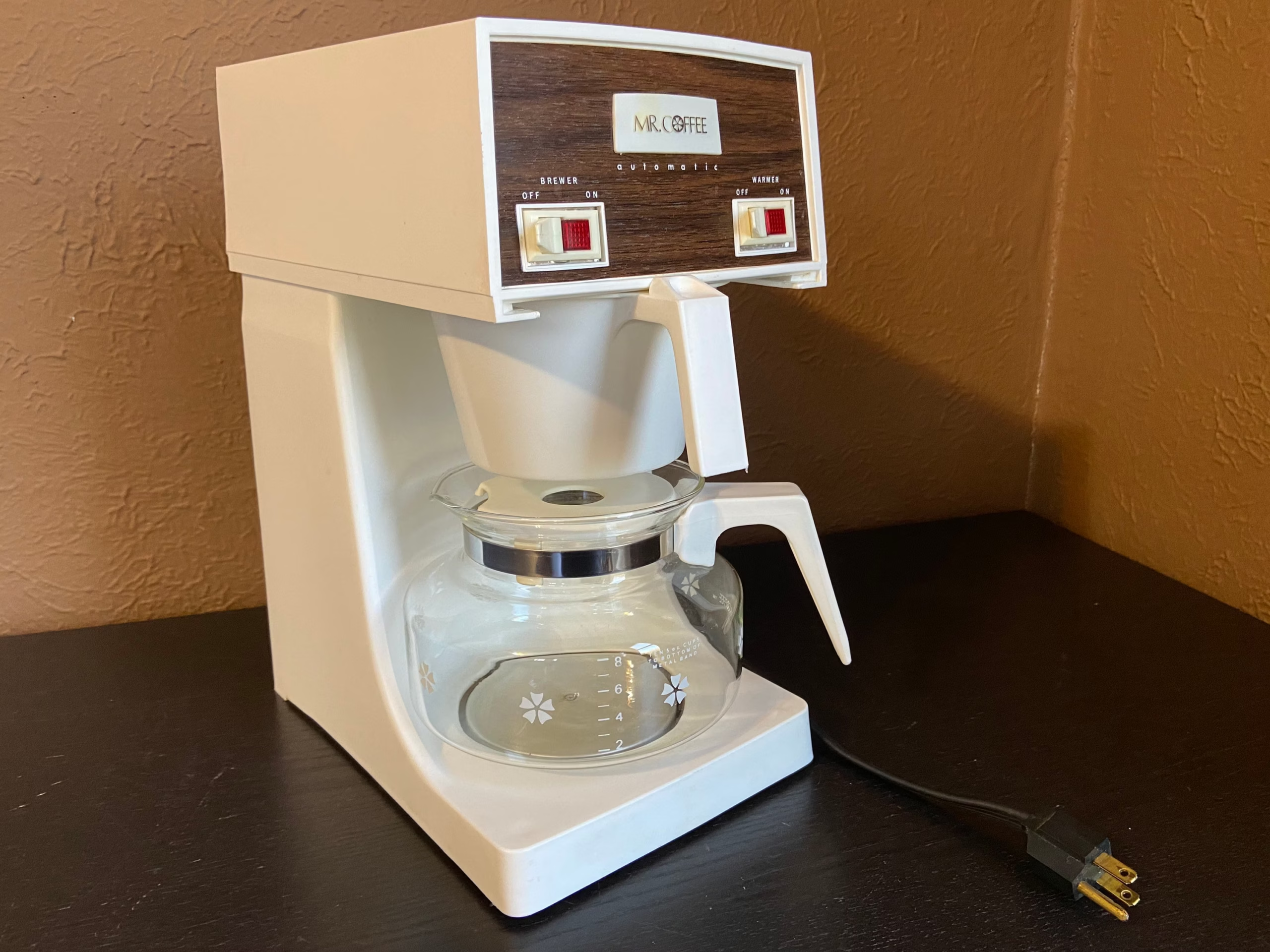
Coffee was often brewing before anyone else woke up and offered again every time another adult walked through the door. By the 1980s, automatic drip machines were increasingly replacing electric percolators, with Mr. Coffee becoming one of the most recognizable names thanks in part to years of Joe DiMaggio commercials. Still, Grandma didn’t necessarily throw out the old percolator just because something newer arrived. It was probably sitting in a cabinet somewhere, just in case.
A Tupperware Pitcher That Seemed to Last Forever
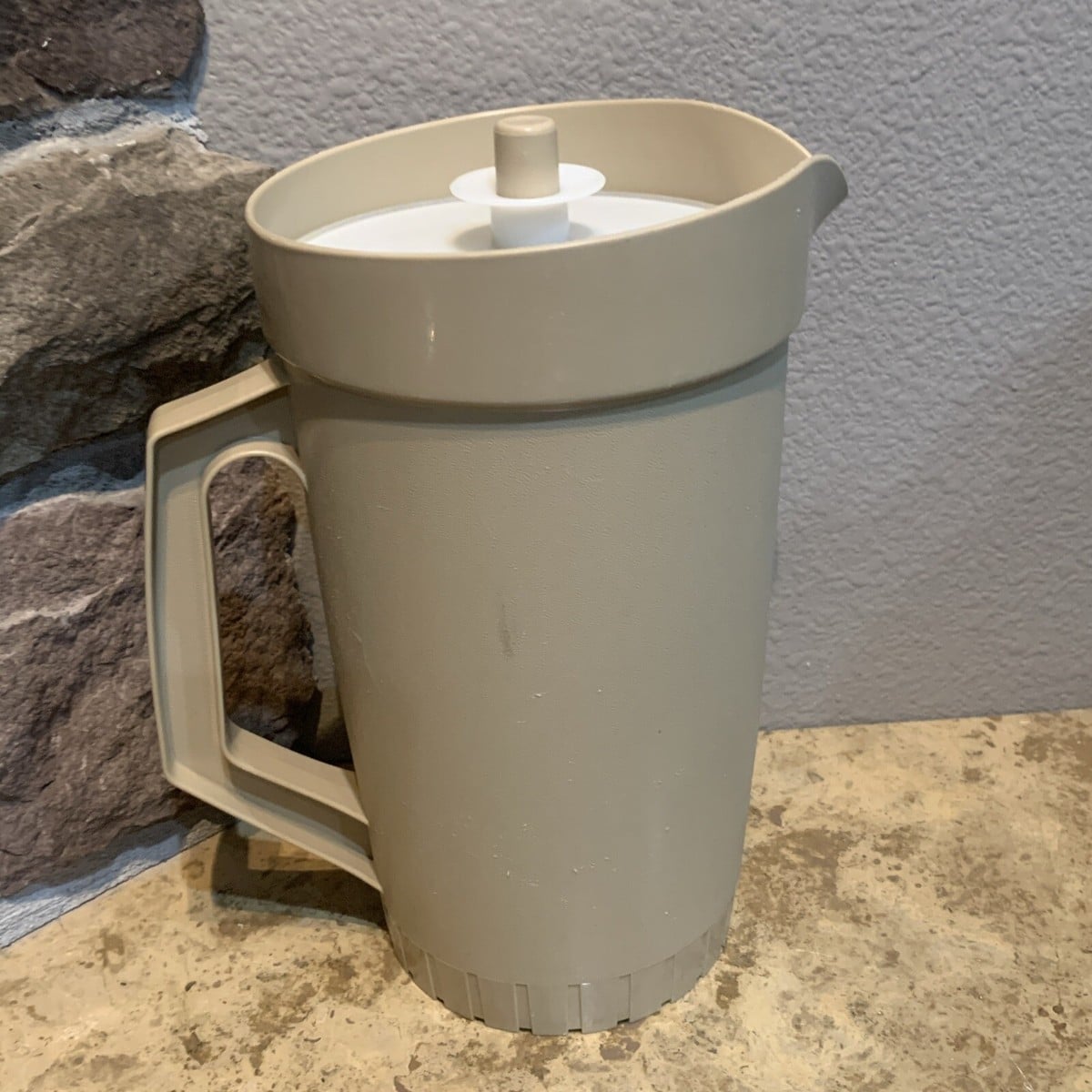
Grandma’s Tupperware collection could occupy an entire cabinet, but the pitcher was especially memorable. Filled with iced tea, lemonade, water, or a brightly colored powdered drink mix, those plastic pitchers came in unmistakably retro shades ranging from burnt orange and beige to translucent pastels. The sealable lids helped make them useful enough to keep around for years — sometimes long enough for the pitcher to be older than the grandchildren drinking from it.
A Butter Dish That Never Left the Counter
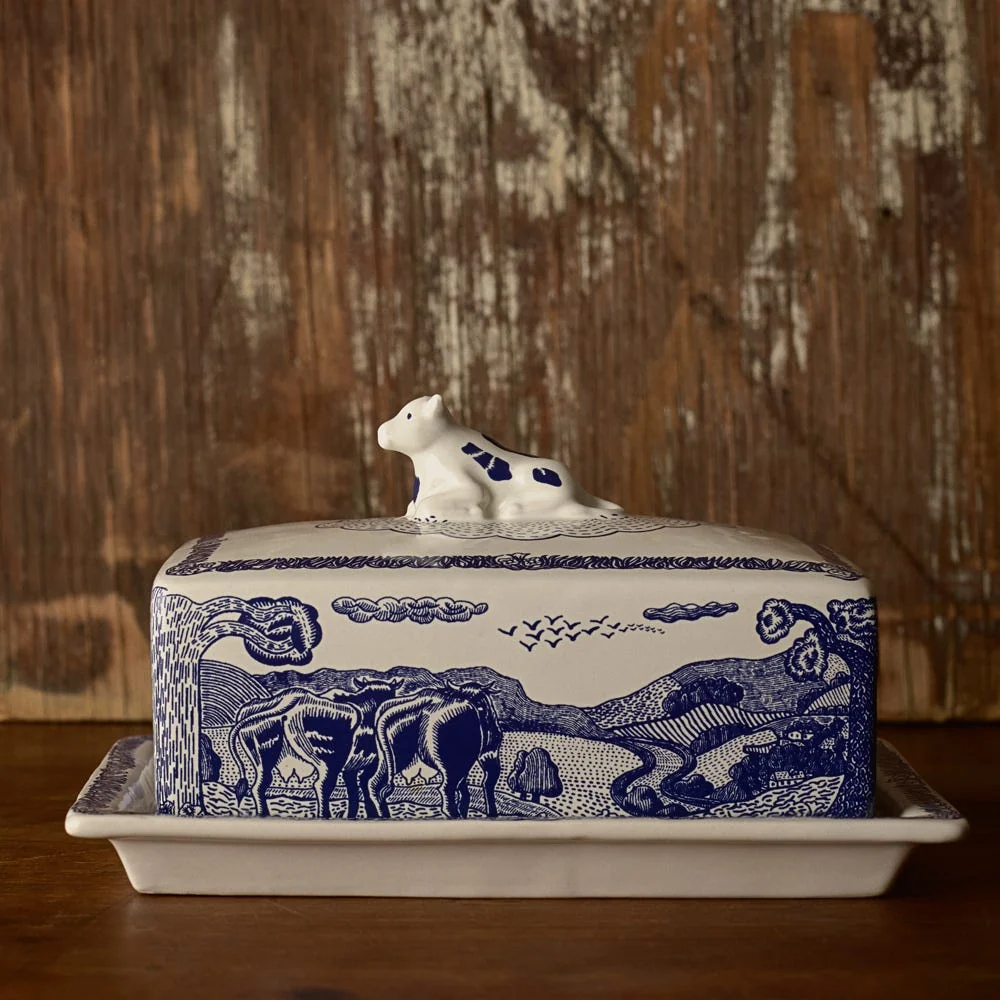
Somewhere near the toaster was a covered dish containing an actual stick of butter. No individual packets, no squeeze bottle — just lift the little lid and get what you need. Butter dishes came in glass, ceramic, or plastic and sometimes matched the rest of Grandma’s dinnerware. There might even be a tiny designated butter knife nearby. Just don’t dig a giant hole into the middle of the stick unless you wanted to hear about it.
Crocheted Towels Hanging From the Oven Door
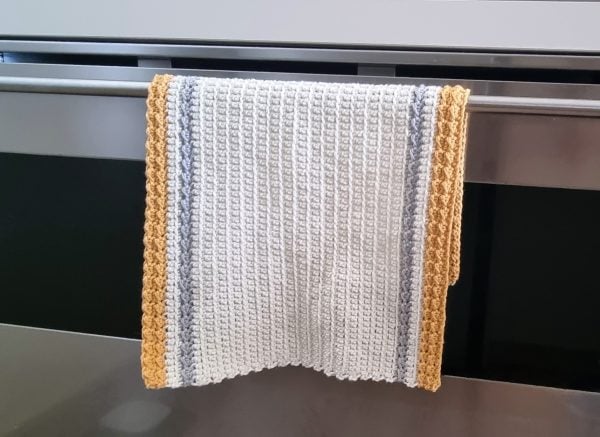
Were you allowed to actually dry your hands on them? That was less clear. Kitchen towels with crocheted toppers, fabric loops, or big buttons frequently hung from oven handles, combining practical household linen with handmade decoration. Grandma might have versions for Christmas, Easter, or every season imaginable, decorated with flowers, fruit, roosters, and other kitchen-friendly motifs. And if she crocheted them herself, there was a good chance another one appeared every holiday.
A Wall Calendar Covered in Everyone’s Business

Long before families shared calendars on their phones, Grandma kept everyone’s schedule on the kitchen wall. The calendar itself may have come free from a local bank, church, pharmacy, insurance agent, or hardware store, with birthdays, doctor’s appointments, school events, and family visits scribbled into the squares. There might even have been a pencil hanging nearby on a string. If you wanted to make plans with Grandma, she was checking that calendar first.
A Candy Dish That Was Somehow Always Full
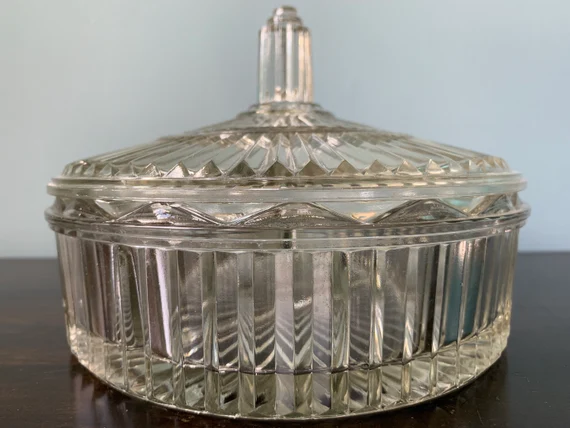
Nobody ever saw Grandma restocking it, yet the candy dish never seemed to run out. Inside might be butterscotch disks, peppermints, hard fruit candies, caramels, or, around Christmas, colorful ribbon candy. The dish itself was often considerably fancier than its contents, perhaps made from cut glass or decorative ceramic. You’d ask if you could have one even though you already knew the answer — and somehow that candy always tasted better at Grandma’s house.
What Did Your Grandma Always Have?
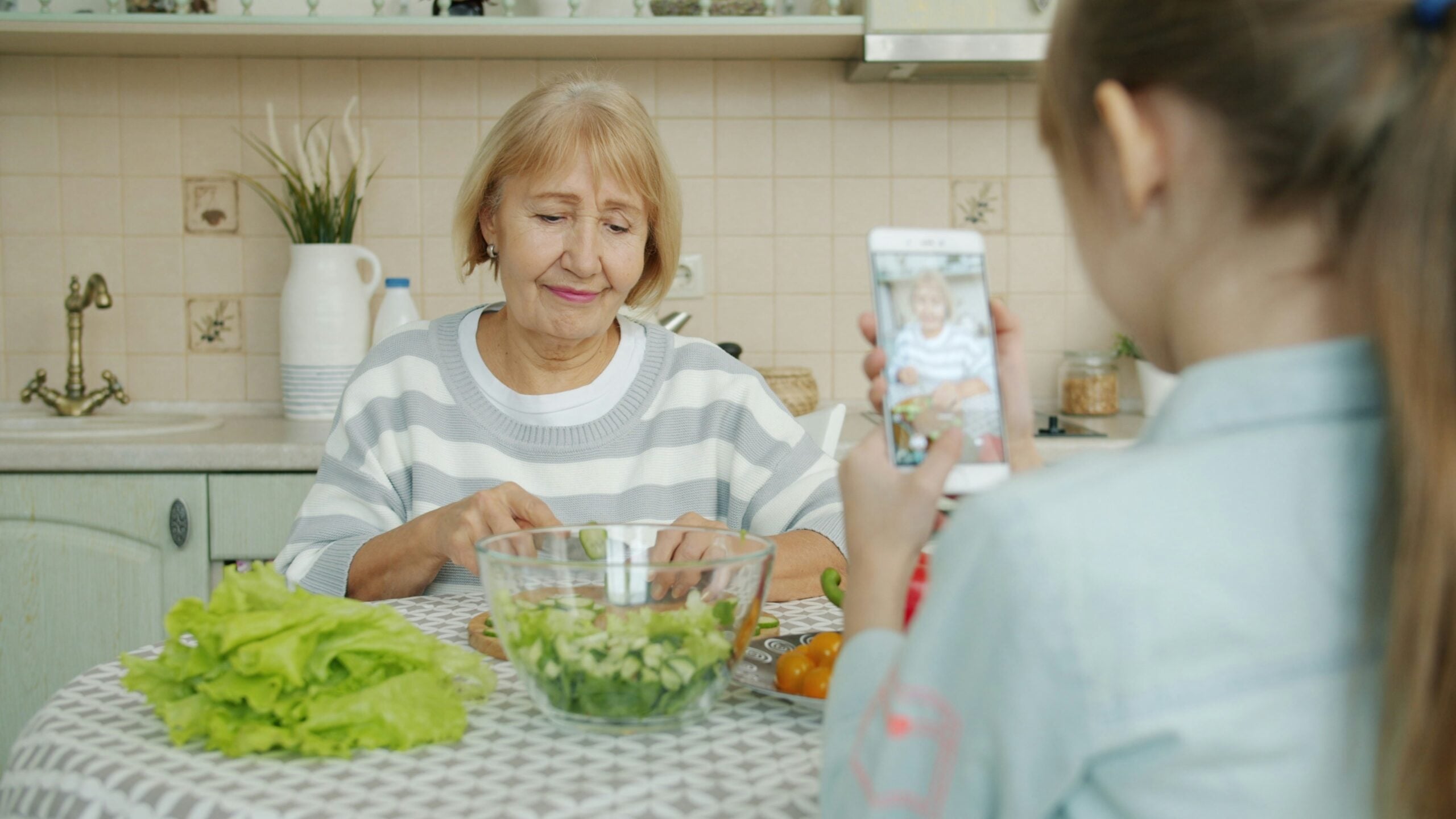
The things that made Grandma’s 1980s kitchen memorable weren’t necessarily the newest or trendiest products. Often, they were objects she’d already owned for years: the same Corelle plates, CorningWare casserole dish, Tupperware pitcher, or handwritten recipes that appeared every time you visited.
And then there were the little rituals — coffee already brewing, dinner cooking all afternoon, candy waiting in a dish, and a container that was never used for what its label suggested. What was the one thing your grandmother always kept in her kitchen that you almost never see anymore?