Family dinner in the 1970s wasn’t all fondue pots and elaborate Jell-O creations. Everyday meals were more likely to revolve around casseroles, canned vegetables, meat and potatoes, bread and margarine, or the convenience foods becoming increasingly common in American kitchens. The Smithsonian’s American Food History Project explores how changing products, technology, and family life have shaped the way Americans eat. From Hamburger Helper and TV dinners to glasses of milk and leftover night, these 12 memories capture what family dinner was like in the 1970s.
One Meal Was Made for Everybody
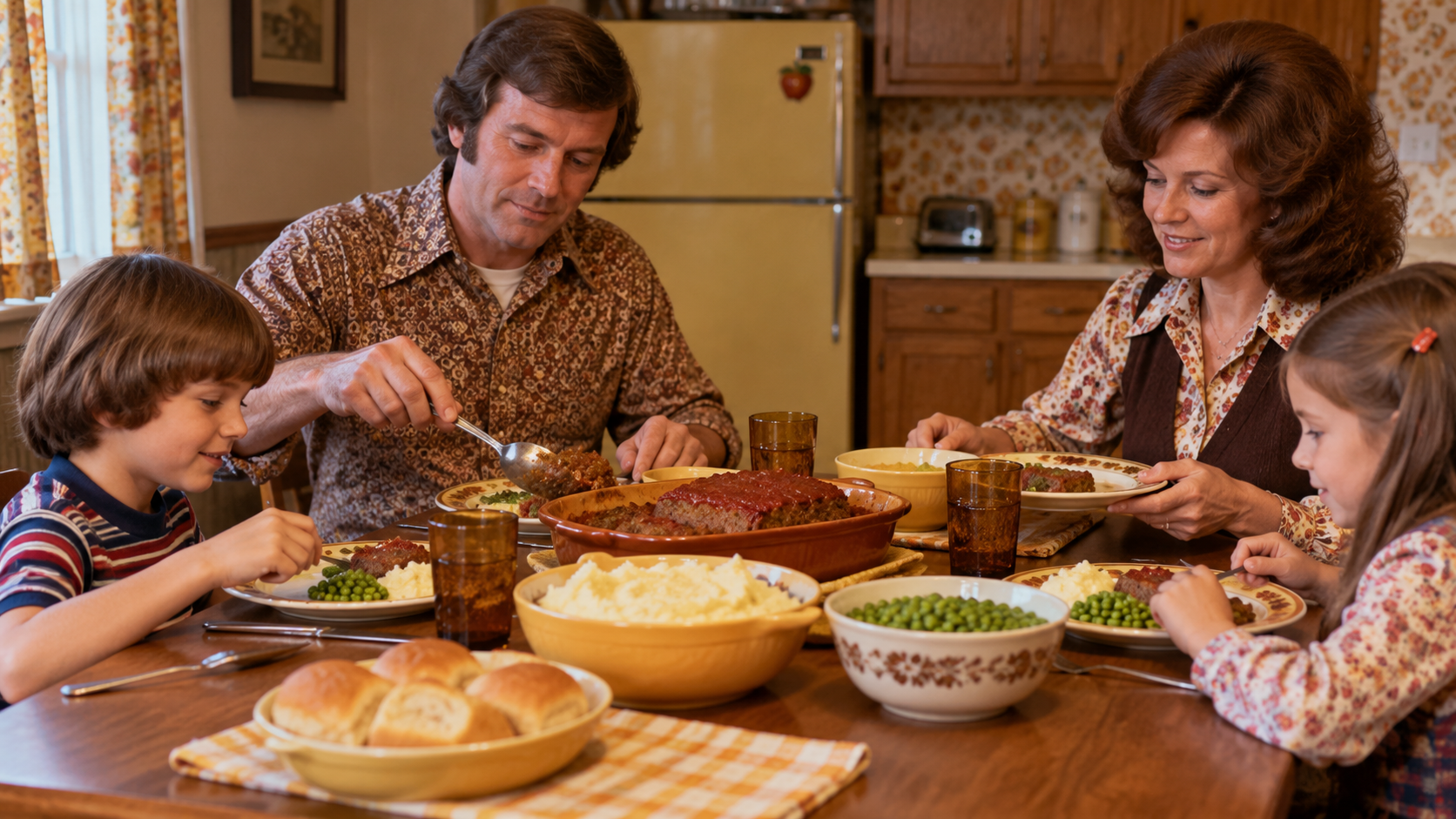
Dinner wasn’t a menu, and in many households, kids didn’t get to place individual orders. Whatever had been cooked was what appeared on the table, whether that meant meatloaf and peas, pork chops and potatoes, spaghetti, or something baked in a casserole dish. Plenty of families had their own rules about picky eaters, from requiring one bite to simply saying no alternative dinner was coming. It wasn’t universal, but “this isn’t a restaurant” became a familiar enough parenting line for a reason.
Casseroles Did a Lot of Heavy Lifting
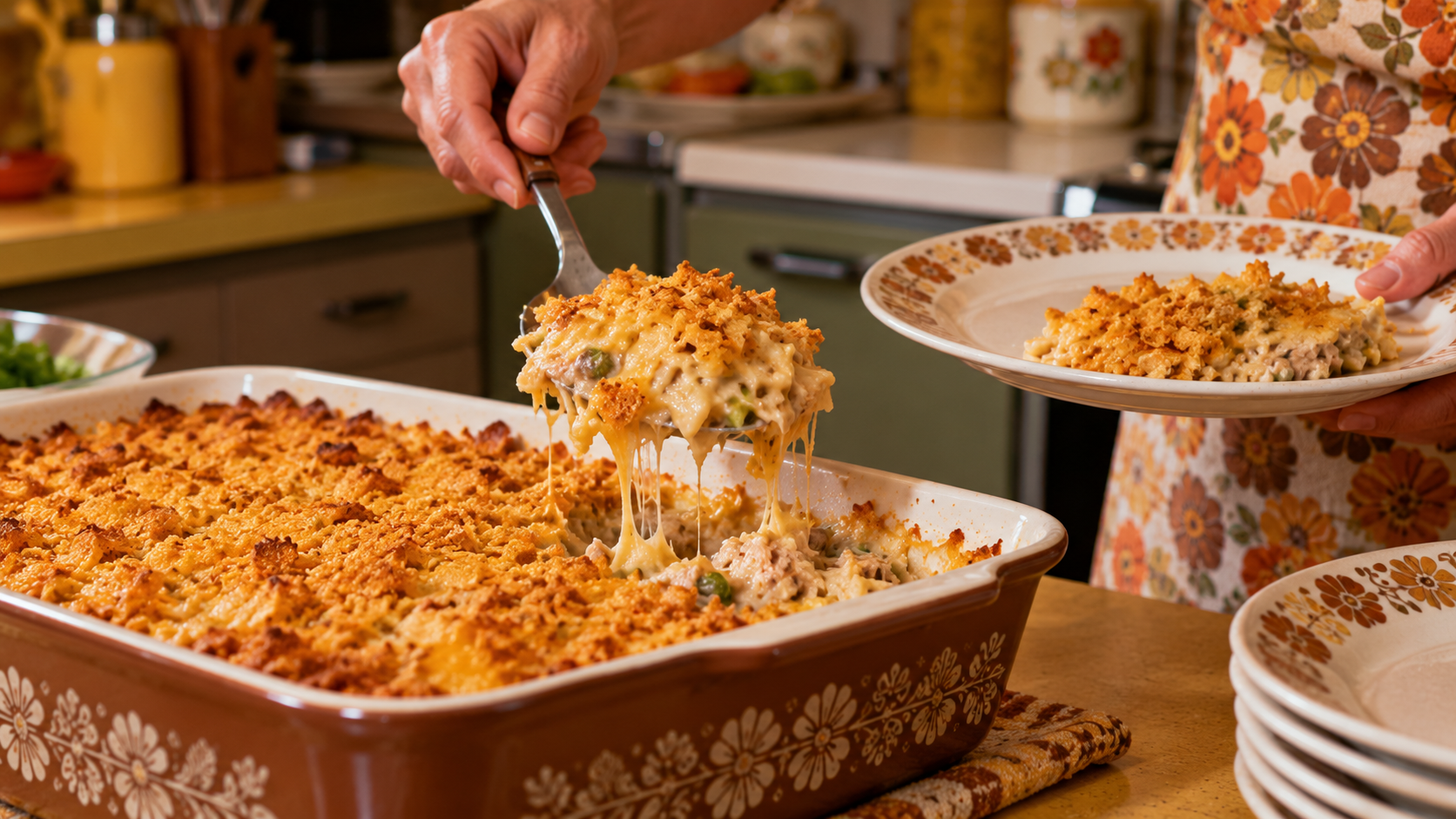
Few dishes could stretch modest ingredients quite like a casserole. Noodles or rice, canned soup, vegetables, cheese, and a relatively small amount of meat could become a filling dinner for an entire family, usually in one baking dish. Tuna noodle casserole, chicken and rice, hamburger casseroles, and green bean casserole were hardly inventions of the 1970s, but they fit neatly into an era increasingly comfortable with convenience ingredients. A crunchy layer of breadcrumbs, crackers, or fried onions often finished things off.
The Can Opener Got a Workout
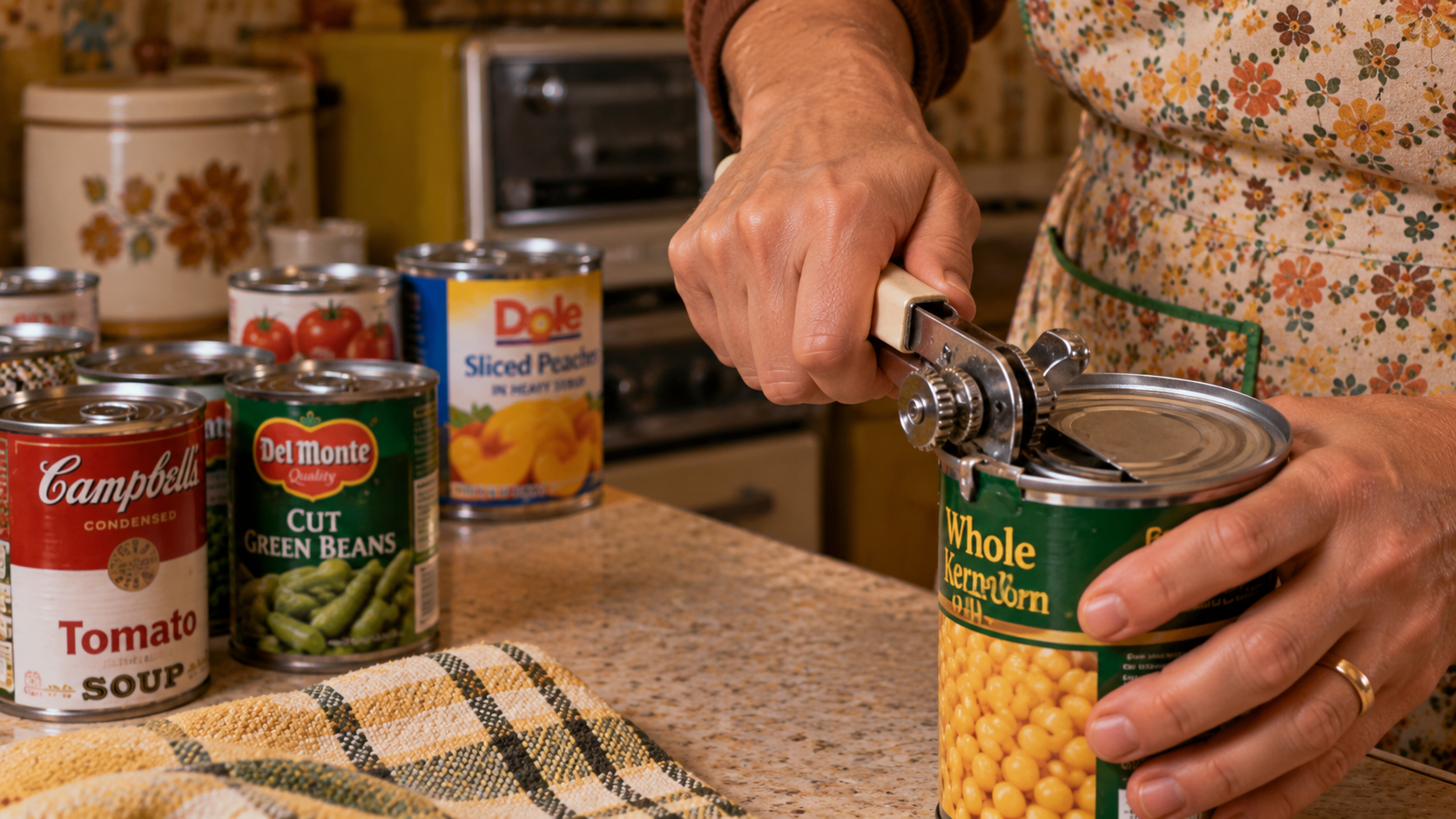
A pantry full of cans could solve several parts of dinner without much preparation. Canned corn, peas, green beans, beans, condensed soups, peaches, and fruit cocktail had been around long before the 1970s, but processed and shelf-stable foods were thoroughly integrated into American cooking by then. Condensed soup could become casserole sauce rather than soup, while canned vegetables provided an instant side. Anyone who remembers the hum of an electric can opener just before dinner probably knows exactly what was coming next.
Meat, Potatoes, and a Vegetable Filled the Plate
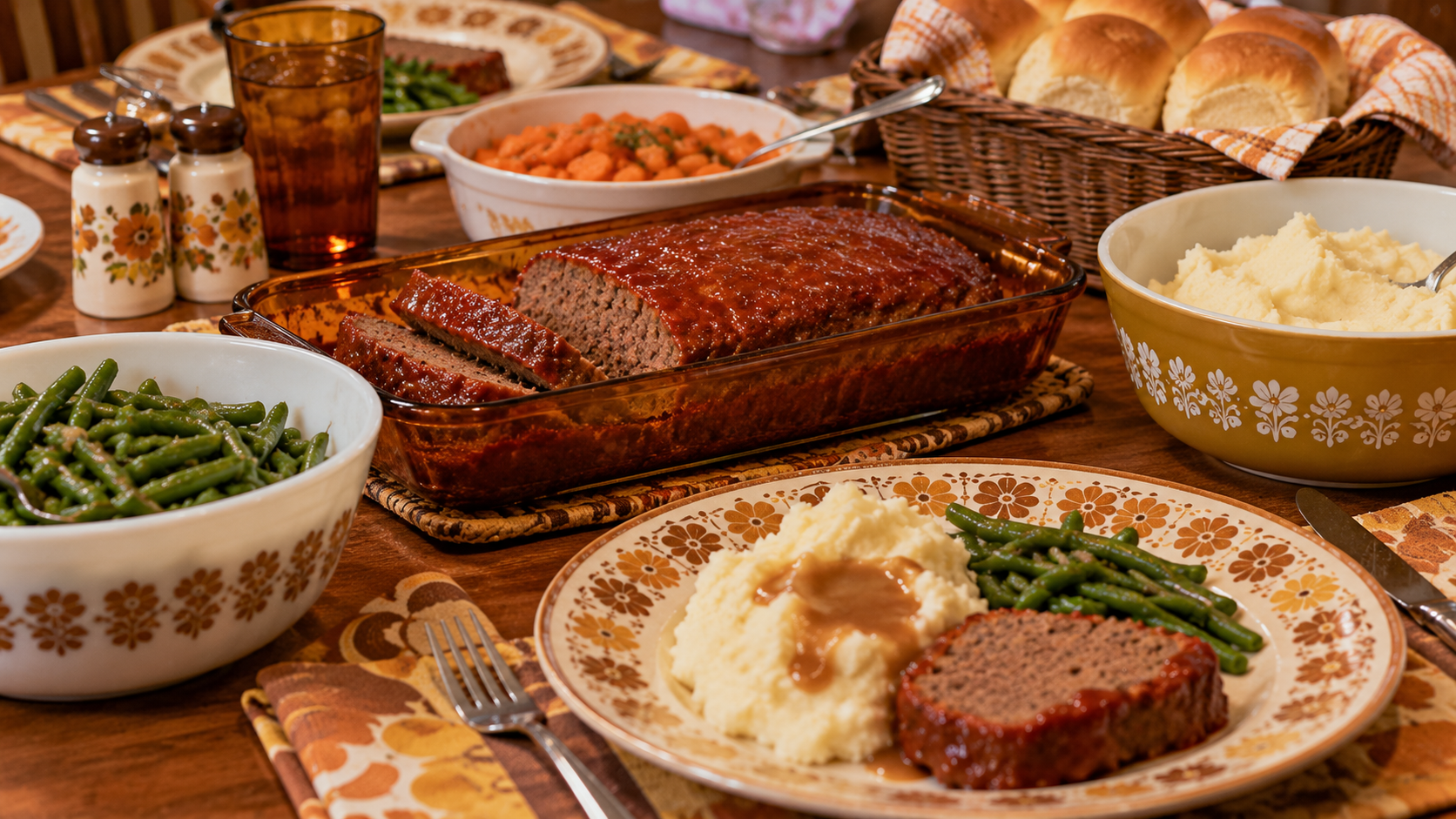
Not every ’70s dinner had a catchy name. Plenty followed a straightforward formula: some kind of meat, something starchy, and a vegetable. Meatloaf, pork chops, roast chicken, ham, Salisbury steak, or hamburger-based dishes might arrive alongside mashed potatoes or rice and peas, carrots, corn, or green beans. It wasn’t necessarily exciting, but that was partly the point. Dinner was an everyday obligation, not a social-media event, and a familiar combination that filled everyone up could do the job perfectly well.
Hamburger Helper Could Stretch a Pound of Beef
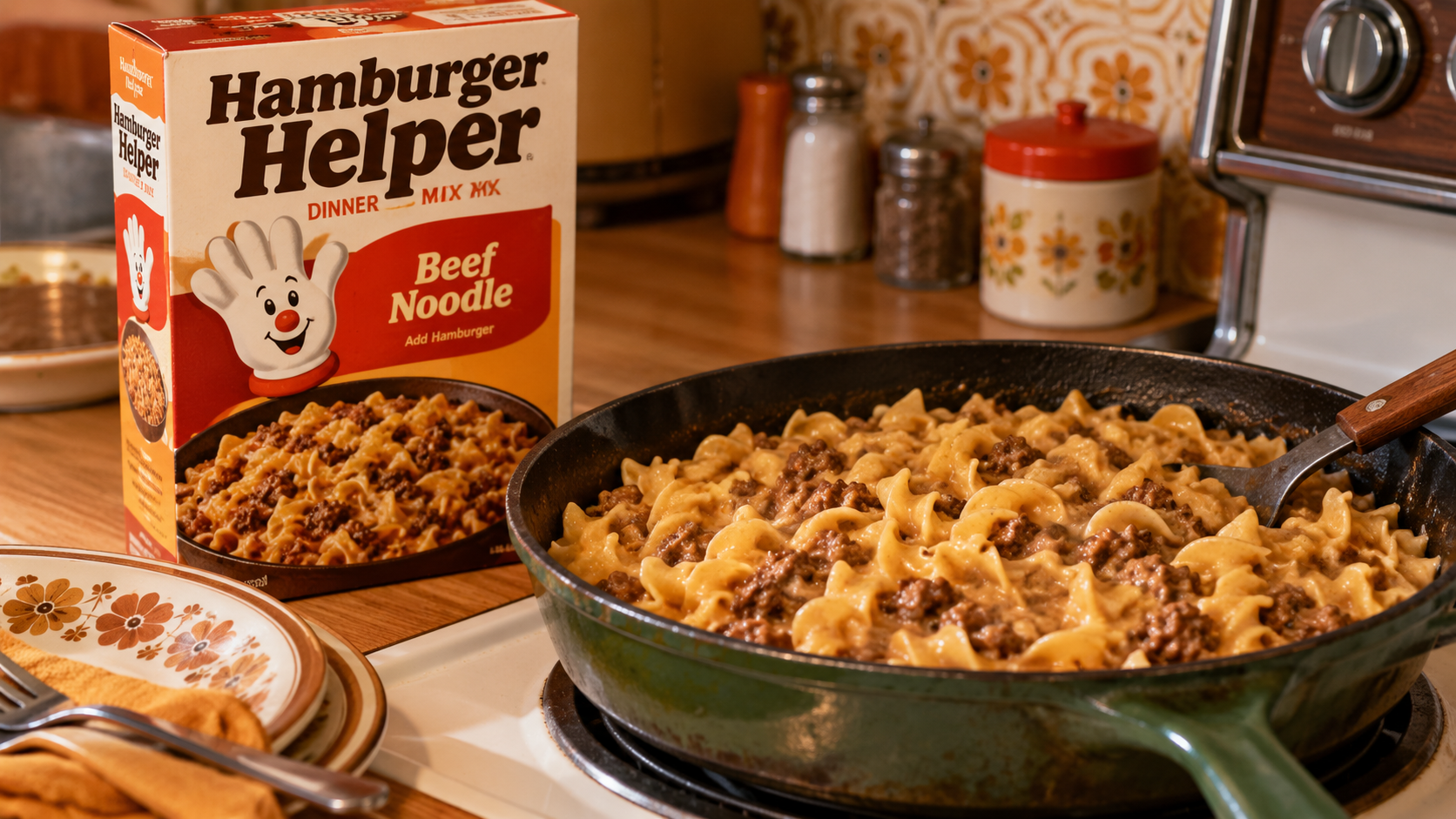
Hamburger Helper arrived in 1971 with a proposition tailor-made for the decade: brown some ground beef, add the boxed ingredients, and turn it into an entire skillet meal. Rising meat prices made stretching hamburger particularly attractive, while the one-pan preparation reduced work and cleanup. The concept caught on quickly enough to become one of the era’s most recognizable convenience foods. Tuna Helper followed in 1972. For families watching the grocery bill, getting more servings from a relatively small amount of meat had an obvious appeal.
Trending on Cheapism
Milk Was a Familiar Sight Beside the Dinner Plate
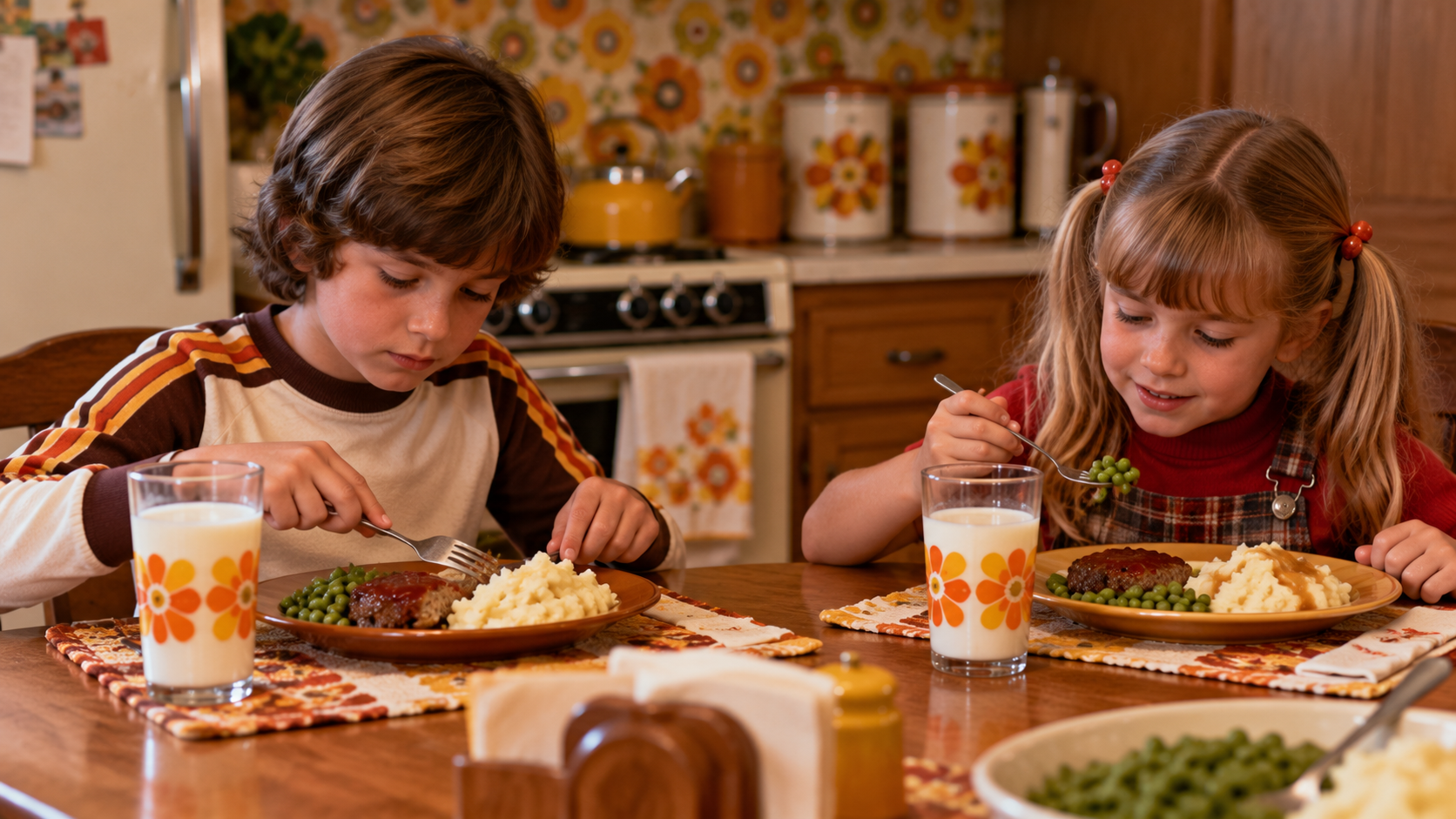
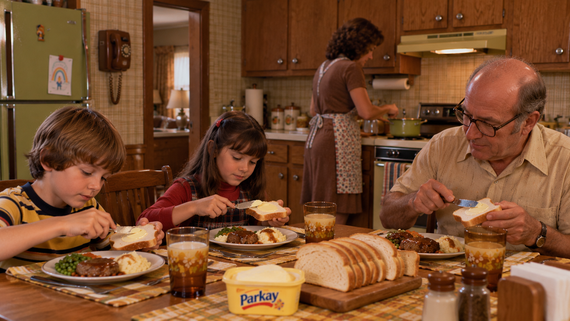
A plain glass of milk beside a child’s dinner looks distinctly old-fashioned today, but dairy occupied a prominent place in American diets and nutrition messaging. U.S. fluid milk and cream availability was considerably higher around the beginning of the 1970s than it would become in later decades. Families certainly weren’t all drinking the same thing, but milk at dinner was familiar enough to become part of the classic family-table image. No elaborate drink station was required: sometimes the choices really were milk or water.
Bread and Margarine Went With Almost Everything
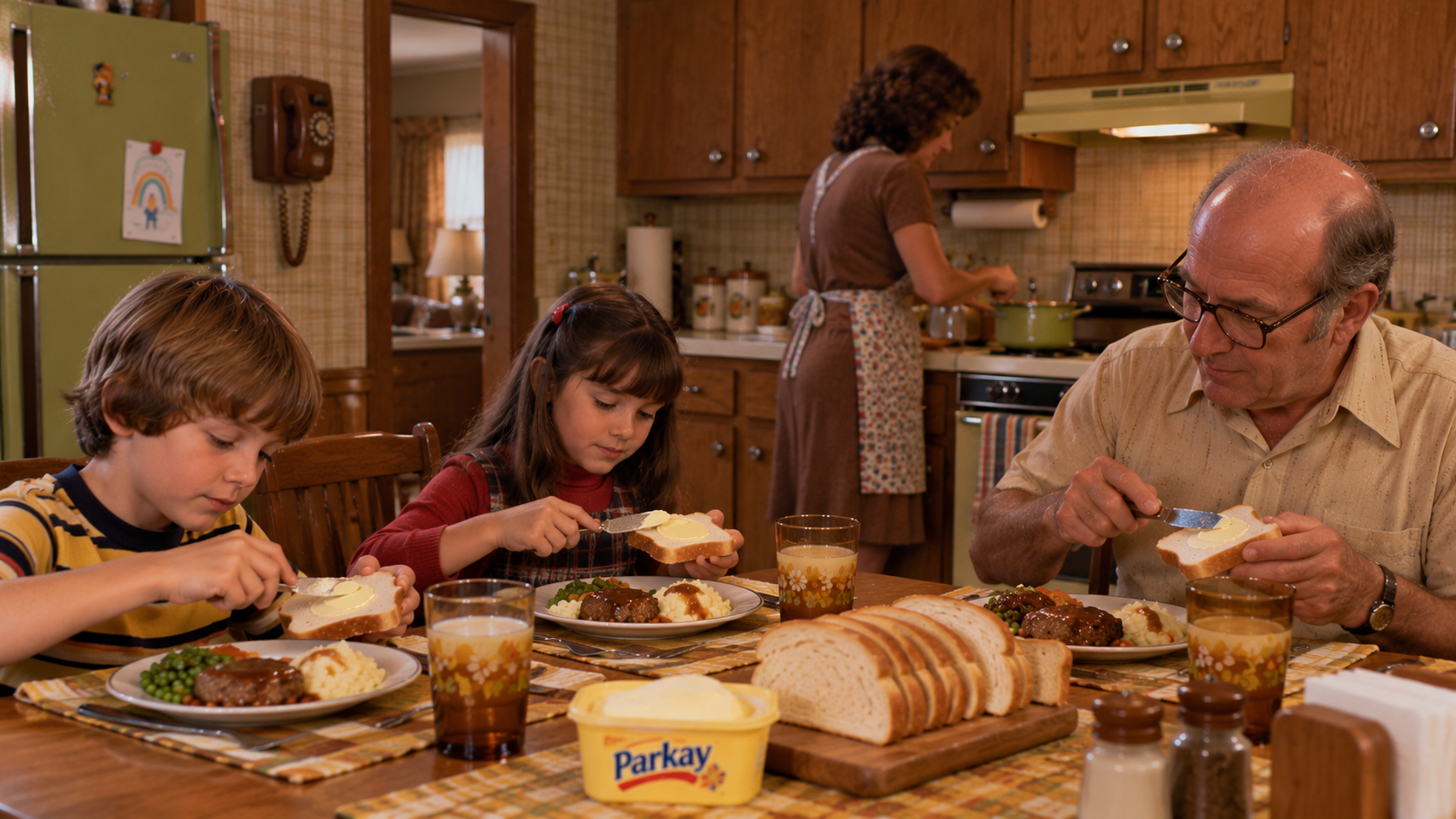
There didn’t have to be much connection between the entree and the bread basket. Sliced white bread, rolls, toast, or garlic bread could help make dinner more filling, particularly when several mouths needed feeding. And in the 1970s, the spread on top was very often margarine. Margarine had overtaken butter in U.S. availability years earlier and reached its historical peak in 1976. A tub or stick on the table beside the bread was therefore much more than a nostalgic prop; it genuinely reflects how Americans were eating.
TV Dinners Still Came in Aluminum Trays
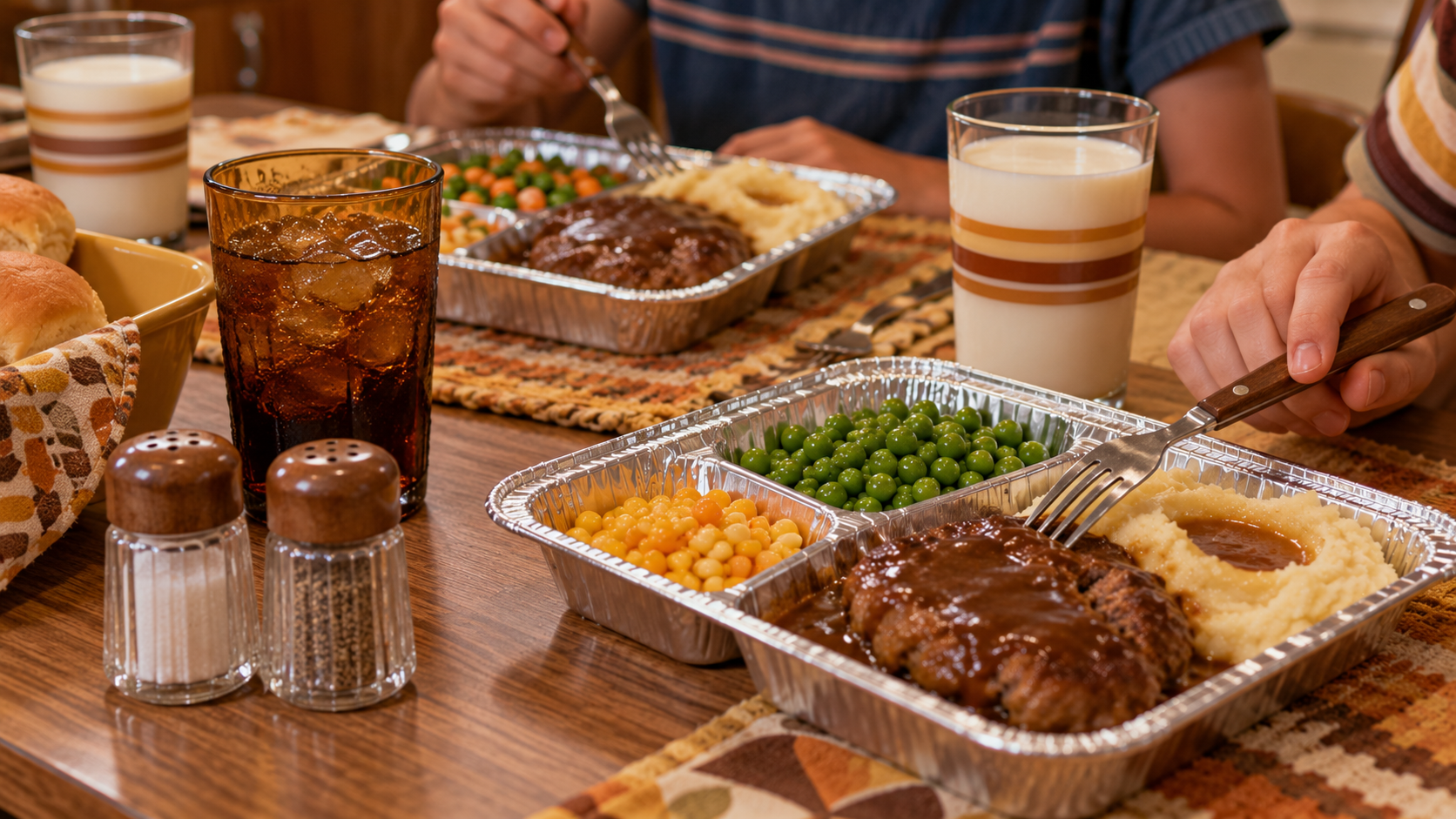
The TV dinner wasn’t new in the 1970s, but by then it was firmly embedded in American food culture. Frozen meals could go straight from the freezer into the oven in their compartmented aluminum trays, providing a main course, vegetables, and sometimes dessert without a sink full of preparation dishes. The portions could be modest and the results weren’t exactly home cooking, but convenience was the selling point. For busy households, having dinner ready with little more than heating it could feel impressively modern.
Sign up for our newsletter
Sometimes Dinner Moved in Front of the Television
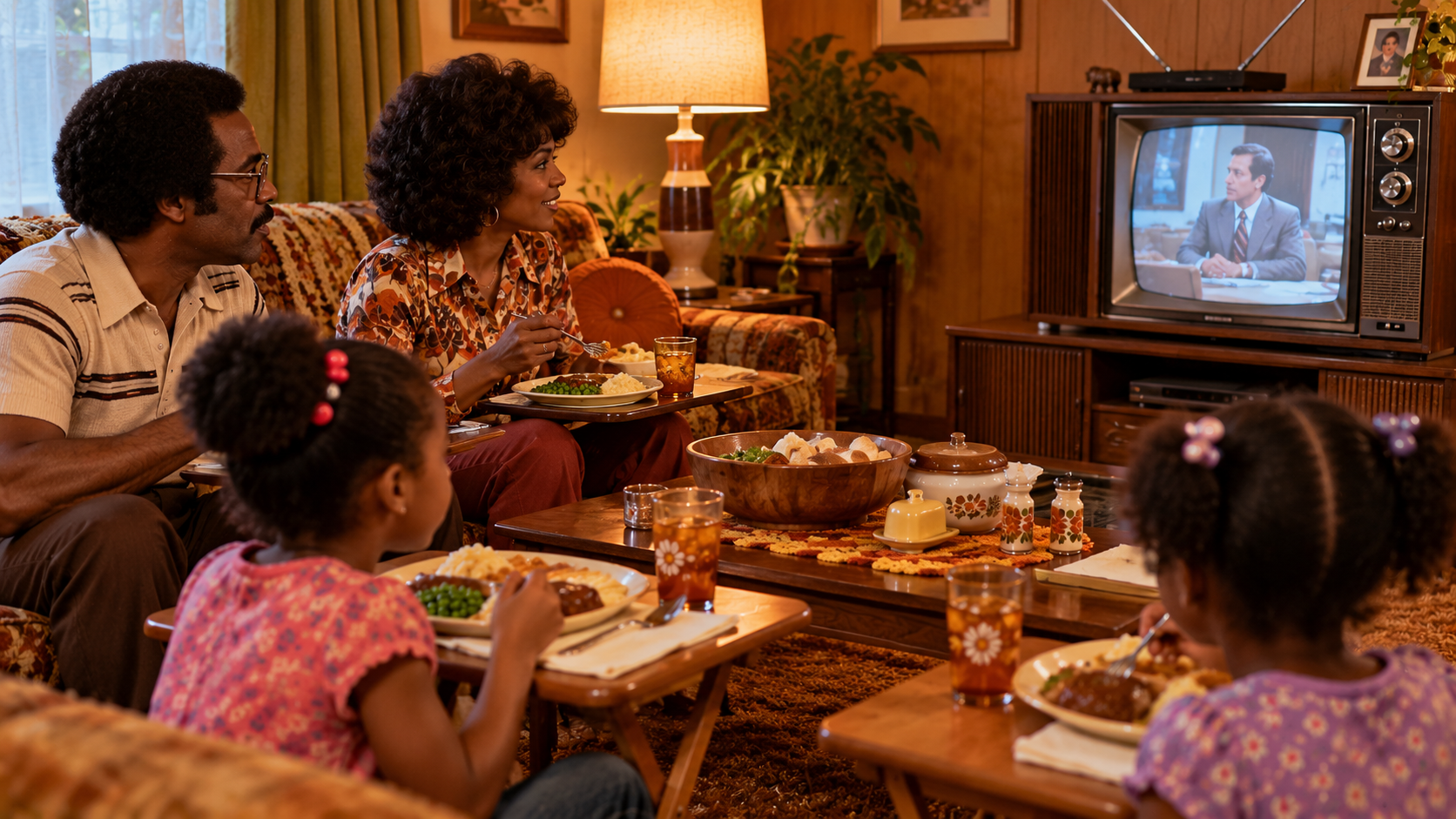
Television was already deeply woven into American home life, and eventually dinner followed it into the family room. Folding TV trays made it possible to eat while watching a favorite program rather than gathering around the dining table. Some parents absolutely prohibited television during meals; other families happily ate in front of it. That’s what makes the memory so recognizably ’70s: the traditional family dinner hadn’t disappeared, but television had become powerful enough to compete with it for everyone’s attention.
Leftovers Had a Second Act
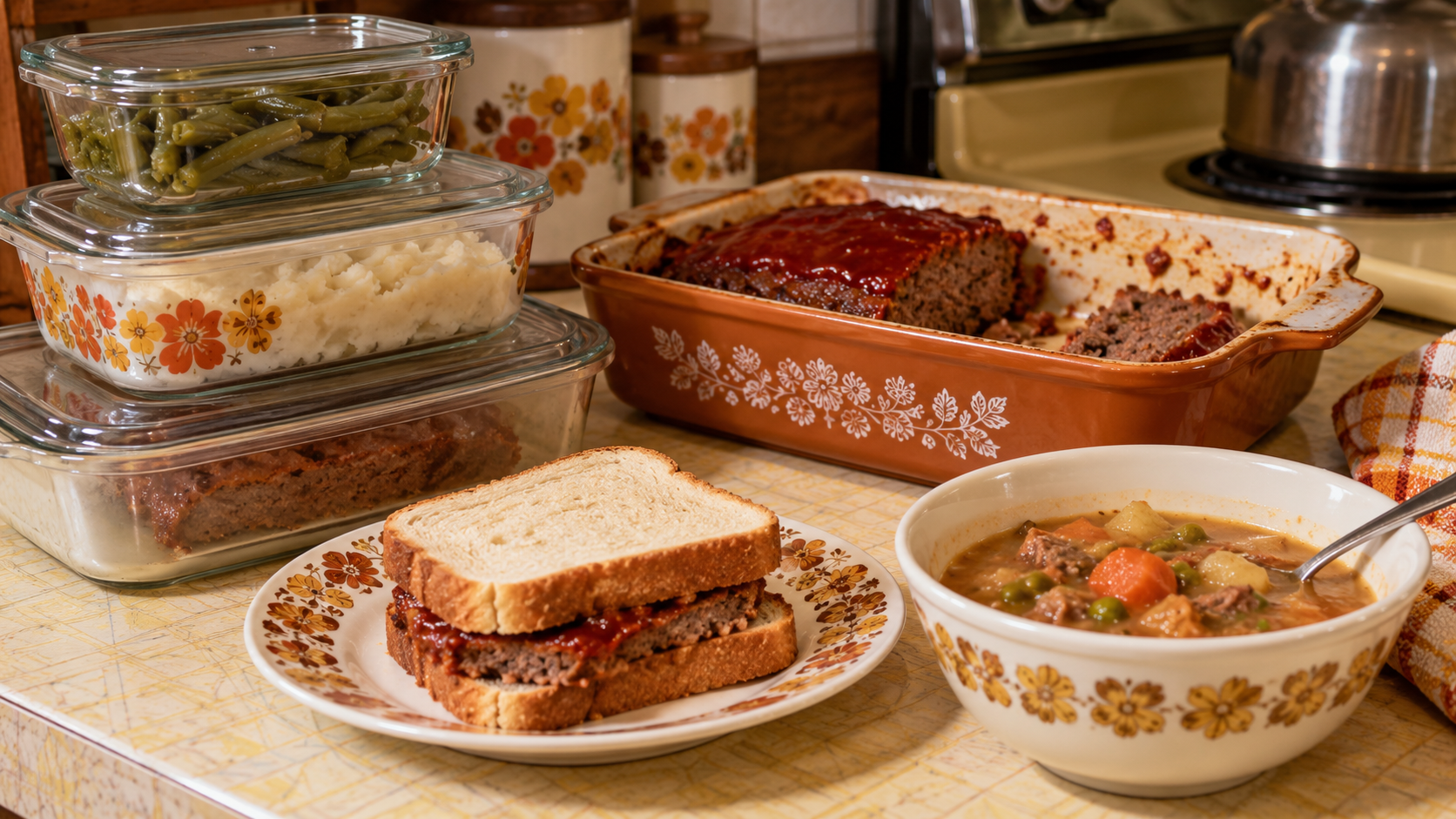
A roast didn’t necessarily disappear after Sunday dinner. Leftover meat could become sandwiches, cooked chicken might find its way into soup or casserole, and yesterday’s vegetables could simply return to the table. Reusing food wasn’t unique to the 1970s, nor did every household approach leftovers the same way. But for families trying to stretch a grocery budget, throwing away perfectly usable food made little sense. Sometimes the only mystery was whether tonight’s leftovers would look exactly like last night’s dinner or return disguised as something new.
Eating Out Could Feel Like a Special Event
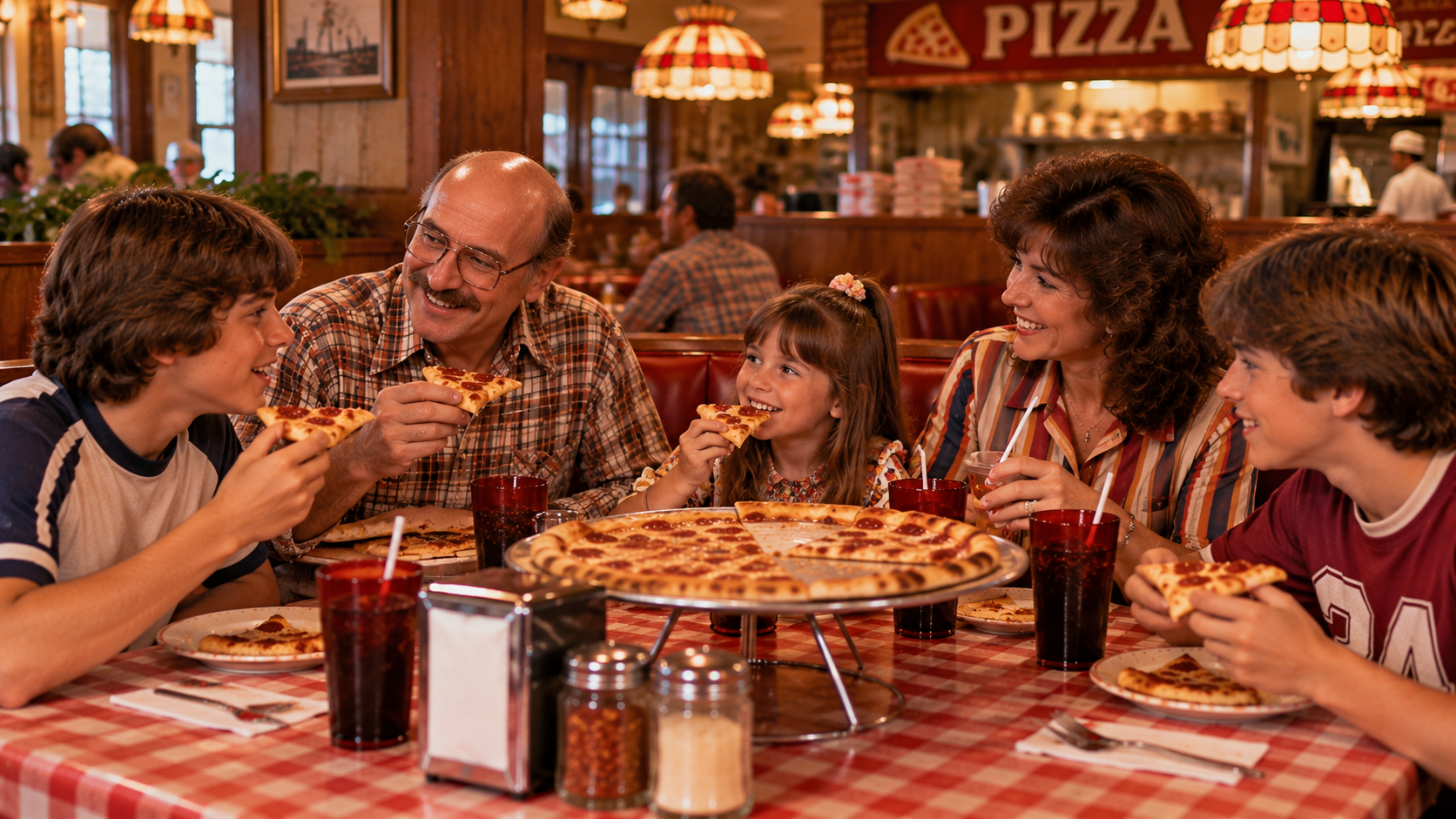
Restaurant meals and takeout certainly existed, and fast-food chains were expanding rapidly, but Americans devoted a much smaller share of their food spending to meals away from home than they eventually would. That helped give a restaurant dinner a different place in family life. Pizza night, burgers after an outing, or dinner at a family restaurant could feel like part of the entertainment rather than merely a solution to an empty refrigerator. For plenty of kids, simply being told the family was eating out was exciting news.
Somebody Still Had to Wash the Dishes
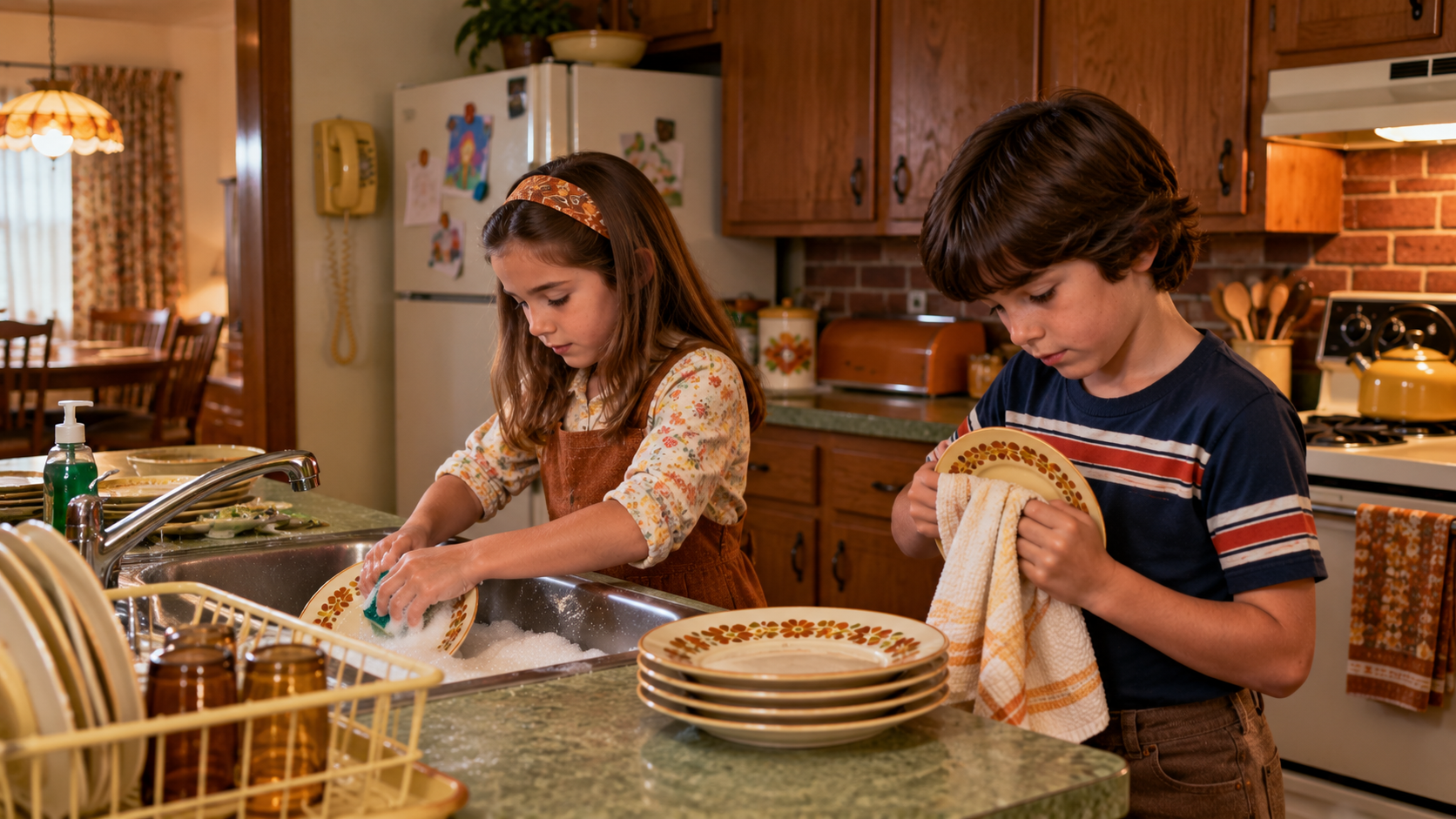
Dinner wasn’t finished when everyone stopped eating. Serving bowls needed clearing, leftovers had to be covered, the table needed wiping, and plates, pans, glasses, and utensils still had to go somewhere. Depending on the household, kids might clear the table, dry dishes, take out the trash, or load the dishwasher. In kitchens without one, the familiar arrangement was even simpler: somebody washed while somebody else dried. For many people, the sound of dishes clattering around a ’70s kitchen is as nostalgic as the meal itself.