
As if avoiding spam emails and phishing texts wasn’t bad enough, scammers have a new tool to help separate you from your money: AI. So those giant, polluting, utility-bill-increasing data centers springing up everywhere will not only help you identify garden plants, but also make scams more sophisticated and believable. Fantastic.
The shift towards more, well, efficient scams due to AI is already happening, according to a new Top Fraud Trends Report from TransUnion. Digital fraud rates are actually on the decline, but more advanced schemes are leading to greater consumer losses.
“The decrease does not necessarily indicate reduced criminal activity,” says the report. “Rather, it may reflect a shift toward tactics designed to maximize ROI through the use of AI.” So instead of peppering millions of emails with the same obvious scam in hopes of getting a few bites, scammers may be switching to a more nuanced, targeted approach.
That’s not to say you don’t still need to be on the lookout for the tried-and-true scams we’re all used to seeing. In the U.S., one in six consumers said they lost money to digital fraud, like email, phone, and online scams, sometime in the last year, with a median reported loss of $2,307. Most of that came in the form of stolen credit cards or fraudulent charges.
How AI Makes Scamming People Easier
While some people and companies use AI to help identify and prevent fraud, scammers are using it to steal more money. “Generative AI has likely accelerated the scale and sophistication of criminal activity, allowing fraudsters to target both consumers and businesses with greater precision and speed,” says the TransUnion report.
Fraudsters are utilizing AI in a number of ways. One of the simplest is the old email phishing scam. By now it’s so easy for most people to recognize these scams simply by the language used in the email, including dead giveaway words like “kindly.” But anyone can ask AI to generate the same email in American English, and those easy-to-spot red flags are gone.
There are many more sophisticated scams created with AI, though. Some people deepfake videos or voices to convince you they’re people you know in trouble, some people generate fake payment and shopping websites with AI, and some create fake AI trading bots, according to NordProtect. These are not the scams your dad fell for 30 years ago.
How to Avoid Scams
Even though scams created with the help of AI may be harder to identify, they still rely on tell-tale signs that should raise alarm bells in your head. If you see any of these in an unsolicited email, text, or other kind of communication, you should beware.
- Urgency. Scams will almost always tell you that there’s only a short time left to purchase something or send money, no matter the situation.
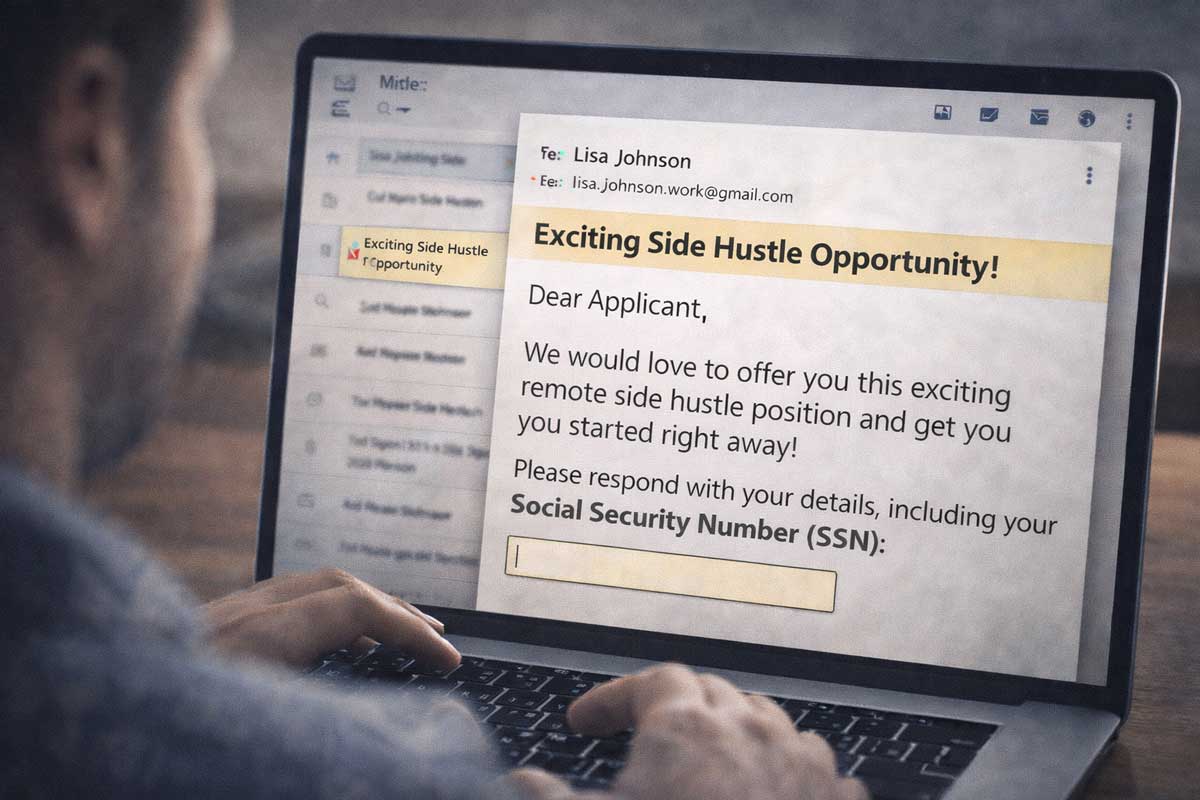
- Requesting personal information, like a bank account, credit card PIN, or social security number.
- Requesting a strange payment method, like cryptocurrency or wire transfer.
- Strange grammar, misspellings, or unusual greetings.
- Attachments from email addresses and phone numbers you don’t recognize or don’t normally get attachments from.
More From Cheapism
- How to Identify Fake Side Hustle Job Scams — Fake side hustle job listings are getting bolder all the time. Here’s how to tell if that side gig job posting is actually fake.
- Scammers Are Targeting Your Phone. Here’s What To Watch For — Here’s everything you need to know about phone scams — including ones that involve fraudsters impersonating IRS officials — and how to avoid becoming a victim.
- 15 Common Financial Scams People Are Still Falling For (and How to Avoid Them) — Every year, about 90% of consumers either fall for or encounter online scams. And while many consumers are sophisticated enough to avoid some of the most common scams, it doesn’t take much for a crafty hacker to steal your money.