Oh, you can make $1,200 a week stuffing envelopes from your couch? Sure.
Fake side hustle job listings are getting bolder all the time. They’re tempting because a good side hustle can be a game-changer, adding a little extra spending money onto your salary, but in reality they’re just scams designed to separate you from your money. Here’s how to tell if that side gig job posting is actually fake.
Pay That’s Too Good
“If it’s too good to be true…” has never been more apt advice than when it comes to job postings. If the pay seems too good to be true, that’s because it is. They’re trying to lure in desperate people with huge promises.
Be on the lookout for ads that promise lots of money for “little to no experience necessary” or that have vague job descriptions with high pay. A phrase like “earn up to $1,000 per week” is another tell.
A Recruiter Contacts You Unsolicited
We’re all used to getting obvious spam texts, calls, and messages on social media by this point. Unfortunately, side hustle offers are just another category of those scams. So if a “recruiter” or “HR rep” contacts you completely out of the blue, it’s probably just a scam.
Upfront Fees
Never, ever pay or send money to anyone that posts a side hustle ad. That includes paying for things like “starter kits,” training fees, or application fees. Think about it: When you’ve applied for salaried positions in the past, did you have to pay any money to do it? Definitely not. The same goes for side gig work.
This is common in “business opportunity” scams, and once you send money, they’re going to ghost you.
Vague Company Info
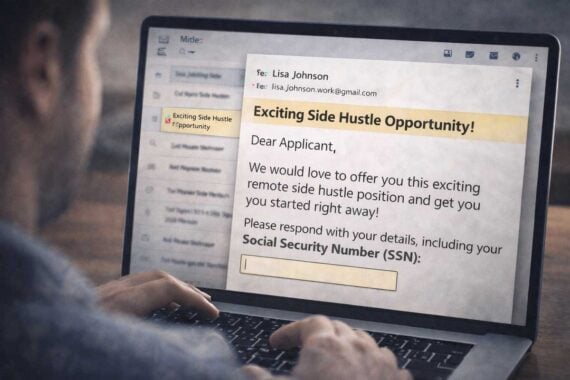
Always look up the company that’s posted the side gig. (If there’s no company listed, well, there’s your sign it’s a scam.) If there’s no real web presence, or a website that looks really dodgy with little to no contact information, it’s definitely a huge red flag. The same goes if the contact information in the posting is for generic domain emails like Gmail or Yahoo.
Sketchy Communication Requirements
Maybe the side hustle posting is in impeccable grammar, but is your communication with the company full of errors or otherwise unprofessional? Chances are it’s a scam.
That’s also true if the company requires you to use certain apps or programs to communicate or interview. Asking you to use WhatsApp or Signal instead of email or video call software like Zoom is a sign of a problem.
Trending on Cheapism


Sensitive Information Requests
Legit side hustles will usually require your social security number or other sensitive personal data, just like a salaried position. But if the person you’re communicating with asks for that information immediately, that’s a scam. Legit companies will go through a typical hiring process before they get your personal information like your bank information for direct deposit. Anyone that wants that information before you’ve even talked about the side gig is trying to scam you out of money or steal your identity.
You Get a Job Offer Immediately
This one falls under the “if it’s too good to be true” category. You may not want to spend a ton of time interviewing and jumping through hoops for a side hustle, but don’t fall for instant job offers. Even if side gigs don’t have application processes as lengthy as full time jobs, there still is going to be some sort of process to navigate.
If the job offer comes in the first email to you — especially if it’s unsolicited — then you can bet that it’s a scam.
Payment Feels Fishy
If anything feels fishy about money in a potential side gig, it’s time to bail. That’s especially true for the typical overpayment scams where someone tells you they’ll send you a check, and you’re supposed to send some money back.
But with side gigs it can also be more subtle. Payment in things like gift cards, wire transfers, or crypto are all big red flags. And if the company is vague about any details of getting paid, that might be because they’re not intending on paying you at all.
Sign up for our newsletter
More From Cheapism

- Scammers Are Targeting Your Phone. Here’s What To Watch For — Thousands of people are bilked every year by criminals who enter the lives of their victims through their telephones. AARP once found that about half of all mobile calls were fraudulent, and that the problem was worsening.
- Travel Booking Scams Can Ruin Your Vacation. Here’s How to Get Ahead of Them — Planning a vacation should be exciting — but for thousands of travelers each year, it turns into an expensive nightmare.
- Another Day, Another Scam: Fake Amazon Recall Texts Are Everywhere — We can’t seem to go a day without getting a spam call or text, and now scammers are using a new tactic to try and separate you from your hard earned money: fake Amazon recall links.