
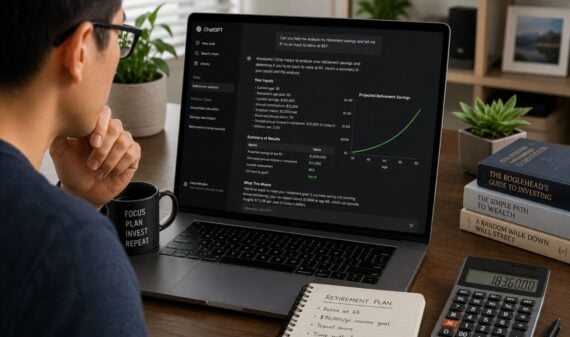
The math of retirement has always been a giant, expensive headache handled by suits, spreadsheets, and NASDAQ scrolling. But it’s 2026, and the vibe has shifted. Americans are officially using AI for retirement planning — ghosting traditional advisors and hitting up ChatGPT, Claude, and Gemini to see if they can finally stop working.
According to a study by the AI company Pearl, about 20% of the country is already using AI for financial tea. Even more revealing: If you’re using AI at your 9-to-5, you’re basically twice as likely to let a bot plan your golden years.
Why Professionals Are Turning to AI for Retirement Planning
The move to AI isn’t just because bots are trendy; it’s because the retirement gap is looking pretty tragic. We all think we need $1.5 million to live our best lives in retirement, but most workers have a median balance of an extremely bleak $955 in their retirement plan. Yikes.
To pile it on, Social Security might catch a 20% benefit cut by 2032 if the government doesn’t get its act together. People are realizing they might have to work way longer than they planned, so they’re looking for any shortcut they can find. And what’s the go-to shortcut these days? AI, duh.
What the Bots Are Actually Good at
AI is low-key obsessed with the data-heavy stuff — the fancy “what-if” models — that used to cost a fortune. A bot can run thousands of scenarios, like a market crash or a random inflation spike, in seconds to see if your money will actually last. Smart users are training AI to build bridges, using specific assets to pay the bills for the first few years of retirement so their portfolio can keep growing.
People are also using AI to figure out Roth conversions, basically moving money into tax-free accounts when they’re in a low tax bracket to flip the bird to the IRS later. Liberating stuff, folks.
So, Is It Smart or Not?
This trend has started a total war between the old guard and the tech-obsessed, especially over on Reddit. One user wrote, “Just because it sounds smart doesn’t mean it knows what it’s doing. AI is famously trash at math. I wouldn’t trust it with a nickel.” On the flip side, another user quipped, “AI fast-tracked my education. I talked to four different humans and got four different answers. The bot gave me better advice in seconds.”
When the pros at CBS News tested the bots with a real-life scenario — a 50-year-old woman with $185k saved — the AI was a bit of a flake.
- Round 1: The bots said she could retire at 65, but it would be tight.
- Round 2: Once they were bullied into looking at taxes and long-term care costs, the bots totally folded, admitting her plan was actually a hot mess.
AI is a massive win for learning the ropes, especially for the two-thirds of Americans who don’t have a financial advisor. But it’s not a magic wand.
As one Redditor who spent months building a 40-page plan put it: “You don’t use it blindly. You cross-check, you correct, and you pay attention.” For the future of your retirement, the best bet is a mix of human common sense and machine speed.
More From Cheapism

- ‘It’s Rough Out There’: A Record Number of Americans Are Tapping Their Retirement Savings Early — The economy is doing great. Just fantastic. Everything is just peachy. And yet, in what must be a completely unrelated coincidence, a record number of Americans are cracking open their retirement savings accounts early and pulling money out.
- No 401(k)? Trump Says He Has a New Retirement Fix — Millions of Americans don’t have a 401(k). Now, President Donald Trump says he has a fix. Or at least … a plan on paper.
- The Average American Worker Has $955 Saved for Retirement. That’s Not a Typo — If you’re imagining the “average” American worker has a modest but respectable retirement cushion tucked away somewhere, you’re sorely mistaken.