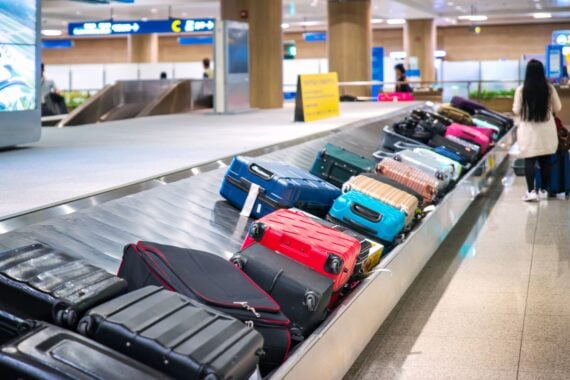
If you feel like your travel budget is being nibbled to death by ducks, you aren’t alone. Every major U.S. carrier — including American, United, Delta, Southwest, and JetBlue — has hiked bag fees this month, effectively crowning $45 as the new standard for a single checked suitcase. And remember: That’s not a round-trip charge. So, you’re looking at nearly $100 just to bring a checked bag on a round trip.
Airlines are citing rising “operational costs” and the recent surge in jet fuel prices as the primary drivers. However, travel experts warn that even if oil prices drop, these fees are a one-way street. Much like the 2008 recession birthed the first checked bag fees, the current economic climate is being used as “cover” for a permanent revenue stream that earned carriers over $7.3 billion last year.
So, What Really Gives?
The reason we see these hikes in baggage fees rather than base ticket prices is psychological. When we shop for flights, we compare the “salient” number — the ticket price. Airlines know that a $10 increase on a bag is less likely to deter a booking than a $10 increase on the flight itself.
By the time you reach the airport with a heavy suitcase, you’ve become a captive audience. Marketing experts note that travelers are often overly optimistic about their ability to pack light when they book their trip weeks in advance, only to realize later that checking a bag is unavoidable.
A Different Strategy to Consider
The new price floor has sparked a fierce debate over the future of the cabin. Frequent flyers on Reddit are already predicting a surge in “gate lice” — passengers who hover around the boarding area to ensure they get their carry-on into a bin before they’re all full.
Some travelers have even pitched a “reverse” model: charging for overhead bin space while making checked bags free. The logic is that it would drastically speed up the boarding process and reduce the frantic “scrum” in the aisles. However, critics point out that once a “legacy” airline starts charging for carry-ons, they risk looking less like a premium carrier and more like an ultra-low-cost airline.
How to Cope With Rising Baggage Costs
If you aren’t ready to drop nearly $100 round-trip just to bring your clothes, strategy is key. Most airline-branded credit cards still include a first checked bag as a perk. If you fly the same carrier even twice a year, the saved fees often completely offset the card’s annual fee.
Additionally, always look for “fare bundles” when booking. In many cases, the “Main Cabin” price (which often includes a bag) is actually cheaper than buying a “Basic Economy” seat and adding the $45 fee separately. In 2026, the only way to win is to do the “total trip math” before you hit the buy button.
More From Cheapism
- Another Hit for Travelers: Delta, United, JetBlue Raised Baggage Fees — So, what you’re saying is: if Delta and United jumped off a bridge, JetBlue would too? All of the big airlines raised their baggage fees in unison.
- Airlines Aren’t Even Letting Basic Economy Passengers Earn Miles Anymore — There are plenty of ways airlines are scaling back and pulling one over on travelers, including how they allow you to earn miles.
- 14 Ways to Travel Internationally Without Setting Your Money on Fire — International travel is expensive, inherently. There are, however, some things that are avoidable if you want to make your trip more affordable.