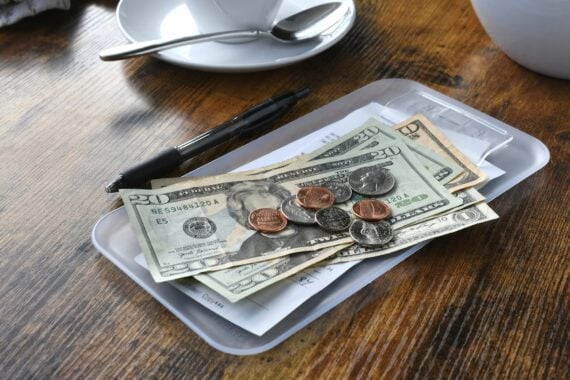
Tipping has become as American as apple pie — especially since many service workers earn less than the federal minimum wage and rely on customers’ generosity to make a living. But somewhere along the way, tipping culture mutated from a simple gratuity into a system where customers are expected to make up for what employers and policymakers have miserably failed to do in the first place: pay workers a decent wage.
According to a new WalletHub survey, many people believe tipping has gotten out of control, with 2 in 5 Americans suggesting the country should ban tips or at least tax them.
The study surveyed 200 respondents on various aspects of tipping culture in the U.S., including when people believe they should tip, whether they feel pressured to do so, and how they think gratuities should be distributed.
81% of Americans Think Tipping Has Gotten Out of Control

In an economy where many consumers are already struggling to make ends meet, tipping is starting to feel like another burden people are being asked to carry — a phenomenon often called “tip fatigue.”
The practice has also moved from something expected mainly in hospitality to virtually every corner of the service economy, including airlines, medical offices, auto repair shops, logistics services, butcher counters, and even impound lots.
That’s why customers are increasingly pushing back against tip creep, with Americans effectively saying, “Here’s a tip: Leave us alone, we are broke.”
“My Starbucks now has tipping options. I feel bad but I do 0 tip. Because it wasn’t there in the past and Starbucks is already too expensive,” shared one user on Reddit.
“It’s ridiculous. I will never forget the wonderful and perfect service in Japan where tipping is not acceptable,” said another.
64% of People Say Businesses Are Replacing Employee Salaries With Tips
While 83% of survey respondents think that tipping is good for the workers, more than 60% said businesses are using customer tips to replace actual salaries.
“No one wants to leave service industry workers without a living wage, but most people don’t want to continue subsidizing wages employers should be paying either,” said WalletHub.
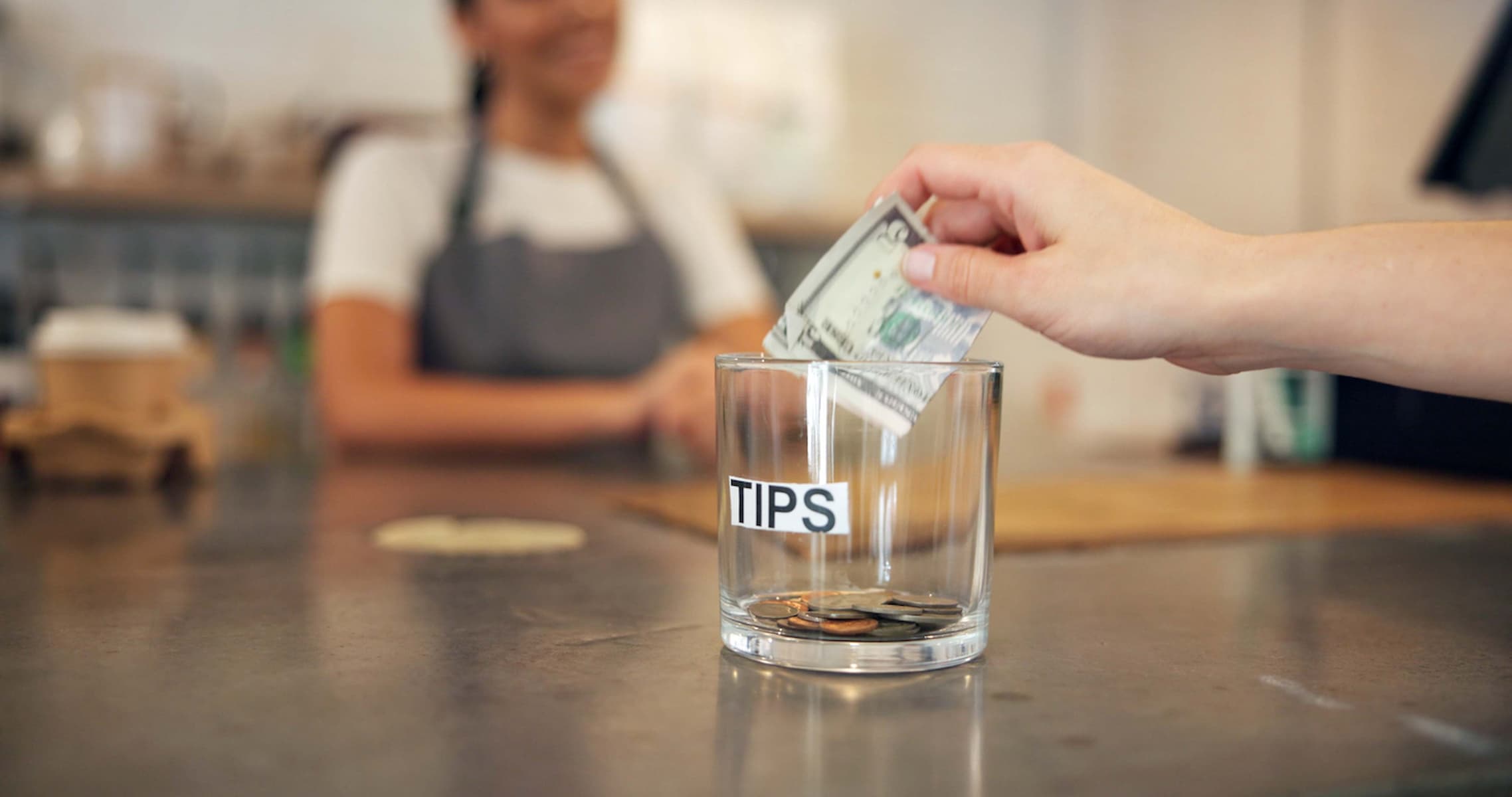
People are increasingly annoyed by being guilted into tipping what sometimes feels like outrageous percentages. A better idea? Paying workers properly instead of bullying customers to make it up for their failure.
“I don’t tip any more than 15%,” said one Redditor. “It shouldn’t be up to us customers to provide a living wage to employees. … If your company is receiving record profits, and you can pay your CEO a million-dollar salary, then you can pay your employees a livable wage.”
55% of People Say They Often Leave a Tip Due to Social Pressure
One of the aspects that bothers people the most is what the lack of tipping might imply. According to the WalletHub survey, half of the respondents said they tip not because of good food or service, but due to social pressure. Yet 9 in 10 said they are good tippers, which means the pressuring tactics work.
“I’m sick of being pressured to tip. It irks me that the ‘suggested’ tip on 15%, 20%, 25% is always based on the total PLUS tax, which is wrong,” said one user on Reddit. “Since Covid, I’ve intentionally tipped more than 20% on my own. In the past few months, I’m edging way back towards 15%-18%”
This bullying has a counter effect on some, with 1 in 5 people tipping less when they’re presented with a tip suggestion screen, the survey found.
“I hate the expectation or the pressure and this will make me less likely to tip if the service has justified it. I am happy to tip good service, but I am tipping what I feel is acceptable, not what I am ‘expected’ to tip,” said another Redditor.
66% of People Think Tips Should be Taxed
People aren’t just tired of feeling pressured to tip—they’re also annoyed at the hidden costs. According to the survey 66% of people think tips should be taxed, making it clear that customers want some transparency on where their money is actually going.
How do you feel about tipping these days? Sound off in the comments!
More From Cheapism

- Why U.S. Employees Are ‘Hugging’ Their Jobs — These days, a lot of workers aren’t job-hopping. They’re job-hugging — clinging to the roles they already have like a life raft in choppy economic waters.
- ‘No One Will Hire You’: Long-Term Unemployment Is on the Rise, and It’s Taking a Toll on Job Seekers — Job seekers are experiencing an increase in long-term unemployment, taking more than six months to find a job.
- Job Cuts Are at the Highest Level Since the Pandemic — The farther away we get from the life the pandemic sucked out of us, that falser our sense of security grows. We think that because the doom days of 2020 layoffs are growing smaller in the rearview, we should be in a safe space with the economy.