What a British survey got right about modern life—and why I think Americans could build an even better list.
Every now and then I come across a survey that doesn’t just measure public opinion. It puts words to something a lot of us have been feeling.
A recent survey in the UK asked people to identify the biggest everyday swindles of modern life. Not the giant expenses like rent, mortgages, or grocery bills, but the hidden fees, smaller charges and little tricks that make you stare at a receipt and think, Seriously? You’re charging me for that now?
The answers were painfully familiar. People pointed to shrinkflation, airport drop-off fees, ticket booking charges, insurance renewal hikes, parking fees, and paying extra to sit next to your own family on a flight.
Some of the examples are distinctly British. Energy standing charges topped the list, and the UK’s television license also made an appearance. But the frustration behind the answers travels very well.
What interested me most wasn’t actually which complaint finished first. It was how resigned people sounded.
Nearly 8 in 10 respondents said they regularly pay charges they believe are unfair because they don’t feel they have a practical alternative. More than seven in ten said hidden fees and surprise charges have become worse over the past five years.
That’s the part that stuck with me. Somewhere along the way, we stopped asking, “Why am I paying for this?” and started saying, “I guess that’s just how it works now.”
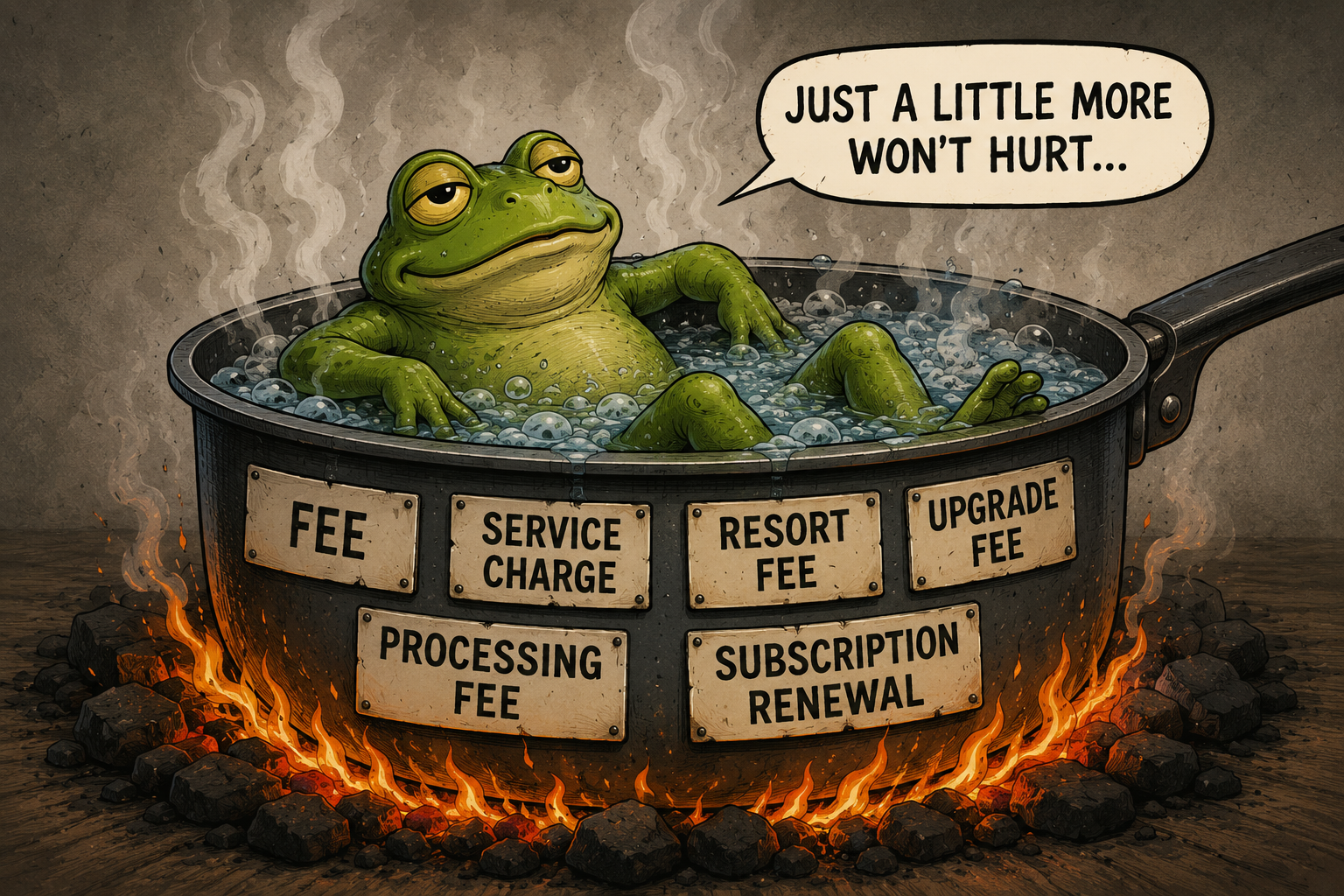
That may be the real victory for the companies collecting these fees…
You can read the original UK story here: The biggest swindles and hidden fees revealed costing Brits up to £150 a year
Reading the British list, though, I kept thinking the same thing: America would absolutely crush this survey. We’ve become exceptionally creative at taking a simple price and turning it into a starting point.
So if I were nominating candidates for the American version, here’s where I’d begin.
Ticket fees: Just tell me the real price
This may be the easiest nominee.
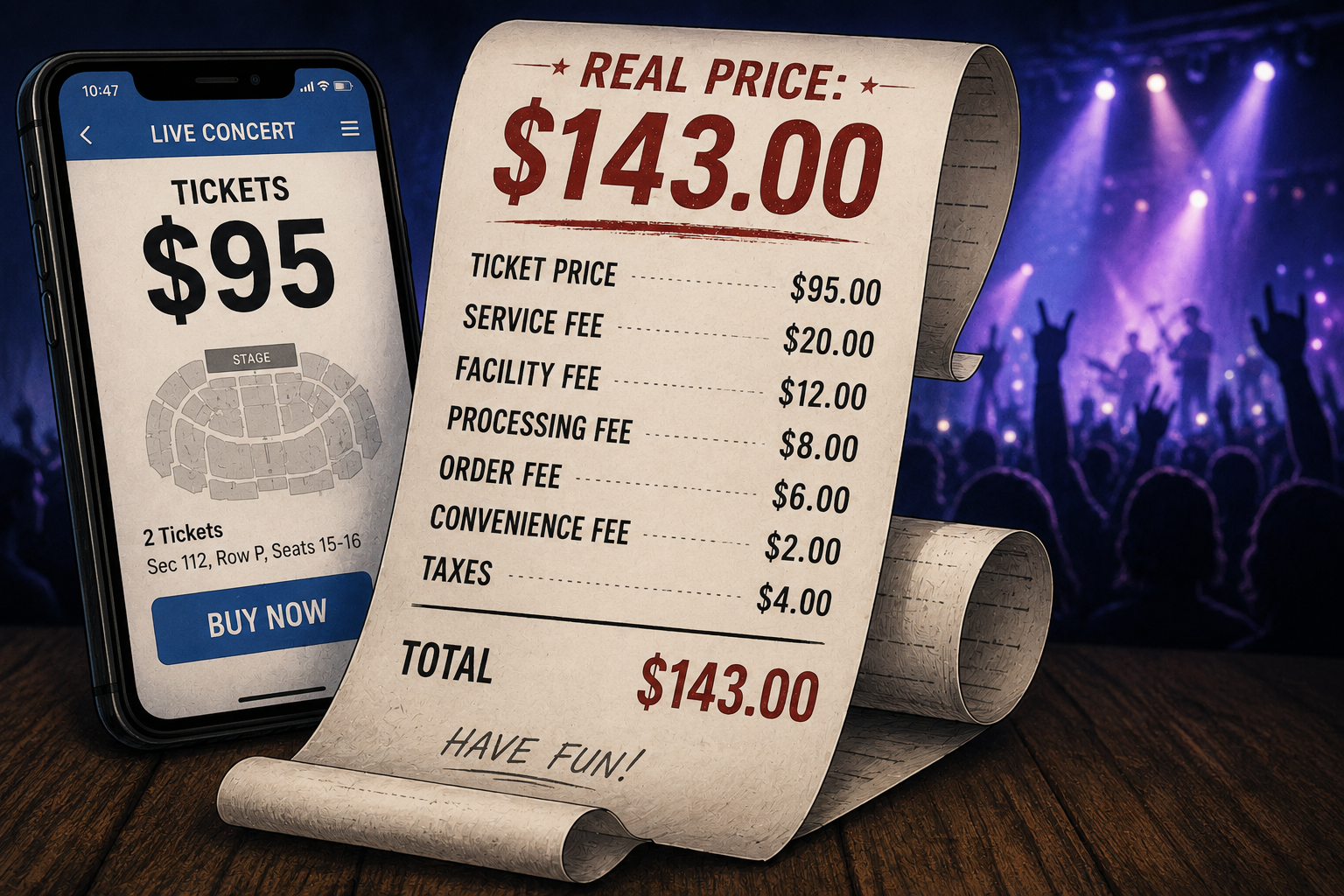
You find a concert ticket for $95. Great. You decide the show is worth $95, choose your seats, coordinate with whoever you’re going with, and click through to checkout. Then the ticket somehow becomes $128. Or $137. Or $143.
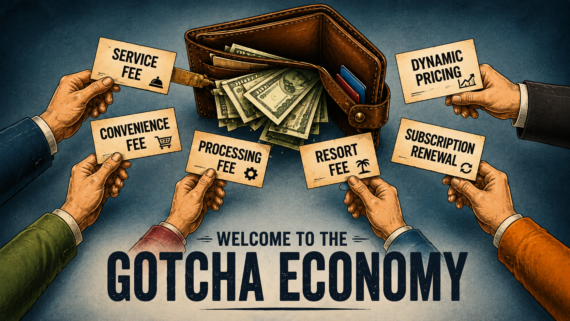
There’s a service fee, an order fee, a facility fee, maybe a processing fee, and whatever else someone managed to name without laughing.
So maybe the concert was worth $143, but it didn’t cost $143 until after I had already decided to buy it.
That’s what makes this stuff feel different from a normal price increase. The company isn’t merely charging more. It’s taking advantage of the fact that you’re already mentally committed.
If the ticket costs $143, tell me it costs $143!
I’ll decide whether I want it.
Resort fees: The most optimistic word in travel
Resort fees might be my personal favorite simply because of the branding.
Imagine checking into an airport hotel for six hours because your flight leaves at 5:45 the next morning. You’re not lounging by the pool, or booking a massage. Your primary recreational activity is trying to remember what time the airport shuttle leaves.
And yet, somehow, there’s a resort fee. The closest thing you’re getting to a resort experience may be the complimentary waffle maker downstairs.
Again, the annoying part isn’t necessarily the amount. It’s the fiction.
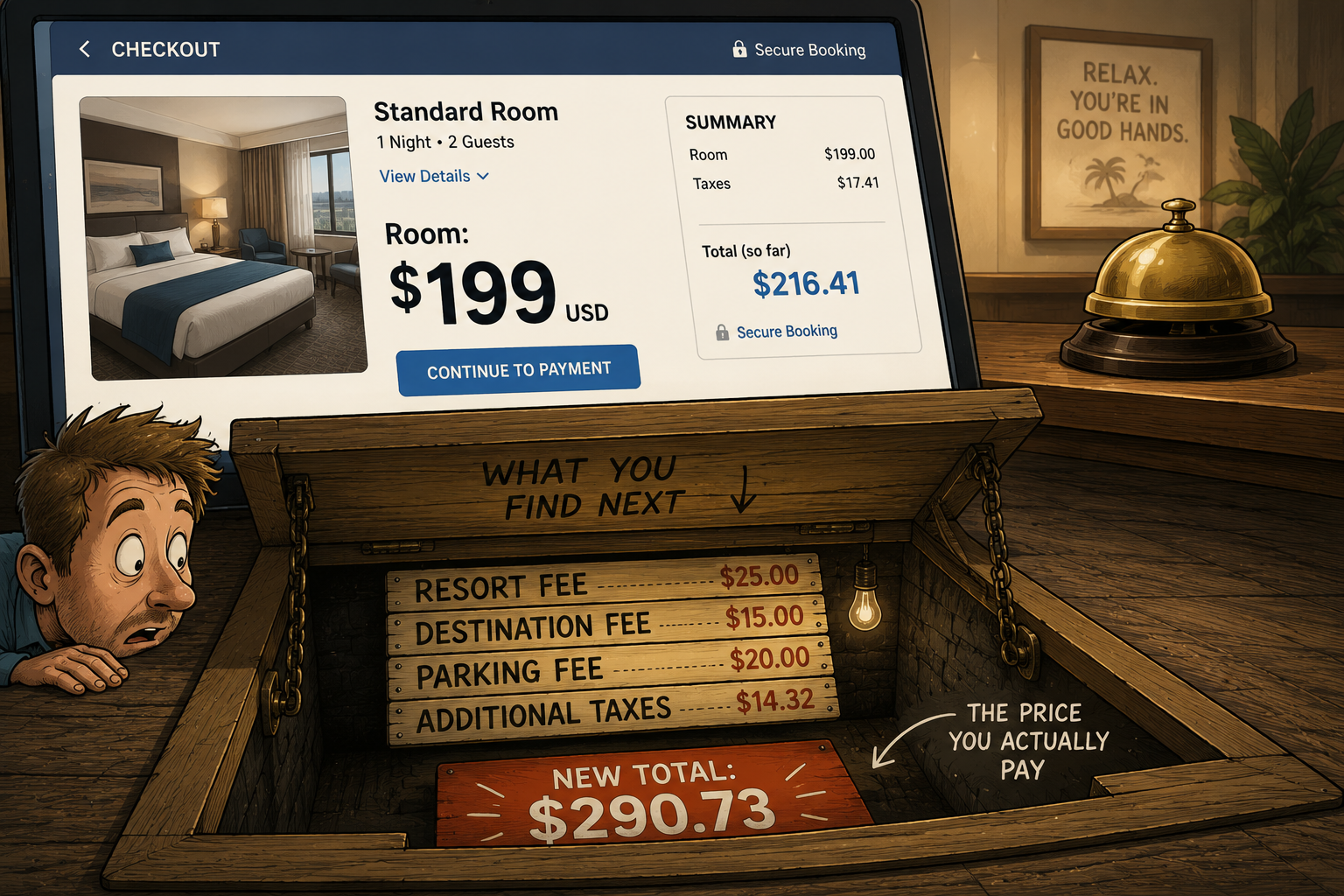
If the room is really $225 instead of $199, charge $225. Don’t invent a little side category that magically appears after I’ve already compared your $199 room with somebody else’s $215 room.
Honestly, I’d have more respect for a line item called “We Wanted Another $26.” At least we’d understand each other.
Airline seating: Your family is now an upgrade
This one amazes me.
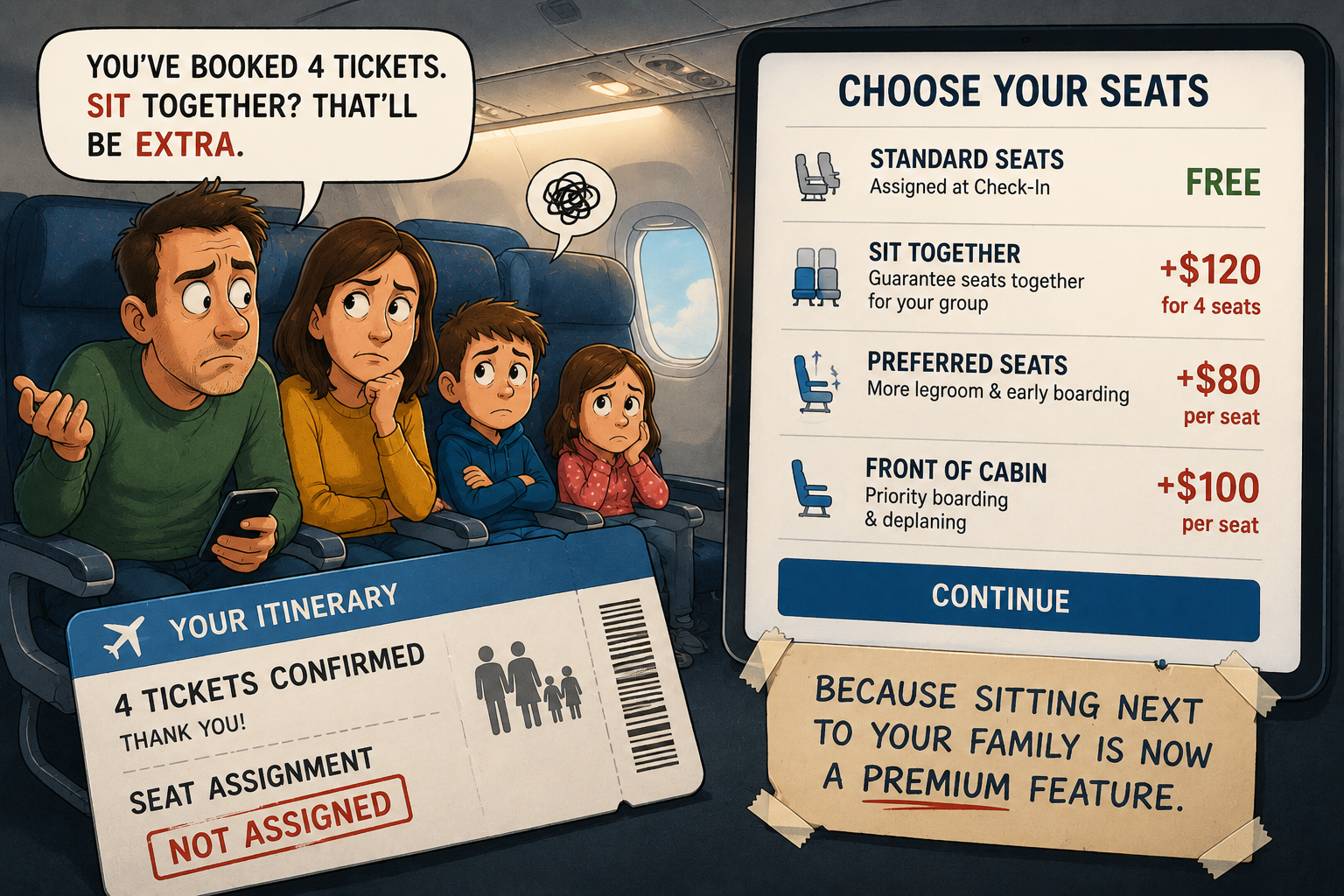
You book four airline tickets together because you’re traveling as a family. Reasonable assumption: perhaps the four people on the same reservation might sit somewhere near one another. Apparently that’s asking a lot.
At some point, airlines realized that the ability to sit next to your spouse or your kids was something they could separate from the actual airline ticket and sell back to you.
That’s an impressive piece of business logic when you think about it. We didn’t add a new service. We took something people assumed was included, removed the certainty, and then monetized the anxiety.
And because parents generally prefer not to have their eight-year-old sitting twelve rows away between two strangers, they pay.
Which brings us right back to that British survey: people often pay the fee not because they think it’s fair, but because the alternative is worse.
Food delivery: The $14 burger that somehow costs $31
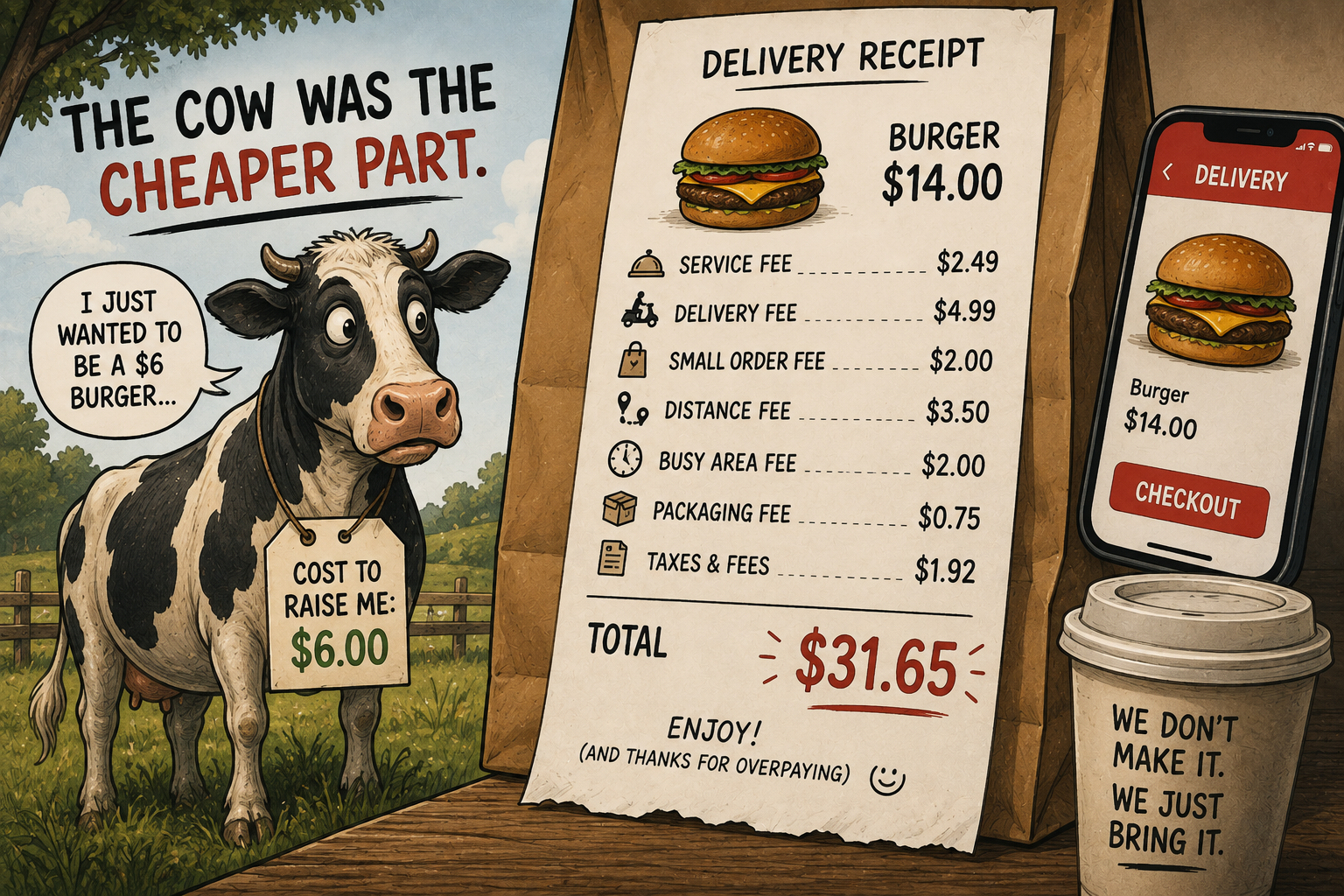
I use food delivery. I’m not pretending I don’t. It’s convenient, and convenience has value.
But the math can get spectacular. You open the app and see a burger for $14. Then comes the menu markup, the delivery fee, the service fee, tax, the tip, and perhaps another creatively named charge depending on the order.
Suddenly that $14 burger is flirting with $30. At that point, the cow was one of the cheaper participants in the transaction.
And again, I’m not arguing that delivery should be free. A driver needs to be paid. The platform needs to make money. Restaurants have costs.
But we seem to have entered an era where businesses increasingly prefer to show us the cheapest possible version of a number first and explain the actual cost, including all those hidden fees, later.
That is the Gotcha Economy in one sentence.
Convenience fees: Convenient for whom?
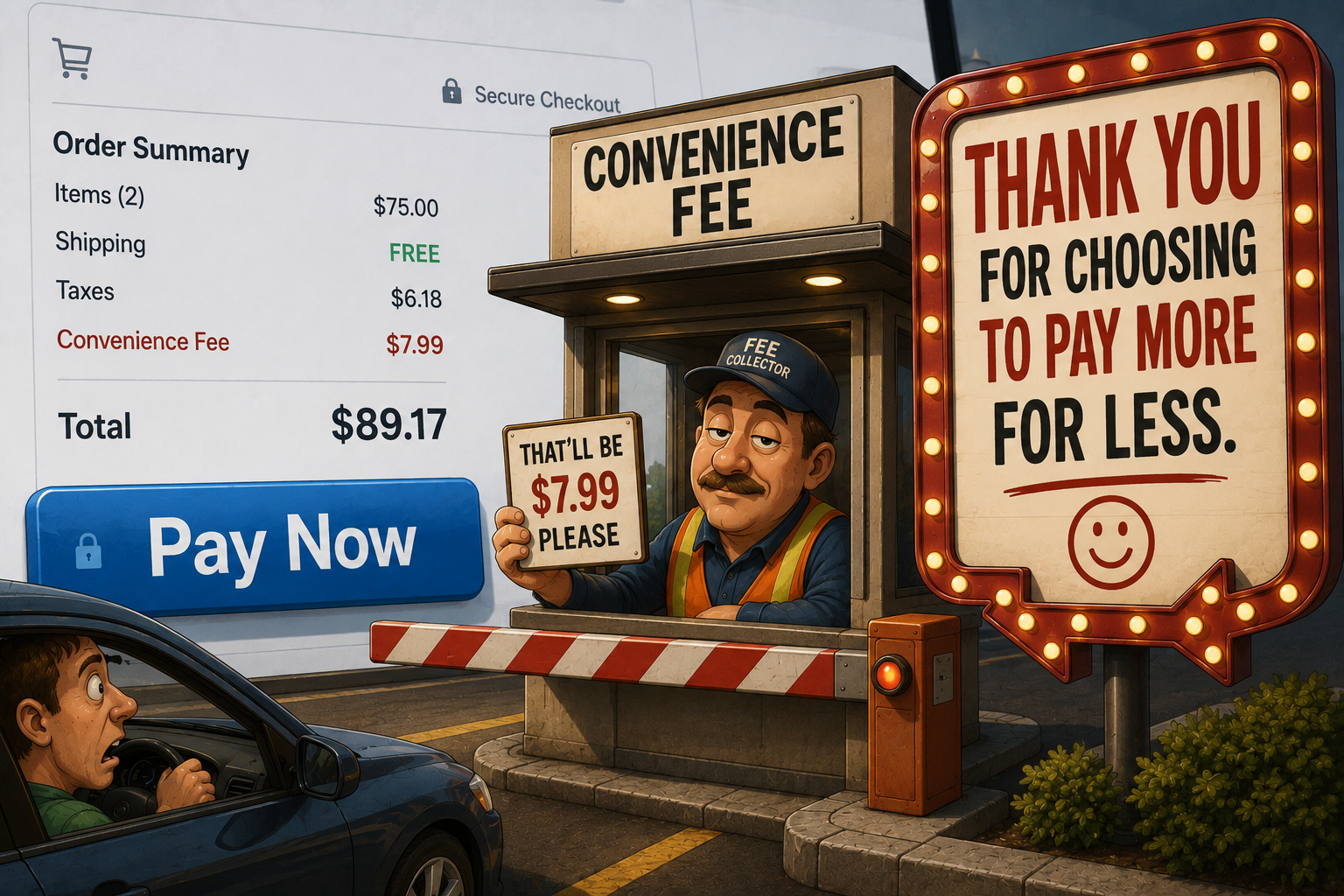
This category deserves special recognition because the name itself feels like a dare.
I pay my bill online. I don’t mail a check. I don’t hand cash to an employee. Nobody needs to open an envelope, process my payment manually, or send me a paper receipt. I’m using the system that is probably cheapest for the company to operate.
Then I’m charged a convenience fee. I’m still trying to work out whose convenience we’re celebrating.
There are legitimate costs behind payment processing, obviously. But from the customer’s perspective, this is exactly the type of fee that feels like the price of doing something the way the company wanted you to do it in the first place.
That’s why a $3 fee can sometimes be more irritating than a $30 purchase. It’s not the amount, it’s the principle.
The British survey called these hidden fees and little charges “swindles,” which I kind of agree with. A $5 charge isn’t going to bankrupt most people. A $25 fee isn’t the reason housing feels unaffordable. But that’s not really what makes these charges irritating.
It’s the sense that somewhere, somebody looked at something ordinary and thought, We could probably charge for that: Parking at the hotel, Choosing a seat, Buying a ticket, Paying a bill.
None of these fees alone defines the cost-of-living crisis. Together, though, they create something else: the feeling that simply moving through modern life means passing one tiny toll booth after another, until eventually, we stop noticing.
So I want to borrow the British idea and turn it over to Americans.
What belongs at the top of our list?
Not necessarily the biggest expense in your life. I’m looking for the charge that irritates. The fee that makes you roll your eyes every single time. The one that makes you wonder when exactly we all agreed this was normal.
Maybe it’s a resort fee. Maybe it’s Ticketmaster. Maybe it’s airline seating, ATM charges, rental application fees, food delivery, parking, credit card surcharges, or something I haven’t even thought of.
Put your nominee in the comments and tell me why it deserves a spot.
If enough people weigh in, we’ll take the answers and build our own American Modern Life Swindle Index.
I suspect we’re not going to struggle for material.