
The idea that high hourly pay requires a four-year degree is starting to crack. A different tier of careers has been building in the background: roles that reward precision, specialization, and real-world skill. They don’t get much attention. They also don’t have enough people stepping into them.
Read more about these stable jobs that can realistically reach $100 per hour territory without a traditional degree path.
Airline Pilots, Copilots, and Flight Engineers

These professionals are responsible for the safe operation of aircraft, navigating through weather, and managing complex flight systems for major passenger and cargo airlines. You know, all the things that have to happen so you can sit back and enjoy your Biscoff cookie in peace. Because federal law limits them to 1,000 flight hours per year to prevent fatigue, their hourly rate is significantly higher than most careers.
The Pay: The Bureau of Labor Statistics (BLS) reveals a median annual wage of $226,600. Senior captains at major “Legacy” carriers (like Delta or United) often earn $350 to $400 per flight hour.
The Path:
- Enroll in a civilian flight school.
- Earn Private, Instrument, and Commercial ratings.
- Accumulate 1,500 flight hours for the Airline Transport Pilot (ATP) certificate.
- Gain experience at a regional carrier before moving to a major airline.
Air Traffic Controllers

Controllers are essentially the police of the sky, managing the flow of aircraft in and out of airports and across the country to prevent collisions. It’s a high-pressure role that requires intense focus and quick decision-making, which the government rewards with a substantial paycheck.
The Pay: The BLS median is $144,580, but for those in the top 10% working at busy metropolitan hubs, pay exceeds $211,000. With federal holiday pay and overtime, senior controllers regularly clear $100 per hour.
The Path:
- Must be a U.S. citizen under the age of 31.
- Pass the FAA’s AT-SA pre-employment aptitude test.
- Complete the training course at the FAA Academy in Oklahoma City.
- Undergo several years of on-the-job training to reach Certified Professional Controller status.
Nuclear Power Reactor Operators
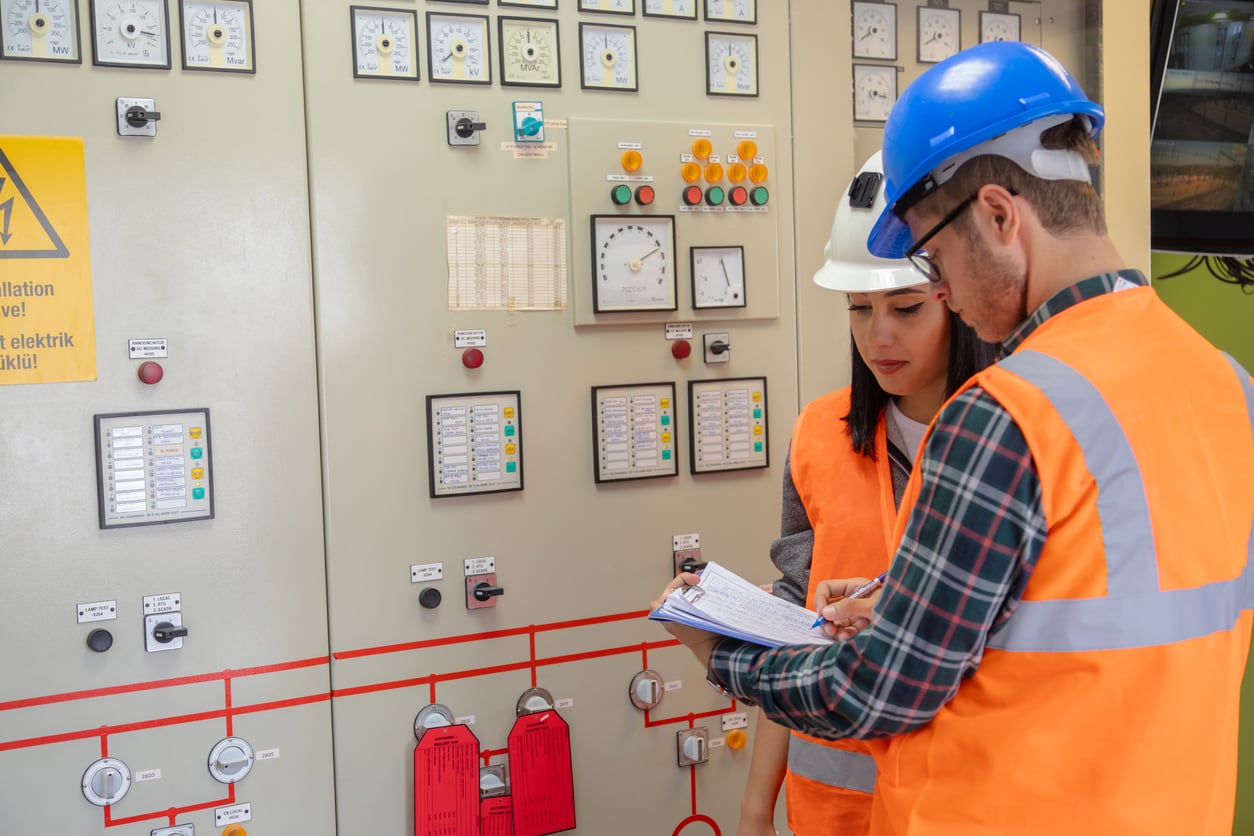
These operators are the front line of safety at nuclear plants, monitoring reactor controls, adjusting power output, and responding to system irregularities. Because of the specialized technical knowledge and the high stakes involved, the energy sector pays a massive premium for licensed talent.
The Pay: The BLS median is $122,610, but this is an overtime-heavy industry. Senior operators at private plants, especially during maintenance “outages,” often push their total compensation toward $200,000, easily crossing the $100/hr mark.
The Path:
- Secure an entry-level position at a power plant to learn the systems.
- Complete years of internal technical and safety training.
- Pass the rigorous Nuclear Regulatory Commission (NRC) licensing exam for that specific plant.
- Maintain your license through constant simulator testing and requalification.
Elevator and Escalator Installers and Repairers
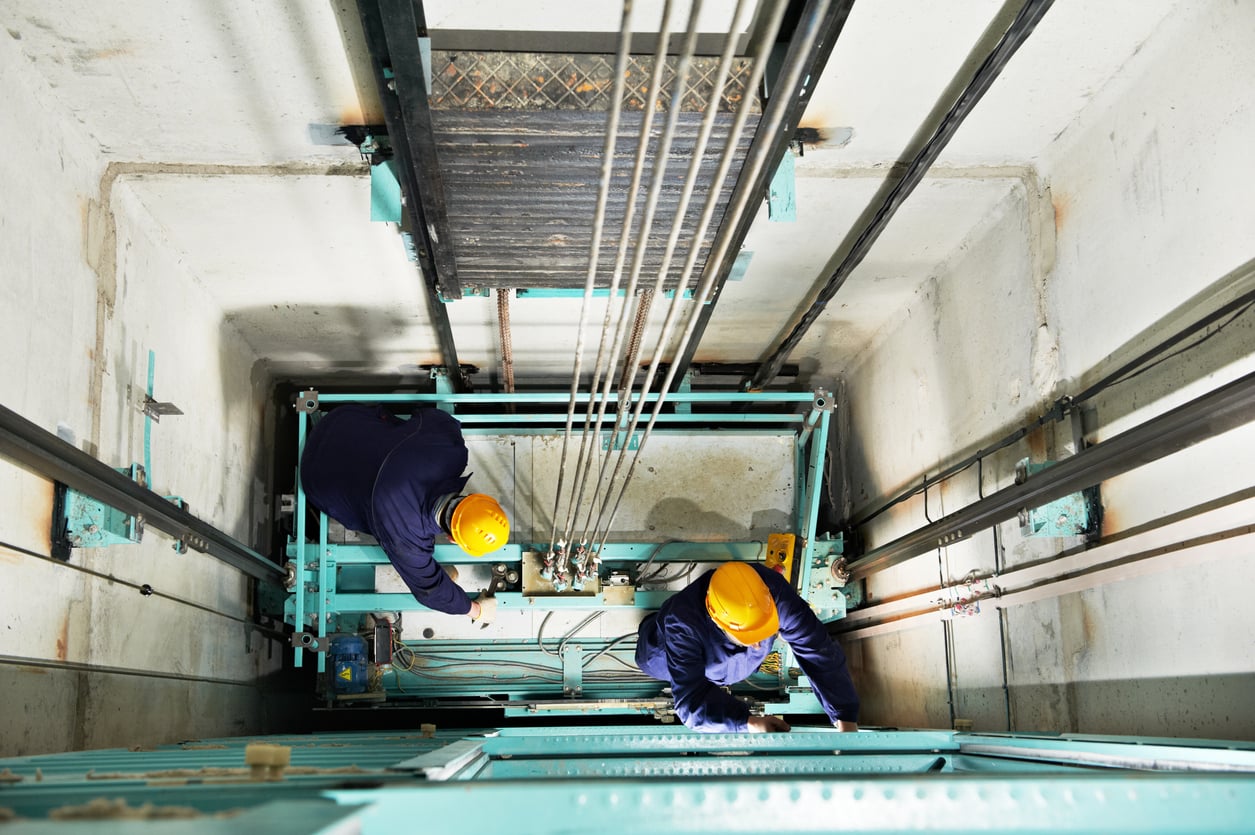
These technicians install, maintain, and fix the complex electrical and mechanical systems that move people vertically through buildings. It’s a highly specialized trade where safety is paramount, leading to strong union protections and high wages.
The Pay: The median annual wage is $106,580, but the top 10% earn over $149,000. In high-demand cities, “call-out” pay for emergency repairs (like a stuck elevator at 2 a.m.) is often double-time, meaning hourly rates of $110 to $140 are common.
The Path:
- Apply for a 4-to-5-year apprenticeship through the National Elevator Industry Educational Program (NEIEP).
- Complete 144 hours of technical instruction per year.
- Accumulate 2,000 hours of paid on-the-job training annually.
- Pass a state licensing exam to become a certified mechanic.
Commercial Divers (Underwater Welders)
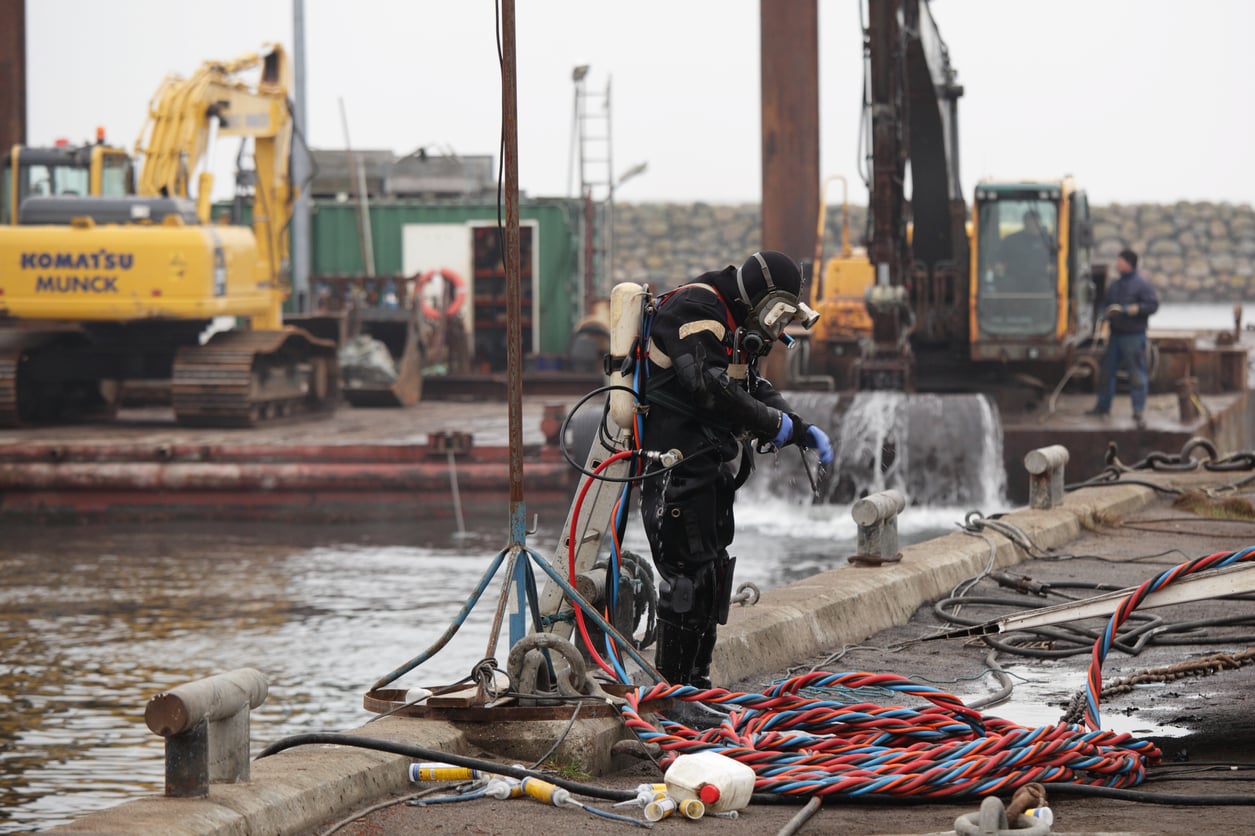
Commercial divers perform tasks like underwater welding, bridge inspection, and pipeline repair deep below the surface. This job is physically grueling and carries significant risks, which is why specialized contract divers — particularly those doing “saturation diving” — command some of the highest day-rates in the skilled trades.
Commercial divers can also transition into high-pay niches like offshore saturation diving.
The Pay: While the general median is roughly $75,570, top-tier contract divers in specialty construction (like offshore oil or heavy infrastructure) earn mean wages near $169,000. Specialized project-based work often pays $120+ per hour.
The Path:
- Graduate from an accredited commercial diving school.
- Obtain specific certifications like Underwater Welding (AWS D3.6) or Non-Destructive Testing.
- Work your way up from a “tender” (assistant) to a lead diver.
- Transition into high-pay niches like offshore saturation diving.
Trending on Cheapism


More From Cheapism

- Jobs You Can Train for in Under a Year That Pay Well — If you’re looking for a job that pays more, chances are, you’d like to start sooner rather than later. These gigs will get you there in a year or less.
- Jobs That Pay Well If You Don’t Mind Driving All Day — Driving something you don’t mind? These jobs include a lot of driving and a lot of money.
- High-Paying Jobs No One Talks About (But Employers Are Desperate to Fill) — These are the high-paying jobs that fly under-the-radar, despite employers being desperate to hire for them.