Remember the red cups, Book It, and the salad bar at Pizza Hut? Those were the glory days. Well, they’re long gone now: The longtime pizza giant confirmed it will close roughly 250 U.S. locations in the first half of 2026 — a noticeable pullback for a brand that once dominated suburban strip malls and family dinners.
Why Is Pizza Hut Closing Stores?
Pizza Hut’s parent company, Yum Brands, announced the closures during its Q4 2025 earnings call as part of an ongoing review of the brand’s performance and long-term strategy. According to CFO Ranjith Roy, the closures will focus on underperforming locations as the company reassesses Pizza Hut’s place in an increasingly competitive quick-service restaurant market.
The numbers help explain the move. Pizza Hut’s U.S. same-store sales fell 3% in the fourth quarter and declined 5% overall in 2025. While competitors have leaned hard into delivery efficiency, digital ordering, and value-driven menus, Pizza Hut has struggled to keep pace in recent years.
How Many Locations Are Closing?
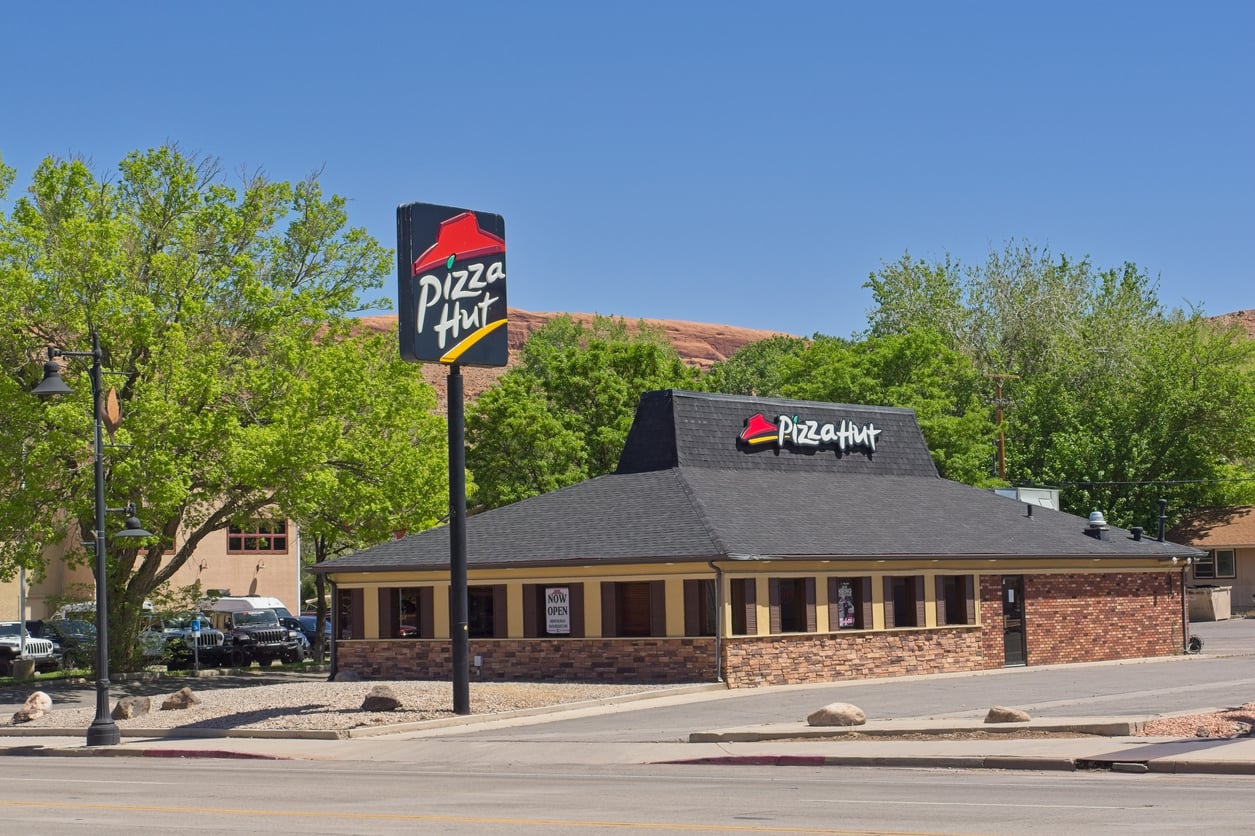
Pizza Hut operates roughly 6,300 locations in the U.S., making the planned closures about 4% of its domestic footprint. While that percentage may sound modest, it represents a significant retrenchment for a major national QSR brand — comparable in scale to Starbucks’ 400-store closure announced last year.
Yum has not released a list of specific locations slated to close, but said the cuts will primarily target stores with persistent performance issues.
What’s the Future Looking Like for Pizza Hut?
Yum CEO Chris Turner confirmed that the strategic review remains ongoing and is expected to conclude sometime in 2026. When the process was first announced last fall, Yum said it could result in a sale or a new ownership structure better suited to guiding Pizza Hut through a turnaround.
Pizza Hut’s total global store count declined from 20,225 at the end of 2024 to 19,974 at the end of 2025. While many of those closures occurred internationally — including more than 250 locations in Turkey — the upcoming U.S. closures signal that the brand’s challenges at home are far from resolved, reminding us all that nostalgia alone isn’t enough to keep the doors open.
More From Cheapism
- Pour One Out: Bahama Breeze Is the Latest Restaurant Chain to Shut Down — Right now, the chain is down to 28 restaurants, and all of them will be closed or converted into different restaurants.
- 7 Things We Thought Were a Luxury Item as Kids (Spoiler: They Weren’t) — From Lunchables to water beds, these items all seemed so fancy when we were kids.
- These Vintage Pizza Hut Photos Explain Why We’re So Disappointed in the Chain Now — Pizza Hut used to be much more than a last-minute pizza delivery option. Let’s take a trip back in time with these photos.