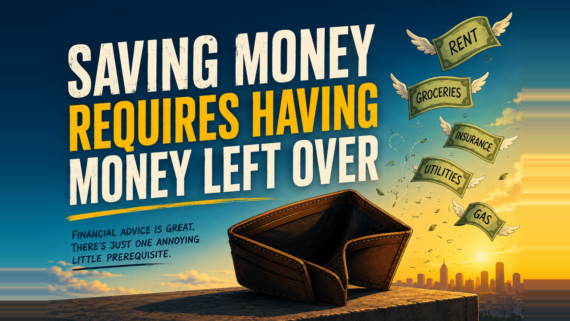
Financial experts have plenty of advice for building your savings. There’s just one annoying little prerequisite.
Saving money isn’t going particularly well for a lot of Americans. A new EY-Parthenon survey found that 54% said they didn’t save any money in June, while about one in five households said they spent more than they earned and relied on savings or debt to cover the difference.
That’s a pretty depressing number, even if it doesn’t necessarily apply to all other months of the year. Not saving money in one particular month doesn’t necessarily mean someone can’t save. Maybe the air conditioner died. Maybe they went on vacation. Maybe June was simply expensive.
But the broader reality behind the number feels a lot harder to dismiss: for a lot of people, saving money has become really difficult.
Fortunately, the personal finance internet has some ideas.
Have You Considered Spending Less on Being Alive?
If you’re struggling to save, you’ve probably heard the advice. Make coffee at home. Eat out less. Cancel subscriptions. Meal prep. Buy generic. Stop impulse shopping. Automate your savings. Pay yourself first.
Most of this is perfectly reasonable advice. If you’re spending $700 a month at restaurants, eating out less will indeed leave you with more money. I ran the numbers.
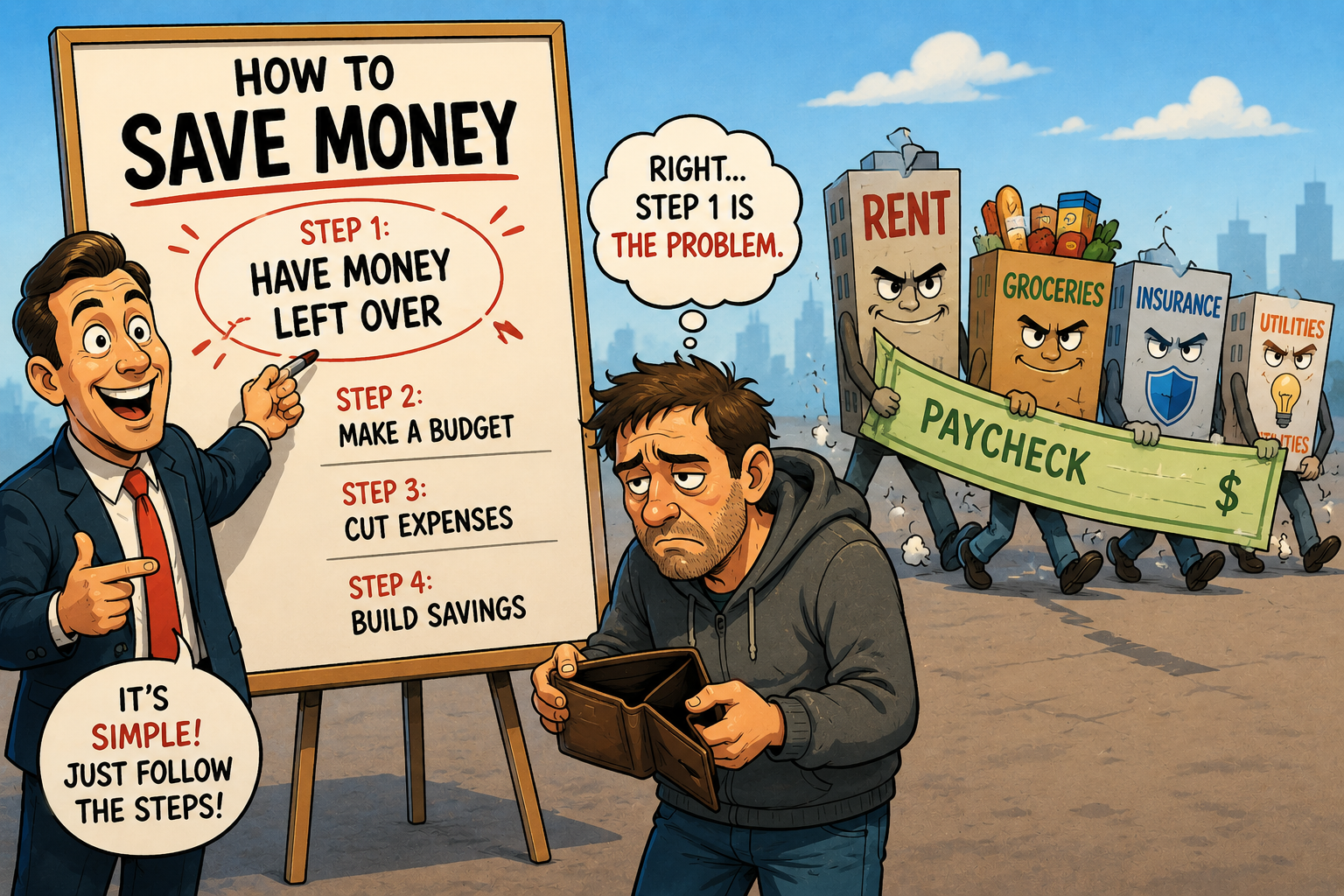
But there’s one small problem that tends to get buried underneath all the budgeting wisdom: in order to save money, you first need to have money left over.
You can cancel Netflix, brew your own coffee and develop an exciting new relationship with store brand cereal, but your landlord still wants the rent. The insurance company still wants its premium. The electric company remains surprisingly uninterested in your financial goals. And groceries have this annoying tendency to become necessary again approximately one week after you buy them.
At some point, there’s only so much financial optimization you can squeeze out of a paycheck.
Your Emergency Fund Would Like Some Money
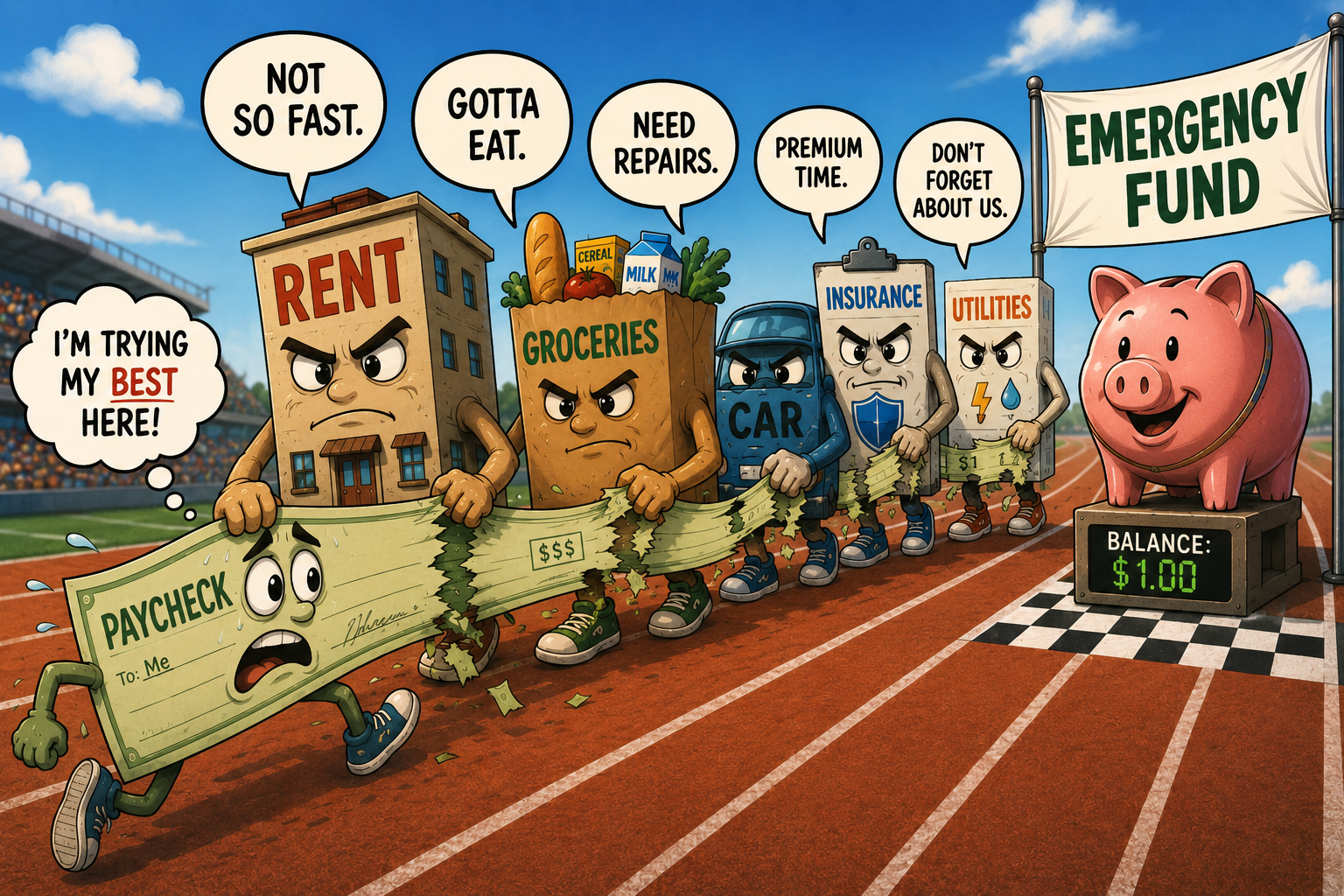
Then there’s the emergency fund.
The standard advice is to build enough savings so that when the car breaks, the furnace dies or your kid unexpectedly needs something expensive, you don’t have to put the whole thing on a credit card.
Again: excellent advice. I enthusiastically endorse having money available when you suddenly need money. Actually building that pile is where things get a little trickier…
Bankrate’s 2026 Emergency Savings Report found that only 30% of Americans said they would pay a $1,000 emergency expense directly from savings. Another 17% said they could cover it from their regular income or cash flow, while a third said they’d need to borrow in some form.
That doesn’t mean 70% of Americans literally have less than $1,000 in the bank, but it certainly adds an alarming telling sign to the challenge. I would not even bother trying to survey a 10x emergency expense.
To me this paints a pretty clear picture of how thin the margin can be.
At some point, telling someone to skip another coffee starts sounding less like financial wisdom and more like you’re really overestimating the economic power of coffee. This is probably around the time I personally start fantasizing about punching that wonderfully helpful financial advisor.
Sometimes the Spreadsheet Isn’t the Problem
I don’t want to swing too far in the other direction. People absolutely waste money. God knows that I do. You probably do too. There are subscriptions we forgot about, takeout orders we didn’t need and purchases that seemed considerably more important at 11:30 p.m. than they did the next morning.
And spending smarter matters. That’s basically the reason Cheapism exists. But there’s a difference between helping people get more from their money and treating every savings problem like a failure of personal discipline.
If somebody earns enough to comfortably cover their expenses and still saves nothing, then yes, maybe it’s time to have a serious conversation with the DoorDash app.
But for plenty of households, the problem isn’t that they haven’t discovered the magic of meal prepping. It’s that after housing, food, transportation, insurance, utilities, childcare and everything else required to operate a functioning human life, there isn’t a giant pile of discretionary money waiting to be rescued.
That’s what gets lost when personal finance advice becomes too simplistic. You can optimize a budget. You cannot optimize it indefinitely.
At some point, telling someone to skip another coffee starts sounding less like financial wisdom and more like you’re really overestimating the economic power of coffee. This is probably around the time that I personally would hallucinate punching that wonderfully helpful financial advisor.
Saving Money Is Great. Having Money to Save Is Better.
The EY survey also found that 72% of consumers could still identify discretionary categories where they could cut spending if necessary, including dining, apparel, beauty and personal care. That’s useful context because it shows this isn’t simply a story about everyone being completely tapped out. People still have choices and trade-offs.
But having something you could cut doesn’t mean saving is in your cards. Sometimes there’s waste in the budget. Sometimes there’s a subscription you should cancel. Sometimes you really are spending an absurd amount on restaurants.
And sometimes rent went up, groceries cost more, insurance costs more, the car needed brakes and your kid needed new sneakers. You can rearrange that spreadsheet as many times as you want. Eventually, the math gets the final vote.
Saving money is excellent advice. Having money left over remains the frustratingly important first step. I would love to hear from you: When people say “just spend less,” what’s the expense you’d like them to come over and cut for you?