
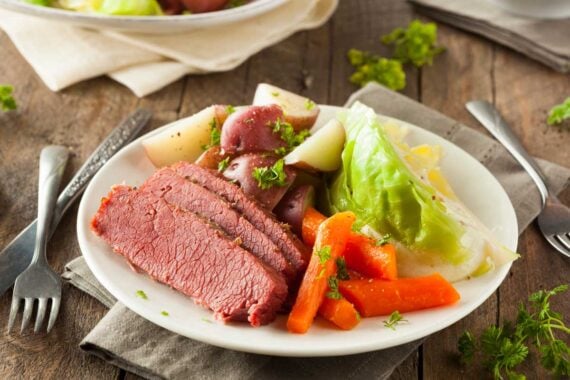
Every year on St. Patrick’s Day, kitchens and restaurants across the U.S. serve up the same classic plate: corned beef, cabbage, potatoes, and carrots. It’s a meal so tied to the holiday that many people assume it’s an ancient Irish tradition.
But the truth is a little more complicated — and honestly, a lot more relatable. The beloved corned beef and cabbage meal that many Americans associate with St. Patrick’s Day dinner actually has roots in affordability, immigration, and making the most of what was cheap and available.
Which, if you’ve seen grocery prices lately, makes it feel even more fitting.
How Corned Beef Entered the Picture
Historically, beef wasn’t a common food in Ireland at all. Cattle were considered a symbol of wealth in traditional Gaelic society and were far more valuable alive than on a dinner plate. Cows were mainly used for farming work and dairy production, and they were typically only slaughtered if they were too old to work or produce milk.
That meant beef was usually reserved for the wealthy or for special celebrations. For most people, pork was a much more common source of meat. In other words, the average Irish household wasn’t regularly sitting down to beef dinners — corned or otherwise.
But things shifted after England gained control of Ireland. England had a long tradition of eating beef, and once it conquered Ireland, the country became a major center for raising cattle.
Then came the English Cattle Acts, which banned the export of live Irish cattle to England. With fewer places to send livestock, the Irish market suddenly had a lot more beef available, and producers began preserving it with salt so it could be exported elsewhere. That salted beef became known as “corned” beef, a term the British coined in the 17th century to describe the large grains (or “corns”) of salt used in the curing process.
Immigrants Helped Create the Dish We Know Today
The St. Patrick’s Day dinner many Americans recognize today really took shape after waves of Irish immigrants arrived in the U.S. during the Great Irish Famine of the mid-1800s. Between 1845 and 1855, millions left Ireland to escape starvation when potato crops failed. Once they were in America — particularly cities like New York City — Irish immigrants found that corned beef was widely available from Jewish butchers, who cured brisket to make kosher corned beef. Brisket was a tougher cut of meat, but slow cooking transformed it into the tender dish people know today.
Pair that brisket with another cheap staple — cabbage — and you had a filling meal that working-class families could actually afford.
Cabbage Was Cheap, Filling, and Perfect for One-Pot Cooking
Cabbage was already a staple in Irish cooking, but it became even more practical in the United States. Like brisket in the 1800s, cabbage was inexpensive and easy to cook alongside other ingredients. Toss it in a pot with potatoes, carrots, and corned beef, and you had a hearty meal that could feed a family without requiring a lot of fuel, time, or money. That practicality helped turn corned beef and cabbage into a staple of Irish-American celebrations — especially on St. Patrick’s Day.
The Budget-Friendly Tradition Lives On
More than a century later, the tradition still carries that same budget-friendly spirit. Cabbage, potatoes, and carrots remain some of the most affordable vegetables in the grocery store, and corned beef brisket almost always goes on sale in the weeks leading up to St. Patrick’s Day.
In a world where many holiday meals can feel like a financial commitment — looking at you, Thanksgiving turkey — this one still feels refreshingly reasonable, which might explain why it’s stuck around. Sure, corned beef and cabbage may not have started as a centuries-old Irish feast. But as far as holiday meals go, it might be the rare tradition that celebrates something we can all get behind: a hearty dinner that doesn’t cause blunt force trauma to your grocery budget.
More From Cheapism

- The True Origins of 18 Classic ‘American’ Foods — Have you ever wondered how some of your favorite “classic” foods came to be? This story dives into the origins of some American staples.
- The Most Delicious Signature Meal from Every State (Including Some Weird Ones) — From tri tip in California to Coney dogs in Michigan, every state has a signature meal.
- Need a Last-Minute Holiday Dessert? Costco Has Plenty Under $25 — If you’re hosting a holiday dinner and need a last-minute dessert, Costco is the place to visit.