In the early 20th century, millions of people from different corners of the world packed their bags, boarded ships, and left the homes of their ancestors behind to chase a dream. To them, the American Dream promised a land where anyone could prosper and build a better life — one worth leaving everything for.
In 2025, for a record 180,000 Americans who left the United States, it was time to wake up from that dream. As more people begin to question what the American Dream means today — and what it actually stands on — conversations about its future are becoming more common.
According to new research from the Savannah College of Art and Design’s applied research studio, millennials and Gen Z “face a growing gap between the ideals of the concept and the systems meant to support it,” and many describe it as “outmoded and distant.”
Can you blame them?
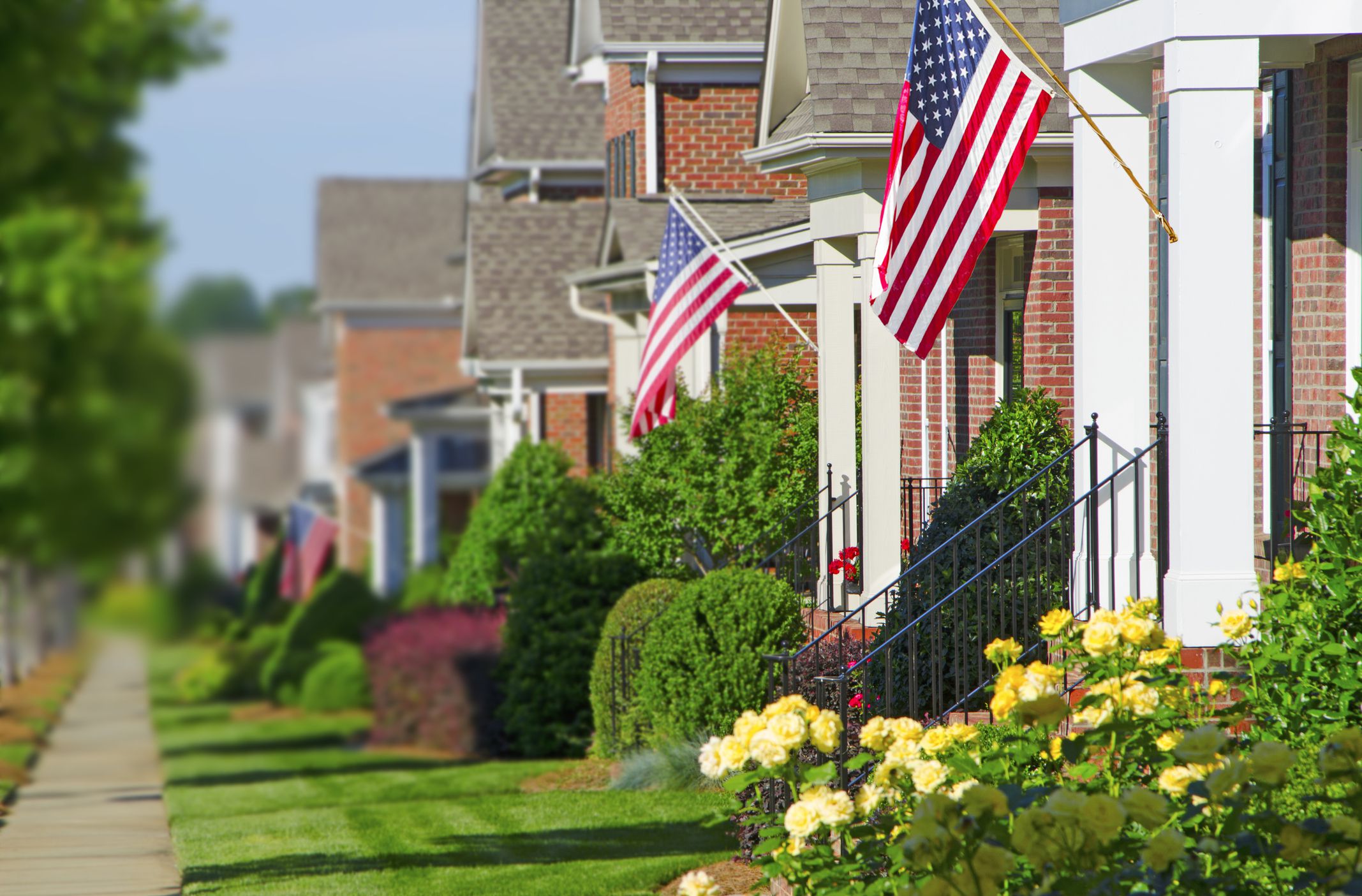
In 1931, at the start of the Great Depression, the historian James Truslow Adams described the American Dream as a society where opportunities and prosperity exist for everyone based on ability rather than social status, class, or wealth. Through global wars, economic downturns, and social upheavals, that concept has endured many tests. It’s been passed down from generation to generation, constantly reshaped and redefined.
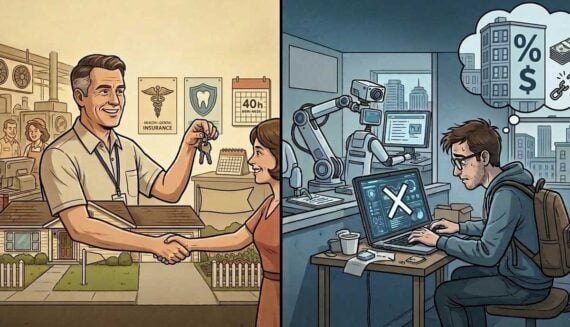
But for younger generations, prosperity isn’t the main goal anymore — stability is. They’re coming of age in a time of recurring financial crises, a tough hiring market, rising living costs, and now the added pressure of competing with technologies like AI that threaten to replace them in jobs that already feel anything but secure.
SCAD conducted two surveys of more than 1,400 respondents across generations and communities. The research included over 730 responses from rural, suburban, and urban Gen Z, Millennial, and Gen X Americans, examining how different groups define the American Dream and whether they believe it is still attainable. The report imagines the future across six interconnected pillars: housing, career, community models, healthcare and nutrition, education, and wealth and financial security .
‘The Rent Is Too High and the Housing Cost Is Too Much’
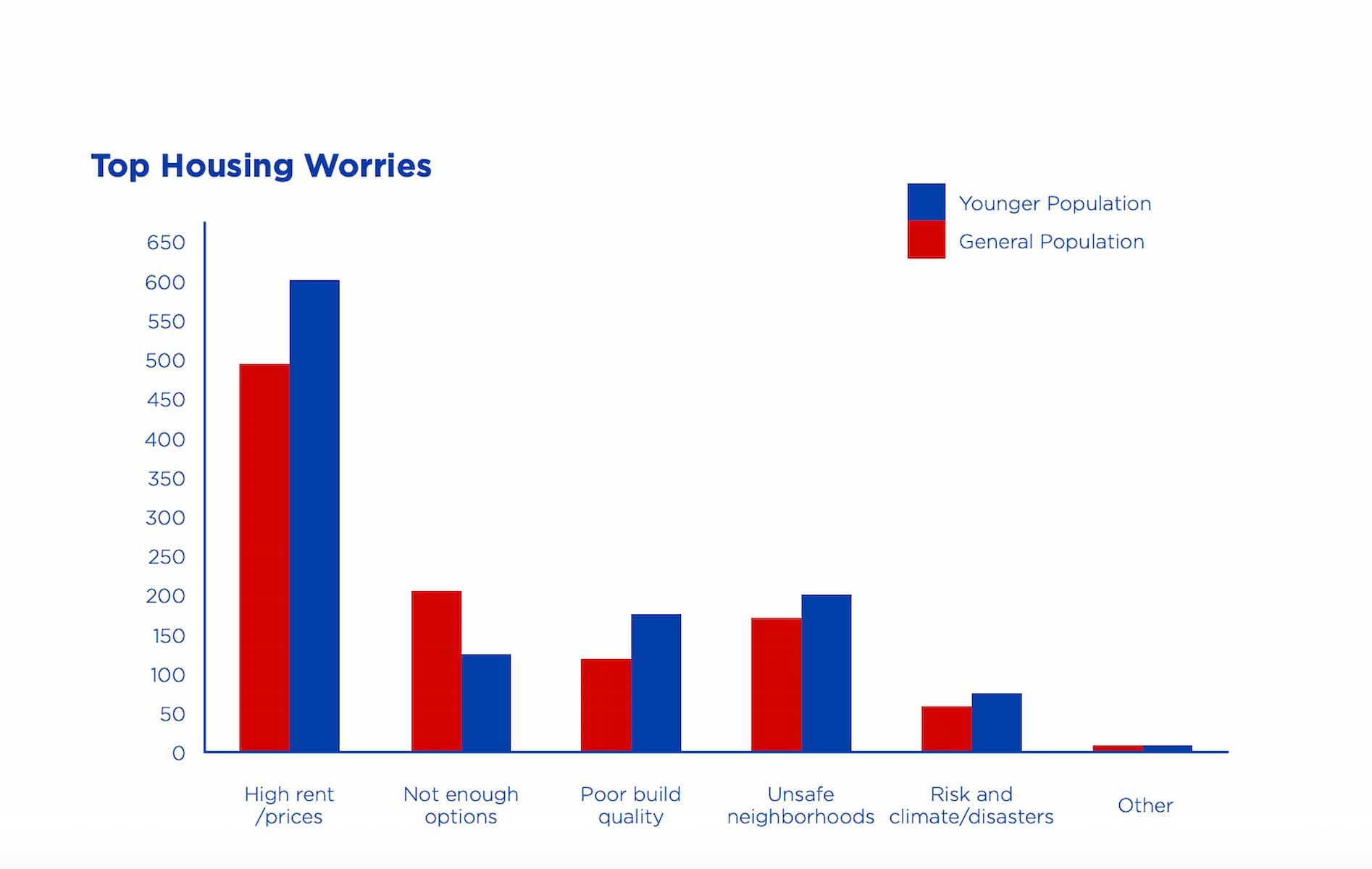
The housing affordability crisis is one of the main places where skepticism about the American Dream begins. Many younger Americans feel like they’re scraping by, hoping that one day they might come close to affording a home of their own.
The suburban house with a white picket fence has long been one of the defining symbols of the dream, and nine out of ten respondents said homeownership is central to their idea of it. Today, however, that dream comes with a price tag many younger generations simply can’t afford, with 95% saying housing in their desired area is out of reach.
“I am a relatively older millennial. For us, I think home buying didn’t really happen until later as well (and for many, still has not),” said one user on Reddit.
“32 [and I] still can’t afford a house,” said another.
83% of Americans Say a Stable Career Is Key to the American Dream
Work is still a big part of the American Dream — but the idea of what a career looks like is evolving. About 83% of respondents said having a stable career matters, and younger people in particular put heavy weight on good job benefits, something 81% said helps define the dream.
At the same time, the traditional “one job for life” model seems to be fading, with 8 in 10 respondents expected to change jobs or even entire careers multiple times.
Stability Is the Dream
Financial security ranked as the single most important part of the American Dream for younger respondents, and remained highly important for the general population as well.
For many, the dream is no longer about getting rich — it’s about reaching a level of stability where everyday expenses, rent or mortgage, and basic savings don’t feel out of reach.
“I wake up every morning exhausted before my day even starts. I drag myself to a job that drains me, where every hour feels like it’s tearing a piece of me away, and for what? A pay-check that barely covers rent, groceries, and bills I’ll still be paying off next month,” said one user on a Reddit thread titled “The American Dream is a lie, and I’m living it’s nightmare.”
What Else Is Holding the American Dream Back?
Health care and student loans are another place where the American Dream begins to crack for millennials and Gen Z. Access to health care was seen as significantly more important by younger respondents, with 86% saying affordable health care programs should be a priority, and 93% calling it one of the most important issues for the future. Rising medical costs were widely described as a major roadblock to financial security.

The report also points to student loan debt as one of the biggest barriers to opportunity, with 73% of younger respondents saying education plays a key role in achieving the American Dream.
Yet many feel the cost of college has made that path increasingly difficult. About 76% said affording college will become even more important in the future, highlighting how student debt continues to weigh heavily on younger generations trying to build financial stability.
“It’s a steep climb to reach the American Dream when you’re burdened by crippling debt. We need tuition-free education and Universal Healthcare,” said one Redditor.
What the Future Holds For the American Dream
The study ultimately looks ahead to what the American Dream might look like by 2040. The answer isn’t that the dream disappears — it just changes shape. For many younger Americans, the dream is drifting away from the old milestones like a suburban house, a lifelong career, and steady upward prosperity. For many younger Americans, the dream is shrinking into something simpler — not getting rich, but simply being able to live comfortably and feel secure about the future.
Trending on Cheapism

More From Cheapism

- Millions of Americans Are Skipping Meals to Afford Health Care — Americans are going hungry so their health care doesn’t bankrupt them. According to new polling from the West Health–Gallup Center on Healthcare in America, one-third of U.S. adults are cutting back on basics — even skipping meals — to afford health care costs.
- TikToker Finds $1K Worth of Groceries in a Dumpster — Only in America would you find $1,000 worth of groceries in a dumpster.
- Report Shows the People Hit the Hardest by Tariffs Are Americans — A new report from the Federal Reserve Bank of New York confirms that tariffs mostly hurt the people who live in the country imposing them. That’s us, Americans.