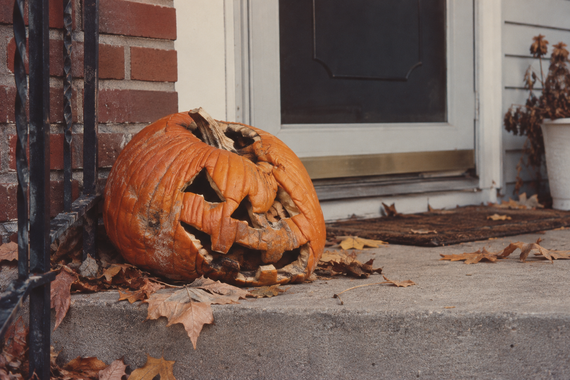
For families growing up in the 1950s, ’60s, ’70s, and ’80s, Halloween decorations didn’t necessarily disappear the moment October 31 was over. The costumes might have been packed away and the candy carefully rationed, but those carved pumpkins sitting on the front porch often had a little life left in them. Sometimes they became ingredients for homemade treats, while other times they simply stayed outside until someone finally decided to deal with the increasingly unpleasant mess.
Back when families were especially careful about making the most of what they had, throwing away a perfectly good pumpkin could seem wasteful. Seeds were saved for roasting or planting, intact pumpkins could become Thanksgiving decorations, and gardening households found ways to return leftover pumpkin pieces to the soil. Of course, not every family was quite so resourceful. Plenty of jack-o’-lanterns simply rotted away on the porch, much to the delight of neighborhood squirrels.
From homemade pumpkin pies to the dreaded chore of cleaning up a collapsed jack-o’-lantern, here are 10 things families used to do with pumpkins after Halloween.
Leaving the Jack-o’-Lantern on the Porch Until It Collapsed
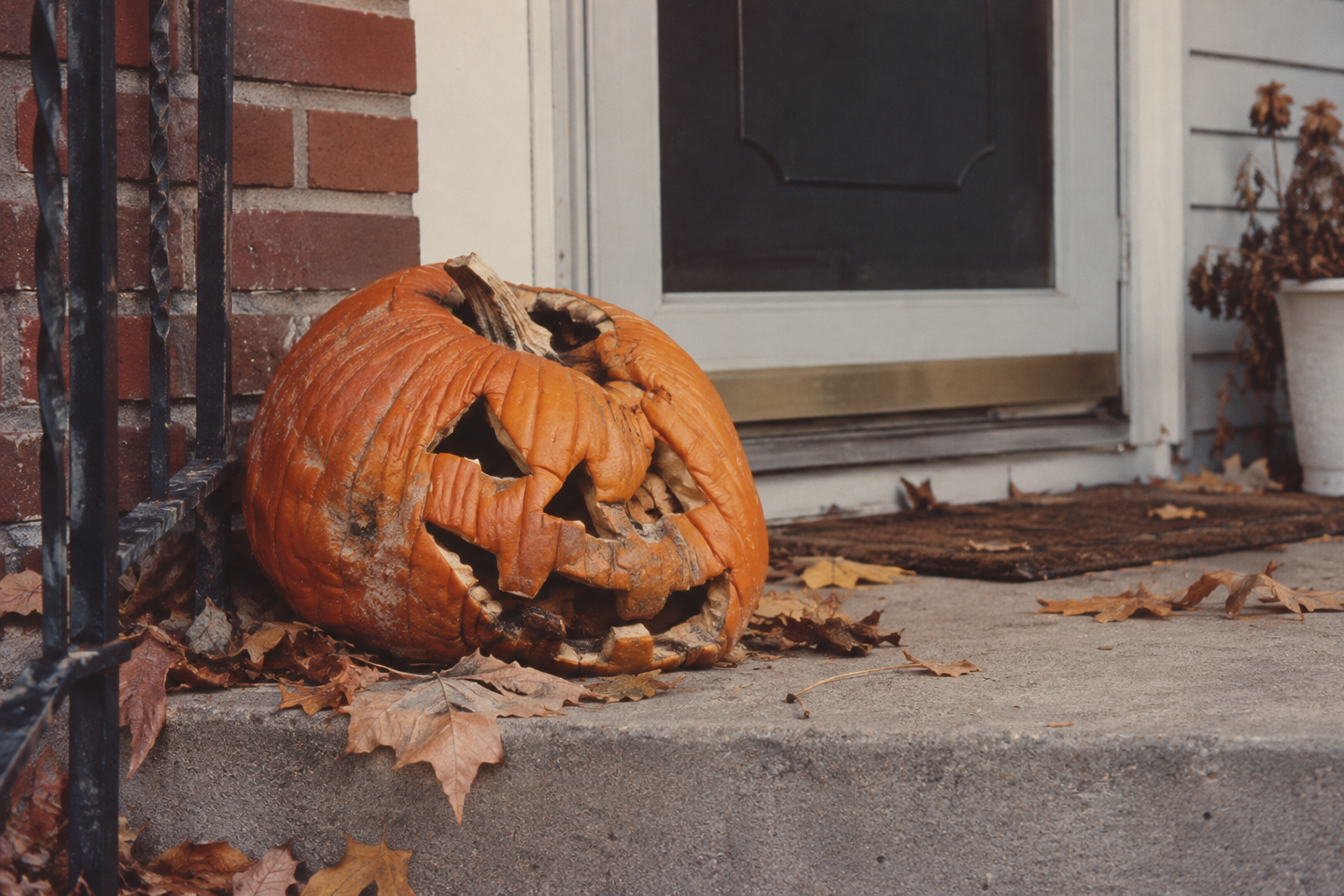
Every neighborhood seemed to have at least one house where the Halloween pumpkin remained on the front porch long after the decorations had come down. At first, it looked perfectly fine, perhaps a little wrinkled around the mouth or slightly darker than it had been on Halloween night. But as November wore on, the cheerful jack-o’-lantern gradually transformed into something considerably less charming. Its lid sank inward, the carved eyes started drooping, and the bottom became so soft that picking it up without making a mess was practically impossible. If the family had used a real candle, there might even be blackened patches and dried wax inside. Eventually, some unfortunate family member had to deal with the smelly remains, usually while everyone else watched from a safe distance.
Roasting the Seeds That Had Been Saved During Carving
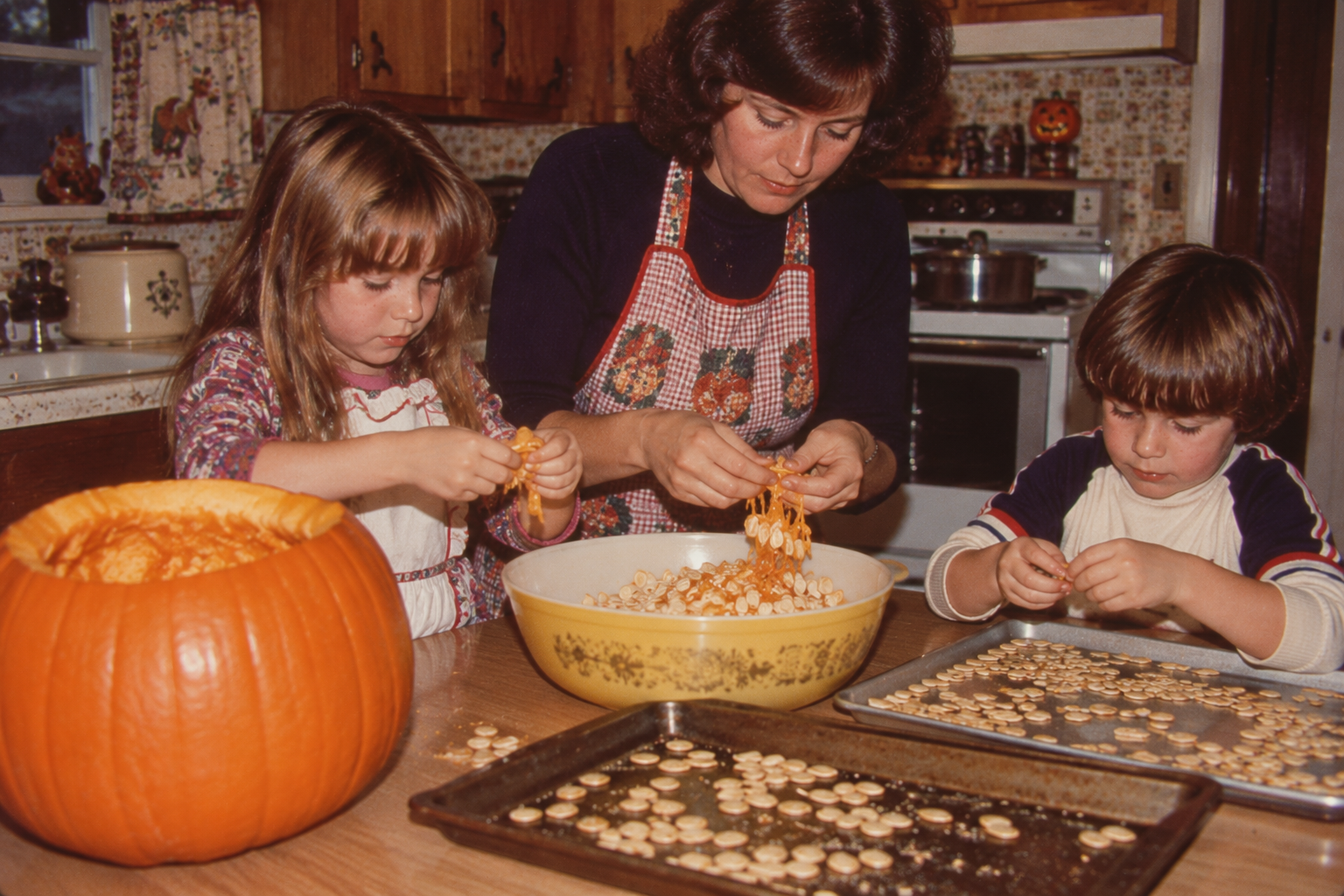
For plenty of families, carving pumpkins meant more than just creating a spooky face. It also meant collecting all those slippery seeds that came out with the stringy orange pulp. Instead of tossing them away, parents sometimes recruited the kids to help separate the seeds, rinse them clean, and spread them across a baking sheet. A little salt, some time in the oven, and suddenly there was a crunchy homemade snack that cost practically nothing extra. The smell of roasting pumpkin seeds could fill the kitchen, and the finished batch might be eaten straight from the pan or stored in a jar for later. Of course, the seeds had to be saved and handled safely during the original carving session. Nobody was digging them out of a moldy jack-o’-lantern two weeks later.
Saving a Few Pumpkin Seeds to Plant the Following Spring
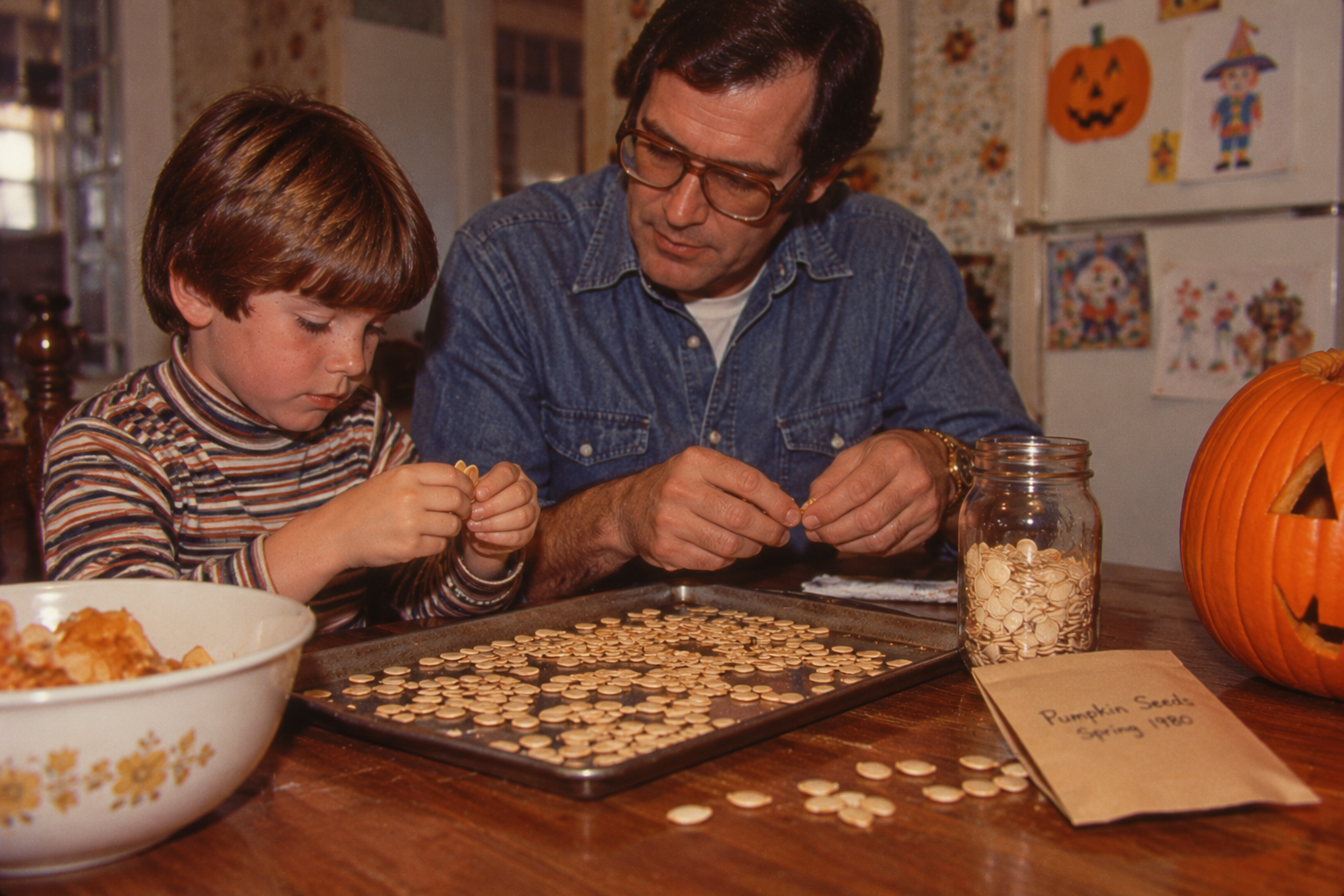
In households with backyard vegetable gardens, Halloween pumpkins sometimes provided the beginnings of next year’s crop. Parents or grandparents would select a handful of seeds, dry them carefully, and tuck them into a paper envelope or small jar until planting season arrived. For kids, there was something almost magical about the idea that the pumpkin they’d carved in October could eventually produce another pumpkin the following fall. Of course, gardening wasn’t always that predictable. Seeds from hybrid or cross-pollinated pumpkins could produce something that looked completely different from the original. But that was part of the fun, especially for children who got to watch the vines spread across the garden throughout the summer.
Turning Uncarved Pumpkins Into Thanksgiving Decorations
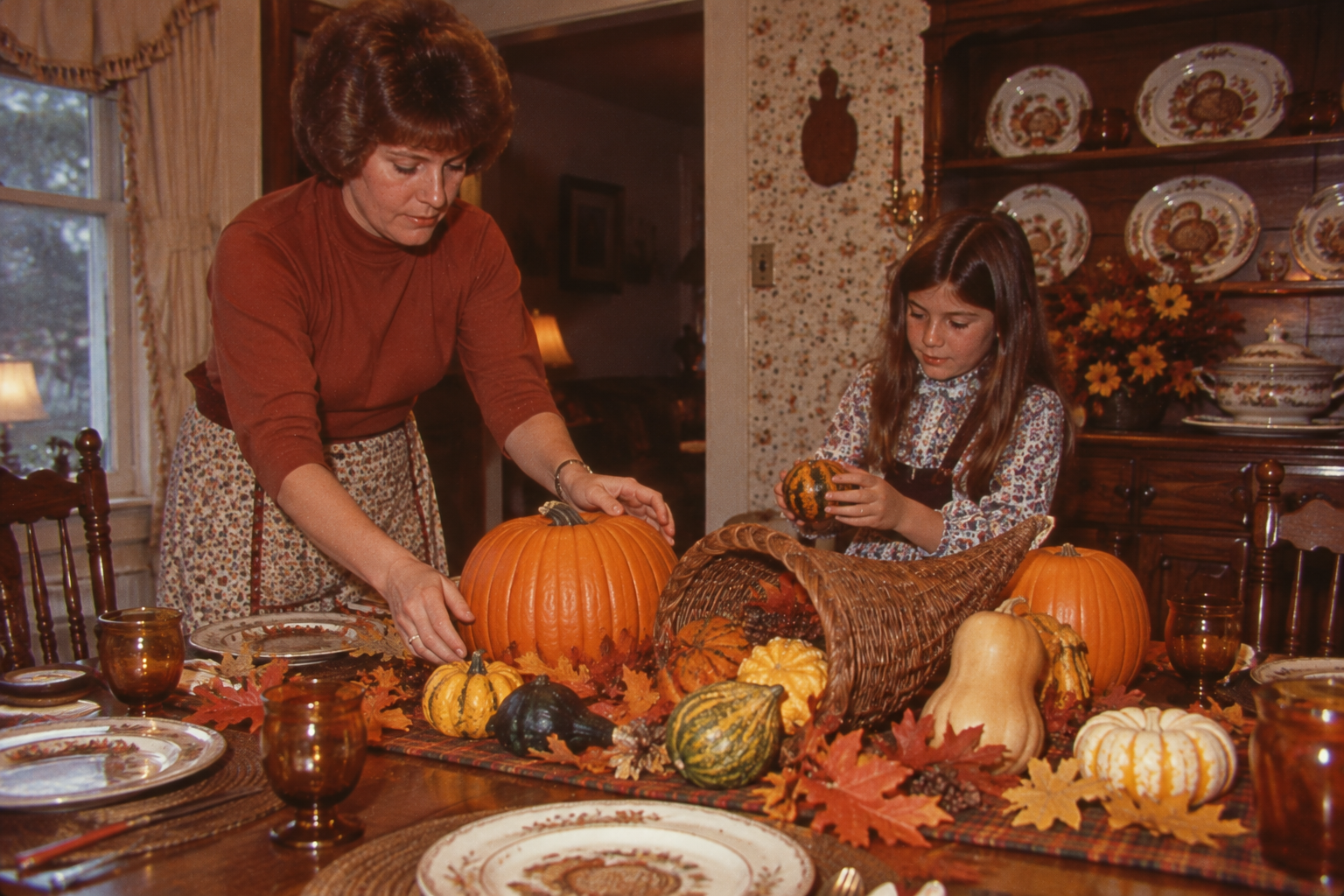
Why buy an entirely new set of decorations for Thanksgiving when the pumpkins from Halloween were still perfectly good? In plenty of practical households, intact pumpkins simply stayed where they were while the spooky decorations disappeared around them. Plastic skeletons and paper ghosts came down, and suddenly those same orange pumpkins looked right at home surrounded by colorful leaves, gourds, and other harvest decorations. Smaller pumpkins might find their way onto the dining room table, sometimes arranged around a homemade cornucopia or a collection of autumn leaves gathered from the backyard. It was an easy way to stretch seasonal decorations across two holidays without spending another dime. The important distinction, of course, was that these pumpkins hadn’t been carved and left to deteriorate outside.
Tossing Pumpkin Pieces Into the Backyard Compost Pile
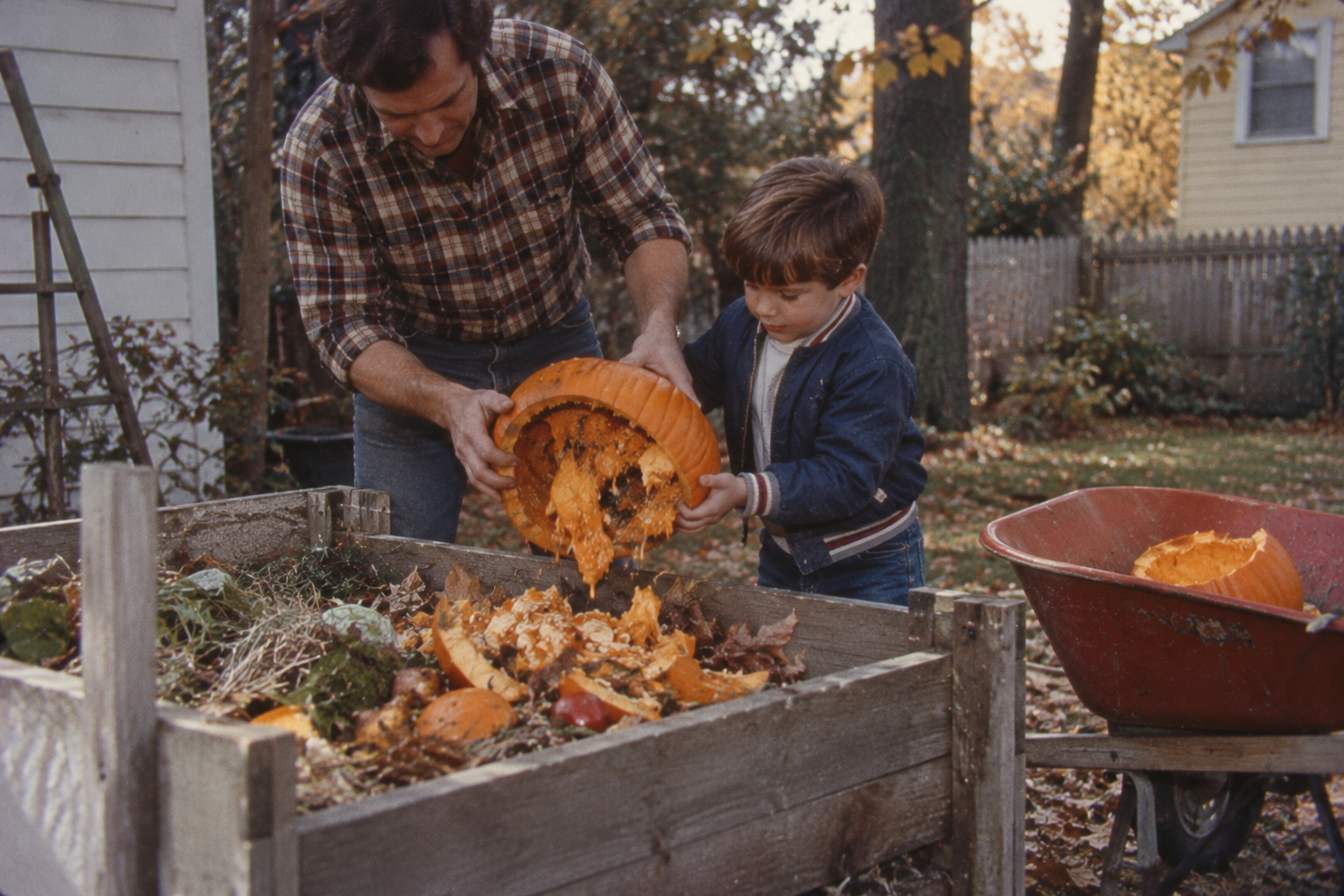
For families who maintained a backyard compost pile, getting rid of an old Halloween pumpkin didn’t necessarily involve the garbage can. Instead, someone could chop the jack-o’-lantern into smaller pieces and toss them onto the heap alongside fallen leaves, vegetable scraps, and other garden waste. The pumpkin would gradually break down, contributing organic matter that could eventually be worked into the soil. It wasn’t the most glamorous Halloween tradition, but it fit perfectly into households where gardening and making use of kitchen scraps were part of everyday life. Some kids even got the job of breaking the pumpkin into smaller chunks, which was probably more entertaining than most other November chores.
Trending on Cheapism

Feeding Leftover Pumpkins to Chickens or Farm Animals
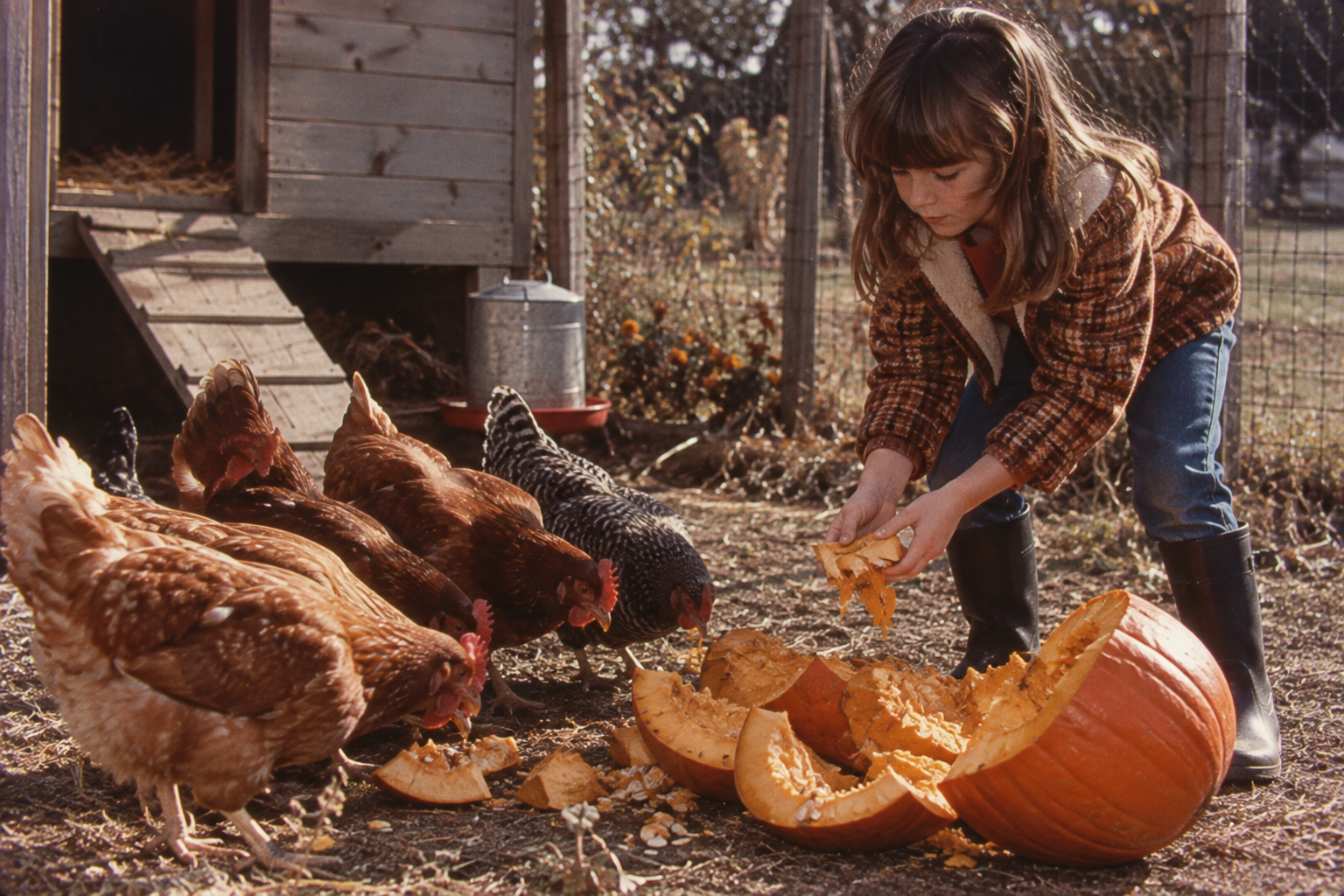
Families living in rural areas sometimes had a particularly practical solution for leftover pumpkins: letting the animals enjoy them. Backyard chickens could peck at fresh pumpkin flesh and seeds, while pigs and certain other livestock could eat suitable pumpkin pieces as an occasional treat. For households accustomed to finding uses for vegetable scraps, it made sense to avoid throwing away something the animals could eat. Of course, not every Halloween pumpkin was suitable for this purpose. Moldy or rotting pumpkins, as well as those covered in paint, bleach, candle wax, or other decorations, weren’t safe to feed to animals. But a fresh, untreated pumpkin could have one final purpose long after the neighborhood trick-or-treaters had gone home.
Watching Squirrels Chew Holes in the Forgotten Pumpkins
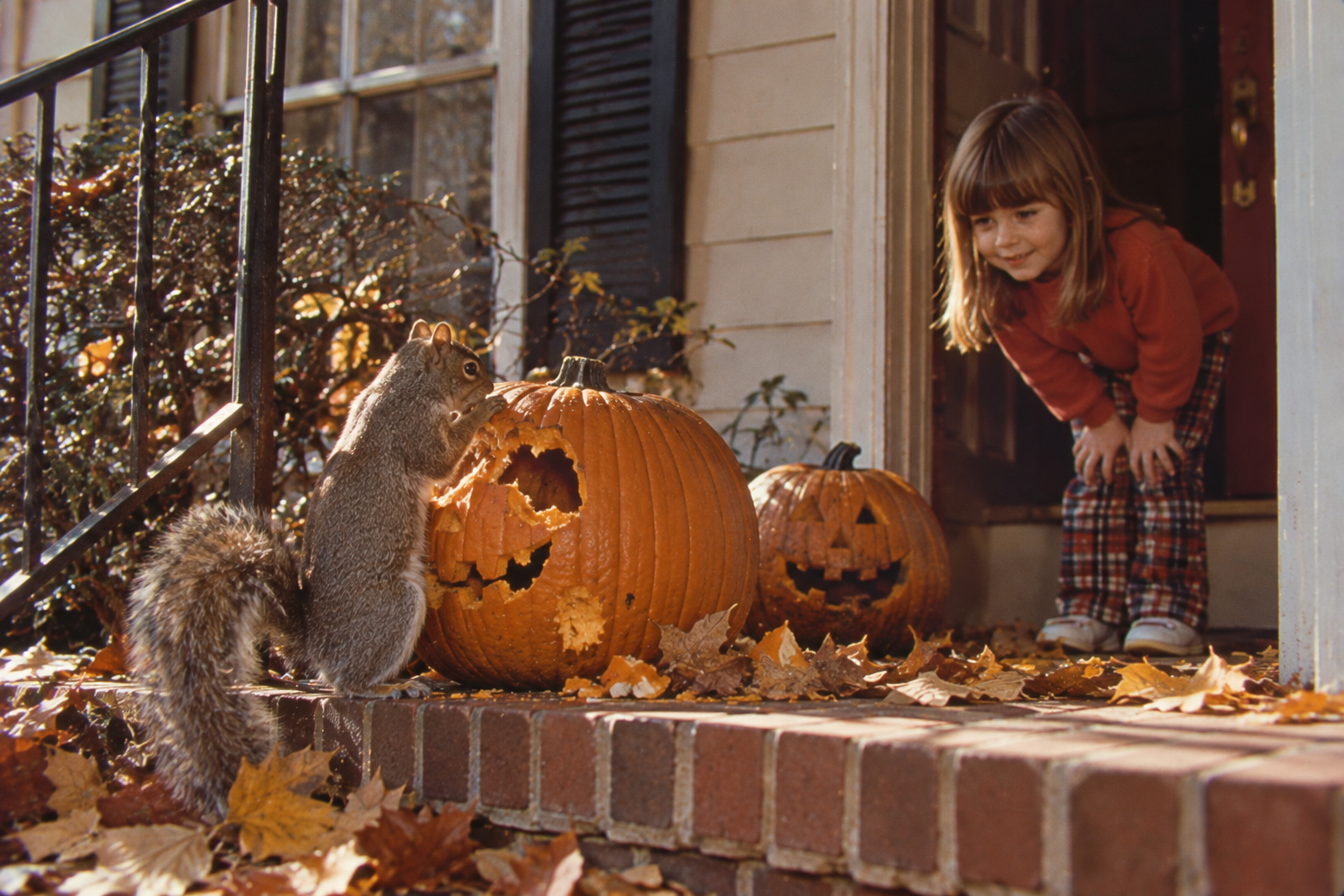
Sometimes families didn’t have to decide what to do with their Halloween pumpkins because the neighborhood wildlife got there first. Squirrels had a remarkable talent for discovering pumpkins left outside, and a jack-o’-lantern that looked perfectly normal one afternoon might have several new holes by the following morning. For kids, watching a squirrel nibble away at the pumpkin could be surprisingly entertaining, especially when the animal managed to completely transform its carefully carved face. Parents, however, were generally less enthusiastic about the mess. Squirrels weren’t the only potential visitors, either. Raccoons, deer, and other animals could also investigate outdoor pumpkins. Although these encounters happened naturally, deliberately dumping pumpkins in parks or wooded areas to feed wildlife isn’t recommended.
Burying the Pumpkin in the Family Vegetable Garden
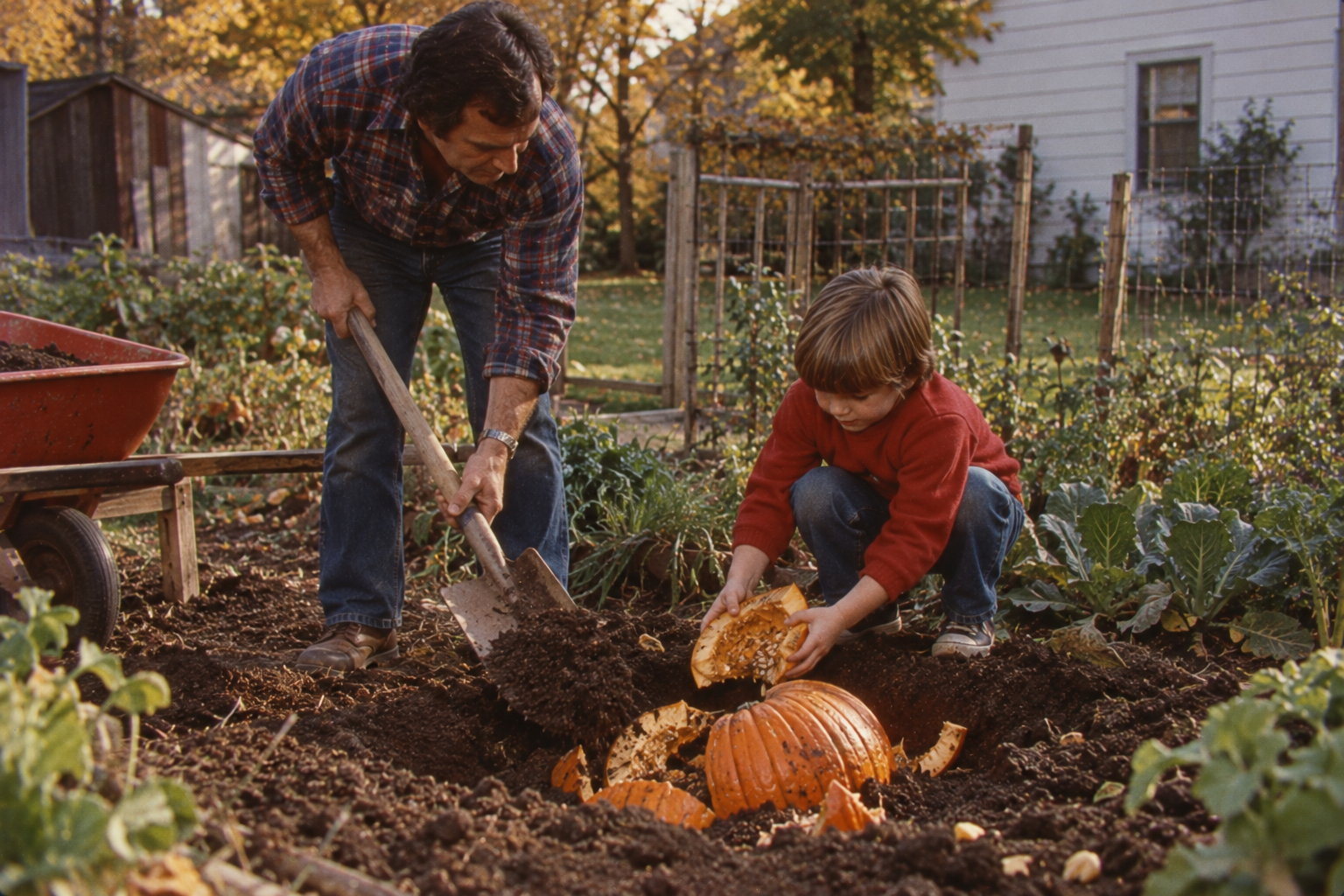
Not every family had a compost pile, but some gardening households still found ways to return their Halloween pumpkins to the earth. Instead of carrying the old jack-o’-lantern out to the garbage, someone might break it into smaller pieces and bury them in the vegetable garden, where they could gradually decompose. It was the kind of practical habit that made sense to people who were accustomed to using vegetable scraps and other organic material to improve their garden soil. Occasionally, the process produced an unexpected surprise. If a few pumpkin seeds survived, new vines might appear the following growing season, leaving someone wondering where those mysterious plants had come from. As with composting, this was something to do in a managed home garden rather than by dumping pumpkins in natural areas.
Sign up for our newsletter
Turning Old Pumpkins Into Makeshift Bird Feeders
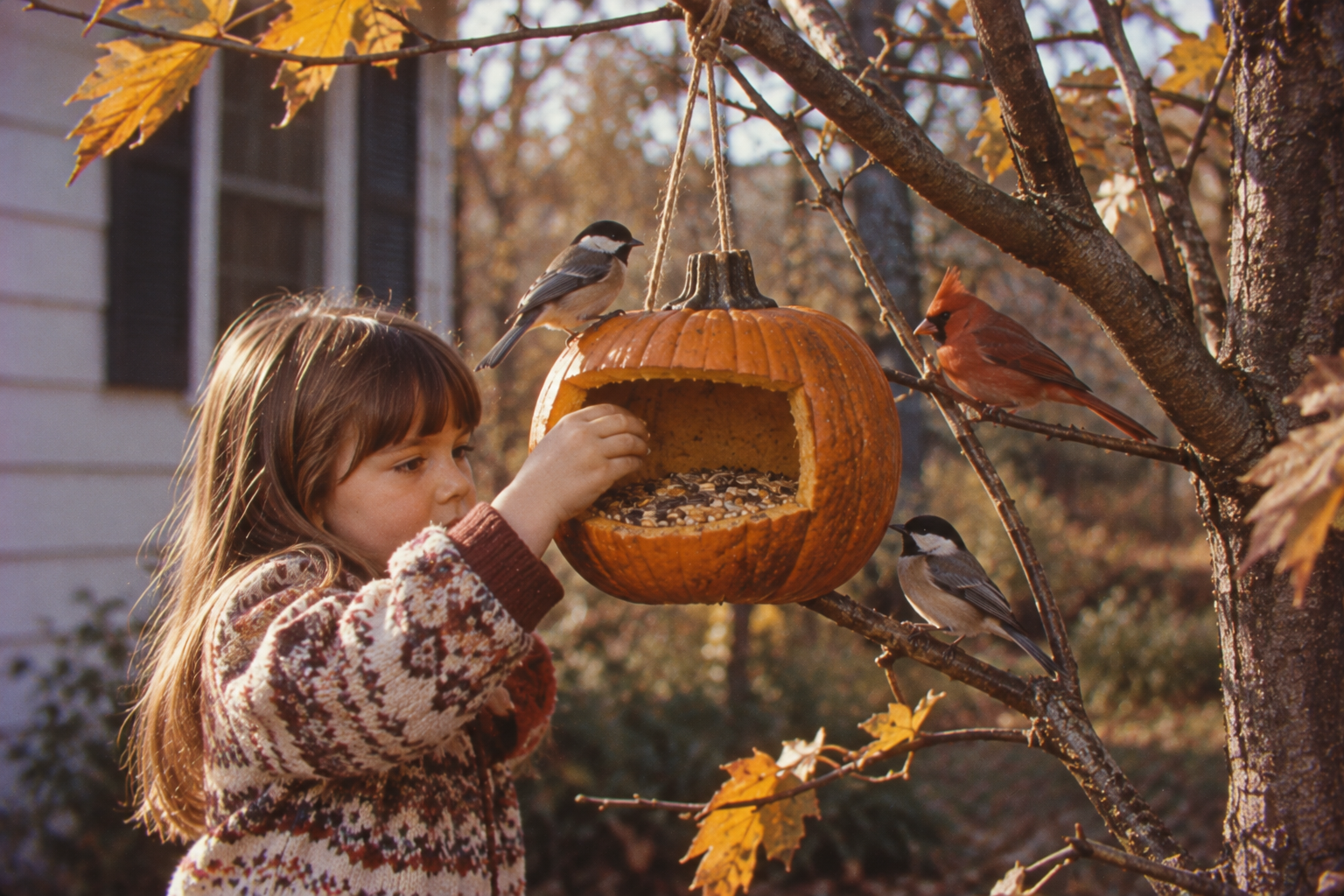
A hollowed-out pumpkin could occasionally find one last use as a temporary backyard bird feeder. Instead of throwing it away immediately, a family might fill a clean, sound pumpkin shell with birdseed and place it somewhere suitable for watching visiting birds. For children, it could turn an ordinary leftover decoration into a little nature-watching project, especially if they enjoyed identifying the birds that stopped by. This is better understood as an old-fashioned style of reuse than a tradition known to have been widespread during the 1950s through the 1980s. And there were some important limitations: The pumpkin needed to be free of wax, chemicals, and other decorations, and it had to be removed before it began to soften or develop mold.
Finally Hauling the Pumpkin Out With the Trash
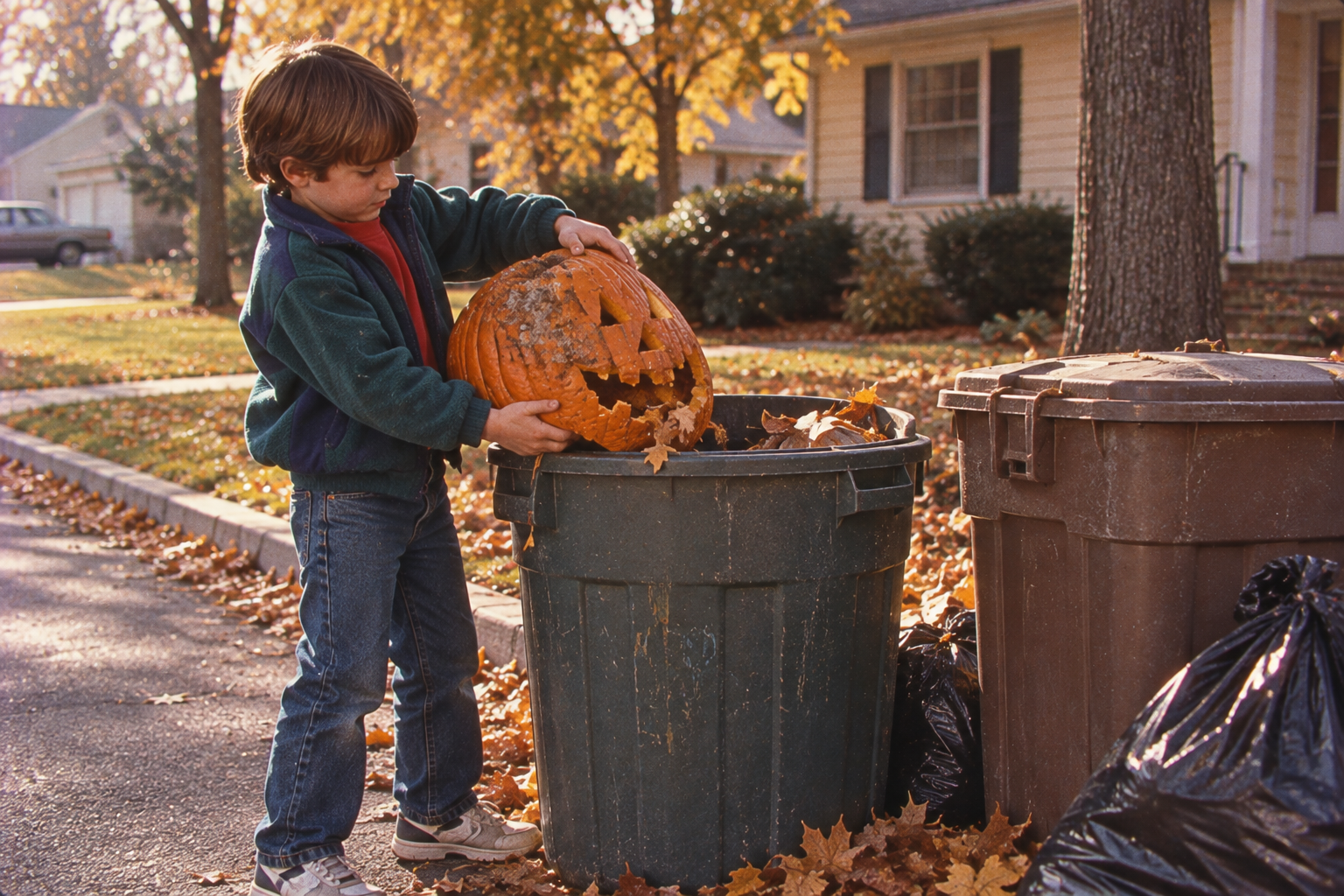
Of course, not every Halloween pumpkin became a homemade snack, garden fertilizer, or clever backyard project. Sometimes it simply sat outside until a parent finally announced that someone needed to throw the disgusting thing away. By then, the pumpkin might have developed a terrible smell, attracted insects, or become so soft that lifting it by the sides was out of the question. Getting rid of it could require a shovel, a sturdy trash bag, and a willingness to deal with something nobody particularly wanted to touch. For families without gardens or composting options, the garbage can was often the final destination. Today, composting is generally a better choice where it’s available, since organic waste decomposing in landfills can contribute to methane emissions. But for many kids, watching that last sagging jack-o’-lantern disappear into the trash was the moment Halloween was officially over.
When Halloween Pumpkins Had a Second Life
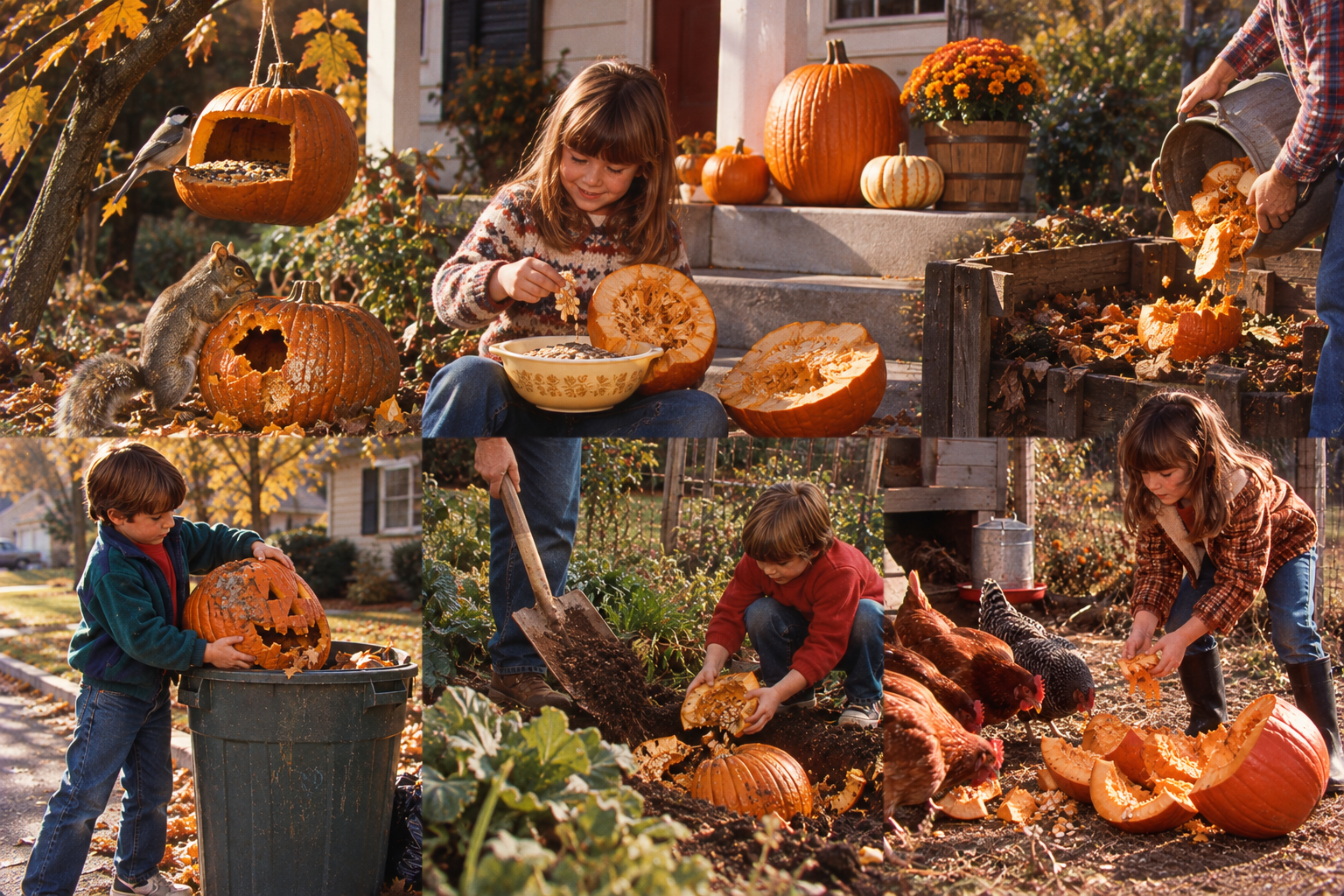
For families who grew up in earlier decades, Halloween pumpkins didn’t always disappear as soon as November arrived. Some became homemade pies and pumpkin bread, others ended up in backyard gardens, and a few were simply left outside until they collapsed into an unpleasant orange mess. Whether families were trying to avoid waste or just putting off another household chore, those pumpkins often remained part of everyday life long after the costumes had been packed away. And for anyone who remembers being assigned the job of cleaning up a rotting jack-o’-lantern, it’s probably one Halloween tradition they’re perfectly happy to leave in the past.