A few generations ago, the goal was to buy a home, save for retirement, and build wealth for the family. However, the economy has changed so much that these financial goals have shifted for newer generations according to the New York Federal Reserve and the National Association of Realtors. While every generation has its differences, younger ones are grappling with housing affordability, student loan debt, and more. We’ll reveal why these younger generations find it so difficult to keep their finances in order!
Homeownership Is Taking Much Longer to Reach

Owning a home has historically been a goal for many Americans, but accumulating the funds needed is a path way more complex for newer generations because they enter the market later. The National Association of Realtors reported that first-time homebuyers accounted for 21% of purchases in 2025, marking one of the lowest figures on record.
Rent Is Eating Up Money That Could Become a Down Payment

The lesson passed down from older generations to newer ones is that renting is a waste of money, funds that could instead go toward a down payment on a home of your own. However, saving to buy a property has become particularly difficult in recent years. The Federal Reserve has reported that 23% of renters fell behind on a rent payment at some point in 2025, a figure 2 percent points higher than in 2024, and 6 percent points higher than in 2021.
Student Debt Is Still Following Millions of Borrowers Into Adulthood

Emergency savings and student loans compete to be key financial goals for younger generations, alongside saving for a home down payment. The New York Fed reported student loan balances totaling $1.64 trillion in the second quarter of 2025. Student loan delinquency rates have increased and some millons of borrowers carry this debt well into adulthood.
Childcare Can Arrive Just as Families Are Trying to Build Wealth

The period when people begin to accumulate savings often coincides with the time young adults start families and face childcare costs, making their financial goals harder to achieve. According to the Department of Labor, there is significant variation between states in the amounts families pay for childcare, young children, and school-age children. Furthermore, the economic impact can be even more profound if parents reduce their working hours to care for a new child.
Everyday Prices Rose Faster Than Households Could Easily Adjust

Although inflation is not as high as it was during the pandemic, it has not yet returned to levels seen years ago. The Federal Reserve reports that 58% of adults stated that price changes in 2025 worsened their financial situation. However, this figure has improved, as 60% felt this way in 2024 and 65% in 2023. Real earnings improved in 2025 too, but the recovery was gradual, making some financial goals easier to pursue.
Trending on Cheapism

A Single Emergency Can Wipe Out Months of Progress

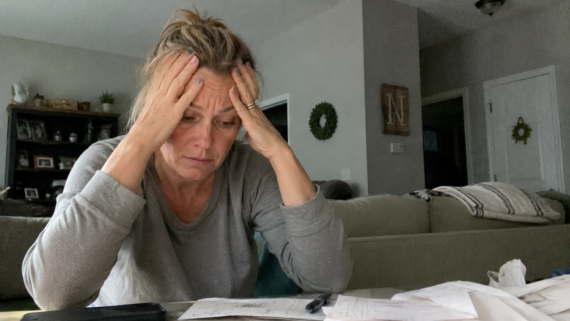
To regain purchasing power, income must be steady, allowing for some savings after all expenses are paid. The Federal Reserve reported that 59% of adults experienced at least one major unexpected expense in the last 12 months, such as vehicle repairs, appliance repairs, or medical costs. The downside of an emergency payment is that it can wipe out the progress made toward financial goals over several months of work overnight.
Credit Card Interest Makes Falling Behind Expensive

Credit cards offer short-term relief, but the debt accumulated through credit cards can quickly become a long-term burden, leading to a month-to-month existence and making financial goals harder to reach. According to the New York Fed, credit card balances in the United States reached $1.21 trillion in the second quarter of 2025. At the same time, credit card delinquency remained notable, with balances transitioning into 90-plus-day delinquency.
Cars Have Become Another Major Debt Payment

In many areas, having a vehicle at one’s disposal can be more of a lifestyle choice than a necessity for commuting to work, school, for shopping, as public transportation is available. According to the New York Fed, auto loan balances reached $1.66 trillion in the second quarter of 2025; additionally, 30% of car owners faced a major repair or replacement as an unexpected expense within the last 12 months, potentialy disrupting their financial goals.
Sign up for our newsletter
Medical Bills Can Compete with Saving Even for Working Adults

Healthcare-related expenses remain one of the most disruptive factors for Americans’ finances when trying to keep their households financially stable. The Federal Reserve found that 26% of adults skipped some form of medical care or treatment due to the cost in 2025, while 21% of adults faced major unexpected medical expenses over the previous 12 months, potentially derailing financial goals.
Early-Career Job Uncertainty Makes Long-Term Planning Harder

Planning for your professional future can provide greater financial stability and help you prepare for the challenges ahead. The Federal Reserve noted that concerns regarding finding or keeping a job increased in 2025 across various age groups, with young adults expressing the greatest overall financial anxiety. Furthermore, early-career workers had limited savings to fall back on should they face employment instability, making long-term financial goals more difficult to pursue.
Delayed Milestones Can Create a Compounding Disadvantage

Saving money right out of college is not the same as doing so when you are 40 and already established in your career. Money saved earlier has more years to compound. The fact that the median age of first-time homebuyers rose to a record 40, highlights just how far out of reach that financial goals, once a major achievement for previous generations, has drifted. Factors such as student loans, high rent, childcare costs, and emergencies now consume funds in ways that were less significant for previous generations.
Family Help Is Becoming a Bigger Part of the Financial Starting Line

The fact that young adults often cannot afford their own homes makes their family’s resources highly significant, as they might live with their parents, receive help with bills, or get assistance with purchasing a property. In the last years, young adults were substantially more likely than older adults to receive financial support from people outside their household, helping them achieve important financial goals.
Conclusion

The shift in the economic landscape for younger generations affects both current and future society, including older generations who may rely on younger adults financially. Younger adults are not universally worse off than previous generations; the problem, however, is that long-standing financial goals, such as homeownership, now arise at the same stage of life when significant wealth accumulation used to occur.