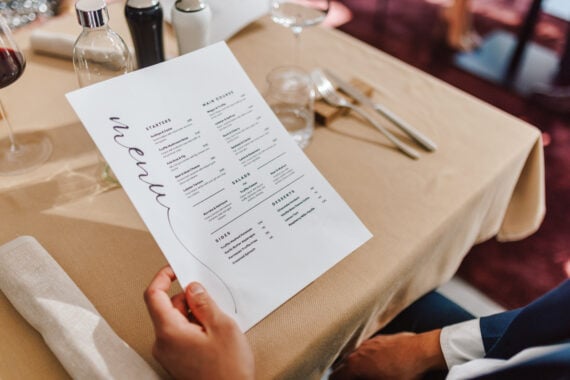
Restaurant menus can tell customers much more than just what food is available and how much each item costs. The way prices are displayed, the language used to describe dishes, and even small symbols can offer clues about how a restaurant sells its food and encourages customers to order it. By gathering information from Cornell Hospitality Research and Toast, we’ll reveal some of the restaurant menu tips so you can figure out what’s actually worth ordering!
Menus That Leave Off the Dollar Sign
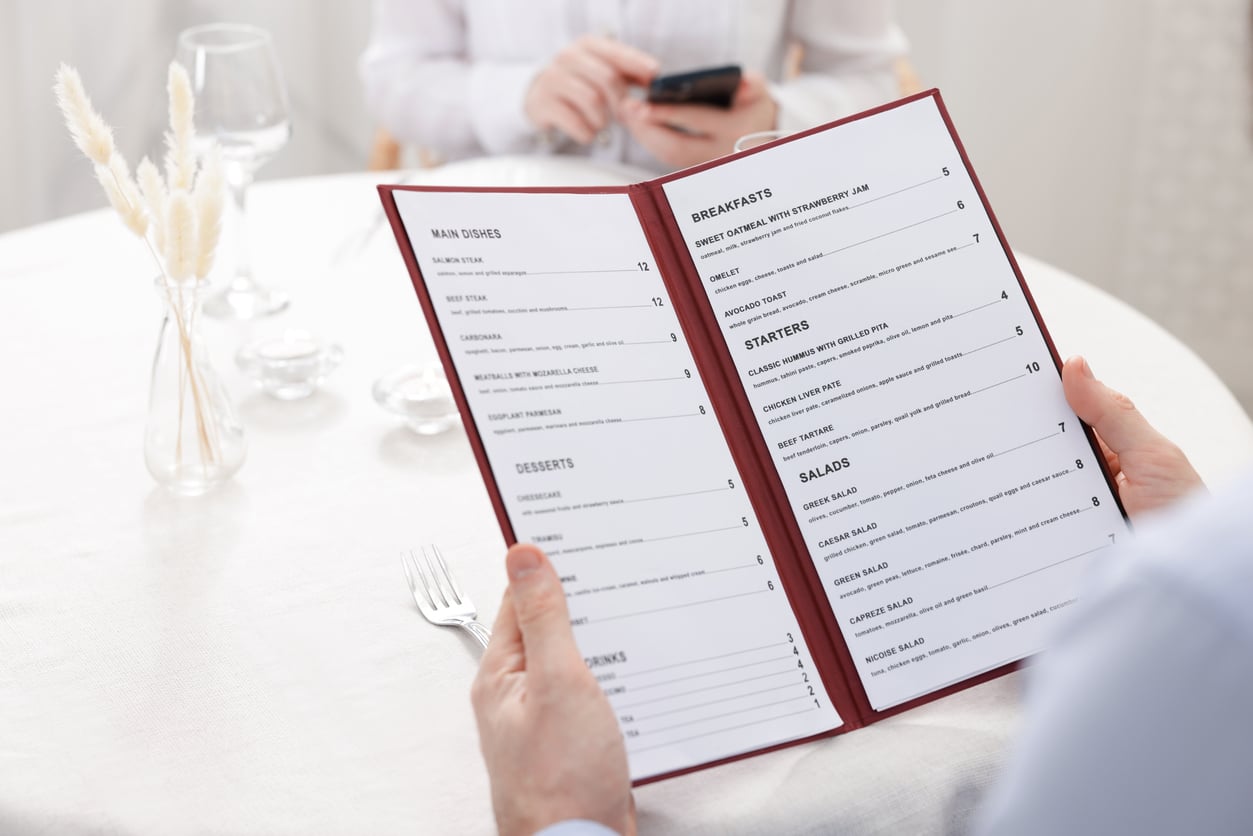
Some restaurants choose to display prices using only numbers, omitting the dollar sign. This decision is not merely stylistic. By removing currency symbols, customers become less conscious of the fact that they are spending money. A Cornell University study found that diners presented with prices without dollar signs spent approximately 8% more than those shown certain other price formats. These restaurant menu tips can help explain how small design choices may influence spending.
Dishes Surrounded by Boxes or Special Graphics

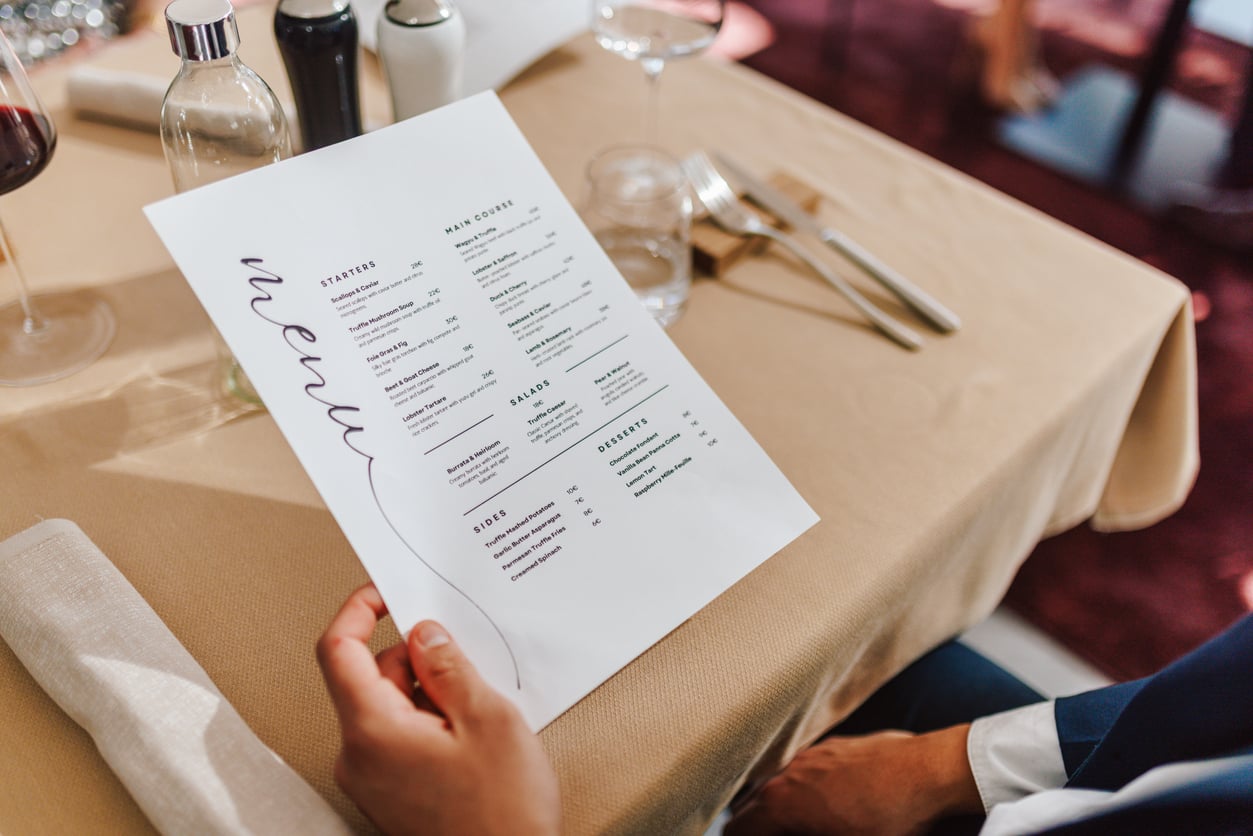
When dishes described on a menu feature borders, colored backgrounds, photographs, or prominent placement, it is the result of a deliberate strategy designed to make those items stand out and become popular. A highlighted dish might be a signature dish, a top seller, or an item that the restaurant wants the customer to notice. As these restaurant menu tips show, visual emphasis does not necessarily mean a dish is the best value.
Descriptions Packed with Tempting Adjectives
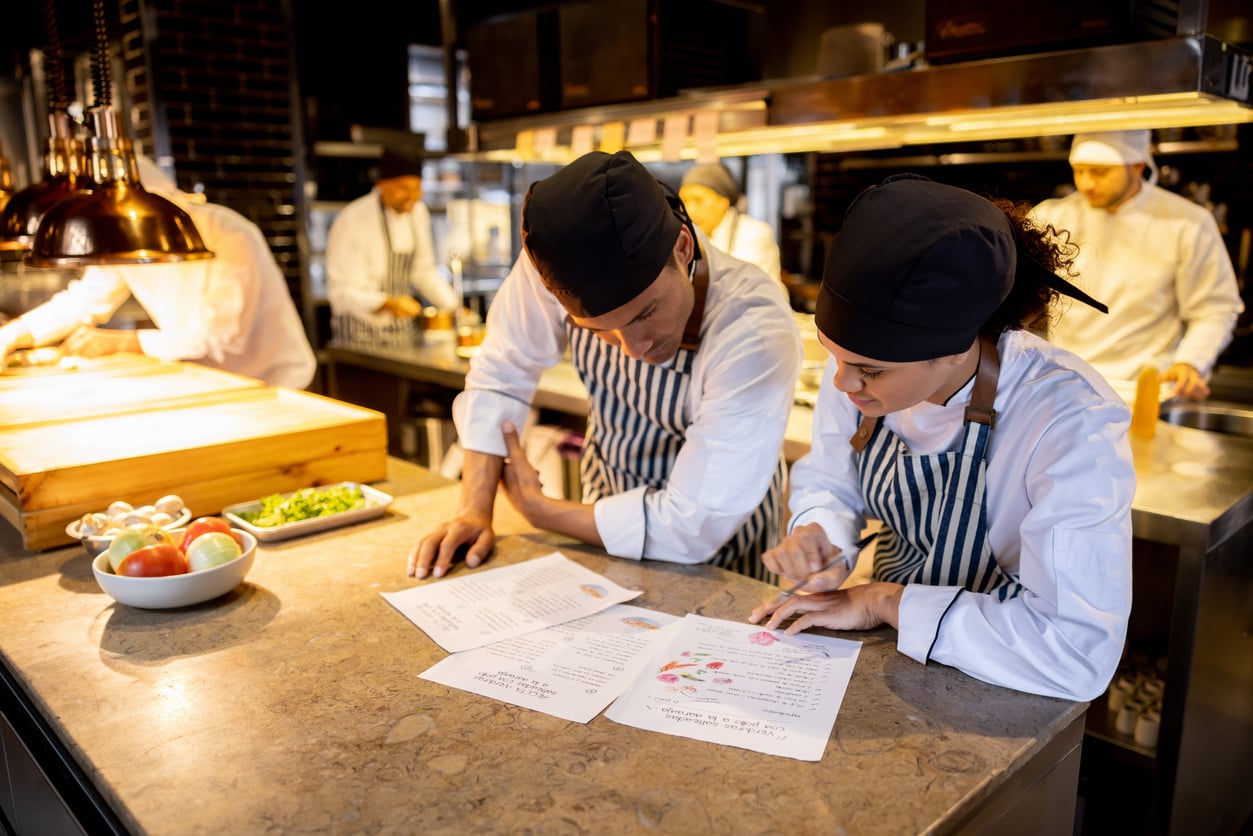
Terms such as “slow-roasted,” “handcrafted,” “buttery,” and “crispy” appear on menus and can make familiar dishes more appealing. Restaurants use these descriptions to convey specific qualities, but also to build anticipation before the food arrives at the table. A 2001 study conducted by the Cornell Hospitality Research specifically investigated how descriptive menu labels affected sales. These restaurant menu tips can help you recognize the persuasive language used to make a dish sound more appealing.
Seafood Dishes Listed at Market Price

You should know that when you see “market price” on a menu instead of a fixed price, it means the restaurant adjusts what it charges based on current market conditions. This often applies to items like lobster, crab, oysters, and certain types of fish. This doesn’t necessarily mean the meal will be cheap or expensive. Rather, it means the price may fluctuate with market conditions, and some seafood is priced by weight, which can affect the final bill. These restaurant menu tips can help you avoid unexpected costs.
Steaks Priced by the Ounce
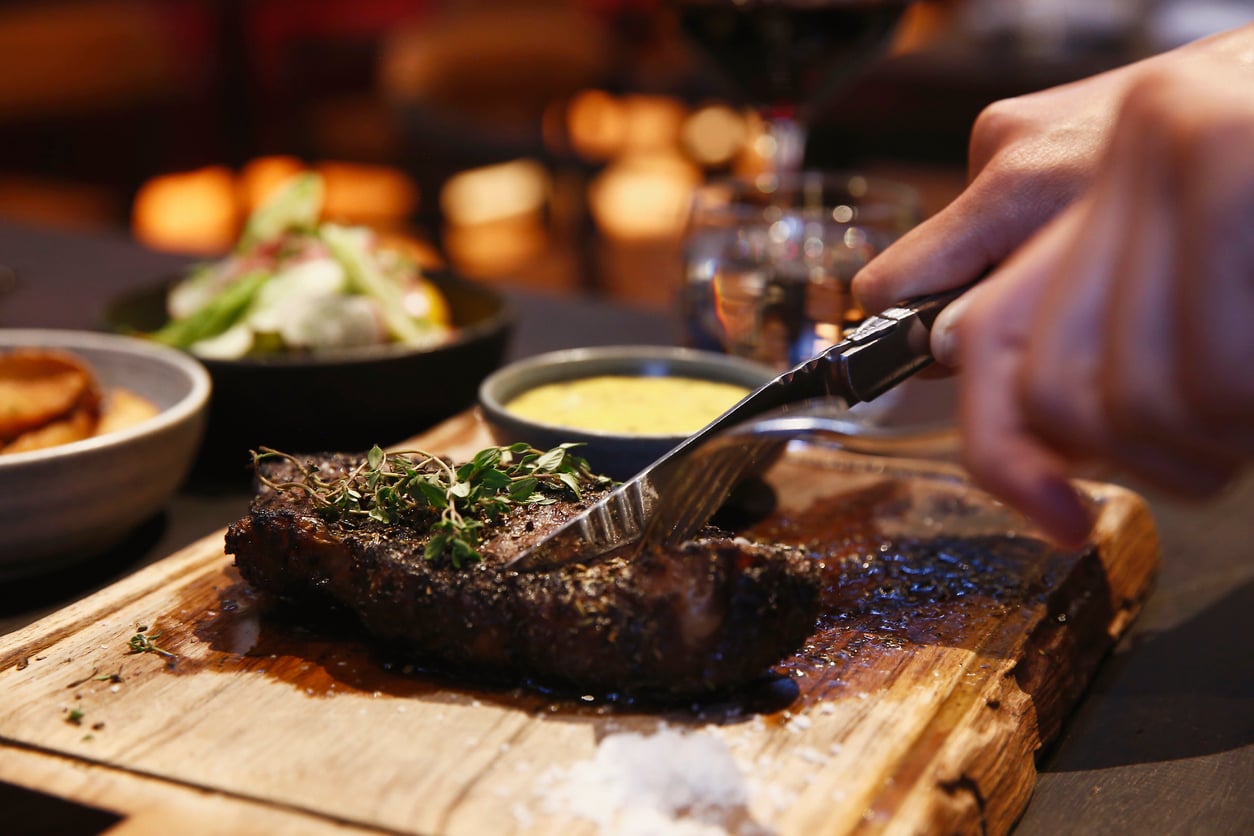
At steakhouses, you may encounter a different menu pricing structure on the menu: prices per ounce for specific cuts, rather than a fixed price for an entrée. Large steaks that carry a significant price tag can end up costing more than the initial figure listed for a dish. If customers understand the difference between a fixed-price steak and a market-priced, weight-based cut, they will be able to estimate the total cost before placing their order.
Trending on Cheapism


Family-Style Meals with Per-Person Prices

A restaurant offering family-style dining may advertise a fixed price per person rather than charging for individual dishes. This type of meal can be convenient when dining in a group, but the total cost increases with each additional person. Customers should verify whether the group meal includes multiple courses, shared dishes, unlimited refills, or any other additional costs. These restaurant menu tips can help groups understand what their meal actually includes.
Side Dishes That Aren’t Included in the Entrée Price

Some side dishes may not be included in the entrée price. Be careful, because these charges could add up to a significant cost once the entire meal is put together. A menu could advertise a main course at an attractive price but list vegetables, potatoes, salads, and sauces separately. Look for terms like “à la carte” or “choice of one side” to identify them. Among these restaurant menu tips, checking the side-dish pricing is an easy way to avoid surprises.
Small Print About Service Charges and Gratuities

Some restaurants may disclose automatic gratuities, banquet service charges, or other fees in the fine print near the bottom of a menu. These details can substantially alter the total amount customers pay at the end of their meal. Furthermore, diners should distinguish between an automatic service charge and a voluntary tip. Disclosure requirements for service charges and other fees vary depending on federal, state, and local laws, according to the Federal Trade Commission.
Sign up for our newsletter
The Asterisk Beside Burgers, Steaks, and Seafood
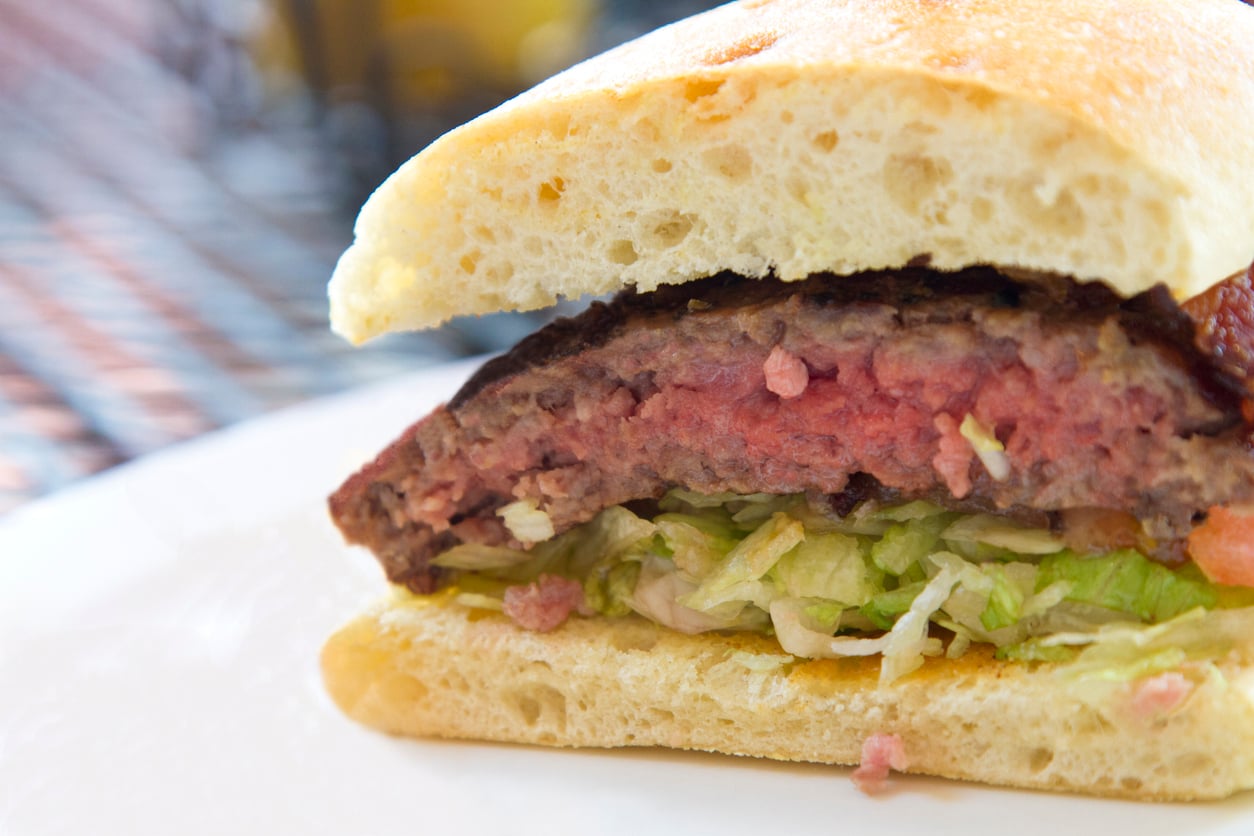
The appearance of an asterisk next to certain menu items may indicate that the food is raw or undercooked. From rare burgers, undercooked eggs, raw shellfish, and certain seafood dishes, those items may be identified as such within the menu descriptions. You should read the accompanying footnote before ordering, because these foods may pose risk for certain people. These restaurant menu tips can help you recognize important food-safety notices.
Calorie Ranges That Are Much Wider Than Expected
The FDA imposes rules requiring certain chains with 20 or more locations to display the calorie counts for standard menu items. If a dish can be served in various combinations, the restaurant must display a range rather than a single figure. Consequently, a sandwich or combo meal might be listed as having 600 to 1,200 calories, a range that could influence choices regarding side dishes, beverages, or portion sizes. These restaurant menu tips can help you interpret calorie information when it is provided.
Seafood Names That Don’t Tell the Whole Story
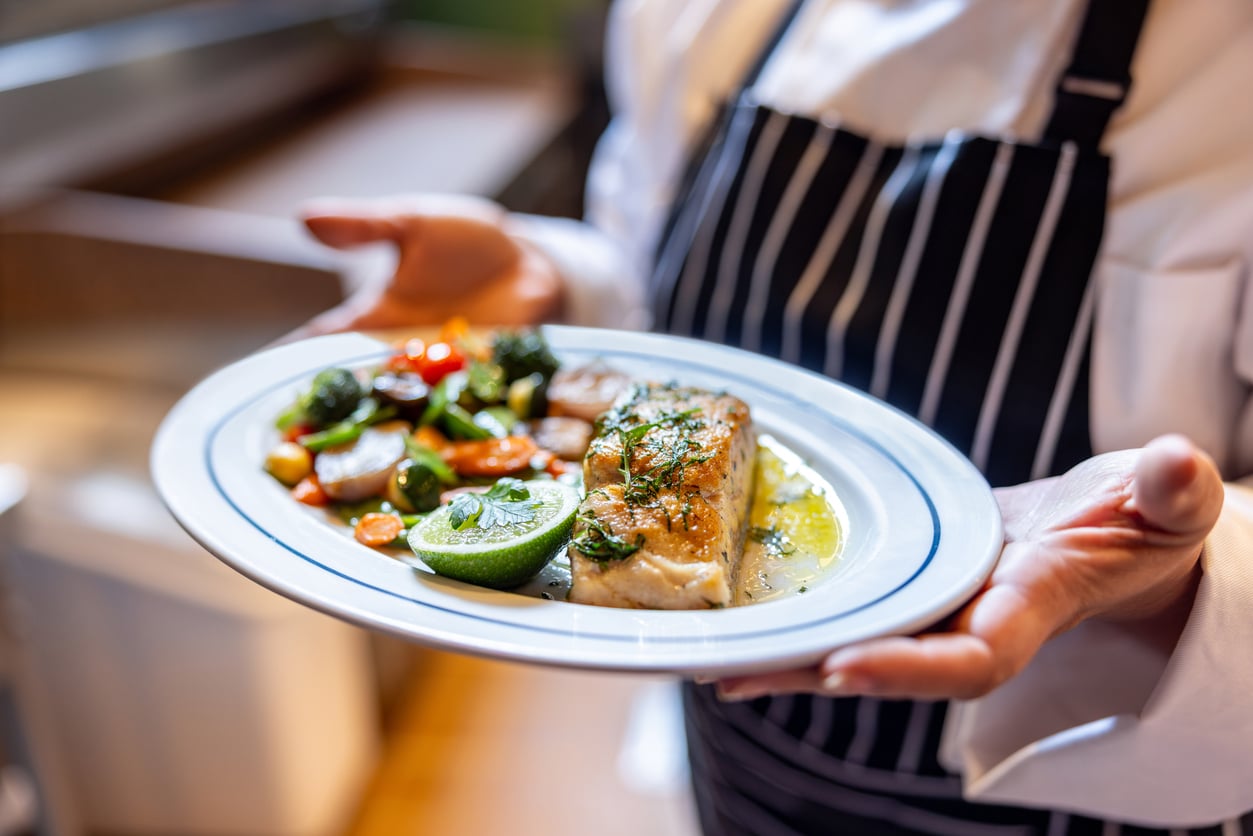
You might not find details, such as the origin, handling, or whether it was previously frozen, for a dish containing fish, whether it is snapper, grouper, or another species. Yet, such information could be important to a customer when choosing their meal. NOAA warns that the substitution of seafood species is a genuine industry problem, and notes that vague menu descriptions do not necessarily prove that a restaurant is misrepresenting its food. These restaurant menu tips can help you ask more informed questions about seafood.
USDA Prime and Other Steak Descriptions
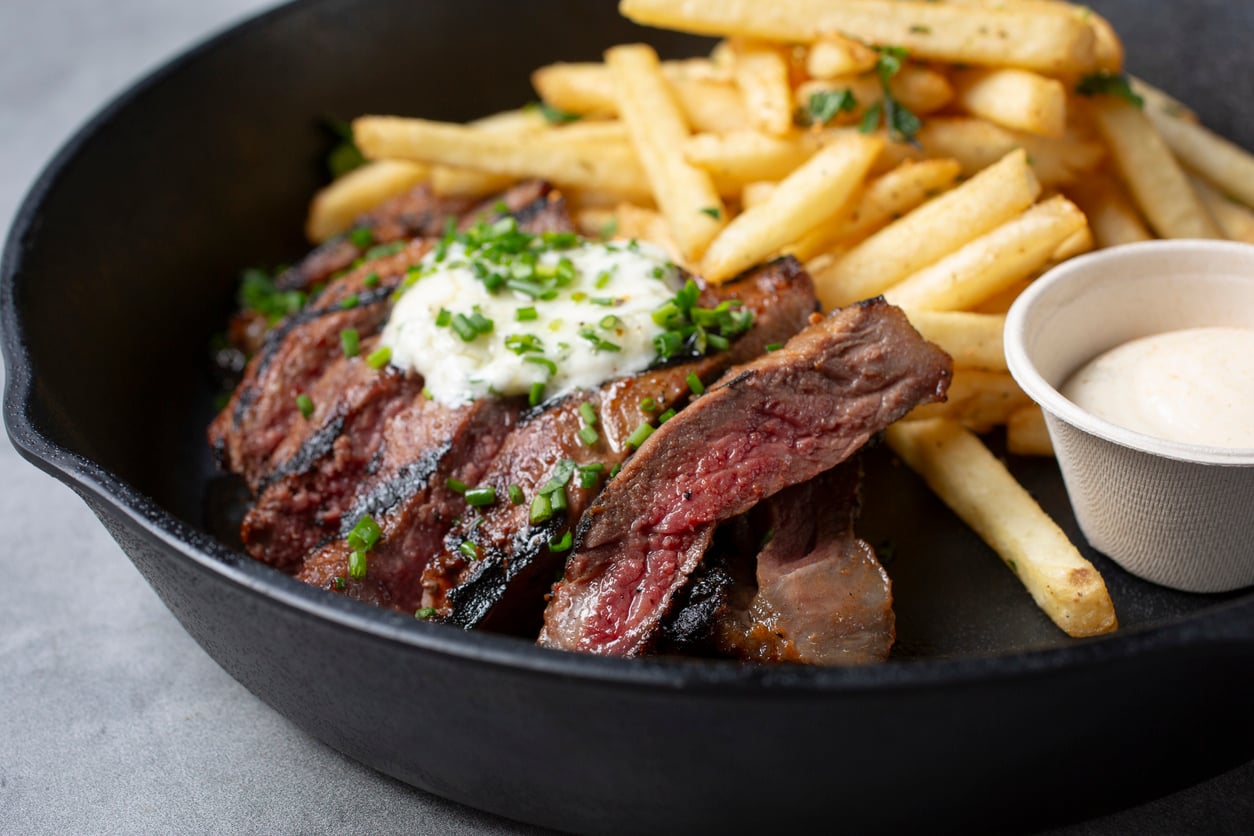
When a customer is presented with a steak whose description includes terms like “USDA Prime,” “Choice,” “dry-aged,” and “grass-fed,” this provides information about the meat. USDA Prime and Choice are formal beef quality grades associated with factors including marbling. Dry-aged describes a preparation process, while grass-fed describes how cattle were raised or fed. These restaurant menu tips can help you distinguish between quality grades, preparation methods, and feeding claims.
Conclusion

Because of all the cues a restaurant menu can provide, it is clear that these are more than just simple lists of food. Through their design, pricing, and terminology, they offer additional information about the dish you are about to order. By applying these restaurant menu tips, you can anticipate what will arrive at your table and truly enjoy the meal that best suits your preferences.