Walk into a typical American office in the 1970s and you’d hear it before you noticed much else: typewriters clattering, desk phones ringing, adding machines clicking, and filing cabinet drawers slamming shut. This was an era when nearly every part of office work had a physical counterpart. Contacts lived on cards, memos traveled by hand, and making a copy could involve carbon paper rather than a keyboard shortcut.
The décor was equally hard to miss. Woodgrain desks, metal filing cabinets, fluorescent lights, and a sea of brown, orange, beige, and avocado green made plenty of workplaces look unmistakably of their time. And yes, there was a decent chance someone was smoking at their desk.
Put all those details together, and an old workplace photo becomes surprisingly easy to date. Here are 12 things that could instantly transport former office workers back to a 1970s office.
An IBM Selectric Typewriter
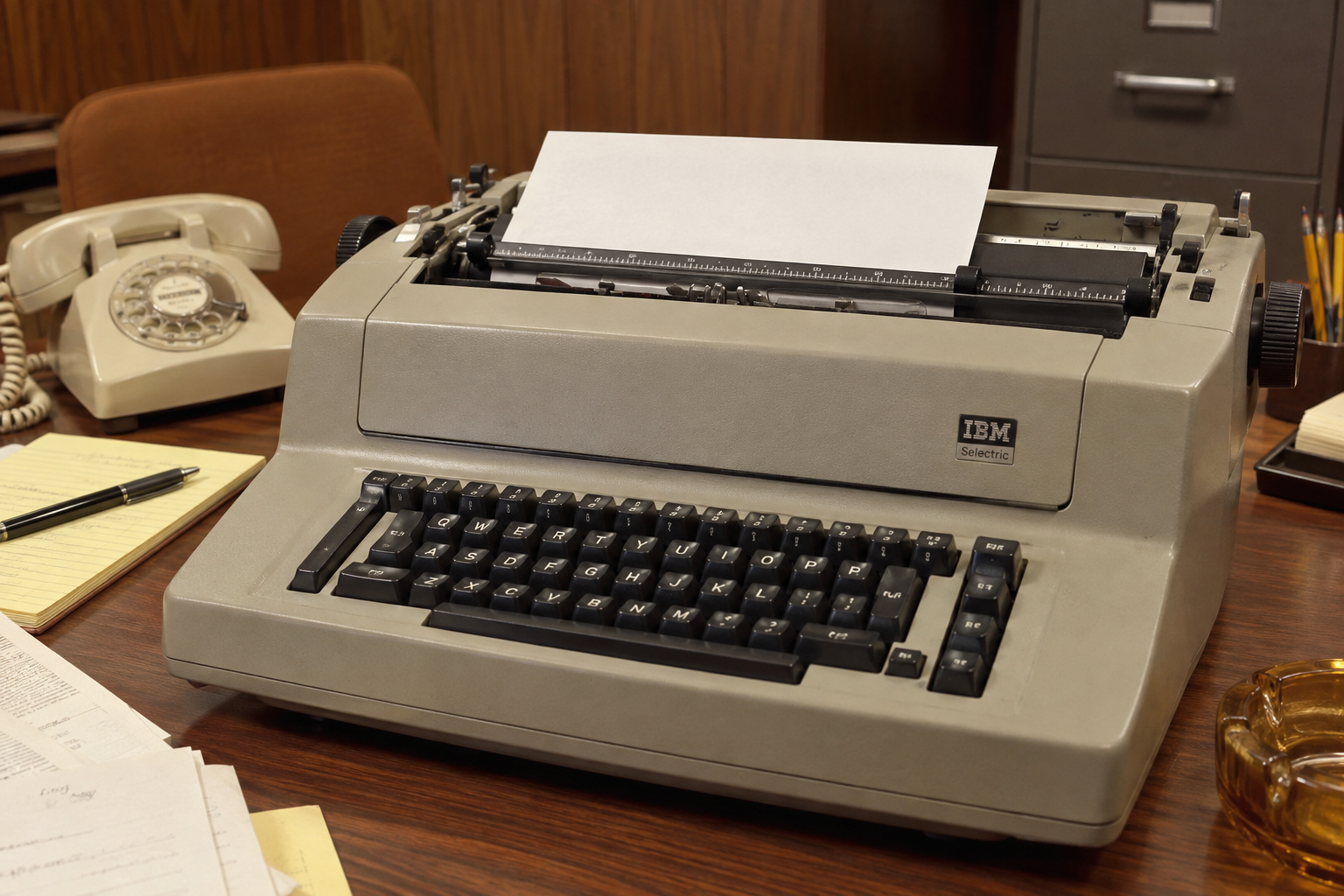
Few sounds defined office work quite like the rapid clatter of an electric typewriter. IBM introduced the Selectric in 1961, replacing traditional typebars with its distinctive golf-ball-shaped typing element, and the machine became a fixture in American workplaces. By the 1970s, secretaries and typists could even swap out typing elements to change typefaces or add special characters. Correcting a mistake was still considerably more involved than hitting backspace, but at the time, the Selectric felt remarkably sophisticated.
A Rotary or Push-Button Desk Phone
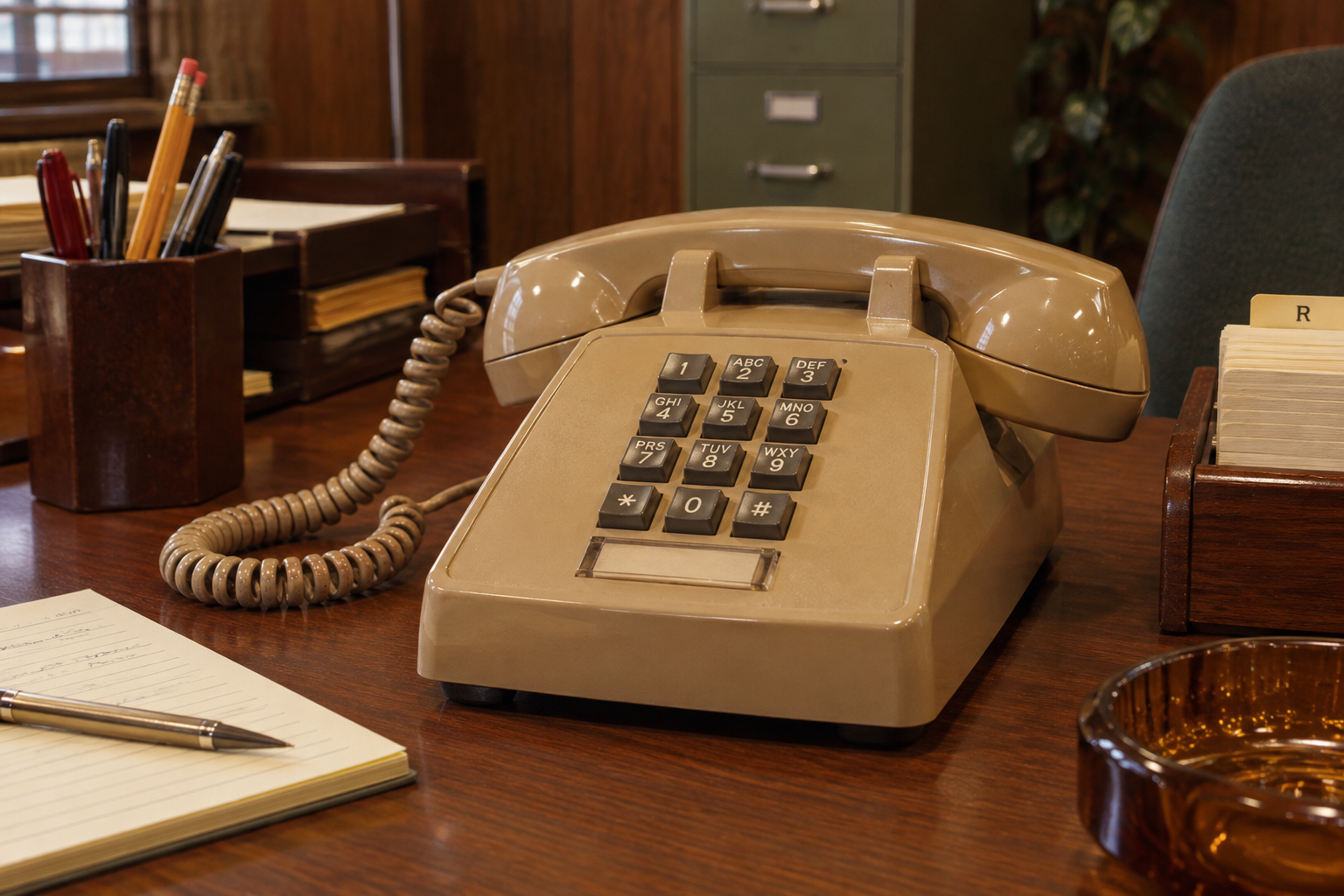
There was no slipping an office phone into your pocket and heading to lunch. Telephones were substantial pieces of equipment planted firmly on desks, with long coiled cords that determined exactly how far you could wander during a call. Rotary phones remained familiar even as push-button Touch-Tone models became increasingly common. Between extension numbers, handwritten message slips, and receptionists transferring calls, answering the phone could be an office workflow all its own.
Metal Filing Cabinets Everywhere
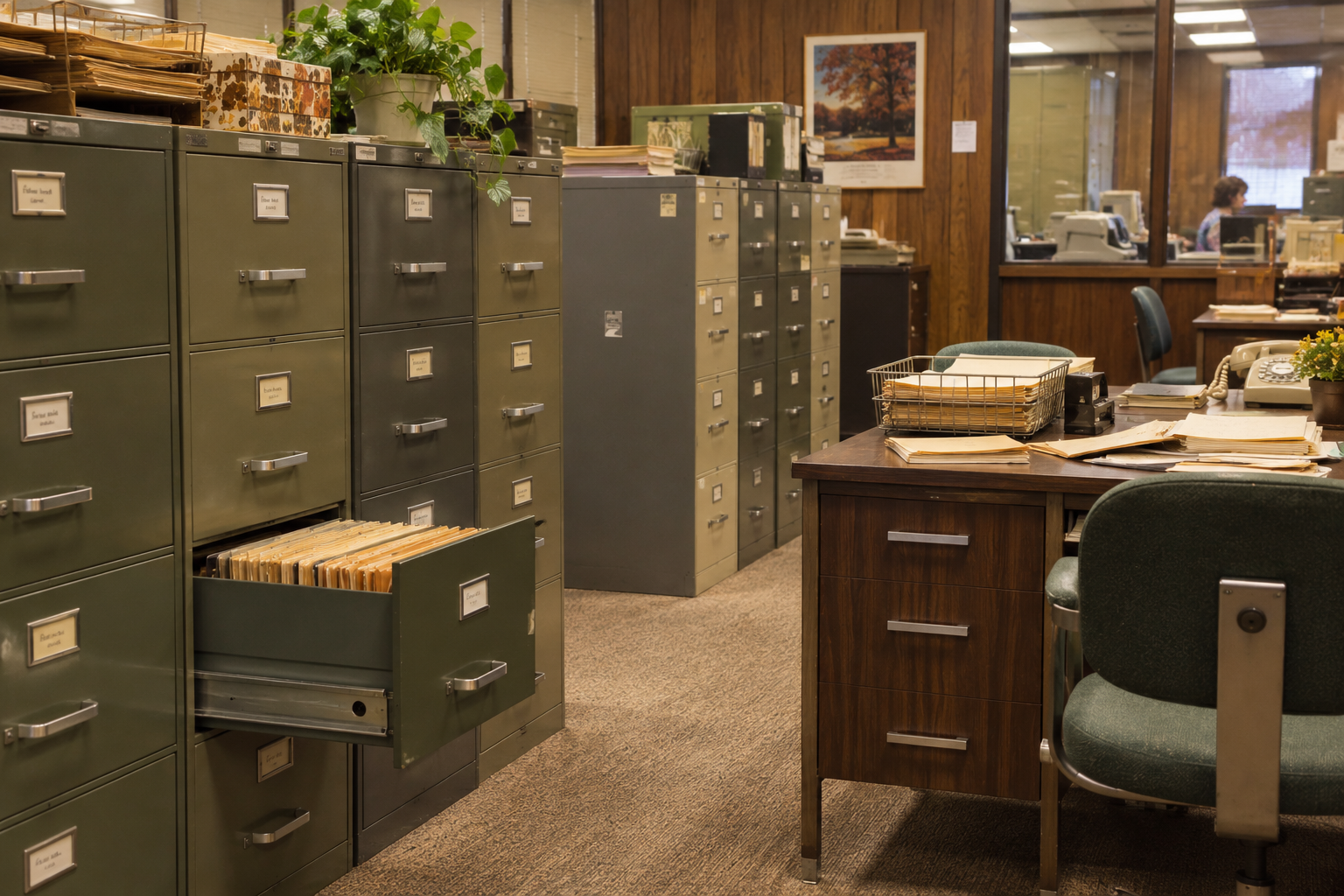
Before searchable PDFs and cloud storage, the office database was essentially a room full of paper. Contracts, invoices, correspondence, employee records, customer information, and countless memos all needed somewhere to go, which meant filing cabinets could occupy an astonishing amount of floor space. Workers spent plenty of time labeling folders, alphabetizing records, and wrestling with drawers packed almost too tightly to close. Losing a document didn’t mean searching your inbox; it could mean physically digging through years of paperwork.
An Ashtray on the Desk
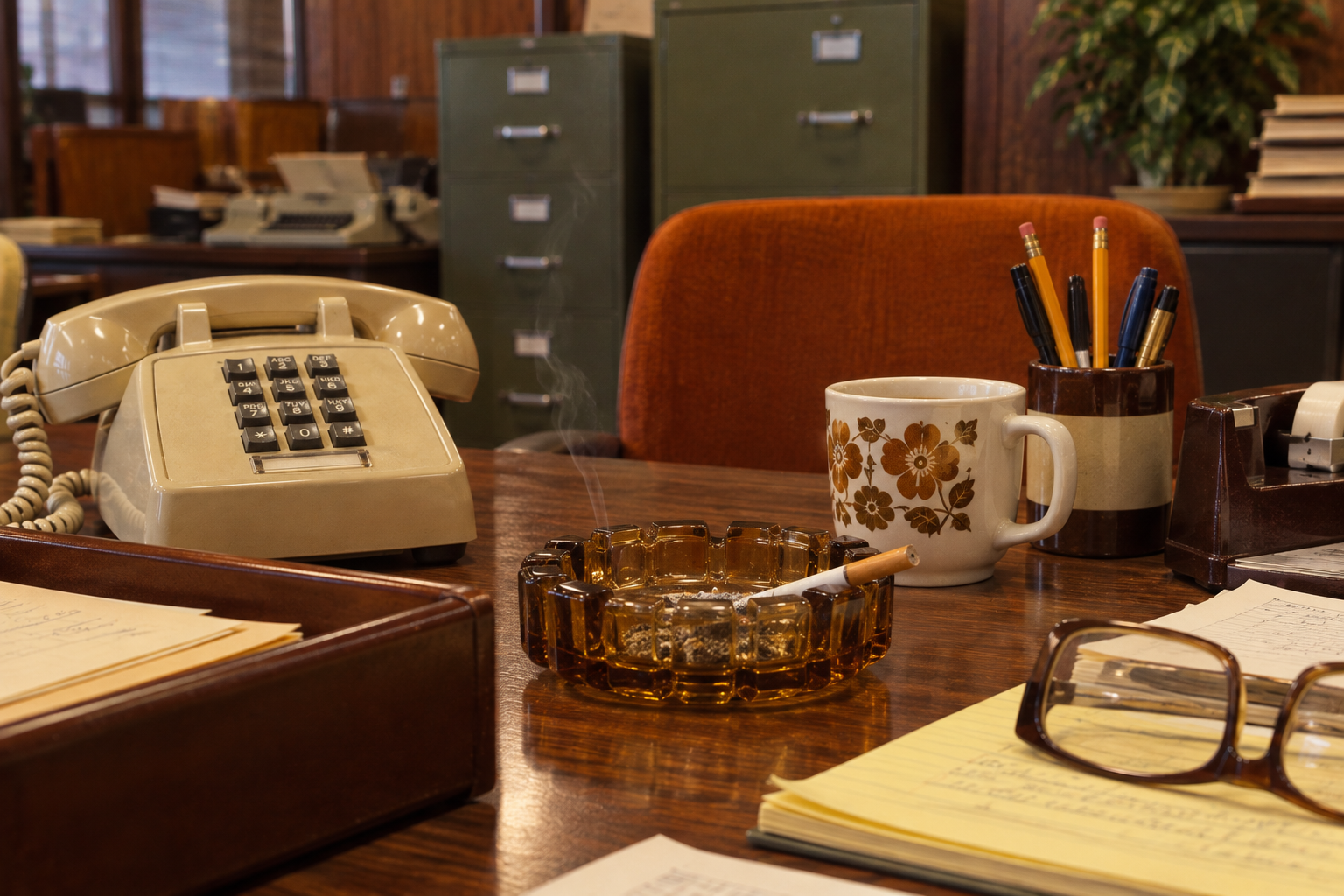
One detail in vintage office photos can look particularly strange today: ashtrays sitting right beside telephones and paperwork. Smoking was still a routine part of workplace life for many Americans in the 1970s, and cigarettes could make appearances at desks, in break rooms, and even around conference tables. Decorative glass or metal ashtrays weren’t necessarily hidden away, either. They could simply be another desk accessory alongside the stapler and telephone.
A Rolodex Stuffed With Contacts
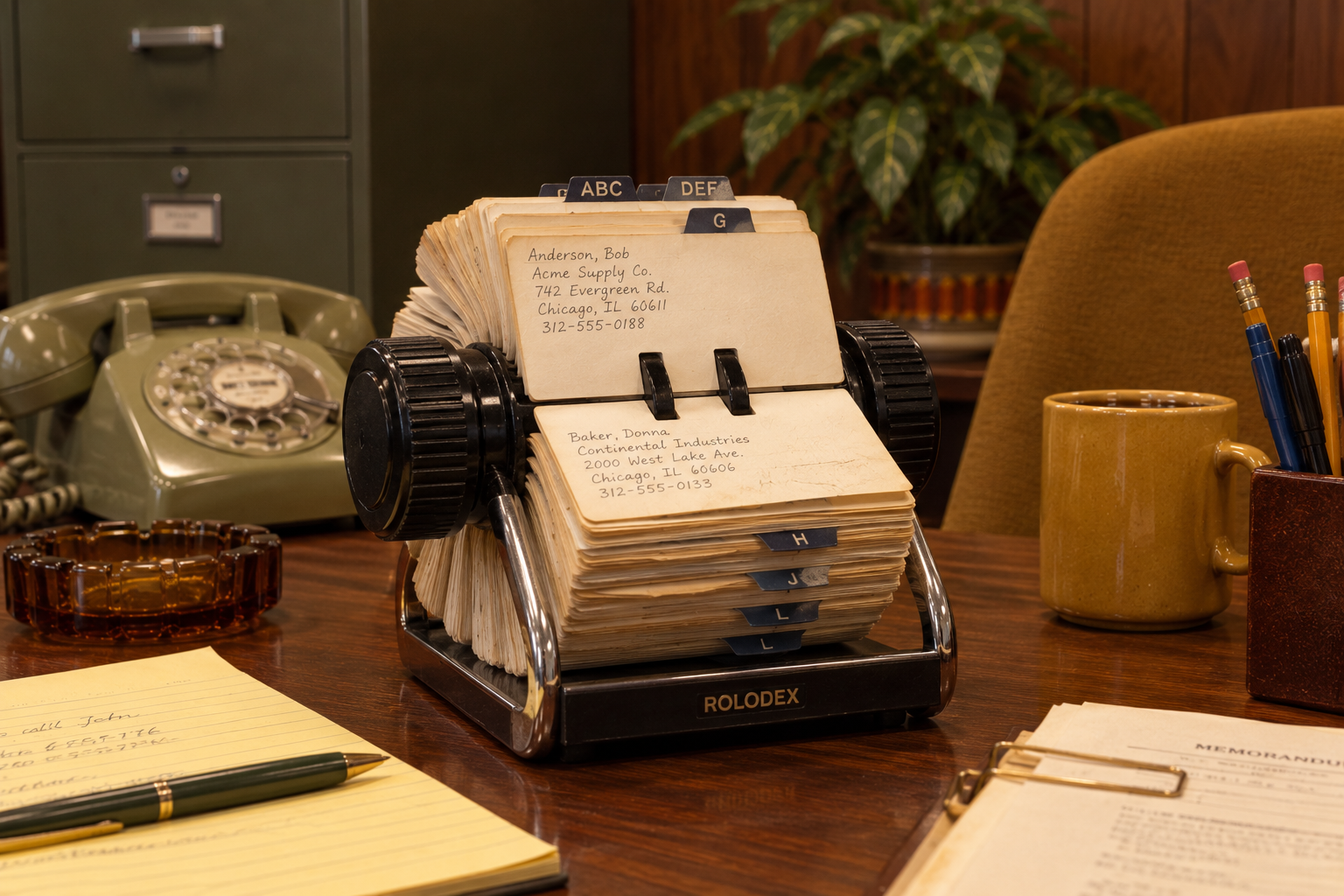
Networking involved considerably more flipping in the 1970s. A Rolodex gave workers a rotating collection of cards for keeping names, companies, addresses, and phone numbers within easy reach. Frequently used cards might accumulate crossed-out numbers, replacement addresses, extensions, and handwritten notes over the years. The Rolodex became so closely associated with professional connections that having a “big Rolodex” eventually became shorthand for knowing a lot of useful people.
Trending on Cheapism


Carbon Paper and Multi-Part Forms
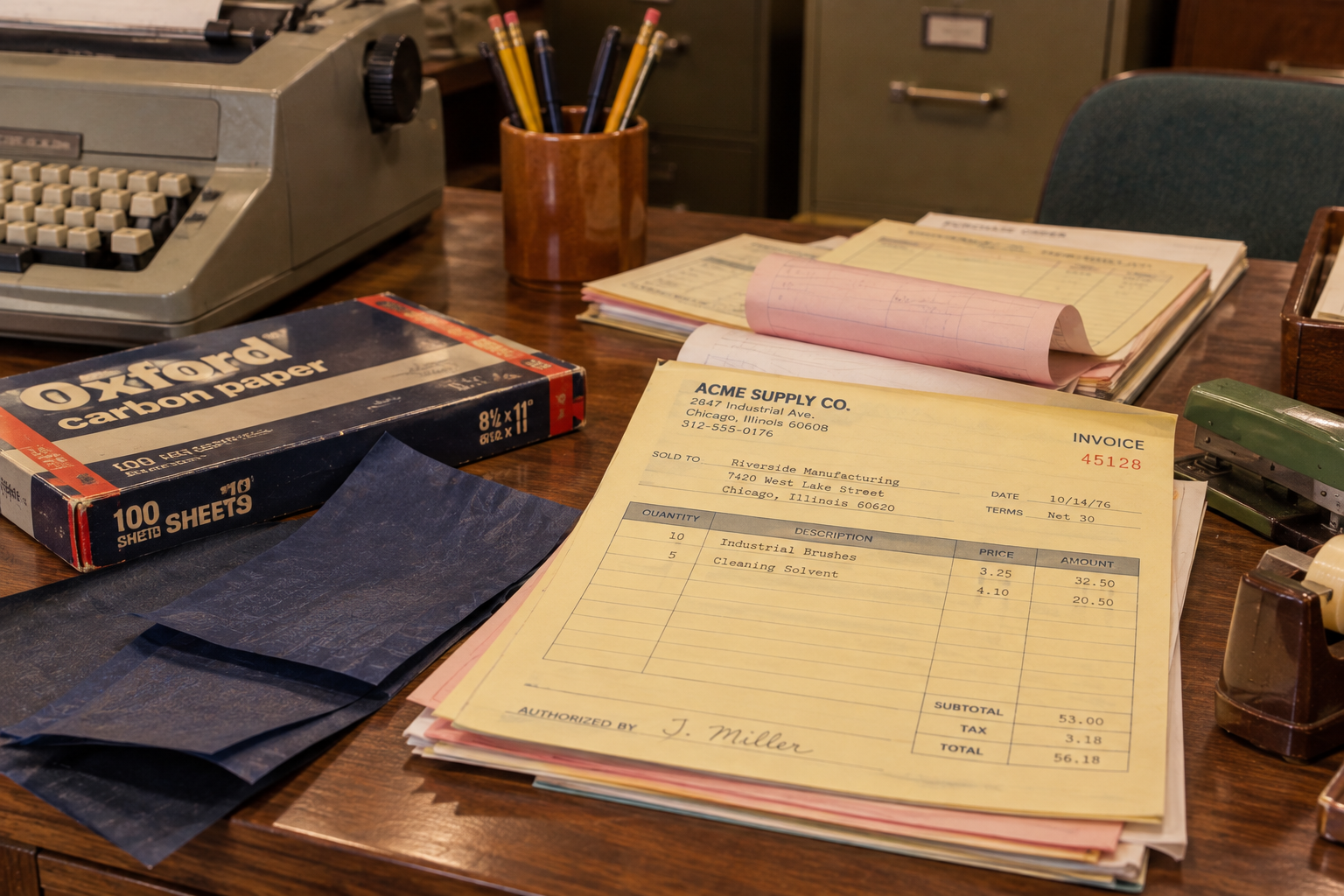
Need another copy? Before clicking “duplicate,” you might have sandwiched a sheet of carbon paper between two pieces of paper and typed through all of them at once. Carbon copies and multipart forms were routine tools for producing invoices, receipts, orders, and other business records without individually retyping them. They could also leave dark smudges on fingers and anything else they touched. One tiny remnant of the practice is still sitting in your email today: “CC” originally meant “carbon copy.”
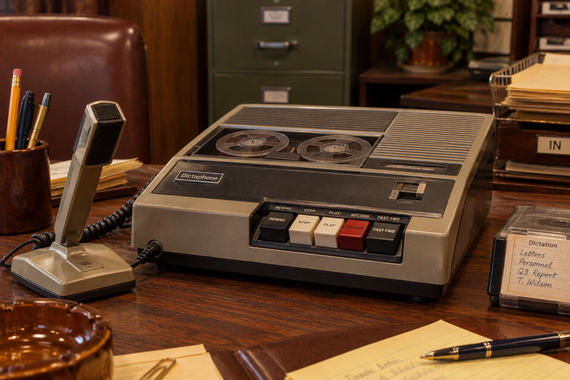
A Dictation Machine
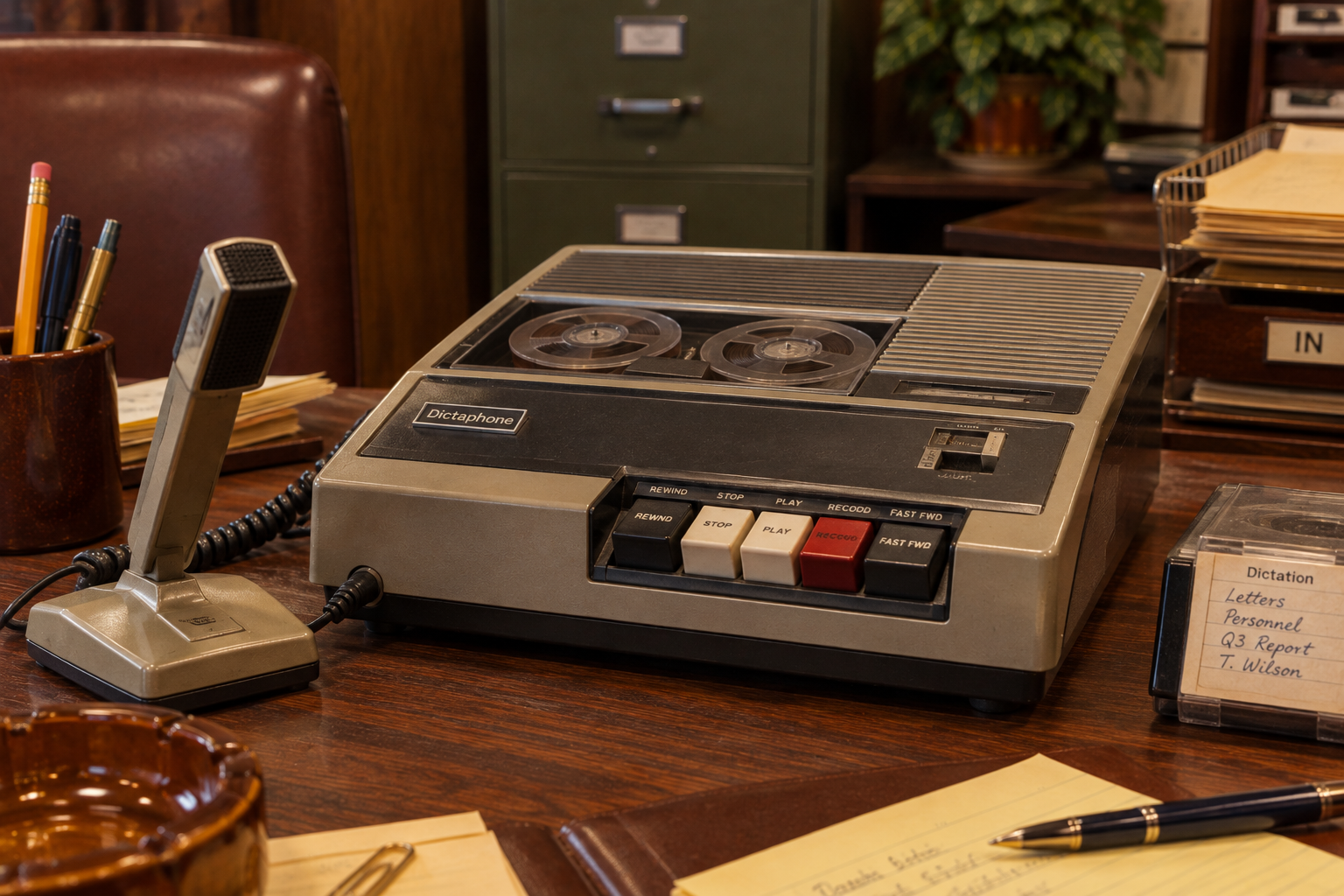
Typing wasn’t necessarily something executives and other professionals did themselves. Someone could dictate a letter, memo, or report into a recording device, then hand the recording over for a secretary or transcriptionist to turn into a typed document. Magnetic tape and increasingly compact recorders made the process more convenient by the 1970s, but it still reflected an office culture in which composing a document and physically typing it could be two entirely separate jobs.
A Huge Adding Machine or Desktop Calculator
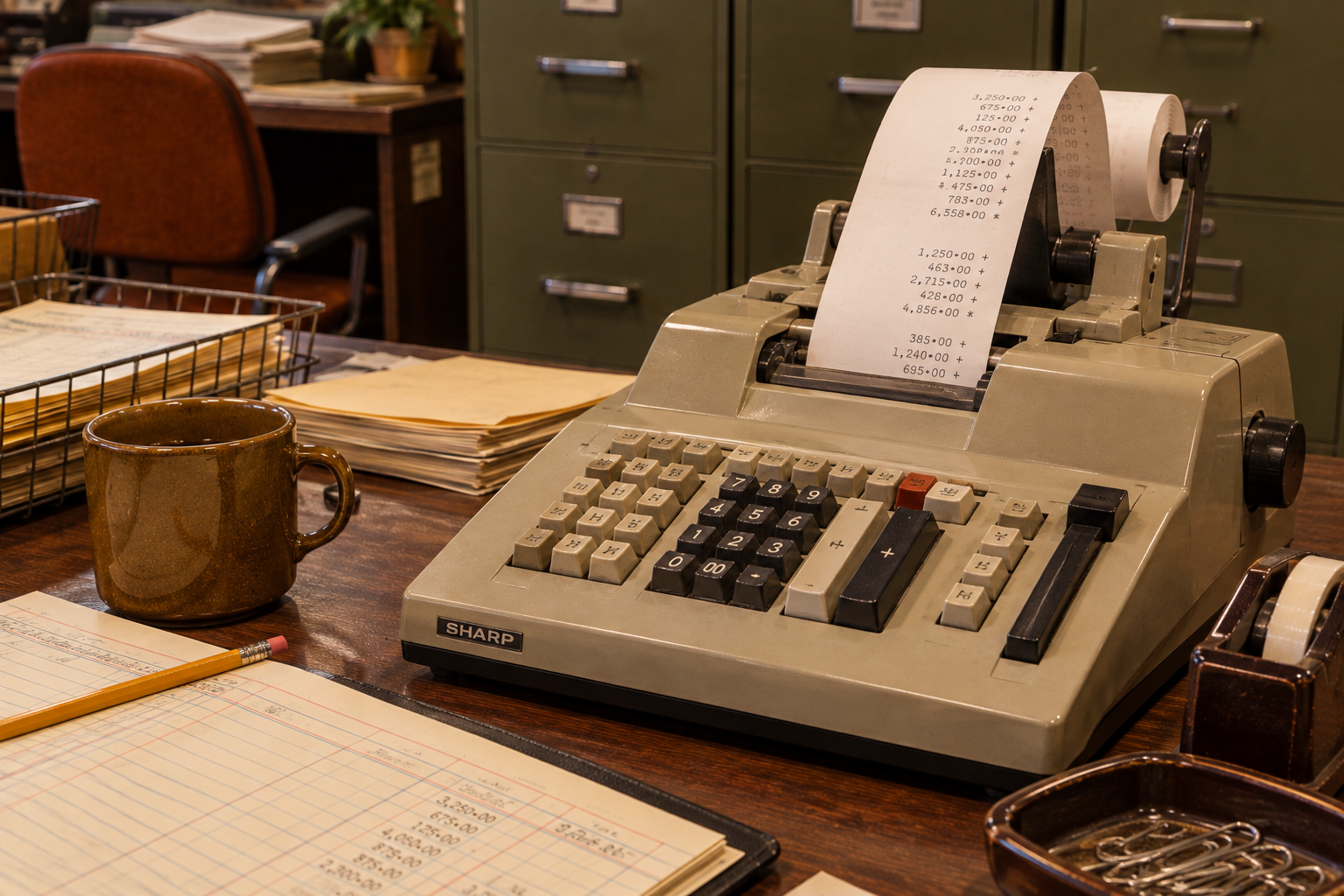
The calculator on your phone would have looked impossibly futuristic beside some of the machines occupying 1970s desks. The decade was a transitional period when electronic calculators increasingly replaced older mechanical adding machines, but office models could still be bulky pieces of equipment. Many included paper rolls that produced a printed record of each calculation, accompanied by plenty of clicking and whirring. For accounting and bookkeeping departments, those curling strips of numbers were part of the scenery.
Sign up for our newsletter
Woodgrain Desks and Earth-Tone Furniture
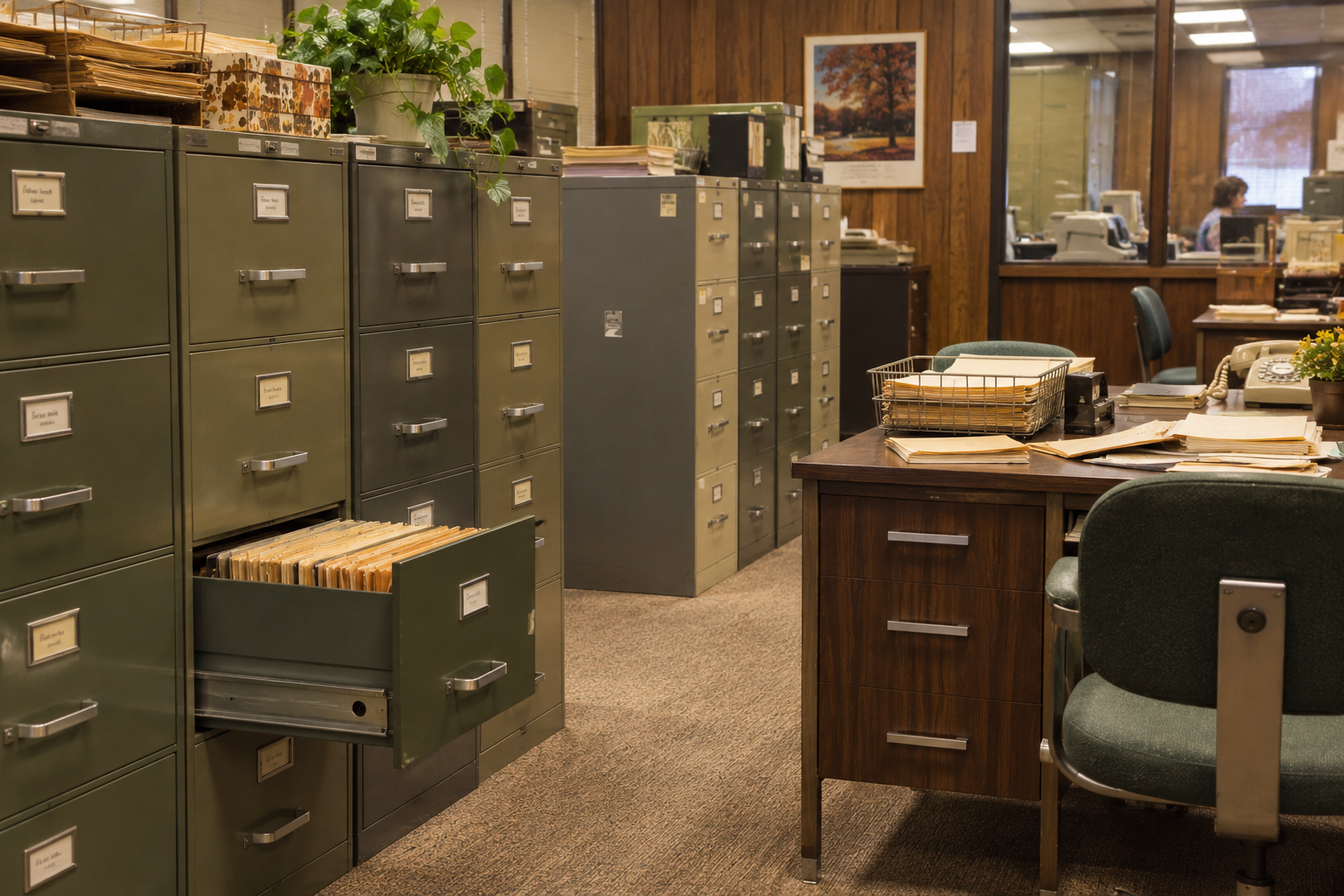
The 1970s didn’t reserve brown and avocado green for kitchens. Offices embraced plenty of the decade’s familiar earth tones, along with wood veneer, beige upholstery, mustard accents, and dark paneling. Executive offices could take the look even further with enormous desks, matching credenzas, heavy chairs, and enough faux woodgrain to make the room resemble a particularly businesslike suburban den. Add fluorescent ceiling lights, and you’ve got a workplace that’s difficult to mistake for 2026.
A Physical In/Out Tray
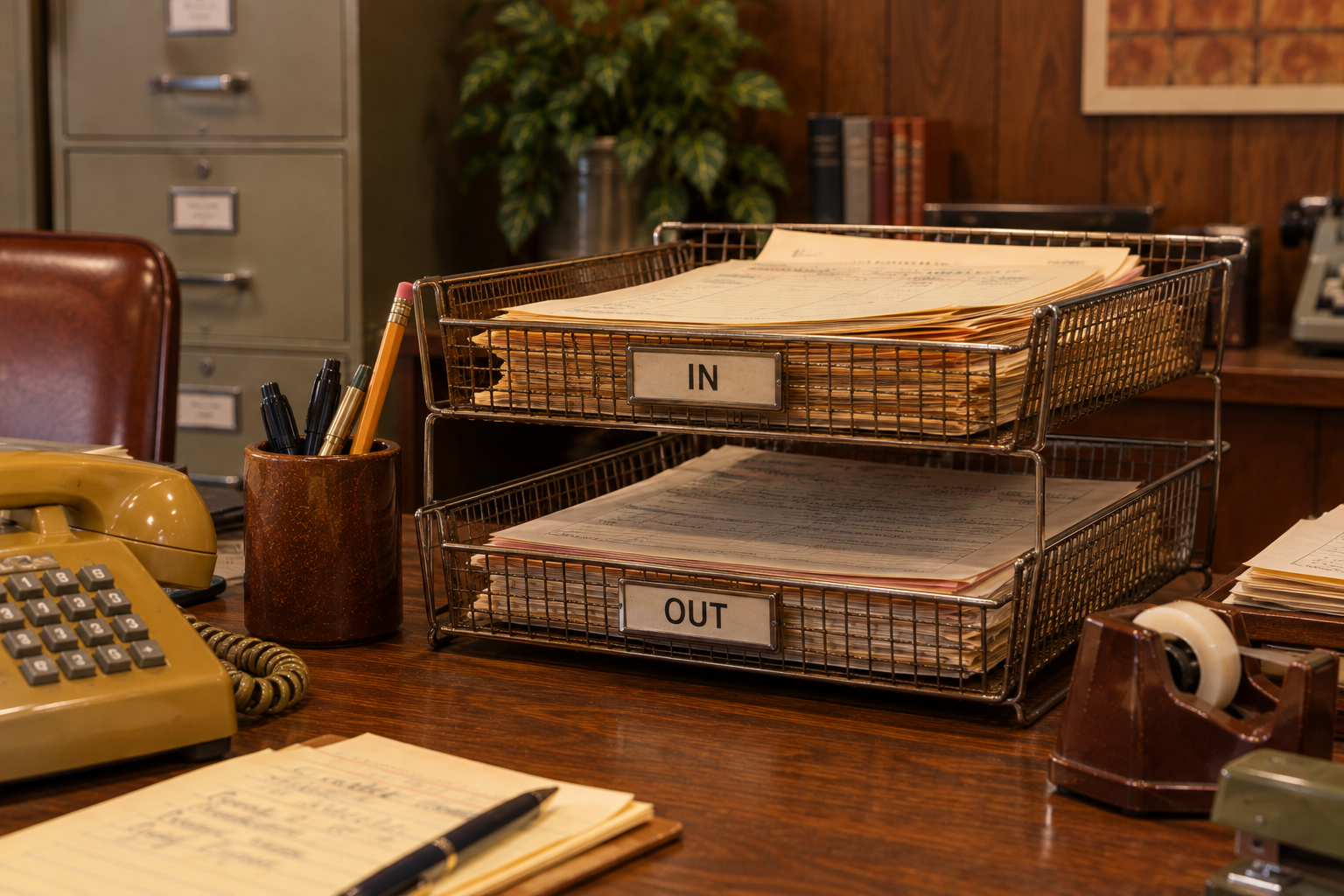
An overflowing inbox once meant an actual box overflowing on your desk. Stackable trays labeled “IN” and “OUT” helped employees keep track of memos, letters, forms, and other documents waiting to be reviewed, signed, typed, copied, or sent somewhere else. Getting information from one coworker to another frequently required physically carrying a piece of paper across the office. Returning from lunch to find the IN tray mysteriously twice as high was the analog version of opening your email after a long meeting.
A Photocopier Everyone Shared
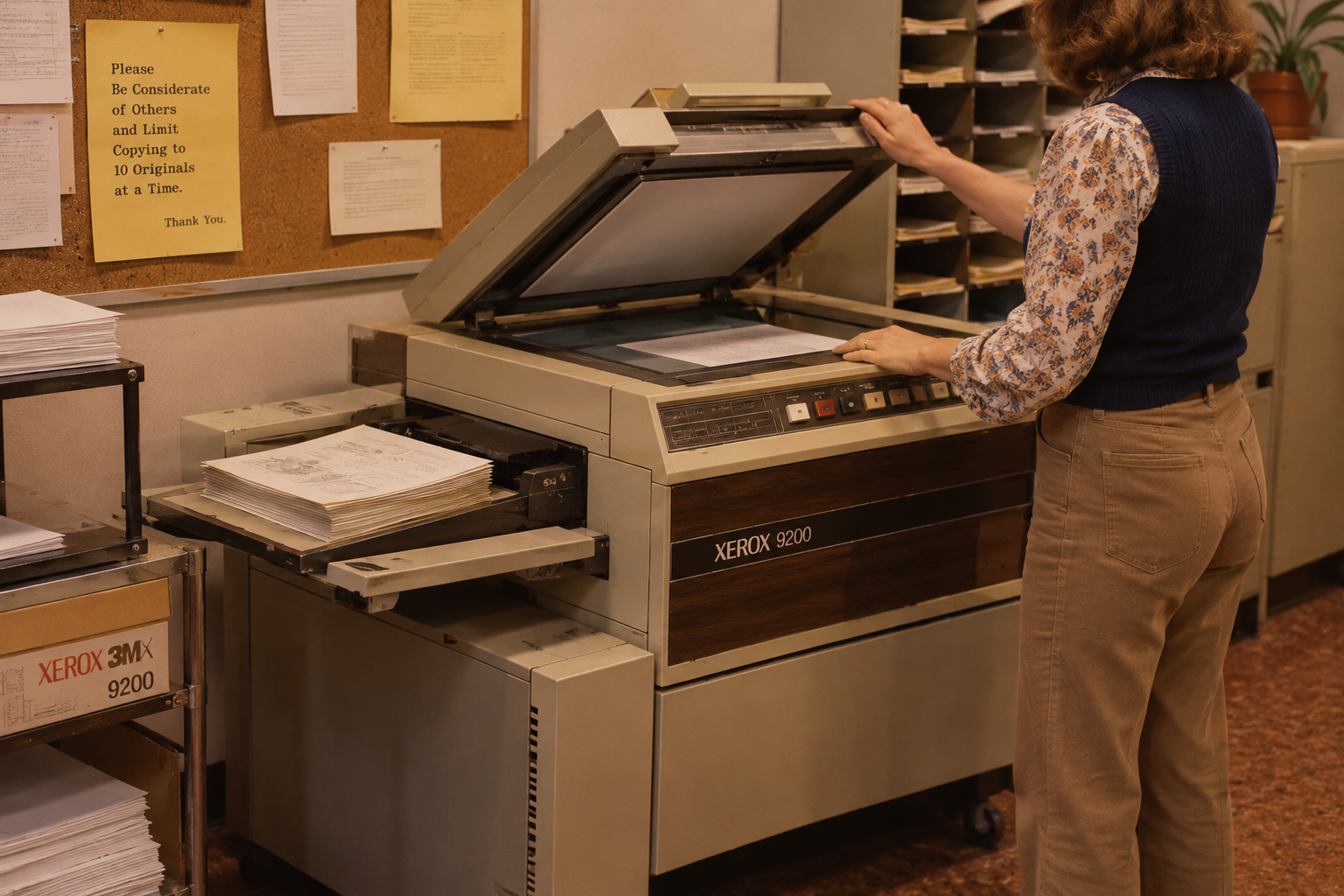
The office copier was already transforming paperwork by the 1970s, but it wasn’t necessarily a convenient little machine within arm’s reach. Xerox’s landmark 914 had introduced plain-paper photocopying in 1959, helping pave the way for copiers to become increasingly important workplace equipment. Employees might trek to a shared machine to reproduce documents, only to encounter a jam, an empty paper tray, or somebody else’s forgotten original. Some office frustrations, apparently, survived the digital revolution just fine.
An Office Coffee Pot That Never Seemed to Be Empty
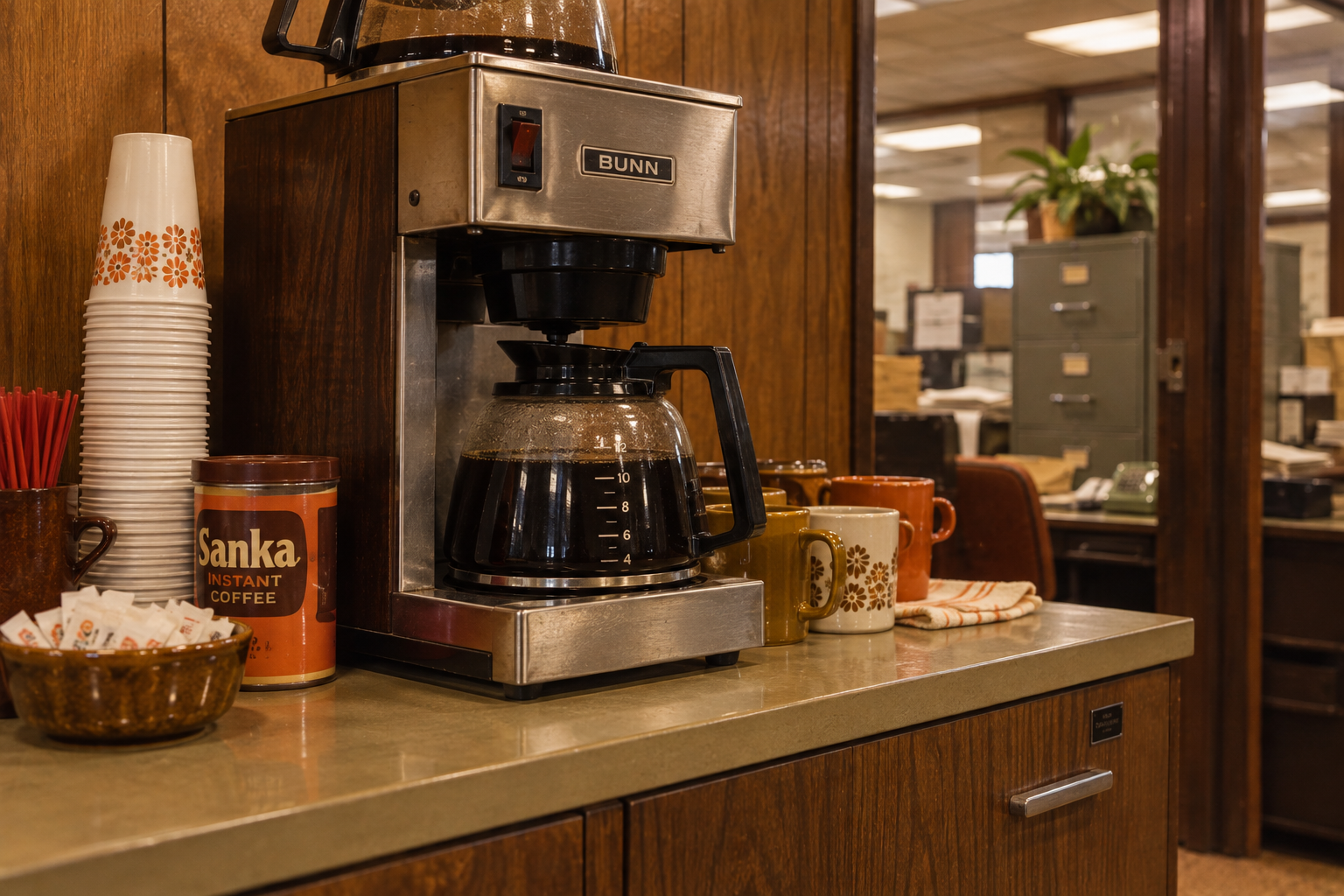
Before cold brew taps and elaborate workplace espresso machines, there was the communal coffee pot — and whatever had been sitting inside it since early that morning. Coffee breaks were already an established part of American work culture, and many offices had a simple setup built around a percolator or drip coffeemaker. Add Styrofoam cups, powdered creamer, sugar packets, and a pot slowly cooking on the warmer, and you had just about everything required for a 1970s office café.
The Office Was Almost Entirely Physical
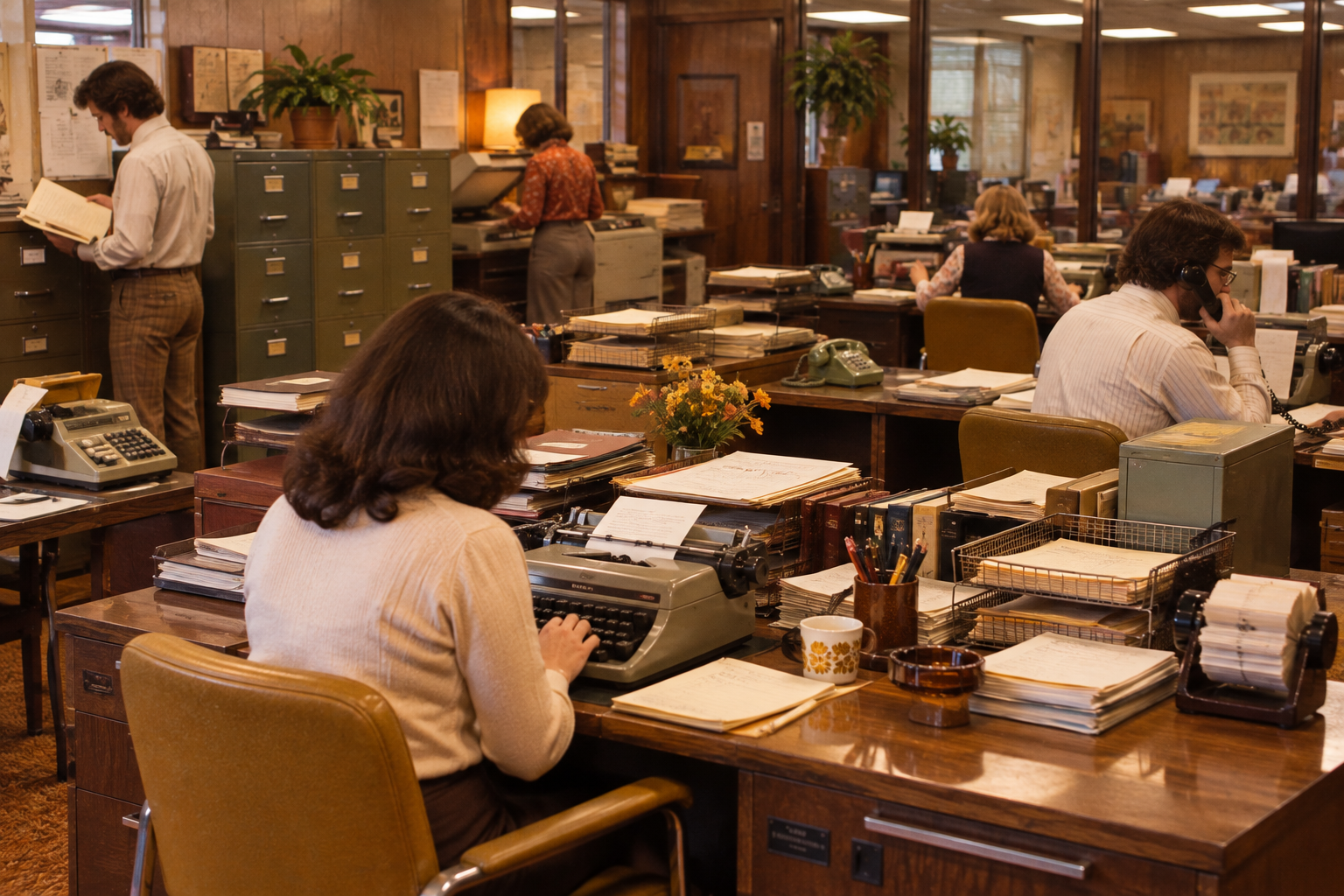
What makes a 1970s office seem so distant isn’t any single avocado chair or clunky machine. It’s how much physical stuff was required to accomplish tasks that now happen invisibly on a laptop. Phone calls needed desk phones, contacts needed cards, correspondence needed typewriters, records needed filing cabinets, and documents literally traveled from desk to desk.
A modern computer has effectively swallowed the typewriter, Rolodex, calculator, dictation machine, filing cabinet, and a good chunk of the copier. The 1970s office needed an entire room full of equipment to do what now fits inside a backpack.