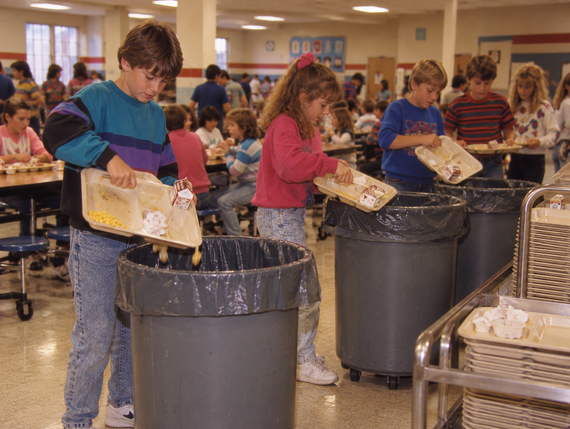
If you went to elementary school in the 1980s, chances are you can still picture your old cafeteria. There were long tables filled with noisy kids, plastic trays divided into little compartments, and a lunch line that seemed to move at a snail’s pace. The food wasn’t exactly gourmet, but there was something exciting about finding out whether the day’s menu included rectangular pizza, chicken nuggets, or one of those mysterious casseroles nobody could quite identify.
Back then, school lunches were a little different. Cafeteria workers served hundreds of meals from enormous metal pans, milk came in tiny cardboard cartons, and the lunchroom doubled as a place to trade snacks, catch up with friends, and occasionally get in trouble for talking too loudly. Some of the food was surprisingly good, while other dishes are probably best left in the past.
From those unmistakable slices of cafeteria pizza to the giant trash cans waiting at the end of the lunch line, here are 12 things from a 1980s school cafeteria that will bring back memories for anyone who ate school lunch in the ’80s.
Rectangular Pizza Served on a Plastic Tray
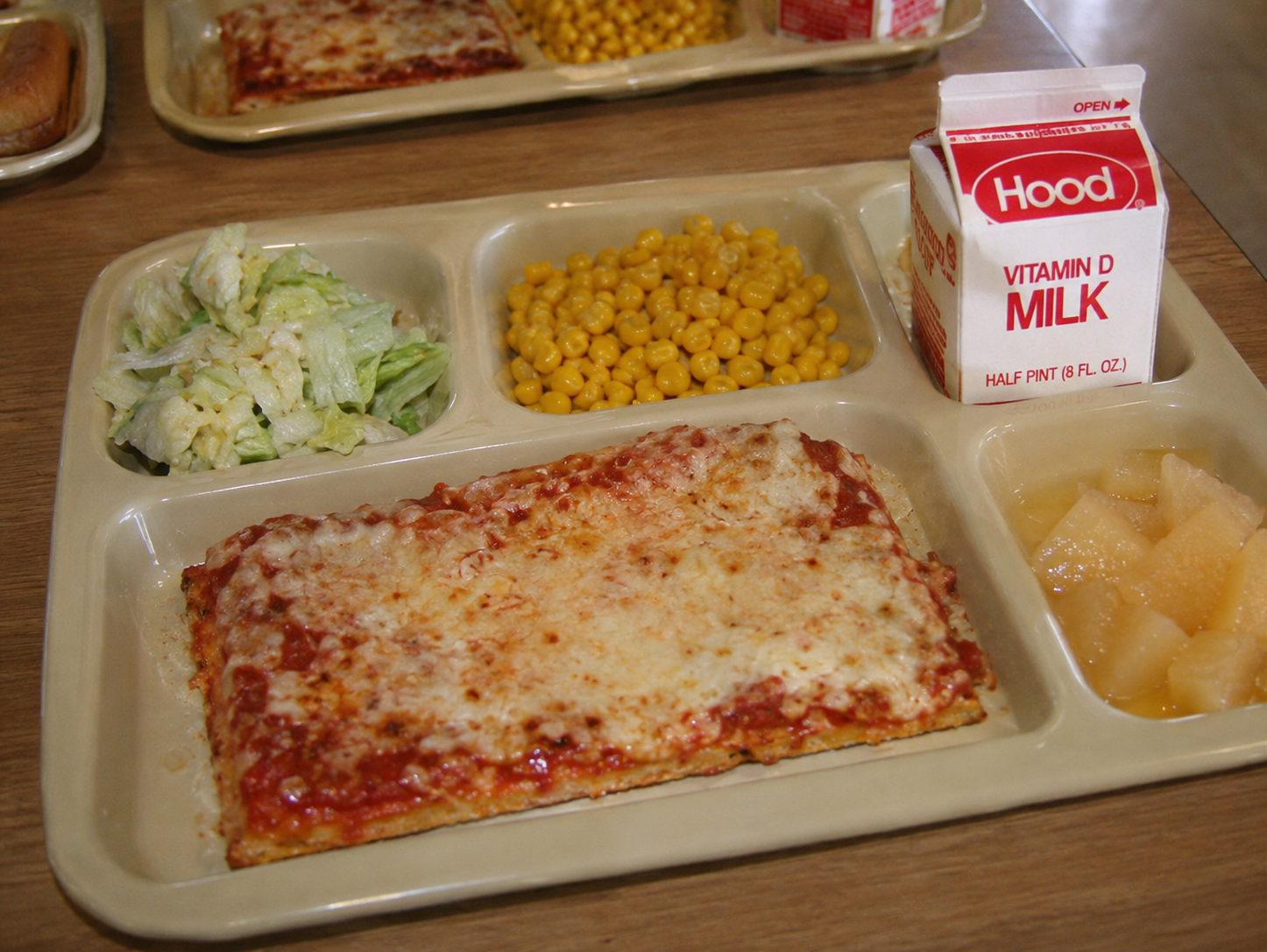
Forget the round slices you’d get at a pizzeria. School cafeteria pizza came in thick, rectangular pieces, usually with a soft crust, a generous layer of tomato sauce, and melted cheese that sometimes slid off in one piece. It was one of the most anticipated lunches of the week, especially when the alternative involved mystery meat or overcooked vegetables. The rectangular shape wasn’t accidental, either. A USDA school food service recipe from 1988 instructed cafeteria workers to bake pizza on large sheet pans and cut each one into 20 portions. It was an efficient way to feed hundreds of hungry kids, even if the finished product barely resembled the pizza served anywhere else.
Tiny Cardboard Cartons of Chocolate Milk
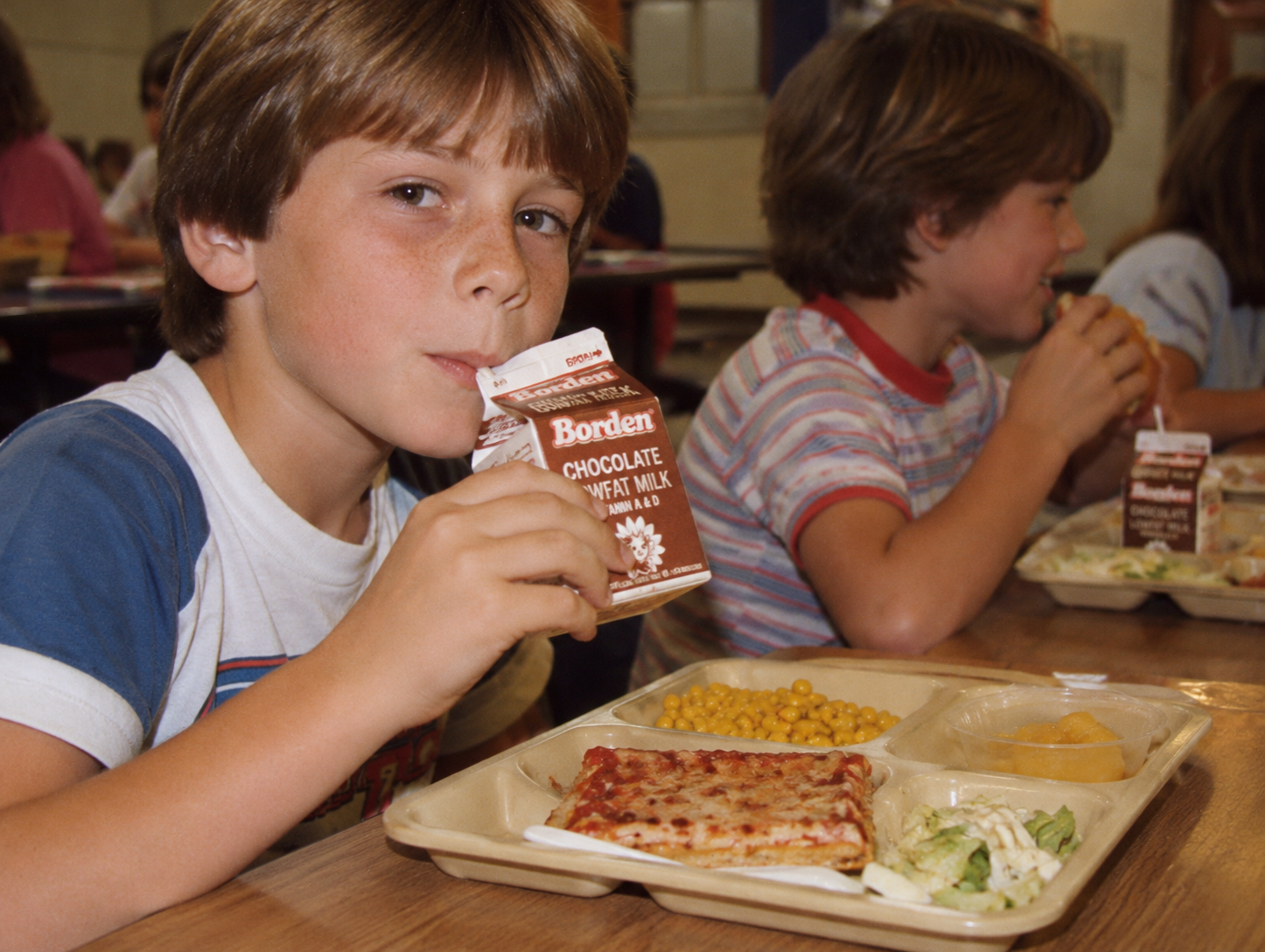
No school lunch felt complete without one of those miniature cardboard milk cartons sitting in the corner of your tray. Most cafeterias offered plain white milk, while chocolate milk was the obvious favorite whenever it was available. Opening the carton was practically a skill of its own: You had to pull apart the folded cardboard spout without tearing it, crushing the container, or spilling milk everywhere. And if you were particularly unlucky, you’d end up with a carton that refused to open no matter how hard you tried. Milk was a longstanding component of federally supported school meals, and the little cartons became one of the most recognizable features of the American lunchroom.
Heavy Plastic Trays With Separate Compartments
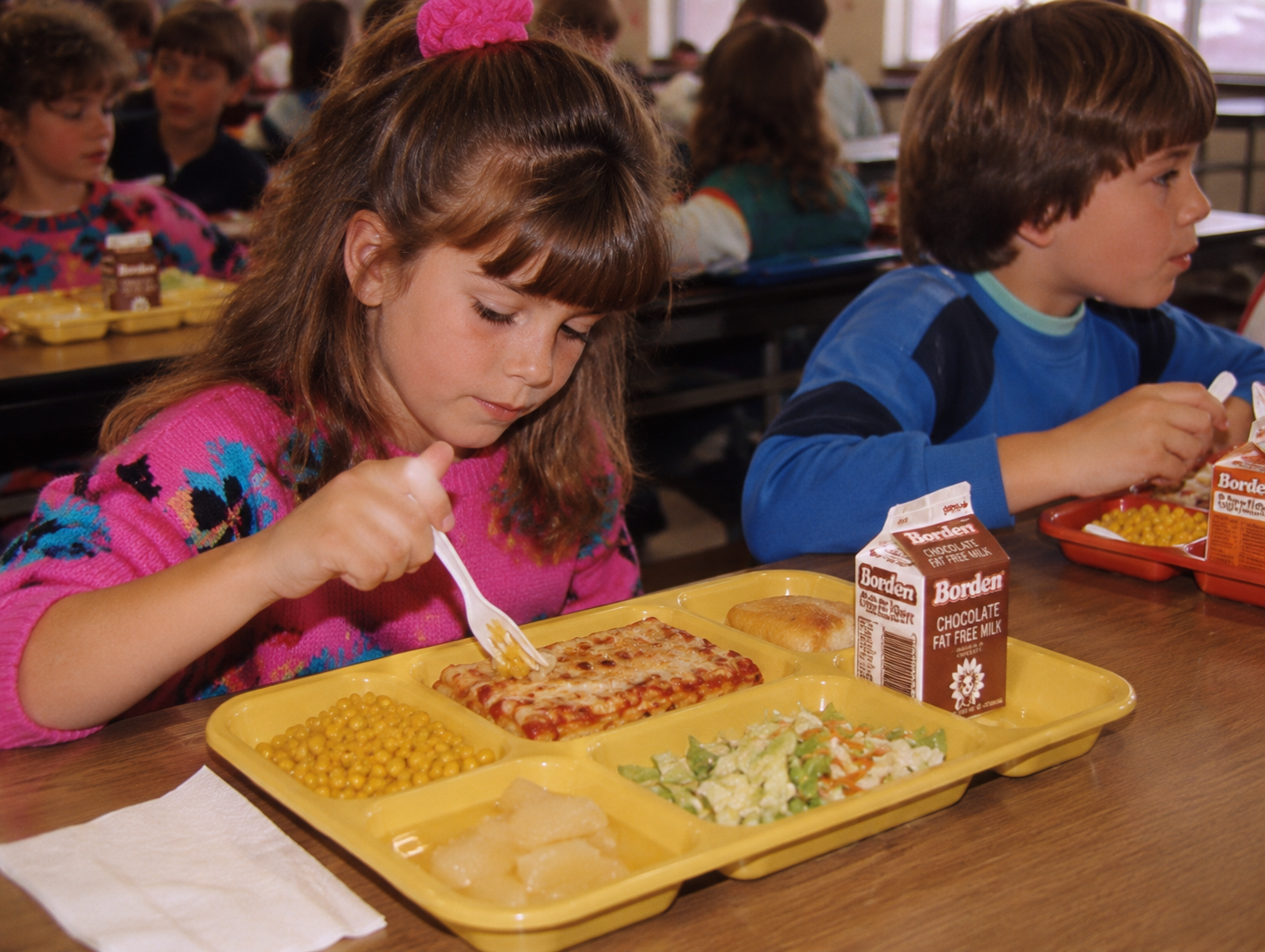
Before disposable cafeteria trays became common in many schools, students often carried sturdy plastic trays divided into sections for the main dish, vegetables, fruit, and whatever else the cafeteria was serving. They came in colors like beige, brown, yellow, and orange, and they were practically indestructible. The compartments were supposed to keep everything neatly separated, although that didn’t stop the juice from canned peaches from creeping toward your mashed potatoes. Once lunch was over, students stacked the trays near the dishwashing area, where cafeteria workers collected them for the next group of hungry kids.
Sloppy Joes on Soft Hamburger Buns
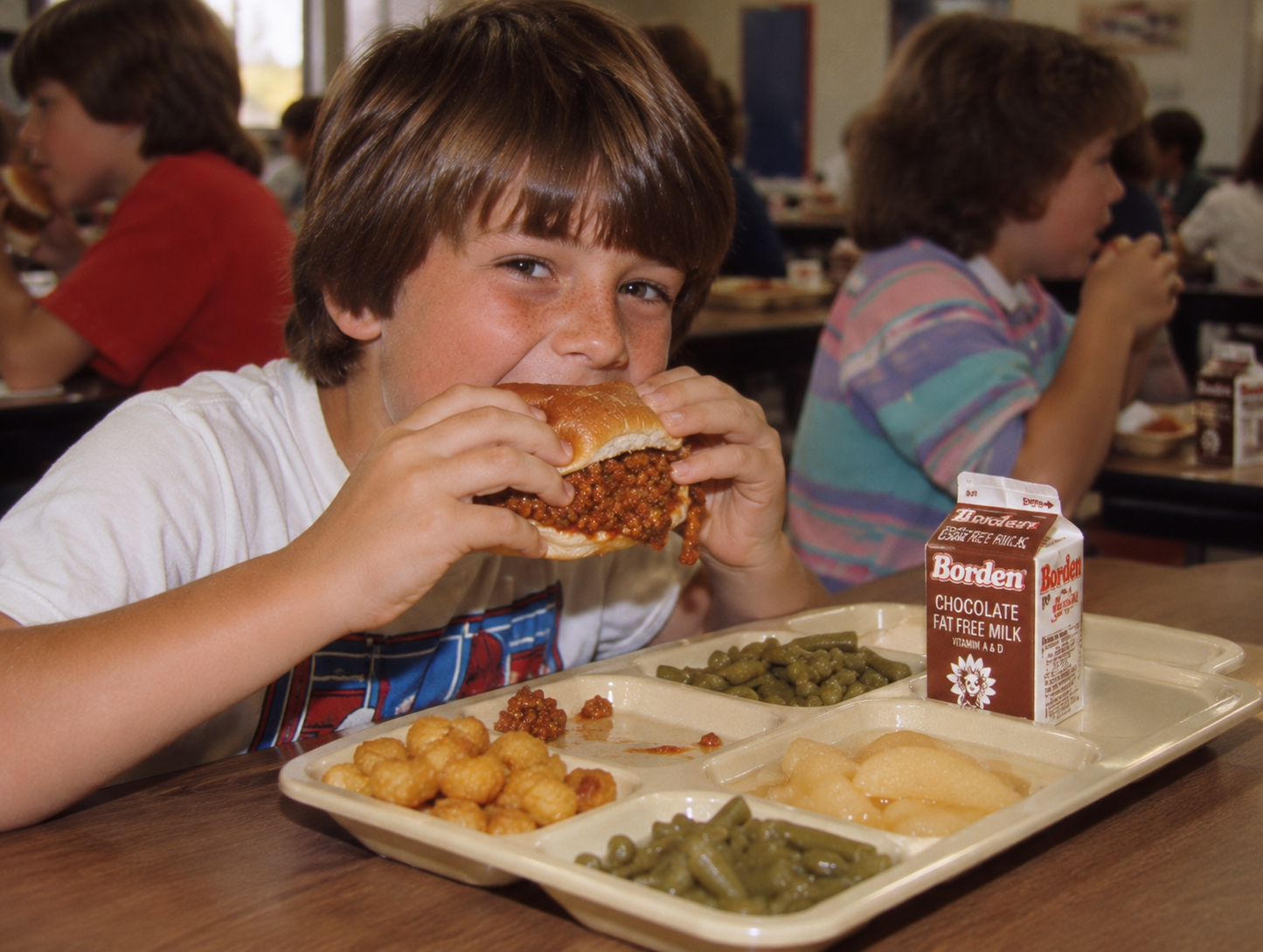
There was nothing particularly elegant about cafeteria sloppy joes, but that was part of their charm. The sandwich usually consisted of a scoop of sweet, tomato-based ground beef piled onto a soft hamburger bun that had little chance of holding everything together. By the time you finished eating, half the filling had probably fallen onto your tray, and your fingers were covered in sauce. Sloppy joes were a practical choice for school kitchens because the meat mixture could be prepared in enormous batches and served quickly. Whether you loved them or dreaded seeing them on the menu, they were hard to forget.
Chicken Nuggets With Tater Tots
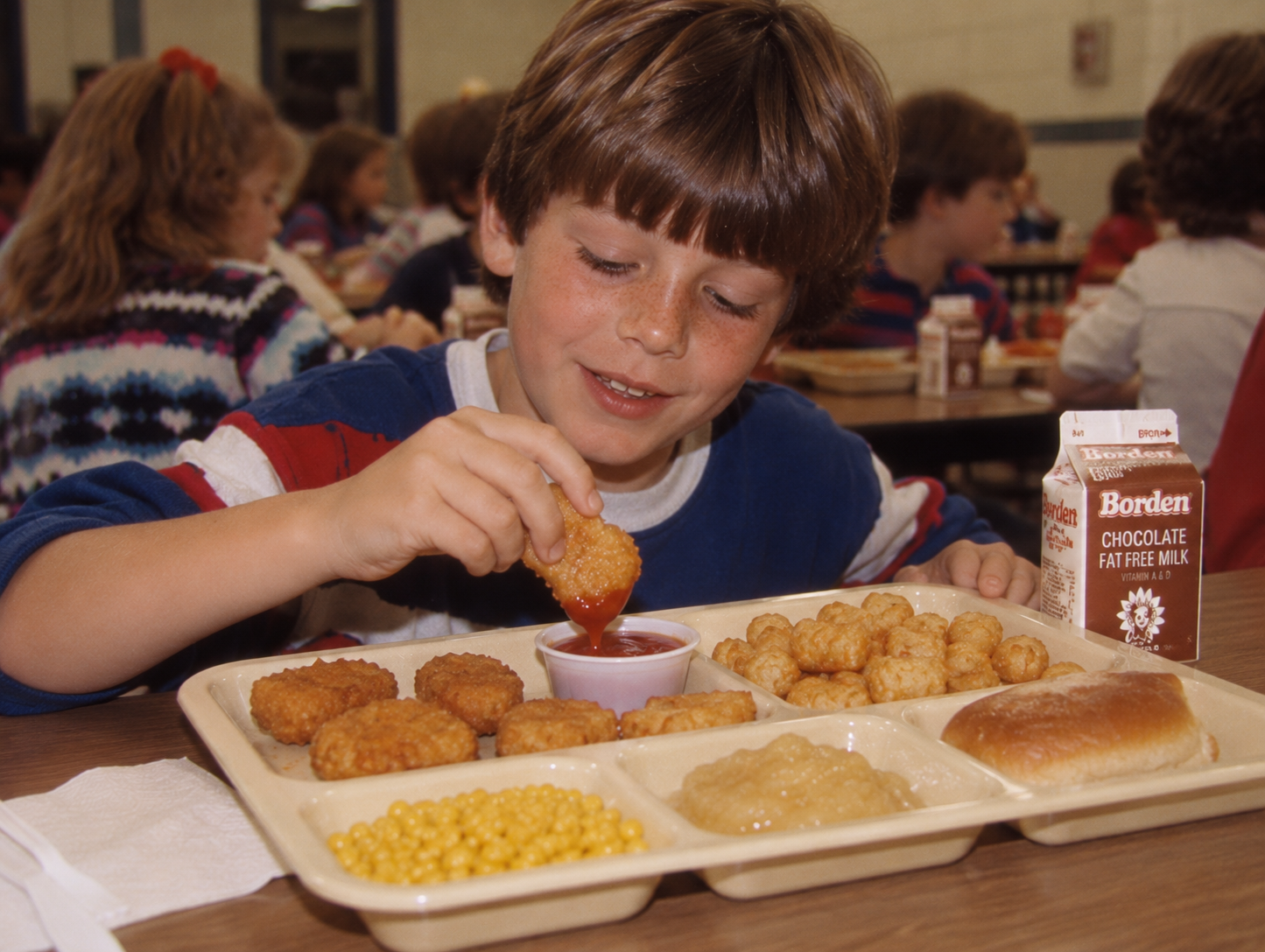
Long before chicken nuggets became a permanent fixture on children’s menus everywhere, they were already making appearances in school cafeterias. They were often served with a pile of crispy tater tots, a small portion of vegetables, and perhaps a dinner roll. The nuggets weren’t always particularly crispy by the time they reached your tray, but a packet of ketchup or a little honey could make almost anything taste better. This wasn’t just a nostalgic combination: A September 1983 elementary school lunch menu from Arlington, Virginia, specifically listed chicken nuggets with honey, tater tots, a dinner roll, and cinnamon applesauce.
Trending on Cheapism

Metal Serving Counters With Cafeteria Ladies Behind Them
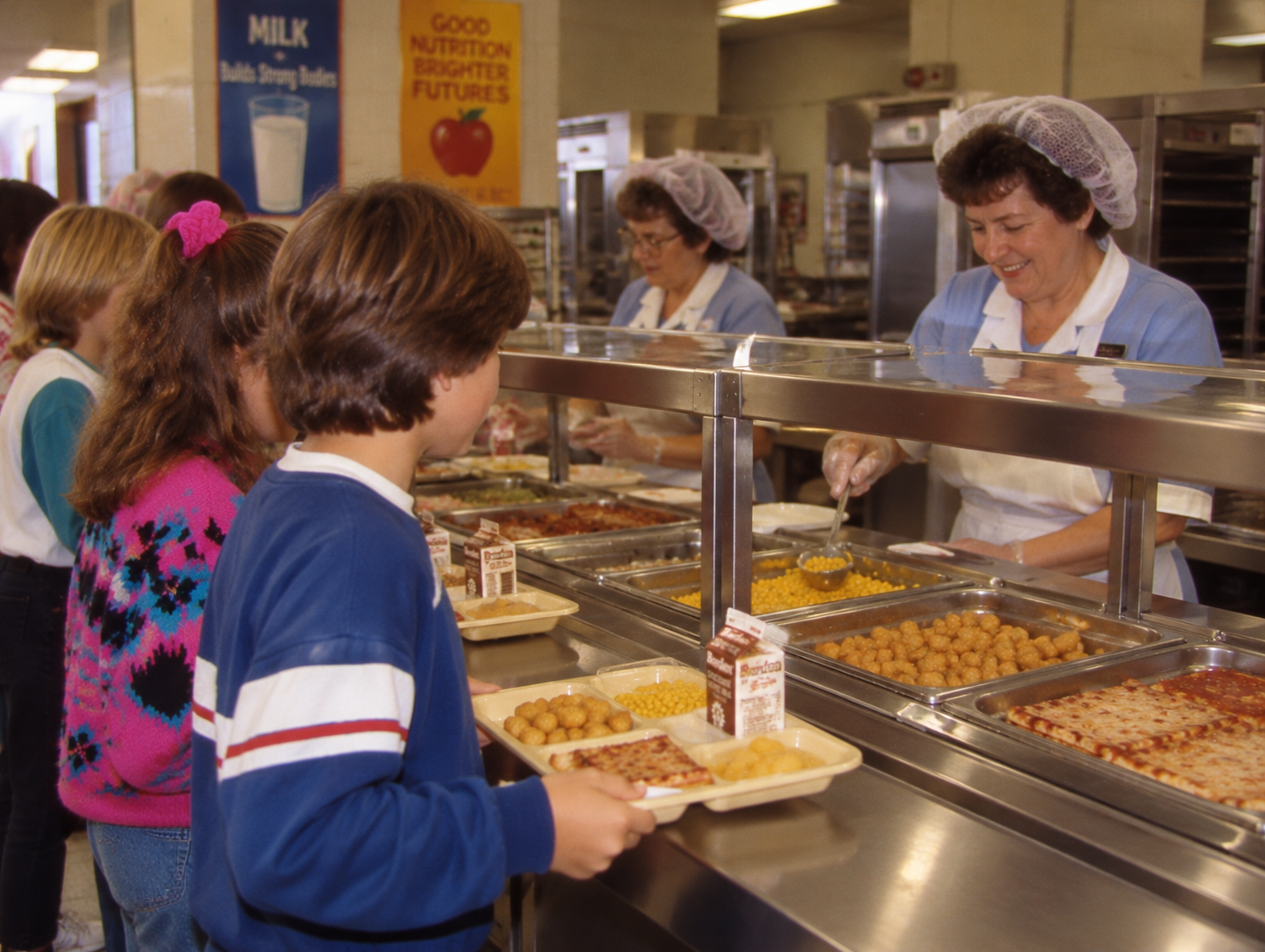
The cafeteria lunch line was practically a production line. Students shuffled along with their trays while cafeteria workers stood behind stainless steel counters, scooping food from enormous metal pans with ladles, spatulas, and serving spoons. Many wore aprons, hairnets, and plastic gloves, and some seemed to know exactly which kids were trying to sneak an extra serving. There was something strangely comforting about seeing the same familiar faces every day, even when they insisted you take a scoop of vegetables you had absolutely no intention of eating. And if you were lucky, one of the cafeteria ladies might slip you a slightly bigger portion of your favorite dish.
Canned Fruit Cocktail in Heavy Syrup
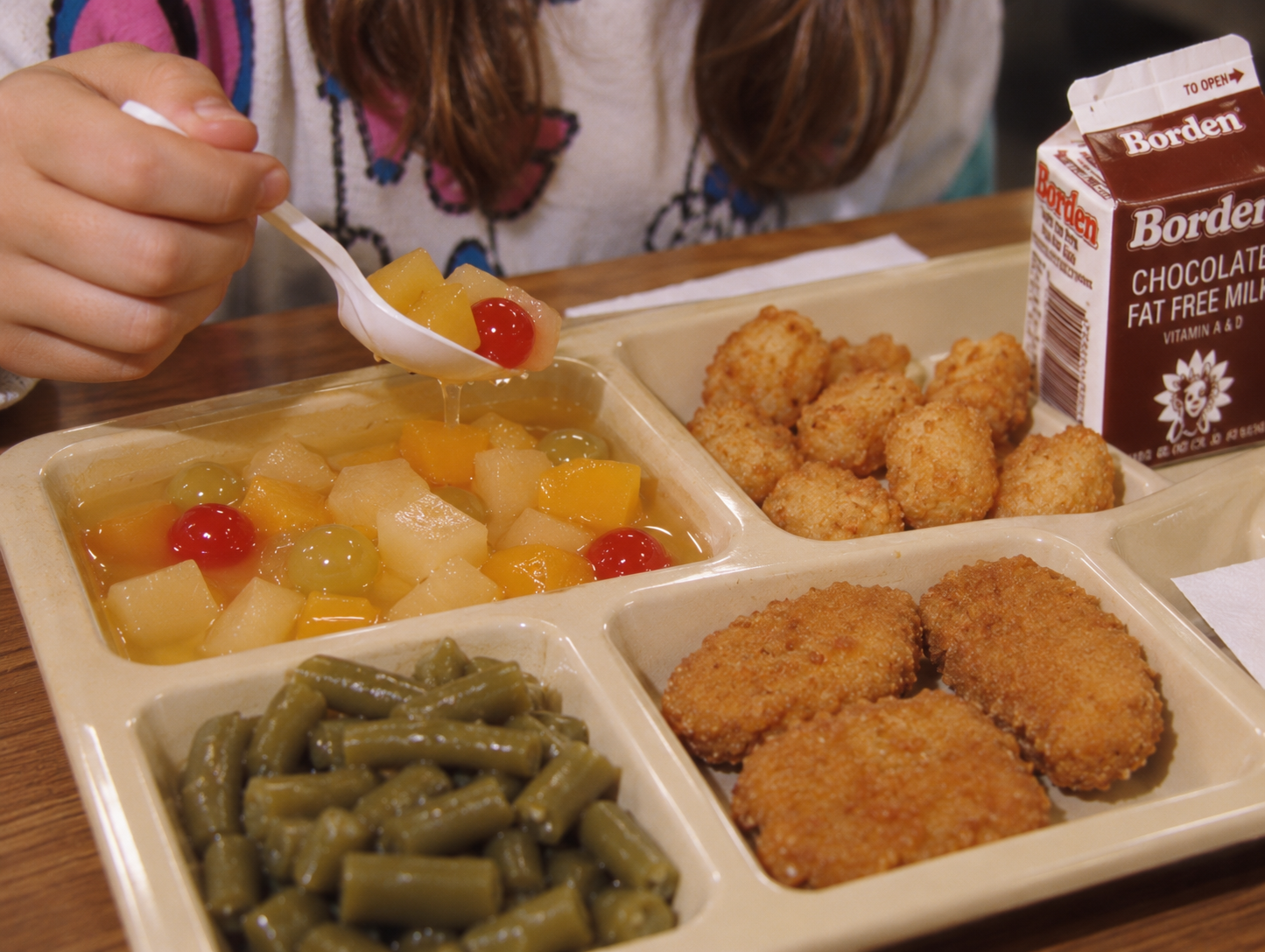
Fresh fruit wasn’t always the star of the school lunch tray. Instead, plenty of kids encountered little servings of canned peaches, pineapple tidbits, applesauce, or fruit cocktail spooned directly into one of the tray’s compartments. Fruit cocktail was especially memorable because it contained a mixture of pale peaches, pears, pineapple, grapes, and the occasional bright red cherry that everyone wanted. The syrup sometimes spread into the neighboring compartments, creating combinations nobody had asked for. Canned fruit was convenient for cafeterias feeding large numbers of students, and surviving menus from the early 1980s show just how frequently peaches, pineapple, and applesauce appeared alongside the main course.
Long Folding Cafeteria Tables With Attached Stools
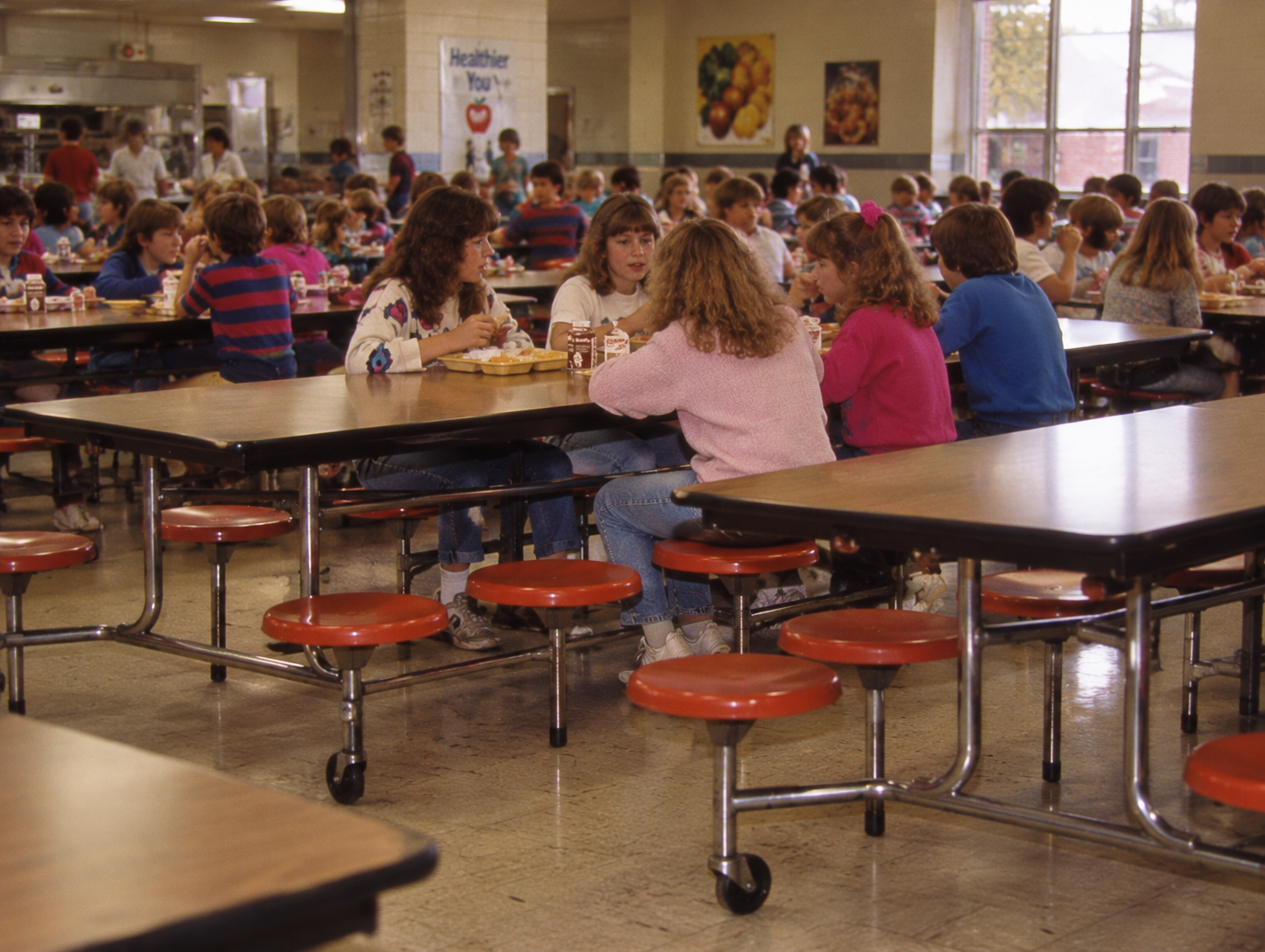
For many ’80s kids, the cafeteria wasn’t just a place to eat. It was also the school gymnasium, assembly room, or multipurpose space, which meant the furniture had to be moved out of the way regularly. Long folding tables with attached round stools were a familiar sight in schools that used this arrangement. The stools were hard, the tables seemed impossibly long, and finding a place next to your friends could determine whether lunch was the best or worst part of your day. At the end of the lunch period, custodians could fold the entire setup and roll it away, transforming the noisy lunchroom into a completely different space.
Sign up for our newsletter
Fish Sticks With a Side of Tartar Sauce
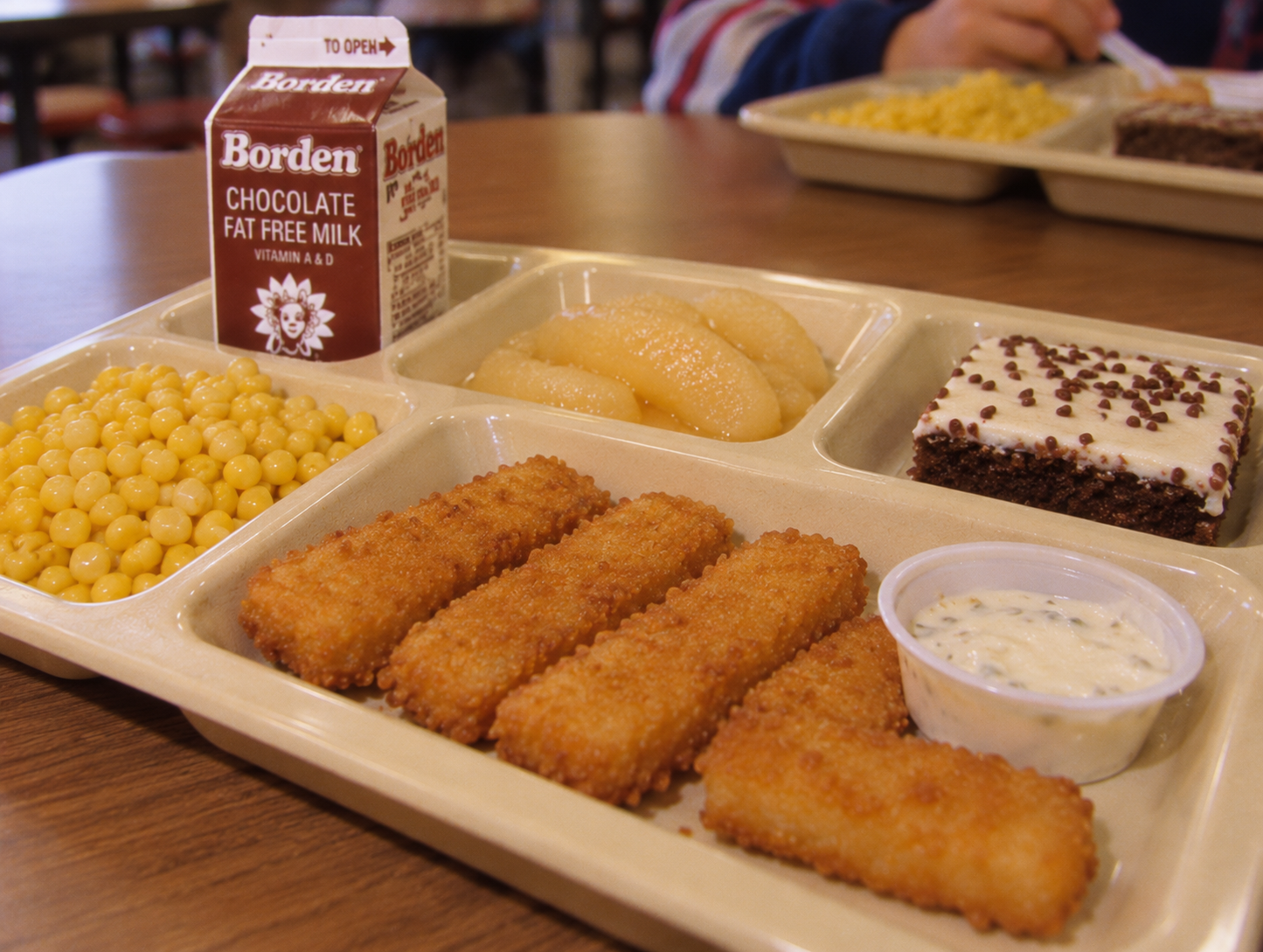
Fish sticks were one of those cafeteria meals that seemed to divide the entire school. Some kids genuinely enjoyed the breaded rectangles of fish, especially when they came with tartar sauce or ketchup. Others spent the entire lunch period trying to figure out how to avoid eating them. They were often served with potatoes, vegetables, or a soft dinner roll, and the breading could turn disappointingly soggy after sitting in a warming tray. Fish sandwiches were also part of the cafeteria rotation. A 1983 Arlington elementary school menu, for example, featured a fish fillet sandwich with potato rounds, tartar sauce, and sliced peaches.
Lunch Tickets and Envelopes Filled With Lunch Money
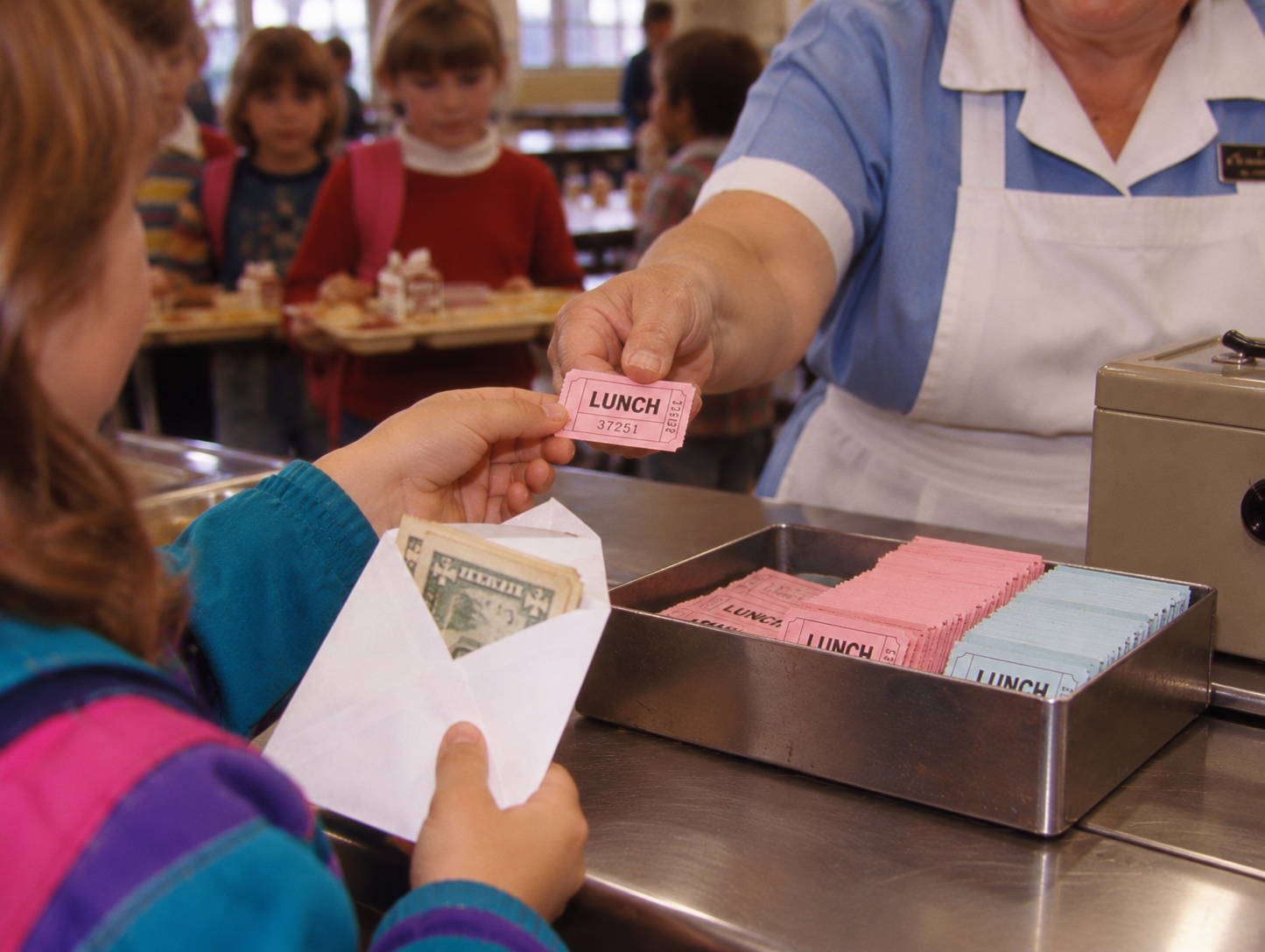
Before computerized cafeteria accounts and student ID scanners, paying for school lunch was a much more hands-on experience. Depending on the school, students might bring coins and dollar bills, purchase a booklet of lunch tickets, or hand over a paper meal card to the cashier. Some elementary schools collected lunch money in envelopes sent from home, while others required students to keep track of their tickets throughout the week. Losing your lunch money could turn an ordinary school day into a minor crisis. And for kids who regularly bought lunch, remembering to bring the right amount of cash was just another responsibility to manage before heading out the door.
Ice Cream Sandwiches and Little Cups of Ice Cream
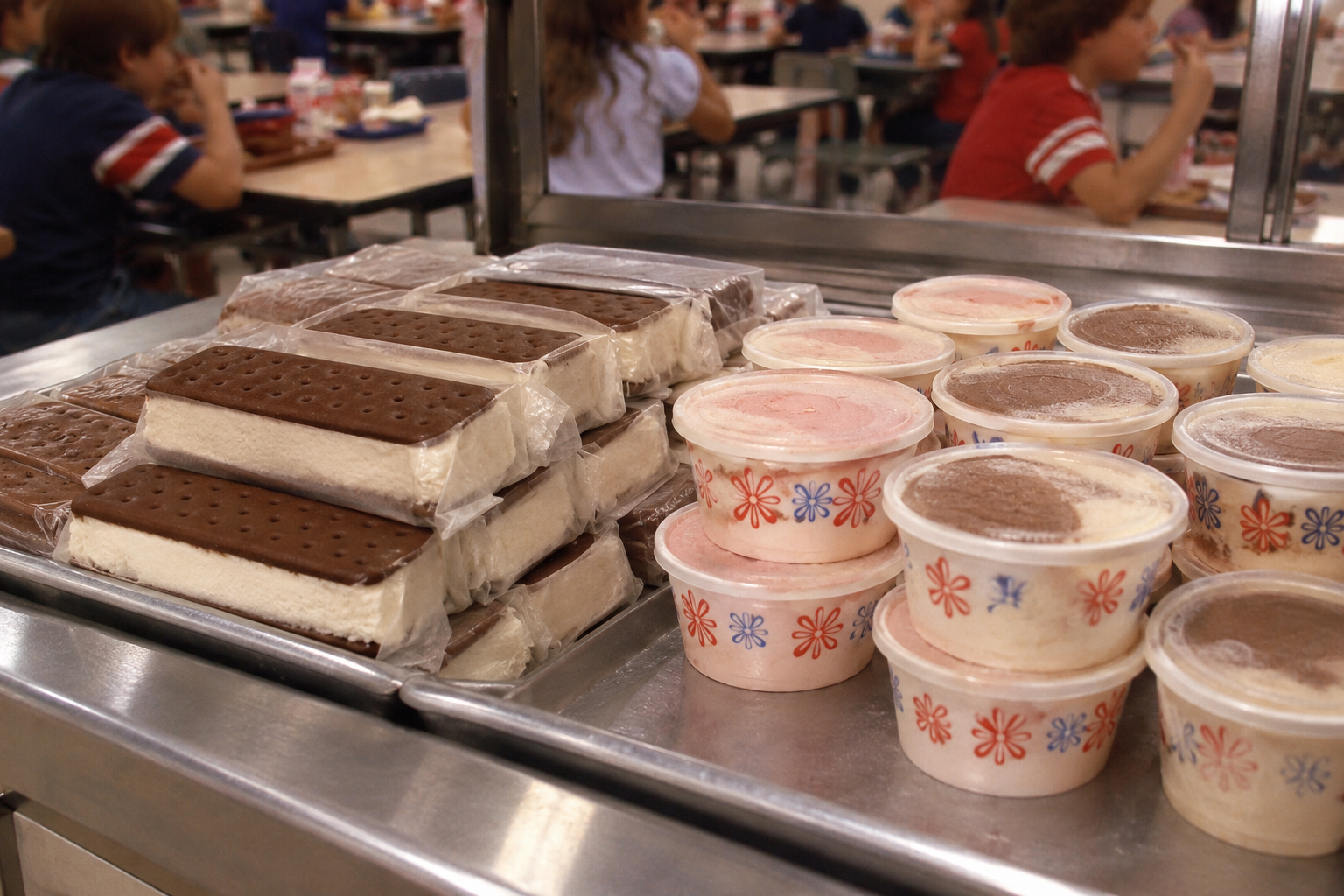
There was always something exciting about discovering that the cafeteria had ice cream available. Depending on the school, students might be able to buy a vanilla ice cream sandwich, a small paper cup of ice cream with a wooden spoon, or another frozen treat as an occasional extra. Ice cream sandwiches were particularly memorable because the chocolate wafers had a habit of sticking to your fingers, leaving dark crumbs everywhere. The little cups weren’t much easier to eat, especially when the ice cream was frozen solid and the flimsy wooden spoon threatened to snap. Not every school offered these treats, but for those that did, having a little extra lunch money could make an ordinary afternoon feel special.
Giant Trash Cans and the End-of-Lunch Cleanup Line
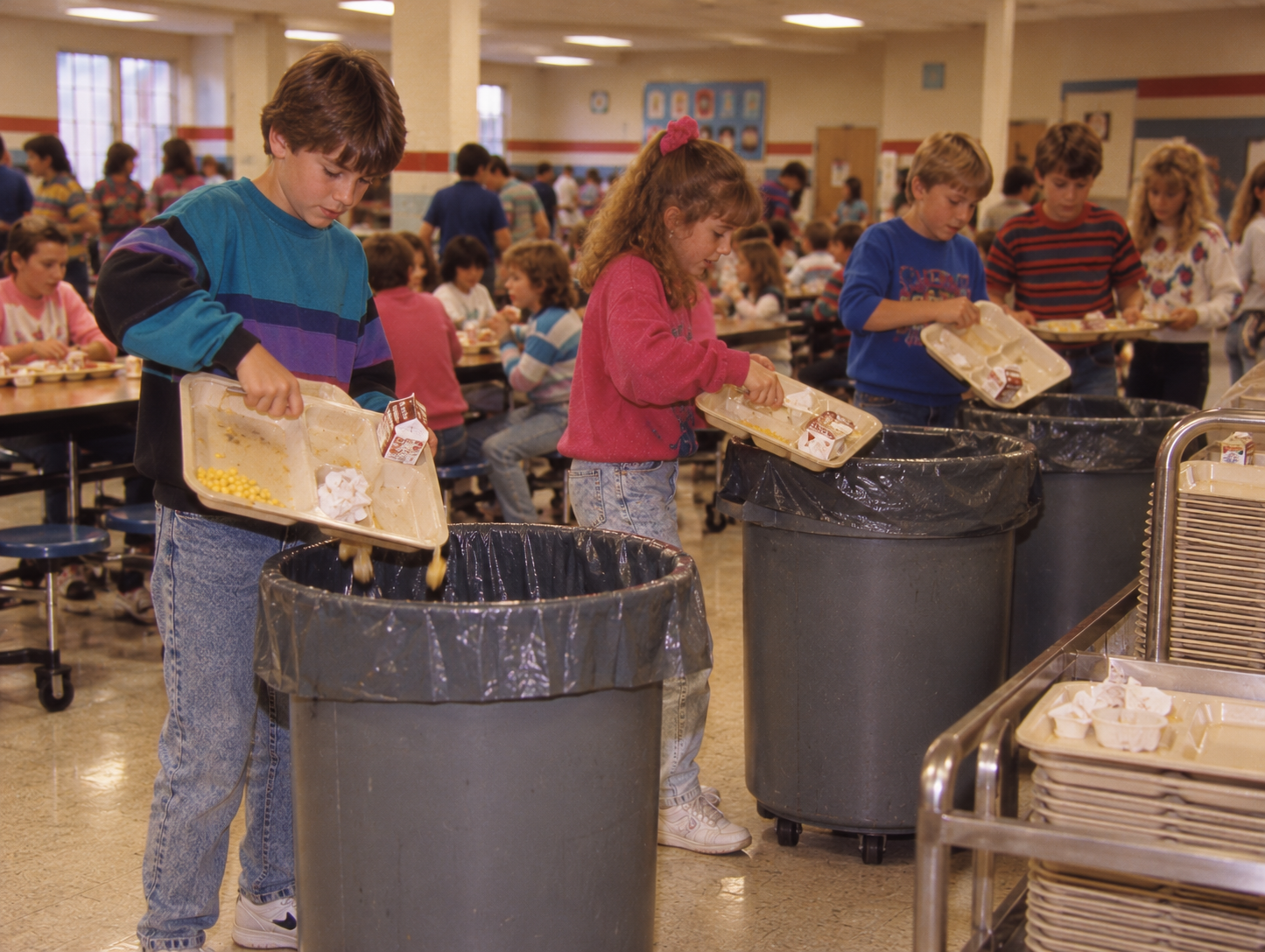
Finishing your lunch in a 1980s school cafeteria didn’t mean you could simply leave. In many schools, students had to carry their trays to a designated cleanup area, scrape leftover food into enormous trash cans, and stack their dishes for washing. The trash cans were usually overflowing with half-eaten vegetables, soggy napkins, and the remains of lunches nobody particularly enjoyed. There was often a teacher or cafeteria monitor nearby making sure students didn’t leave a mess behind. And if you accidentally dropped your tray, the resulting crash was practically guaranteed to attract the attention of everyone in the room.
When School Lunch Was Its Own Daily Adventure
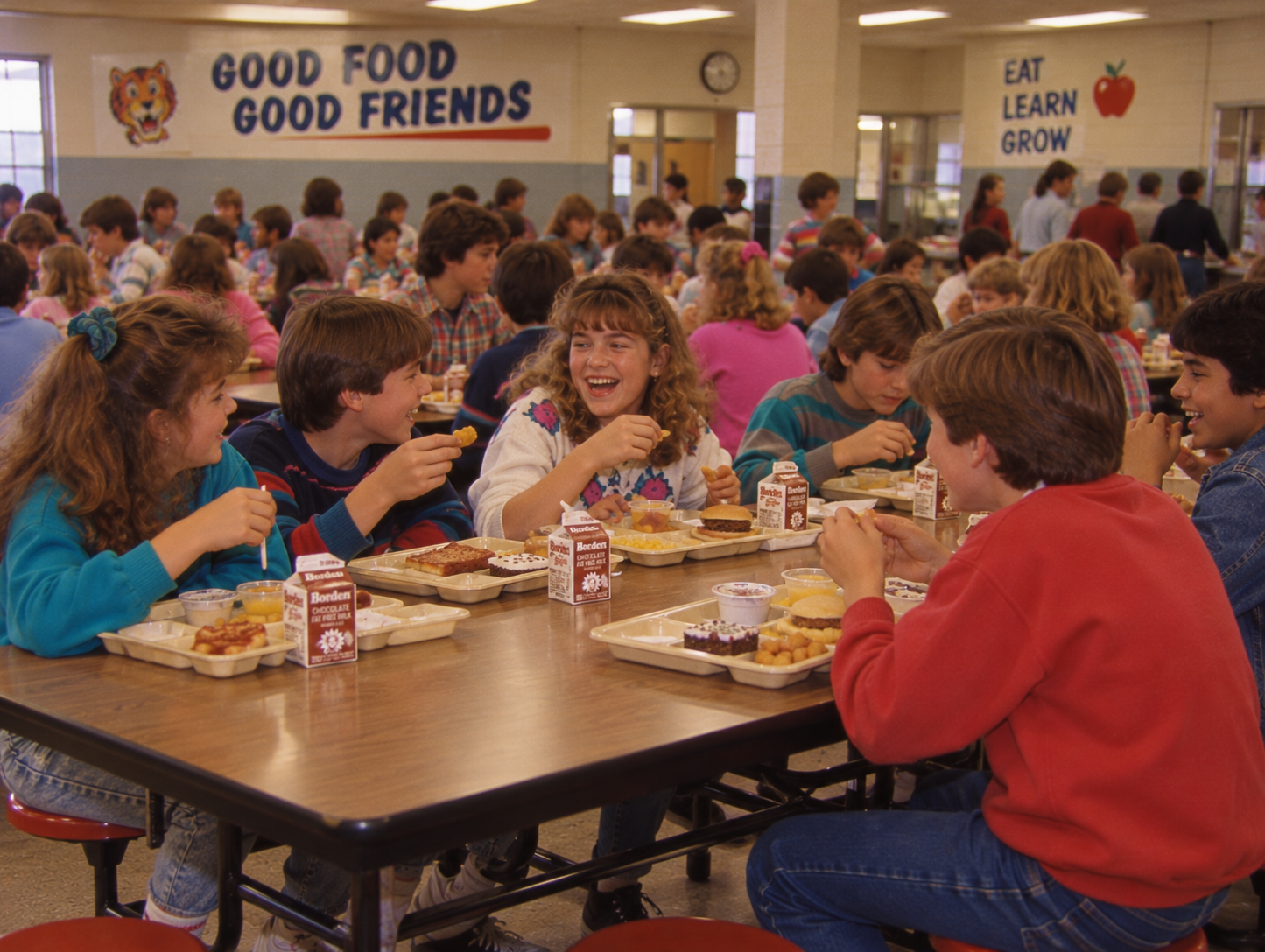
Looking back, the ‘80s school cafeteria was about much more than what ended up on your tray. It was where friendships were formed, snacks were traded, and the smallest things, like getting chocolate milk or finding out it was pizza day, could make an entire afternoon better. The food might not have been particularly impressive, but the experience was unforgettable. And for anyone who grew up eating rectangular pizza under fluorescent lights while sitting at a crowded cafeteria table, those memories are probably still surprisingly vivid.