Homes in the 60s were filled with everyday objects that shaped how families watched TV, listened to music, did homework, handled chores, and spent time together. According to the U.S. Census Bureau, television ownership was already widespread by 1960, but many households still relied on shared phones, record players, encyclopedias, clotheslines, and other practical staples that now feel distinctly nostalgic. These 12 items capture some of the most familiar sights of American family life during the decade.
A Television Set Everyone Shared
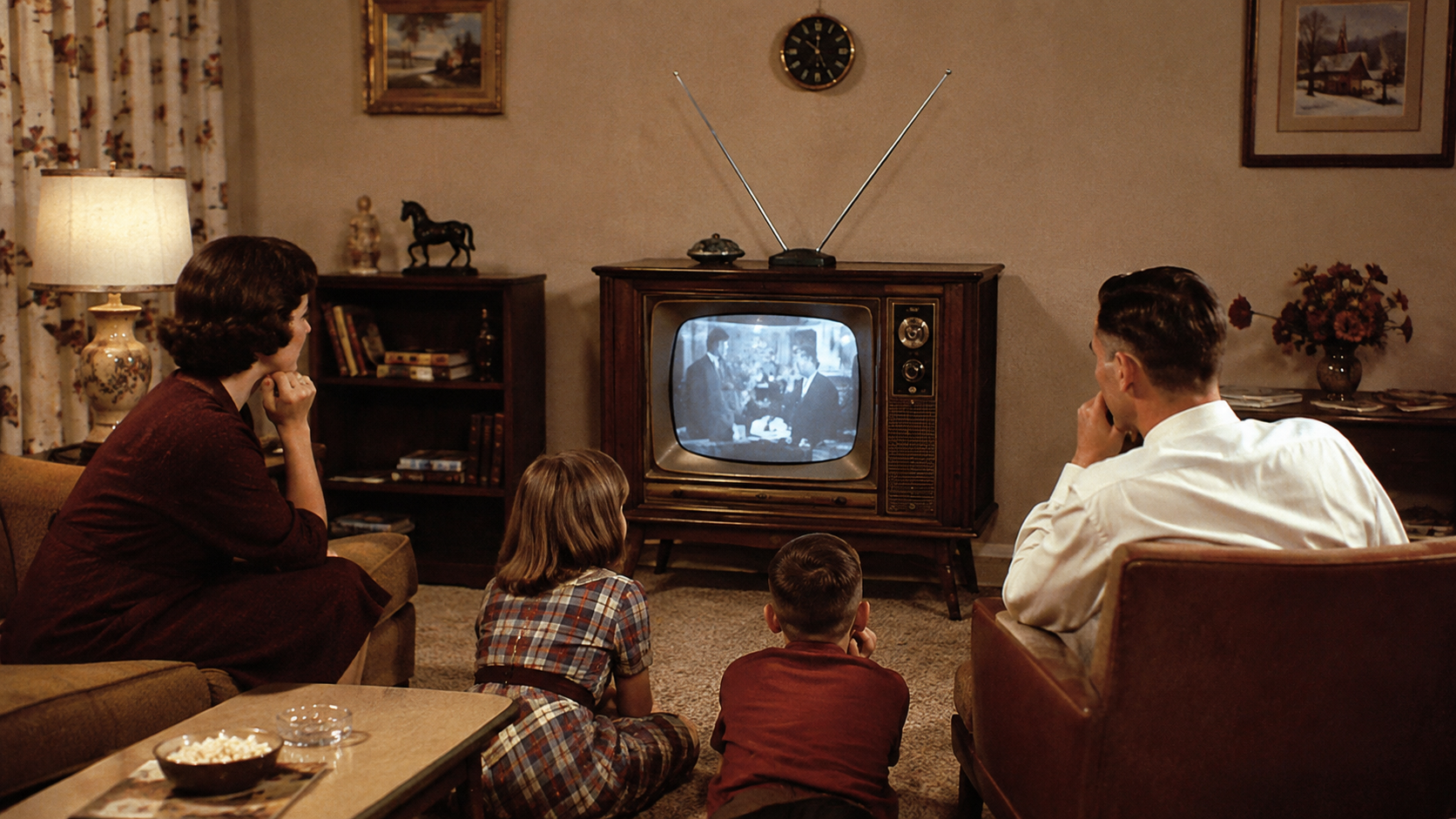
By 1960, television was no longer a novelty. More than 46 million occupied U.S. housing units had at least one set, and TVs were actually found in more households than automobiles or telephones. The difference was that families usually weren’t surrounded by screens. One substantial television, often framed in a wood cabinet, commanded the living room. Someone had to turn a knob to change channels, fiddle with the antenna when reception went fuzzy, and negotiate with everyone else over what the family was going to watch.
A Rotary Telephone With a Long Cord
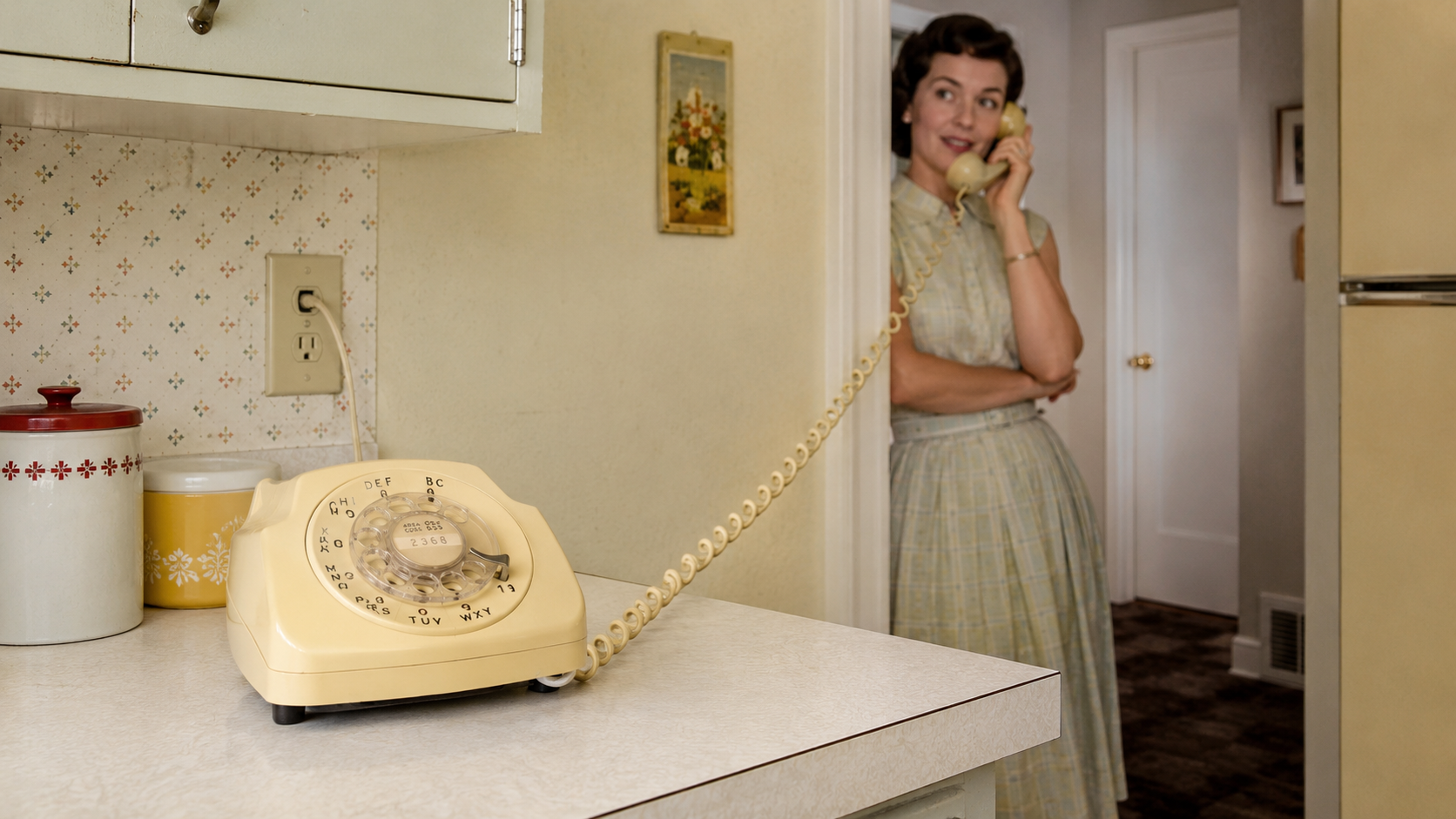
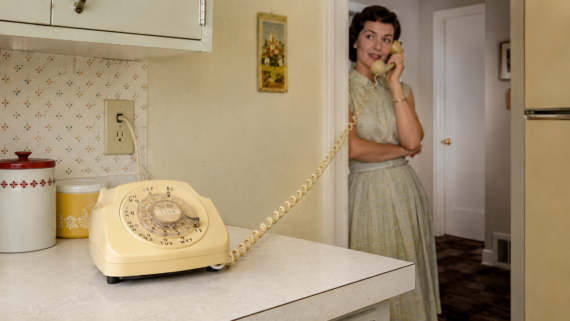
For many families, calling someone meant standing in the kitchen or hallway and spinning a rotary dial one number at a time. The 1960 Census even asked whether residents had a telephone on which people in the household could be reached. Familiar designs included Western Electric’s Model 500 and the more stylish Princess phone, which the Smithsonian dates to around 1960. One household number also meant limited privacy, especially when another family member could pick up an extension.
A Record Player or Giant Hi-Fi Console
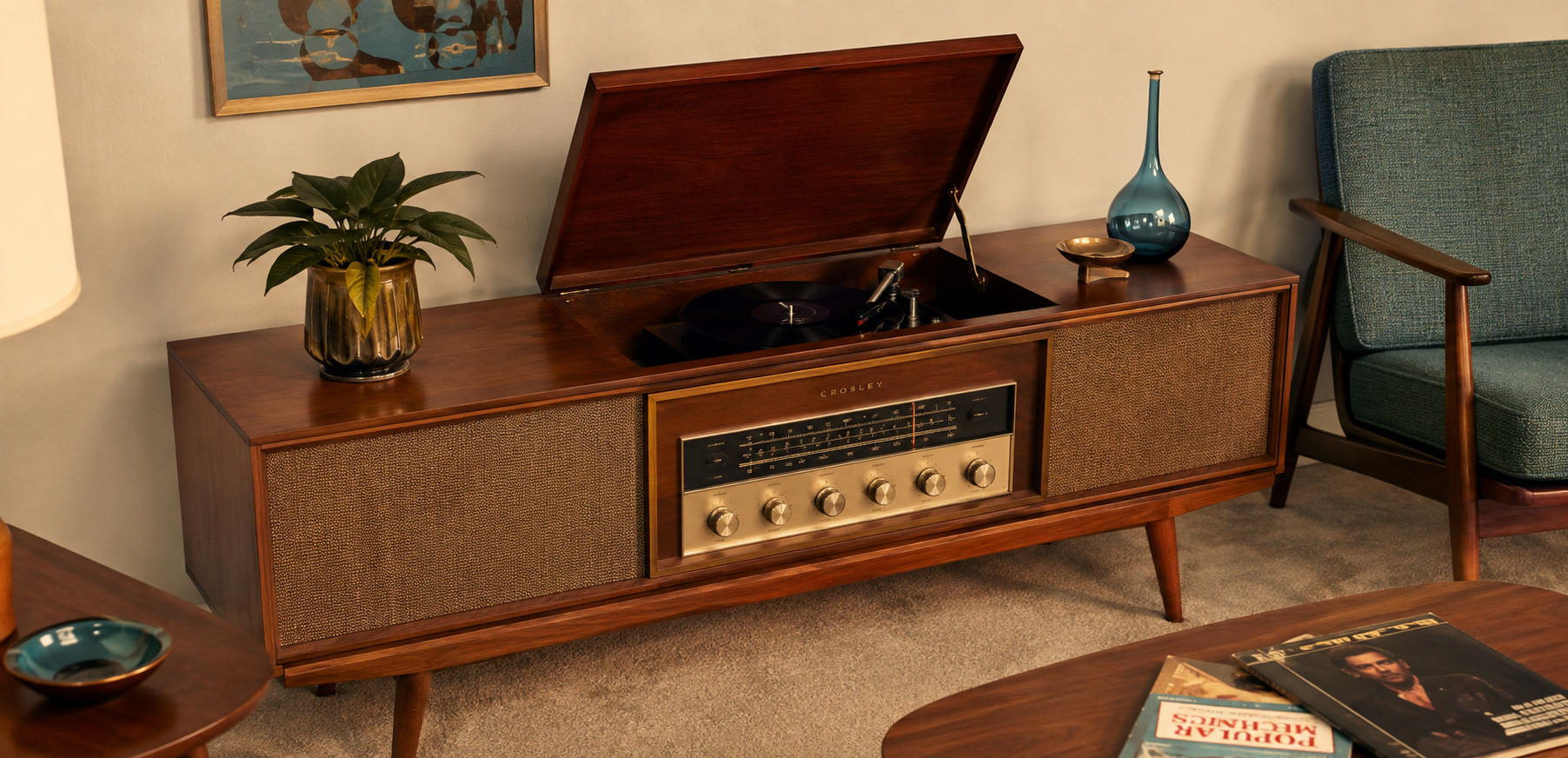
Long before playlists followed people from room to room, putting on music could involve lowering a needle onto a record and flipping the album halfway through. The La Crosse County Historical Society notes that most homes in the 1960s had some type of record player, ranging from portable units to substantial console cabinets. The big versions could combine a turntable, radio, amplifier, speakers, and storage in what was essentially another piece of living-room furniture. Teenagers, naturally, often preferred something they could take elsewhere.
A Shelf Full of Encyclopedias
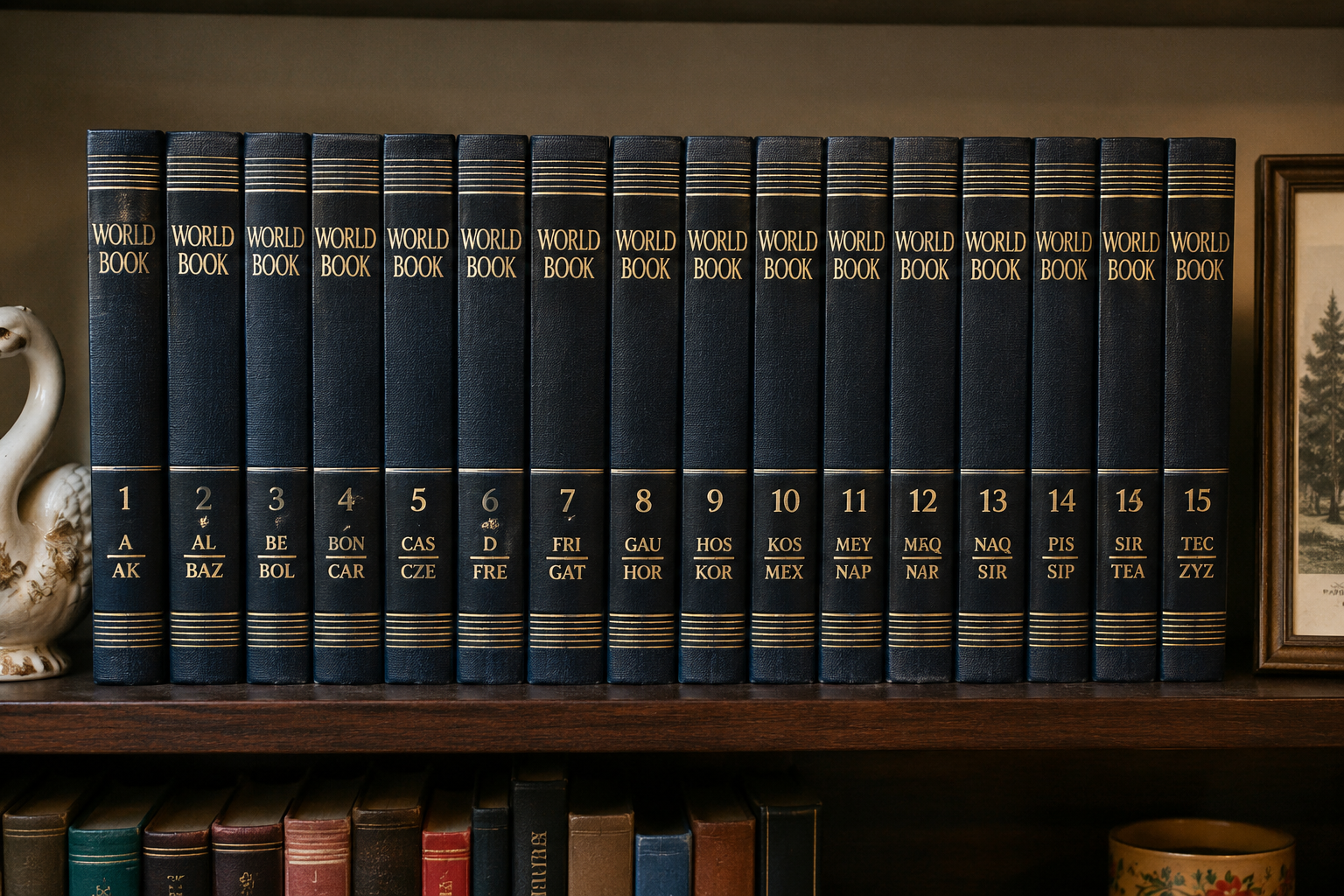
Before a school report could begin with an internet search, it might begin with dragging a heavy encyclopedia volume to the dining-room table. World Book and Encyclopaedia Britannica sets became familiar reference tools for families who could afford them, and a complete collection could consume a sizeable section of a bookcase. Children searched alphabetically, copied notes by hand, and occasionally discovered that the information was already getting old. Annual supplements helped, but they couldn’t make an expensive printed set update itself whenever the world changed.
At Least One Radio
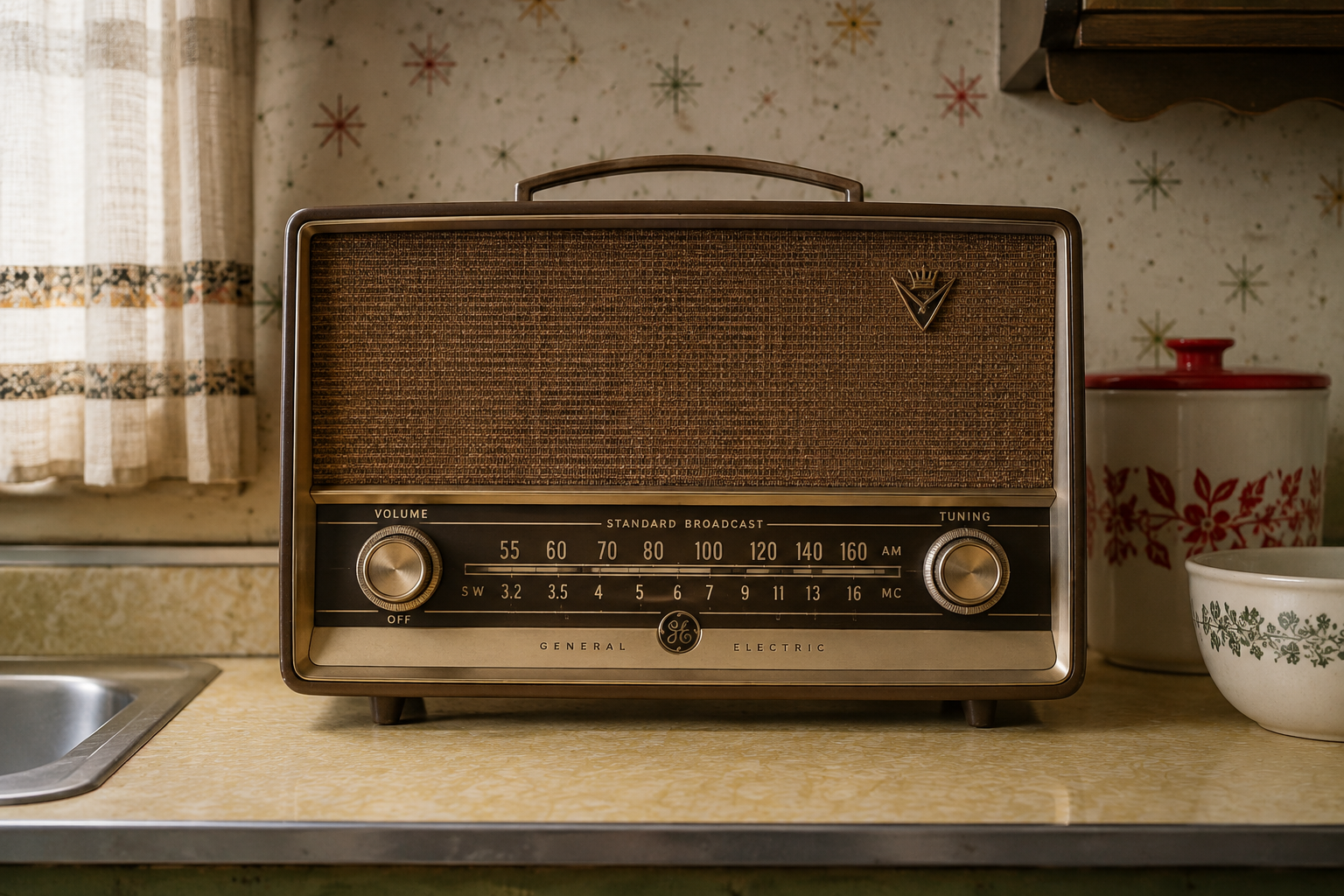
Television may have conquered the living room, but radio remained woven into everyday life. In fact, the 1960 Census specifically asked households whether they had one working radio, two or more, or none, counting floor, tabletop, portable, and combination sets but excluding car radios. A kitchen radio could provide music and news during chores, while increasingly portable transistor sets gave younger listeners more independence. There was no algorithm picking the next song, either. You turned the dial, heard some static, and kept searching.
Trending on Cheapism


Wall-to-Wall Carpeting
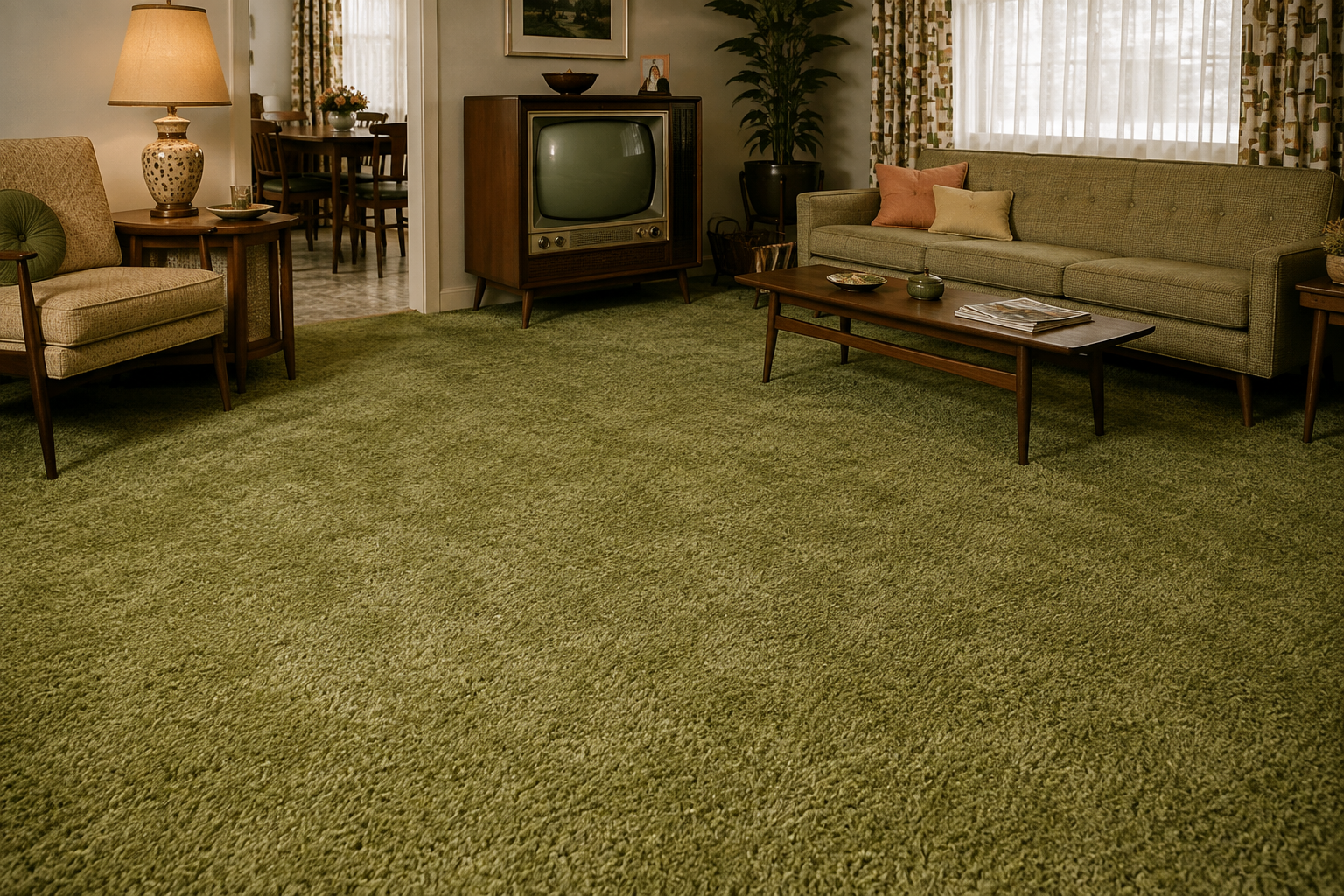
Few decorating choices say midcentury American home quite like carpeting stretching from one wall to the other. Broadloom carpet made it possible to cover entire rooms rather than relying solely on individual rugs, and increasingly colorful synthetic materials helped homeowners coordinate floors with curtains, sofas, and other furnishings. The result could feel wonderfully soft under bare feet, although it also meant vacuum marks, stubborn furniture dents, and plenty of cleaning. The especially deep shag carpeting people associate with the era became even more prominent as the 1970s approached.
An Iron and Full-Size Ironing Board
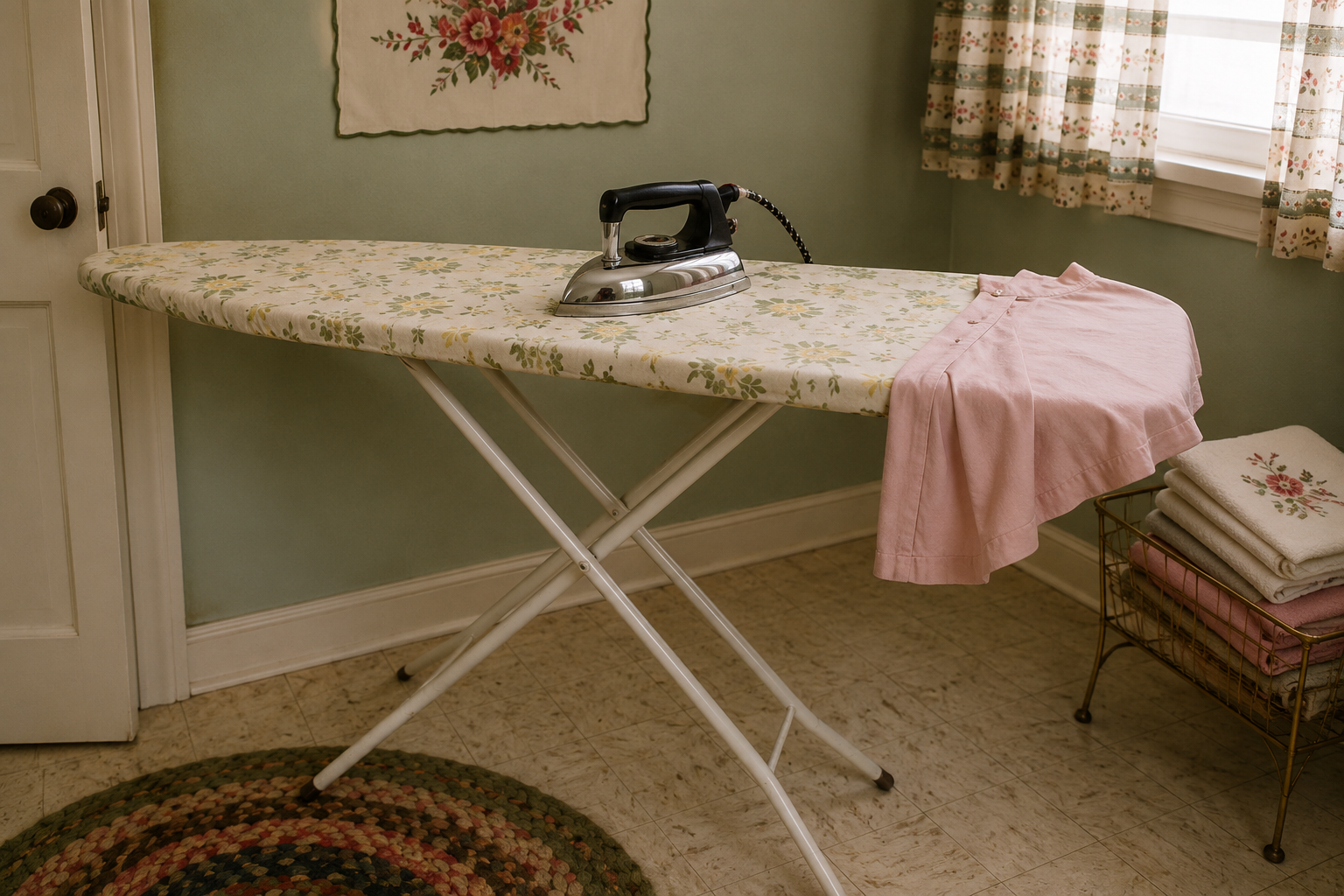
Ironing wasn’t an occasional emergency reserved for weddings and job interviews. For many households, it was simply part of keeping clothes presentable. Cotton shirts, dresses, school clothes, table linens, and other fabrics could require regular pressing, so a folding ironing board and electric iron were practical equipment rather than forgotten closet clutter. Spray starch frequently joined the routine. As wrinkle-resistant fabrics and easier-care clothing became more common, some of that workload eased, but many people who grew up in the ’60s remember ironing as a recurring household chore.
A Sewing Machine Ready for Repairs
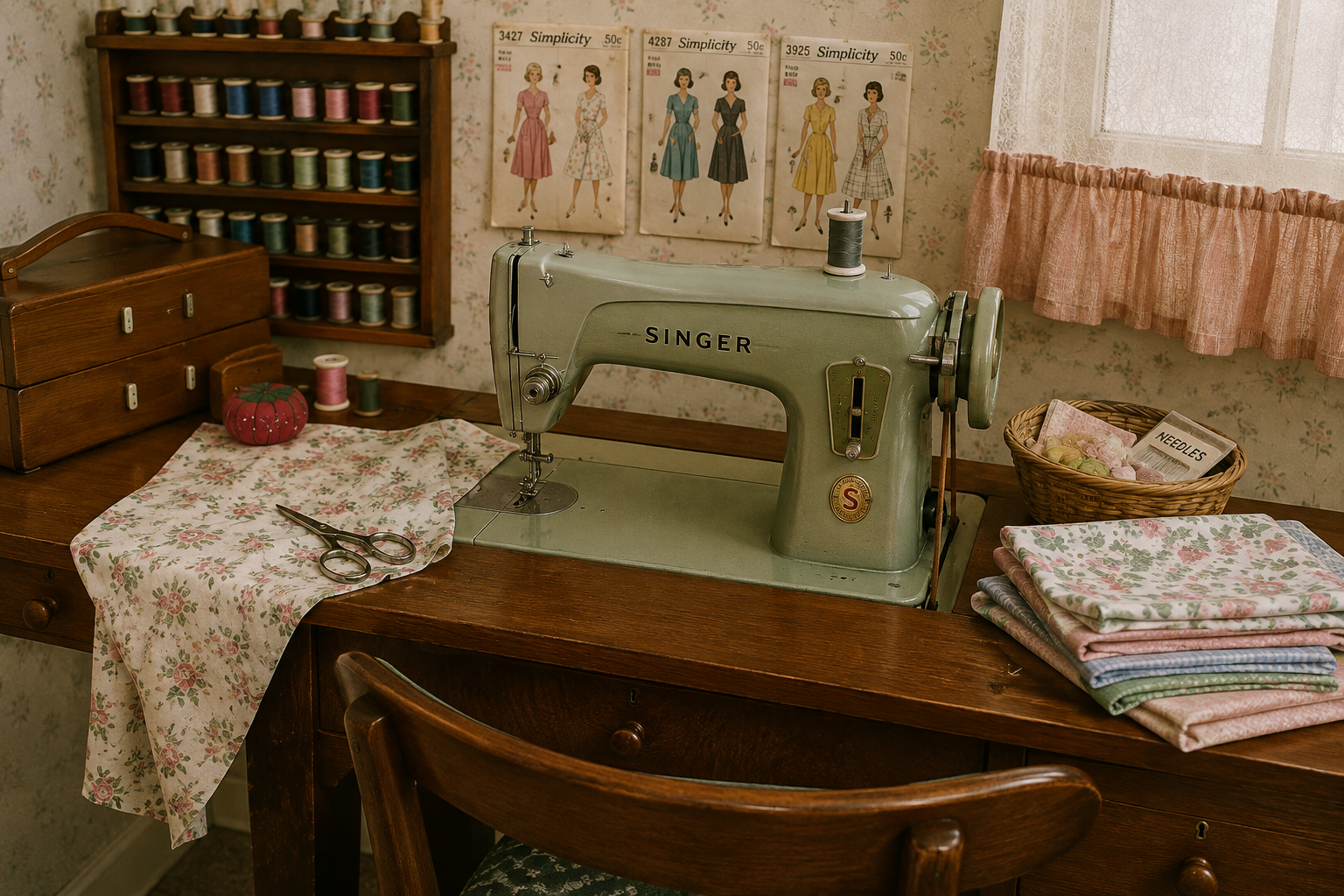
A torn seam or too-long hem didn’t automatically mean replacing a garment. Home sewing remained a useful money-saving skill, and sewing machines were used for everything from mending children’s clothing to making curtains and entire outfits. Singer was particularly recognizable; the Smithsonian holds a substantial Singer industrial-design archive whose strongest concentration is from 1960 through 1977, as well as documentation for the company’s 1961 Slant-O-Matic 500. Paper patterns also gave home sewers a blueprint for recreating current fashions.
Sign up for our newsletter
A Refrigerator That Doubled as a Bulletin Board
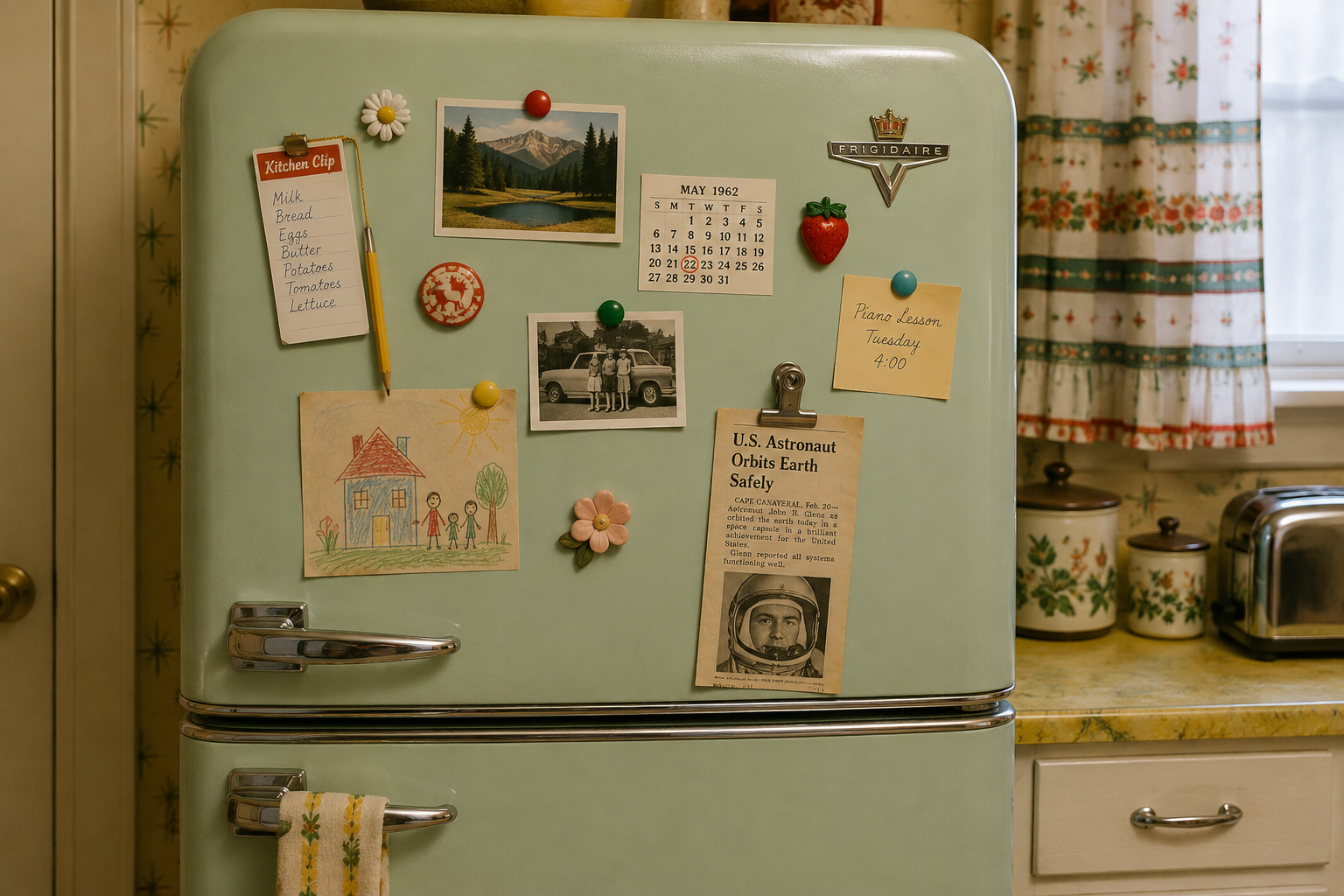
The refrigerator wasn’t just where the milk went. In plenty of family kitchens it gradually became an unofficial information center, surrounded by children’s drawings, shopping lists, calendars, photographs, recipes, and reminders. The appliance itself had become basic household infrastructure by the 1960s, while the kitchen remained one of the busiest shared spaces in the home. Compared with today’s smart refrigerators and phone-based calendars, the system was decidedly low-tech. If somebody needed the family to remember something, sticking it where everyone went for food was hard to beat.
A Kitchen Table Used for Almost Everything
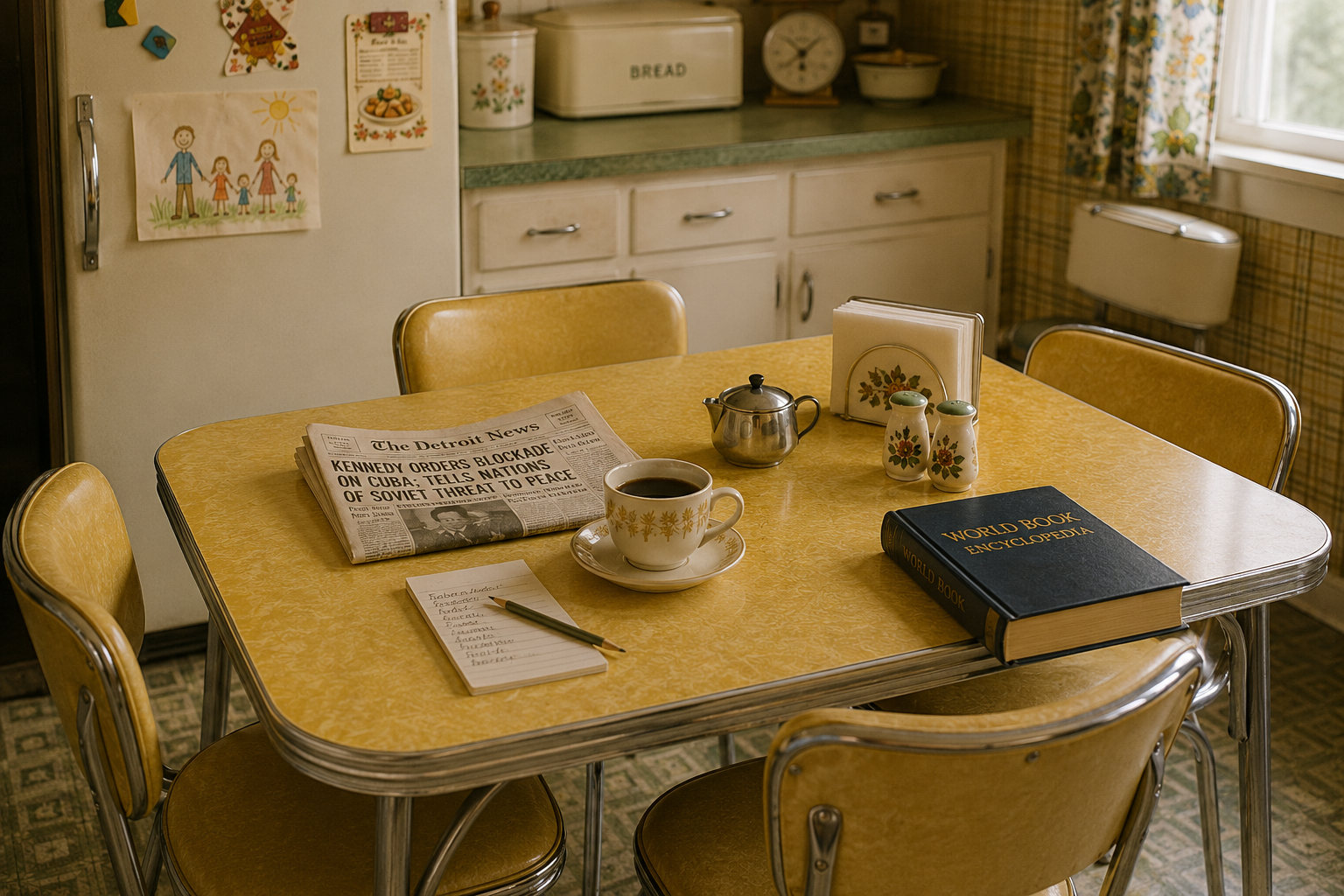
The kitchen or dining table had a much bigger job than simply holding dinner. It could become a homework desk in the afternoon, a sewing or craft surface later on, a place to sort bills, and eventually the setting for a family meal. Encyclopedia volumes might be spread across it one night and a board game the next. That multipurpose role is easy to overlook when remembering vintage appliances and decor, but it captures something important about the era: families often shared not only their technology, but their everyday working and living spaces too.
A Clothesline and a Bag of Clothespins
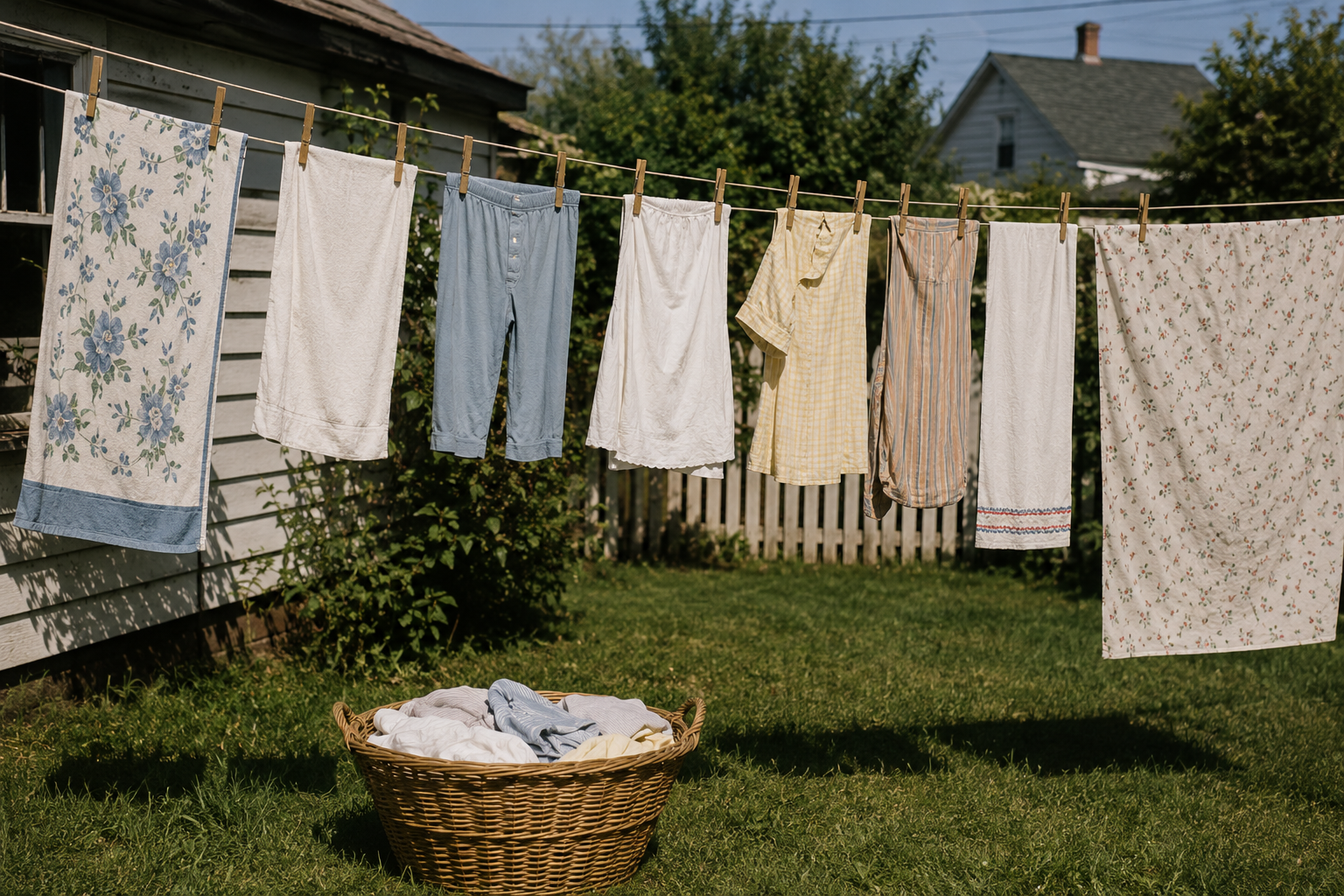
A dryer wasn’t something every family could count on in 1960. The Census questionnaire distinguished among electric dryers, gas dryers, and households with no dryer at all, showing that machine drying was still far from universal. For many families, that left the clothesline doing plenty of work. Sheets, towels, shirts, and children’s clothes went outside when the weather cooperated, while drying racks handled indoor duty. It cost essentially nothing to operate, although rain, winter weather, and stiff laundry could make the savings less convenient.
A Family Photo Album
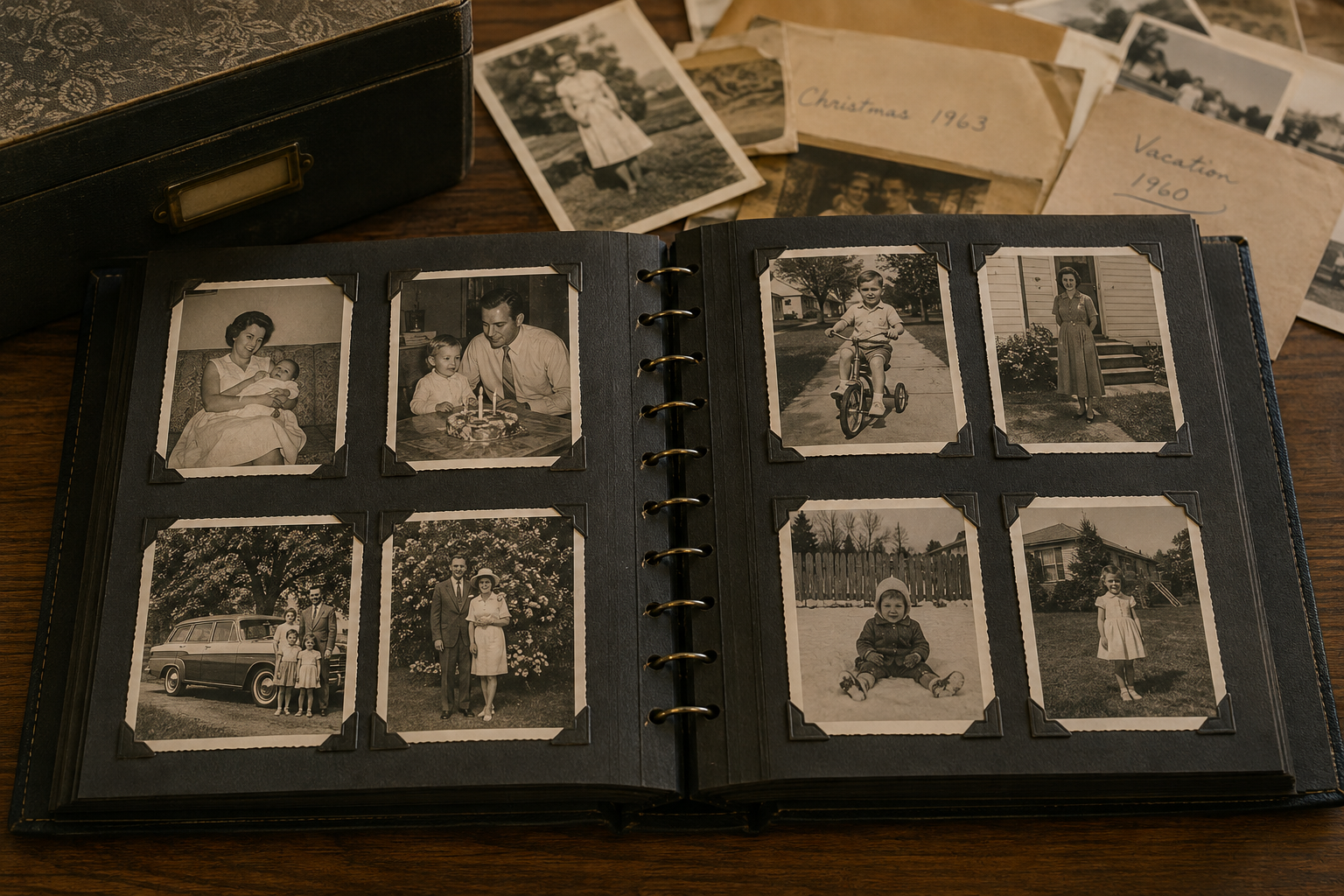
Family pictures lived in albums, envelopes, and shoeboxes rather than disappearing into a camera roll containing 20,000 images. Albums documented birthdays, Christmas mornings, vacations, new babies, graduations, and relatives posed beside the family car. The Smithsonian preserves family albums from the period, including one assembled around 1960 with black-and-white snapshots of everyday family life. Kodak made casual photography even easier when it introduced its cartridge-loading Instamatic line in 1963; more than 50 million Instamatic cameras were produced between 1963 and 1970.