These days, there’s a service for just about everything. You can hire someone to mow your lawn, clean your house, wash your car, assemble your furniture, or even pick up dinner and bring it straight to your doorstep. But for many baby boomers growing up in the 1950s, ’60s, and ’70s, paying someone else to handle everyday chores wasn’t something their families regularly considered. If something needed doing around the house, chances were somebody in the family would figure out how to do it.
Of course, it wasn’t necessarily because everyone enjoyed spending their weekends scrubbing floors or pulling weeds. For many households, doing things yourself was simply the most practical way to save money. Parents passed down skills to their children, neighbors occasionally lent a hand, and a well-stocked toolbox or sewing kit could solve plenty of everyday problems without spending a dime on labor.
While professional services certainly existed back then, many of the tasks we routinely outsource today were once ordinary family responsibilities. From changing the oil in the driveway to baking birthday cakes from scratch, here are 12 things boomers rarely paid someone else to do.
Mowing and Maintaining the Lawn

For plenty of boomer families, Saturday mornings meant one thing: Somebody had to mow the lawn. Instead of paying a landscaping company to show up every week, homeowners typically handled the job themselves, often recruiting their children to rake leaves, pull weeds, or trim the edges of the yard. Depending on the household, that might mean pushing a heavy manual mower across the grass or wrestling with a noisy gasoline-powered machine that never seemed to start on the first pull. The work wasn’t particularly glamorous, especially during the hottest days of summer, but it was simply part of maintaining a home. And if you were a teenager hoping to earn a little spending money, mowing the neighbors’ lawns could be a pretty reliable side hustle.
Washing and Vacuuming the Family Car

Before professional detailing packages and unlimited car wash memberships became commonplace, many families washed their cars right in the driveway. All you really needed was a bucket of soapy water, a sponge, a garden hose, and a few old towels that had been retired from bathroom duty. Parents might handle the roof and windshield while the kids were assigned the tires, hubcaps, and lower door panels. Cleaning the interior was another project entirely, involving shaking out floor mats, wiping down the dashboard, and dragging the household vacuum cleaner outside with an extension cord. By the time everyone finished, the car was sparkling, the driveway was soaked, and at least one family member had probably gotten sprayed with the hose.
Changing the Oil and Handling Basic Car Maintenance

For many boomers, learning how to work on a car was practically a rite of passage. Fathers, uncles, older siblings, and mechanically inclined neighbors often taught younger drivers how to check the oil, replace windshield wipers, change a tire, and tackle other basic maintenance jobs. Instead of automatically scheduling an appointment at a garage, some families spent weekend afternoons with the hood propped open, a toolbox nearby, and a repair manual spread across the workbench. Older vehicles generally had fewer electronic systems than today’s cars, making certain repairs easier for amateur mechanics to understand. Of course, not everyone was comfortable changing their own oil, and professional mechanics were still essential for complicated problems. But knowing your way around an engine could save a considerable amount of money. Anyone attempting an oil change today should also remember that used motor oil needs to be collected and recycled properly.
Sewing on Buttons and Repairing Clothes
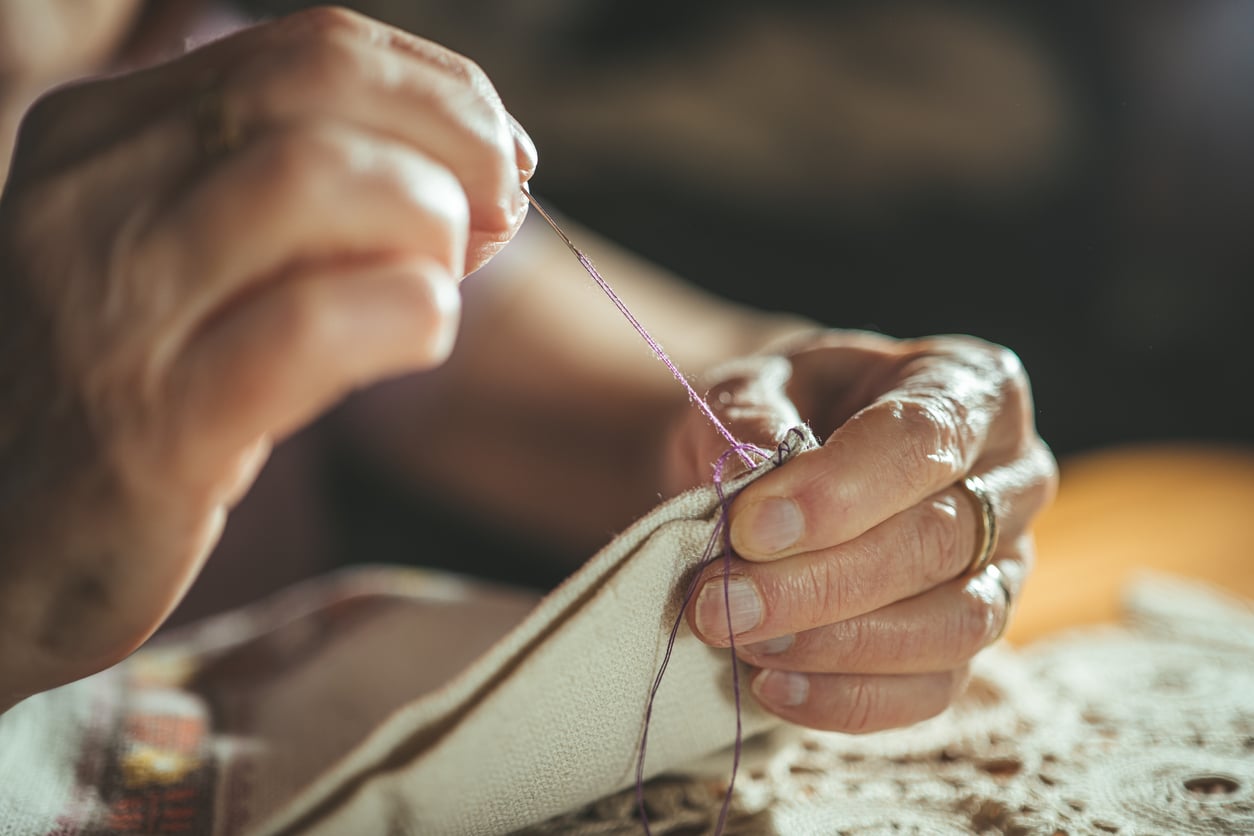
A missing button or torn seam wasn’t necessarily a reason to visit a tailor, much less throw away an otherwise perfectly good piece of clothing. Many boomer households had a sewing kit tucked away in a drawer or closet, often inside an old cookie tin that contained absolutely no cookies. Instead, you’d find tangled thread, spare buttons, needles, pins, and mysterious fabric scraps saved from previous projects. Parents and grandparents frequently knew how to hem pants, patch holes, repair pockets, and make school clothes last another year. Some children even learned these skills in home economics classes. While professional alterations were available, paying someone to replace a button would have seemed unnecessary in plenty of households. And considering how expensive clothing can be today, knowing a few basic stitches remains a useful way to stretch a wardrobe budget.
Painting Rooms and Doing Minor Home Repairs

When a bedroom needed a fresh coat of paint or a cabinet handle came loose, many boomer families didn’t immediately start looking for a handyman. Instead, someone headed to the garage, pulled out the toolbox, and turned the problem into a weekend project. Painting a room might involve spreading old newspapers across the floor, taping around the trim, and spending hours rolling paint onto the walls. Minor repairs, from tightening loose screws to patching small holes, were often handled with whatever tools were already around the house. Sometimes the results looked professional, and sometimes they were a little less impressive, but the money saved on labor made the effort worthwhile. Of course, certain jobs are better left to professionals, especially electrical work, major plumbing repairs, and projects involving potentially hazardous materials. Homes built before 1978 may also contain lead-based paint, which requires special precautions before renovation.
Trending on Cheapism


Cooking Dinner Instead of Ordering Delivery

For many families growing up in the ’50s, ’60s, and ’70s, dinner was something somebody prepared in the kitchen, not something that arrived at the front door in an insulated delivery bag. Pizza delivery and takeout certainly existed, but ordering food wasn’t always the convenient everyday option it has become. Instead, households relied on familiar recipes, pantry staples, inexpensive cuts of meat, and leftovers that could be transformed into another meal. Meatloaf, casseroles, pot roast, spaghetti, and slow-cooker dinners helped feed entire families without requiring a restaurant bill. And if someone complained about what was being served? There was a good chance they’d be told to eat what was on the table. Today, delivery apps make it tempting to outsource dinner several nights a week, but cooking at home can still help avoid restaurant markups, delivery fees, and service charges.
Cleaning the House From Top to Bottom

Hiring someone to clean the house every week wasn’t a regular expense for many boomer households. Instead, sweeping, mopping, dusting, scrubbing bathrooms, and washing windows were simply chores that needed to get done, often with the entire family participating. Saturday mornings might involve someone running the vacuum cleaner while another person polished furniture, cleaned the kitchen counters, or tackled the bathroom. Children were frequently expected to make their beds, straighten their rooms, and help with smaller tasks before heading outside to play. There were no robotic vacuums quietly navigating the living room, and many cleaning products required plenty of old-fashioned elbow grease. Professional housecleaning services can certainly be worth the money for people who need the help, but basic cleaning remains one of those household responsibilities that can be handled with relatively inexpensive supplies.
Growing Vegetables Instead of Buying Everything at the Store

For some boomer families, the backyard wasn’t just a place for barbecues and lawn chairs. It was also where tomatoes, cucumbers, green beans, lettuce, and other vegetables grew throughout the warmer months. Maintaining a vegetable garden meant preparing the soil, planting seeds, pulling weeds, watering regularly, and keeping an eye out for hungry insects. Children might be assigned the less exciting jobs, like weeding between rows or carrying buckets of water. But when harvest time arrived, there was something satisfying about bringing a basket of fresh vegetables into the kitchen. Families with productive gardens sometimes ended up sharing extra tomatoes or zucchini with neighbors who had more than enough of their own. Gardening wasn’t necessarily cheaper in every situation, especially when accounting for supplies and time, but it offered a practical way to supplement grocery shopping while learning useful skills.
Sign up for our newsletter
Preserving Fruits and Vegetables for Winter

When a garden produced more tomatoes, peaches, or green beans than a family could eat, letting everything go to waste wasn’t the only option. Some households spent long summer afternoons canning vegetables, making homemade jam, freezing produce, or preserving fruit to enjoy during the colder months. Kitchens could become hot and crowded with glass jars, large pots, and countertops covered in freshly picked produce. Children sometimes helped wash vegetables, peel fruit, or prepare ingredients while parents and grandparents handled the more complicated steps. These traditions also provided an opportunity to pass down recipes and practical knowledge between generations. Today, buying canned vegetables or jars of preserves is certainly easier, but home food preservation remains popular among people who enjoy making things themselves. Anyone interested in trying it should follow modern, tested food-safety instructions rather than relying on potentially outdated family canning methods.
Packing, Loading, and Moving Their Own Furniture

Moving to a new house or apartment didn’t always involve hiring a company to pack every dish, wrap the furniture, and carry boxes onto a truck. For many boomers, moving day meant collecting cardboard boxes from local stores, borrowing a pickup truck, and convincing a few friends or relatives to sacrifice their Saturday. Furniture was carefully maneuvered through narrow doorways, mattresses were carried down staircases, and somebody inevitably complained about how heavy the sofa was. There might have been a few scratched walls or arguments about how to fit everything into the truck, but the goal was to get the job done without spending a fortune. Friends who helped were often rewarded with pizza, sandwiches, or cold drinks afterward. Professional movers can be invaluable for large households, long-distance relocations, or heavy furniture, but handling a smaller move yourself can still eliminate substantial labor costs.
Baking Birthday Cakes at Home

Before elaborate custom birthday cakes became a familiar sight on social media, plenty of children’s birthday parties featured a cake made right in the family kitchen. Sometimes it was prepared entirely from scratch, while other times a boxed cake mix did most of the heavy lifting. Either way, parents or grandparents usually handled the frosting, decorations, and candles themselves. A simple rectangular sheet cake could become something special with colorful sprinkles, candy decorations, plastic figurines, or a child’s name written somewhat unevenly in icing. Not every homemade cake looked like something from a professional bakery, but that was part of the charm. And if the frosting ended up a little crooked or the cake leaned to one side, nobody seemed particularly concerned once it was time to eat. Making birthday cakes at home remains a relatively inexpensive alternative to ordering elaborate custom creations.
Preparing Their Own Income Tax Returns

Long before tax preparation software could walk people through their returns, many Americans sat down at the kitchen table with paper forms, instruction booklets, calculators, and stacks of financial records. Filing taxes could be a frustrating annual ritual, especially when someone realized they’d misplaced an important document or made a mistake halfway through a form. But households with relatively straightforward finances could often complete their returns without paying an accountant or tax preparation company. Professional tax services certainly existed, and H&R Block had already become a major business by the 1970s, but doing your own taxes remained an option for people willing to work through the paperwork. Today, complicated financial situations may justify professional assistance, but taxpayers with simpler returns can still take advantage of free preparation options offered through the IRS.
When Doing It Yourself Was Just Part of Everyday Life

Looking back, it’s striking how many everyday responsibilities boomers and their families handled without hiring outside help. Whether it was fixing a loose button, maintaining the family car, growing vegetables, or painting the living room, knowing how to do things yourself was often a practical necessity rather than a hobby.
Of course, paying a professional isn’t always a waste of money. Sometimes the convenience, expertise, or time saved is worth every penny. But there’s something to be said for holding on to a few of those old-fashioned skills, especially when they can help keep household expenses under control. After all, not every problem requires an appointment, a subscription, or somebody else’s help.