If you went to elementary school in the 1970s, chances are you can still picture your old school library. There were rows of hardcover books, wooden tables that seemed to have been there forever, and a librarian who somehow knew exactly where everything belonged. The room had its own unmistakable atmosphere, complete with the smell of aging paper, the squeak of wooden chairs, and the occasional stern reminder to keep your voice down.
Back then, finding information wasn’t as simple as typing a question into Google. Students had to search through card catalogs, flip through enormous encyclopedias, and figure out the Dewey Decimal System before they could even begin their research. Checking out a book involved handwritten cards and rubber stamps, and forgetting to return one on time could mean an uncomfortable conversation at the circulation desk.
Of course, school libraries have changed considerably since then, but plenty of those old-fashioned features remain surprisingly easy to remember. From tiny card catalog drawers to rolling carts overflowing with returned books, here are 12 things you probably remember seeing in a school library during the 1970s.
The Wooden Card Catalog With Endless Little Drawers
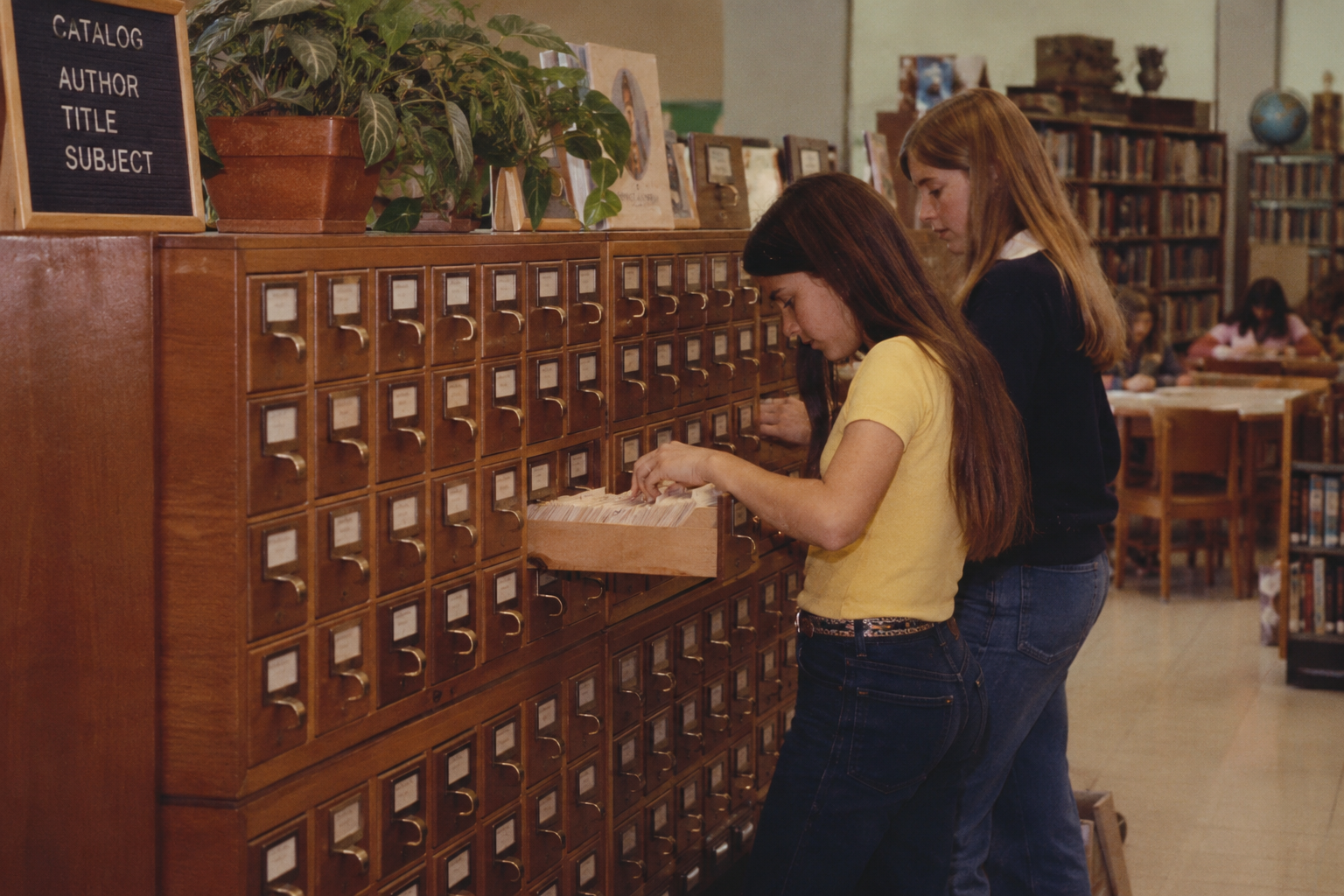
Before computers took over the job of finding books, there was the card catalog: a large wooden cabinet filled with dozens of little drawers, each containing hundreds of index cards. Students searched through cards organized by author, title, or subject, hoping to find the book they needed for a class assignment. Once you located the right card, you had to write down its call number and track down the corresponding shelf. The drawers themselves were practically an attraction, with little metal handles, handwritten labels, and rods that kept the cards from falling out. And there was something strangely satisfying about sliding a drawer open and flipping through the cards, even when you weren’t looking for anything in particular.
A Complete Set of World Book Encyclopedias
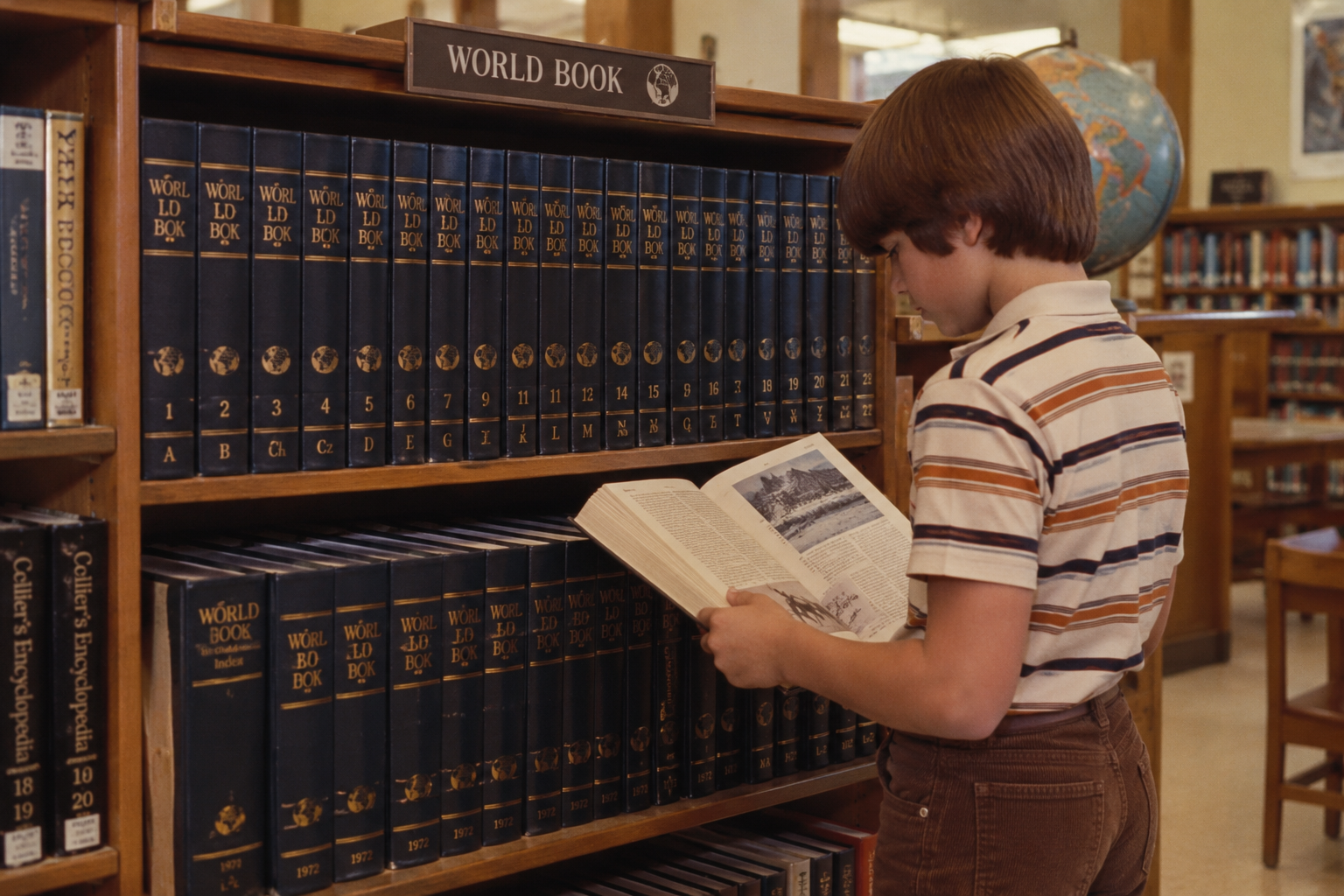
Nearly every school library seemed to have an impressive row of matching World Book encyclopedias sitting somewhere in the reference section. These thick, heavy volumes contained answers to just about everything a curious student might want to know, from the planets in our solar system to the history of ancient civilizations. Of course, researching a topic meant figuring out which volume contained the information, carefully reading through the entry, and copying important details into a notebook. You couldn’t simply search for a keyword or click on a link. And if the encyclopedia was several years old, you had to hope the information hadn’t changed too much. Still, those neatly arranged volumes made the reference shelves look like they contained all the knowledge in the world.
Library Books With Little Card Pockets Inside
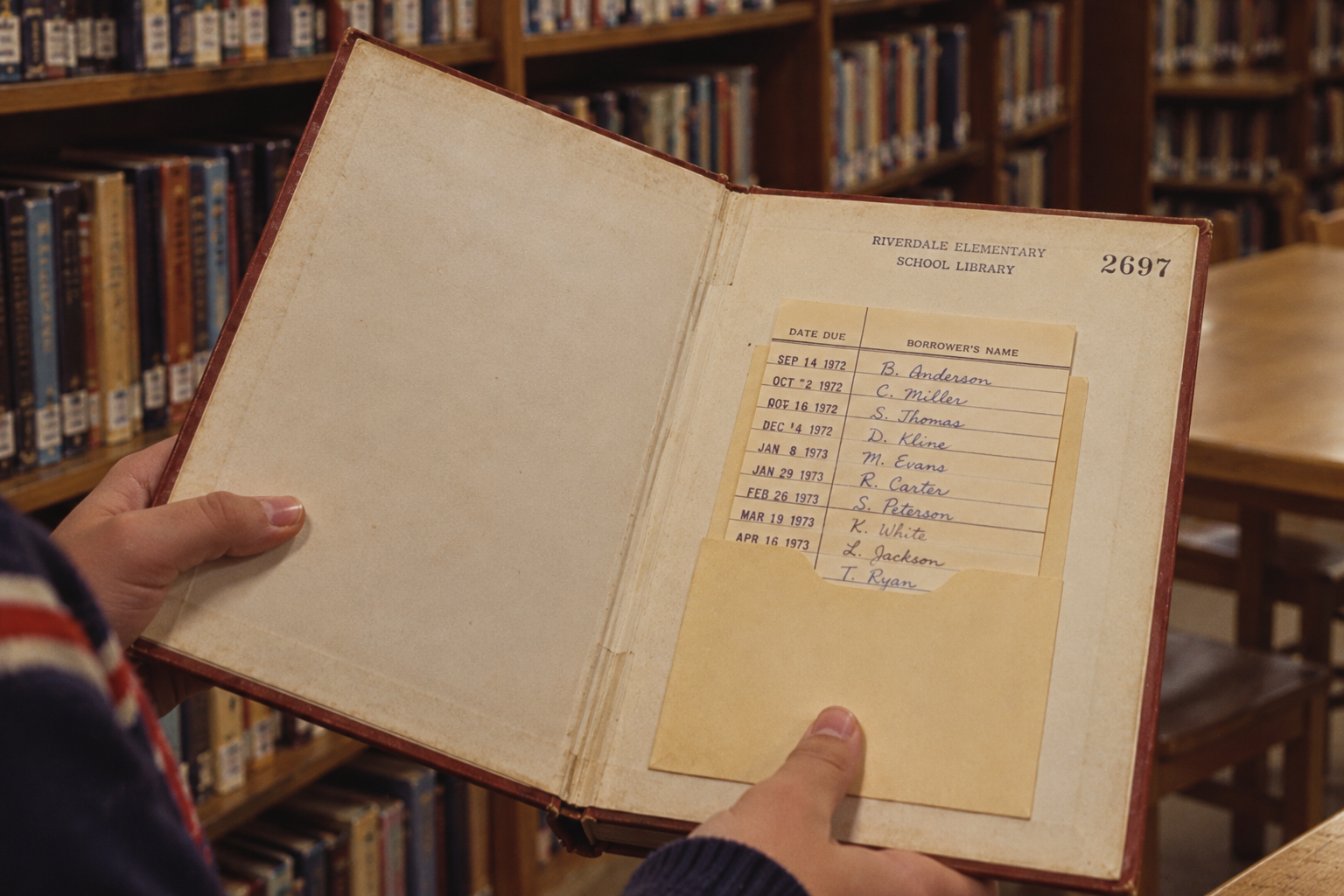
Opening the back cover of a library book in the 1970s often revealed a small paper pocket with a checkout card tucked inside. Before digital borrowing systems, these cards were an essential part of keeping track of who had borrowed what. Depending on the school, the librarian might write down your name or library number, remove the card, and file it away until you returned the book. Sometimes, older cards contained the names of students who had checked out the same title years earlier, giving you a glimpse into the book’s previous life. It was a surprisingly personal system, especially compared with today’s computerized checkouts, where borrowing a book can take just a few seconds.
The Librarian’s Rubber Date Stamp
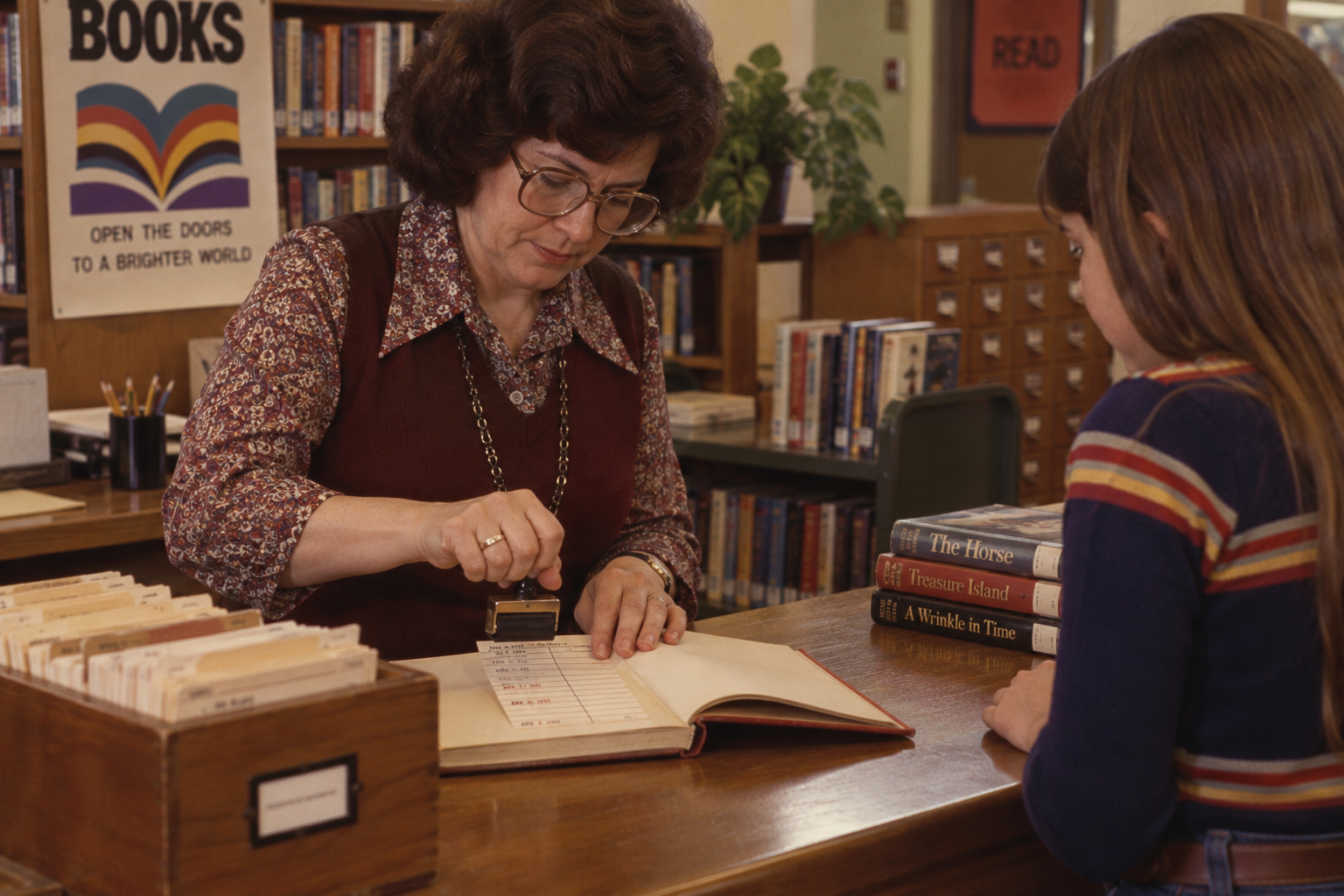
Few sounds were as familiar in a 1970s school library as the solid thump of a rubber date stamp hitting a piece of paper. After checking out a book, the librarian would stamp the due date onto a slip inside the cover, giving you a very clear reminder of when it needed to come back. There were no automatic email notifications or smartphone alerts to warn you that your book was overdue. You simply had to remember, or hope you noticed the date before it was too late. And if you returned a book late, you might find yourself standing at the circulation desk while the librarian examined the stamped date with an expression that suggested you had committed a serious offense.
Books Organized by Mysterious Dewey Decimal Numbers
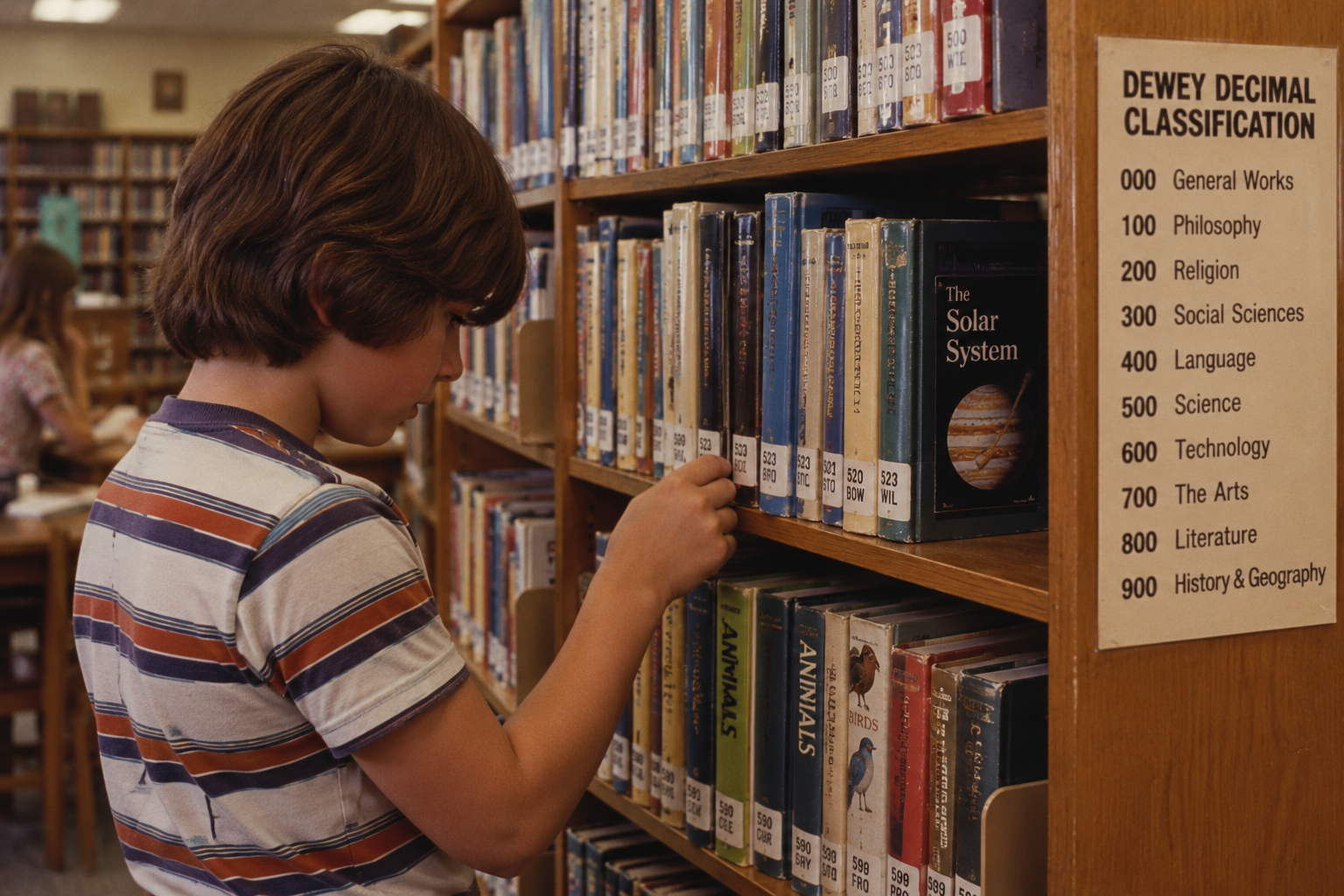
Learning the Dewey Decimal System was practically a rite of passage for students who spent time in school libraries during the 1970s. Instead of typing a subject into a search bar, you had to understand that different categories of nonfiction books were assigned specific numbers. Want to learn about animals? You needed the 500s. Interested in history or geography? Head toward the 900s. Teachers and librarians often spent entire lessons explaining how the system worked, and students were expected to use it when researching assignments. The system itself dated back to the 19th century, but for a child staring at rows of numbered book spines, figuring out where everything belonged could feel like solving a complicated puzzle.
Trending on Cheapism


An Enormous Dictionary That Never Left the Library
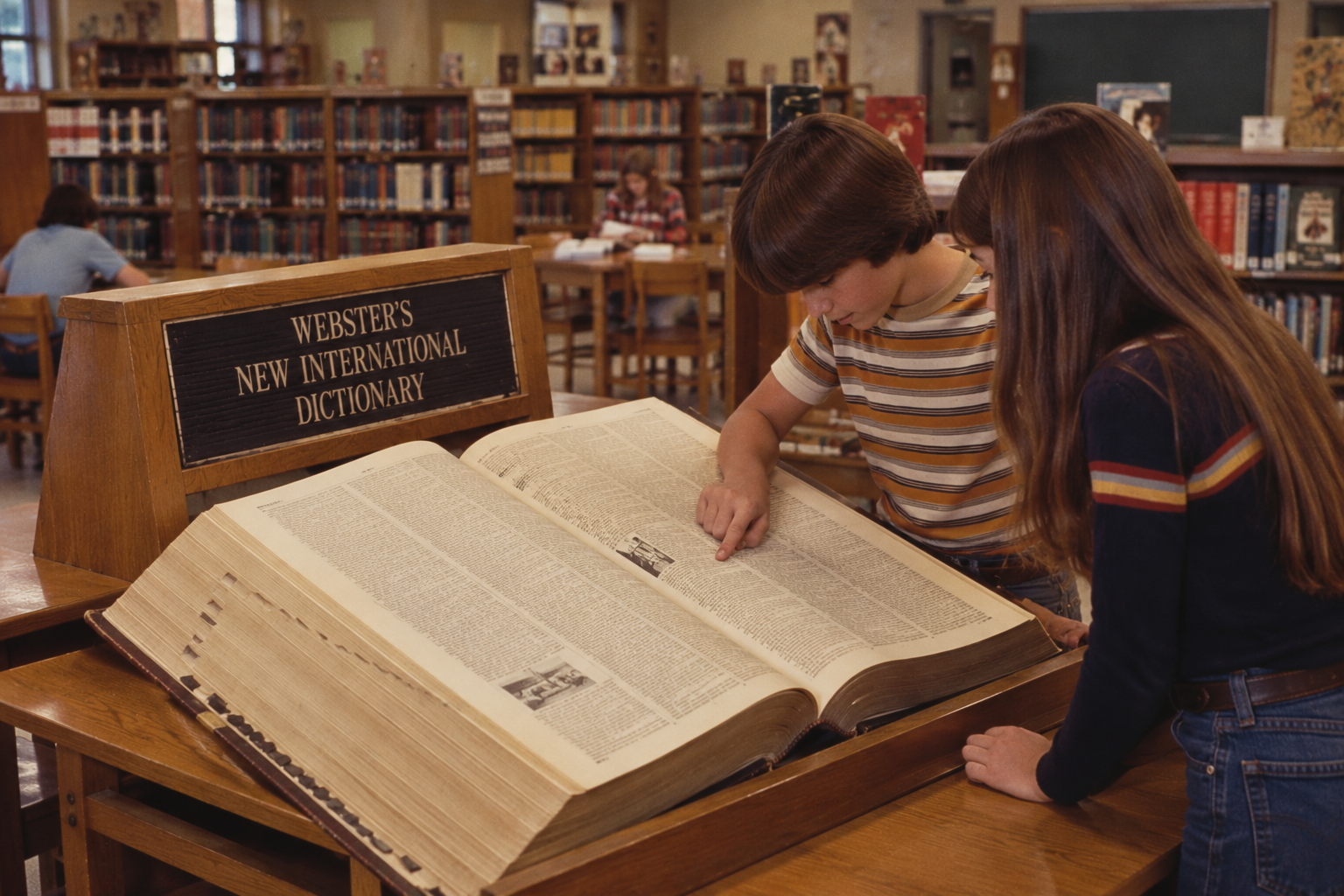
Some school libraries had a dictionary so enormous that it seemed more like a piece of furniture than an actual book. These oversized reference volumes often sat on their own wooden stands or occupied a permanent spot on a table, ready for students who needed to check a spelling, look up a definition, or settle an argument about whether a word really existed. Without spell-checking software or online dictionaries, looking up an unfamiliar word meant physically flipping through pages and knowing how alphabetical order worked. And because these dictionaries were usually too heavy or too important to check out, you had to do your searching right there. The pages were often thin, the print was tiny, and finding the correct entry could take considerably longer than anyone wanted.
A Magazine Rack Filled With Children’s Periodicals
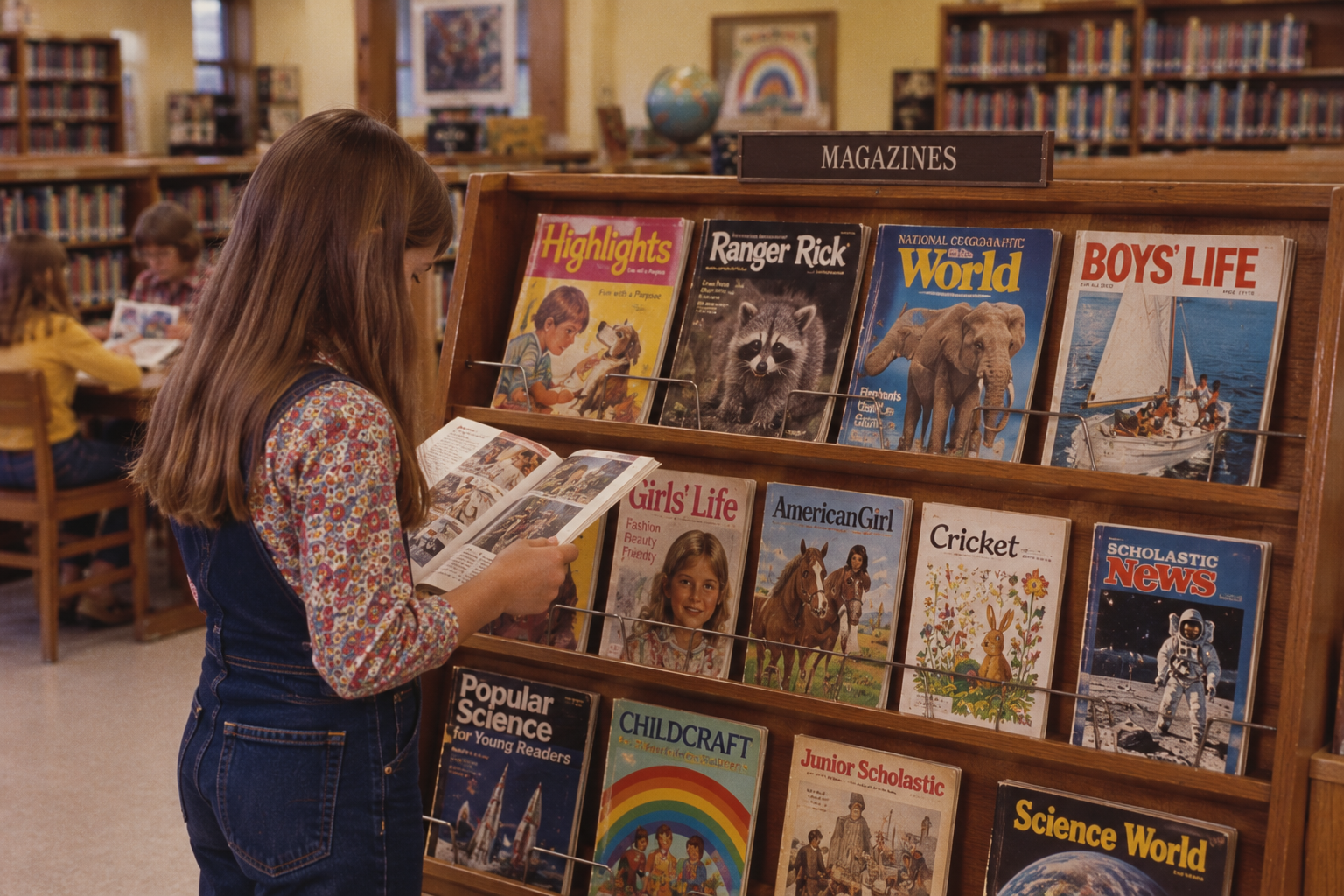
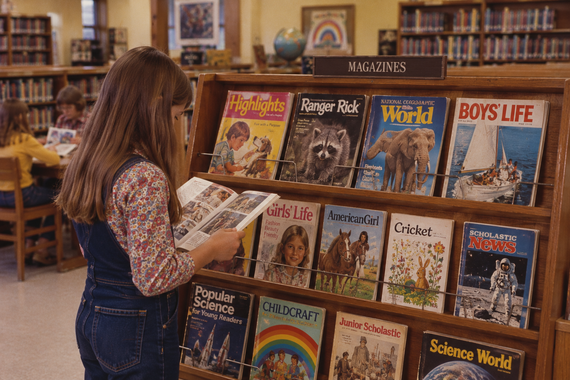
Not everything in a 1970s school library was a thick hardcover book. Many libraries also had magazine racks displaying colorful children’s publications, science magazines, nature periodicals, and educational reading materials. Depending on the school, students might find issues of Highlights, Ranger Rick, or other magazines filled with puzzles, photographs, short stories, and interesting facts. Unlike the books that stayed on the shelves for years, magazines offered something new to look forward to whenever another issue arrived. And if you finished your library assignment early, getting permission to browse the latest magazine could feel like a small victory. There was also the disappointment of discovering that another student had already claimed the issue you wanted.
Oversized Atlases and Reference Books Full of Maps
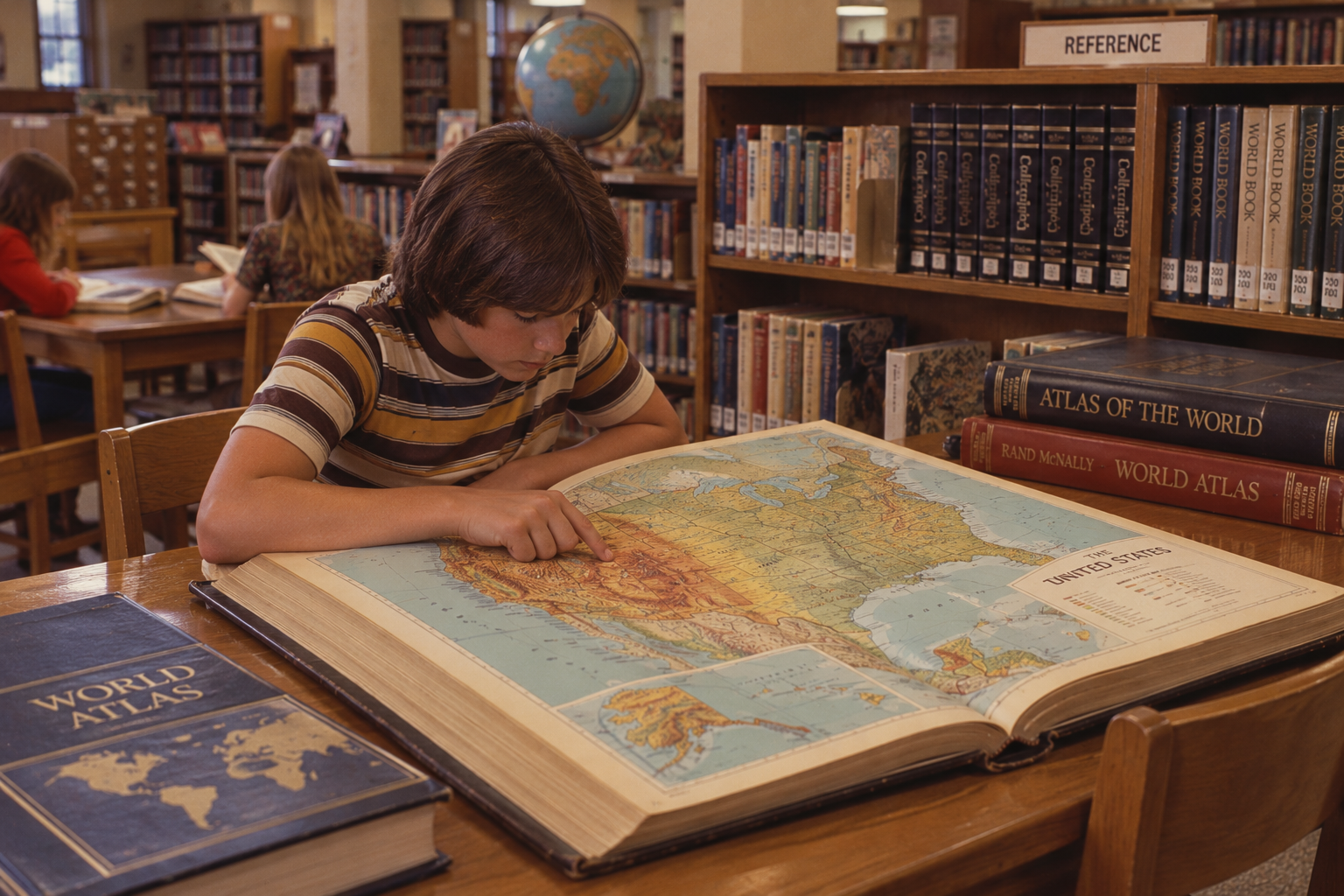
Before Google Maps and satellite imagery, students relied on enormous printed atlases to figure out what the world looked like. These reference books contained colorful maps showing countries, mountain ranges, rivers, oceans, and political boundaries, often accompanied by charts and geographical information. Some were so large that students had to spread them across an entire table just to examine a single map properly. Researching a country could mean consulting an atlas for its location, an encyclopedia for its history, and another reference book for population statistics. Of course, the maps could become outdated as borders and country names changed, but that didn’t stop generations of students from using them to complete geography assignments.
Sign up for our newsletter
Shelves of Newbery Medal Winners
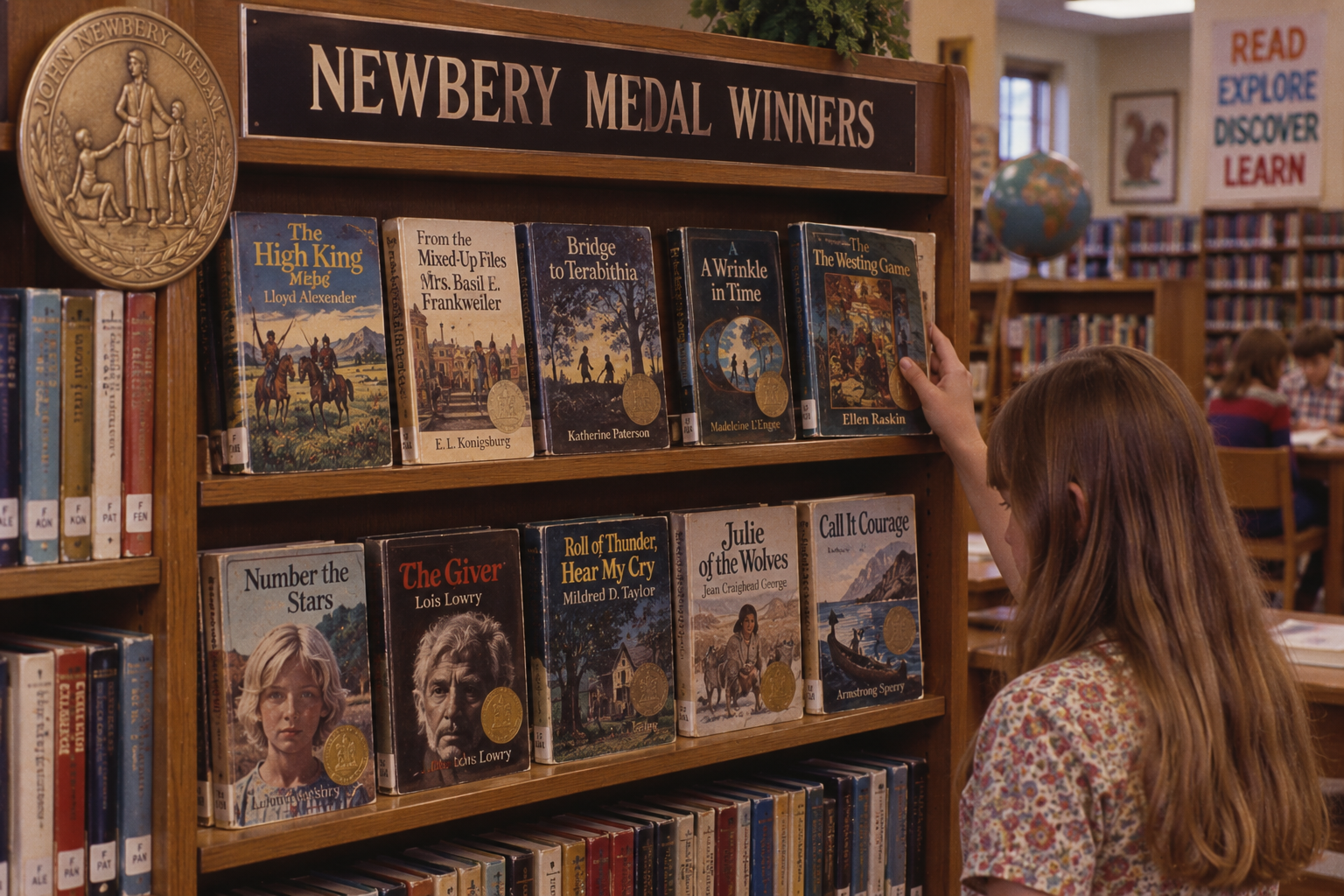
If you spent enough time browsing the fiction section of a 1970s school library, you probably noticed books decorated with shiny gold or silver award seals. These often identified Newbery Medal winners and honor books, which librarians frequently recommended to students looking for something worthwhile to read. Familiar titles included Charlotte’s Web, Sounder, and Mrs. Frisby and the Rats of NIMH, while the decade introduced future classics such as Julie of the Wolves, Roll of Thunder, Hear My Cry, and Bridge to Terabithia. Some students eagerly reached for these award-winning books, while others associated them with assigned reading and book reports. Either way, those little metallic seals made certain books stand out on the shelves, and many of the stories remain popular decades later.
A Quiet Reading Corner With Low Chairs and Little Tables
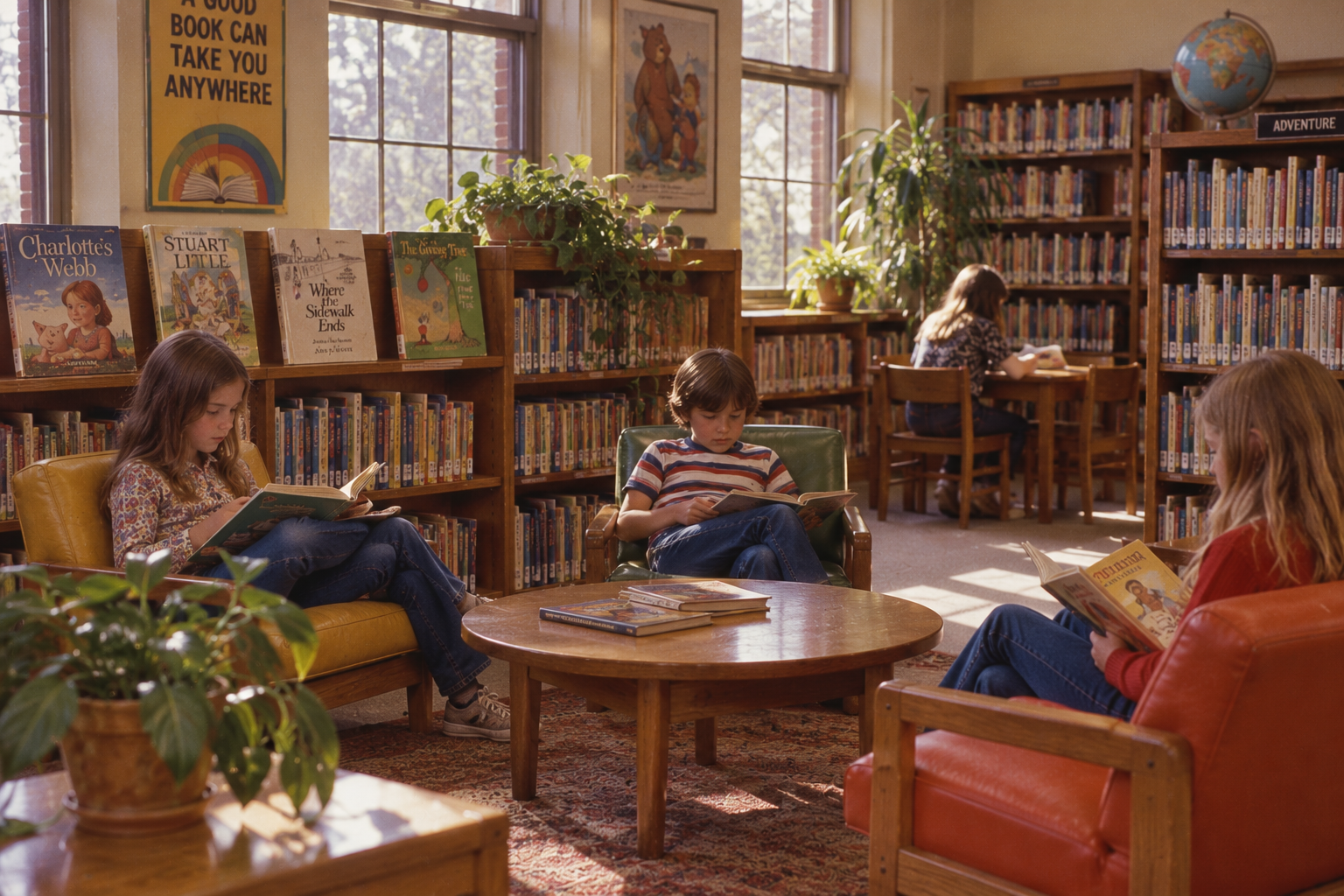
One of the best parts of visiting the school library was getting to sit somewhere other than your regular classroom desk. Some elementary school libraries had special reading corners with low wooden tables, child-sized chairs, colorful rugs, or cushions where students could settle in with a book. Compared with the rigid rows of desks in a classroom, these spaces felt almost luxurious. You could flip through a picture book, explore a new story, or simply enjoy a few minutes of quiet without having to complete a worksheet. Of course, the librarian still expected everyone to behave, and whispering too loudly could quickly earn you a warning. But for students who loved reading, those little corners could feel like the most comfortable places in the entire school.
Filing Cabinets Filled With Newspaper Clippings and Pamphlets
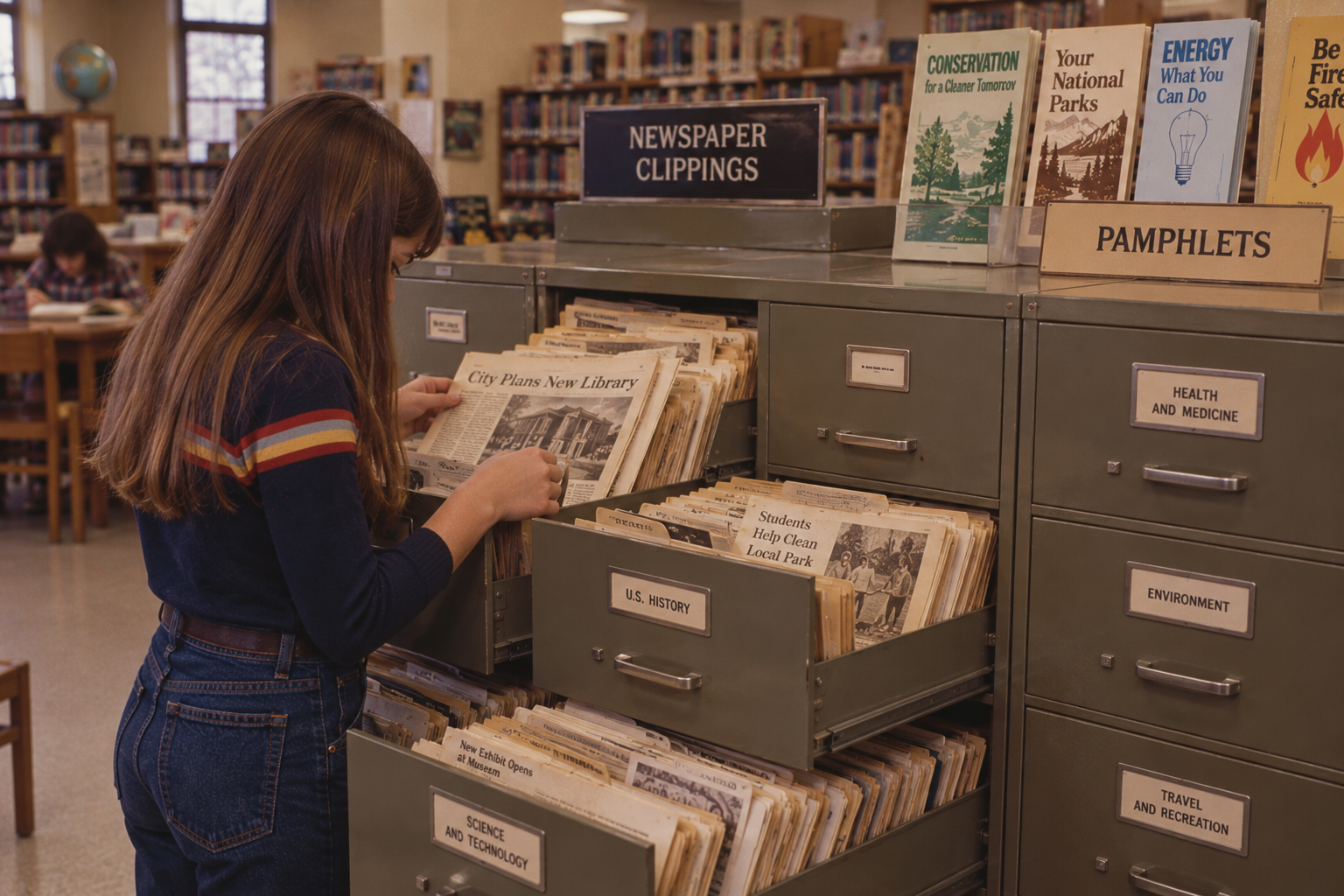
Long before students could search the internet for information about current events or local history, some school libraries maintained filing cabinets filled with newspaper clippings, pamphlets, brochures, and other reference materials. These collections, often called vertical files, helped students research subjects that weren’t necessarily covered in their encyclopedias. If you were working on a report about environmental issues, a historical event, or something happening in your community, the librarian might direct you toward a folder containing several years’ worth of articles. Finding useful information meant sorting through paper, reading carefully, and sometimes dealing with newspaper clippings that had already started turning yellow. It wasn’t the fastest research method, but it could turn a simple homework assignment into an unexpected treasure hunt.
A Library Cart Piled High With Books Waiting to Be Shelved
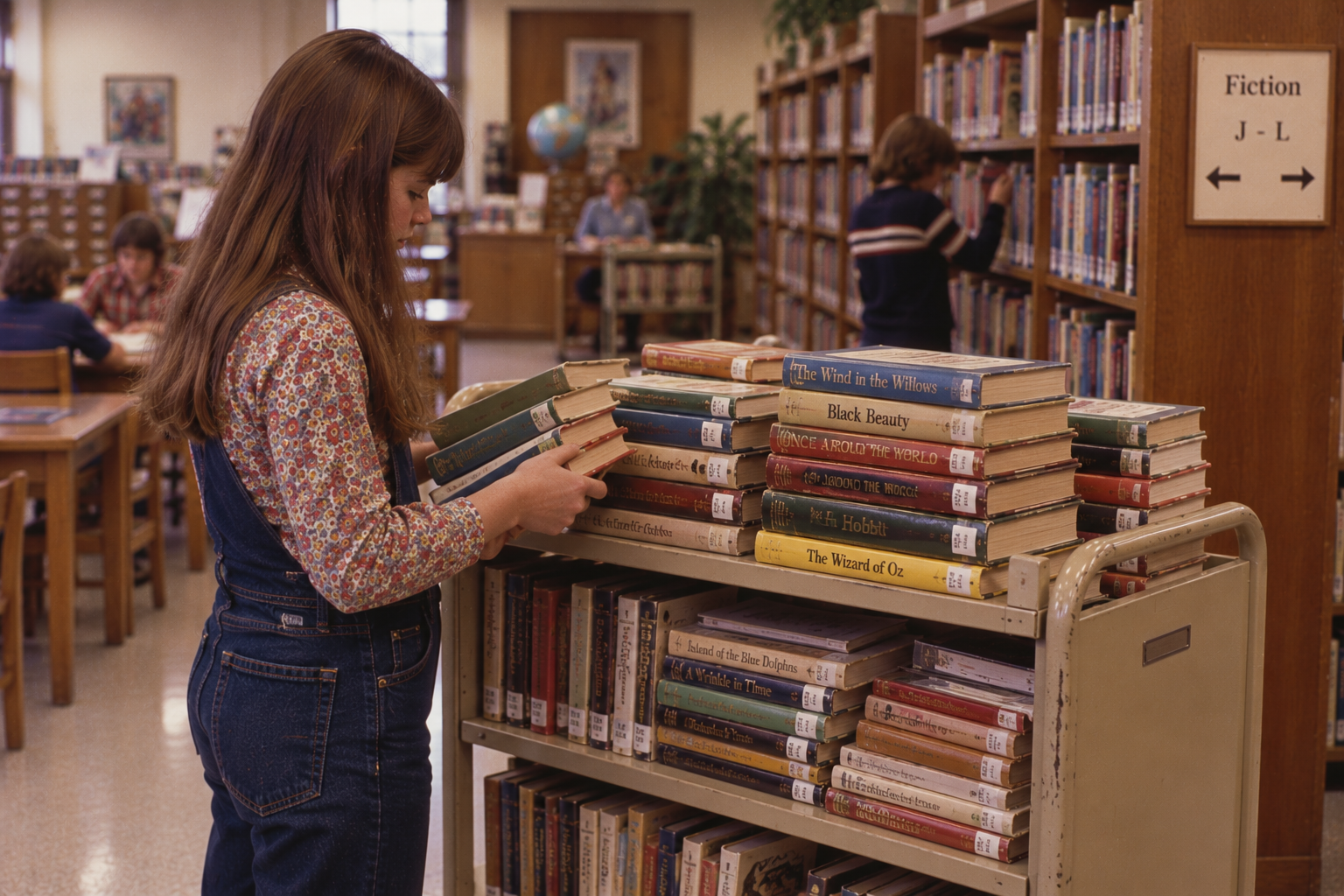
Somewhere near the circulation desk, there was often a rolling metal or wooden cart piled high with books that students had recently returned. Before everything could go back onto the shelves, librarians had to check the books in, sort them, and make sure each one returned to its proper place. Students who volunteered as library helpers might get the important responsibility of organizing these carts, straightening shelves, or putting books back in Dewey Decimal order. For everyone else, the cart could be an excellent place to spot something interesting before it disappeared into the stacks again. And there was always something satisfying about watching a librarian navigate a heavily loaded cart between the shelves without knocking anything over.
When the School Library Was a World of Its Own
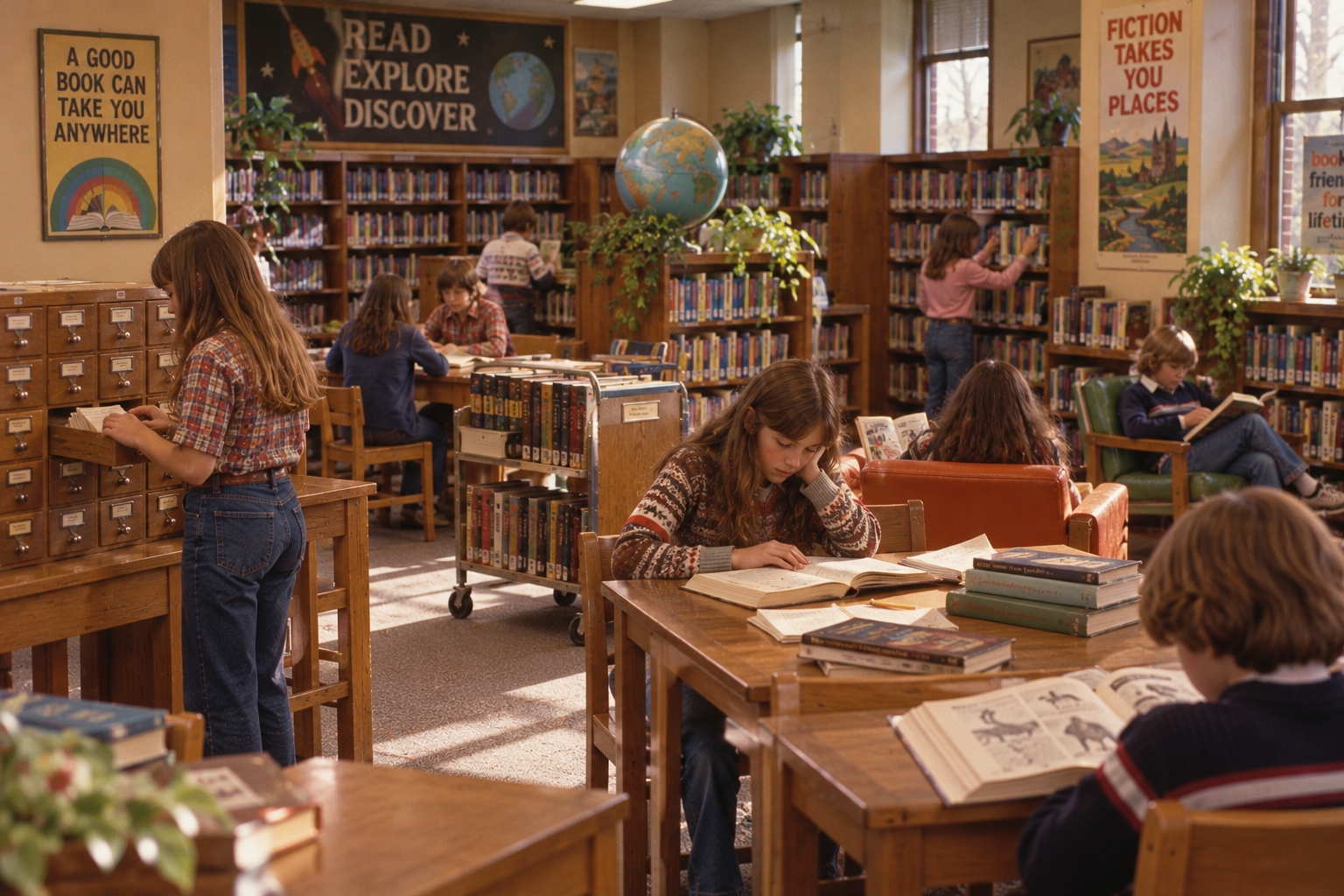
Looking back, it’s remarkable how much work went into something as simple as borrowing a book or researching a homework assignment in the 1970s. There were no online catalogs, instant search results, or electronic reminders to make things easier. Instead, students learned to navigate card catalogs, consult reference books, and rely on librarians who seemed to know the location of every title in the building.
Today’s school libraries offer conveniences that would have seemed almost unimaginable back then, but there’s something special about remembering those quiet rooms filled with wooden furniture, paper records, and shelves of well-loved books. For many kids growing up in the 1970s, a trip to the library wasn’t just another part of the school day. It was a chance to discover an entirely different world, one book at a time.