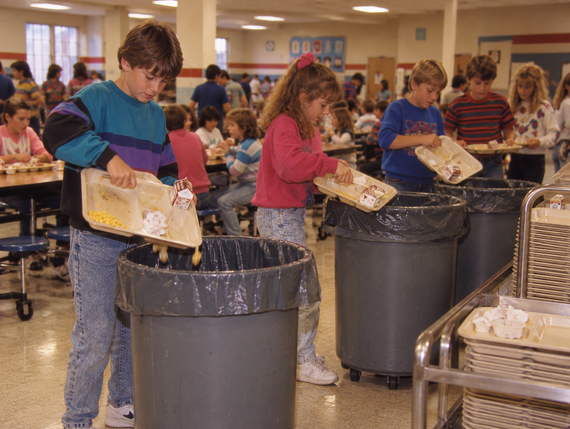
For teenagers growing up in the 1980s, earning a little spending money usually meant getting out of the house and finding someone willing to hire you. Maybe you woke up before sunrise to deliver newspapers, spent your afternoons bagging groceries, or landed a weekend job at the mall. Whatever the gig, there was something exciting about earning your own paycheck and deciding whether to spend it on a new cassette tape, a movie ticket, or a trip to the arcade.
Teenagers were also a much more familiar sight in the workforce back then. According to the Bureau of Labor Statistics, roughly 54% to 56% of Americans ages 16 to 19 participated in the labor force during much of the 1980s, compared with considerably lower rates in recent decades. And while plenty of teenagers still work today, many of the jobs that once gave young people their first taste of independence have either disappeared or changed beyond recognition.
From delivering newspapers on bicycles to selling movie tickets from tiny glass booths, here are 12 teen jobs in the 1980s that were once common but are much harder to come by today.
Delivering Newspapers Before School
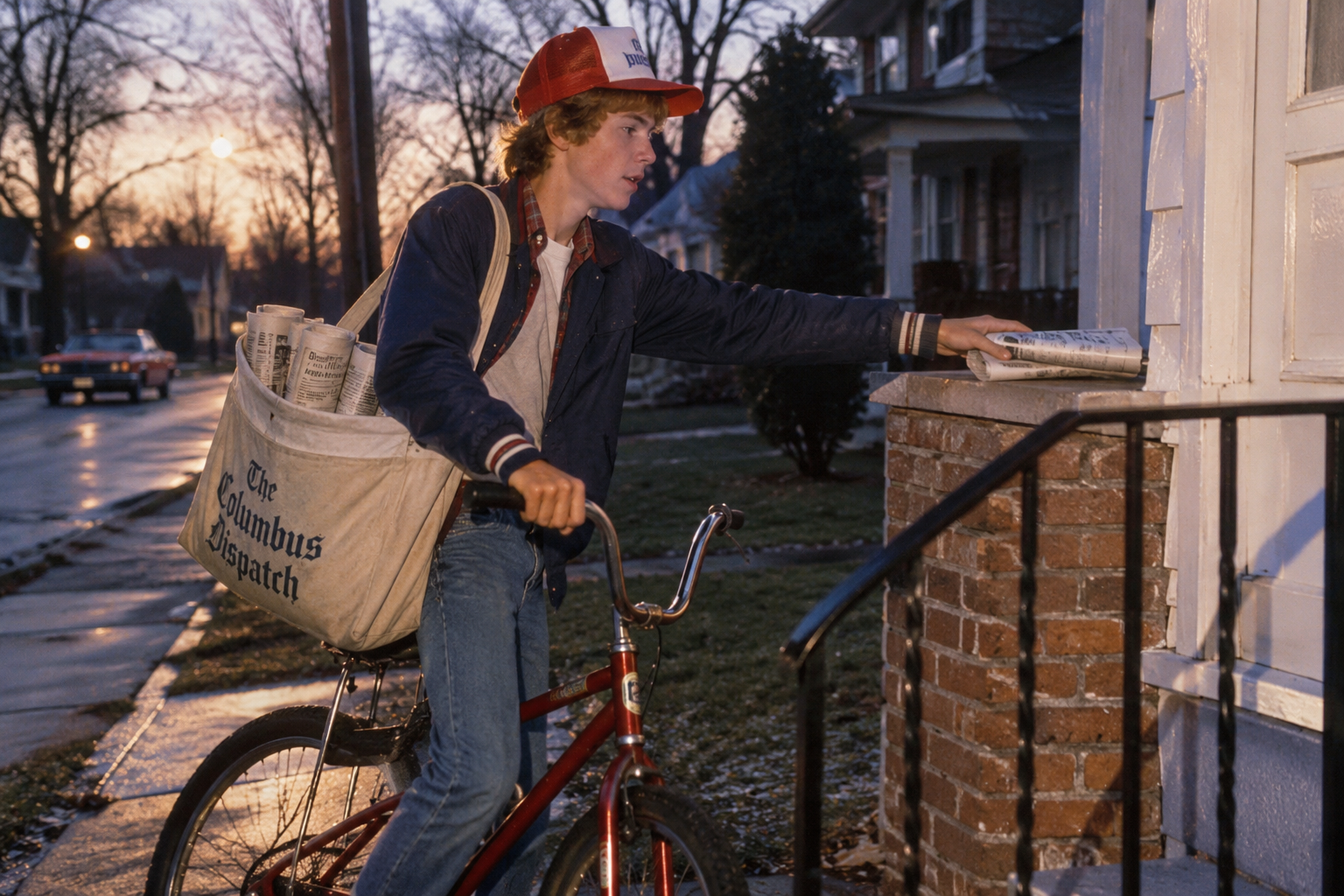
Long before news arrived on your phone, somebody had to make sure the morning paper landed on your doorstep. For plenty of teenagers in the ’80s, that meant waking up before sunrise, loading a canvas bag with newspapers, and riding a bicycle through the neighborhood while everyone else was still asleep. You had to remember which houses subscribed, keep the papers dry when it rained, and sometimes knock on doors to collect payments. A well-aimed toss onto someone’s porch was practically a professional skill. Newspaper routes were once a classic first job, but as publishers increasingly hired adults with cars and print subscriptions declined, opportunities for young carriers became much harder to find. According to a 1995 Los Angeles Times report, children made up roughly 90% of daily newspaper carriers in 1980, compared with just 57.5% in 1994.
Working at a Video Rental Store
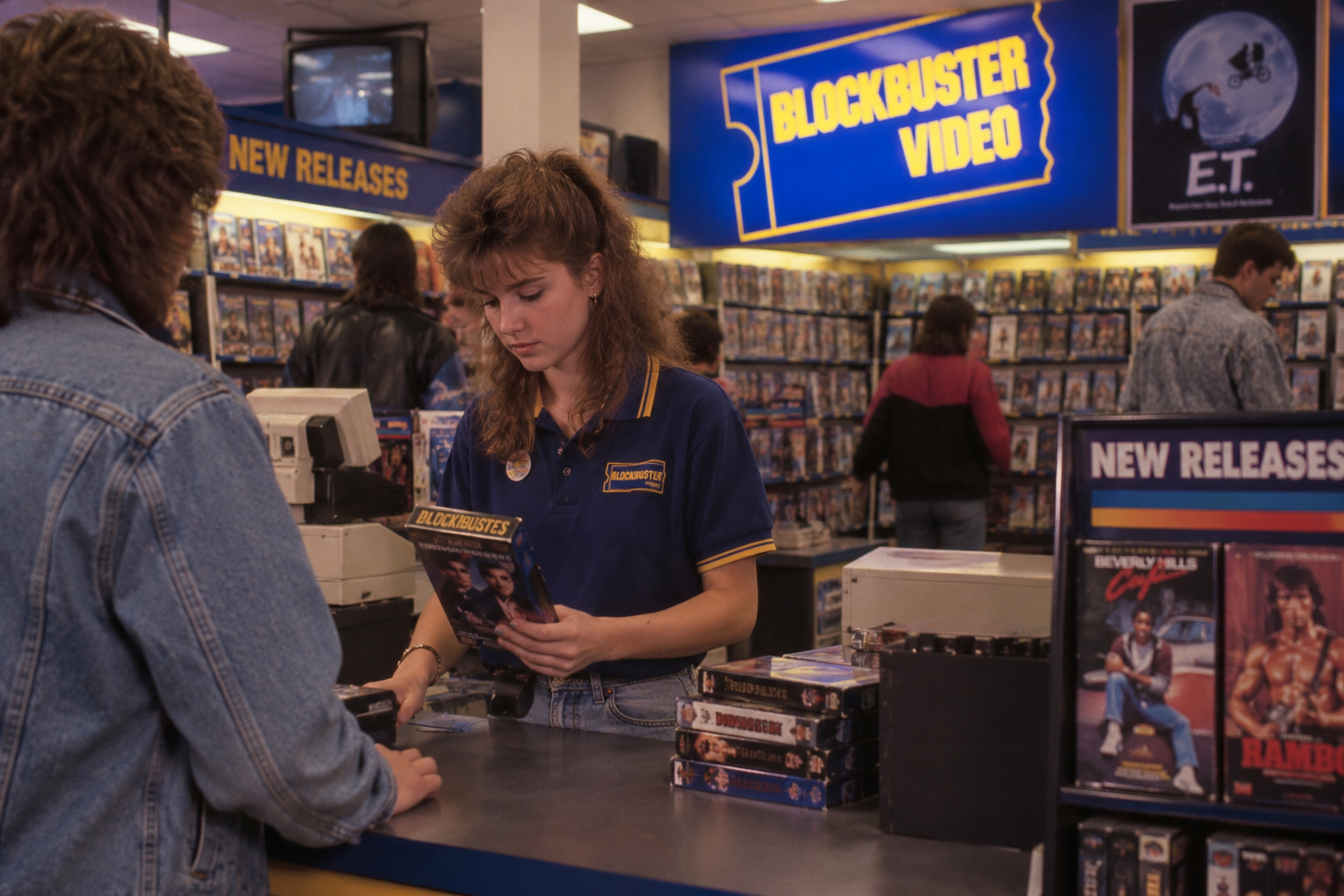
Getting hired at a video rental store in the late ’80s probably made you one of the most popular teenagers in your friend group. Your afternoons might involve organizing VHS tapes, checking movies in and out, collecting late fees, and reminding customers to rewind their rentals. There was also the occasional customer who insisted they’d returned a movie that was nowhere to be found. Blockbuster opened its first store in Dallas in 1985, and video rental shops quickly became a regular stop for families planning their weekends. Today, streaming has made most of those stores obsolete, taking the jobs along with them. The once-mighty Blockbuster chain has just one remaining location in Bend, Oregon, making this particular teenage gig something of a museum piece.
Selling Records and Cassettes at a Music Store
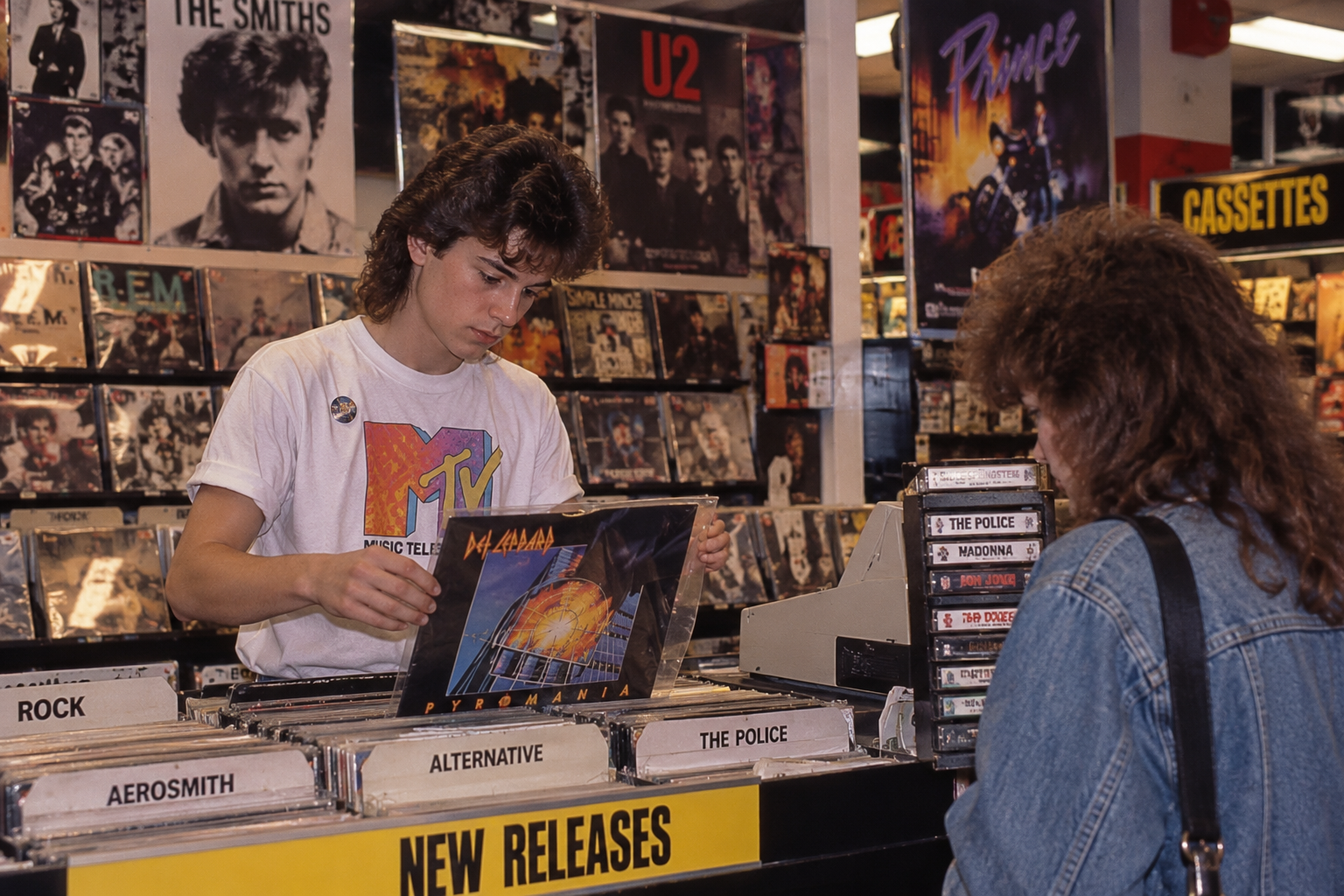
For music-loving teenagers, working at a record store was about as cool as a part-time job could get. You spent your shifts organizing vinyl albums, restocking cassette tapes, putting price stickers on new releases, and helping customers track down their favorite artists. If you were lucky, you might even get to hear the latest album before your friends did. Stores like Tower Records were popular destinations for anyone who wanted to browse music for hours, and employees were often expected to know a thing or two about what they were selling. But digital downloads and streaming eventually changed how people bought music. Tower Records closed its remaining U.S. retail stores in 2006, and while independent record shops still exist, those once-common mall music store jobs are considerably harder to find.
Running Games at a Neighborhood Arcade
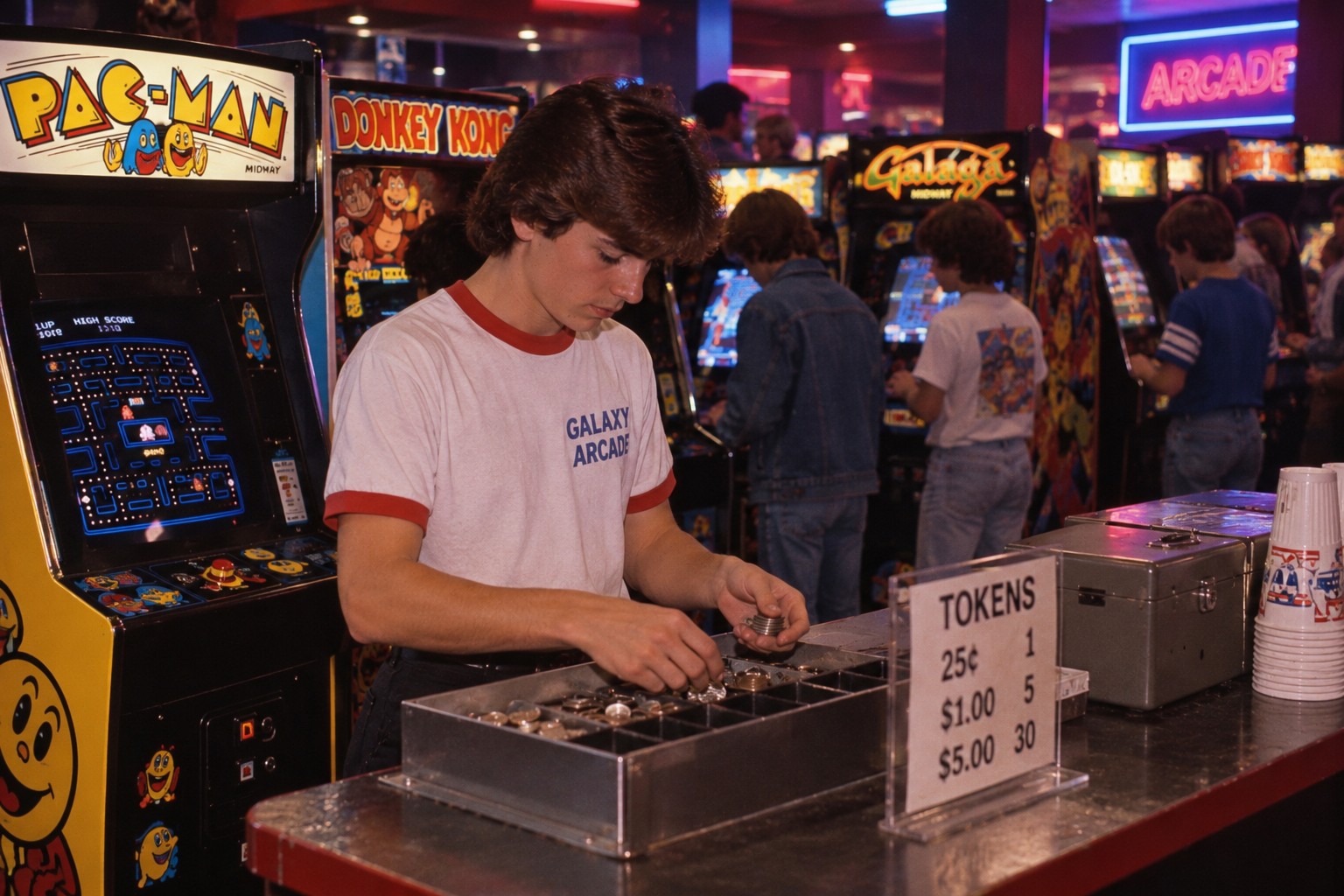
Imagine spending your entire shift surrounded by Pac-Man, Donkey Kong, Galaga, and the constant sound of quarters dropping into machines. For teenagers working at neighborhood arcades in the early ’80s, that was pretty much the job description. Employees exchanged dollar bills for quarters, kept an eye on the games, cleaned up after customers, and occasionally dealt with machines that swallowed someone’s money without giving them a turn. The arcade boom didn’t last forever, though. As home video game consoles became more popular and operating costs increased, standalone arcades began disappearing. A 1985 Los Angeles Times report found that the number of arcades in San Diego County had dropped from more than 200 in 1982 to approximately 20. Today’s entertainment centers still employ teenagers, but working at a small neighborhood arcade isn’t nearly as common as it once was.
Working the Counter at a One-Hour Photo Shop
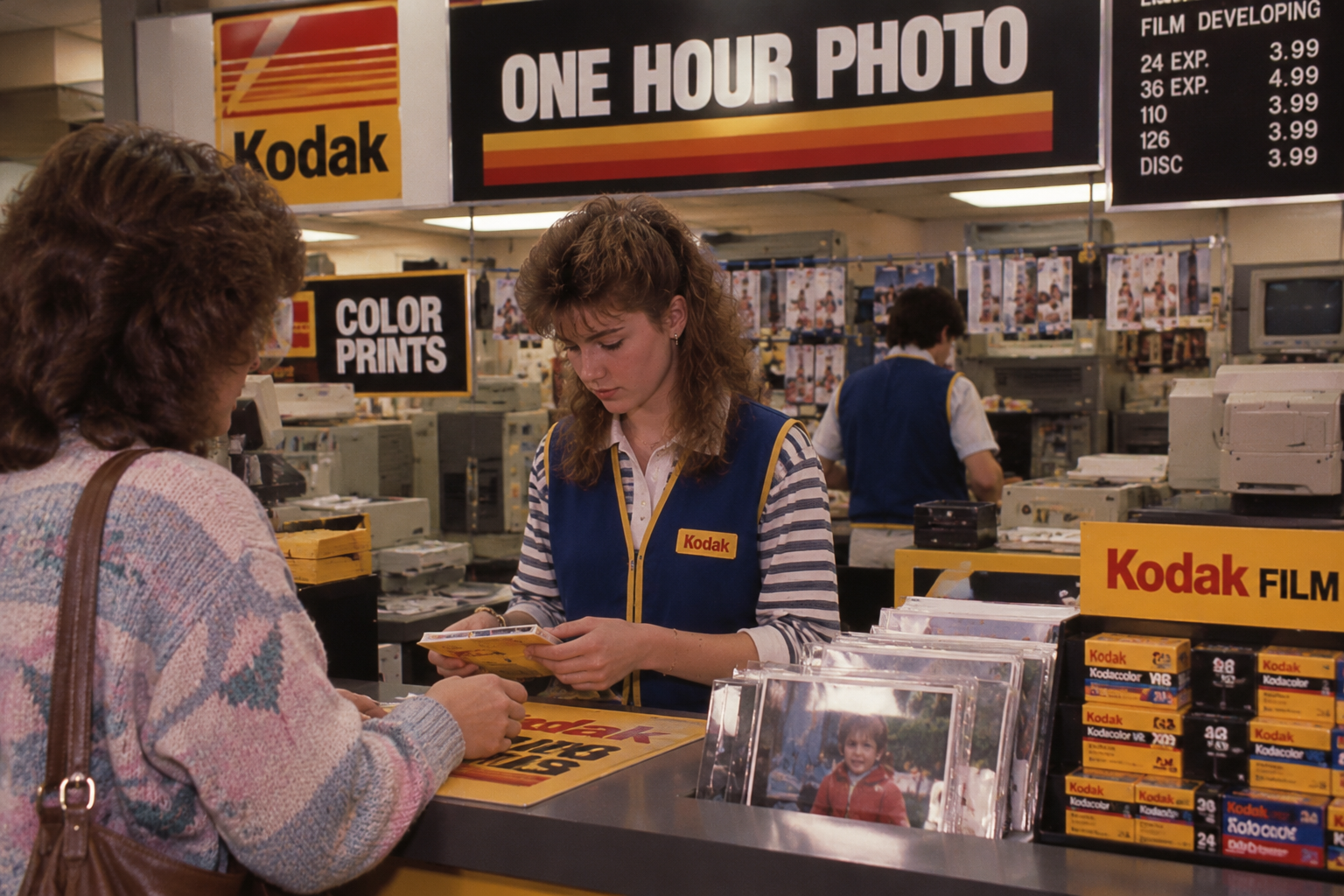
Before smartphones made it possible to take hundreds of pictures without thinking twice, families had to bring their rolls of film somewhere to find out whether their photos had turned out. During the ’80s, one-hour photo shops offered teenagers jobs accepting film, organizing orders, handing customers envelopes of freshly developed pictures, and sometimes learning to operate processing equipment. There was always a little excitement when someone came back to collect vacation photos or birthday snapshots, especially since nobody knew exactly what they’d captured until the film was developed. Digital cameras eventually eliminated much of the demand for everyday film processing, and smartphones finished the job. Specialty photo labs still exist, but the neighborhood shop where you could drop off a roll of film and return an hour later has become increasingly rare.
Trending on Cheapism

Pumping Gas at a Full-Service Station
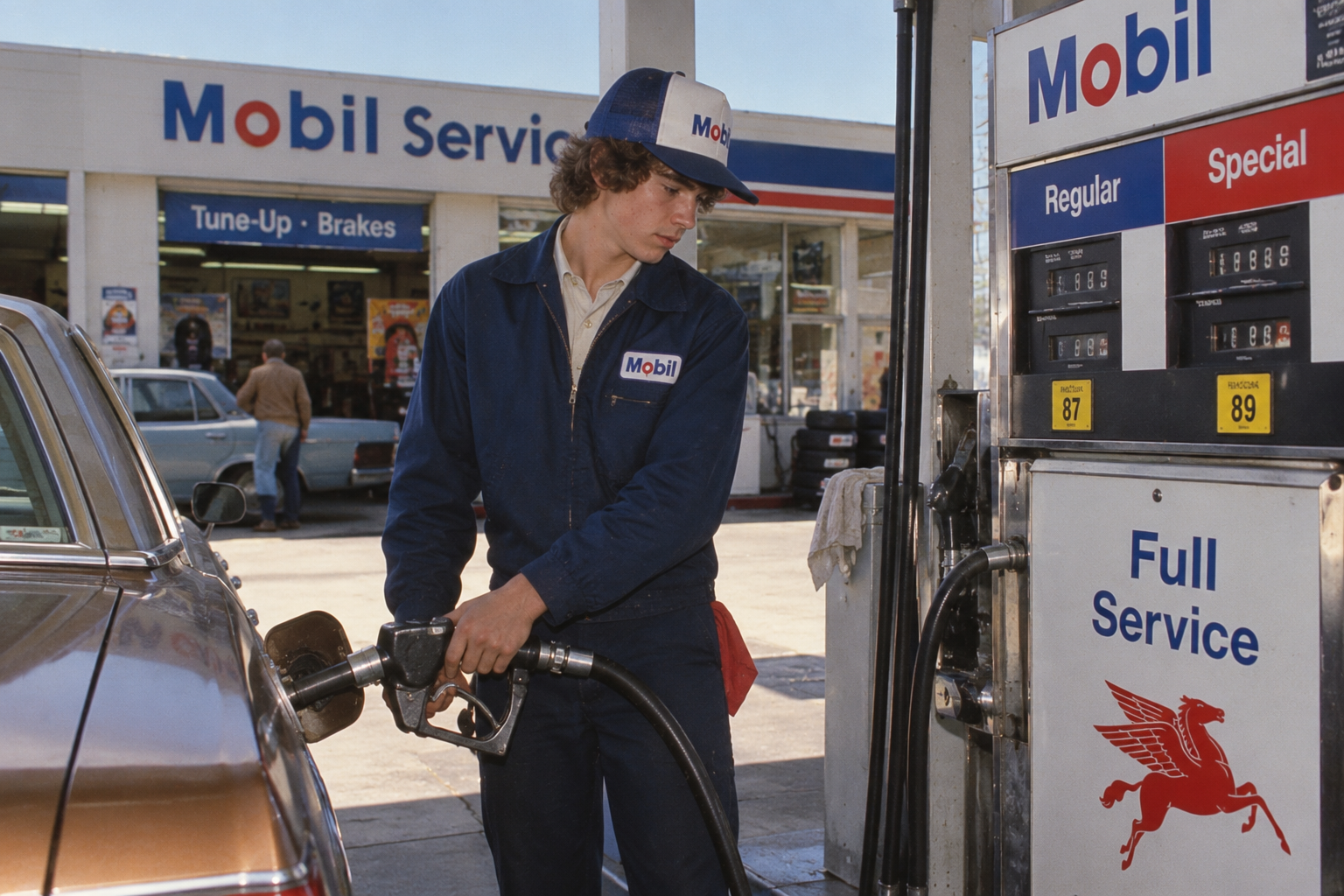
There was a time when pulling into a gas station meant someone would actually come outside and fill your tank for you. For teenagers working at full-service stations in the ’80s, the job involved pumping gasoline, washing windshields, checking oil levels, and collecting payments while customers stayed comfortably inside their cars. You might hear a bell ring when a vehicle pulled up, signaling that it was time to grab a squeegee and get to work. Full-service stations were already losing ground to self-service pumps during the 1970s and ’80s, gradually eliminating many attendant positions. Although places like New Jersey still require attendants to pump gasoline, most American drivers now do the job themselves, making the old-fashioned gas station attendant a much less familiar sight.
Wrapping Christmas Presents at a Department Store
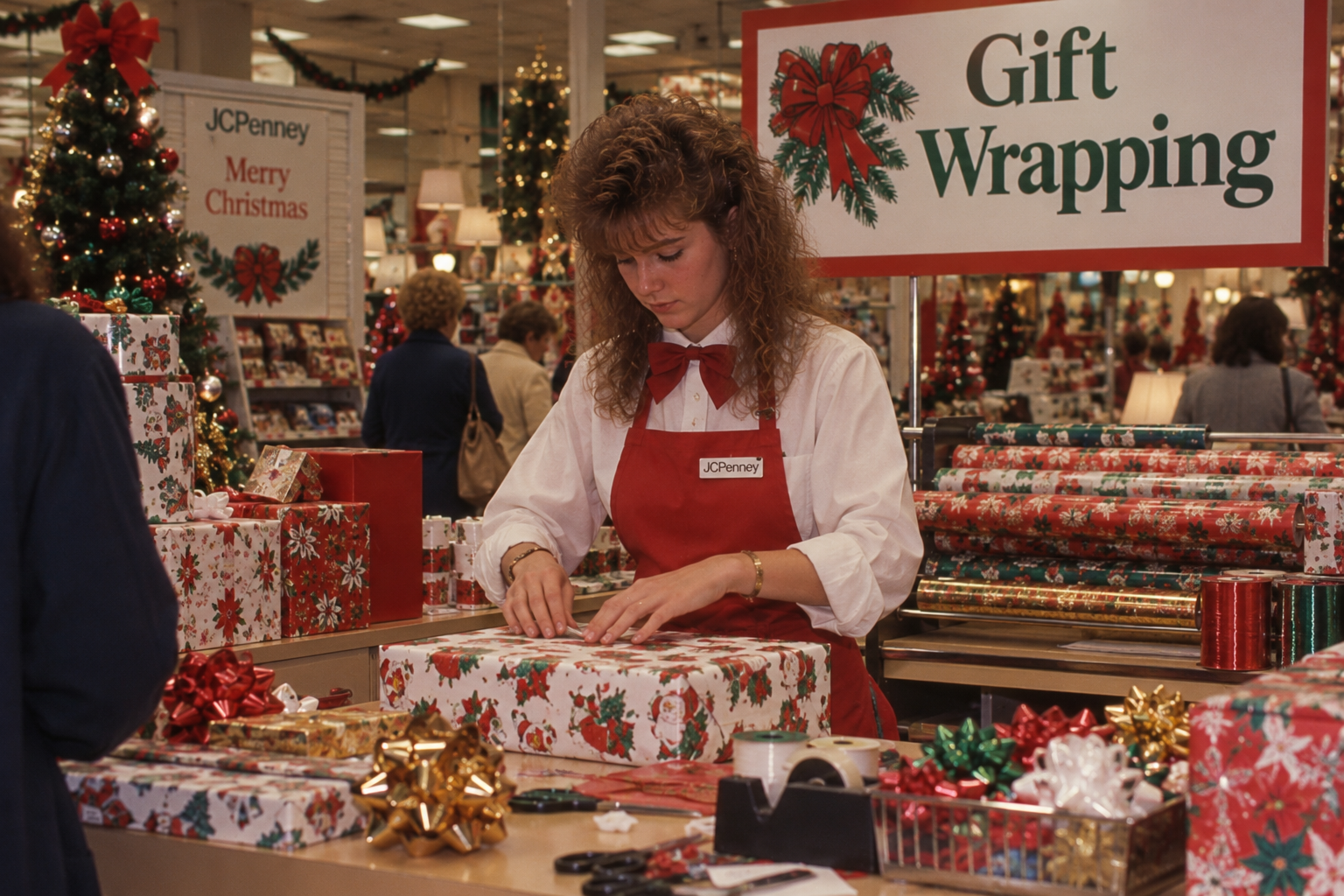
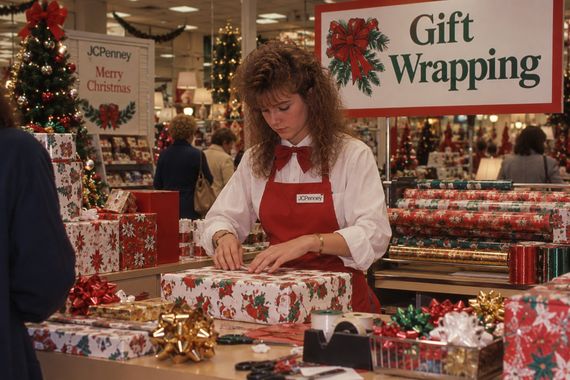
If you were a teenager looking for seasonal work in the ’80s, the gift-wrapping counter at a department store could be a surprisingly busy place. During the weeks leading up to Christmas, shoppers could bring their purchases to a dedicated counter where employees wrapped boxes in decorative paper, tied ribbons, and added bows. Your entire shift might involve measuring wrapping paper, cutting tape, curling ribbons with scissors, and trying to make oddly shaped packages look presentable. Stores sometimes offered gift wrapping as a complimentary service or charged a small fee, making it especially popular with shoppers who didn’t want to tackle the task themselves. Over time, department stores reduced these services, and by 2010, major chains such as Macy’s and JCPenney had scaled back or eliminated traditional gift-wrapping departments. Seasonal wrapping jobs still exist, but they’re nowhere near as easy to stumble upon as they once were.
Serving Popcorn at a Drive-In Movie Theater
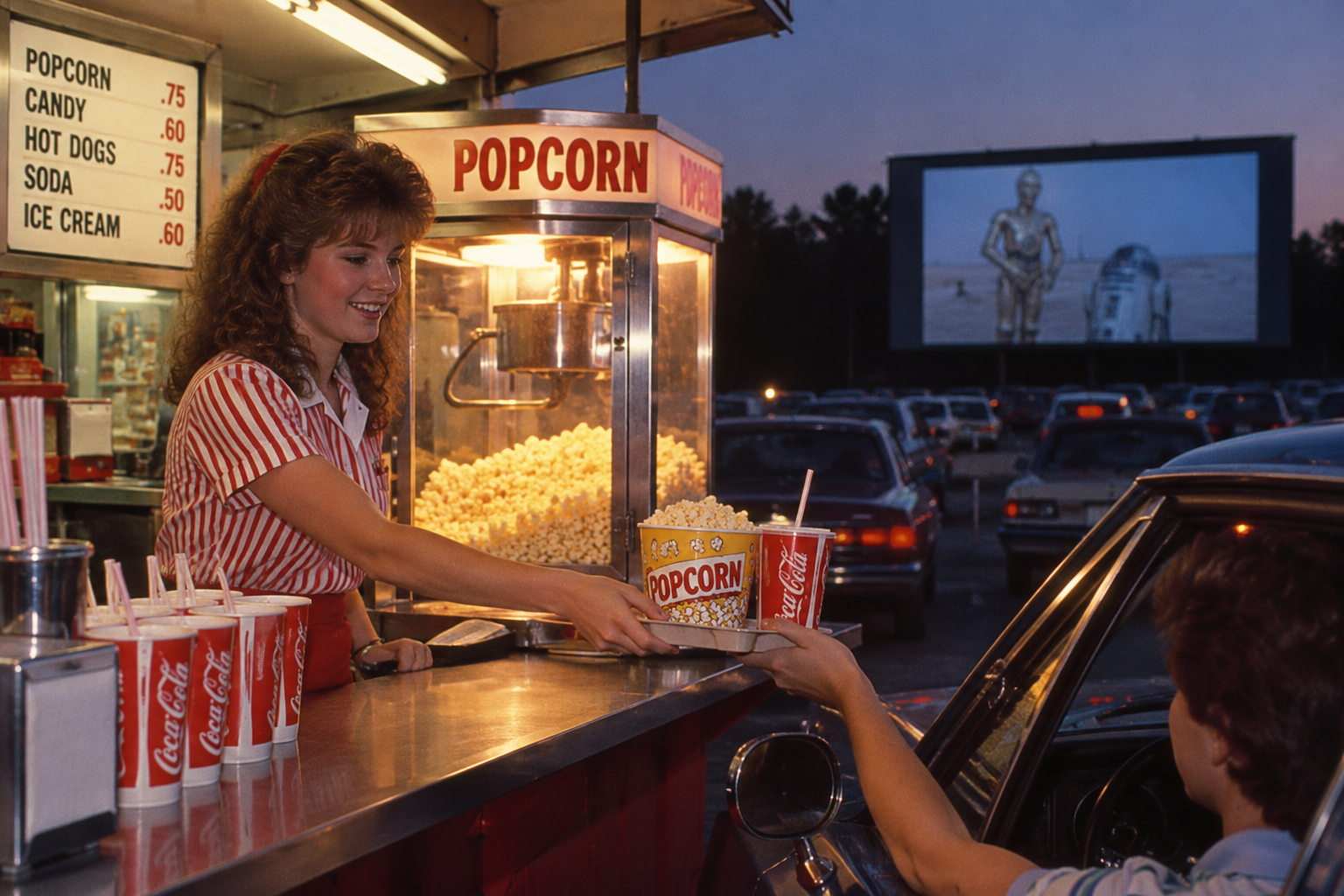
For teenagers lucky enough to live near a drive-in theater, a summer job at the concession stand could mean spending warm evenings selling popcorn, hot dogs, candy, and enormous cups of soda. You’d arrive before the movie started, prepare snacks for families pulling into the lot, and deal with another rush of customers between features. There was something pretty special about hearing a movie playing in the distance while you worked behind the counter. Drive-in theaters had already passed their peak by the 1980s, however, as indoor multiplexes became more popular and valuable land was redeveloped. According to Smithsonian Magazine, the United States had approximately 4,063 drive-ins at its peak in 1958, compared with only a few hundred in more recent decades. That means far fewer opportunities for teenagers to spend their summer nights working beneath a giant outdoor movie screen.
Sign up for our newsletter
Bringing Burgers to Cars as a Restaurant Carhop
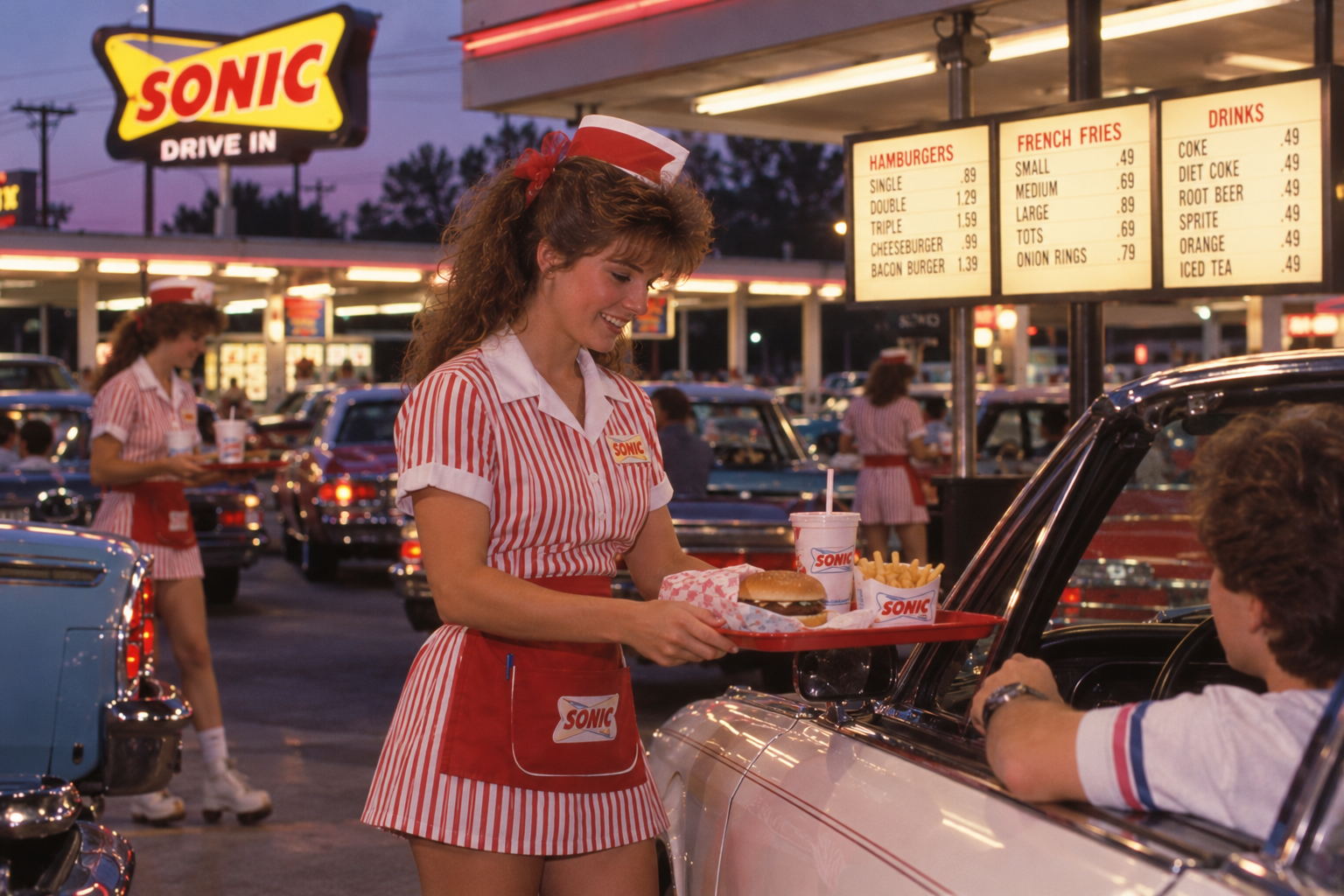
Before drive-thru windows became the default way to grab fast food without leaving your vehicle, drive-in restaurants employed carhops to bring meals directly to customers. For teenagers in the ’80s, the job meant carrying trays loaded with burgers, fries, milkshakes, and sodas between rows of parked cars. At some restaurants, servers even wore roller skates, which made balancing several drinks a particularly impressive skill. Customers could enjoy their meals without ever stepping inside, and carhops were responsible for keeping orders straight and making sure everyone got what they’d requested. As traditional drive-in restaurants gave way to modern fast-food chains and drive-thru service, carhop positions became much less common. Sonic still keeps the tradition alive at many locations, but the days when teenagers could easily find a job delivering burgers to parked cars are largely behind us.
Bagging Groceries and Carrying Them to Customers’ Cars
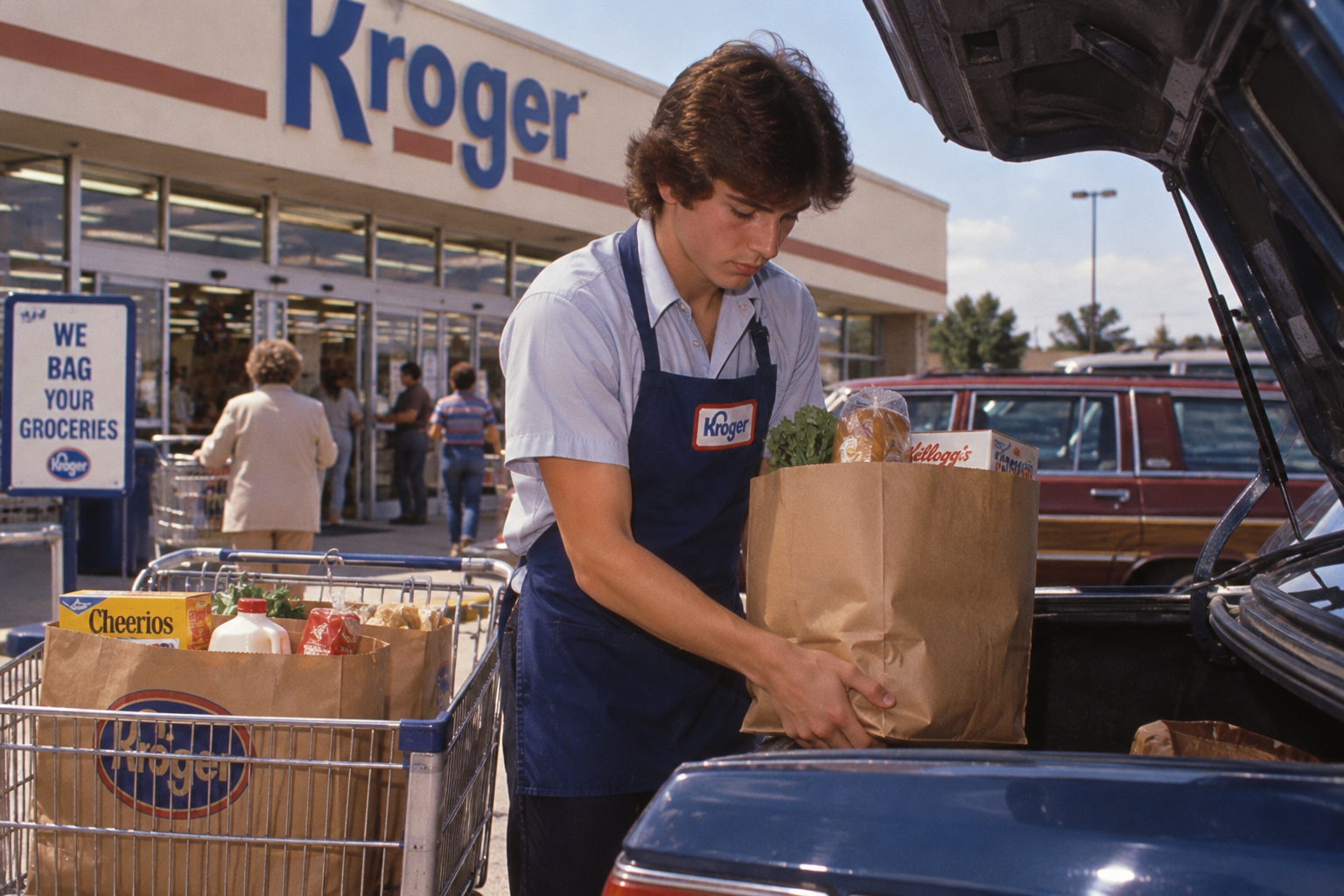
For many teenagers in the ’80s, their first real paycheck came from the neighborhood supermarket. Working as a grocery bagger meant standing at the end of the checkout lane, carefully packing purchases into brown paper bags, gathering shopping carts from the parking lot, and occasionally helping customers load groceries into their cars. There was an art to doing the job properly: canned goods went at the bottom, bread stayed on top, and eggs needed enough protection to survive the ride home. You also had to move quickly when the checkout line started growing. Although grocery stores still employ baggers and courtesy clerks, self-checkout machines, customer bagging, and changing staffing practices have reduced the need for employees dedicated exclusively to packing groceries. Today’s teenagers can still find supermarket jobs, but the familiar bagger position has changed quite a bit.
Delivering Telephone Books Around the Neighborhood
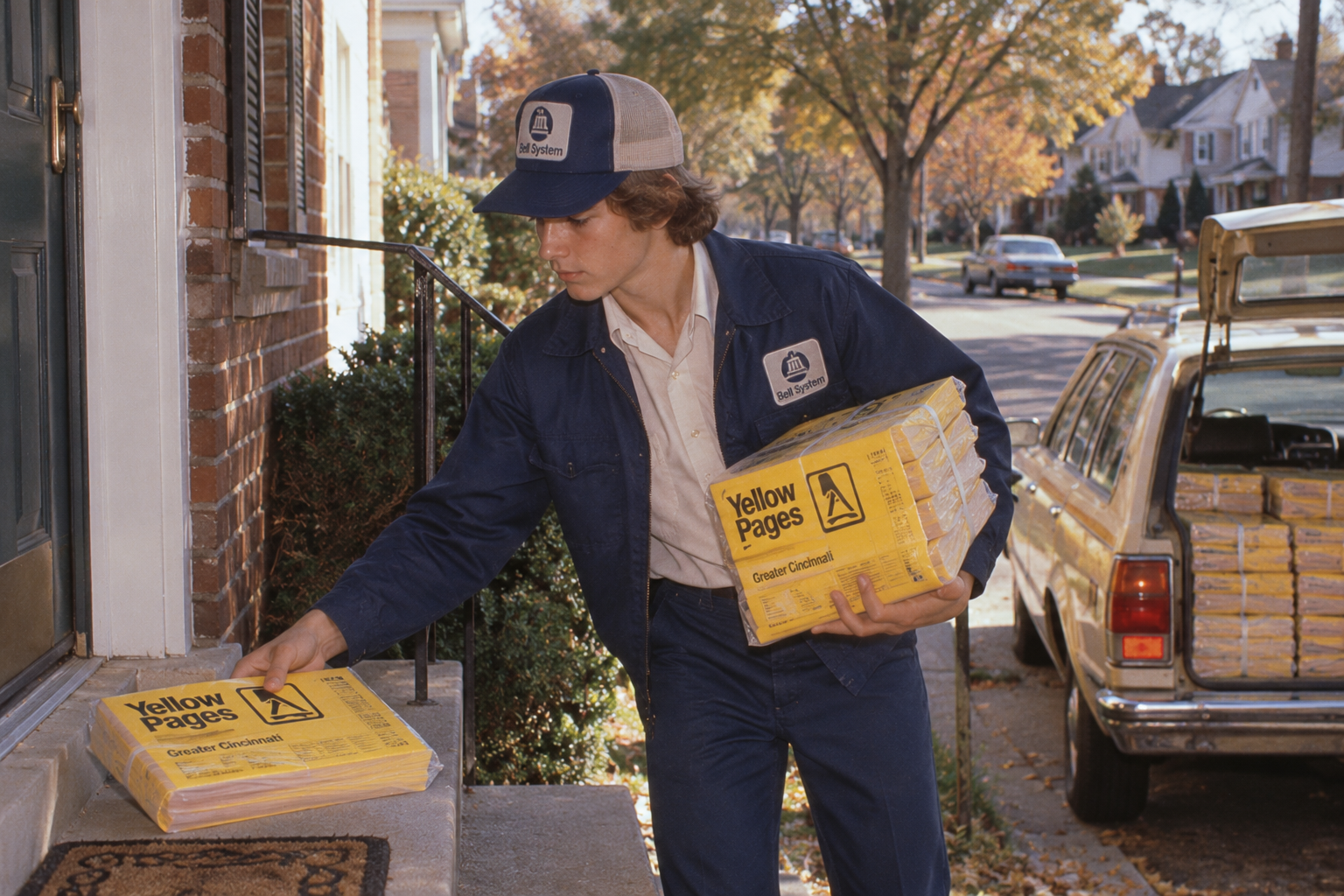
Before Google made it possible to find practically any phone number in seconds, households relied on enormous printed directories filled with residential listings and business advertisements. When a new edition of the Yellow Pages or White Pages arrived, somebody had to deliver those heavy books to every house in the neighborhood. In some communities, teenagers could earn temporary spending money helping distribute them, sometimes working alongside family members or using a car to transport stacks of directories. The job wasn’t particularly glamorous, especially when you had to carry dozens of bulky books up driveways and front steps, but it was a straightforward way to earn a little cash. As internet searches replaced printed directories, routine telephone book distribution declined dramatically. Some printed directories remain available by request, but the days of delivering a fresh phone book to nearly every doorstep are mostly gone.
Selling Movie Tickets at a Theater Box Office
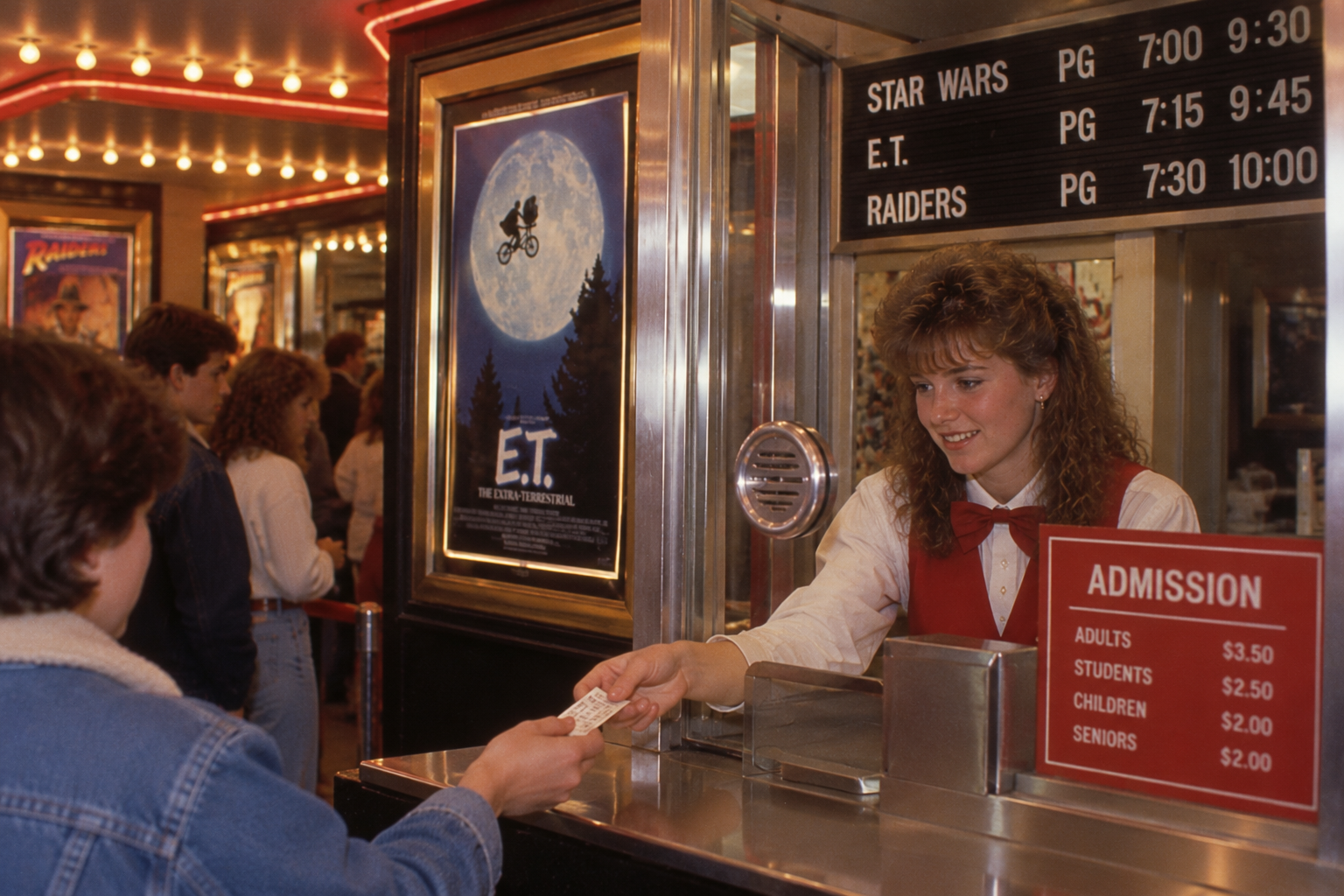
Getting a job at the local movie theater was another popular option for teenagers in the ’80s, especially if you enjoyed being around the excitement of opening night. Before online reservations and self-service kiosks, customers lined up outside small glass ticket booths to purchase admission from an actual person. As a box office employee, you collected cash, handed out paper tickets, explained showtimes, and tried to keep the line moving when a popular movie was about to begin. Friday nights could get particularly hectic, especially when everyone seemed to arrive five minutes before the same showing. Movie theaters still hire teenagers today, but digital ticketing and advance online purchases have changed how admissions work. The classic job of sitting inside a tiny booth and selling paper tickets all evening is much harder to find.
When a First Job Looked a Little Different
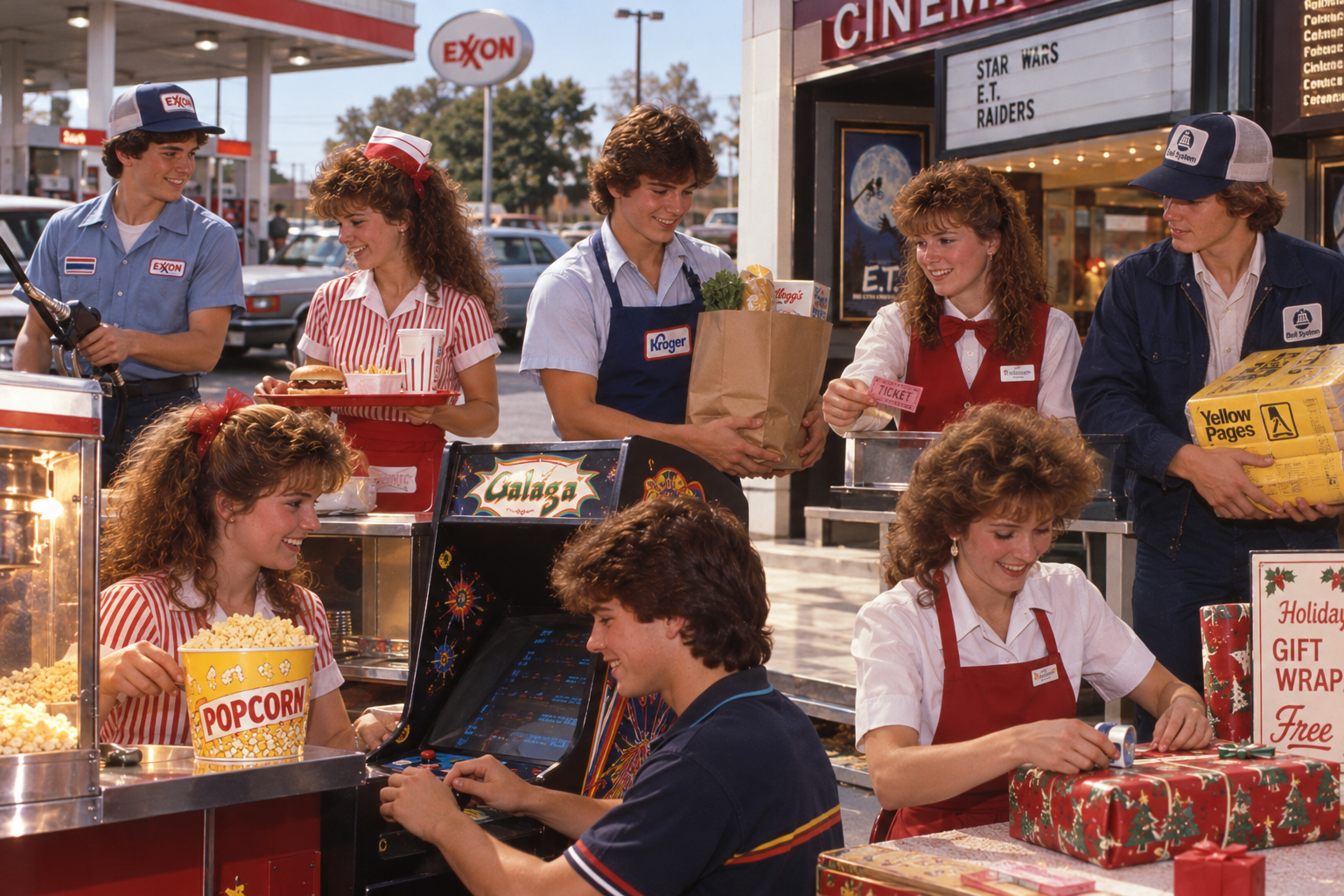
For teenagers growing up in the 1980s, these jobs were about more than earning enough money for a new album or a Saturday night at the movies. They offered a first taste of responsibility, independence, and the satisfaction of having cash that was entirely your own. Some involved early mornings, others meant working weekends, and plenty required dealing with impatient customers or demanding managers. But they also came with experiences that today’s teenagers might have a hard time imagining.
Of course, young people still work in restaurants, stores, and entertainment venues. It’s just that technology, automation, and changing consumer habits have transformed the kinds of jobs available to them. And while few teenagers today would probably volunteer to wake up at 5 a.m. to deliver newspapers, there’s something nostalgic about remembering a time when your first paycheck might have come from a paper route, a video store, or a tiny ticket booth at the neighborhood theater.