If you went to elementary school in the 1970s, chances are your typical school day looked pretty different from what kids experience today. There were no laptops waiting on classroom desks, no online portals where parents could check your grades, and certainly no smartphones to call home when you forgot your lunch money. Instead, you carried a metal lunch box, wrote everything by hand, and probably spent a good chunk of your afternoon playing outside without anyone knowing exactly where you were.
Of course, not everything about going to school in the ’70s was better. Some routines were inconvenient, others required a little more independence, and plenty have disappeared for good reason. But there was something memorable about the sound of a metal lunch box snapping shut, the smell of freshly sharpened pencils, and the excitement of hearing the final school bell.
From covering textbooks with grocery bags to bringing home report cards your parents had to sign, here are 12 things you probably remember from school days in the 1970s that today’s kids rarely experience the same way.
Walking to School Without a Parent Tagging Along
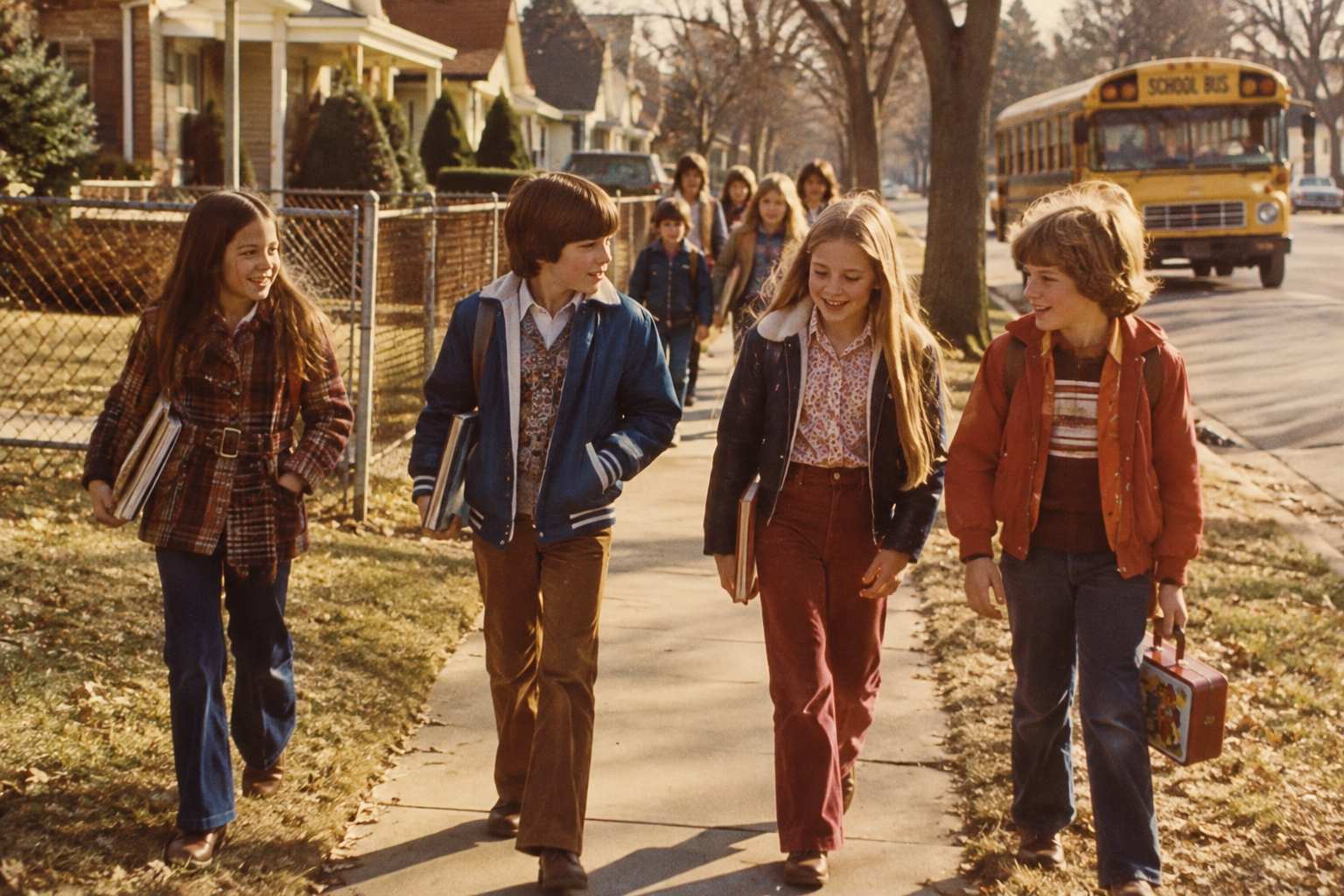
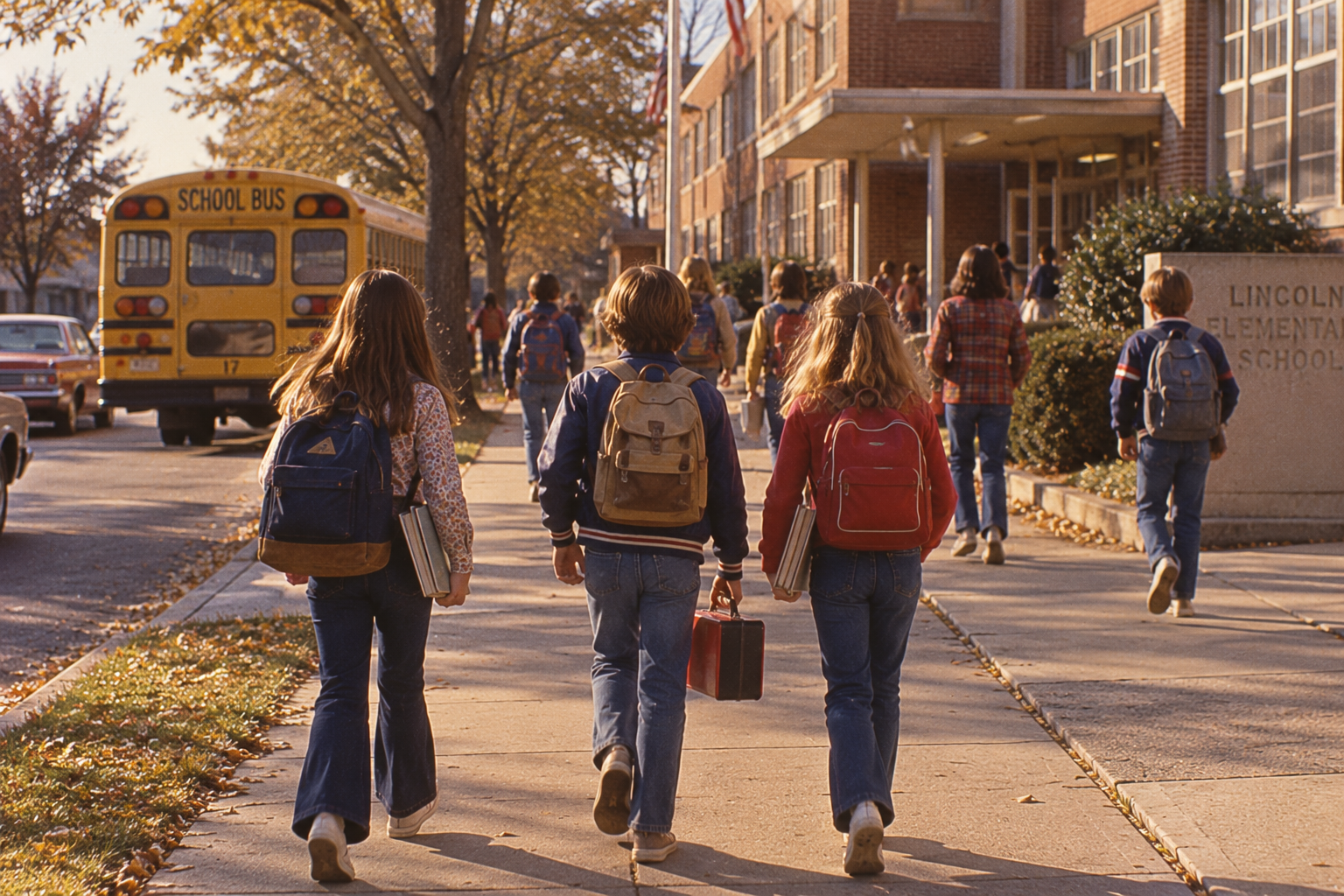
For plenty of kids growing up in the ’70s, getting to school meant walking through the neighborhood with a few friends, not waiting for a parent to drive them to the front entrance. You might have cut through someone’s yard, stopped to pick up a classmate, or hurried across the street when the crossing guard waved you through. And unless you lived particularly far away, nobody necessarily thought twice about letting you make the trip without an adult. According to national transportation research, nearly 48% of American K–8 students usually walked or biked to school in 1969, compared with about 13% in 2009. Today, the morning drop-off line has become a familiar sight at many schools, but back then, the walk itself was part of the adventure.
Carrying a Metal Lunch Box With a Matching Thermos
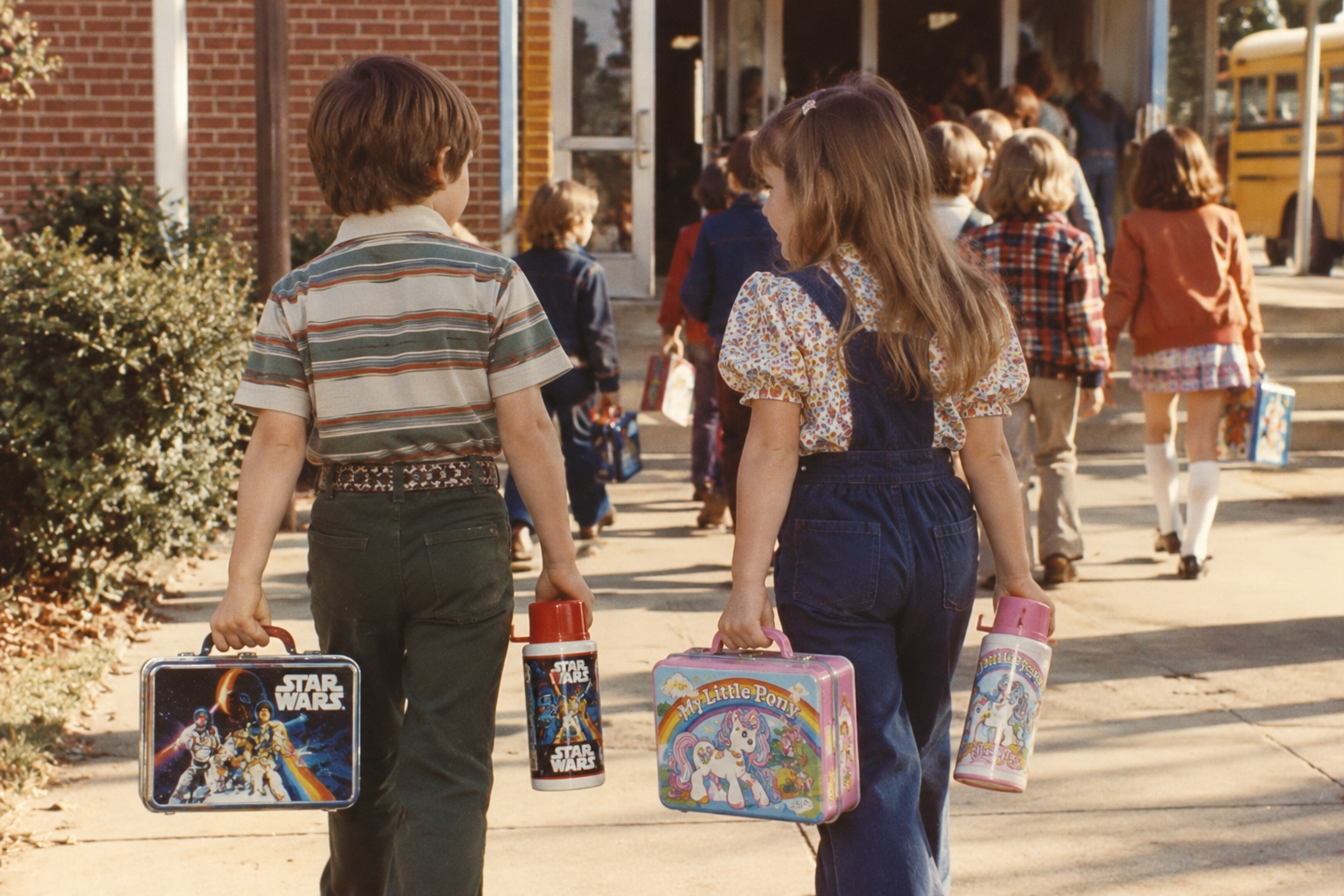
Before insulated lunch bags became the norm, plenty of kids carried rectangular metal lunch boxes decorated with their favorite television characters, superheroes, or cartoons. The matching thermos was practically as important as the lunch itself, even if its contents had a tendency to reach a questionable temperature by noon. Some older thermoses even had glass interiors that could break if you dropped them. Opening your lunch box usually meant finding a sandwich wrapped in wax paper, a piece of fruit, and maybe a homemade treat if you were lucky. And there was always that unmistakable metallic click when you snapped the latch shut before heading back to class.
Covering Your Schoolbooks With Brown Grocery Bags
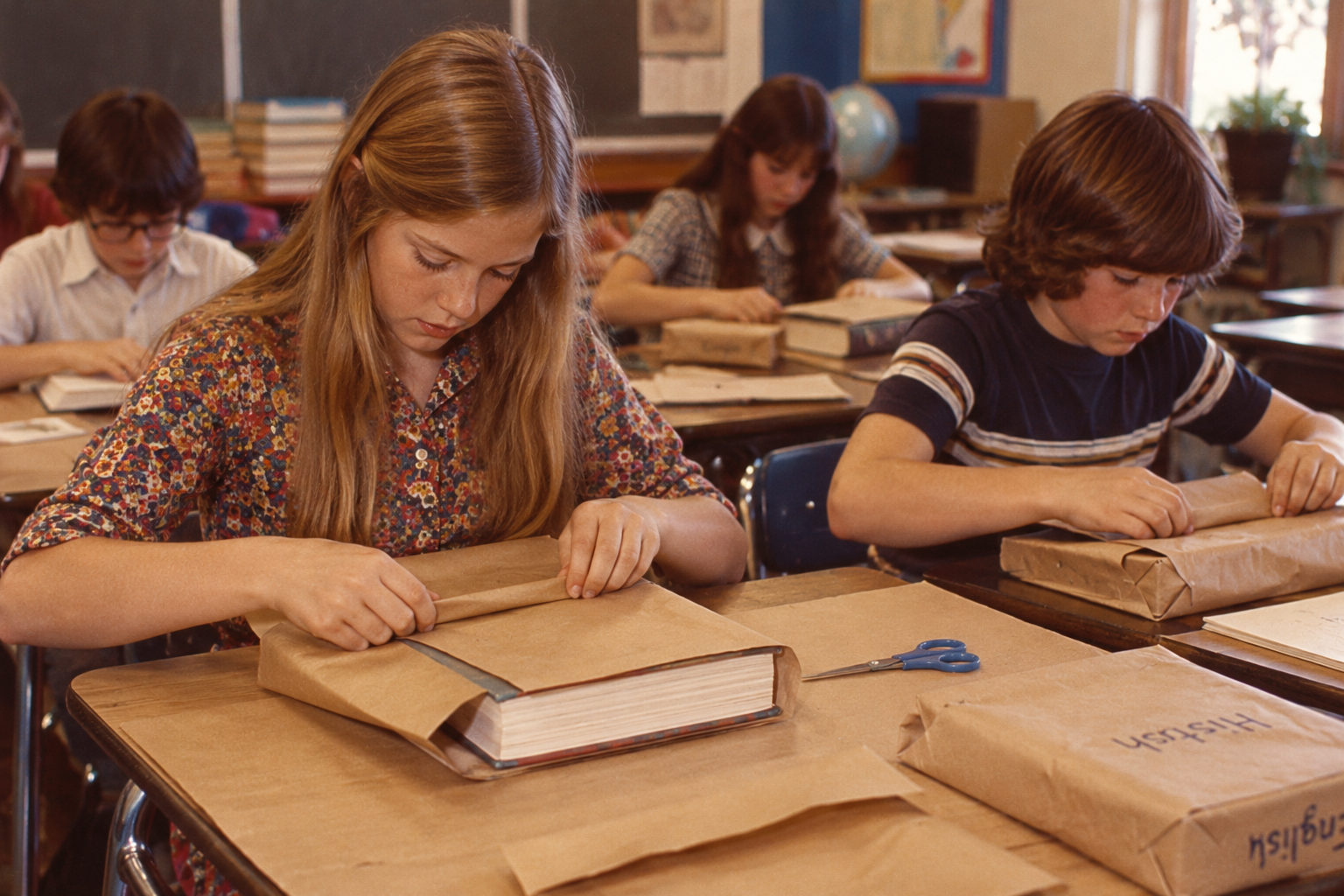
At the beginning of the school year, one of your first assignments might have been protecting your textbooks with homemade covers fashioned from brown paper grocery bags. You’d carefully cut the paper, fold it around the thick hardcover book, and tuck the edges inside until everything stayed in place. Of course, the real fun started afterward, when you could decorate the cover with your name, doodles, band logos, or the initials of someone you had a crush on. By the end of the year, those covers were usually covered in pencil marks, worn around the corners, and barely holding together. With digital textbooks and school-issued devices becoming more common, this particular back-to-school ritual isn’t nearly as familiar to younger students.
Searching Through a Library Card Catalog to Find a Book
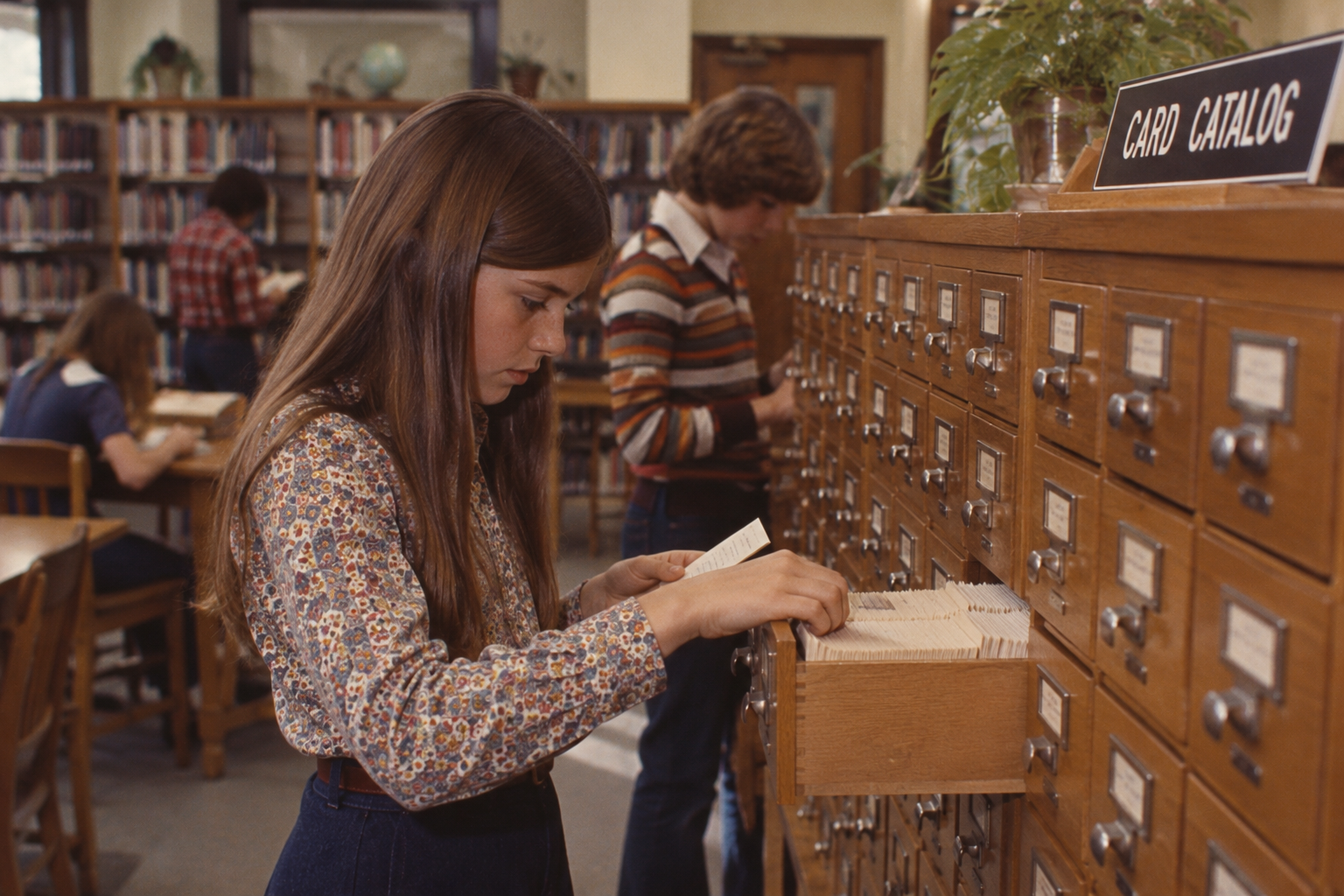
Doing research for a school project in the ’70s required a little more patience than typing a question into Google. If you needed a book about dinosaurs, the solar system, or George Washington, you headed to the school library and searched through a wooden card catalog. Each drawer contained rows of index cards organized by author, title, or subject, and finding the right book meant writing down its call number before wandering through the shelves. Sometimes you’d discover that another student had already checked out the only copy you needed, which meant starting the search all over again. It wasn’t exactly convenient, but figuring out how to navigate those little drawers was practically a school subject of its own.
Looking Up Homework Answers in a Set of Encyclopedias
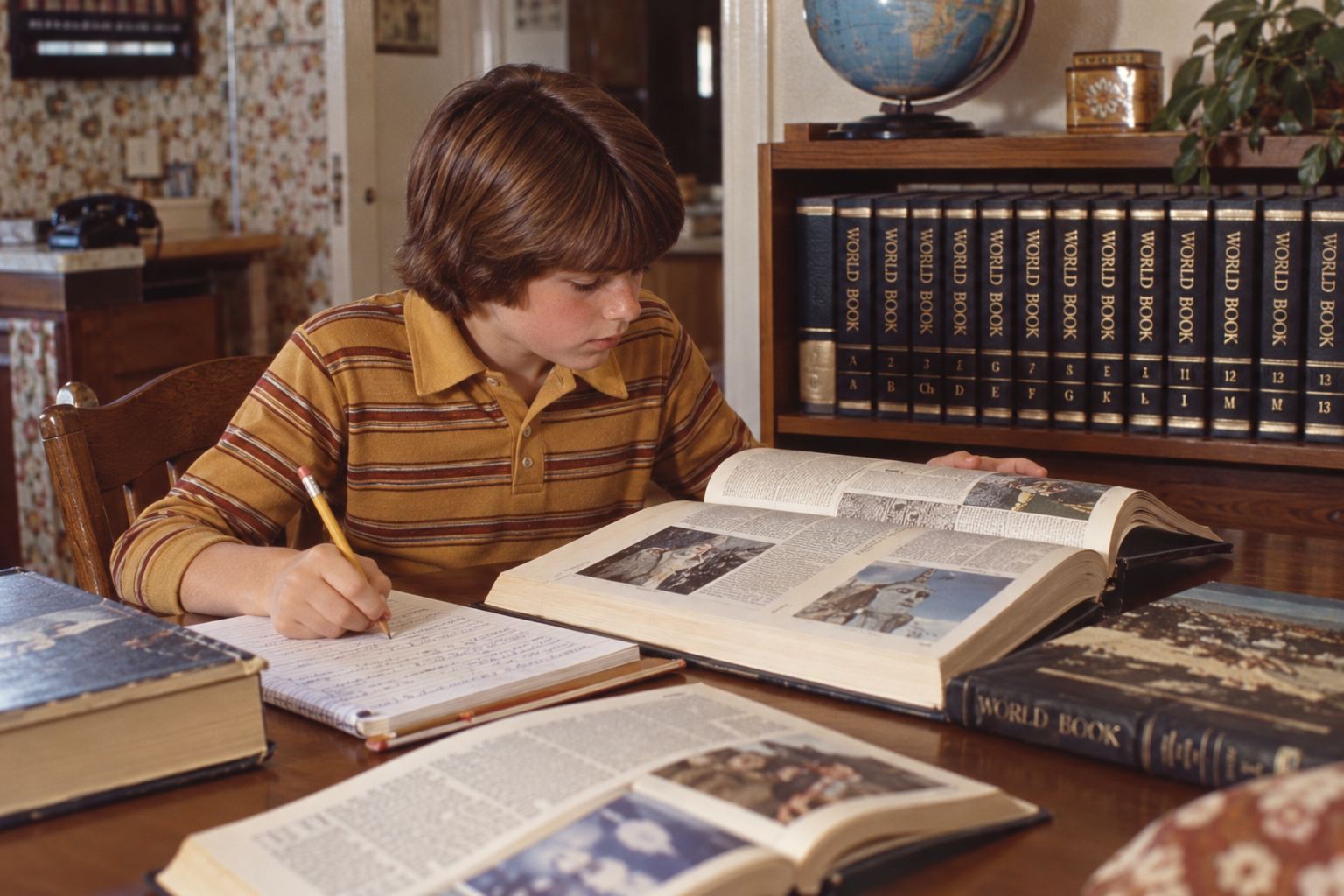
Long before Wikipedia and online research databases, a set of encyclopedias was one of the most valuable homework resources a family could own. If you had a report due on ancient Egypt or the American Revolution, you might spend the evening pulling enormous volumes of World Book or Encyclopaedia Britannica off the shelf. Finding the right information meant figuring out which volume you needed, checking the index, and carefully copying facts onto lined notebook paper. Families without their own sets often relied on the public or school library instead. And if the encyclopedia didn’t have the answer you were looking for? You couldn’t just open another browser tab and keep searching.
Trending on Cheapism

Practicing Cursive Until Every Letter Looked Just Right
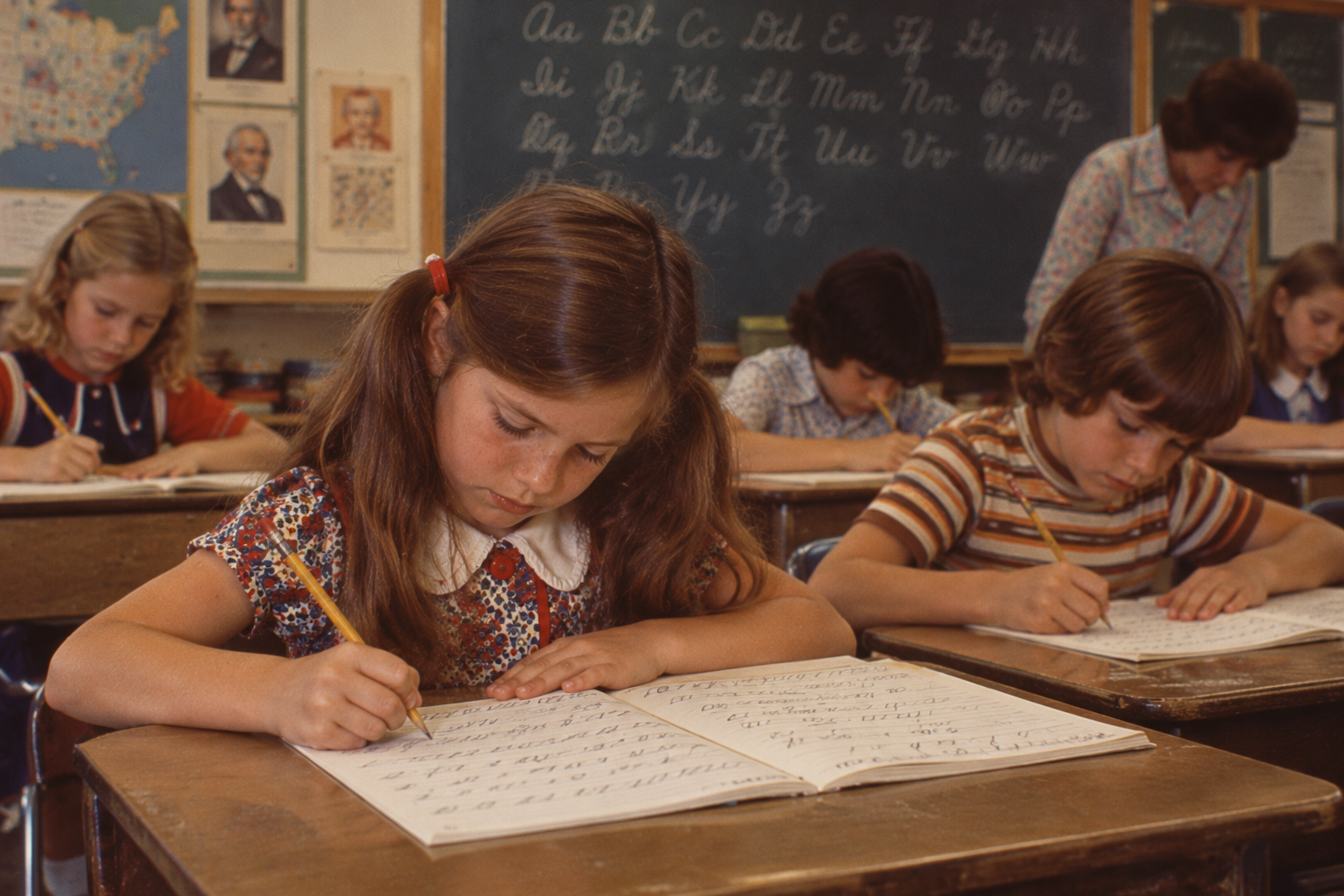
For many elementary school students in the 1970s, handwriting wasn’t just something you did to complete assignments. It was a subject you were expected to practice. Teachers spent time showing students how to form looping lowercase letters, connect words without lifting their pencils, and keep everything neatly positioned on the lines. Classrooms often had cursive alphabet charts displayed above the chalkboard, giving everyone a model to follow. You might have spent an entire lesson copying the same letters or sentences until your handwriting looked presentable. Cursive hasn’t disappeared completely, and some states have brought back requirements for teaching it, but today’s students generally spend much more time learning to use keyboards and digital devices.
Turning in Homework Written Entirely by Hand
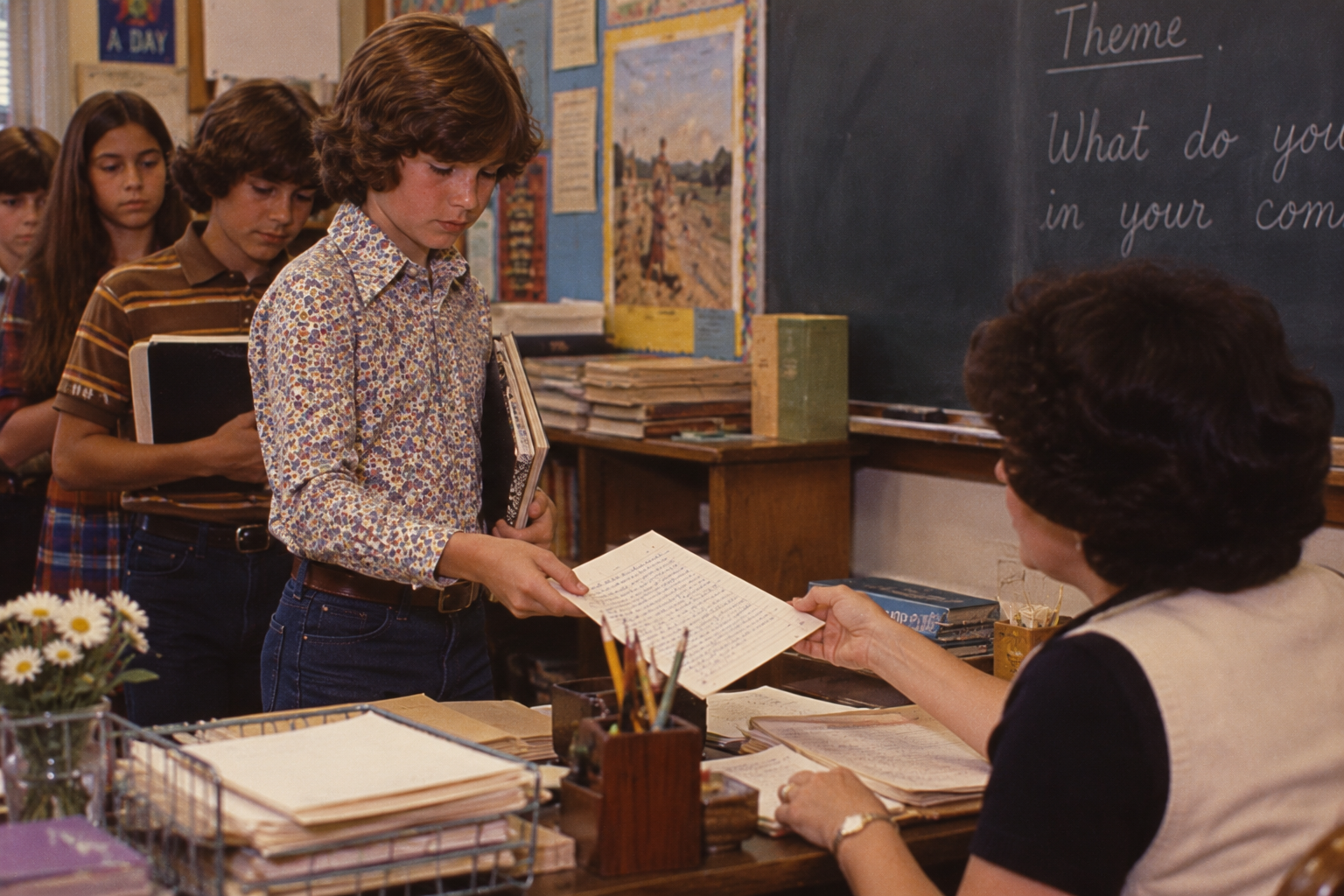
There was no uploading an assignment at 11:59 p.m. or fixing a typo with the backspace key. In the ’70s, homework usually meant sitting at the kitchen table with a pencil, a stack of notebook paper, and an eraser that seemed to make more of a mess than the original mistake. If you were writing a report, one particularly bad error could mean starting an entire page over again. And heaven help you if you finished a long assignment only to realize you’d forgotten to write your name at the top. Once you handed your work to the teacher, you had to wait for it to come back with handwritten corrections and a grade. There was no online classroom where you could check your results that evening.
Paying for School Lunch With Coins or Paper Tickets
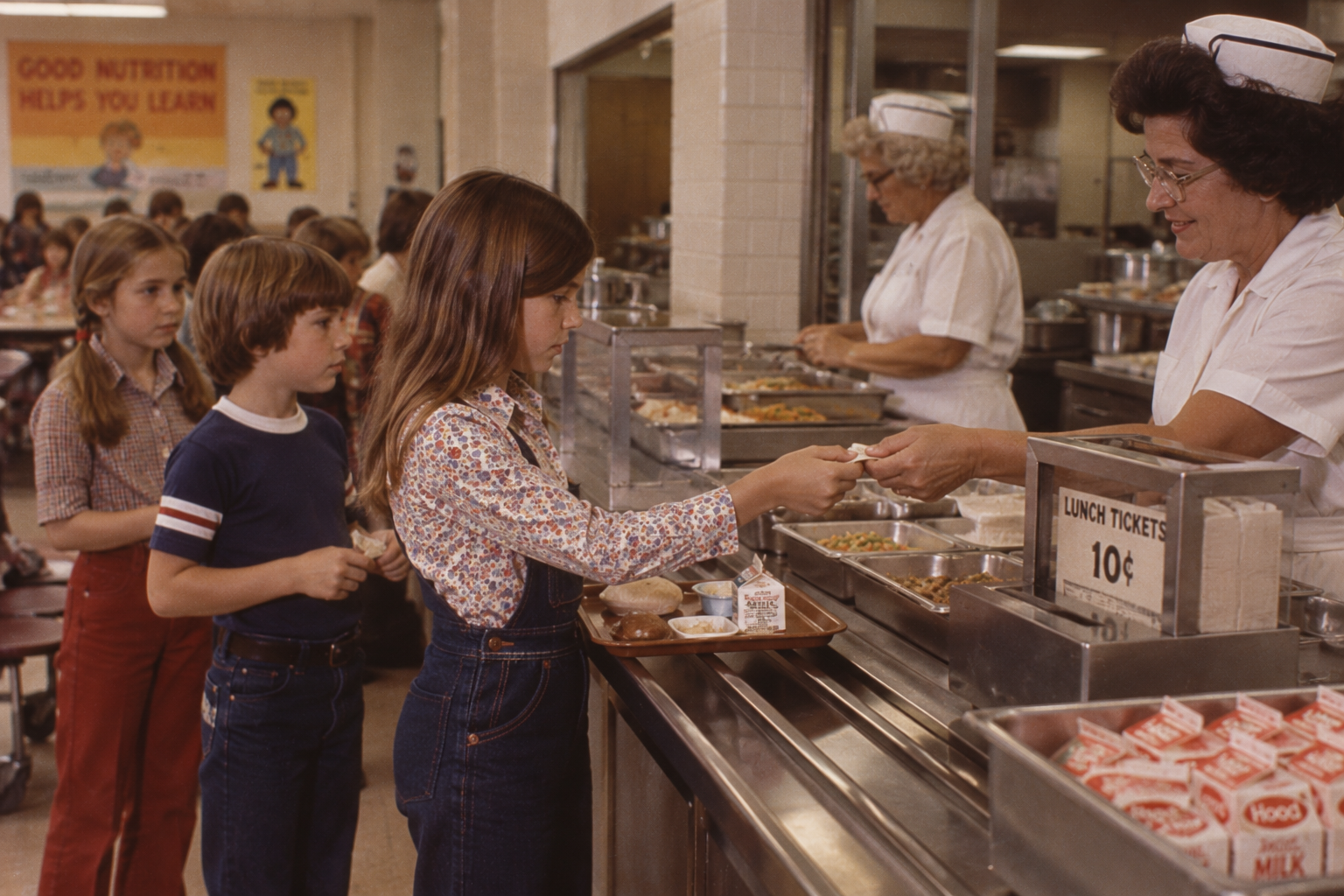
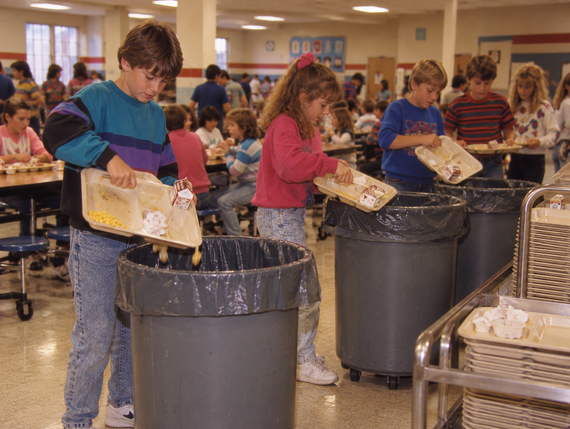
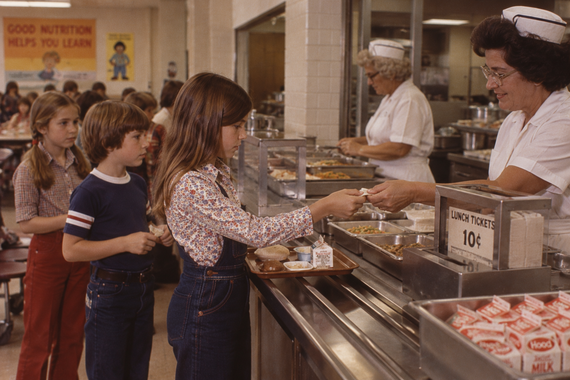
If you bought lunch at school in the ’70s, you probably remember the responsibility of keeping track of your lunch money. Depending on the school, that might have meant bringing a few coins, handing over a paper meal ticket, or using a punch card. Some kids carried their money in little envelopes, while others stuffed it into their pockets and hoped it would still be there when lunchtime arrived. Forgetting your money or losing your ticket could turn an ordinary school day into a stressful experience. Today, many cafeterias use electronic accounts and online payment systems, but back then, standing in line clutching your lunch money was just another part of the routine.
Sign up for our newsletter
Playing Playground Games With Almost No Equipment
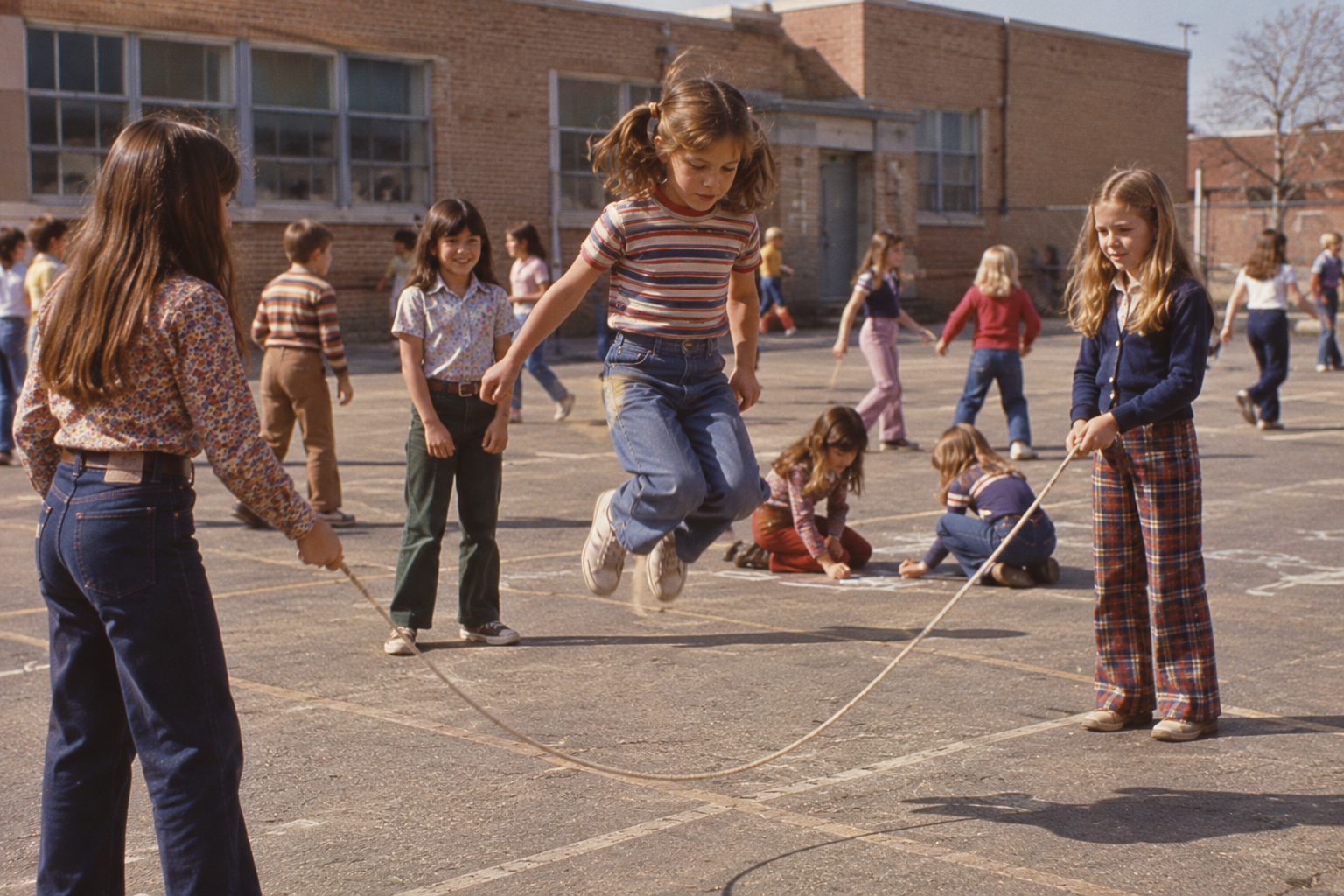
Recess in the 1970s didn’t necessarily require an elaborate playground or a collection of expensive equipment. Give a group of kids a patch of pavement, a ball, or a jump rope, and they’d usually find a way to entertain themselves. Four square, hopscotch, tag, and Red Rover could keep everyone busy until the bell rang. Of course, the games weren’t always particularly peaceful. Arguments over who was out, who cheated, or whose turn came next were practically guaranteed. Some of the rougher playground games have become less common as schools have changed their safety rules and supervision practices. But for many ’70s kids, figuring out how to organize a game without an adult directing every move was half the fun.
Using the School Office Telephone to Call Home
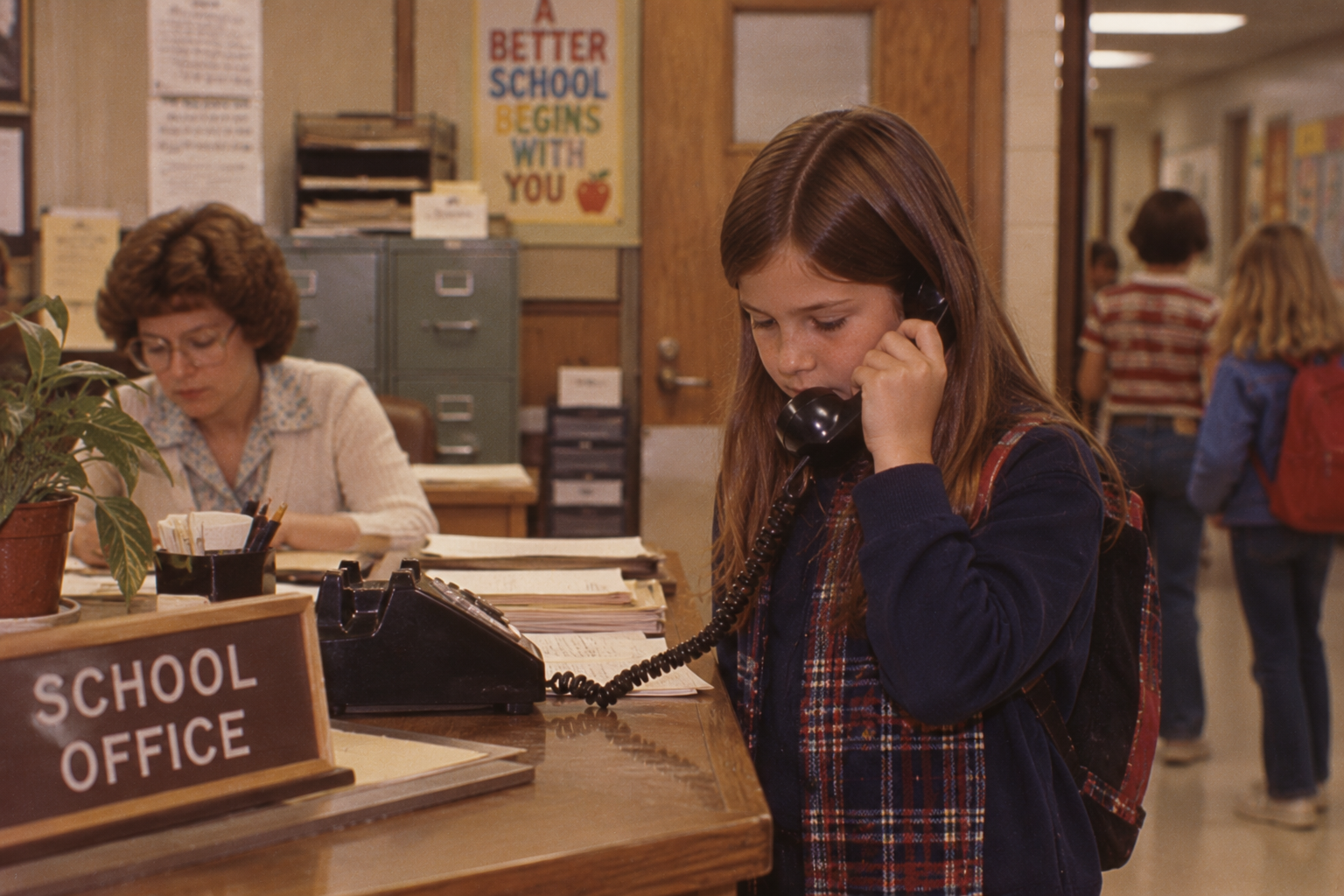
If you got sick at school, forgot something important, or needed your parents to pick you up, you couldn’t simply pull a phone out of your backpack. You had to ask permission to use the telephone in the school office. That usually meant standing near the secretary’s desk while someone dialed the number or handed you the receiver. Then came the suspense of waiting for someone to answer, especially if both of your parents were at work. If nobody picked up, you might have to leave a message or wait until the office could reach another family member. Schools still use office phones today, but modern messaging systems and mobile communication have made it much easier for families to stay connected during the day.
Taking Home a Paper Report Card That Your Parents Had to Sign
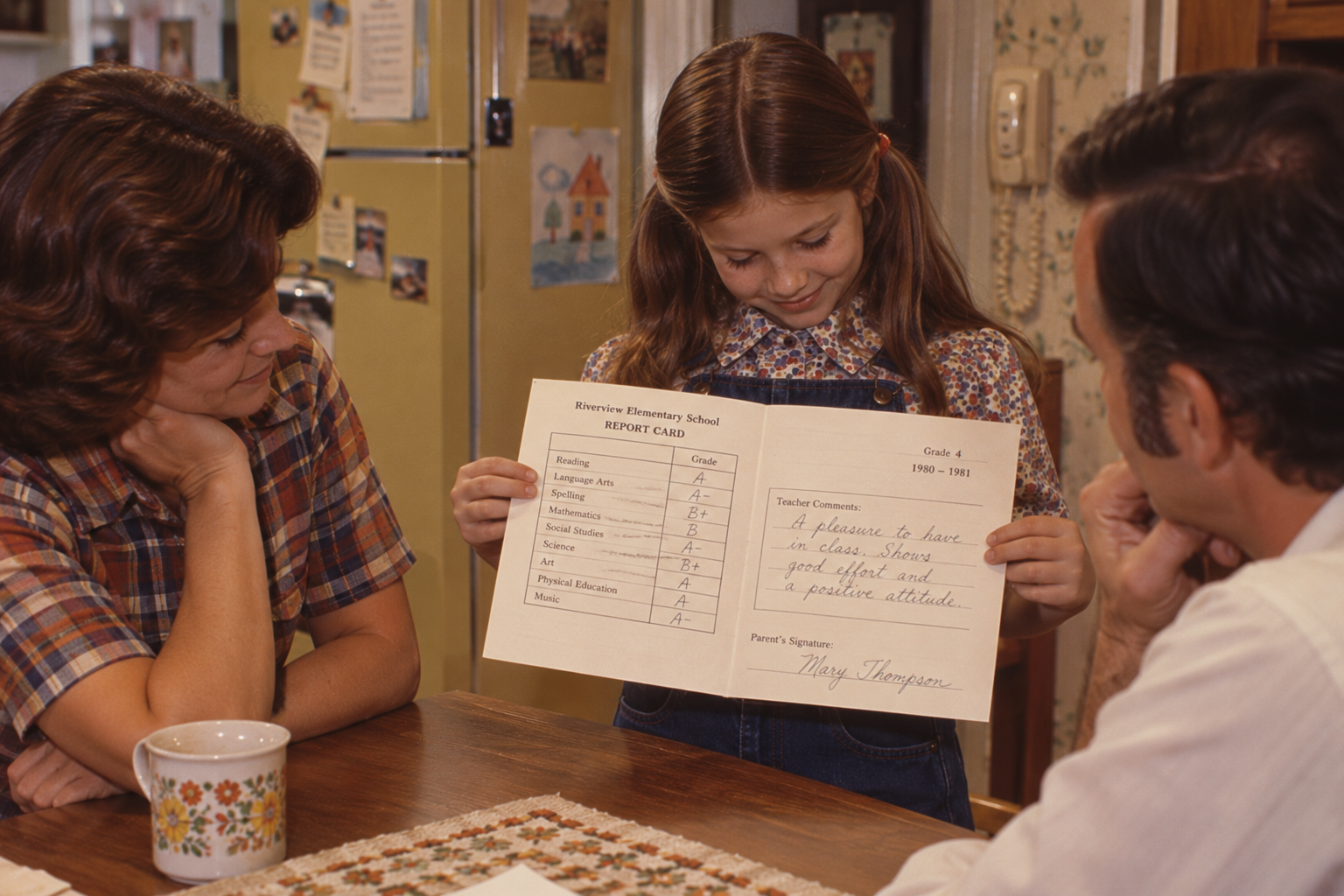
Few things inspired quite as much nervous anticipation as bringing home a report card in the 1970s. Depending on your school, it might have arrived in a paper envelope or as a folded document filled with letter grades, attendance records, and handwritten comments from your teachers. And unlike today’s online gradebooks, your parents often had no way of knowing exactly what was coming until you handed it over. Some schools even required a parent’s signature to prove the report card had been seen, meaning you had to bring it back afterward. If your grades weren’t exactly impressive, that walk home could feel considerably longer than usual. Today, many parents can monitor grades throughout the semester, but back then, report card day was a major event.
Heading Straight Outside After the Final Bell Without Checking In by Phone
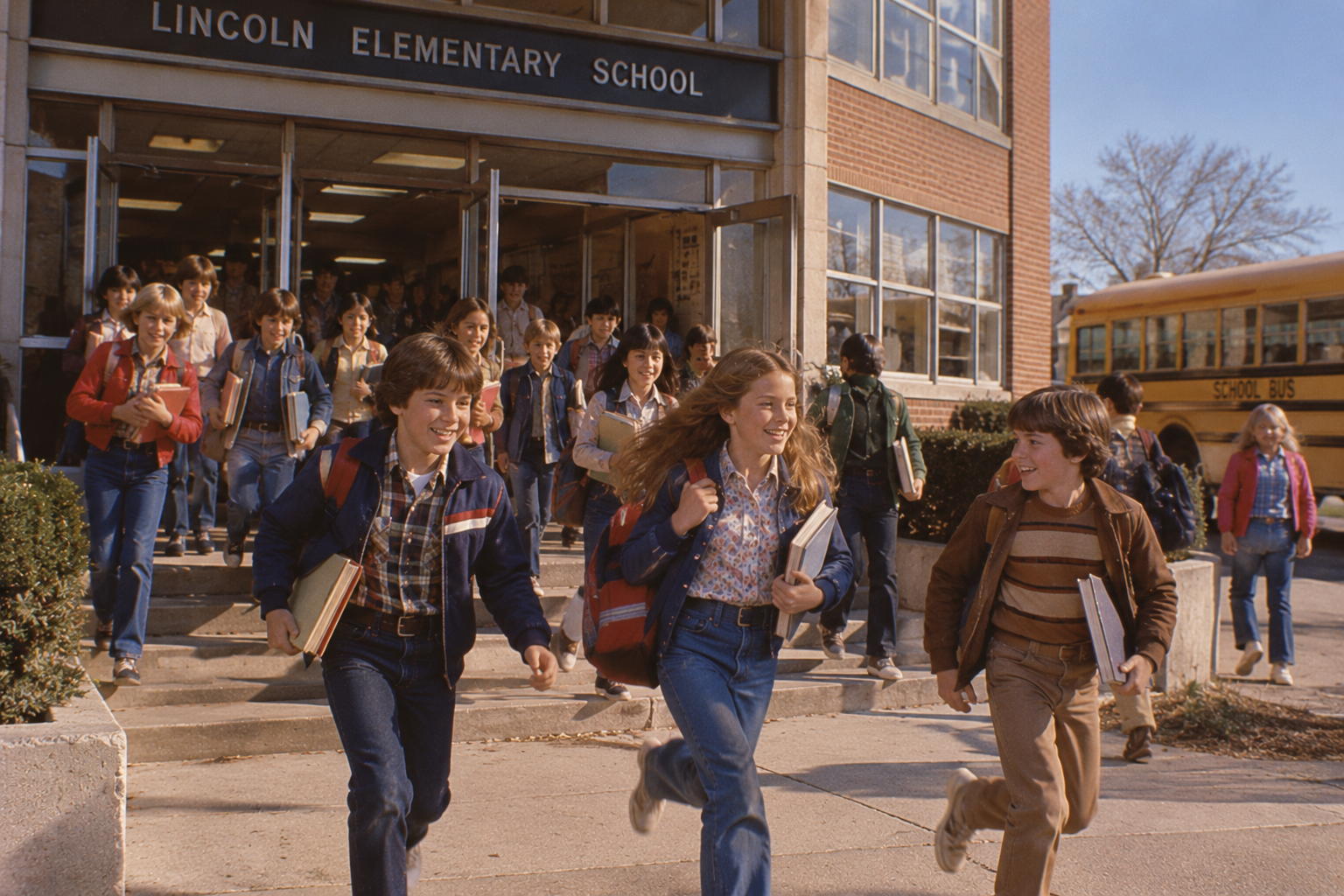
For many kids growing up in the ’70s, the school day didn’t really end when the final bell rang. After walking or biking home, you might drop your schoolbag inside the front door, grab your bicycle, and head straight back outside to find your friends. There were no group chats to organize plans or text messages asking where everyone was. You simply rode around the neighborhood, knocked on a few doors, or headed to the usual meeting spot and hoped someone was there. Parents often relied on familiar routines and the expectation that you’d be home by a certain time. Organized after-school activities and changing attitudes about children’s independence have made this kind of afternoon less common, but for many former ’70s kids, those unscheduled hours were among the best parts of growing up.
When Going to School Meant a Different Kind of Independence
Looking back, a typical school day in the 1970s involved a surprising amount of independence, patience, and paper. You were expected to keep track of your lunch money, find information without the internet, and remember to bring home important documents without a reminder popping up on your phone. Some of those routines were inconvenient, and modern technology has certainly made plenty of things easier for students and parents alike. But there’s something undeniably nostalgic about remembering a time when schoolbooks came wrapped in grocery bags, the library card catalog held all the answers, and the best part of the afternoon began the moment the final bell rang.