A rainy day in the 1980s didn’t mean handing a kid a tablet and letting streaming services take over. If the weather ruined whatever plans you had outside, entertainment usually came down to whatever happened to already be inside the house.
That might mean digging a board game out of the closet, building something with LEGO bricks, putting on a VHS tape you’d already watched a dozen times, or sitting next to the radio waiting for exactly the right song to come on. Even video games had limits. You couldn’t download something new when you got bored with what you had.
And maybe that was part of the fun. With fewer options instantly available, kids had to get considerably more mileage out of what was around them. Here are 12 things that could keep an ’80s kid occupied until the rain finally stopped.
Build an Enormous Blanket Fort
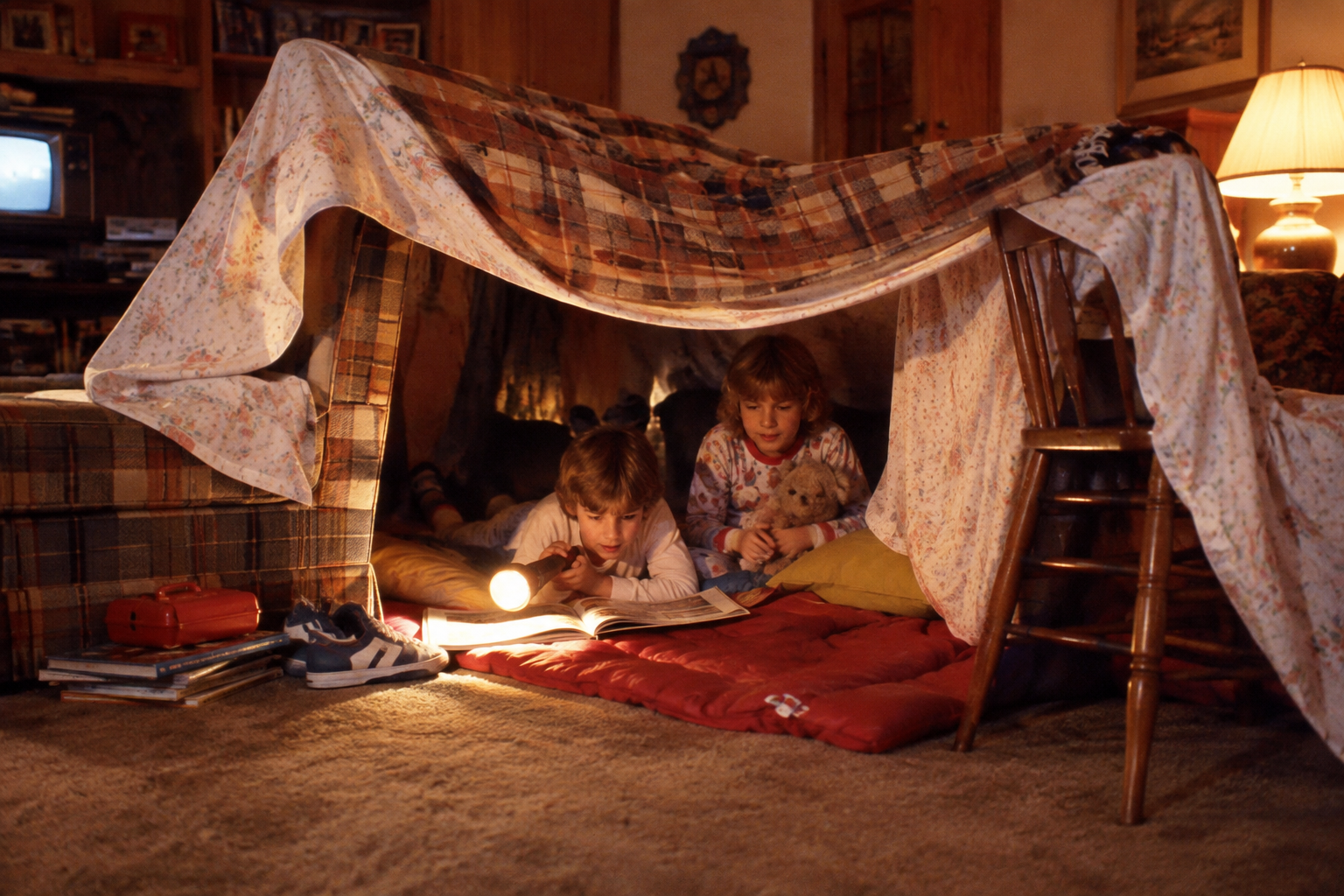
A couple of couch cushions, dining-room chairs, and every spare blanket in the house could transform a living room into something much more interesting. Once construction was finished, the fort might become a clubhouse, spaceship, military base, secret hideout, or simply somewhere to eat snacks while insisting that adults weren’t allowed inside. There were no special fort-building kits required, and structural integrity was rarely a major concern. Half the challenge was figuring out which household objects could hold up a blanket without everything collapsing five minutes later.
Play Atari or Nintendo Until Someone Made You Stop
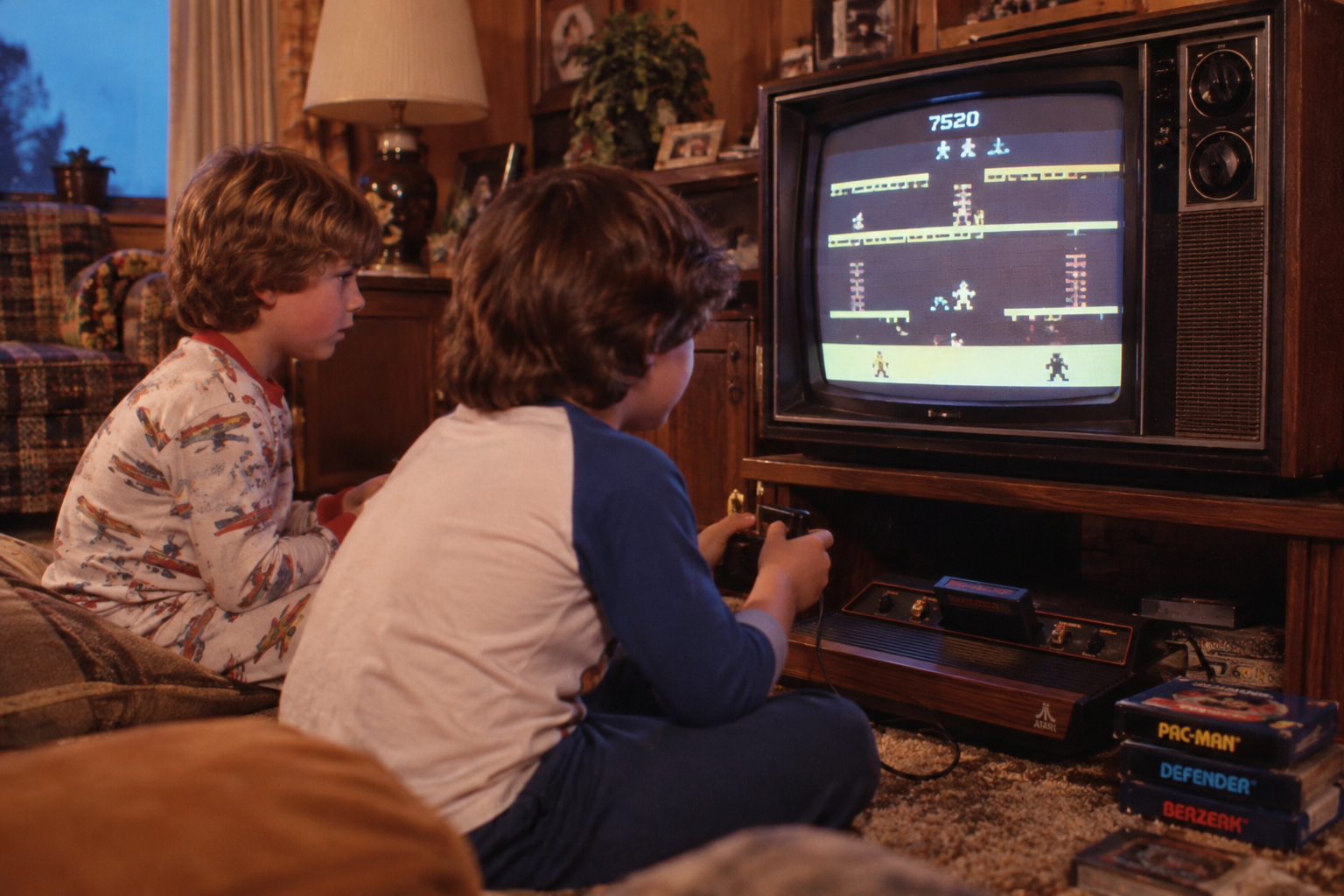
Video games were absolutely part of an ’80s rainy day, although what you played depended heavily on which part of the decade you grew up in. The Atari 2600, released in 1977, helped make cartridge-based home gaming a fixture of American childhood, with games including Space Invaders, Pac-Man, and Frogger. Then Nintendo changed the landscape again when the Nintendo Entertainment System launched in America in 1985. There was no enormous digital library waiting when you got bored, either. You played the cartridges you owned, swapped games with friends, or kept attempting the same level until somebody finally told you to turn the thing off.
Spend Hours With a Coloring Book and Crayons
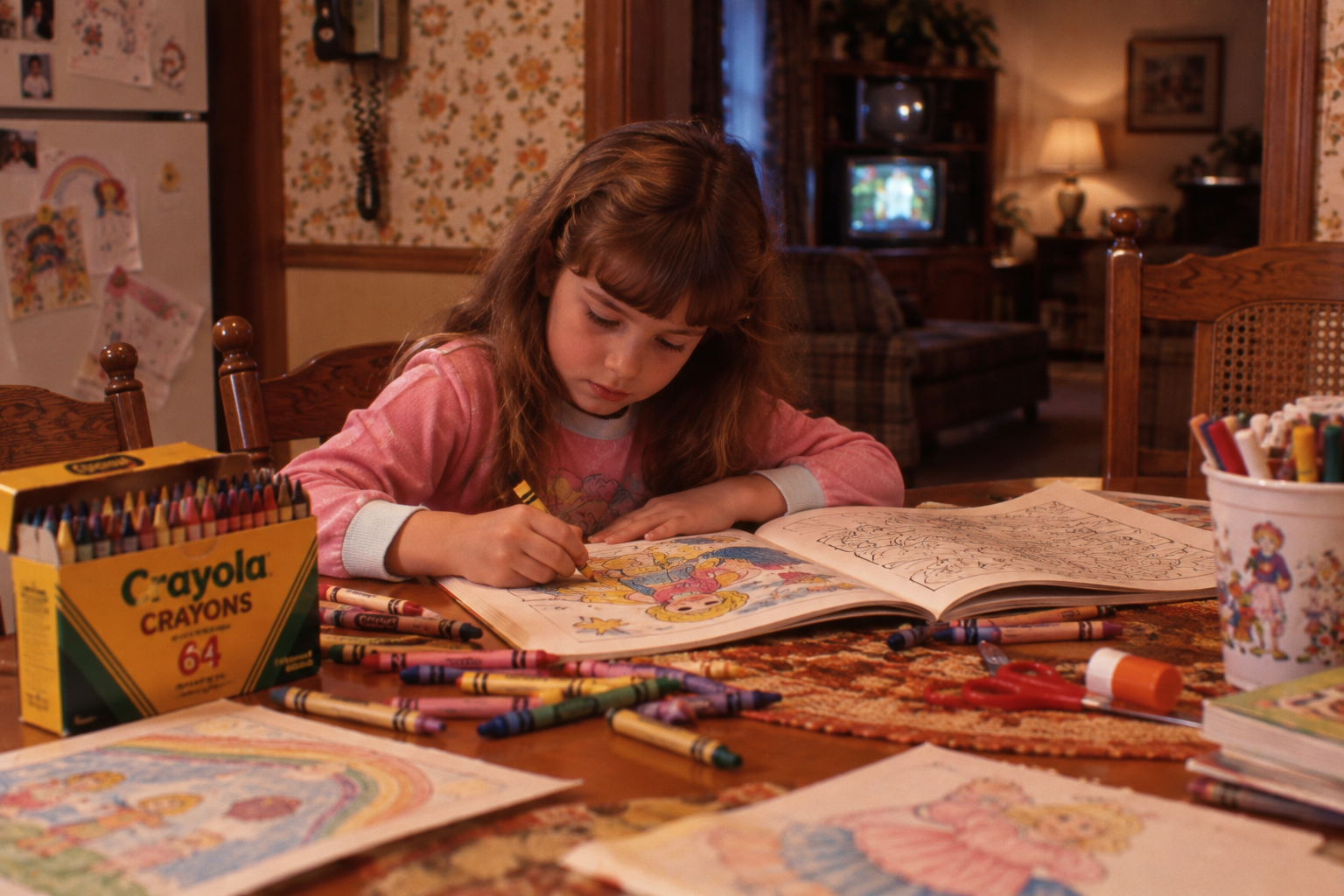
Before online craft tutorials could tell you exactly how to make something, a pile of construction paper and art supplies left considerably more room for improvisation. Coloring books, crayons, markers, scissors, glue, and whatever happened to be hiding in the craft drawer could consume an entire afternoon. The classic Crayola 64-count box was already firmly established by the ’80s; Crayola introduced it with its built-in sharpener back in 1958. Of course, plenty of households also had the less glamorous alternative: an old coffee can or plastic container filled with broken crayons that required digging around for five minutes to find a usable blue.
Put on a VHS Movie You Had Already Seen 20 Times
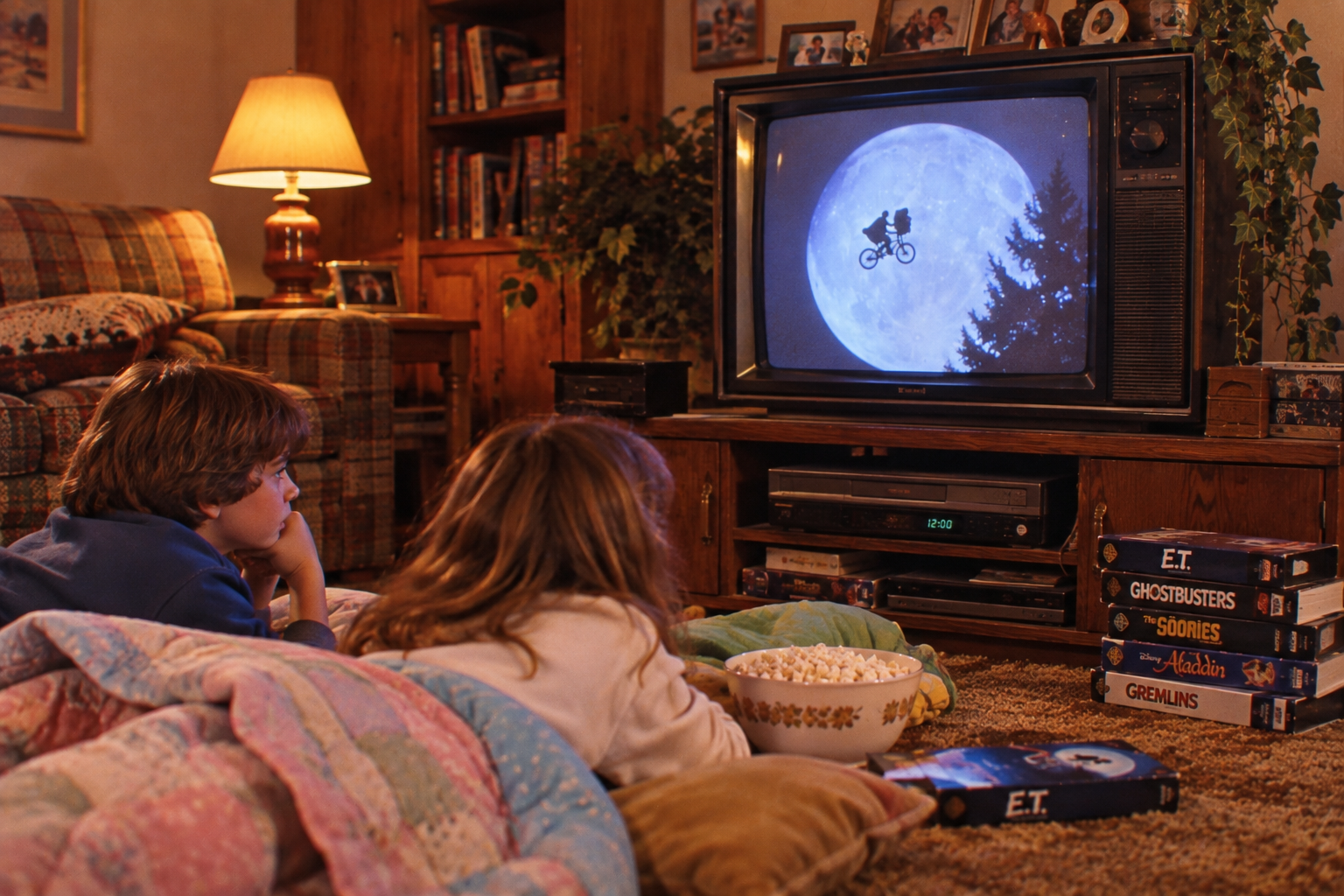
Having a VCR eventually gave families an incredible new ability: watching a movie when they wanted to watch it. The technology spread rapidly during the decade. Only about 1% of U.S. television households had a VCR in 1980, compared with roughly 21% in 1985 and 66% by 1990. That didn’t mean kids had hundreds of movies at their fingertips, though. A rainy afternoon might mean rewatching one of the handful of tapes the family owned or putting on something recorded from television, commercials and all. Getting something different required a trip to the video store — and there was always a chance somebody else had already rented the movie you wanted.
Play Monopoly Until Everyone Got Mad
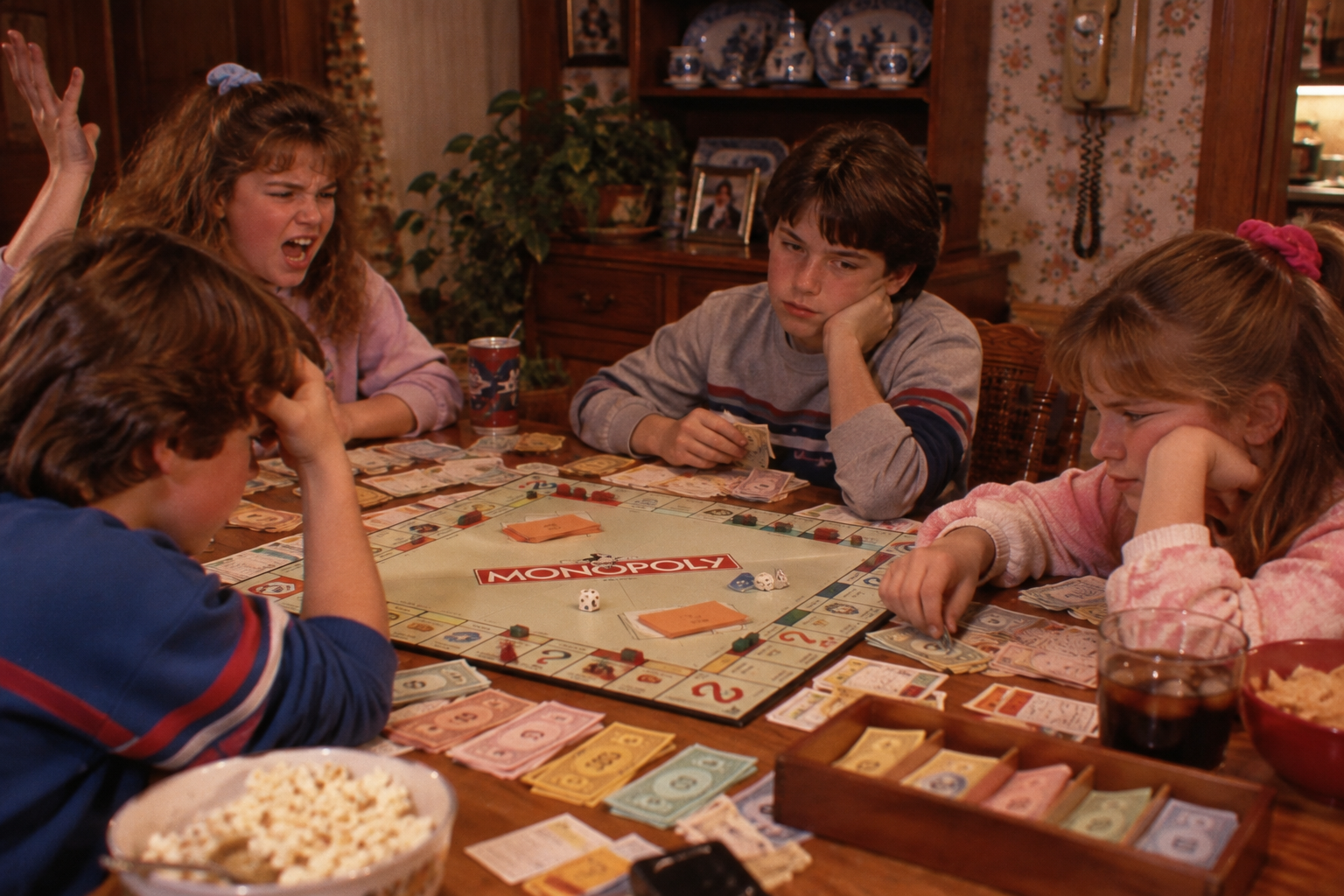
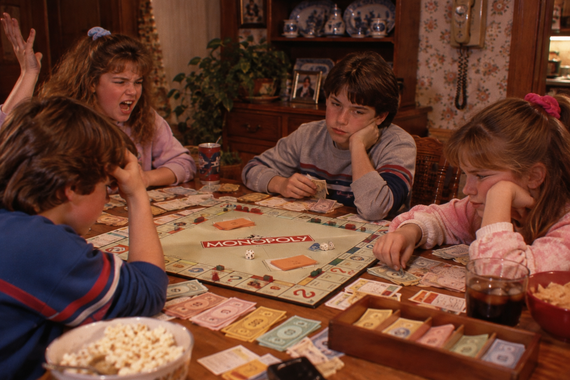
Board games were an easy solution when rain trapped everyone indoors, at least until they created an entirely different problem. Monopoly, Clue, Sorry!, Battleship, The Game of Life, Risk, Connect Four, and Yahtzee could turn the kitchen table into an afternoon-long battleground. Monopoly was particularly dangerous because there was no guarantee a game would actually end before dinner. A board might simply be left exactly where it was so everyone could return later — assuming nobody bumped the table and sent hotels, money, and tiny metal pieces flying. And naturally, at some point, somebody was going to accuse the banker of cheating.
Trending on Cheapism


Build Something With LEGO
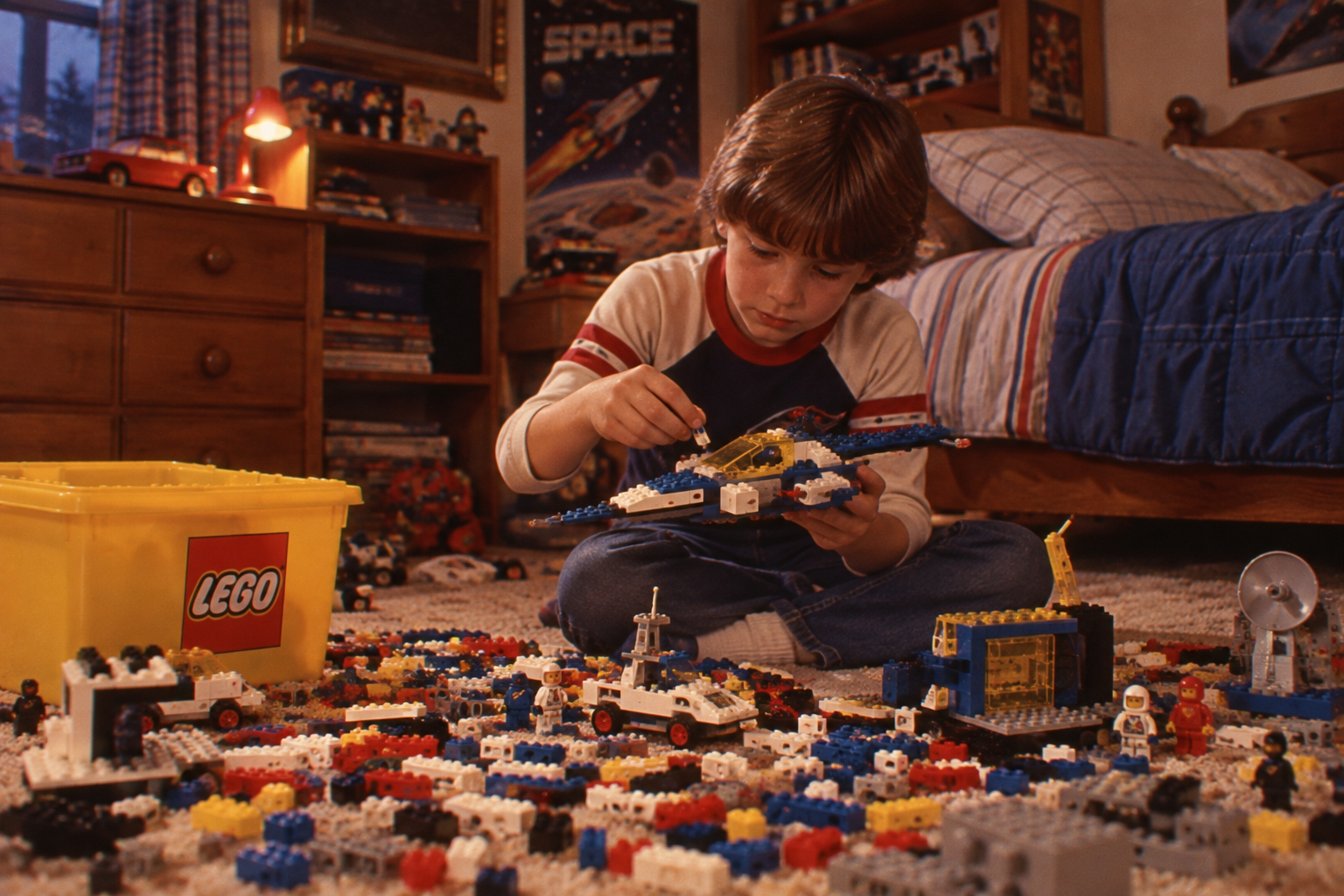
Dumping an enormous container of LEGO bricks onto the floor was an activity in itself, and one that everybody elsewhere in the house could hear. Kids might start by following instructions, but once several sets had been dismantled and mixed together, those instructions became considerably less important. Spaceships could acquire castle pieces, houses could develop wheels, and whatever you were building inevitably required one tiny brick that seemed to have disappeared forever. The finished creation didn’t necessarily have to resemble anything recognizable. Finding that missing piece among hundreds of nearly identical bricks was often the real project.
Make a Mixtape Off the Radio
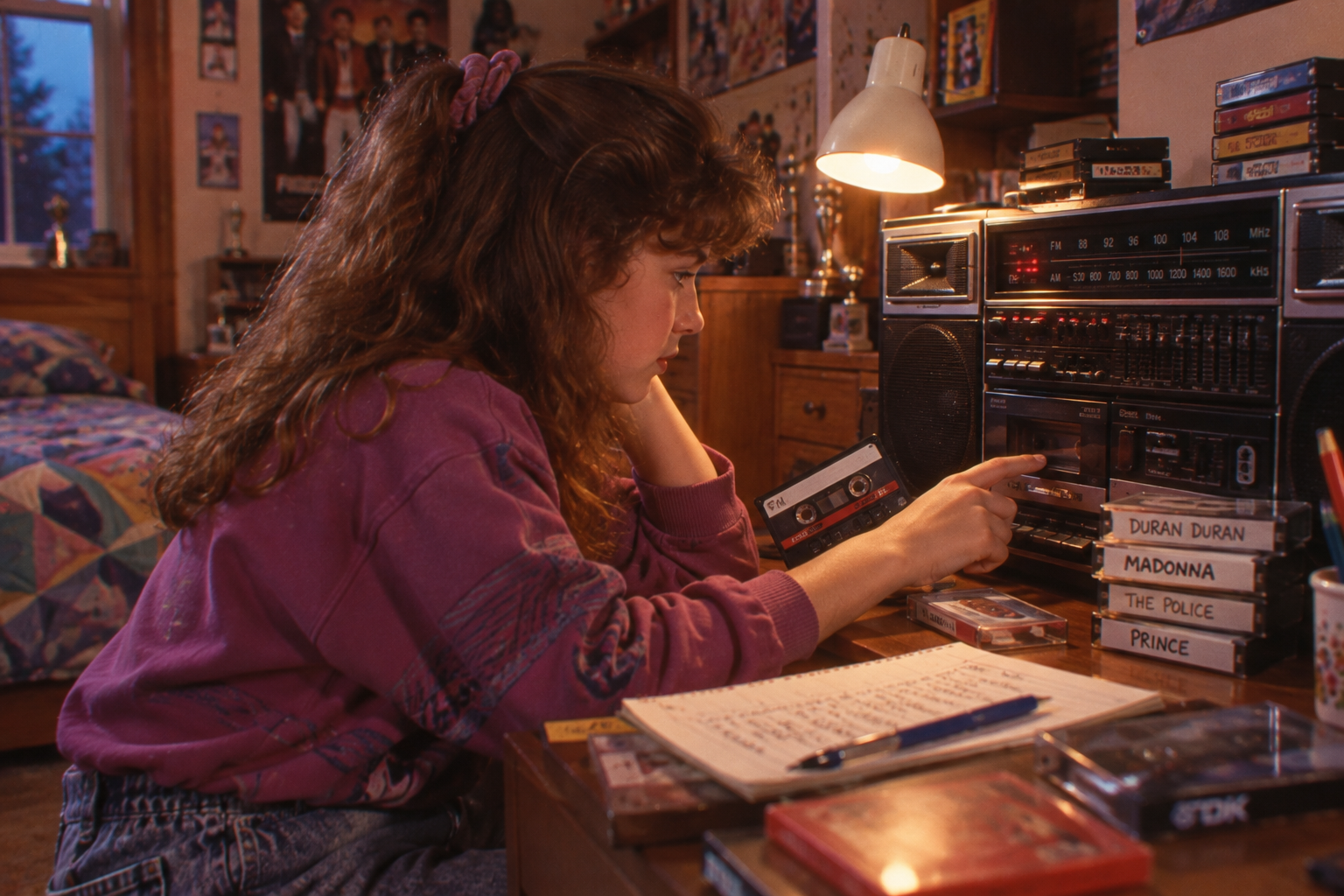
For older kids, a rainy afternoon could be spent with one hand hovering over the record button on a cassette player. Making a playlist wasn’t a matter of searching for songs and dragging them into the right order. You needed a blank tape, a radio station willing to cooperate, and enough patience to wait for the songs you actually wanted. Then came the tricky part: pressing record quickly enough to catch the beginning without recording too much of the DJ. After waiting an hour for your favorite song, there were few things more irritating than hearing an announcer start talking during the final chorus.
Read Comic Books Until the Rain Stopped
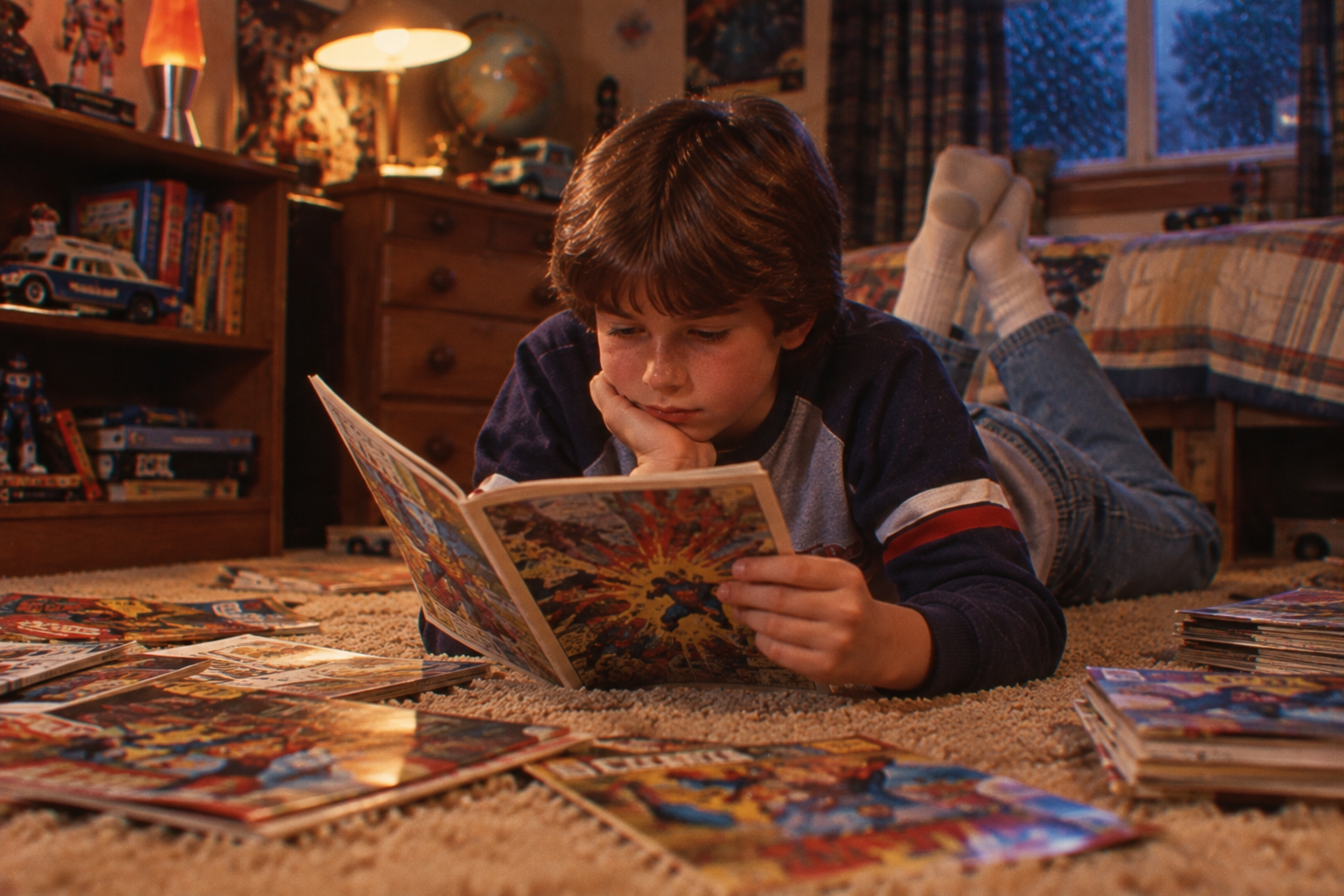
A stack of comics could make several rainy hours disappear without requiring electricity at all. Depending on the kid, that might mean Superman, Batman, Spider-Man, X-Men, Archie, or collections of newspaper strips such as Garfield. Comics also had the advantage of being endlessly rereadable, especially when there wasn’t a new issue immediately available. If a story ended on a cliffhanger, there was no tapping a screen to find out what happened next. You might have to wait for the next visit to a comic shop, supermarket, drugstore, or newsstand. Favorite issues could consequently be read enough times for their covers to become soft, bent, and permanently familiar.
Sign up for our newsletter
Try to Solve a Rubik’s Cube
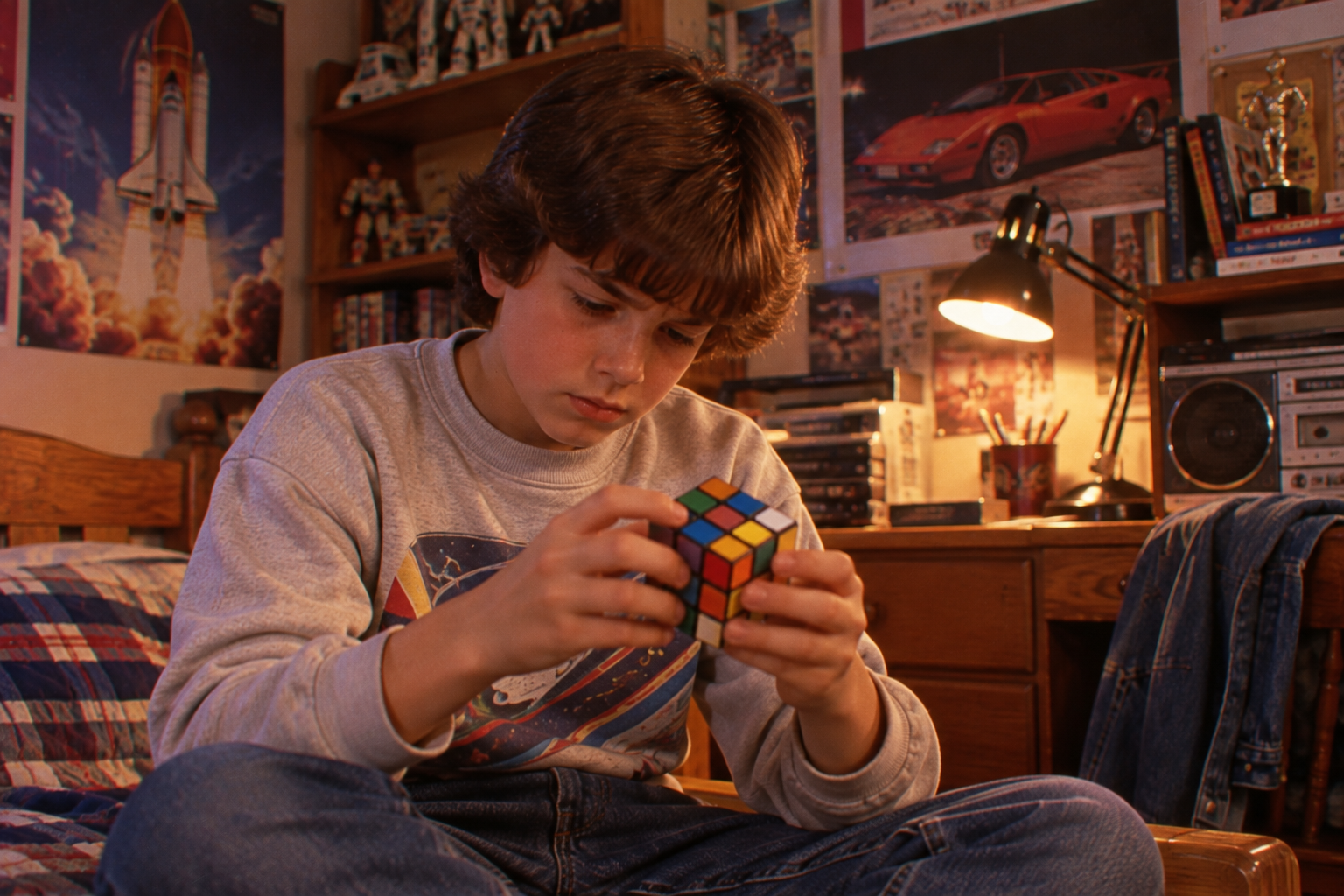
Few objects scream early ’80s quite like a scrambled Rubik’s Cube sitting on a coffee table. The puzzle was launched internationally in 1980 and quickly became a worldwide phenomenon; the Smithsonian’s Lemelson Center notes that approximately 100 million had been sold by 1982. Solving one was another matter. There was no YouTube tutorial available when you got stuck, so kids relied on solution books, advice from friends, or sheer trial and error. Getting a single side to match could briefly feel like a major breakthrough — until you realized that fixing the other five sides was considerably more complicated.
Turn the Bedroom Into a G.I. Joe, Barbie, or He-Man Universe
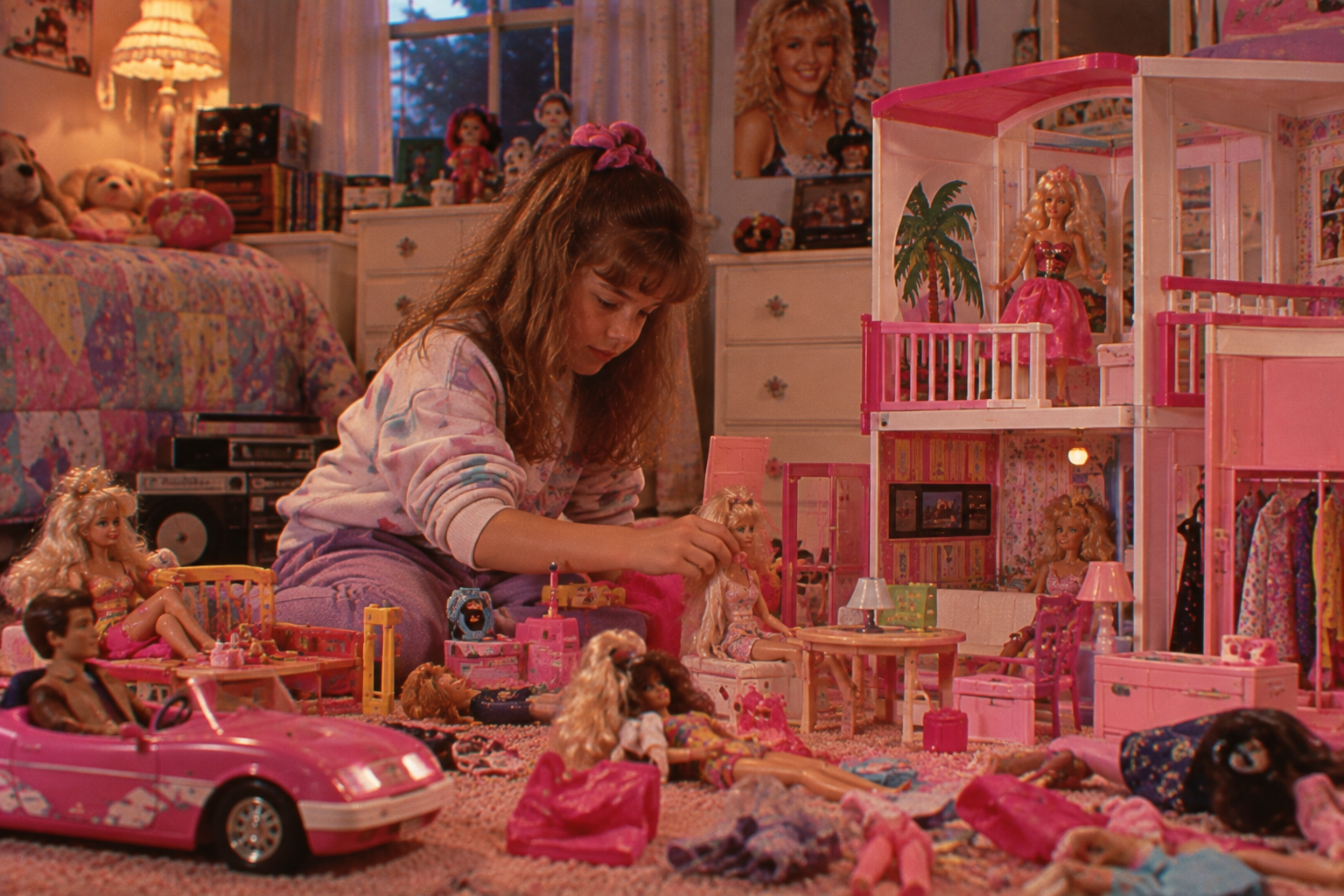
Action figures and dolls didn’t necessarily provide 15 minutes of entertainment before kids moved on to something else. Given enough time indoors, they could become the cast of an increasingly complicated story that occupied an entire bedroom. Barbie, G.I. Joe, Masters of the Universe, Transformers, My Little Pony, Care Bears, and other ’80s favorites could take over beds, dressers, carpets, and furniture. A shoebox became a house, a pile of pillows became a mountain, and the space under the bed might become an enemy hideout. The biggest problem came when a parent expected everything to be cleaned up even though the story was very clearly nowhere near finished.
Dig Out a Choose Your Own Adventure Book
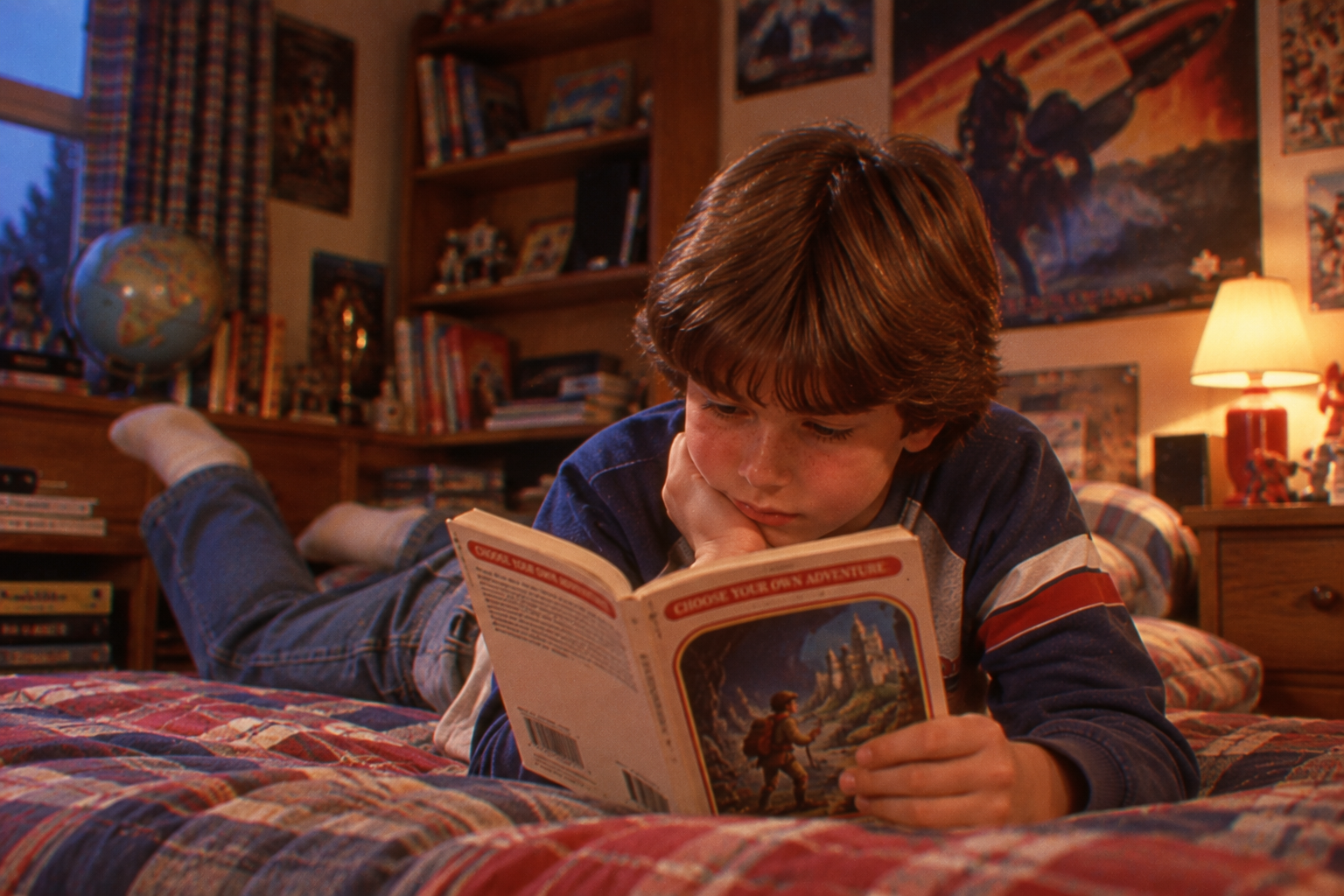
A Choose Your Own Adventure book offered something surprisingly close to interactive entertainment without requiring a screen. Bantam began publishing the series in 1979, and the books became enormously popular during the following two decades, ultimately selling more than 250 million copies worldwide between 1979 and 1999. Readers decided what their character should do and jumped to different pages depending on the choice, which meant the same book could be explored repeatedly. Of course, there was also the unofficial strategy: keeping one finger firmly planted on the previous page in case your supposedly brave decision resulted in a terrible ending.
Get Sent Into the Basement and Figure It Out
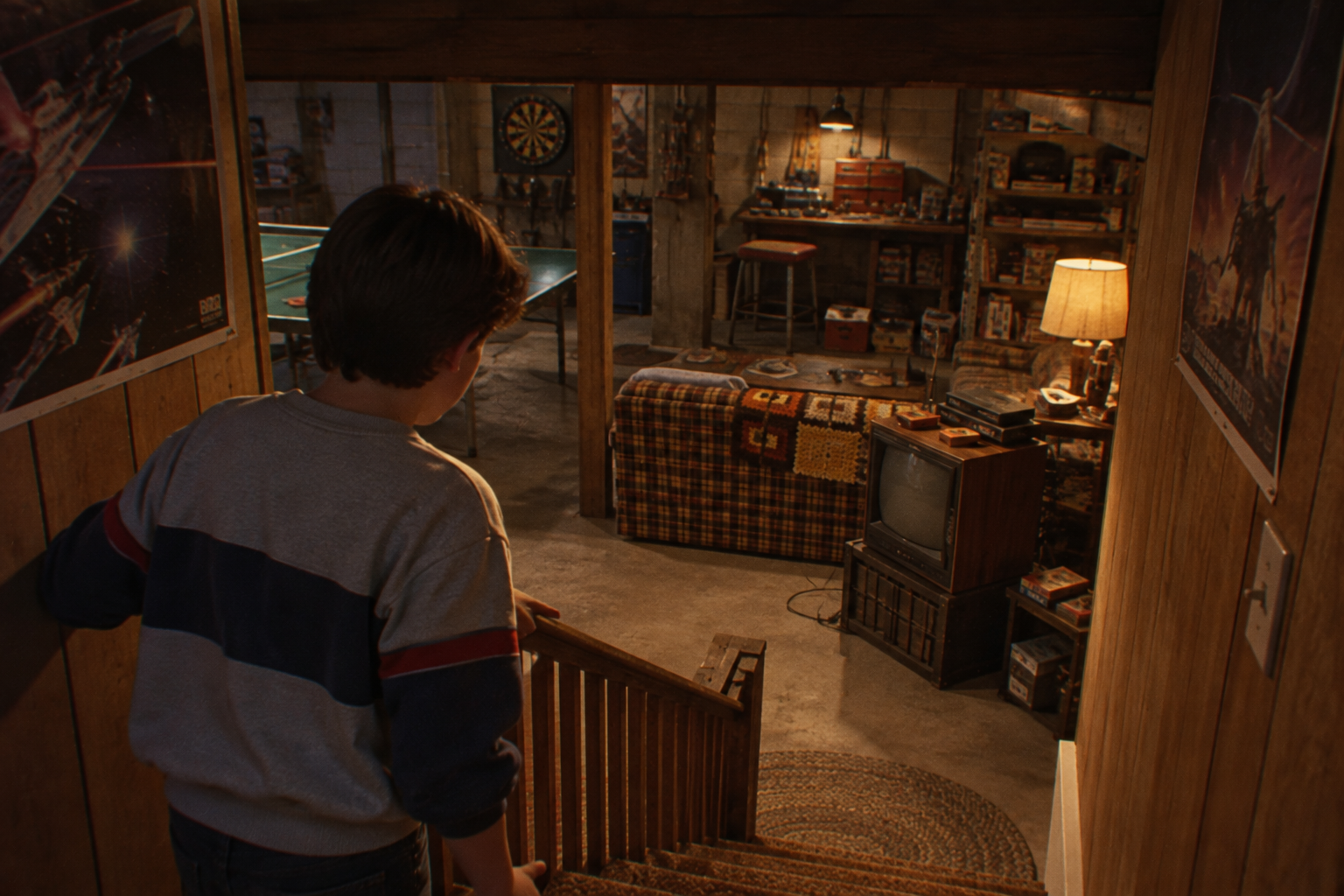
Sometimes there was no carefully planned rainy-day activity. You complained that you were bored, an adult told you to go find something to do, and that was more or less the entire entertainment strategy. The basement, bedroom, or playroom might contain Matchbox cars, Lincoln Logs, puzzles, cards, dolls, action figures, model kits, LEGO bricks, or miscellaneous toys that hadn’t seemed interesting five minutes earlier. Eventually, something usually happened. A sibling got recruited, a completely invented game developed its own complicated rules, or an old toy suddenly became interesting again. What started with “there’s nothing to do” could somehow eat up the next three hours.
When Boredom Was Part of the Entertainment
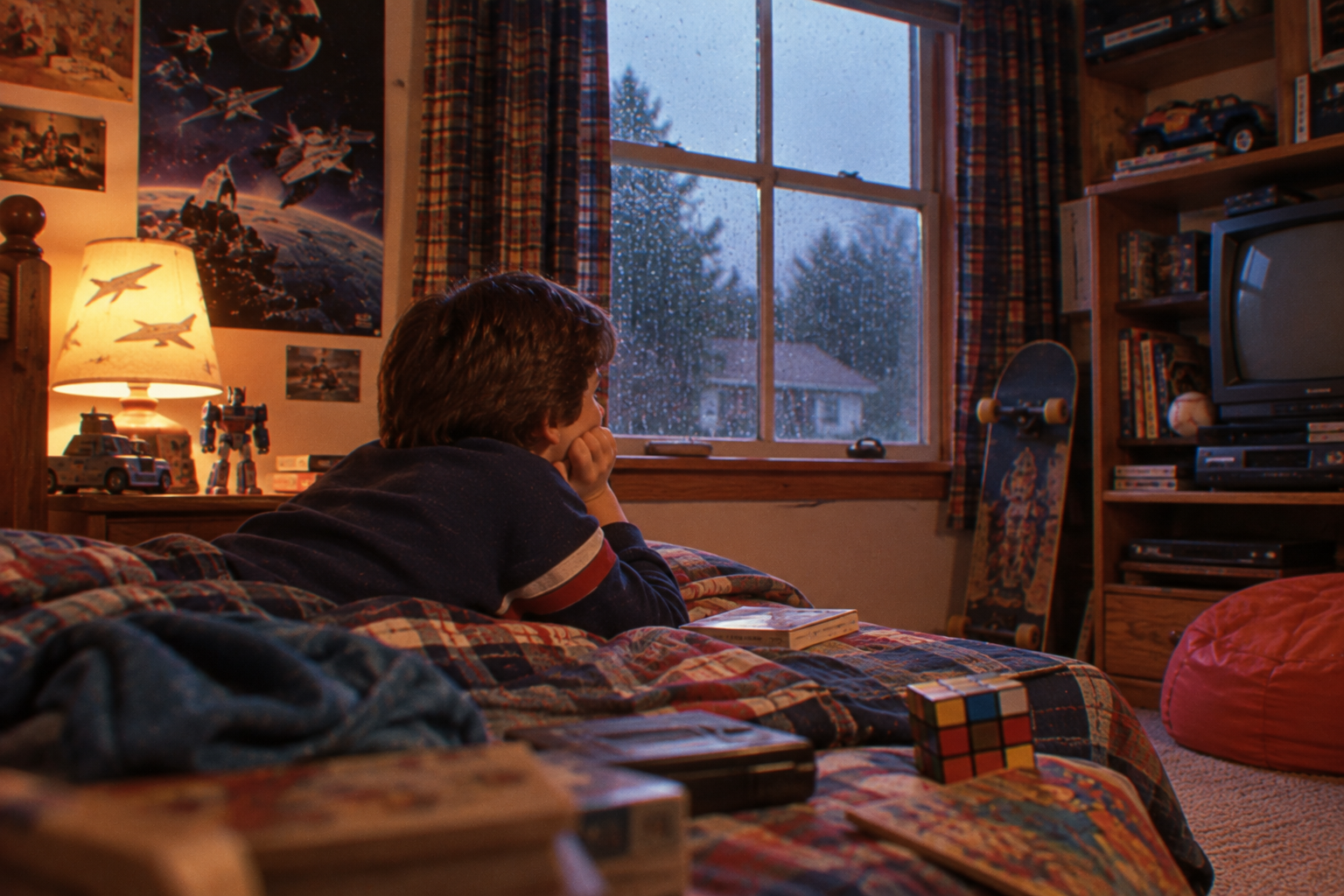
A rainy afternoon in the ’80s wasn’t necessarily technology-free. Kids had Atari consoles, Nintendo cartridges, cassette players, televisions, and increasingly, VCRs. The difference was that entertainment was largely limited to whatever happened to be physically available in the house.
So you replayed the same game, rewound the same movie, reread the same comic, or dumped the same box of toys onto the floor and figured out something different to do with them. Sometimes being bored long enough was exactly what turned an ordinary rainy afternoon into something memorable.