For kids growing up in the 1970s, few things were more exciting than hearing their teacher announce an upcoming field trip. 1970s school field trips were a big deal, whether the destination was a museum, a local factory, or a nature center. The chance to escape the classroom for an entire day was enough to make even the most ordinary outing feel like a major event.
Of course, school field trips in the 1970s looked a little different from the ones kids take today. There were paper permission slips to get signed, yellow school buses with vinyl seats, metal lunchboxes packed with sandwiches, and absolutely no smartphones to document the experience. And while teachers hoped everyone would learn something, plenty of students were more interested in sitting beside their best friends or spending their allowance at the gift shop.
From planetarium shows to factory tours and the thrill of bringing home a souvenir pencil, here are 12 things that made a 1970s school field trip feel like a huge adventure.
Bringing Home the Permission Slip That Made Everything Official
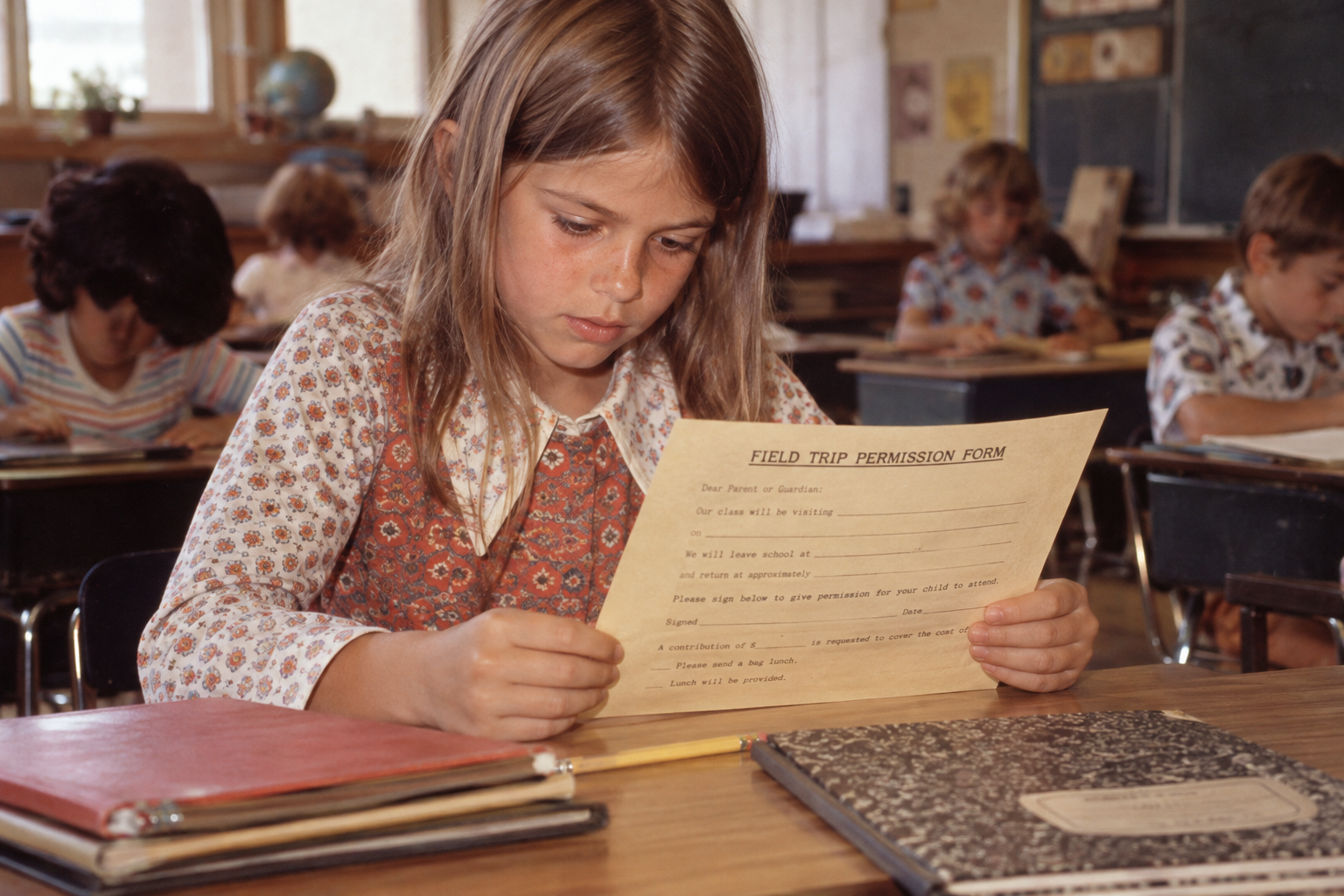
Before online forms and electronic signatures, a field trip wasn’t happening until you brought home a paper permission slip and convinced a parent to sign it. The form usually explained where the class was going, when students needed to arrive, whether they should pack a lunch, and how much money the trip would cost. Getting that signature felt like securing a ticket to something special. Of course, there was always at least one kid who forgot to bring the slip back, leading to frantic reminders from the teacher as departure day approached. For everyone else, that folded piece of paper tucked inside a schoolbook was the first sign that something exciting was coming.
Climbing Aboard a Yellow School Bus That Suddenly Felt Special
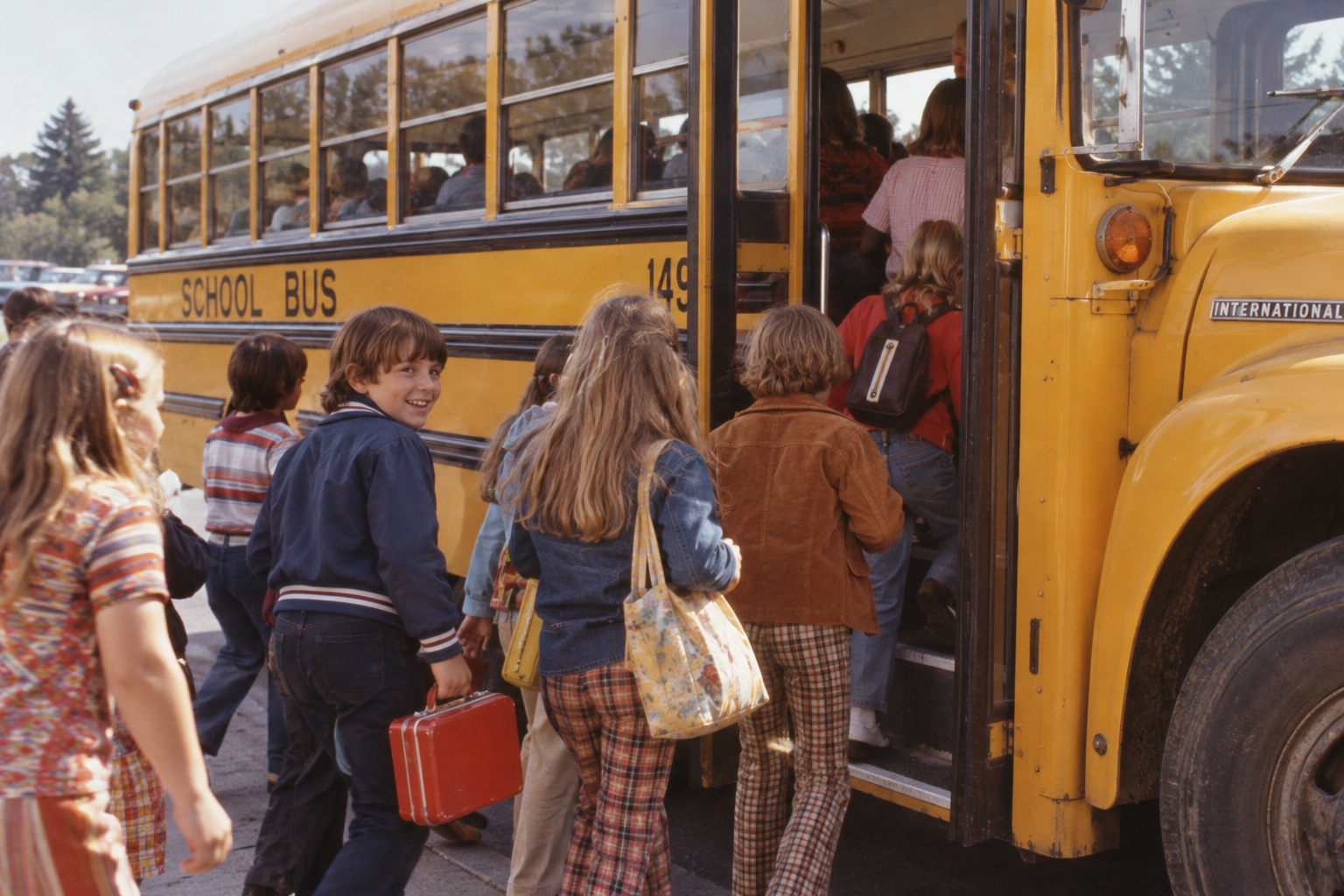
Riding a school bus might have been an everyday experience, but taking one somewhere other than school was an entirely different story. Kids scrambled to claim seats beside their friends, slid across the vinyl benches, and pressed their faces against the windows as familiar neighborhoods gave way to unfamiliar roads. The ride could get loud quickly, especially when everyone started singing or shouting across the aisle. There were no individual seat belts on most school buses of the era, and air conditioning was hardly a standard feature. Still, the combination of bumpy roads, excited chatter, and the possibility of sitting far away from the teacher made the journey almost as memorable as the destination.
Getting to Eat a Packed Lunch Somewhere Other Than the Cafeteria
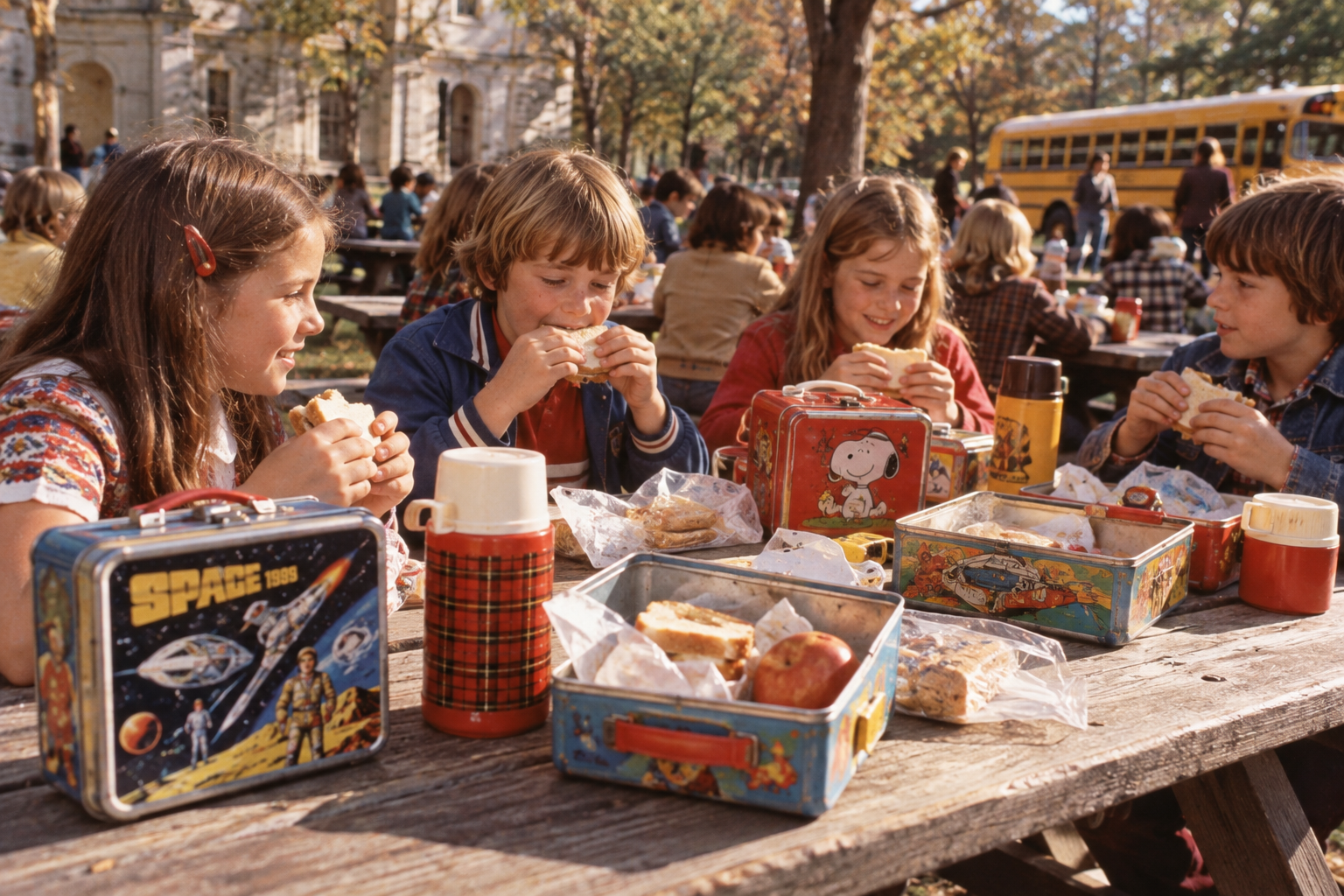
A peanut butter sandwich didn’t suddenly become gourmet food just because you were eating it on a field trip, but it certainly felt more exciting. Instead of lining up in the cafeteria, students got to open their lunchboxes at picnic tables, on museum grounds, or beneath a shady tree. Colorful metal lunchboxes featuring popular television characters, superheroes, and cartoon favorites were especially recognizable during the 1970s, often accompanied by matching thermoses. Inside, there might be a sandwich wrapped in wax paper, an apple, a bag of chips, and a couple of cookies. Even the occasional leaking thermos or squashed sandwich couldn’t ruin the novelty of eating lunch somewhere completely different.
Visiting a Factory and Seeing How Everyday Products Were Made
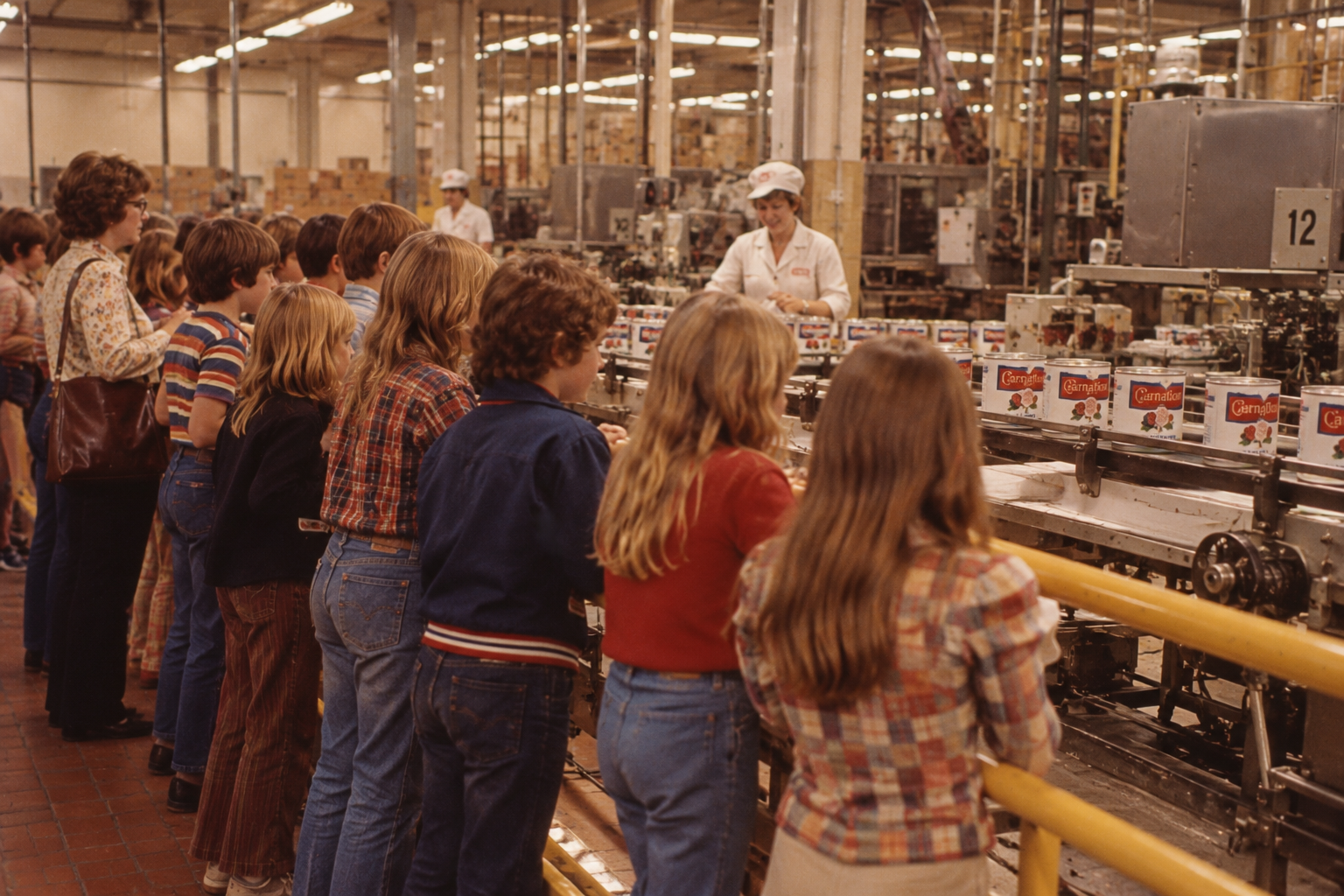
Long before kids could watch manufacturing videos online, seeing how everyday products were made often meant visiting an actual factory. Depending on where they lived, students might tour a dairy, bakery, newspaper printing facility, or local manufacturing plant. Watching enormous machines fill bottles, package food, or roll freshly printed newspapers off a press could be surprisingly fascinating, especially for children who had never seen industrial equipment up close. The machinery was noisy, the buildings sometimes smelled unusual, and the tour guides always seemed to have an endless supply of interesting facts. But for many students, the biggest question was whether the visit would end with a free sample or souvenir.
Walking Into a Planetarium and Watching the Ceiling Become the Night Sky
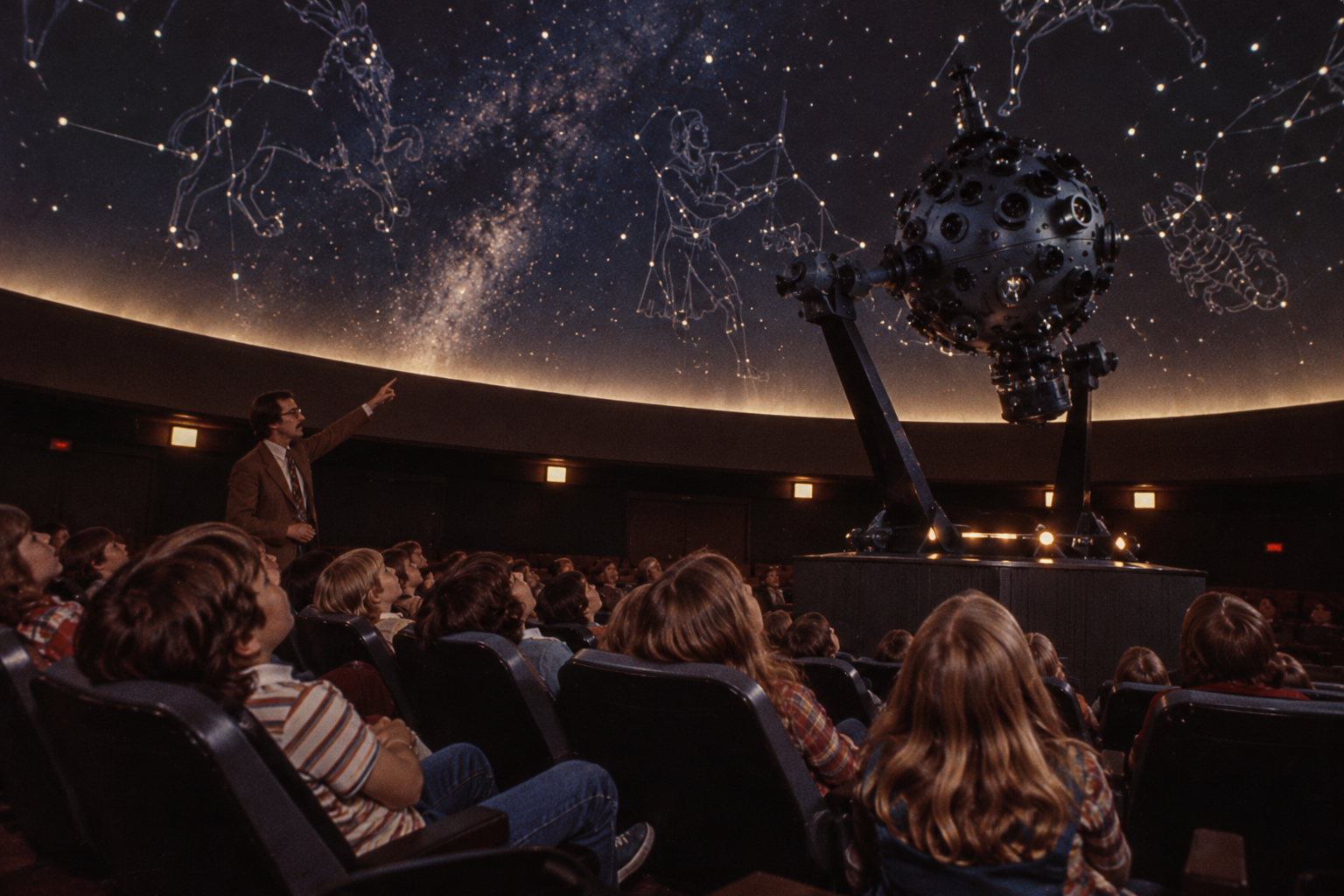
For a generation that had watched Americans walk on the moon, a trip to the planetarium could feel like a journey into outer space. Students settled into reclining seats beneath a massive dome, waiting for the lights to dim and the presentation to begin. Then, almost magically, thousands of artificial stars appeared overhead. A large mechanical projector might recreate the night sky, demonstrate the movement of planets, or show familiar constellations. Compared with the filmstrips and overhead projectors used in many classrooms, the experience was wonderfully immersive. There was always some whispering when the room went completely dark, but once the stars appeared, even the most restless kids had a reason to look up.
Trending on Cheapism


Seeing Real Animals at the Zoo Instead of Pictures in a Textbook
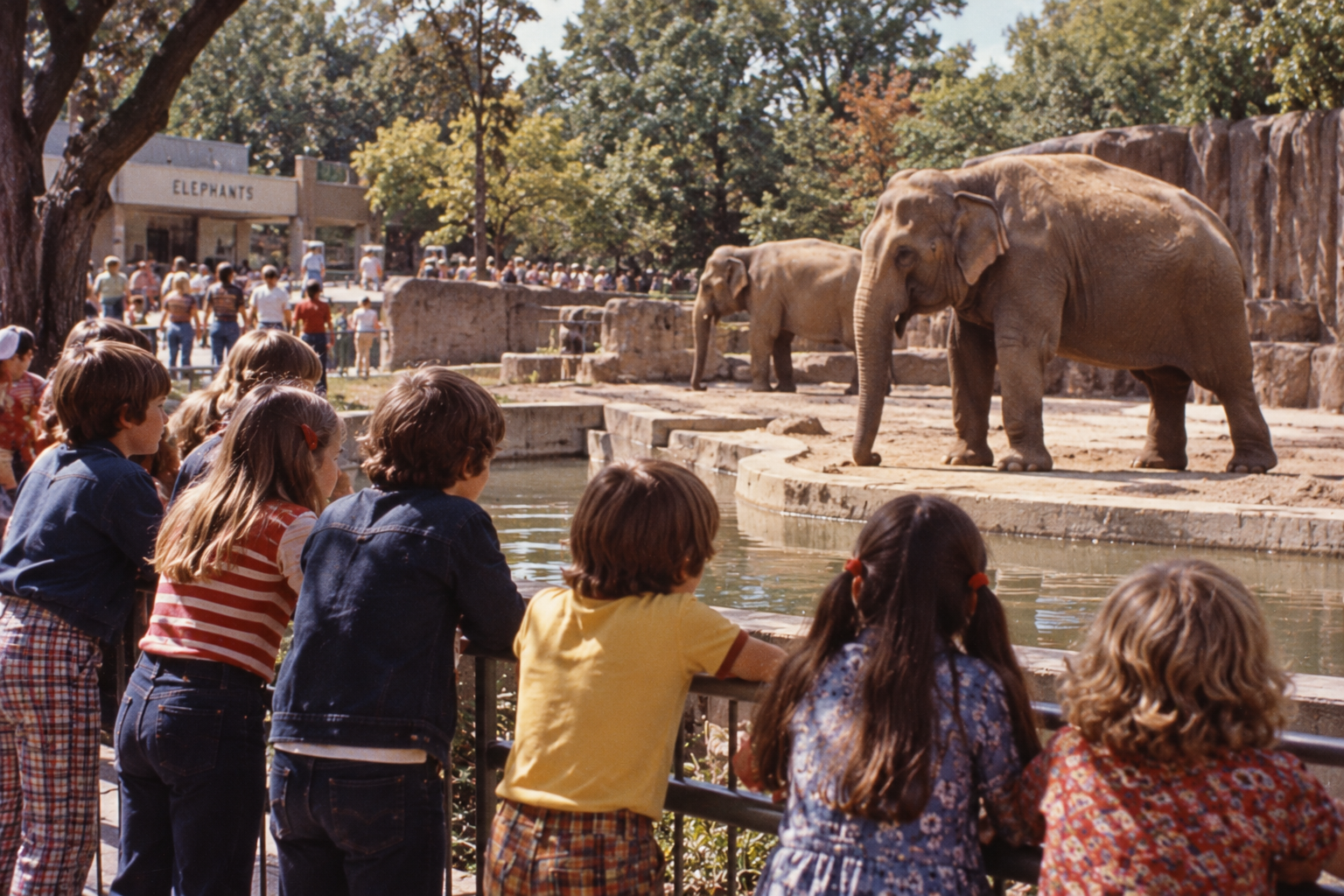
Reading about elephants, giraffes, and lions in a science textbook was one thing. Standing a few feet from an animal enclosure was something else entirely. Zoo field trips gave students the chance to see creatures they might otherwise know only from books, television programs, or classroom posters. Children crowded around exhibits, unfolded paper maps, and argued about which animal they wanted to visit next. Some were fascinated by the biggest animals, while others could spend ages watching monkeys climb or penguins swim. And although teachers usually tried to incorporate lessons about habitats and animal behavior, the real excitement came from seeing something extraordinary alongside an entire class of friends.
Being Given a Little Money for the Museum Gift Shop
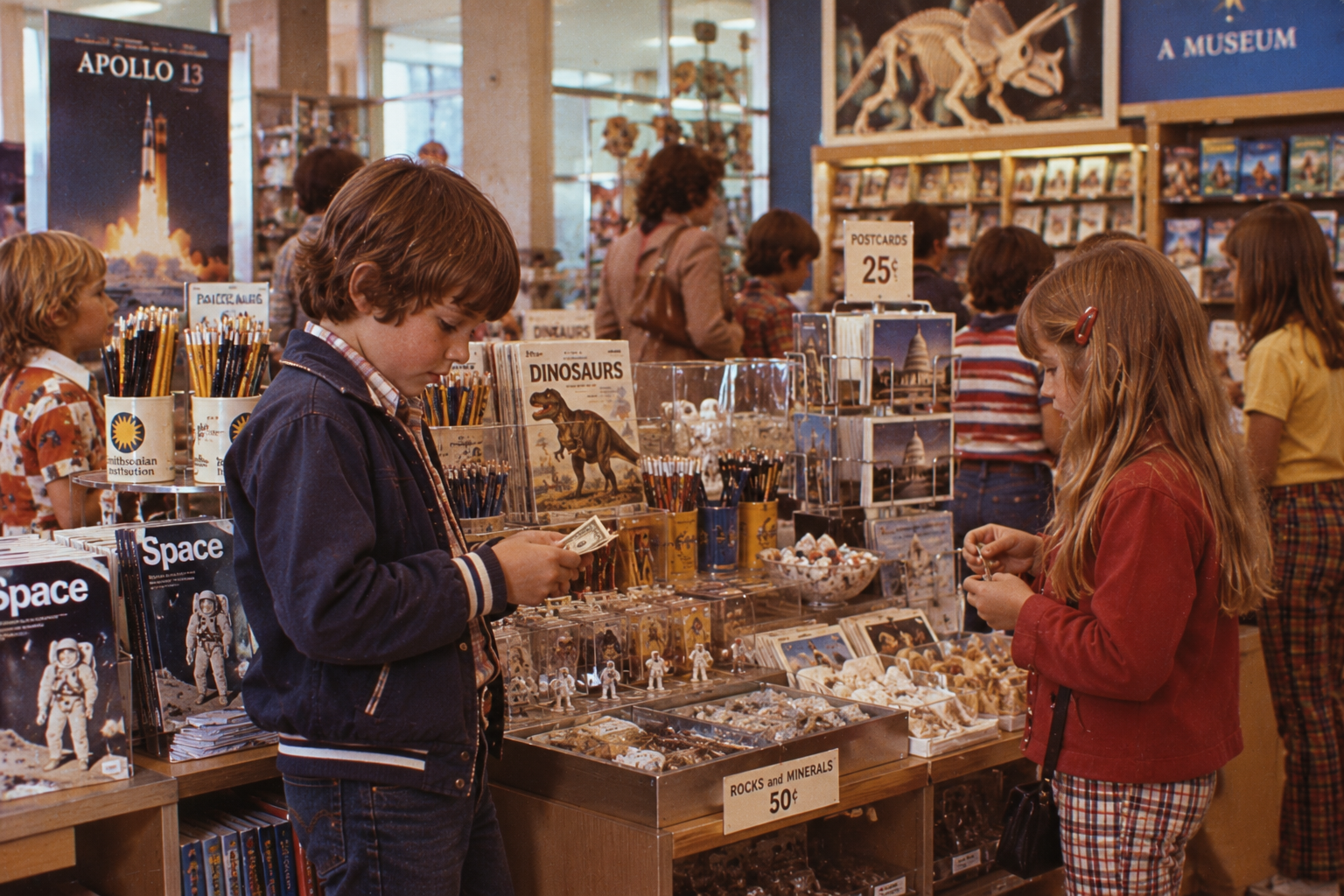
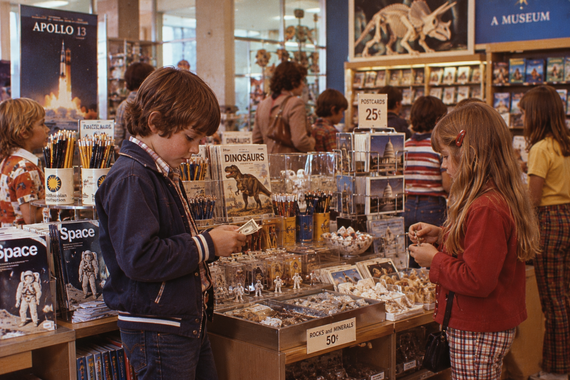
For some kids, the museum gift shop was practically the main attraction. Parents might send them off with a dollar or two, along with strict instructions not to lose the money before they arrived. Once inside, the choices could feel overwhelming: postcards, souvenir pencils, miniature dinosaurs, polished rocks, plastic toys, and all sorts of inexpensive treasures. Students carefully counted their coins, compared prices with friends, and debated whether to buy one slightly more expensive item or several smaller ones. Having a little money to spend independently was a big part of the appeal. And somehow, a pencil with a museum’s name printed on it felt infinitely more special than anything in the classroom supply cabinet.
Walking Through a Historic Village Where Everything Looked Like Another Century
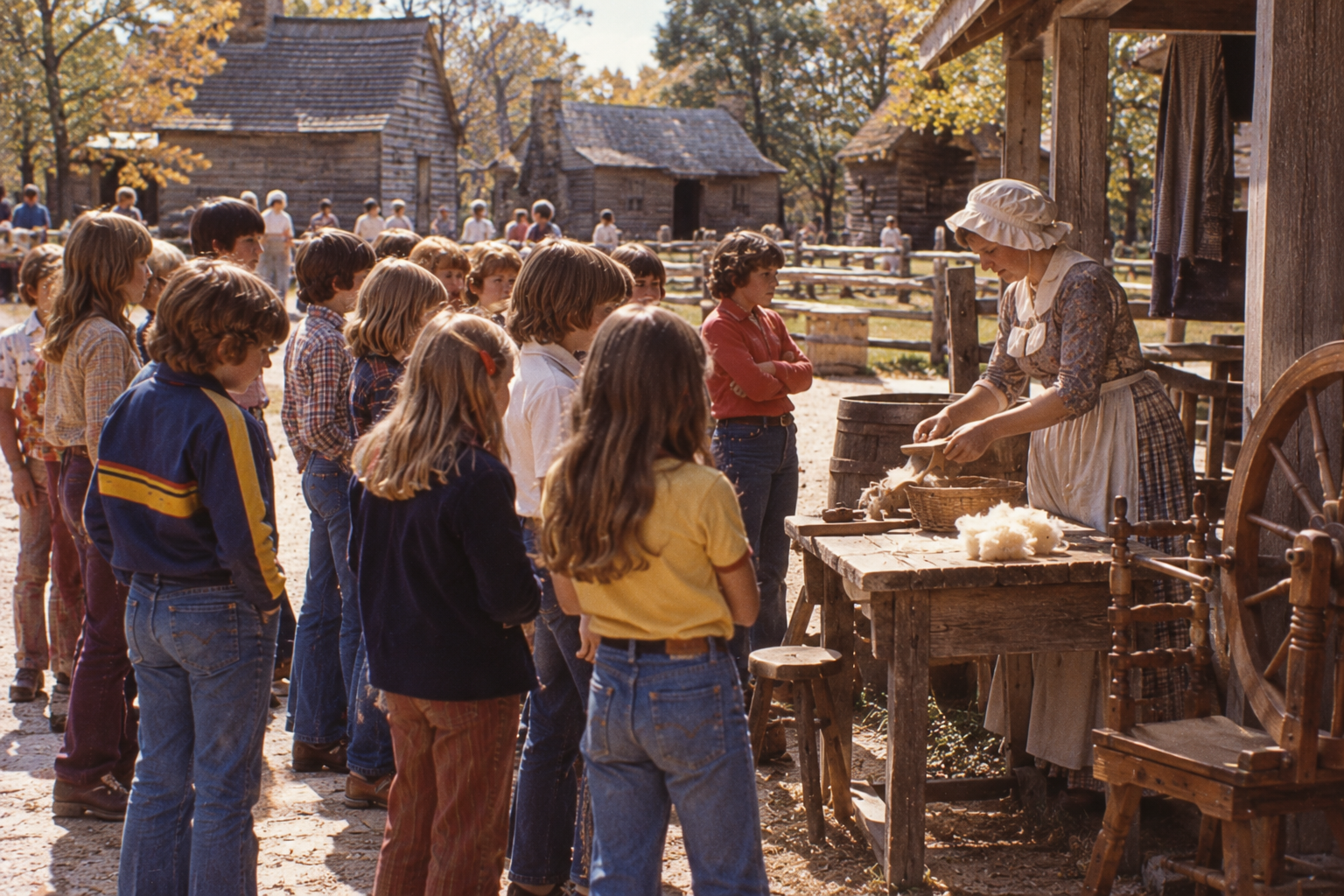
A visit to a historic village or pioneer settlement could make students feel as though they’d traveled backward in time. Instead of simply reading about life before modern conveniences, they could walk through old-fashioned houses, examine wood-burning stoves, and peek inside one-room schoolhouses. Costumed interpreters sometimes demonstrated blacksmithing, candle making, weaving, or other traditional skills. For children accustomed to televisions, refrigerators, and modern bathrooms, the idea of living without electricity or indoor plumbing could seem almost unbelievable. The demonstrations were interesting, but the most memorable part was often imagining what it would actually be like to live in one of those buildings.
Sign up for our newsletter
Carrying a Clipboard and Trying to Finish the Field Trip Worksheet
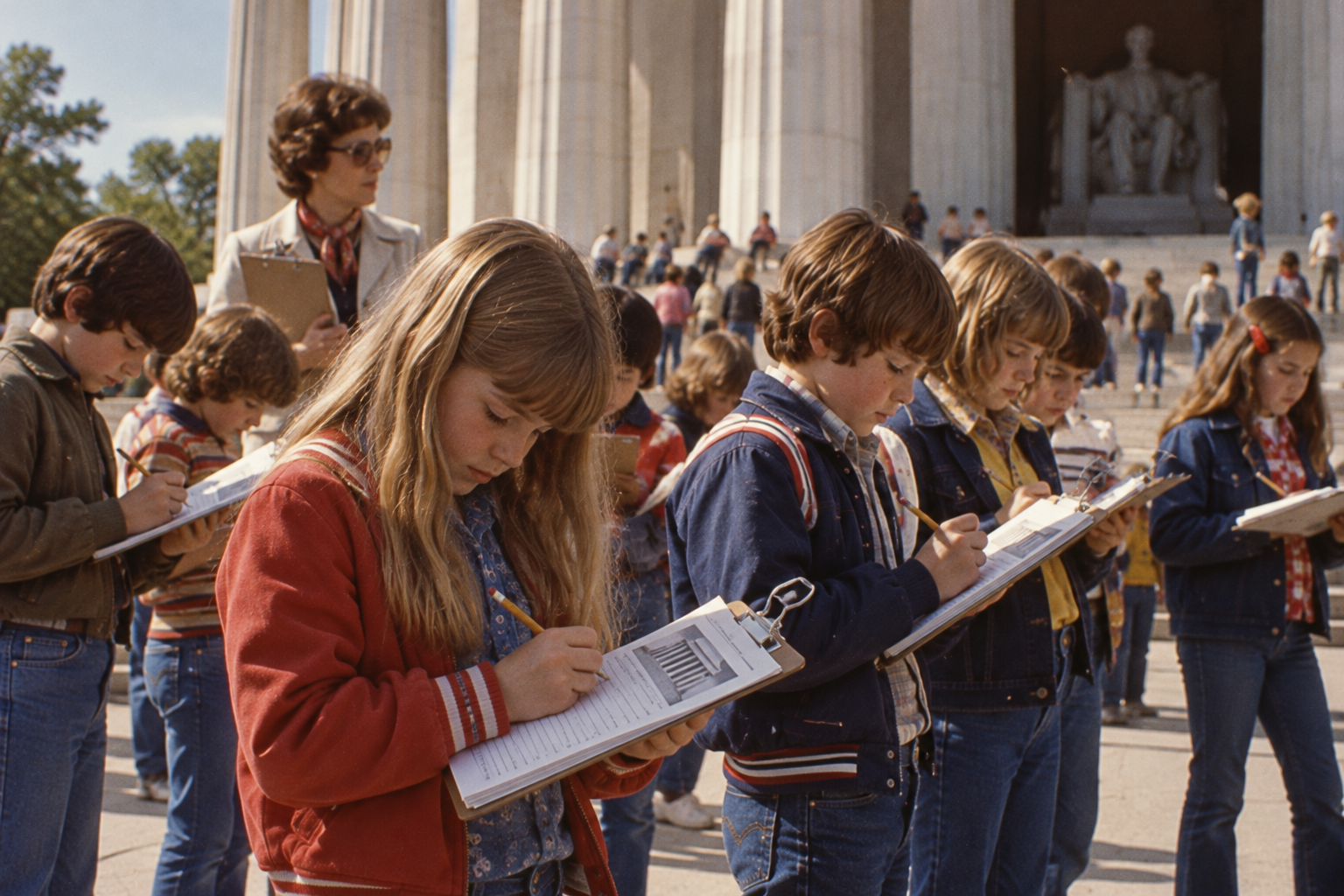
Just when students thought they’d escaped schoolwork for the day, the teacher would pull out a stack of worksheets. Suddenly, that relaxing museum visit came with questions to answer, objects to identify, and facts to write down. Some children took the assignment seriously, carefully balancing their clipboards while studying exhibits. Others rushed through the questions so they could get back to exploring with their friends. There was always someone borrowing a pencil, someone who couldn’t find the correct display, and someone who realized halfway through the tour that they’d missed several answers. The worksheet was supposed to make the outing educational, but it also gave kids one more thing to worry about losing.
Getting to Take Pictures With a Real Film Camera
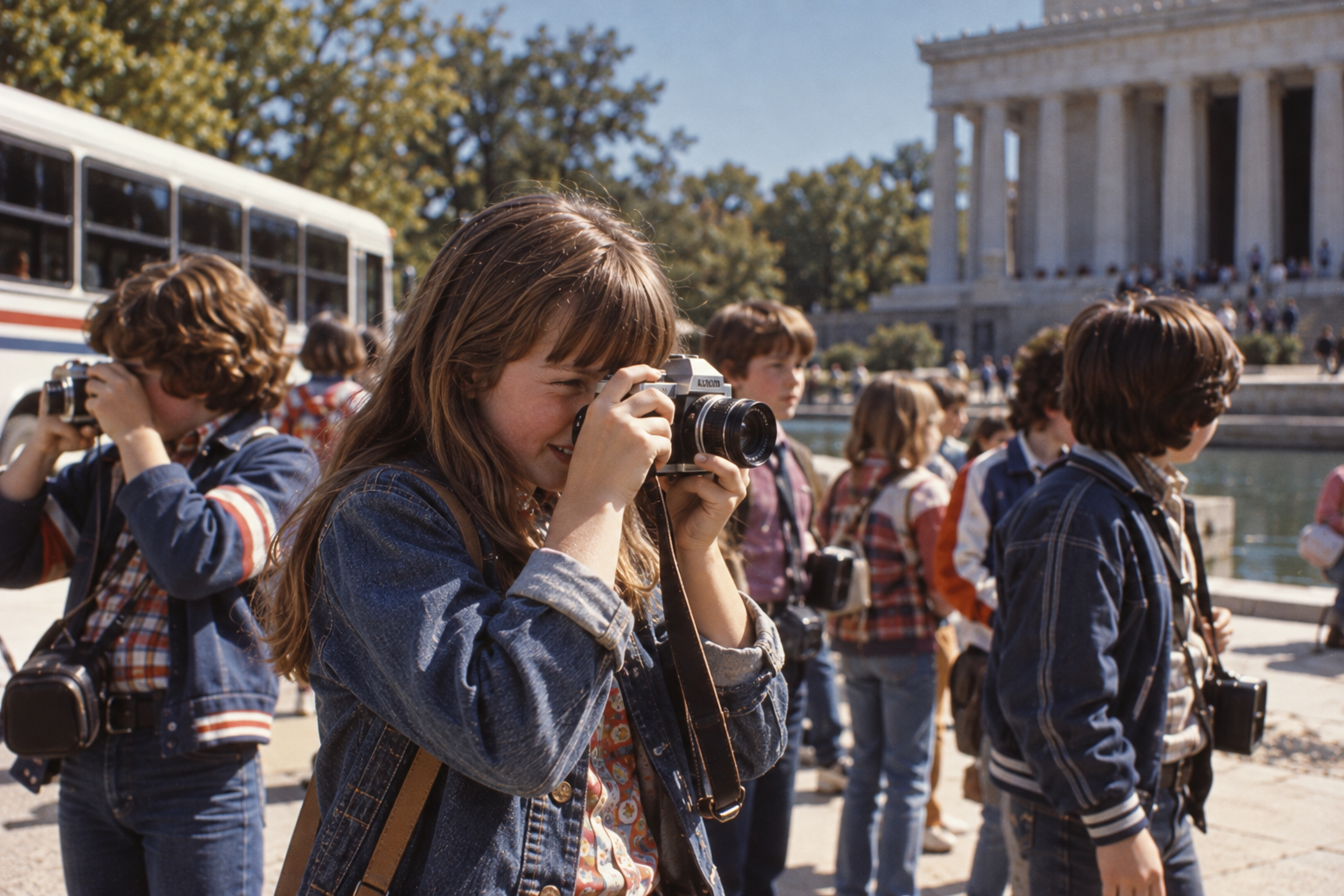
Taking pictures on a 1970s field trip required considerably more planning than pulling out a smartphone. Some lucky students brought a family camera, while others relied on teachers or parent chaperones to capture the day. Kodak’s Pocket Instamatic cameras, introduced in 1972, made compact photography more accessible, but film still had its limitations. Every photograph used one of a finite number of exposures, and there was no screen to check whether someone had blinked or moved out of the frame. Kids had to wait until the film was developed to discover whether their pictures had turned out. That anticipation made the occasional blurry photograph or awkward group shot feel like a genuine keepsake.
Exploring a Nature Center and Feeling Like a Real Outdoor Explorer
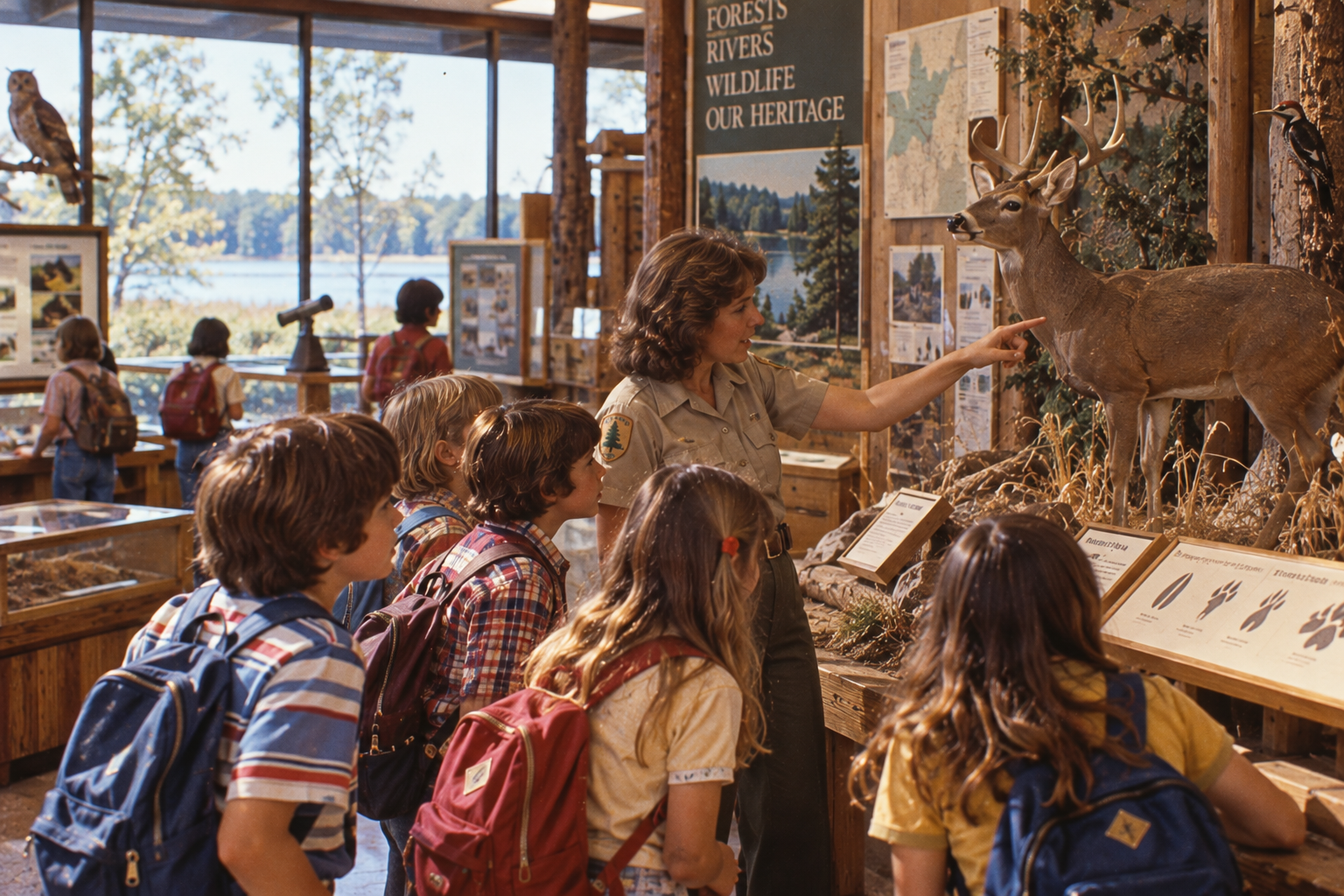
A field trip to a nature center or park could turn an ordinary school day into an outdoor expedition. Students followed trails through wooded areas, examined unfamiliar plants, searched for insects beneath rocks, and sometimes explored streams or ponds under adult supervision. Teachers and park educators encouraged them to identify leaves, observe wildlife, and record their discoveries in notebooks. For children who spent much of the school day sitting at desks, the opportunity to wander through the woods and get a little muddy was especially appealing. Of course, the educational mission didn’t stop anyone from getting distracted by an interesting bug, an unusually shaped rock, or the chance to splash through a shallow creek.
Returning to School With Souvenirs and Stories Nobody Else Could Understand
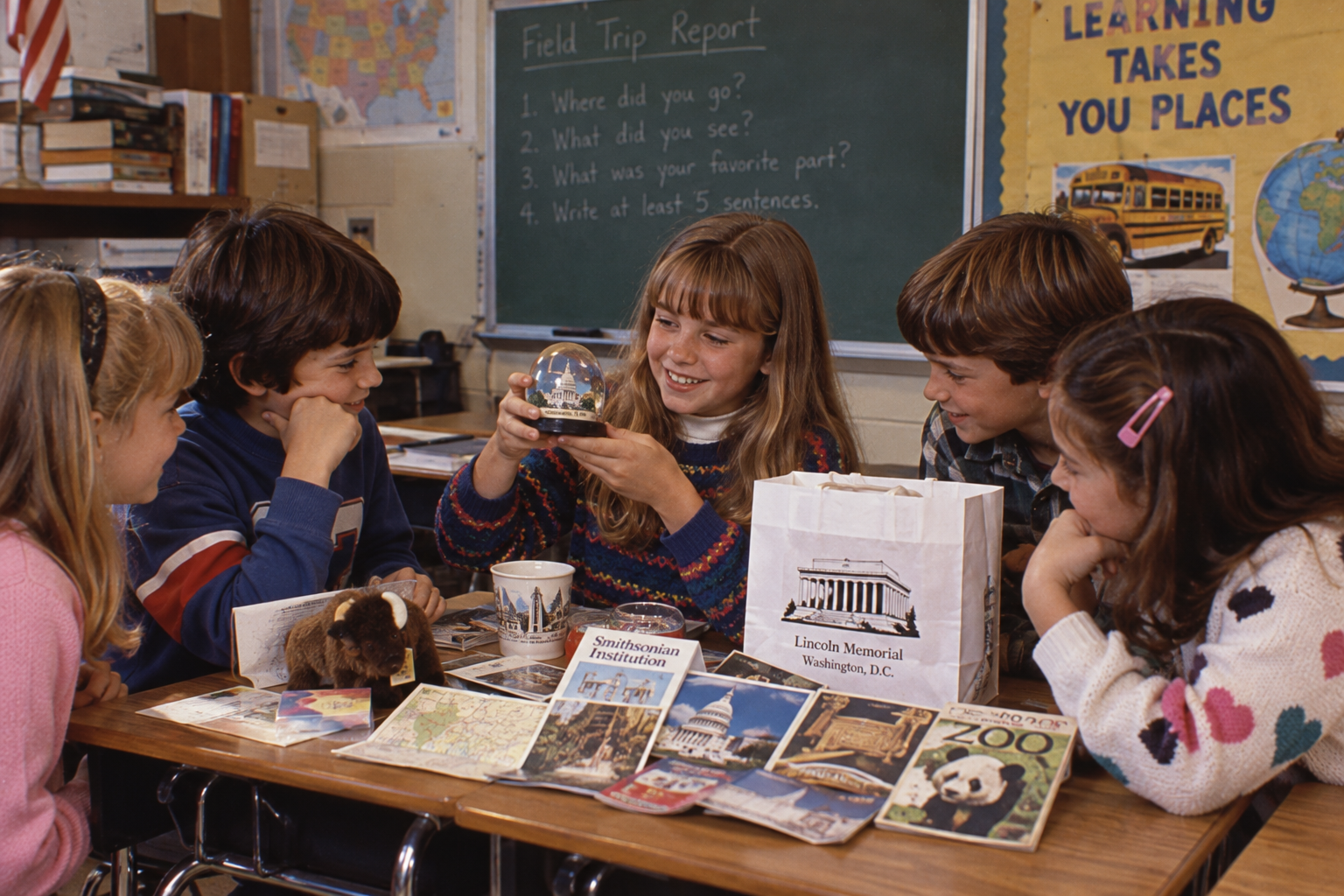
By the time the bus pulled back into the school parking lot, everyone was usually exhausted, a little disheveled, and full of stories. Backpacks contained crumpled museum brochures, ticket stubs, souvenir pencils, and perhaps a postcard or two. Some children had photographs waiting to be developed, while others had nothing more than their memories of the day. And those memories weren’t always about the destination. They might involve something funny that happened on the bus, a classmate’s embarrassing moment, or the excitement of buying something without a parent standing nearby. The next morning, the entire class could still be talking about the trip, even if nobody else quite understood why it had been so wonderful.
When Getting Out of the Classroom Was an Adventure in Itself
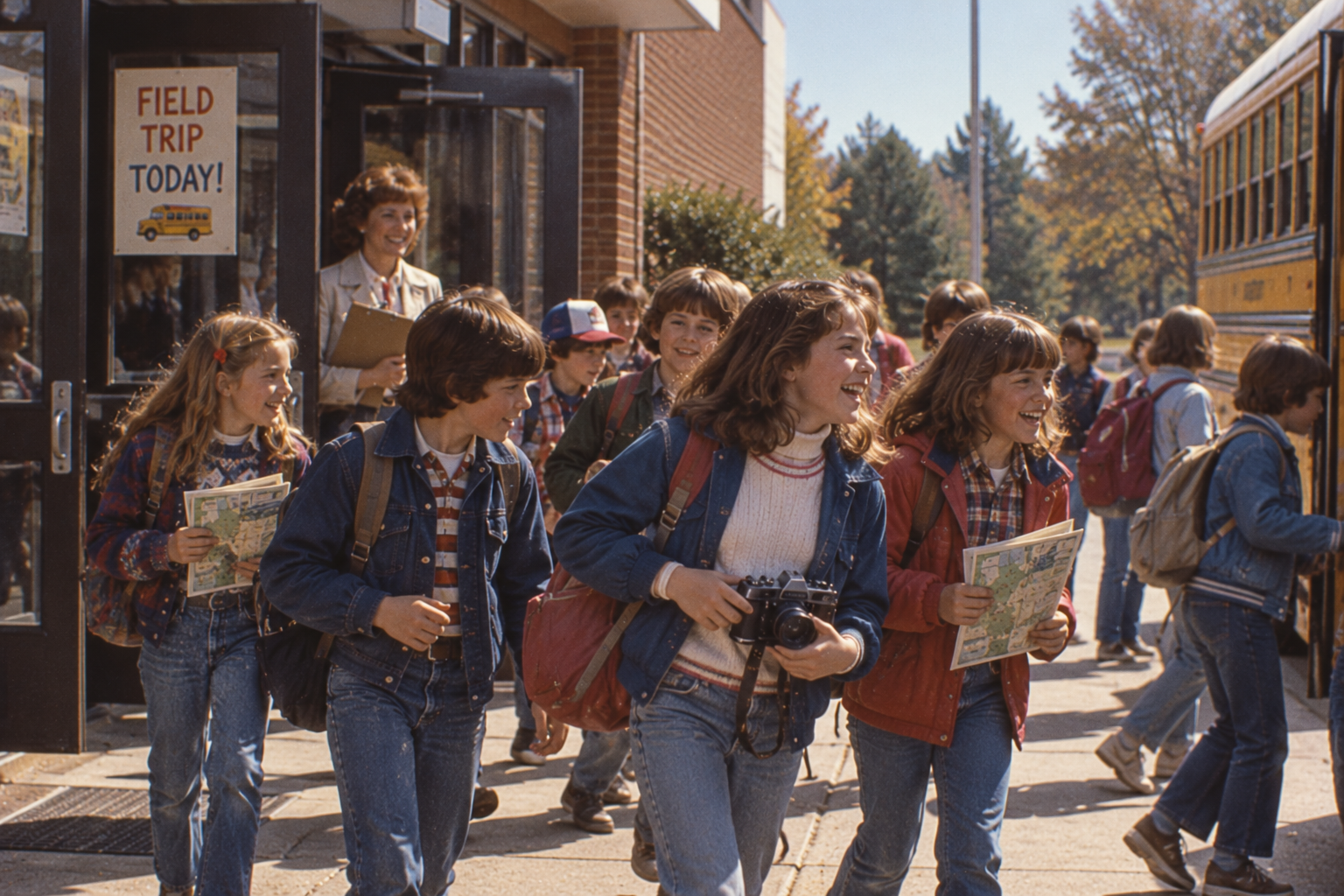
The magic of a 1970s school field trip wasn’t necessarily the destination. It was the anticipation of doing something different, the excitement of traveling with friends, and the feeling that an ordinary school day had suddenly become an adventure. A yellow school bus, a packed lunch, and a few dollars for souvenirs were sometimes all it took to make a lasting memory.
And without smartphones to capture every moment, kids returned home with stories to tell, small treasures to show off, and memories that could stick around for decades. After all, sometimes the best part of learning happened when everyone got to leave the classroom behind.