It’s hard to imagine office life before email, especially when so much of today’s workday depends on it. Today, sending a document to a coworker, scheduling a meeting, or following up with a client takes just a few clicks. But before email became a workplace staple, even the simplest office communications could involve typewriters, stacks of paper, telephone calls, and plenty of walking from one department to another.
Throughout the 1960s, ’70s, and ’80s, office workers relied on everything from interoffice envelopes and pink telephone message slips to Rolodexes and bulky fax machines. A memo that takes seconds to send today might have required several people, a photocopier, and a trip down the hallway. And if you needed an answer from someone in another city? You might be waiting days.
Of course, email has made office life considerably more convenient, but there’s something fascinating about remembering how things used to get done. Here are 12 things workers routinely did before email took over the workplace.
Sending Paper Memos Through Interoffice Envelopes
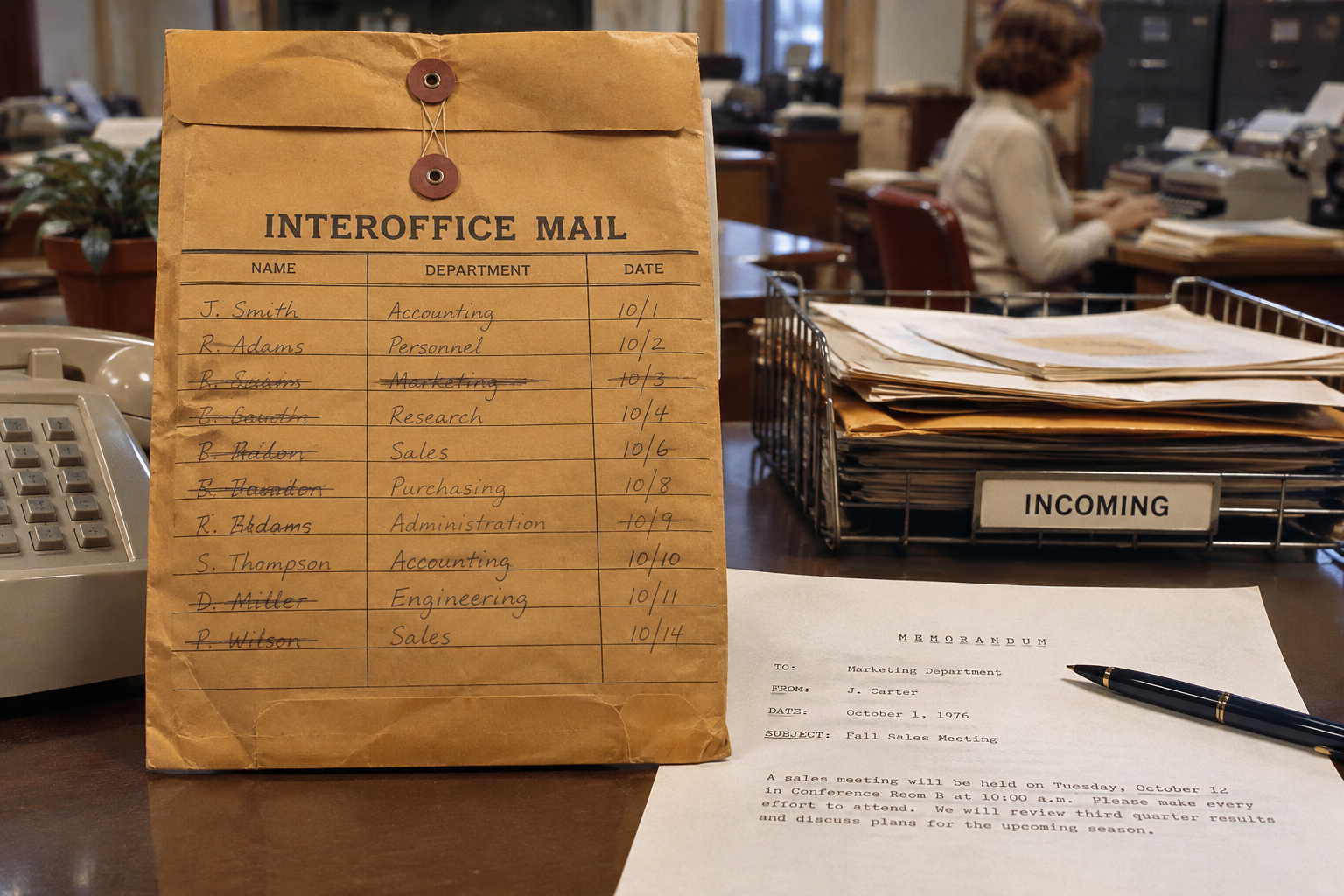
Before you could fire off a quick email to someone down the hall, you had to send an actual piece of paper. Employees typed memos, slipped them into large manila interoffice envelopes, and sent them through the company’s internal mail system. These reusable envelopes typically had rows for names and departments, so each recipient could cross out the previous person’s information and write in the next destination. Some accumulated so many crossed-out names that they practically told the history of the office. And unlike an email, there was no guarantee your memo would reach the right desk before lunchtime.
Leaving Pink Telephone Message Slips on Someone’s Desk
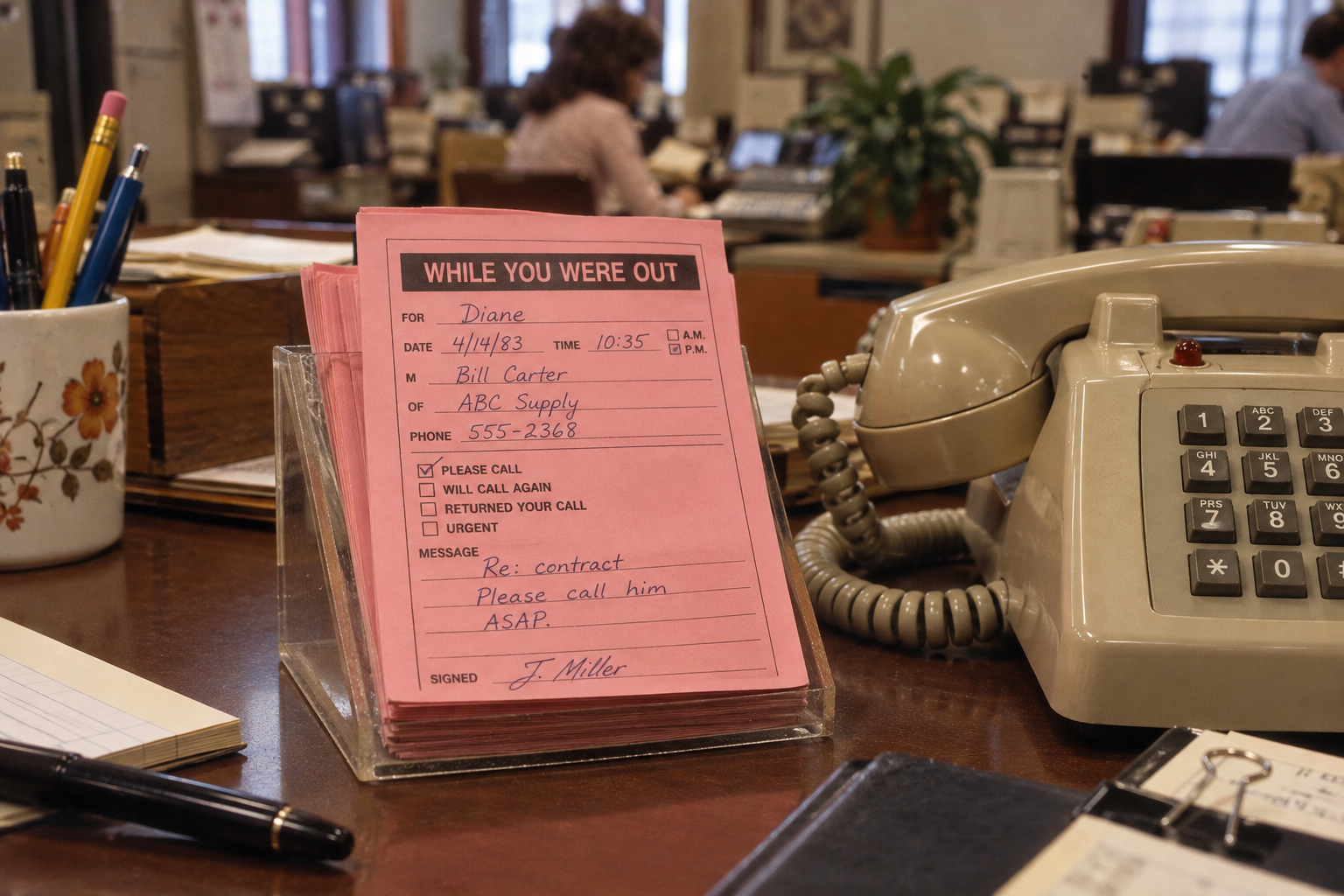
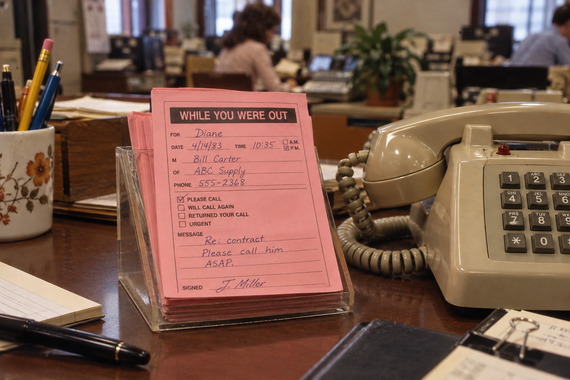
Remember those little pink “While You Were Out” message pads? Before voicemail and email became commonplace, receptionists and secretaries often served as the office’s unofficial communication hubs. If someone called while you were away, they’d jot down the caller’s name, telephone number, and reason for calling, sometimes checking boxes marked “Please Call” or “Urgent.” Returning from lunch could mean finding a small mountain of pink slips waiting on your desk. And if someone accidentally wrote down the wrong phone number, good luck figuring out who had been trying to reach you.
Dictating Letters Into a Recorder for Someone Else to Type
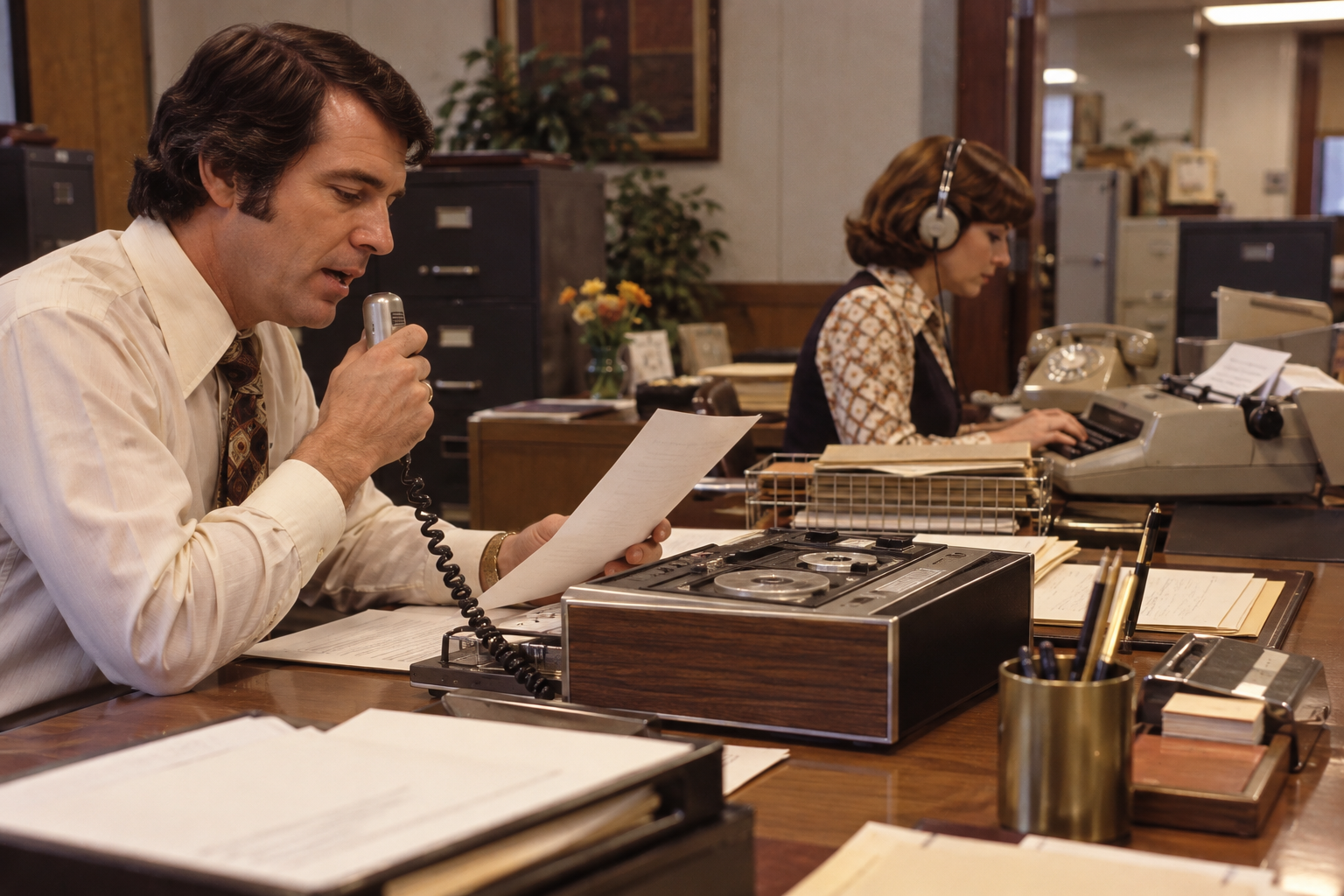
Writing a business letter wasn’t always something executives did themselves. In many offices, managers dictated correspondence to a secretary or spoke into a recording device that captured their words for someone else to transcribe. A typist would listen to the recording, sometimes through headphones connected to a Dictaphone-style machine, and carefully turn it into a polished letter. The process could involve rewinding tapes, deciphering unclear words, and correcting mistakes before the finished document was ready for a signature. What takes a few minutes at a computer today could once involve an entire chain of people.
Making Copies With Carbon Paper
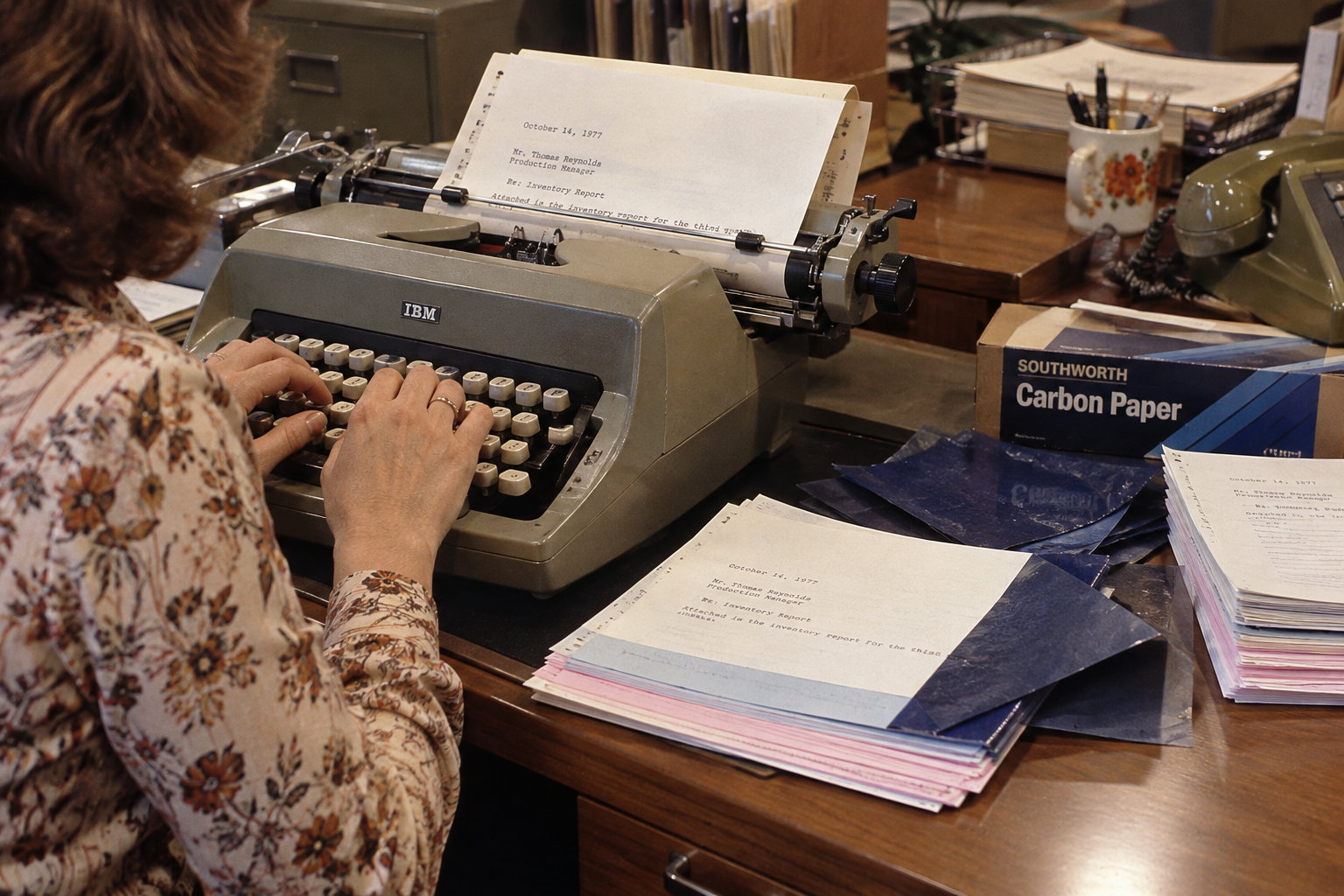
Long before copying and pasting became second nature, office workers had a much messier way of producing duplicate documents. Typists placed sheets of carbon paper between pieces of typing paper, allowing the pressure from each keystroke to transfer the text onto the pages underneath. It was a clever system, provided you didn’t make a mistake. One typo could appear on every copy, and correcting it meant dealing with multiple sheets of paper. Anyone who worked with carbon paper probably remembers the blue-black stains it left on their fingertips and the increasingly faint lettering on the bottom copies.
Looking Up Every Contact in a Rolodex
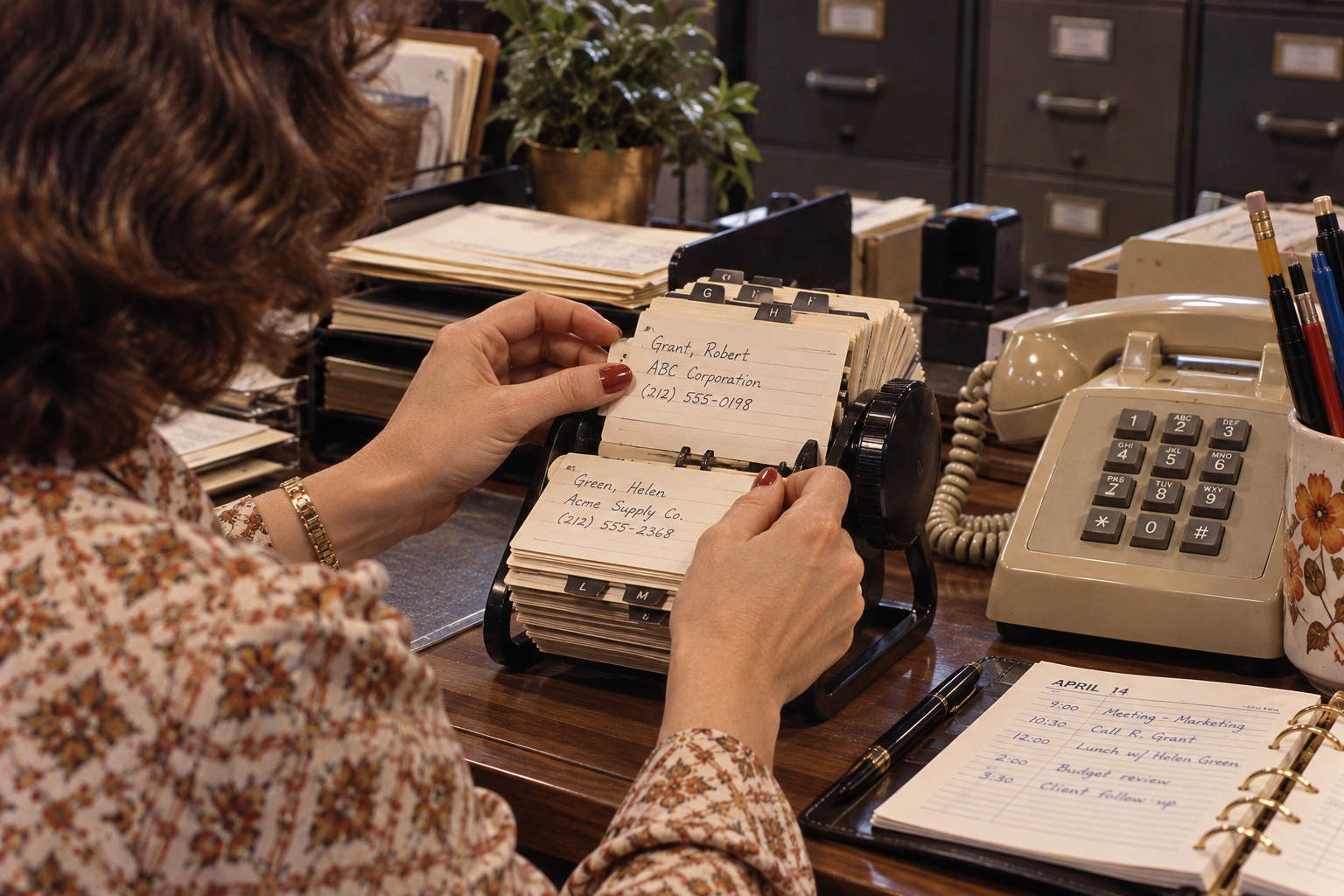
Before digital address books and searchable email contacts, keeping track of business relationships meant maintaining a Rolodex. These rotating desktop organizers held hundreds of alphabetized cards containing names, telephone numbers, addresses, and handwritten reminders. Need to call a client? You’d flip through the cards until you found the right one, hoping nobody had changed their number without telling you. Longtime employees often had Rolodexes filled with crossed-out information, scribbled extensions, and notes that made perfect sense only to them. Losing one could mean losing years of valuable business contacts.
Trending on Cheapism


Walking Documents Across the Building for Someone’s Signature
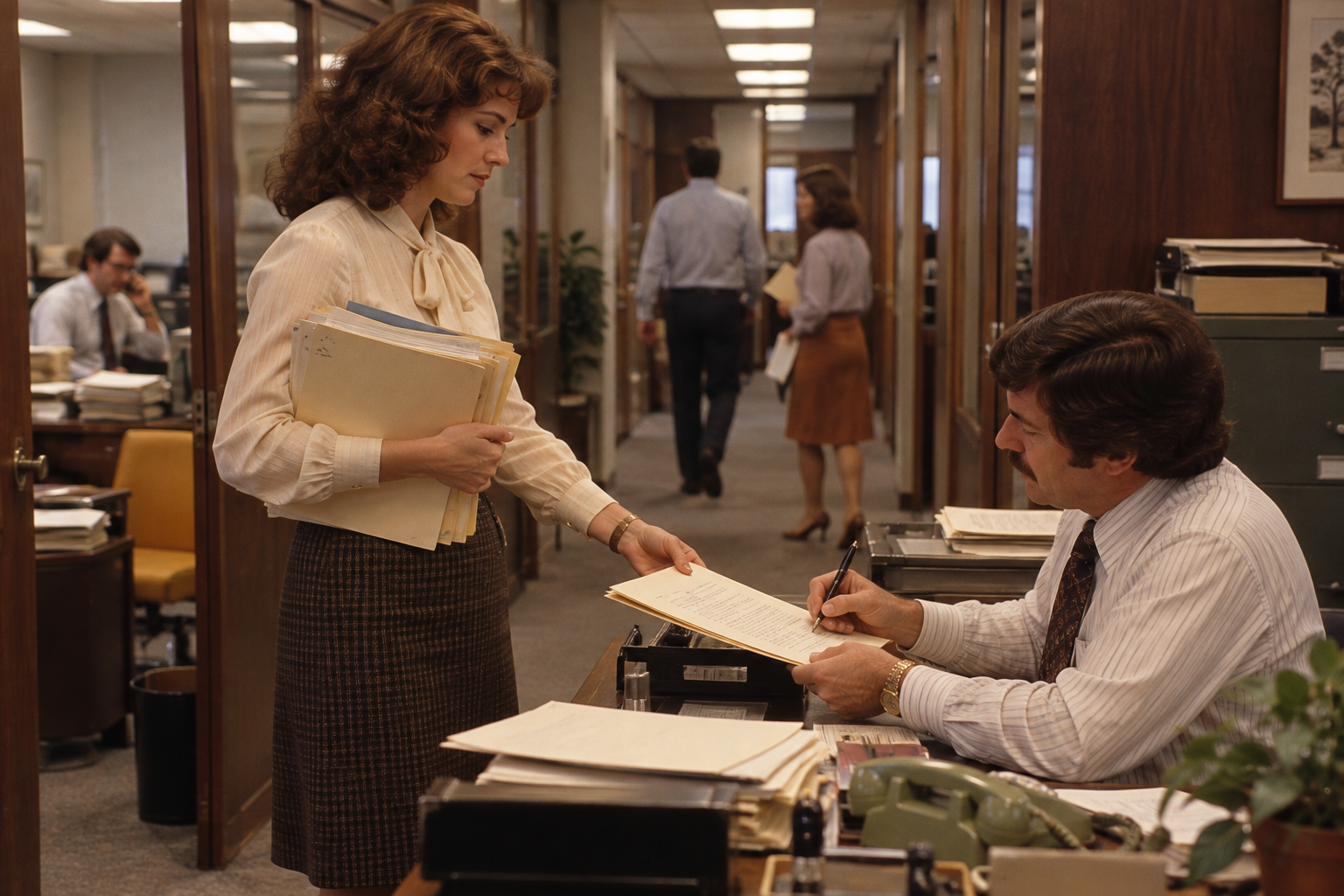
Getting a document approved once required considerably more legwork than clicking a button. Contracts, purchase orders, and official memos often had to travel from desk to desk, collecting signatures and approval stamps along the way. Some offices used routing slips to indicate exactly who needed to review a document and in what order. If the department manager was out for the afternoon, the paperwork might sit untouched in a metal inbox until the next morning. And if someone misplaced the folder? The entire process could grind to a halt while everyone tried to figure out where it had gone.
Sending Urgent Documents Through a Fax Machine
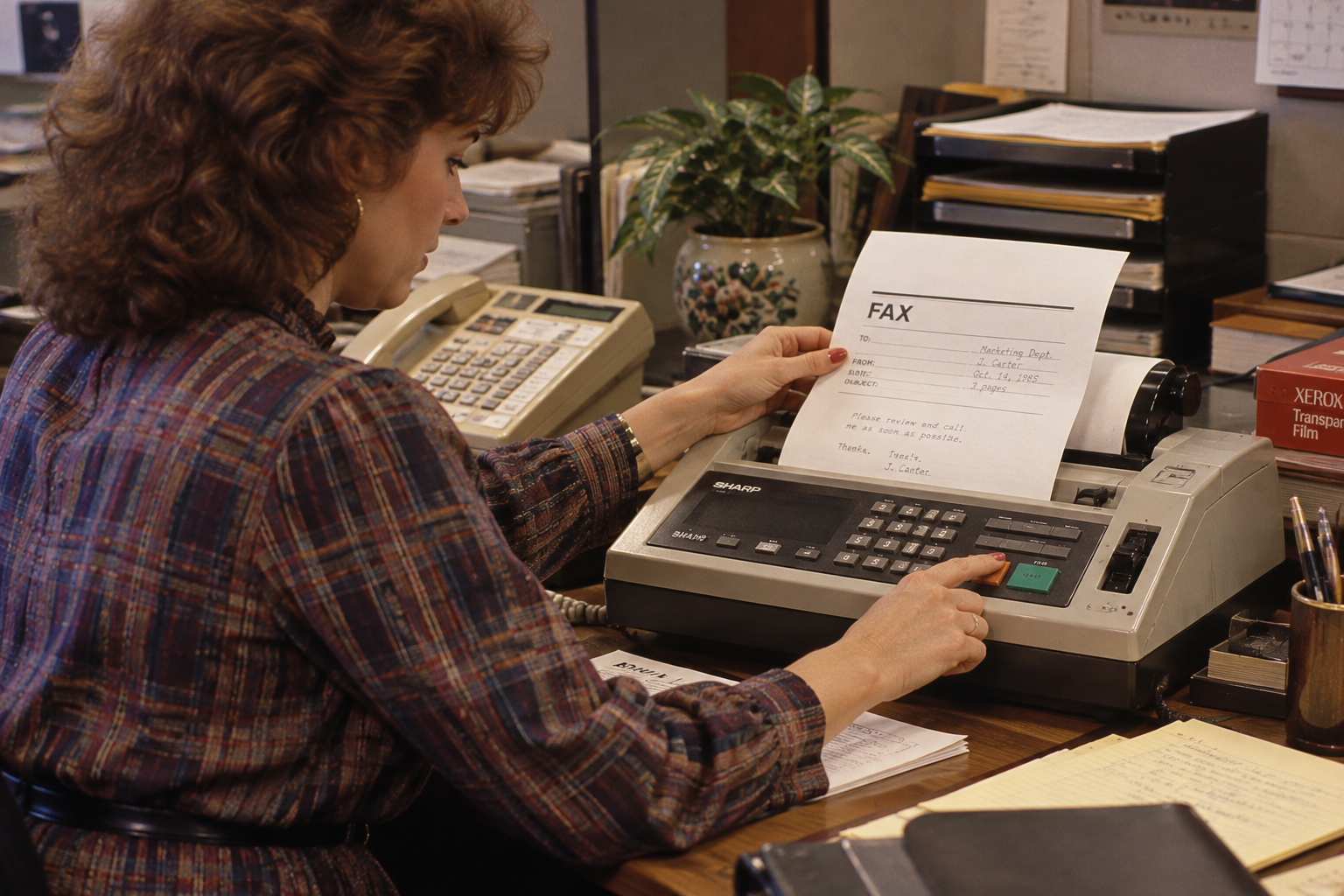
For anyone who worked in an office during the 1980s, the sound of a fax machine dialing and connecting is probably unforgettable. Before attaching documents to emails became routine, fax machines offered a way to send signed contracts, invoices, and other paperwork across long distances without waiting for the mail. But the process wasn’t always smooth. Workers had to feed pages into bulky machines, wait for the transmission, and sometimes discover that an important document hadn’t gone through. Early fax copies could emerge on curling thermal paper, and some faded over time. Still, being able to send paperwork across the country in minutes felt remarkably futuristic.
Typing Entire Letters Again Because of One Mistake
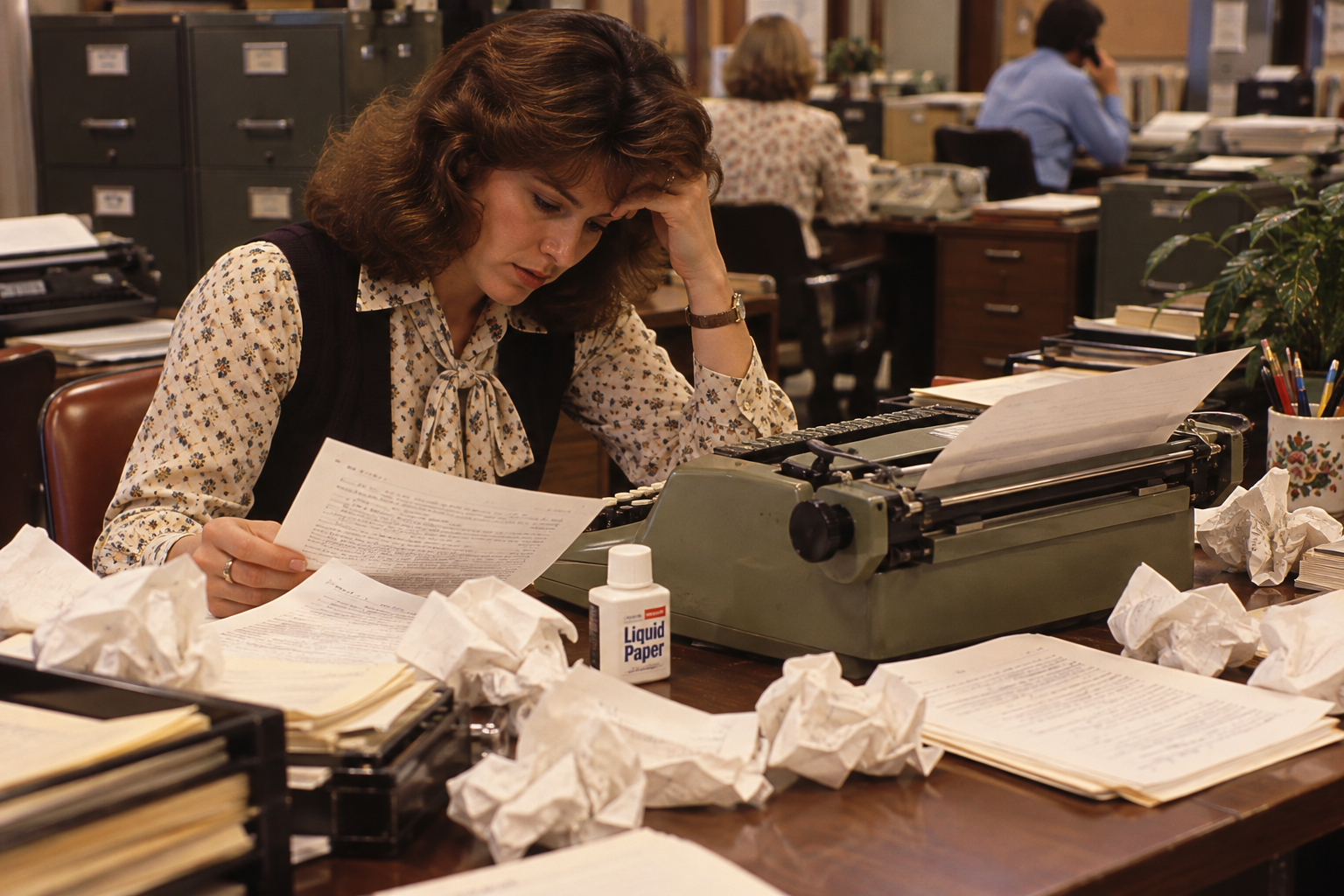
Imagine spending 20 minutes typing an important business letter, only to make a mistake near the bottom of the page. Before word processors became common, that could mean reaching for correction fluid, carefully fixing the error, or starting the entire page over. Typists became experts at avoiding mistakes because fixing them was often more trouble than it was worth, especially when multiple carbon copies were involved. Office wastebaskets frequently collected crumpled drafts, while bottles of white correction fluid sat beside typewriters. The ability to delete a sentence without wasting paper would eventually become one of the most welcome improvements in office life.
Sign up for our newsletter
Distributing Announcements With Mimeograph Machines
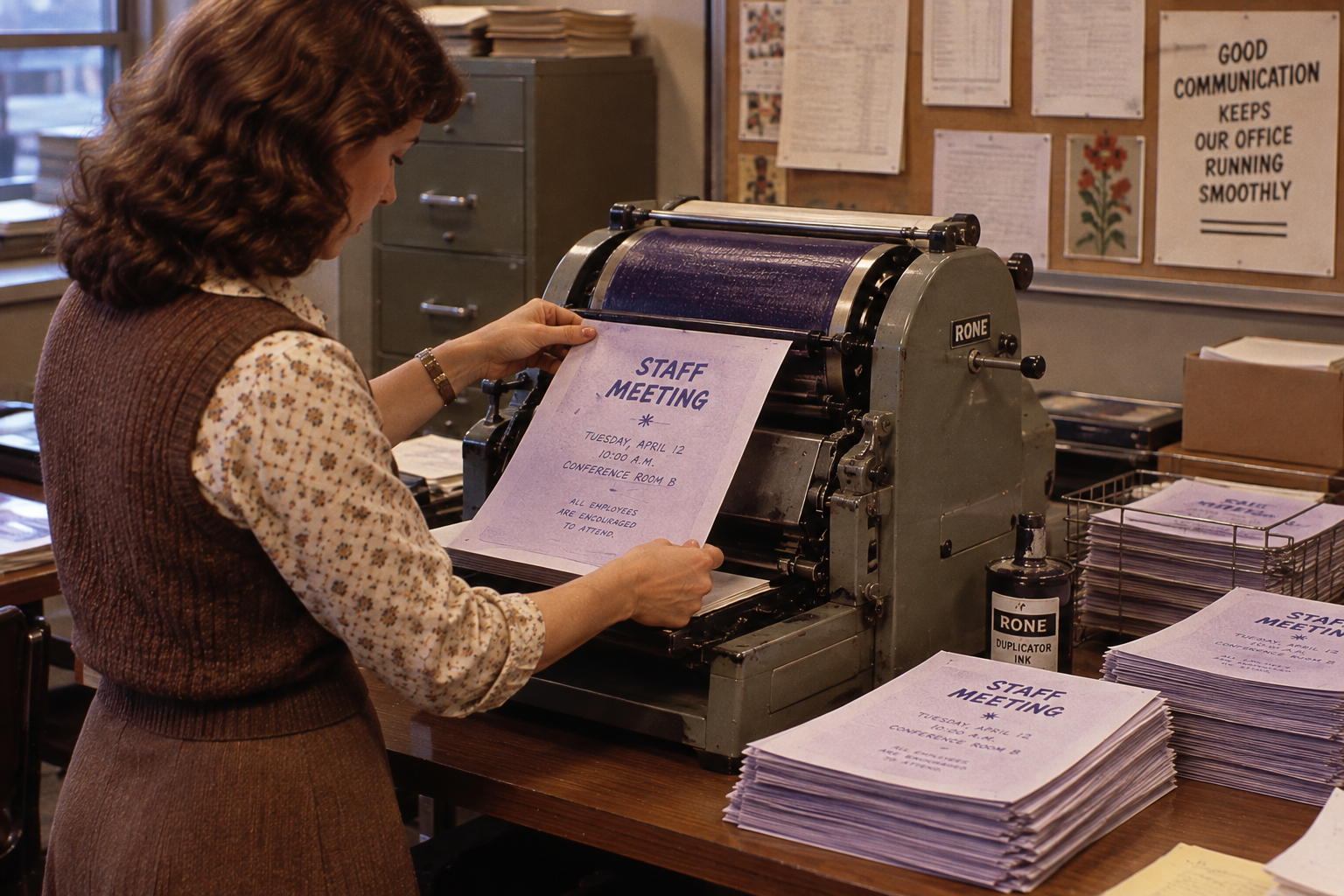
Before someone could email an announcement to the entire company, producing enough copies for everyone was practically a project of its own. Some offices relied on mimeograph machines, which used prepared stencils and ink to reproduce documents in large quantities. Workers had to prepare the original, operate the machine, collect the copies, and distribute them to the appropriate departments. The process could leave ink on your hands and stacks of paper covering every available surface. Photocopiers eventually made things easier, but even then, sharing information meant physically producing and delivering it rather than simply hitting “Send.”
Having Receptionists Transfer Calls Through a Switchboard
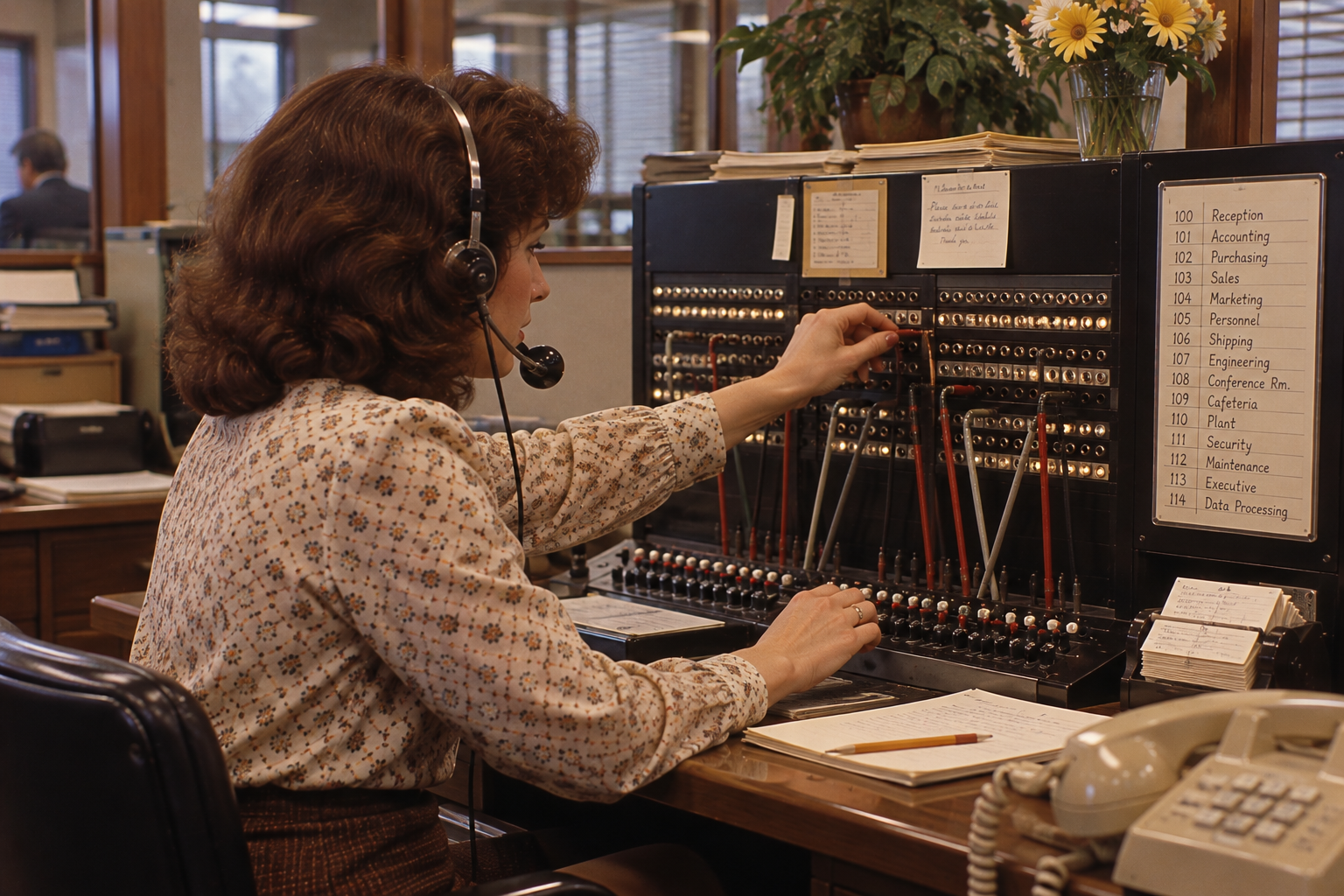
Before direct telephone lines and automated systems became widespread, reaching someone in a large office often meant speaking to a receptionist or switchboard operator first. These workers managed incoming calls, connected people to the appropriate extensions, and sometimes took messages when employees were unavailable. Older switchboards featured rows of cords, plugs, and illuminated indicators that operators had to manage with impressive speed. Even as telephone systems modernized, receptionists remained essential for directing calls and keeping communication moving. If you didn’t know someone’s extension, the person at the front desk was often your best hope of getting through.
Mailing Business Letters and Waiting Days for a Reply
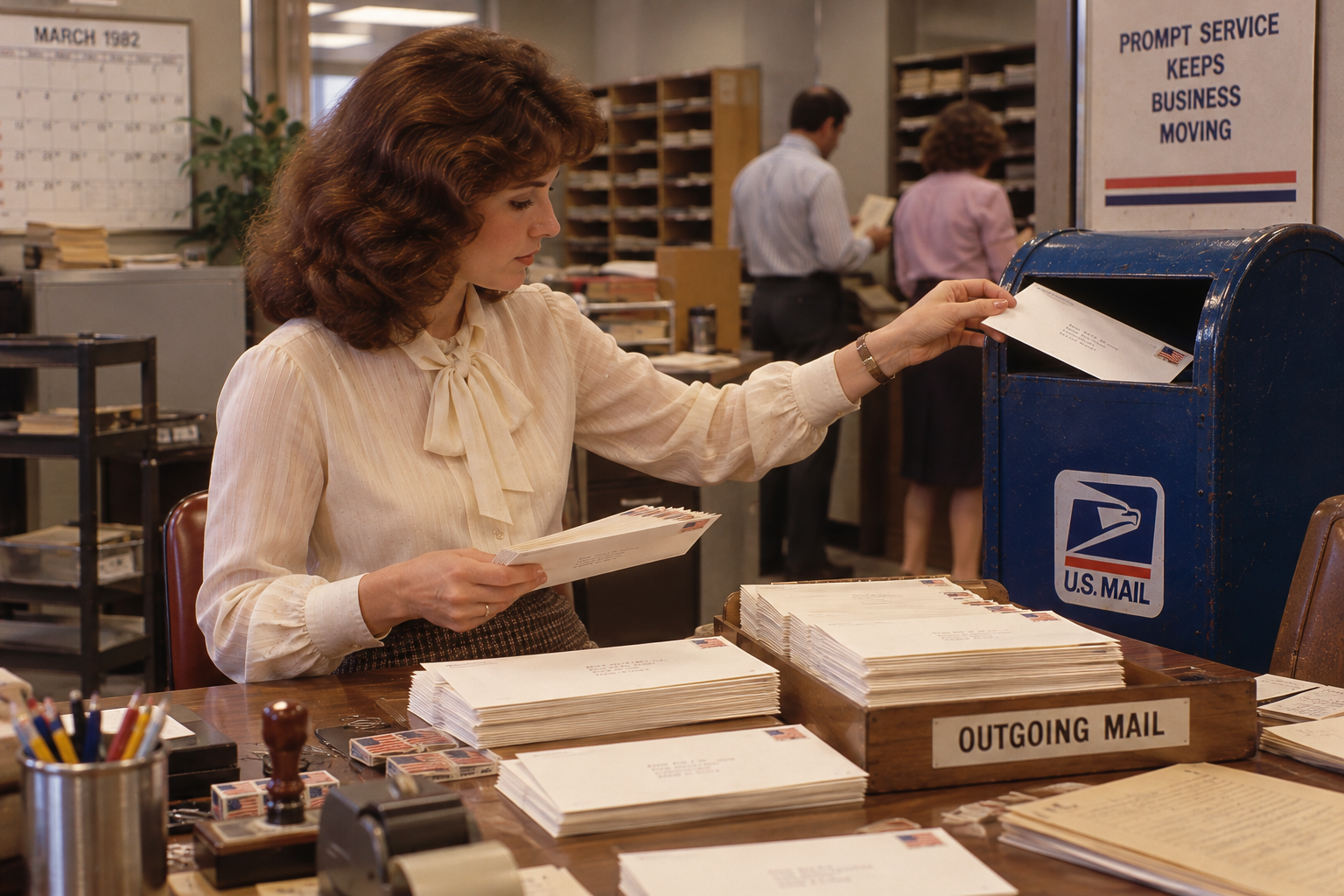
Today, it’s easy to get impatient when someone doesn’t answer an email within a few hours. But before electronic communication became standard, corresponding with clients or business partners in another city often meant sending a physical letter and waiting days for a response. Someone had to type the letter on company stationery, get it signed, address the envelope, and send it through the mailroom. Once it left the building, there was little to do but wait. A conversation that might now unfold over several emails in a single afternoon could once stretch across weeks of back-and-forth correspondence.
Keeping Copies of Important Correspondence in Filing Cabinets
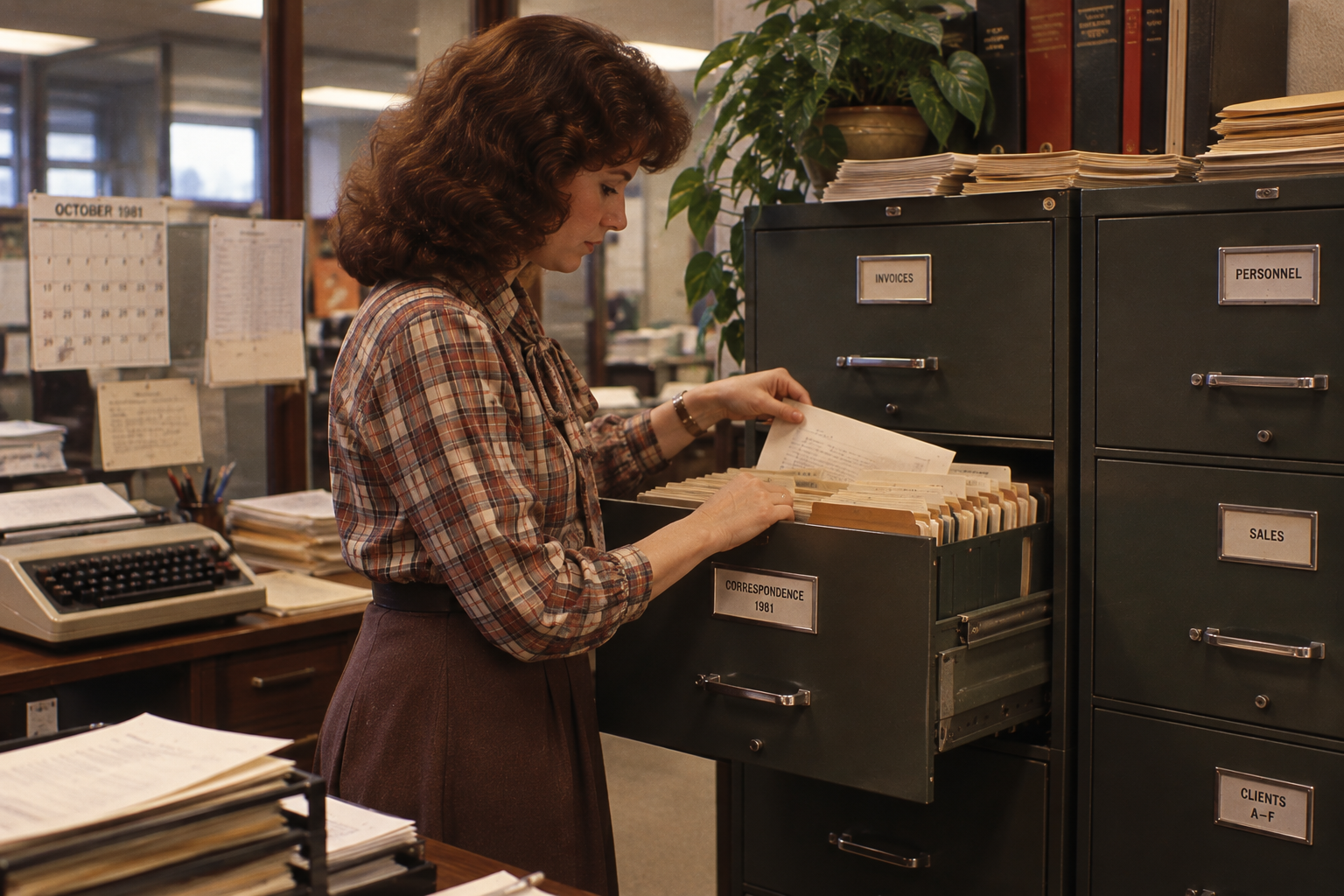
Before email archives made old conversations searchable, businesses had to preserve important correspondence the old-fashioned way: in filing cabinets. Letters, memos, contracts, and other documents were organized into folders labeled by client, department, project, or date. Finding a particular document could mean opening drawer after drawer, flipping through hanging folders, and hoping someone had filed it correctly. Larger organizations sometimes maintained entire rooms dedicated to records, with employees responsible for retrieving and returning files. One misplaced piece of paper could turn a simple question into an afternoon-long scavenger hunt.
Before Email, Office Communication Was a Full-Time Job
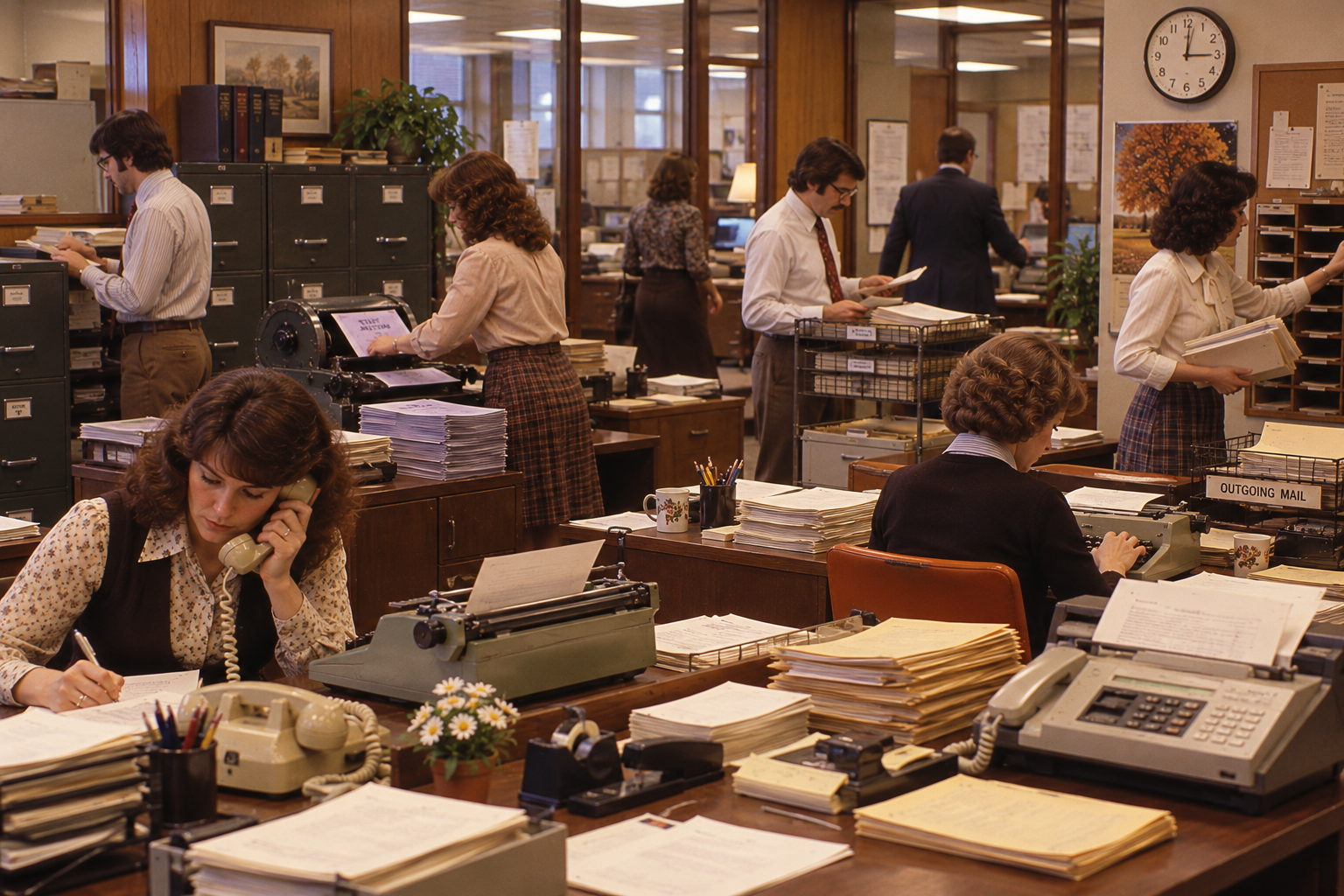
Looking back, it’s remarkable how much time office workers once spent simply moving information from one person to another. Between typing letters, delivering memos, answering telephones, making copies, and organizing paperwork, communication involved a surprising amount of physical labor. Email eliminated many of those steps, making it possible to accomplish in seconds what once took hours or even days.
Of course, modern offices have their own frustrations, from overflowing inboxes to the expectation that everyone should be available around the clock. But there’s something almost appealing about an era when leaving work meant leaving most of your messages behind, and nobody expected you to answer an urgent memo from your couch at 10 p.m.