Remember the sound of lunch trays clattering, the smell of freshly baked rolls drifting down the hallway, and the excitement of discovering that pizza was on the school lunch menu? For kids growing up in the 1970s, lunchtime was about much more than grabbing something to eat. It was a daily ritual filled with familiar foods, noisy cafeterias, and the occasional mystery dish that nobody seemed particularly excited about.
Long before digital lunch accounts and elaborate cafeteria menus, American schools served everything from sloppy joes and pizzaburgers to mashed potatoes with gravy and brightly colored gelatin desserts. Kids carried coins or lunch tickets, struggled to open tiny milk cartons, and waited in line while cafeteria workers scooped generous (or not-so-generous) portions onto compartmentalized trays.
Of course, school lunches varied depending on where you lived, but plenty of these cafeteria staples were familiar to children across the country. From homemade dinner rolls to lunches that cost less than a dollar, here are 12 things you’d find in a 1970s school cafeteria that might bring back some memories.
Compartmentalized Plastic Lunch Trays
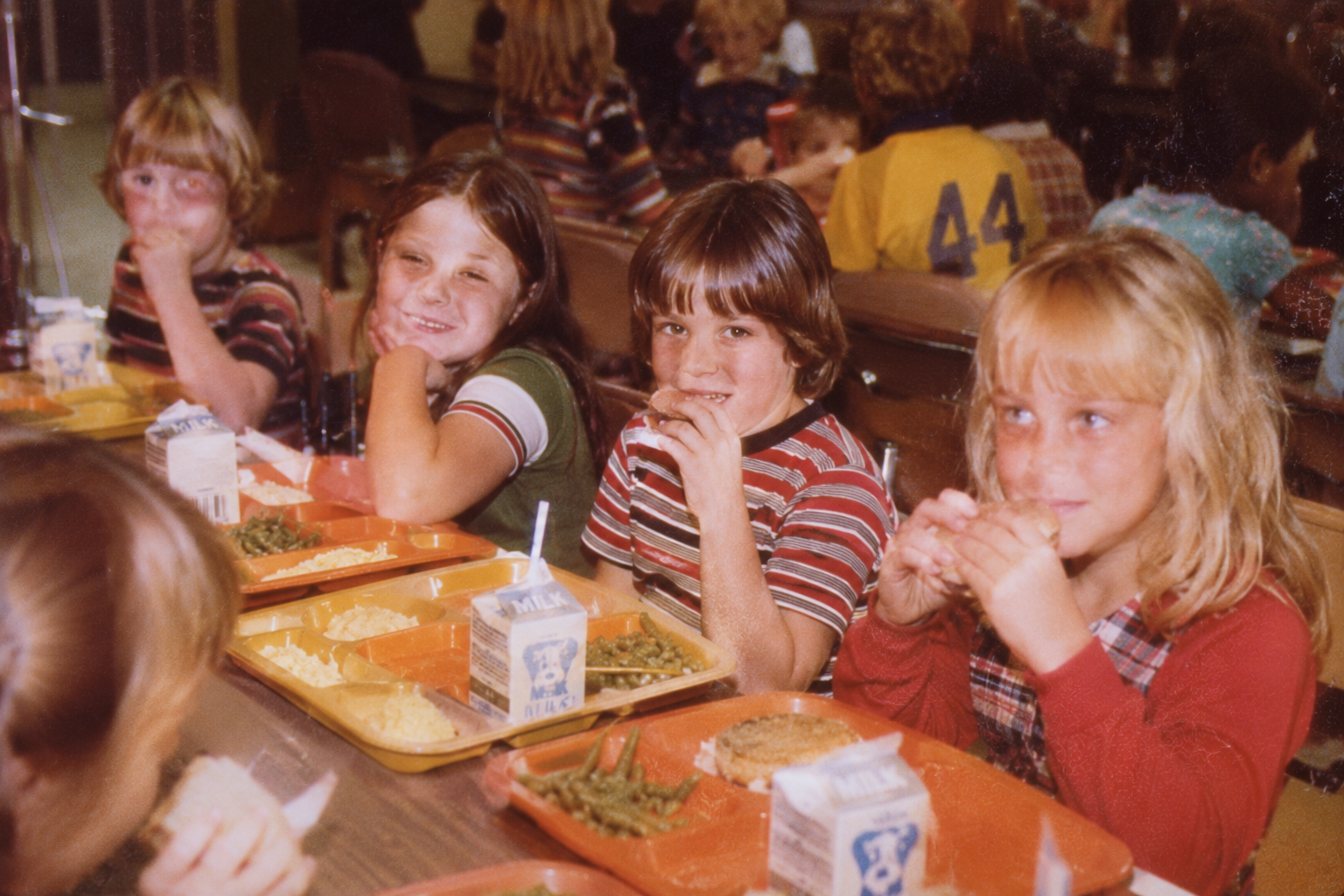
Before schools started experimenting with more modern cafeteria setups, those colorful compartmentalized lunch trays were a familiar sight in many lunchrooms. Usually made of sturdy plastic in shades of green, yellow, or orange, they featured separate sections for the main dish, vegetables, dessert, and whatever else was on the menu that day.
Of course, those little dividers didn’t always do their job. Gravy had a way of finding its way into the vegetables, canned fruit juice could spread across the tray, and everything sometimes ended up tasting vaguely like everything else. Still, there was something satisfying about carrying a fully loaded tray to your usual lunch table.
Small Milk Cartons Served With Nearly Every Lunch
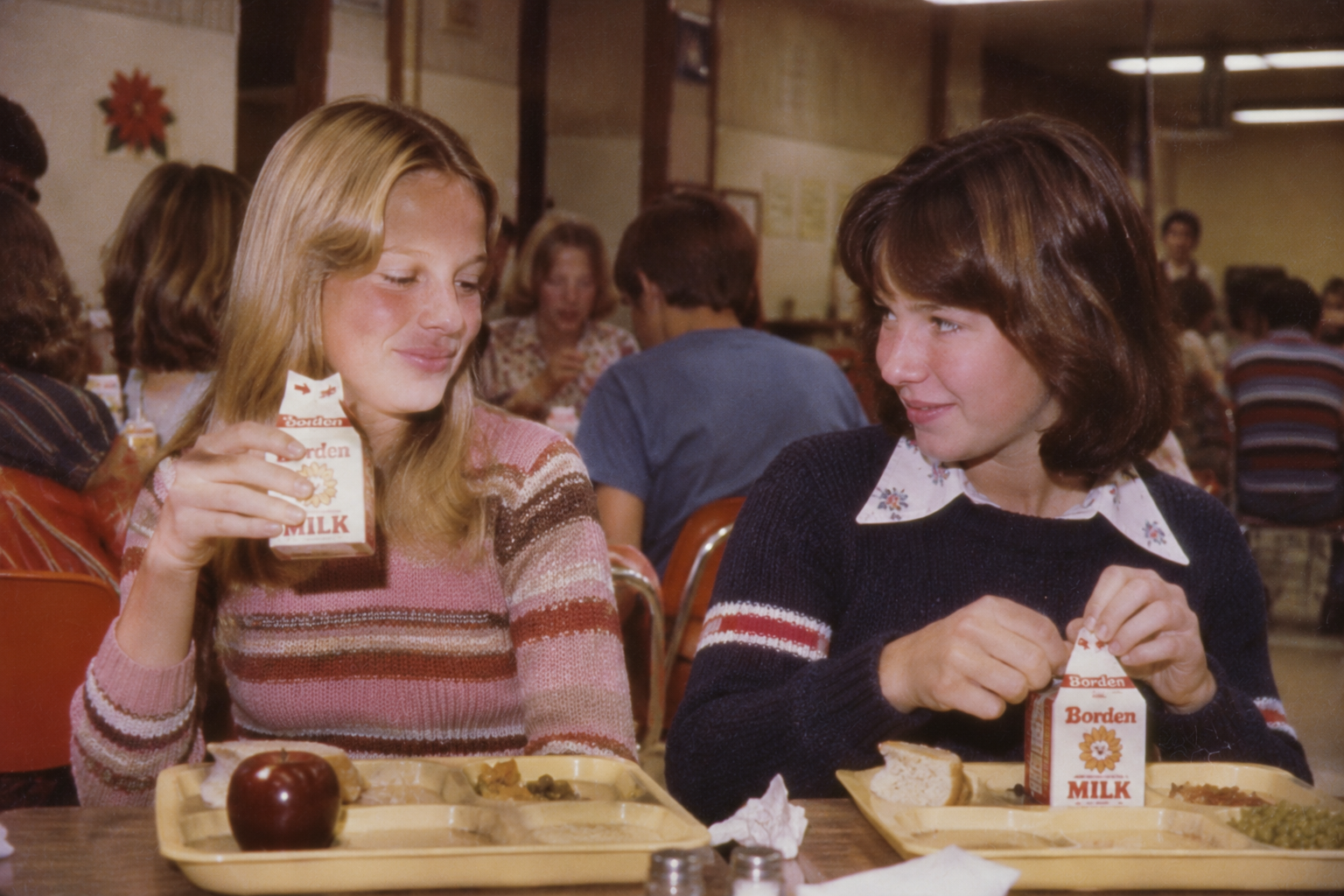
If you attended an American school in the 1970s, chances are you remember those little half-pint milk cartons that came with nearly every cafeteria meal. Milk was a standard part of federally supported school lunches, and depending on the school, students might have had a choice between different varieties.
But drinking the milk wasn’t always the hard part. Opening the folded cardboard spout without tearing it, crushing the carton, or spilling milk everywhere required a surprising amount of patience. And there was always at least one kid who managed to turn a perfectly ordinary milk carton into a lunchtime disaster.
Sloppy Joes Served on Soft Hamburger Buns
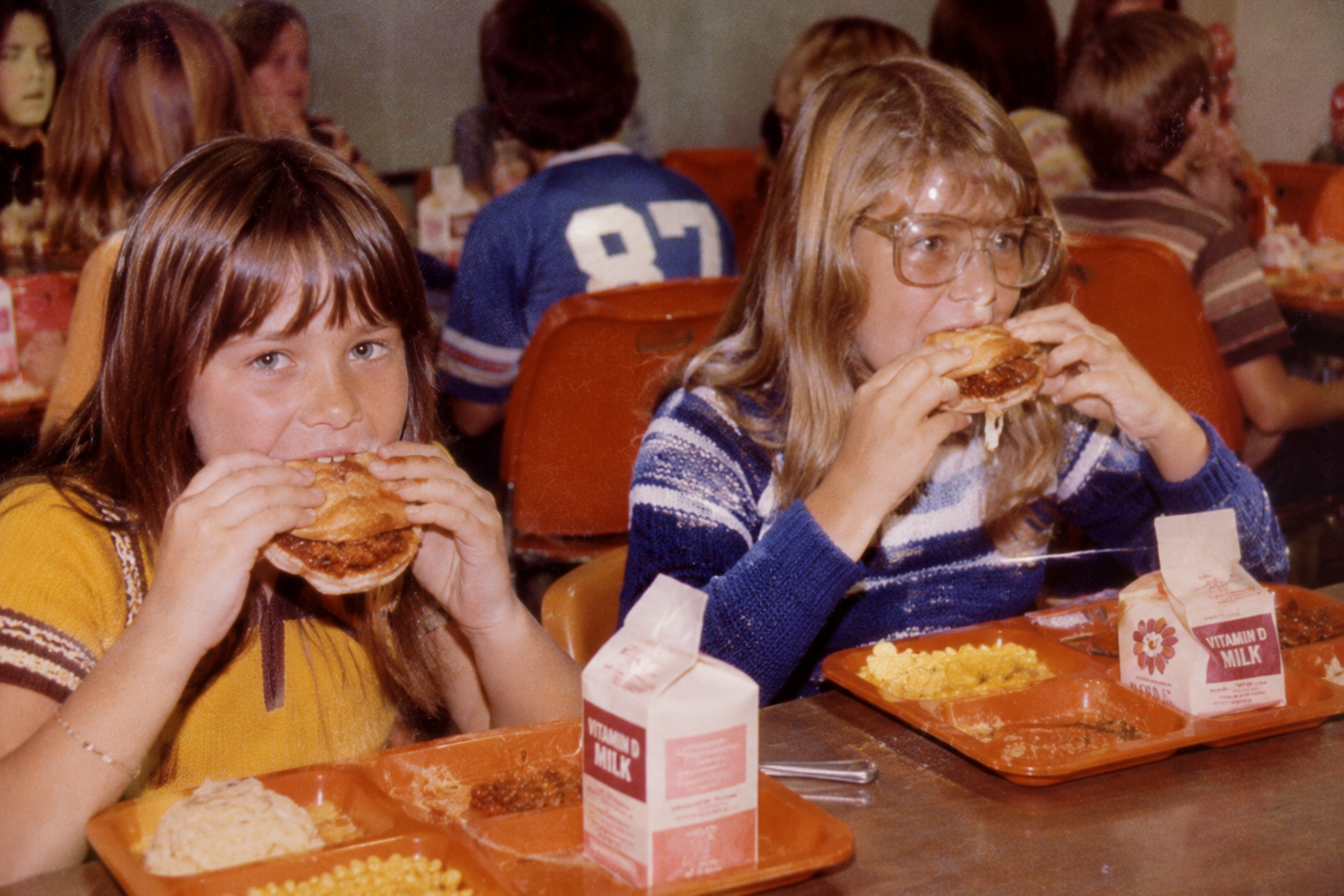
Sloppy joes were practically made for school cafeterias. The combination of seasoned ground meat and tomato-based sauce was inexpensive, filling, and easy to prepare in enormous batches, making it a practical choice for feeding hundreds of hungry students.
And this wasn’t just a nostalgic stereotype. Actual school lunch menus from Michigan in 1975 included sloppy joes among their regular offerings. The sandwiches usually arrived on soft hamburger buns, although keeping the filling inside was another story. By the time lunch was over, there was a good chance half the meat had ended up on the tray instead of in your mouth.
Pizzaburgers and Rectangular Pizza
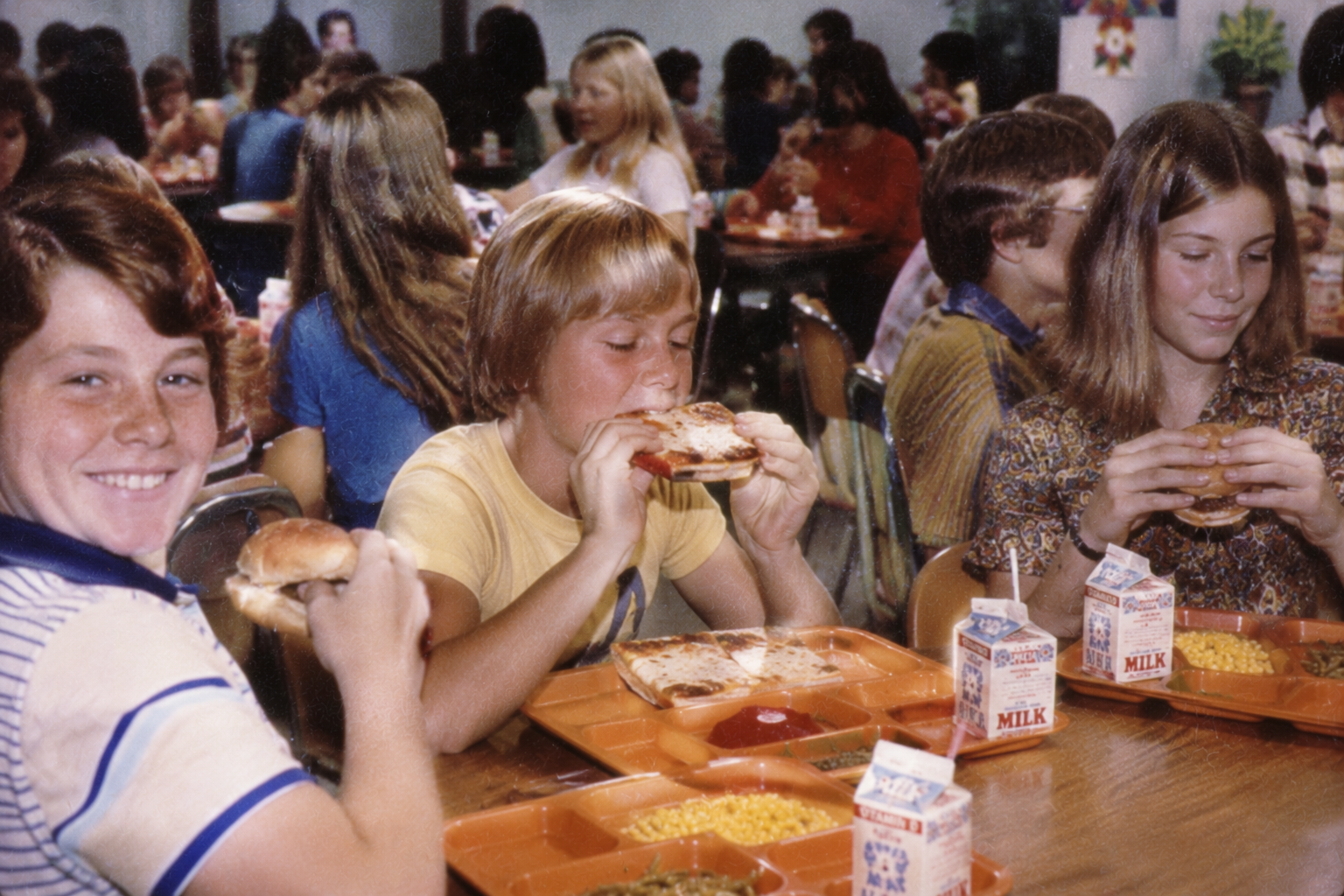
Pizza day was a big deal in many school cafeterias, even if the pizza itself looked nothing like something you’d order from your favorite neighborhood pizzeria. Rectangular slices with soft crusts, tomato sauce, and melted cheese became a familiar cafeteria favorite, while some schools served pizzaburgers instead.
Pizzaburgers, which appeared on actual 1975 school menus, combined pizza-inspired toppings with a hamburger-style bun. They weren’t exactly gourmet, but that didn’t stop kids from getting excited when they appeared on the weekly lunch schedule. And if your school served rectangular pizza, you probably still remember the distinctive shape.
Gelatin Desserts in Bright Colors
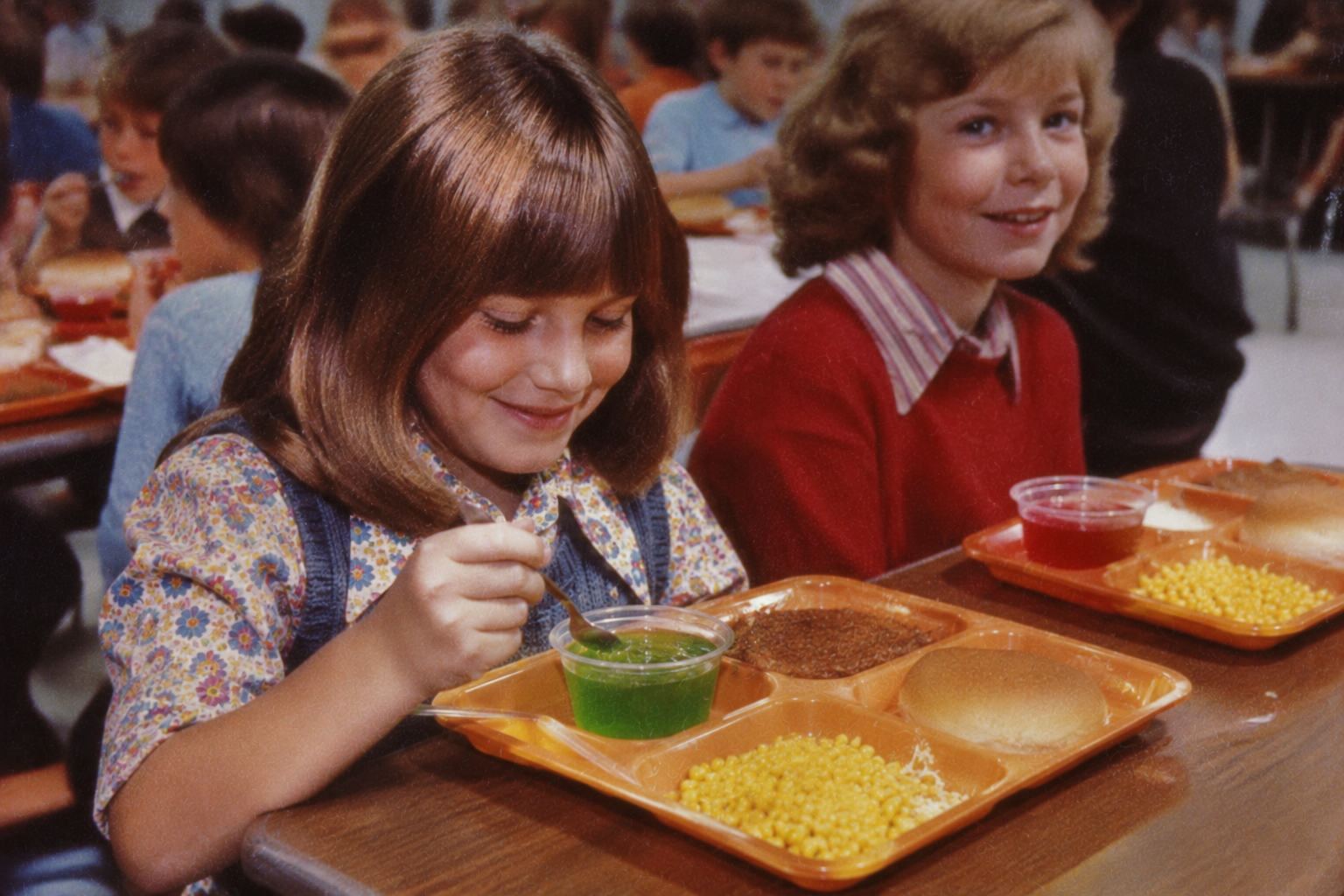
Few cafeteria desserts were quite as recognizable as a wobbly square of brightly colored gelatin. Red, green, orange, and yellow varieties appeared on school lunch menus throughout the decade, sometimes served plain and other times accompanied by fruit or whipped topping.
Gelatin was inexpensive, easy to prepare in large quantities, and simple for cafeteria workers to portion out. For students, though, the real entertainment was watching it jiggle whenever someone bumped the table. And if you carried your tray too quickly, there was always the possibility that your dessert would slide into the mashed potatoes.
Trending on Cheapism


Homemade Dinner Rolls With Butter
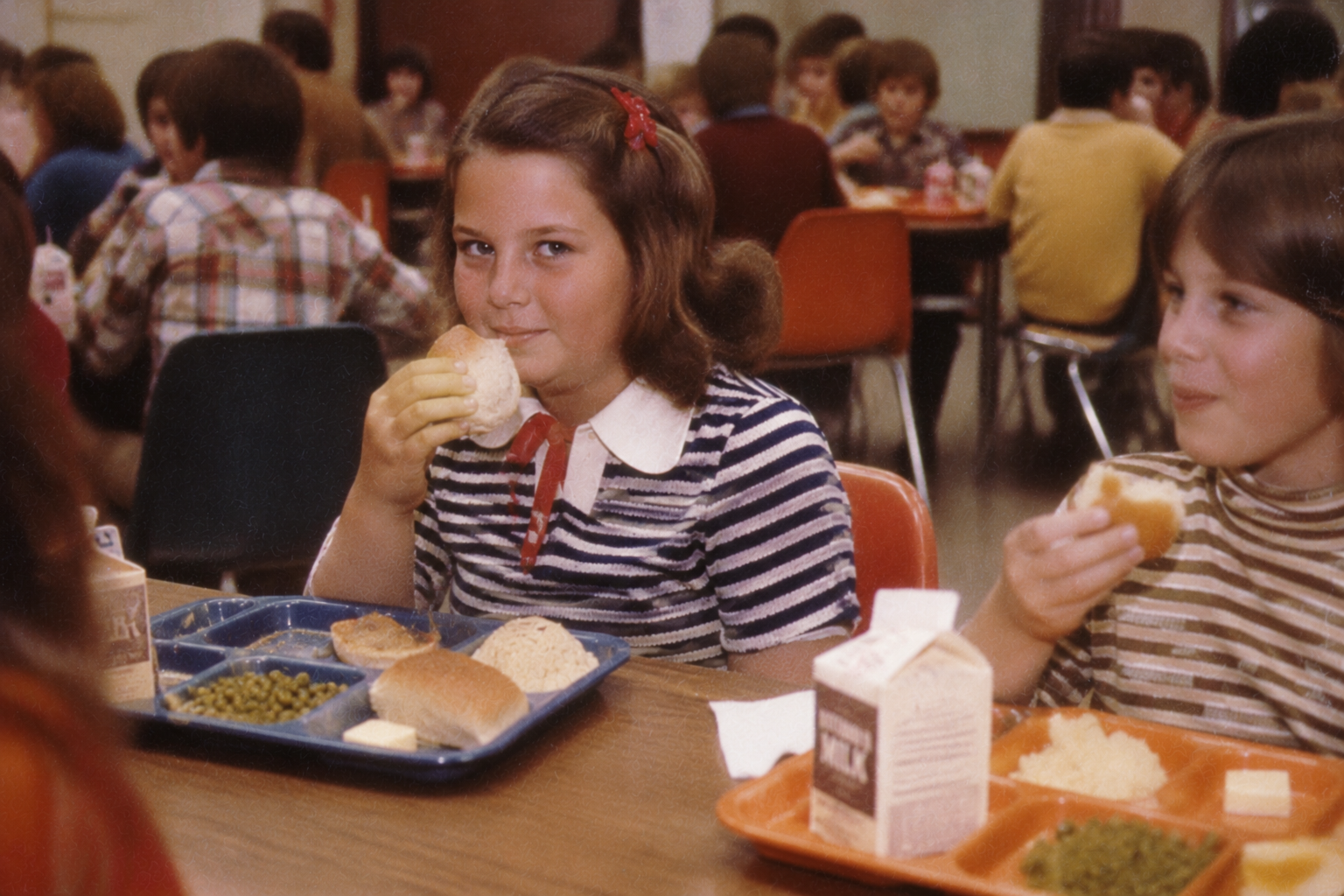
Not everything served in a 1970s school cafeteria came out of a can or a package. Some school kitchens baked their own bread, and contemporary menus from Michigan and Oklahoma specifically mentioned homemade rolls, biscuits, and cornbread.
For plenty of students, a warm dinner roll was the highlight of an otherwise ordinary cafeteria lunch. Soft, fluffy, and sometimes served with a little butter, it could make even an unpopular entrée seem more appealing. And if you were lucky enough to get an especially fresh roll, you might have finished it before touching anything else on your tray.
Hot Turkey With Mashed Potatoes and Gravy
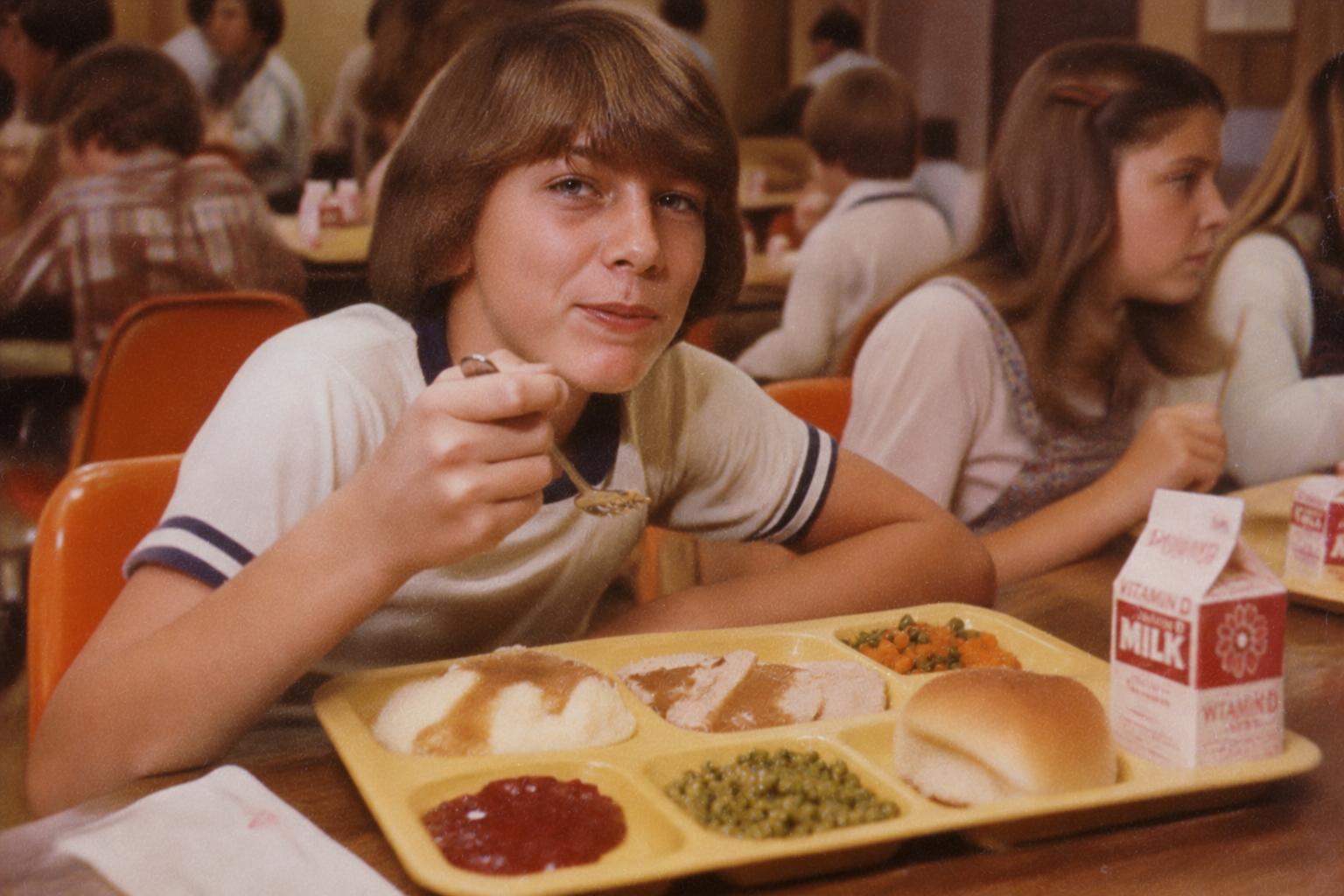
School lunches in the 1970s weren’t all sandwiches, hot dogs, and pizza. Some cafeterias served surprisingly elaborate hot meals that looked like simplified versions of Sunday dinner.
For example, a January 1975 menu from Pioneer Middle School in Michigan listed sliced turkey roll, mashed potatoes with gravy, cranberry sauce, peas and carrots, and a homemade roll. That’s quite a spread for an ordinary school day. Of course, cafeteria gravy had a tendency to travel, so by the time students reached their tables, the mashed potatoes and vegetables might have become one big, saucy combination.
Apple Crisp, Pudding, and Homemade Cookies
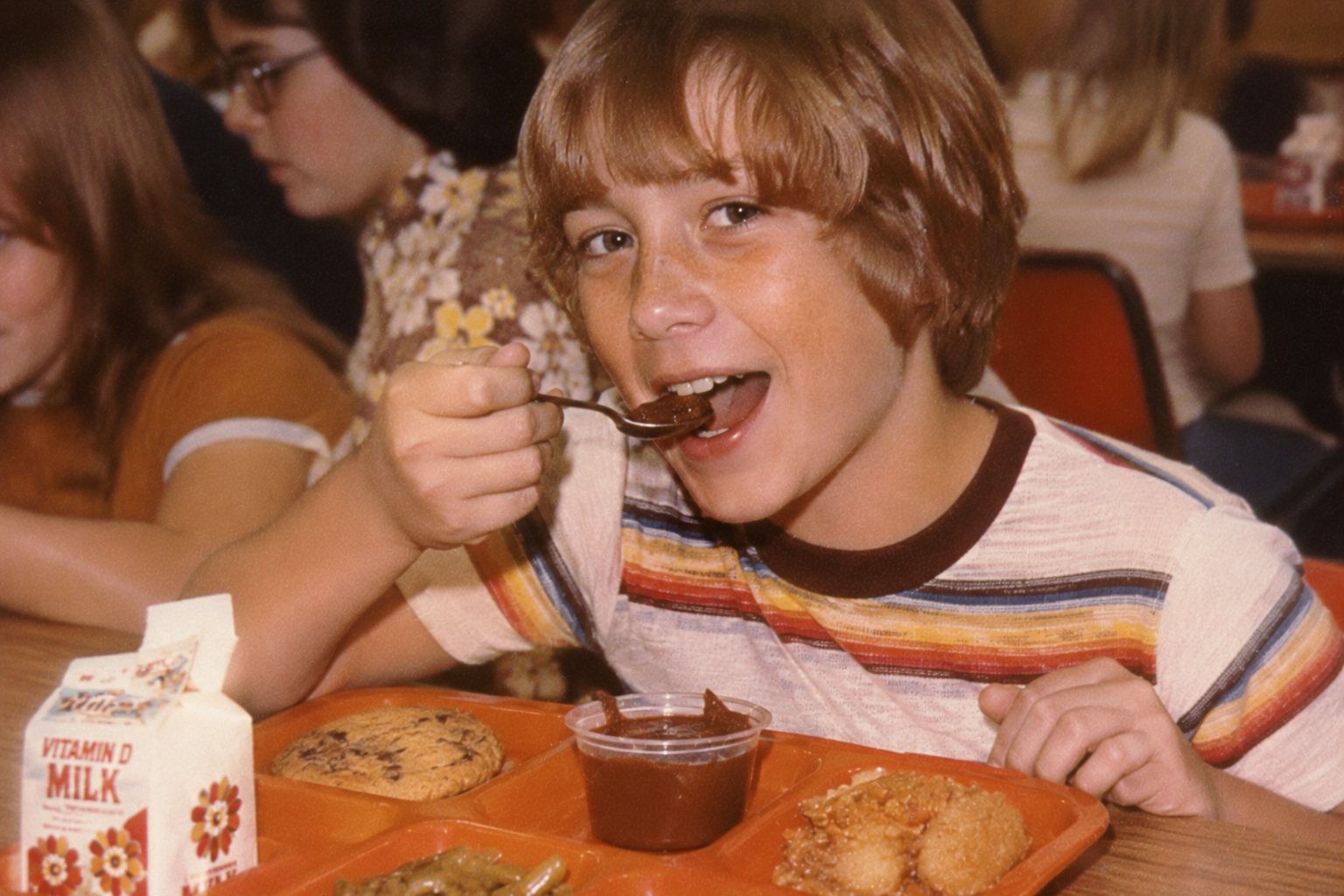
Dessert was often the most anticipated part of a school cafeteria lunch, and menus from the 1970s featured plenty of familiar favorites. Apple crisp, brownies, cookies, and chocolate or vanilla pudding all made appearances, giving students something sweet to look forward to after finishing their meals.
Many of these treats were prepared in large batches, with cafeteria workers cutting brownies and apple crisp into individual portions. Naturally, some kids went straight for dessert before touching their vegetables. Others tried to negotiate trades with classmates, hoping to exchange an unwanted side dish for an extra cookie.
Sign up for our newsletter
Lunches That Cost 55, 65, or 75 Cents
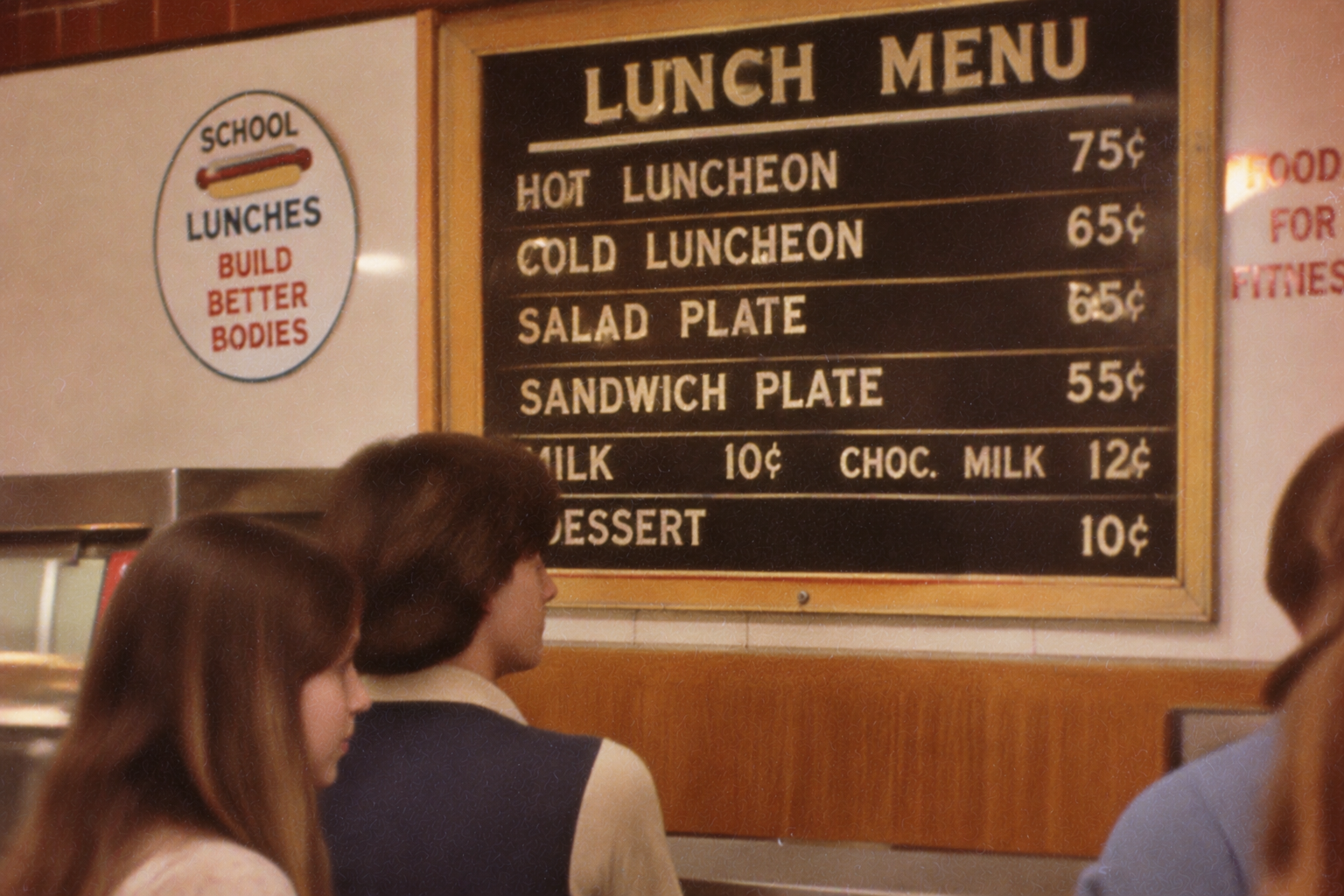
It’s hard to imagine buying a complete school lunch for less than a dollar today, but those prices were a reality for many American students in the 1970s. In fact, a September 1975 school menu from Euclid, Ohio, advertised complete meals for 65 or 75 cents, while certain individual sandwiches cost just 40 cents.
Of course, those prices reflected the economy of the time, and lunch costs varied by school district. Still, for anyone who remembers handing over a few coins in exchange for a hot meal, today’s cafeteria prices can seem almost unbelievable. Back then, remembering your lunch money was often just as important as remembering your homework.
Paying With Coins or Lunch Tickets
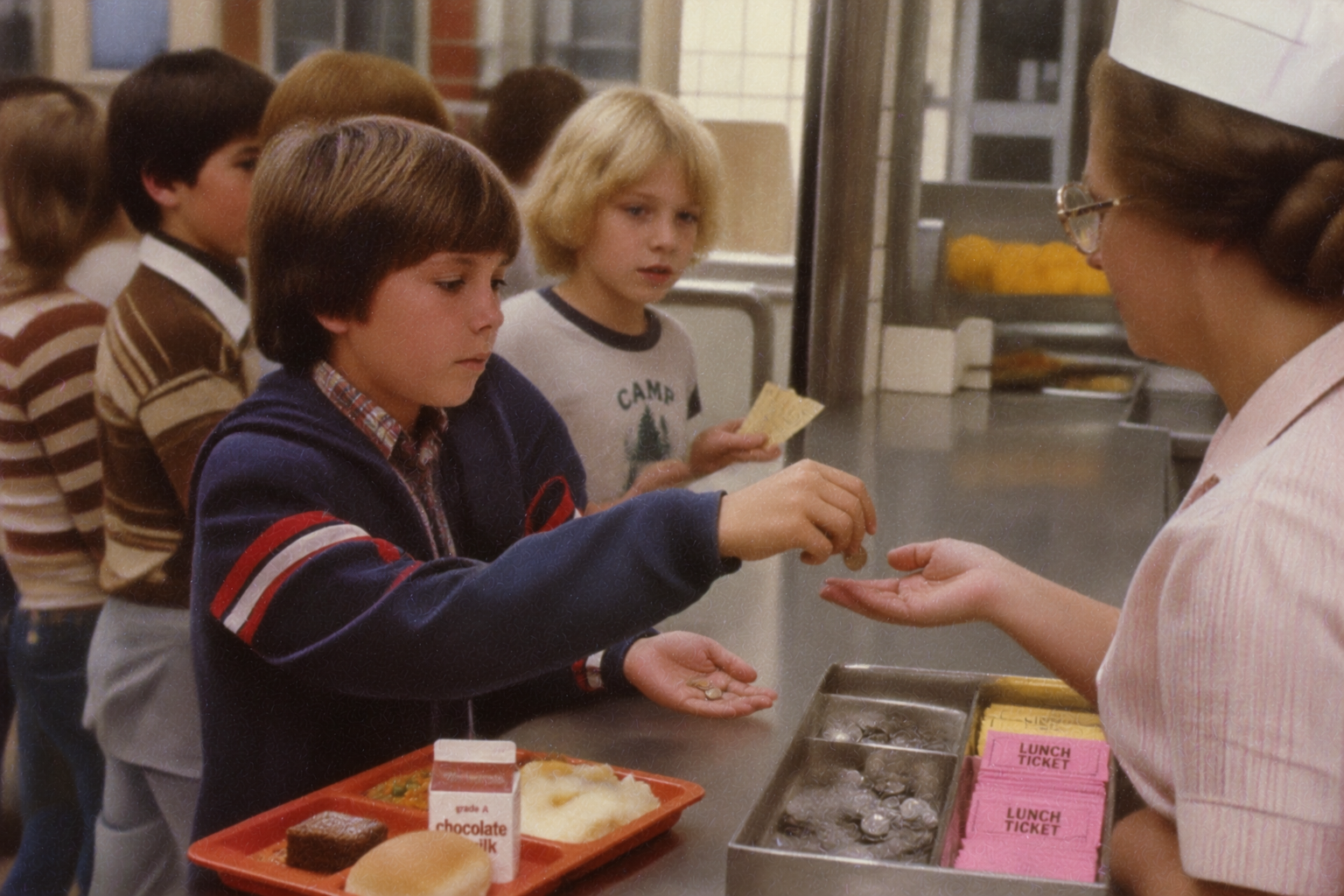
Long before students could pay for cafeteria meals through electronic accounts, lunch money was something many kids physically carried to school. Some brought coins tucked into their pockets, while others used prepaid lunch tickets or other systems provided by their schools.
Naturally, this arrangement came with its own problems. Coins could disappear into the bottom of a backpack, tickets could get misplaced, and realizing you’d forgotten your lunch money wasn’t exactly a pleasant experience. Schools also had to accommodate students receiving free or reduced-price meals, making cafeteria payment systems an important part of the daily routine.
Cafeteria Workers Serving Food From Large Metal Pans
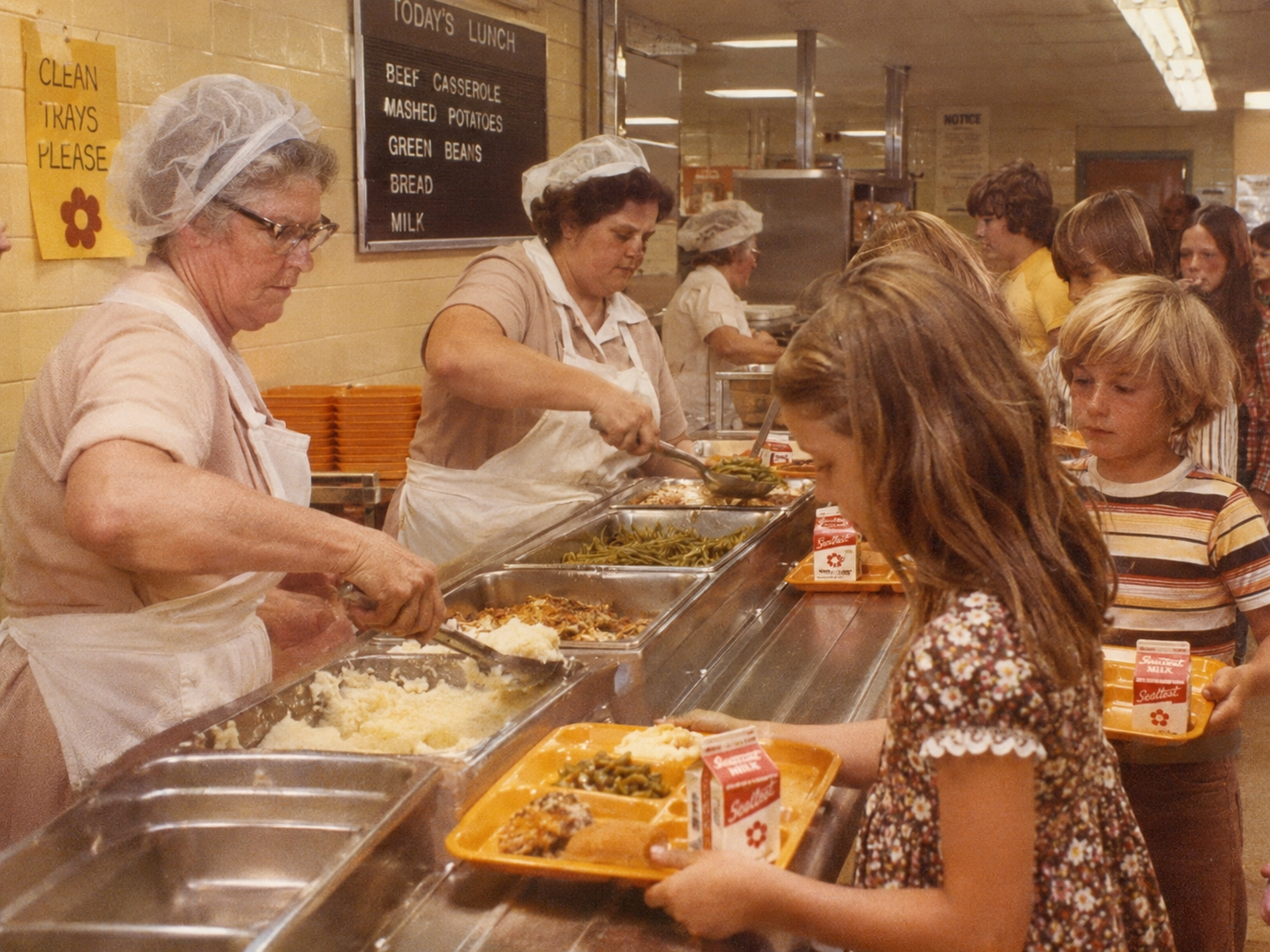
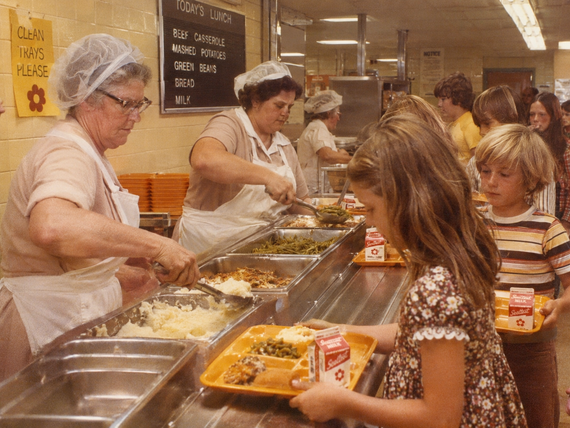
For many former students, one of the most recognizable cafeteria memories is standing in line while lunchroom workers served food from enormous metal pans. Mashed potatoes, vegetables, casseroles, and other hot dishes were prepared in large quantities, then portioned onto trays as children shuffled through the serving line.
The workers often wore aprons, hair coverings, or uniforms, and some became familiar faces to generations of students. Of course, everyone knew that the person holding the serving spoon had considerable power. One generous scoop of mashed potatoes could make your day, while a disappointingly small portion might leave you hoping for a better lunch tomorrow.
Printed Weekly Menus Sent Home or Published in Newspapers
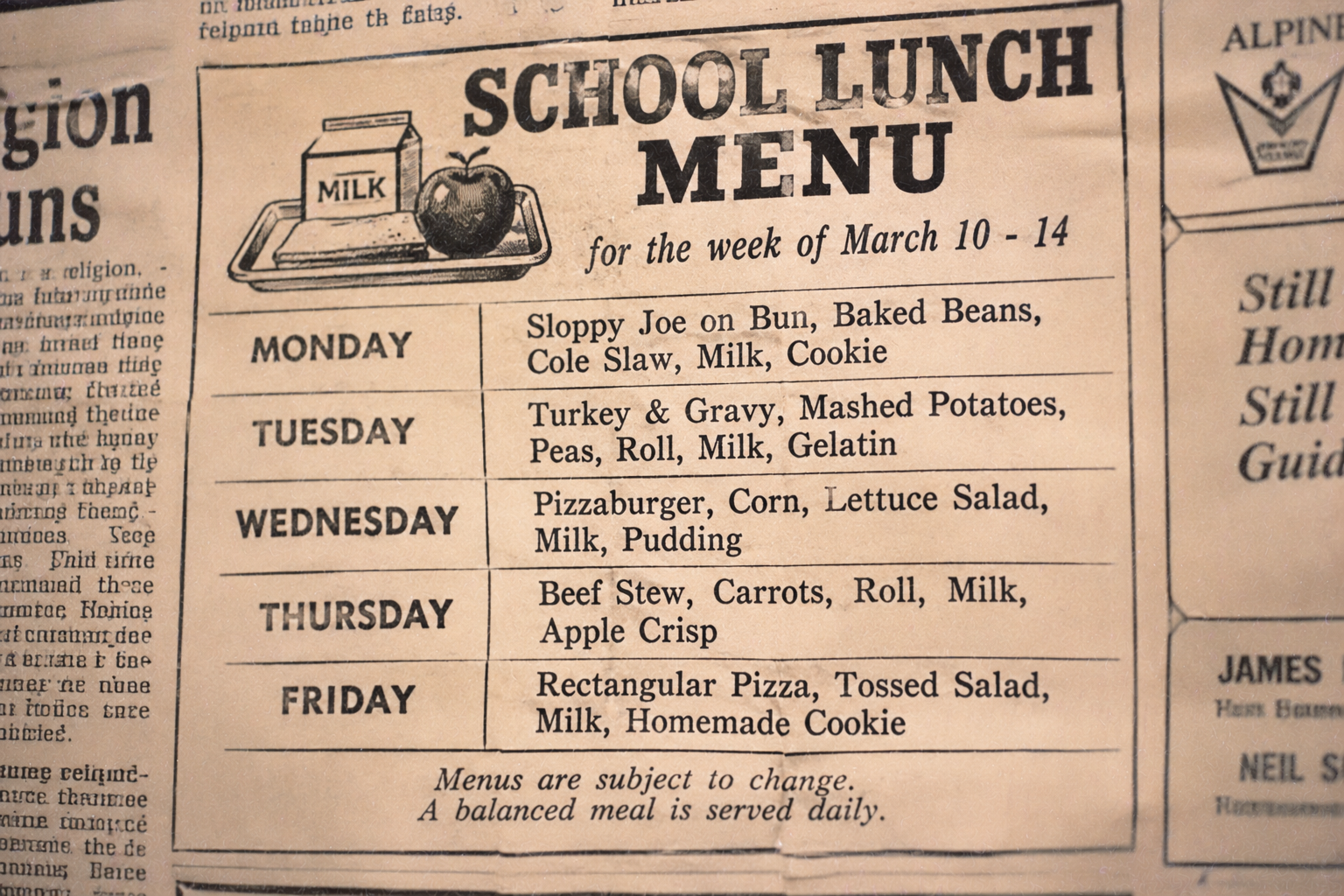
Before parents could check school lunch menus online, families often relied on printed schedules distributed by schools or published in local newspapers. These weekly menus listed upcoming entrées, side dishes, desserts, and milk, allowing students to see exactly what was coming.
Newspaper archives from 1975 show just how detailed these menus could be, with everything from sloppy joes and pizzaburgers to turkey dinners and homemade rolls appearing on the schedule. For kids, checking the menu was practically a weekly tradition. Knowing that Friday meant pizza could make the entire school week feel a little more manageable, while spotting a less popular dish might inspire someone to bring a brown-bag lunch instead.
When School Lunch Was a Daily Adventure
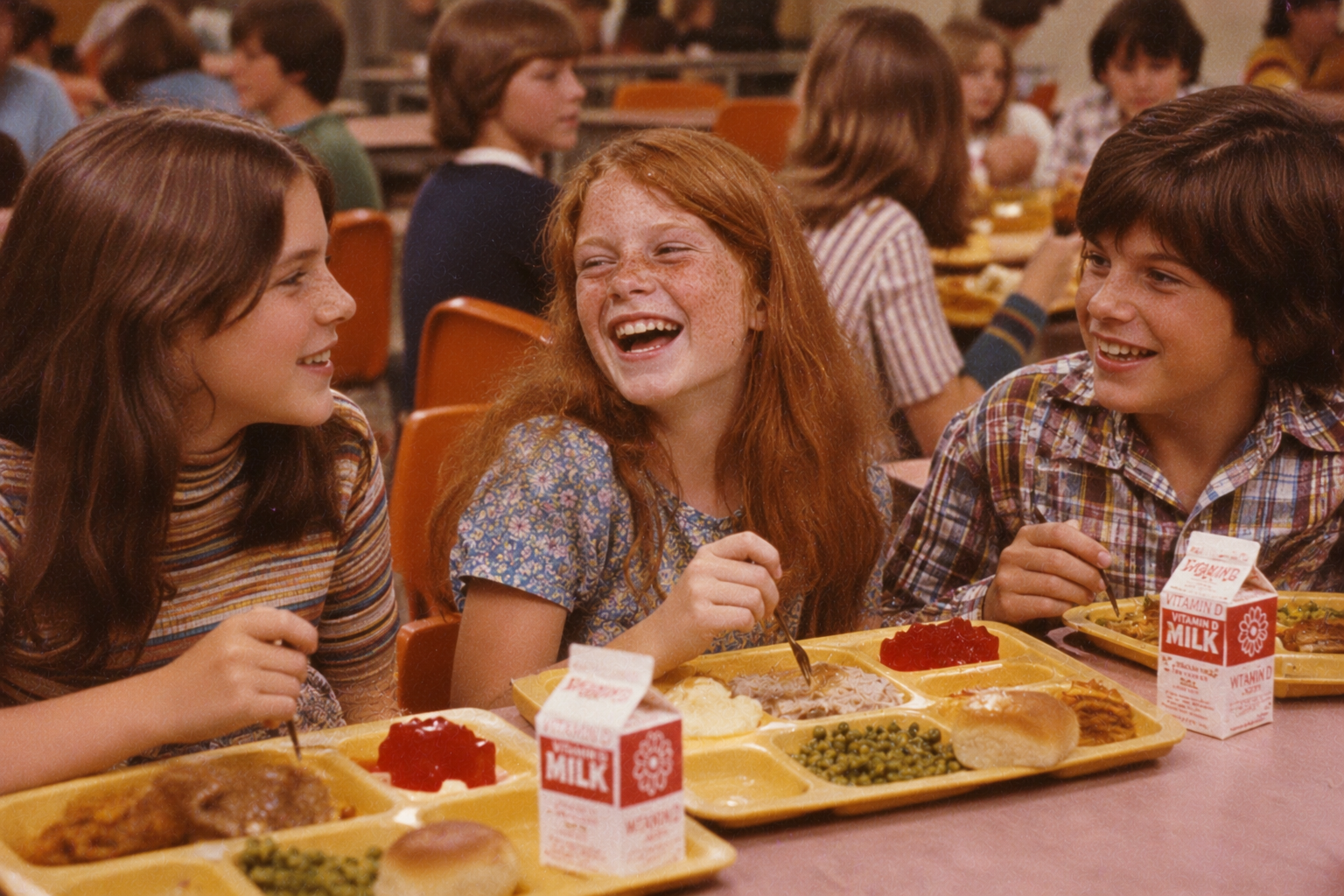
Looking back, school cafeterias in the 1970s had a character all their own. Between the colorful plastic trays, tiny milk cartons, homemade rolls, and cafeteria workers serving food from enormous pans, lunchtime was filled with little routines that became surprisingly memorable.
And while it’s easy to remember the occasional questionable entrée or soggy vegetables, actual school menus from the decade reveal a much wider variety of foods than the usual mystery-meat jokes suggest. For many former students, the best memories aren’t necessarily about what was on the tray, but about sitting with friends, trading desserts, and counting down the days until pizza appeared on the menu again.