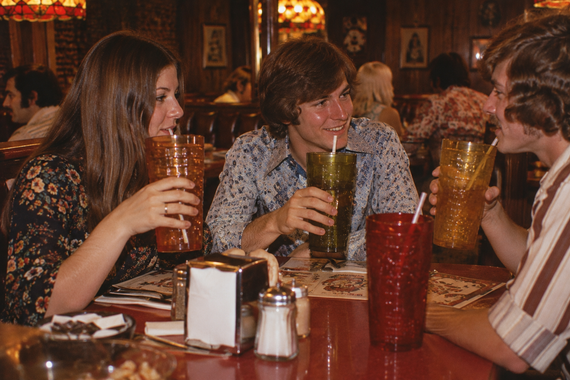
Walk into the right American restaurant in the 1970s and you could probably identify the decade before you even saw the menu. 1970s restaurants were filled with dark wood, colored glass, oversized booths, and lighting dim enough to make dinner feel slightly mysterious.
The decade also helped establish the kind of casual-dining restaurant that turned an affordable family meal into something that felt like a night out. Steak and Ale leaned heavily into rustic wood and atmospheric lighting, while Pizza Hut surrounded diners with brick walls, booths, hanging lamps, and other details that made eating pizza feel like an occasion.
Not every restaurant looked exactly the same, of course. But from enormous salad bars to tiny candles flickering on the table, these 13 features could make a 1970s restaurant instantly recognizable.
Dark Wood Paneling Everywhere
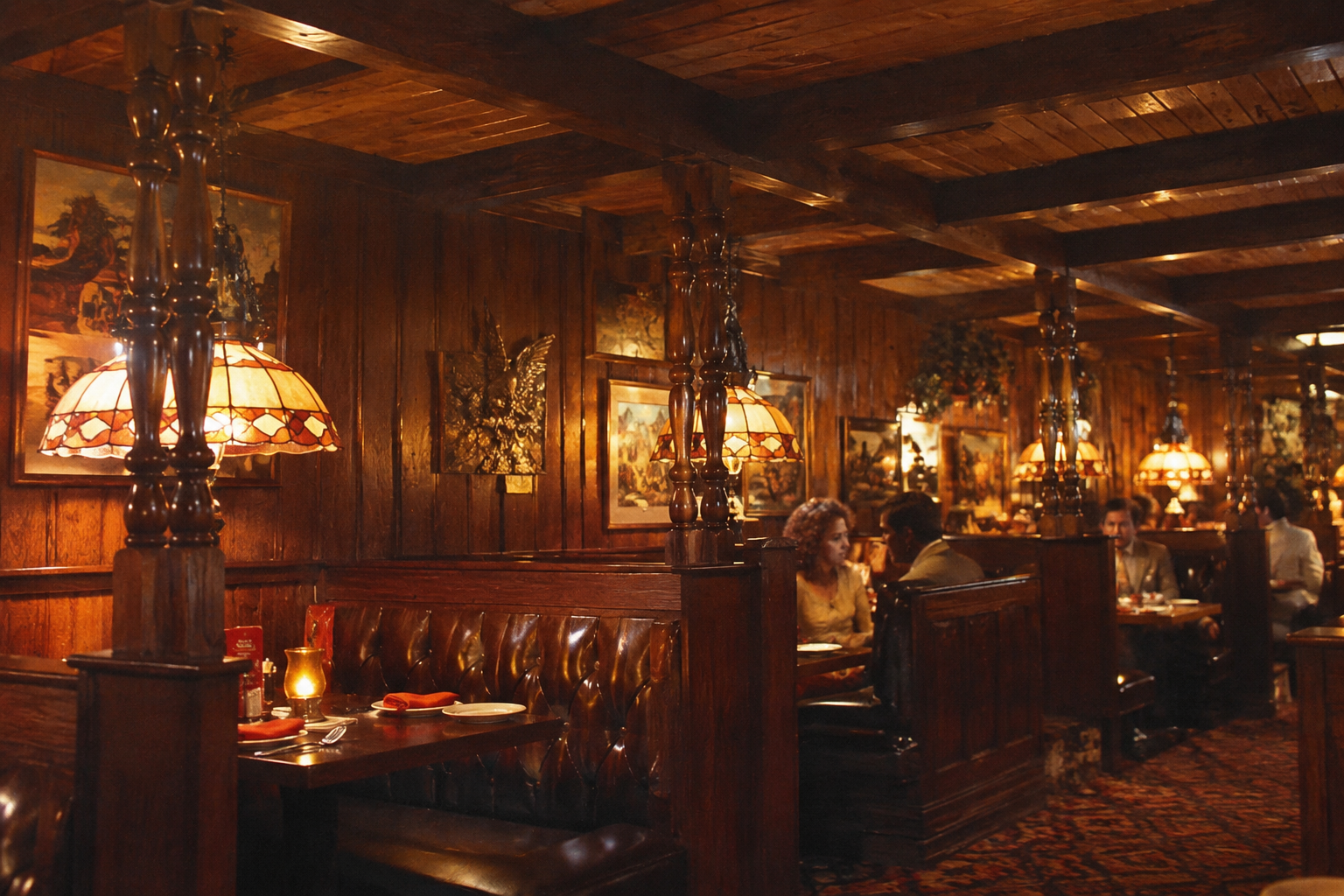
If your 1970s restaurant wasn’t covered in dark wood, was it even trying? Wood-paneled walls, exposed ceiling beams, heavy furniture, and wooden partitions helped create the cozy, rustic atmosphere that was especially popular in steakhouses and casual dinner restaurants. Steak and Ale was one of the most recognizable examples, using wood beams and deliberately dark dining rooms to make a relatively affordable steak dinner feel much more upscale. Compared with today’s preference for bright, open dining rooms, some of these places practically looked like medieval taverns.
Tiffany-Style Hanging Lamps
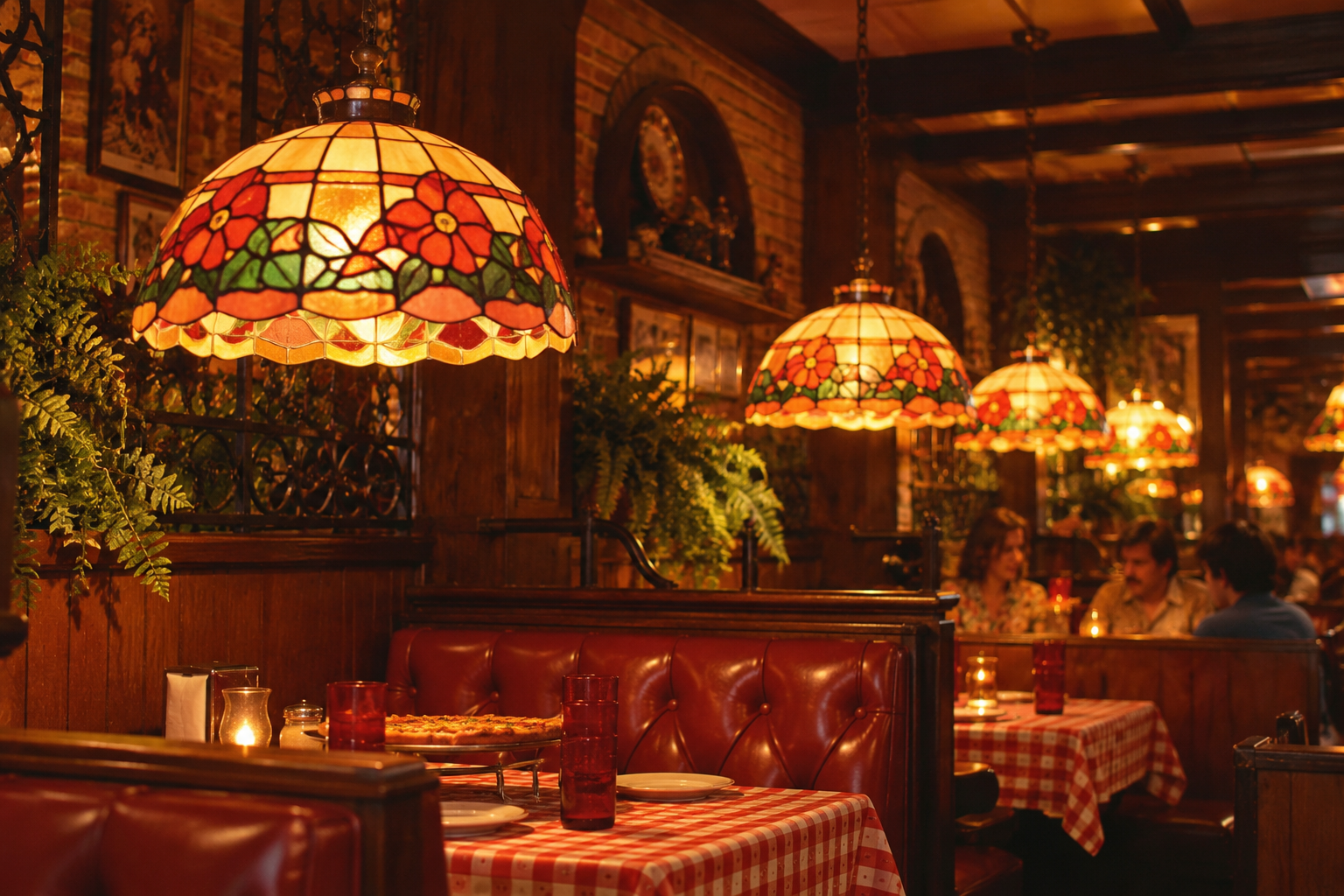
Few lighting fixtures scream “1970s restaurant” quite like a faux-stained-glass lamp hanging directly over the table. Amber, red, green, and yellow glass cast a warm glow over booths while leaving much of the surrounding dining room in shadow. The lamps appeared in fashionable fern bars as well as family restaurants, but they’re particularly associated with old-school Pizza Hut dining rooms. Pair one with a vinyl booth and a tabletop candle and you’ve basically recreated an entire decade of dining.
High-Backed Vinyl Booths
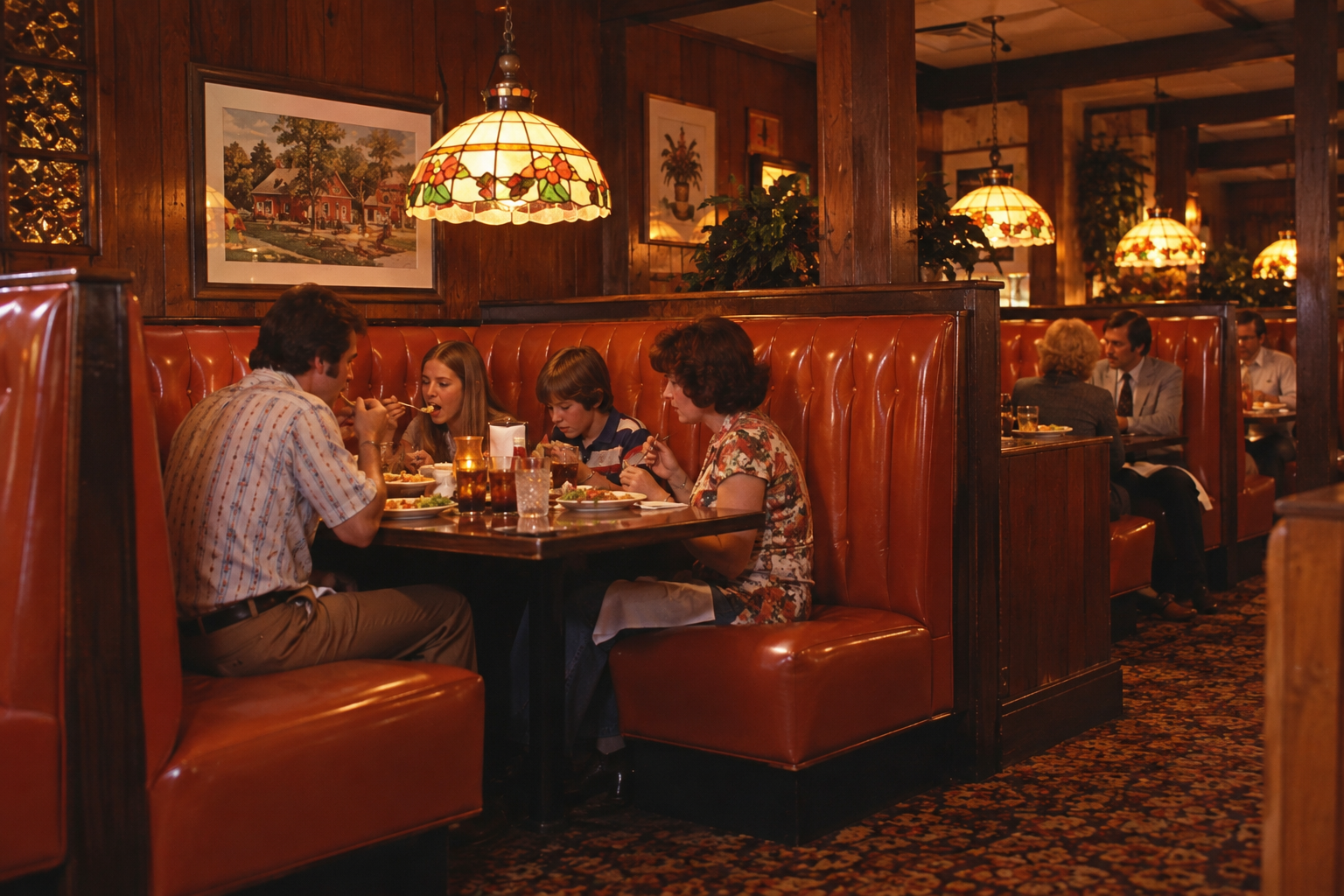
Restaurants weren’t particularly interested in open-concept dining rooms yet. Instead, families could slide into deep vinyl booths separated by high backs or wooden partitions that made even a crowded restaurant feel surprisingly private. The upholstery came in colors that wouldn’t have looked out of place in a 1970s living room, including burnt orange, avocado green, deep red, and brown. They weren’t necessarily subtle, but they were comfortable enough to make you want to stick around after dinner.
The Giant Salad Bar
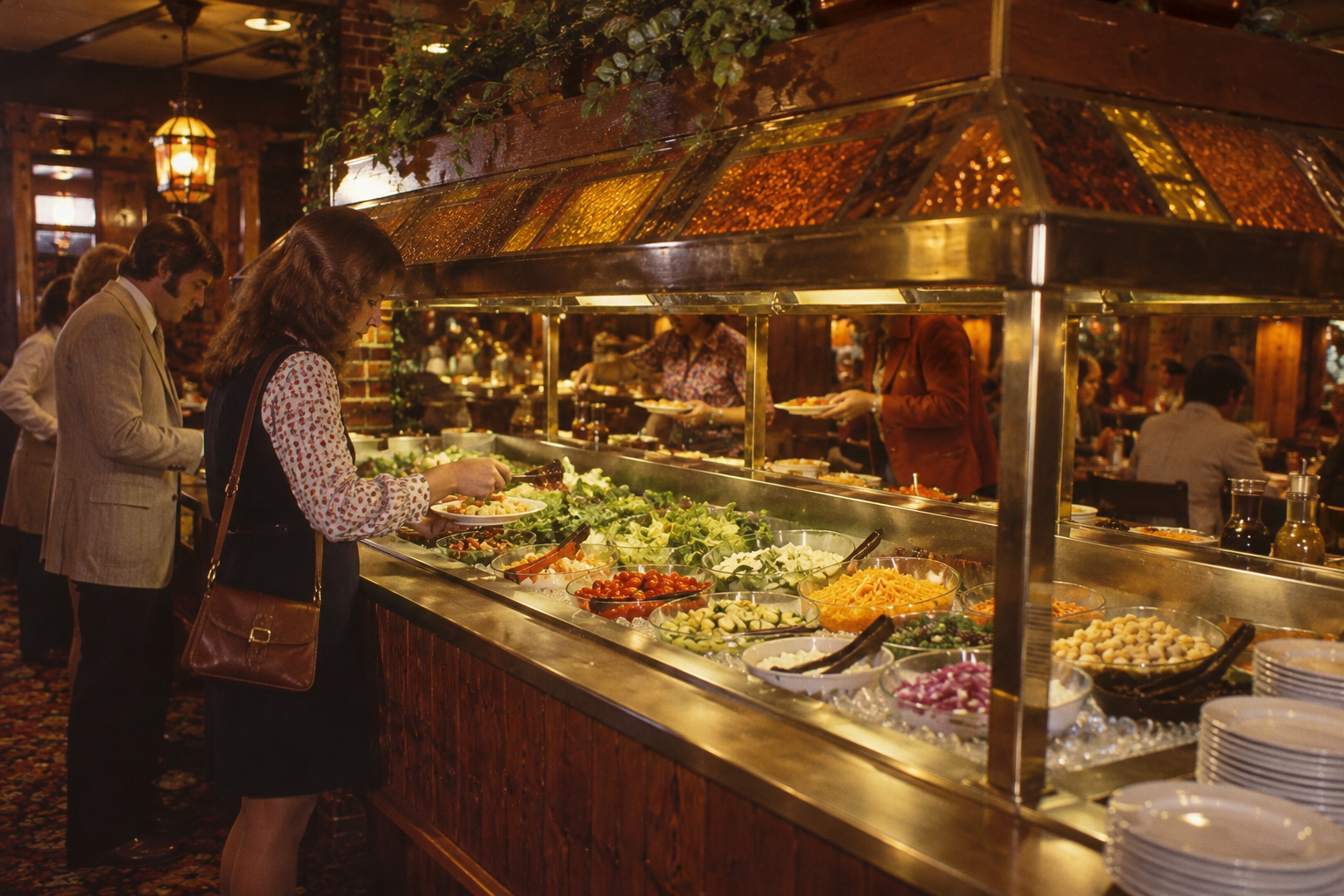
Before the salad bar became something you hurried past on your way to the buffet, it could be one of a restaurant’s main attractions. Steak and Ale helped popularize the concept, and by the 1970s diners could build towering salads from refrigerated displays loaded with iceberg lettuce, tomatoes, cucumbers, shredded cheese, croutons, dressings, and other toppings. There was something unusually exciting about being handed a chilled plate and told to assemble dinner’s opening act yourself — especially when nobody was keeping track of how much cheese you added.
Red-and-White Checkered Tablecloths
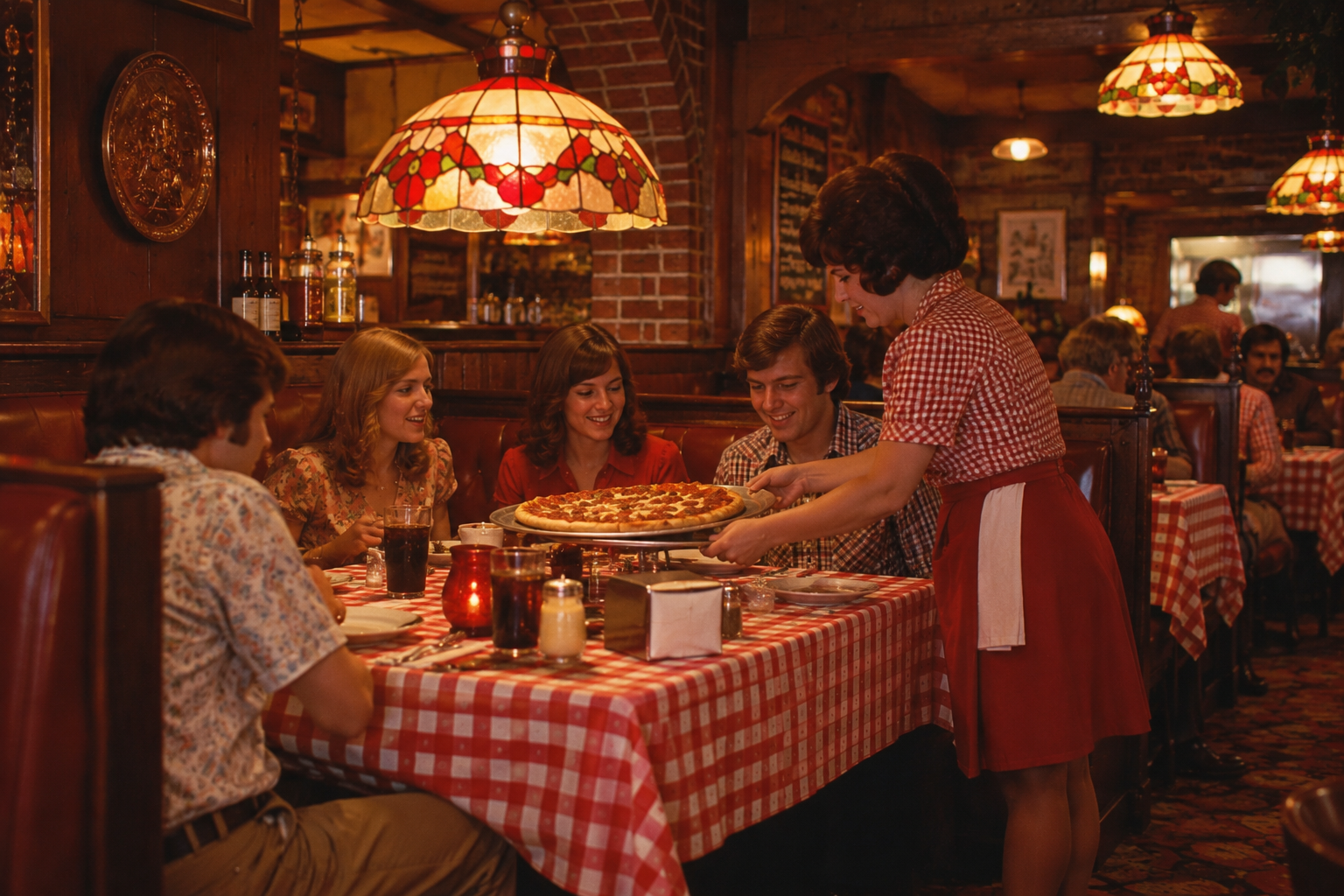
Nothing said casual Italian-American restaurant quite like a red-and-white checkered tablecloth. Pizza restaurants leaned particularly hard into the pattern, often surrounding those tables with exposed brick, wood paneling, and low-hanging lights to create an exaggerated version of an old neighborhood pizzeria. At Pizza Hut, the combination helped make a chain restaurant feel more like a sit-down destination. Add a steaming pizza pan in the middle of the table and the scene is instantly recognizable.
Trending on Cheapism
Ferns and Hanging Plants
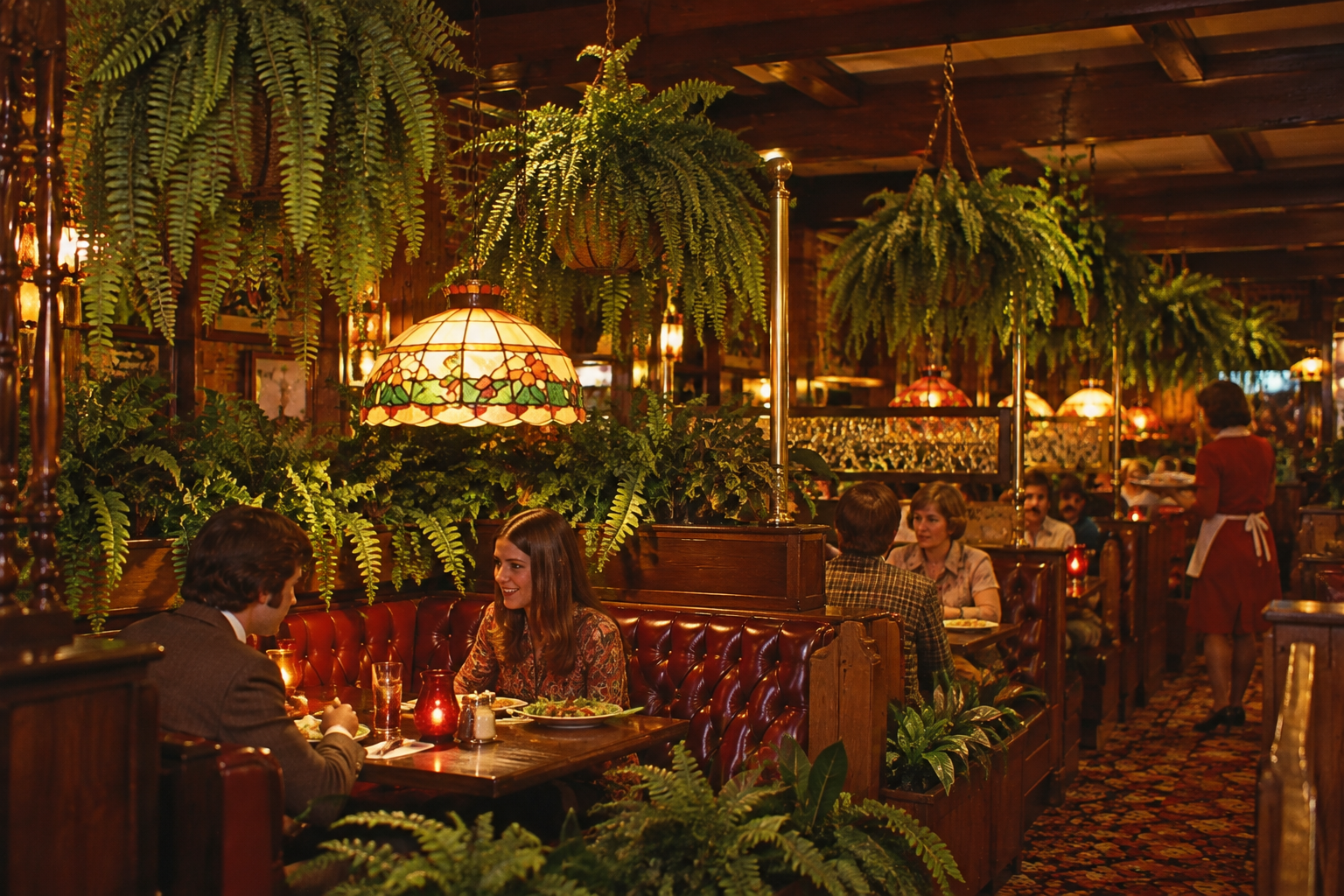
By the second half of the 1970s, some restaurants had enough greenery to rival a garden center. Hanging ferns and potted plants became especially associated with the emerging “fern bar,” where greenery was combined with wood, brass, stained glass, and a more polished casual atmosphere. The look offered a softer, trendier alternative to traditional cocktail lounges and quickly spread beyond bars. Soon, restaurants were tucking plants between booths, hanging them from ceilings, and filling empty corners with enough foliage to make watering everything seem like a full-time job.
Exposed Brick and Faux-Rustic Walls
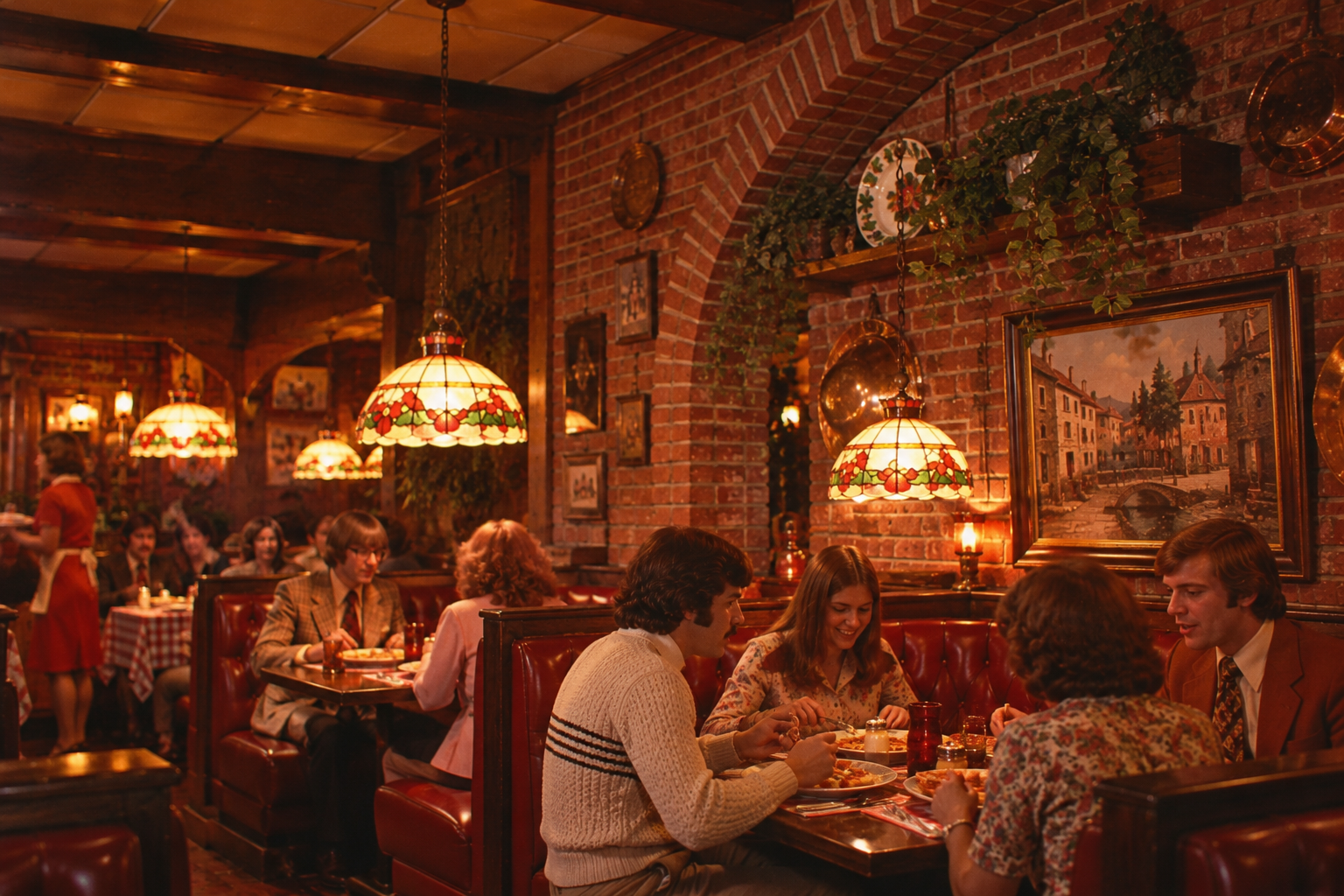
A brand-new restaurant in the 1970s might go to considerable effort to convince you that it had been there for generations. Exposed brick, rough wood, stucco, decorative plates, and faux-antique objects were all used to create the feeling of an old tavern, inn, or neighborhood Italian restaurant. Pizza Hut famously paired brick with wood paneling and ceiling beams, while Steak and Ale incorporated similarly rustic materials. Authenticity wasn’t necessarily the point. Atmosphere was.
Little Tabletop Candles
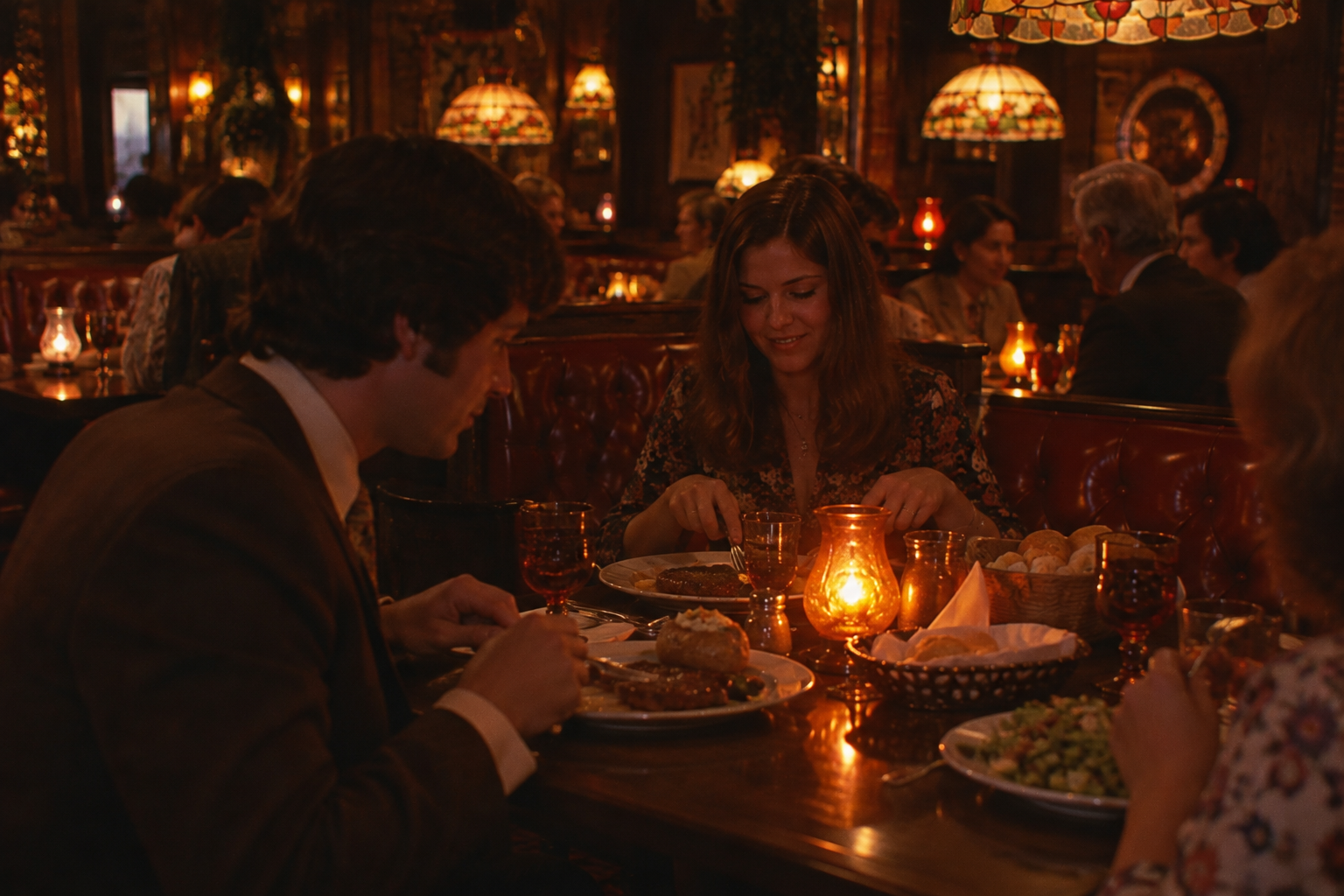
Restaurants didn’t need elaborate decor to make a table feel special. Sometimes a tiny candle in a glass holder did the job. Votive candles and miniature lanterns appeared at pizza parlors, steakhouses, and date-night restaurants, adding another layer of warm light to already dim dining rooms. They sat beside salt and pepper shakers, napkin dispensers, and menus and became such a familiar part of the experience that former diners still specifically remember the candles at old Pizza Hut locations.
Sign up for our newsletter
Oversized Plastic Drink Tumblers
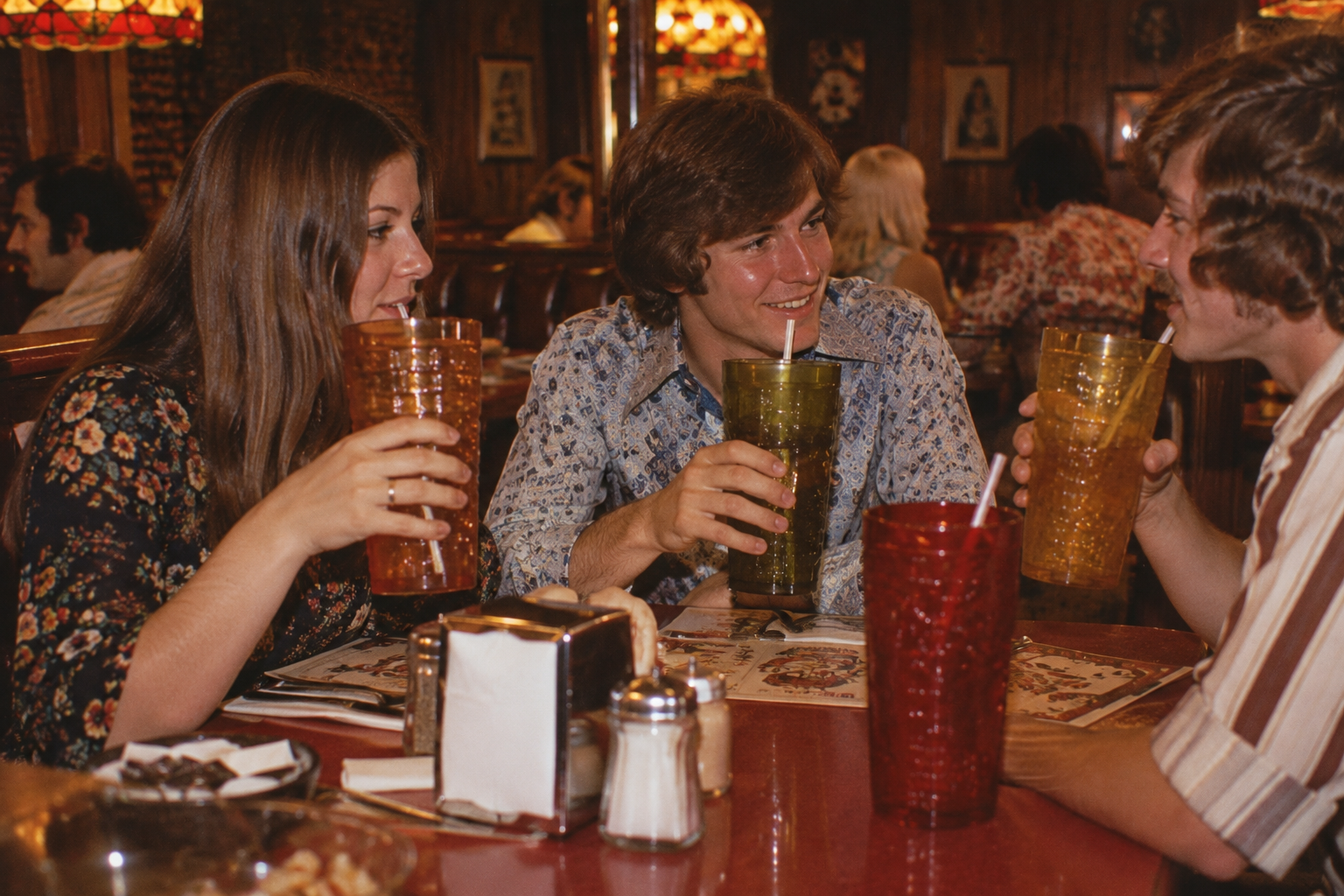
Even the drinking glasses had a distinctive look. Casual family restaurants frequently served soda, iced tea, and water in thick textured plastic tumblers, often in smoky brown, amber, or deep red. Pizza Hut’s translucent red cups became particularly memorable and remain closely tied to nostalgia for the chain’s old dine-in restaurants. Packed with ice and sweating onto a paper placemat, these practically indestructible cups were considerably less glamorous than crystal — but somehow much more memorable.
Tableside Preparation
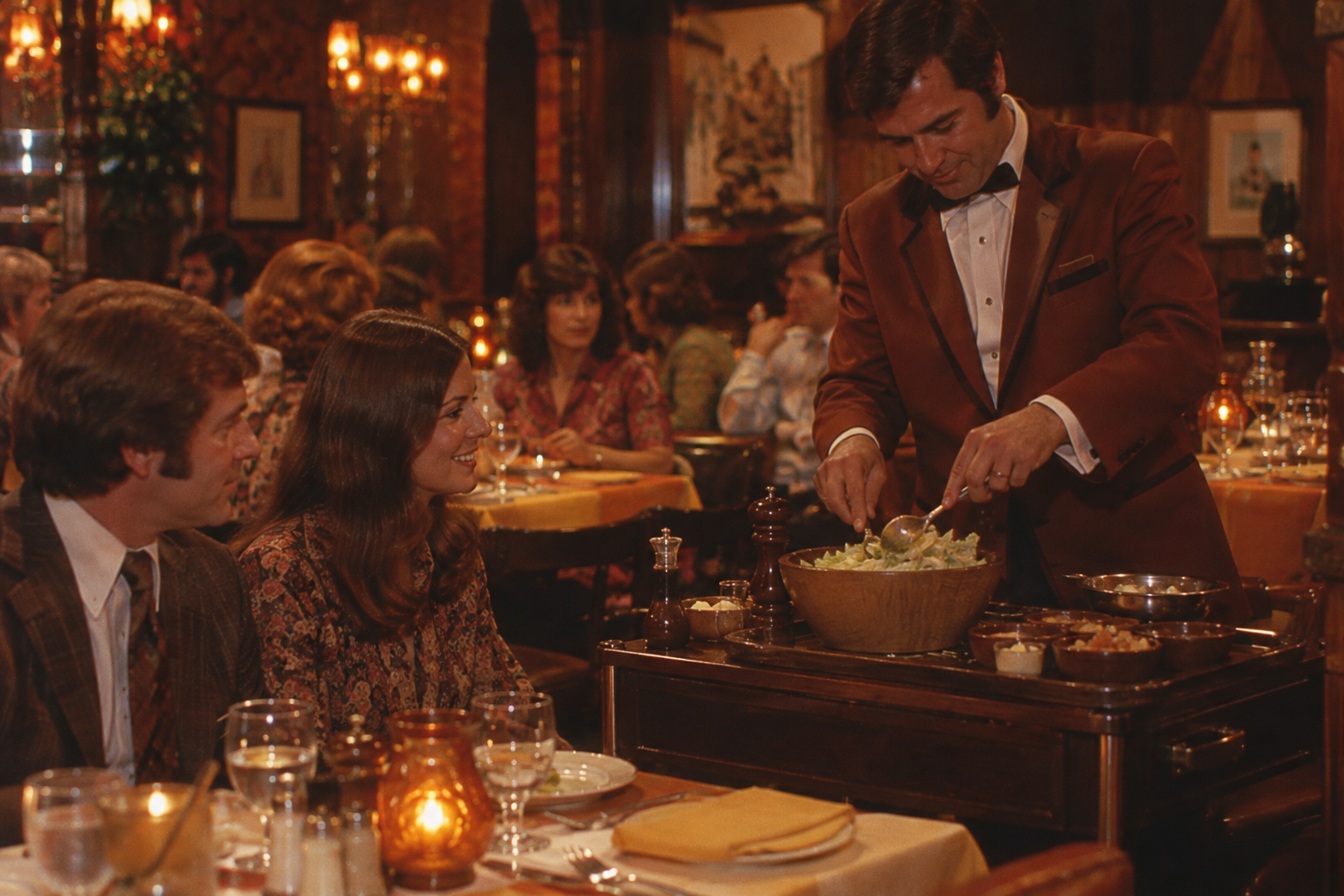
Dinner wasn’t always something that simply appeared from the kitchen. Part of the entertainment could be watching a server finish the dish right beside you. Depending on the restaurant, that might mean tossing a salad, carving meat, preparing a flambé dessert, or completing another dish from a rolling cart. The practice gave dinner a little bit of theater and made restaurant service feel more personal. Steak and Ale has even brought back tableside salad preparation as part of its modern revival, a deliberate nod to the experiential service associated with its earlier restaurants.
Jukeboxes and Tabletop Music Controls
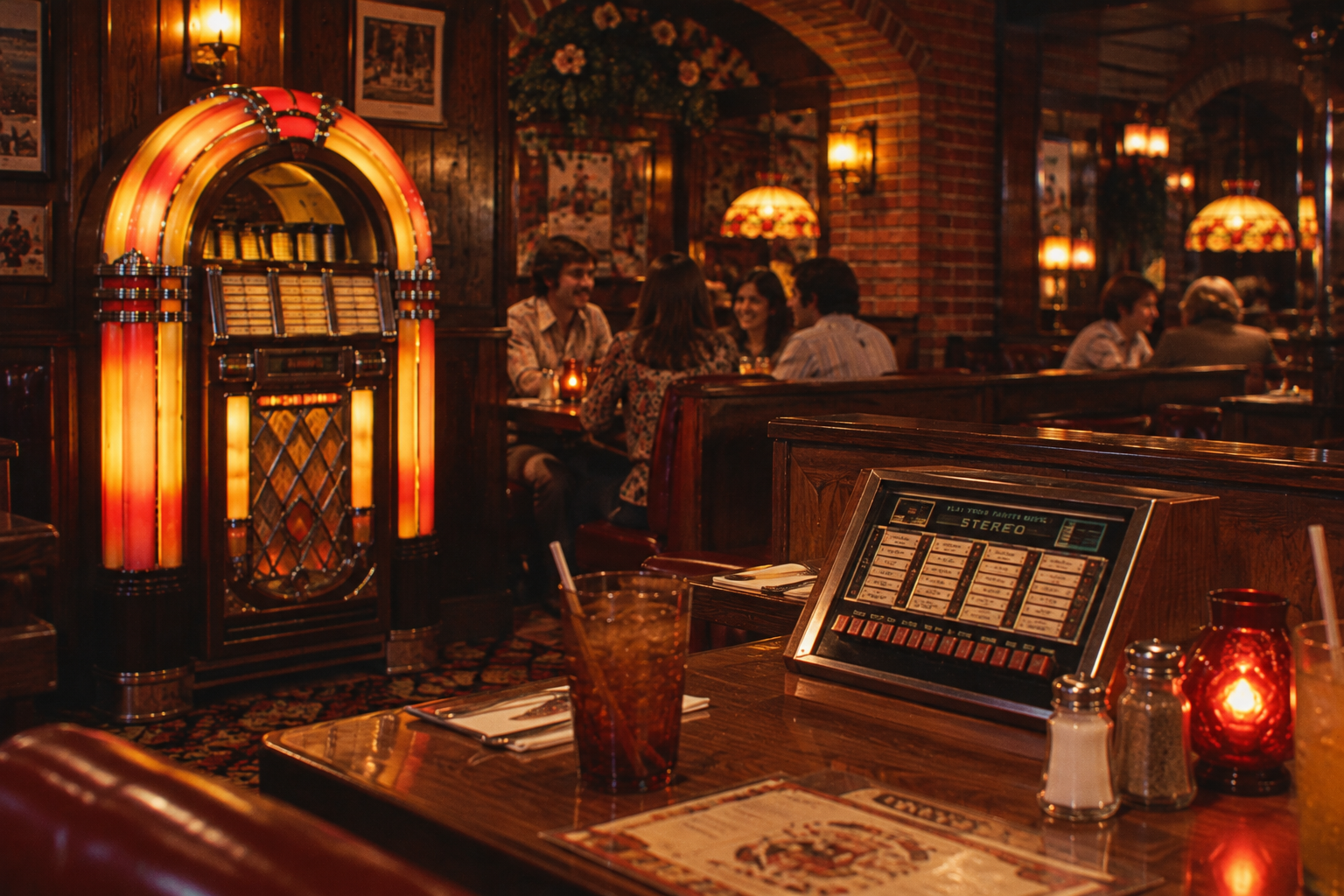
Sometimes dinner came with control of the soundtrack. Pizza parlors and other casual restaurants could have full-size jukeboxes or smaller tabletop selectors that let diners choose a song without even leaving the booth. Drop in a coin, press a few chrome buttons, and your selection might eventually play across the dining room. Jukeboxes weren’t exclusive to the 1970s, but alongside candles, booths, and red plastic cups, they became another memorable feature of casual restaurants from the era.
Instantly Recognizable Themed Buildings
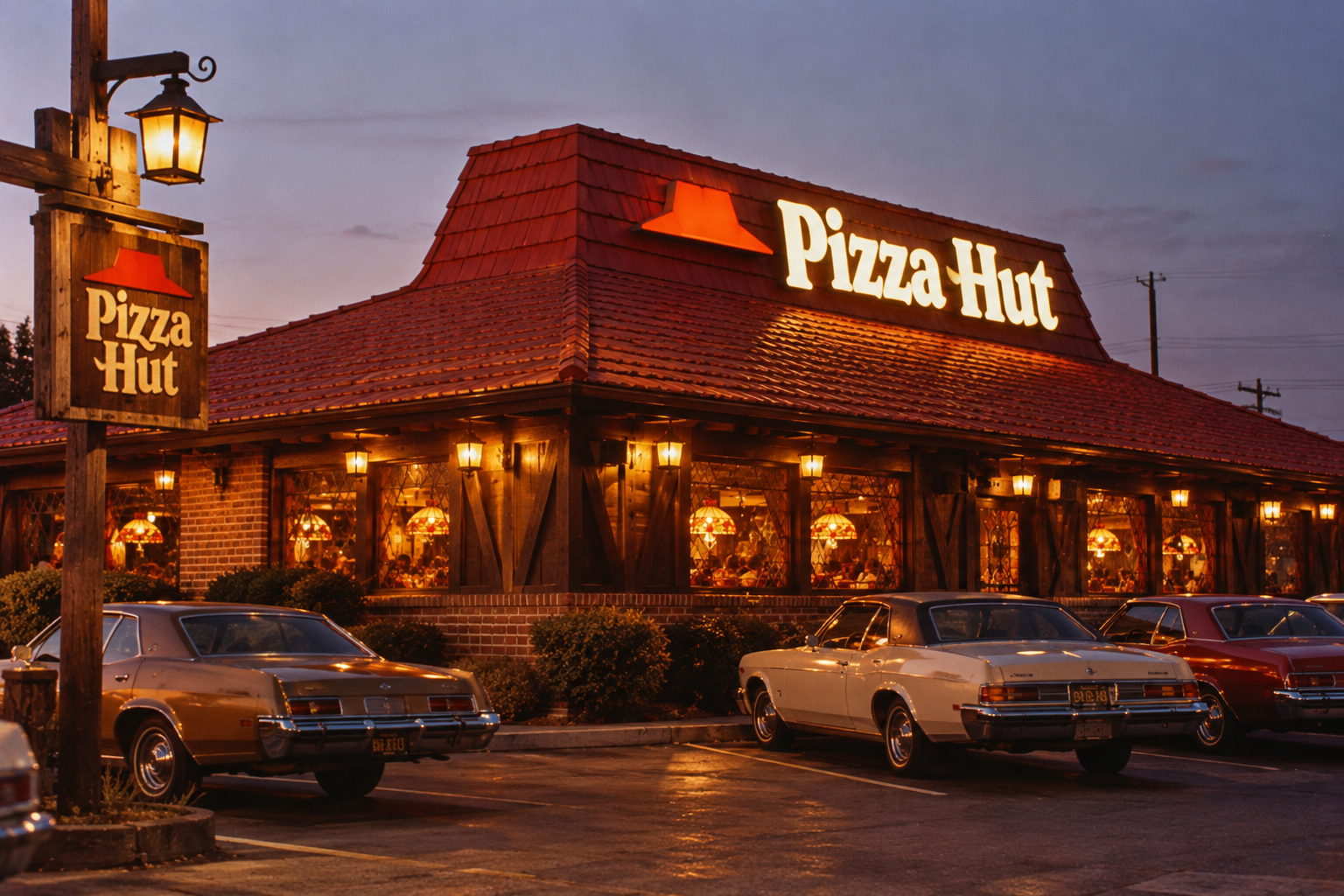
You didn’t necessarily need to see the sign to know which restaurant you were approaching. Chains frequently used distinctive architecture as part of their identity, creating buildings designed to be recognized from the highway. Pizza Hut’s enormous red trapezoidal roof is perhaps the most famous example, but restaurants also borrowed faux-colonial, Tudor, ranch, and other heavily themed architectural styles. Compared with the generic rectangular storefronts occupied by many chains today, a 1970s restaurant could practically function as its own billboard.
Decorative Glass Everywhere
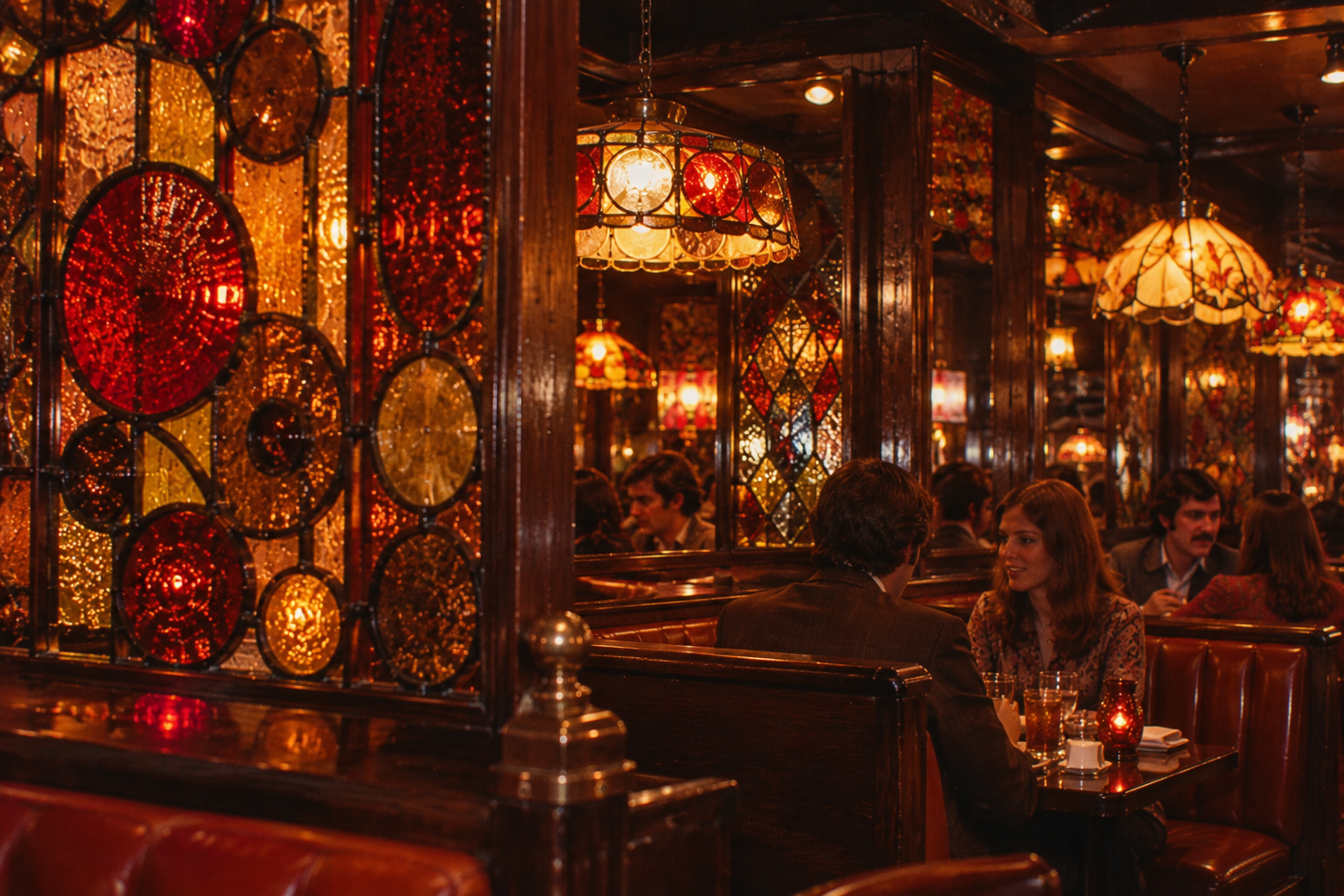
Apparently ordinary clear glass wasn’t atmospheric enough. Stained, colored, etched, and textured glass appeared in lamps, windows, partitions, and decorative panels throughout 1970s restaurants. Steak and Ale paired stained glass with wood beams and other rustic materials, while colored-glass lighting became closely associated with Pizza Hut and fern-bar interiors. Amber glass partitions could divide booths without completely closing them off, and brass trim reflected the glow from nearby candles. It was one final ingredient in the warm, slightly theatrical look that defined so many restaurants of the decade.
Eating Out Looked a Lot Different
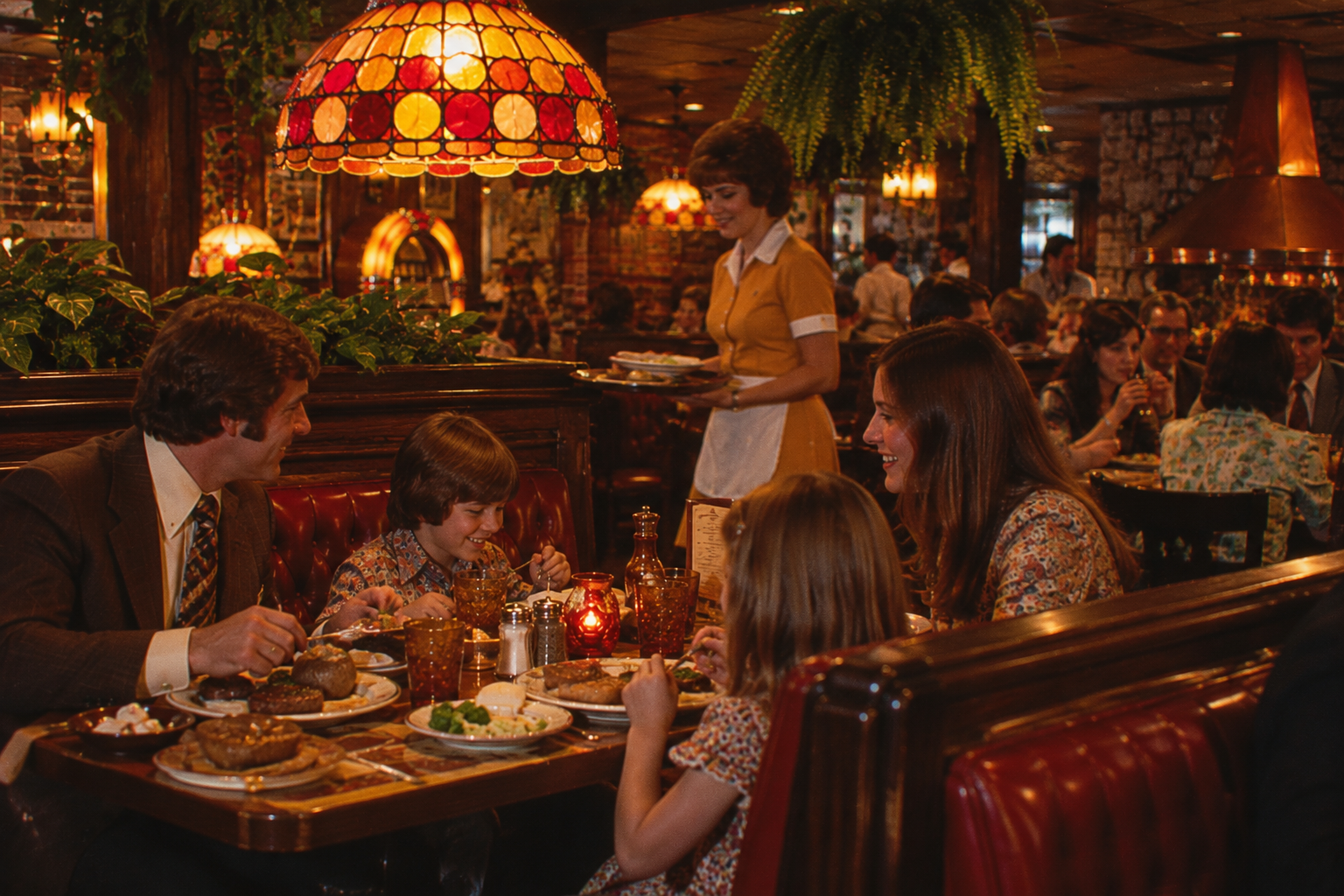
The quintessential 1970s restaurant wasn’t bright, minimalist, or particularly subtle. It was warm, dark, textured, and determined to create an atmosphere. Wood paneling met exposed brick, stained glass hung above vinyl booths, and ferns competed for space with candles and oversized plastic cups.
Restaurants also gave customers plenty to remember beyond what they ordered. Salad bars turned appetizers into an activity, jukeboxes provided entertainment, tableside preparation brought part of the kitchen into the dining room, and elaborate buildings made the experience start before you even walked through the door.
Maybe that’s why such ordinary details can still trigger surprisingly powerful nostalgia. For anyone who ate out during the era, sometimes all it takes is a red plastic tumbler or the glow of a stained-glass lamp to bring the whole restaurant back.