A family road trip in the 1970s required a little more patience — and a lot more improvising — than it does today. There were no GPS directions to reroute you after a wrong turn, no smartphones to find the nearest motel, and definitely no streaming playlists to keep everyone entertained for eight hours.
Instead, families relied on paper maps, roadside signs, AM/FM radio, motel vacancy boards, and whatever snacks could survive several hours in a cooler. And then there was the car itself, often a massive station wagon or sedan packed with kids, suitcases, blankets, and enough vacation gear to make the rear window practically useless.
From 8-track tapes and roadside picnic tables to glowing motel signs and license plate games, these 15 hallmarks made the classic American road trip of the 1970s an adventure before you even reached the destination.
A Station Wagon Packed to the Roof
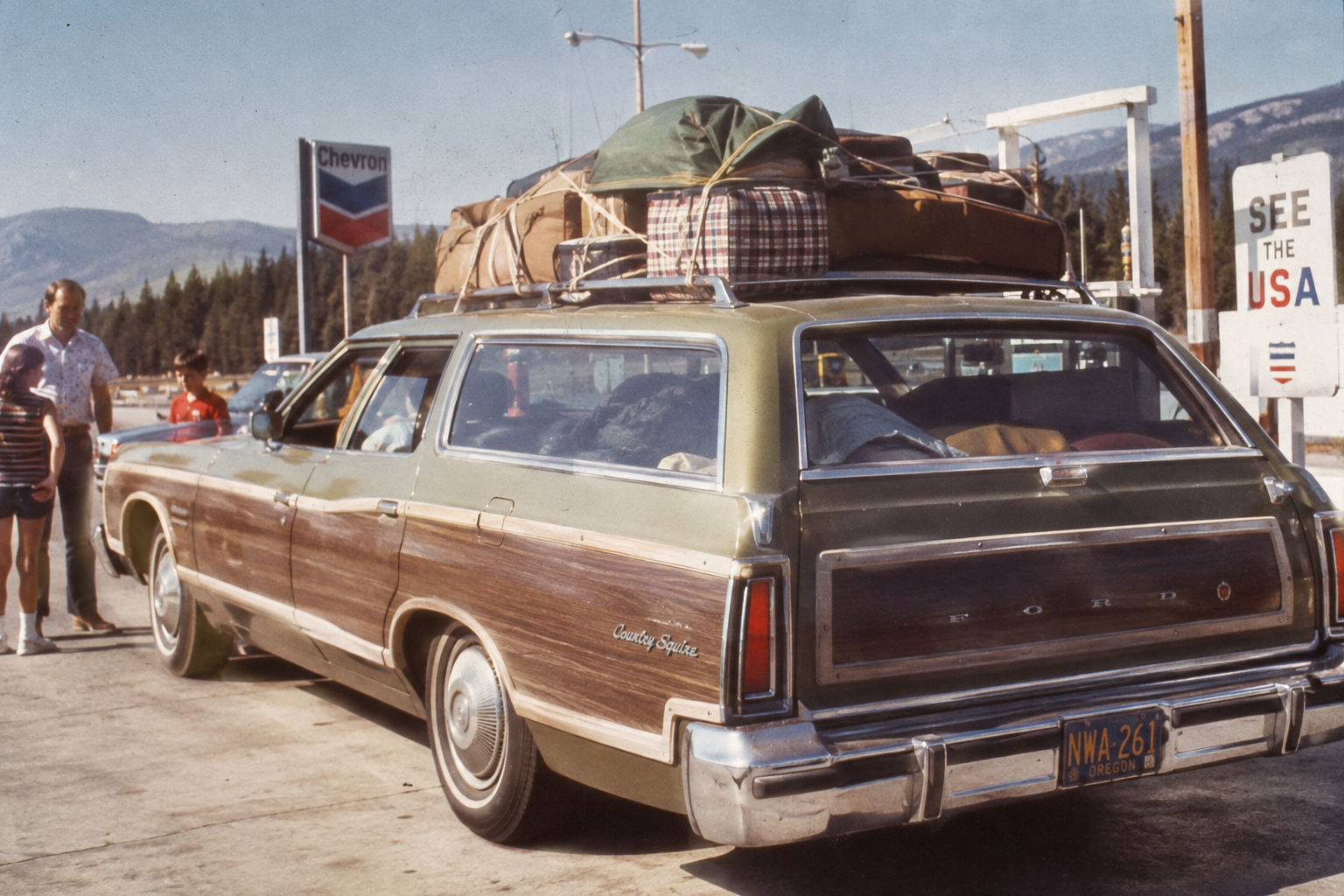
Few vehicles scream “1970s family vacation” quite like a giant station wagon loaded with suitcases, coolers, blankets, and assorted kid gear. Woodgrain-sided models became especially memorable fixtures of the era, and some wagons offered rear-facing “way-back” seats that let kids watch the highway disappear behind them. Add luggage strapped to the roof and a back seat filled to capacity, and the family car became almost as memorable as the vacation itself.
Folding Paper Maps Everywhere
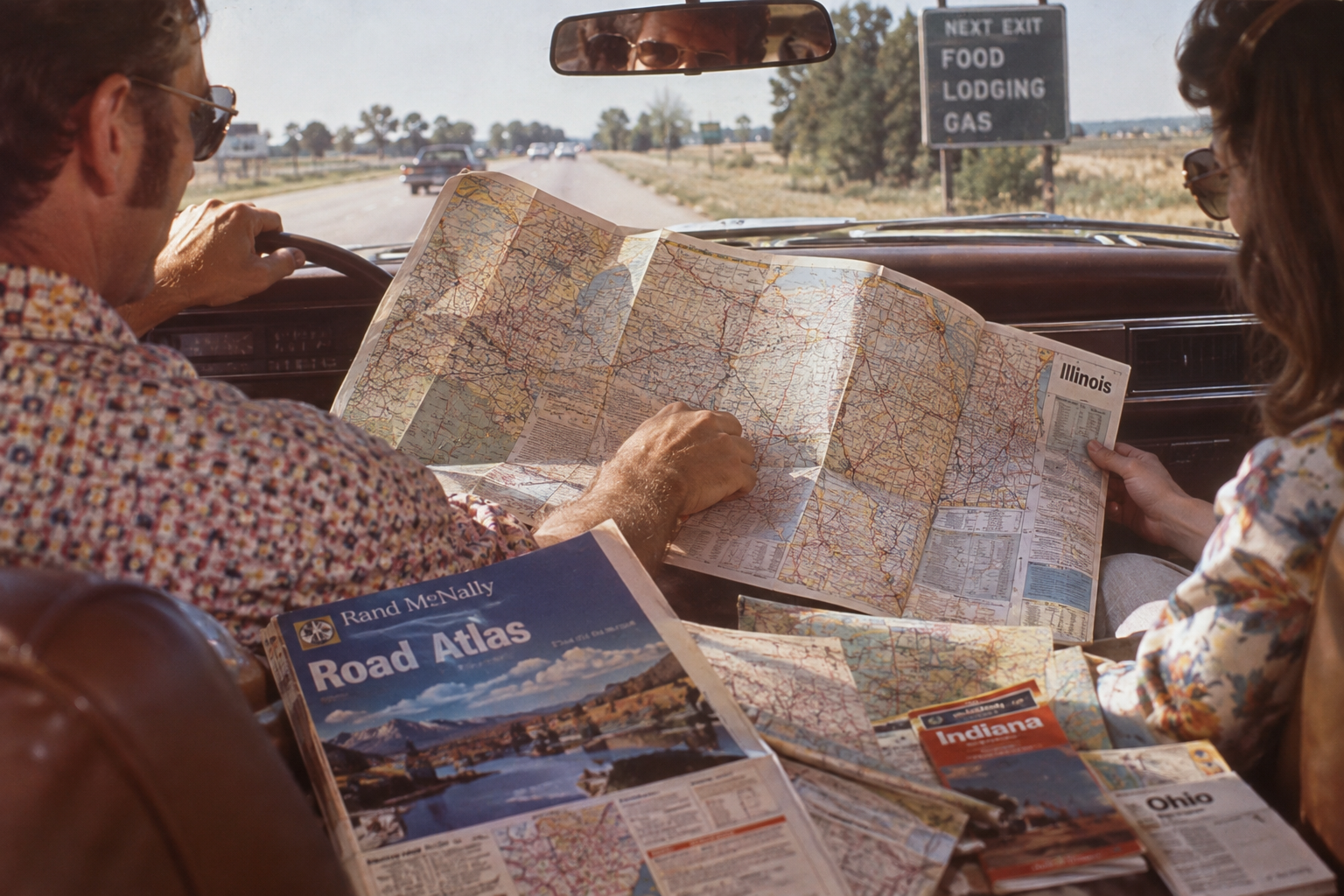
Before a phone could calmly tell you to make a U-turn, somebody had to figure out where you were using a paper map. Families traveled with road atlases and maps picked up from gas stations, auto clubs, and tourism offices, many of which eventually accumulated in the glove compartment. Taking a wrong exit could lead to the passenger wrestling with an enormous folded map while the driver tried to find somewhere safe to pull over.
Kids Fighting Over the Back Seat
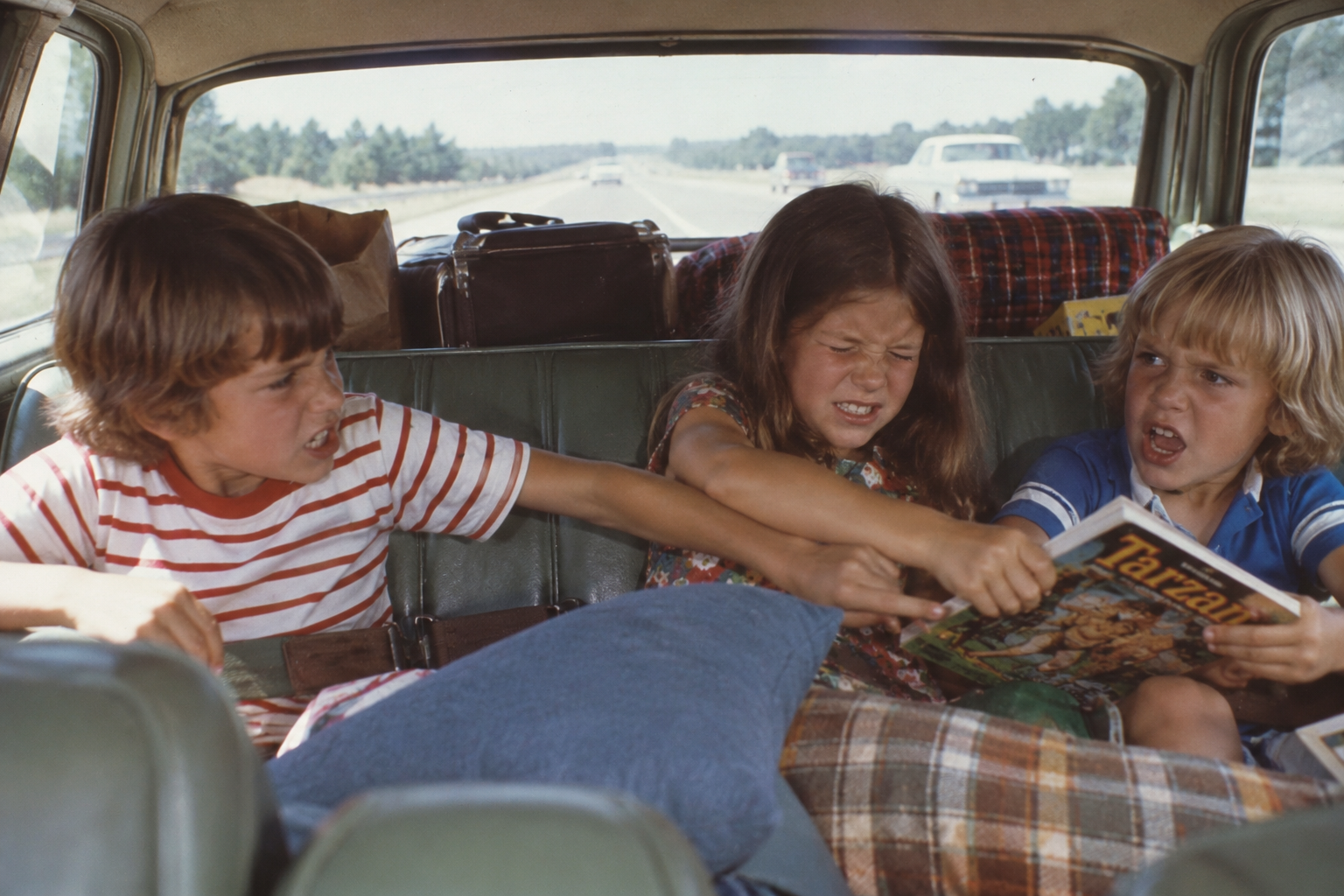
There were no tablets mounted to the headrests to keep the peace. Kids sharing a bench seat had to make do with comic books, toys, snacks, games, and whatever they could see through the window. After enough hours on the highway, invisible territorial lines inevitably appeared between siblings, along with arguments over who was touching whom and repeated questions about how much longer the drive would take.
AM/FM Radio as the Soundtrack
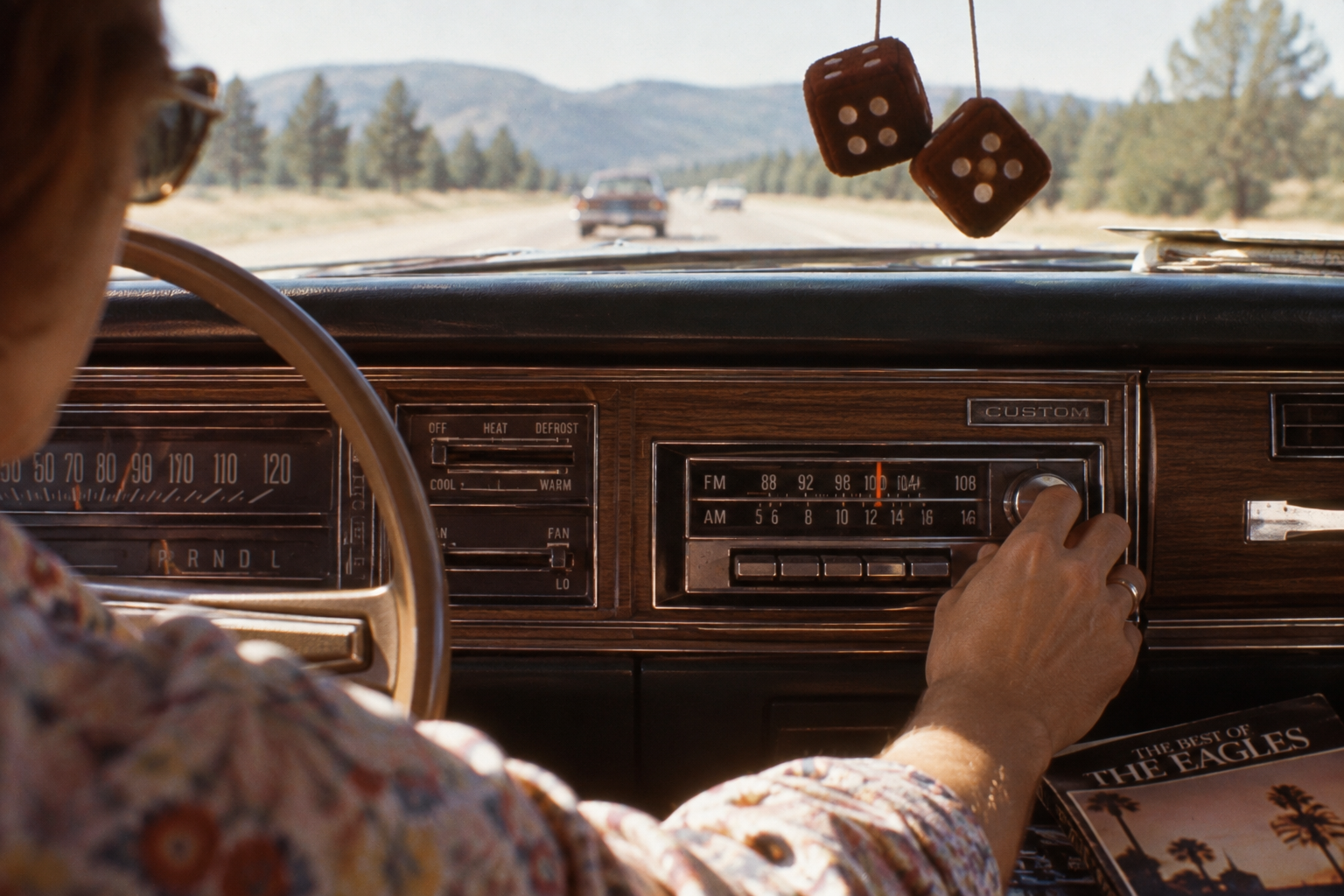
The soundtrack to a road trip depended partly on where the car happened to be. Families tuned into local AM and FM stations for music, news, baseball games, and radio personalities, only to hear a favorite station gradually dissolve into static as they drove beyond its range. Then came the hunt for something else worth listening to — at least until that signal disappeared, too.
An 8-Track Player
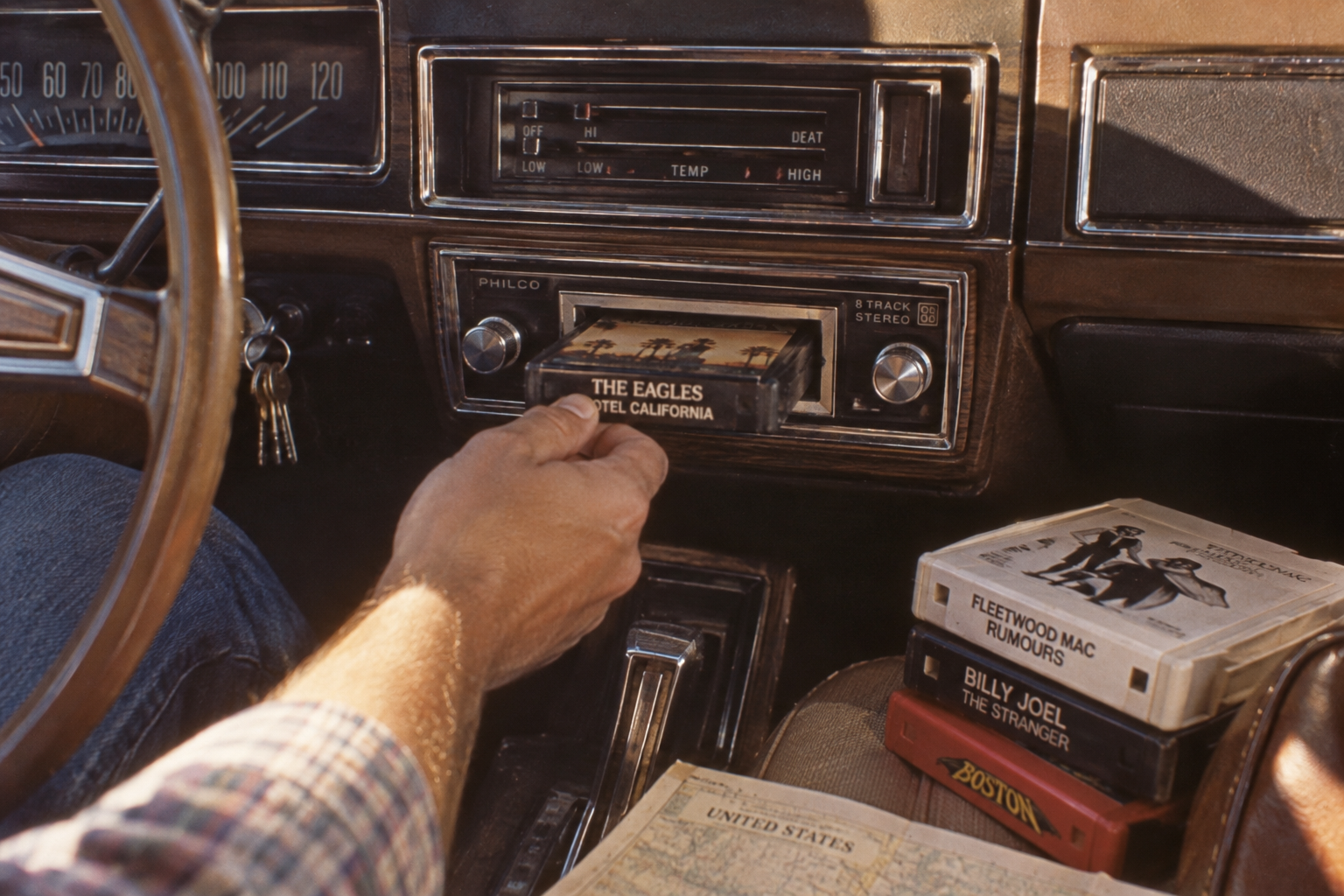
Drivers who didn’t want to leave the music entirely up to local radio could turn to an 8-track player, one of the decade’s quintessential car accessories. A small collection of favorite tapes meant the family could listen to the same albums repeatedly as the miles passed. The format had its quirks, though, including songs occasionally being interrupted by a track change at a particularly inconvenient moment.
Trending on Cheapism

A Cooler Full of Drinks and Sandwiches
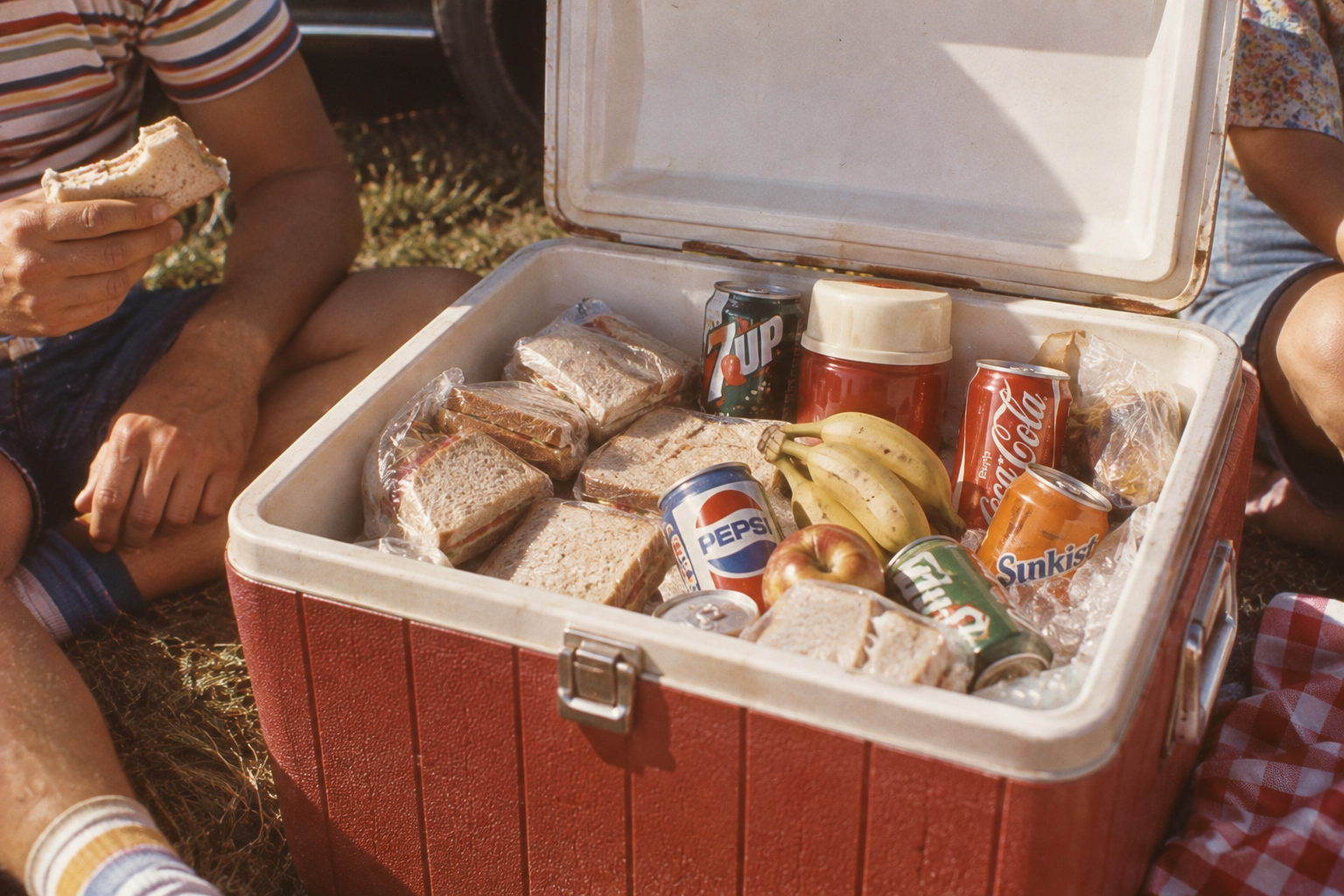
Eating every meal at a restaurant could quickly eat into a family’s vacation budget, so plenty of travelers brought food from home. A hard-sided cooler packed into the station wagon might contain sandwiches, soda, fruit, hard-boiled eggs, and other road-friendly foods. It wasn’t glamorous, but pulling over for a homemade lunch was considerably cheaper than buying restaurant meals for an entire family.
Gas Station Rest Stops
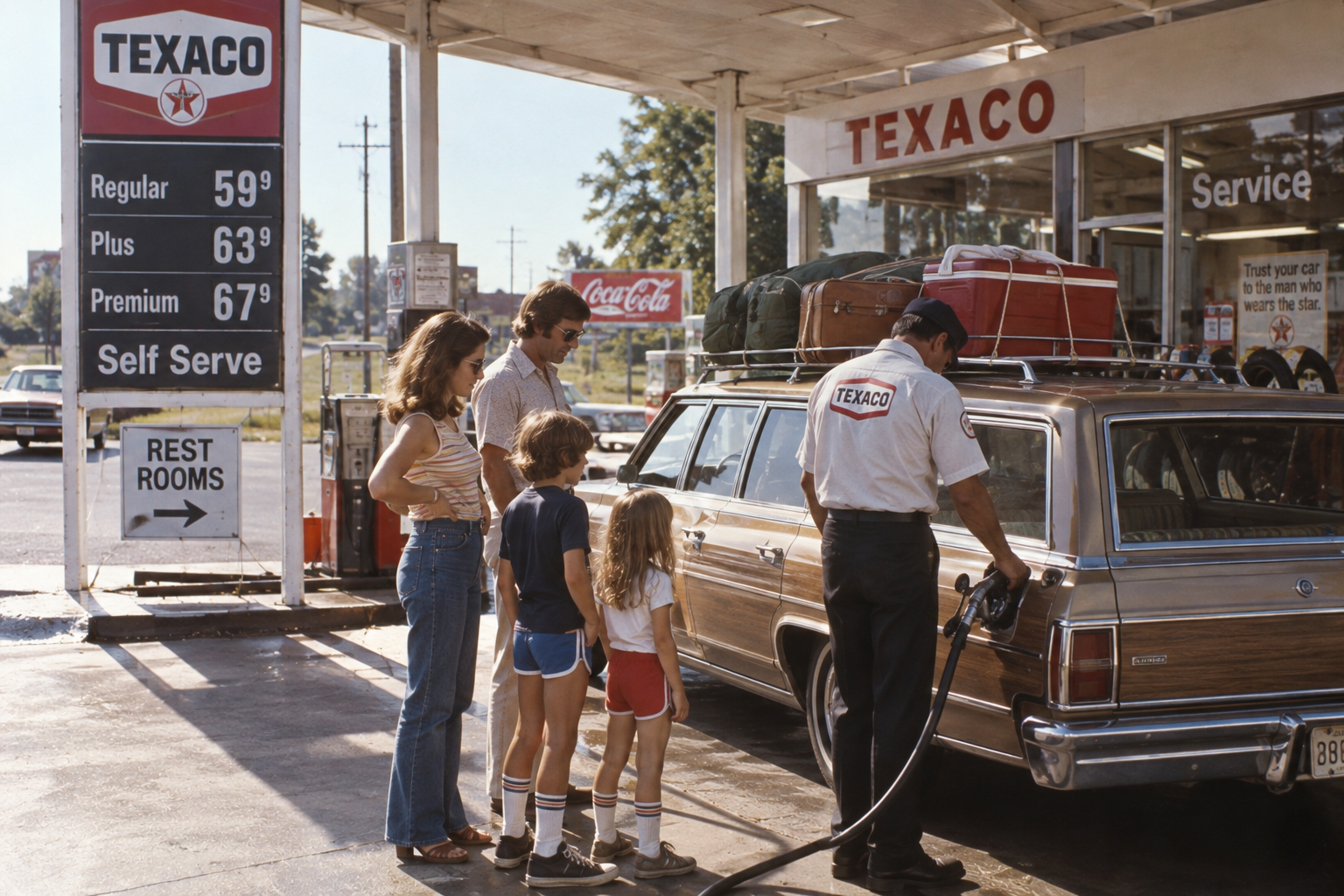
A gas station could solve several road-trip problems at once. In addition to filling the tank, families could use the restroom, pick up snacks, grab a map, and ask for directions. Full-service stations were also more common than they are today, so an attendant might pump the gas, check the oil, look at the tires, or offer advice about the road ahead while everyone stretched their legs.
Roadside Picnic Tables
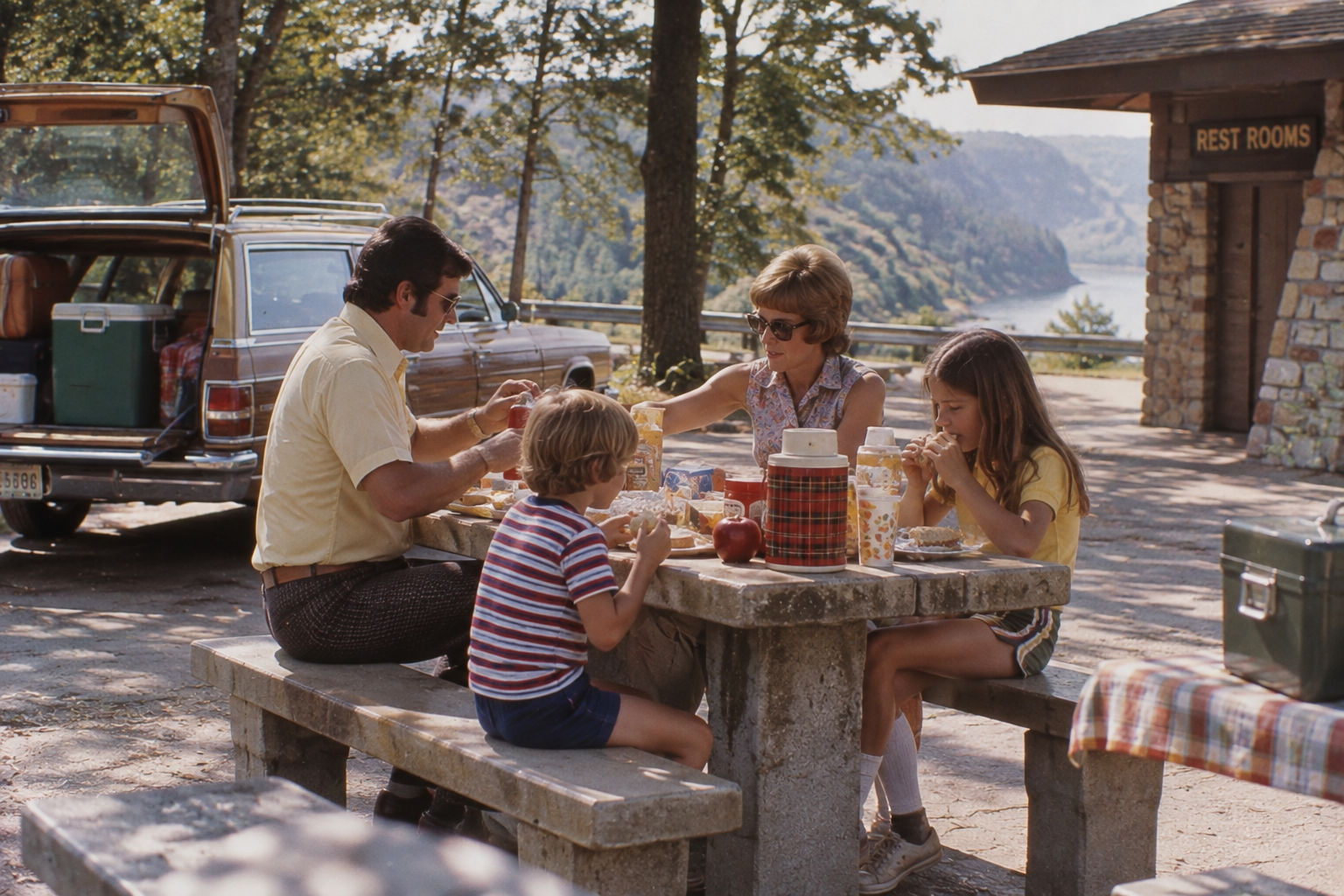
Sometimes the best lunch spot was simply the next rest area with an empty picnic table. Families unpacked coolers and thermoses, broke out sandwiches and paper plates, and enjoyed a little time outside the car before returning to the highway. A station wagon parked nearby and a plaid blanket or two could make the whole scene look like a family vacation snapshot straight out of the decade.
Sign up for our newsletter
Motel Vacancy Signs
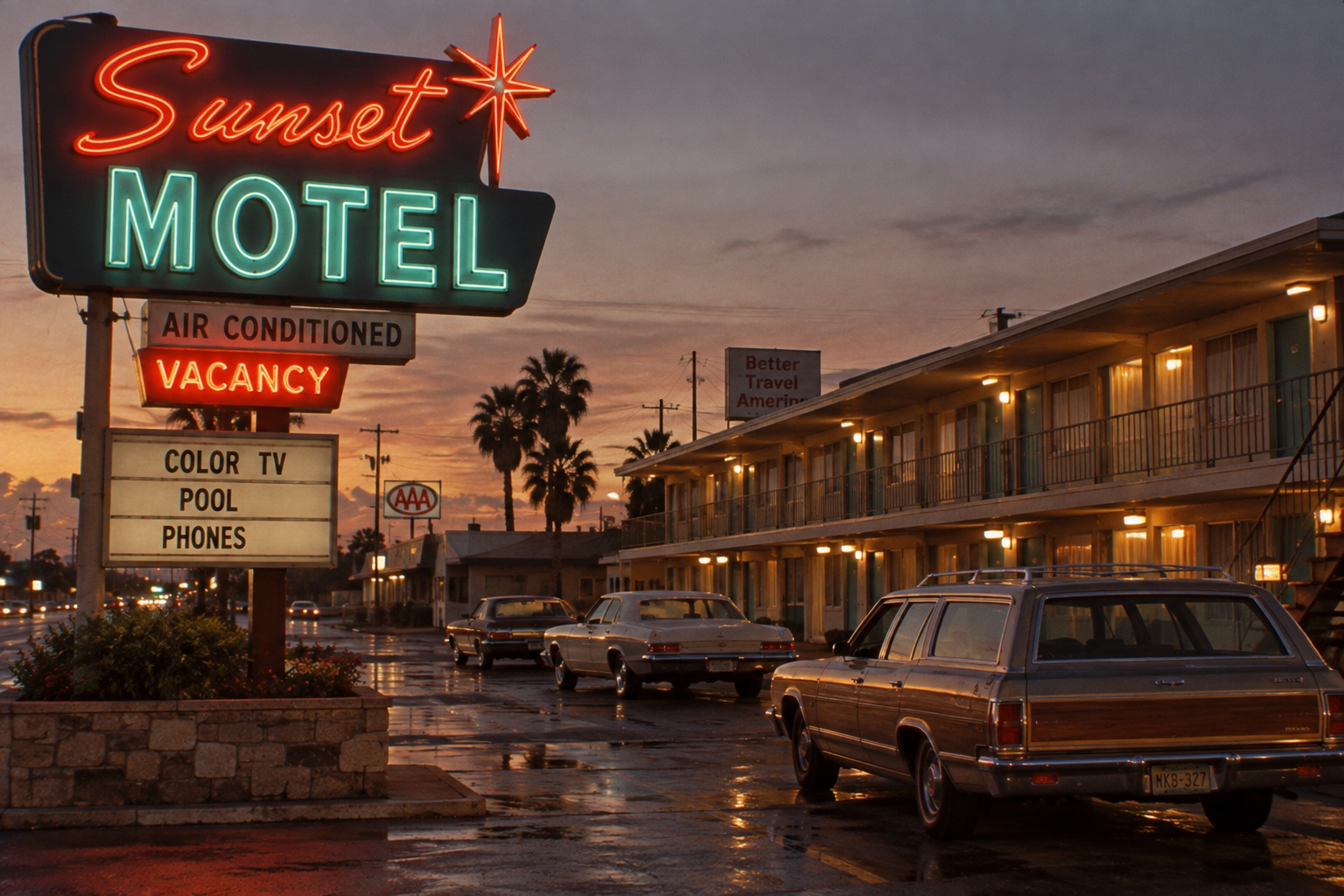
Not every night of a road trip was booked weeks in advance. Families could simply keep driving until they were ready to stop, then start watching the roadside for motels — and, more importantly, an illuminated “VACANCY” sign. Exterior corridors, neon signs, parking spaces outside the room, and prominently advertised rates were all familiar features of the roadside motels that lined major travel routes.
Motel Swimming Pools
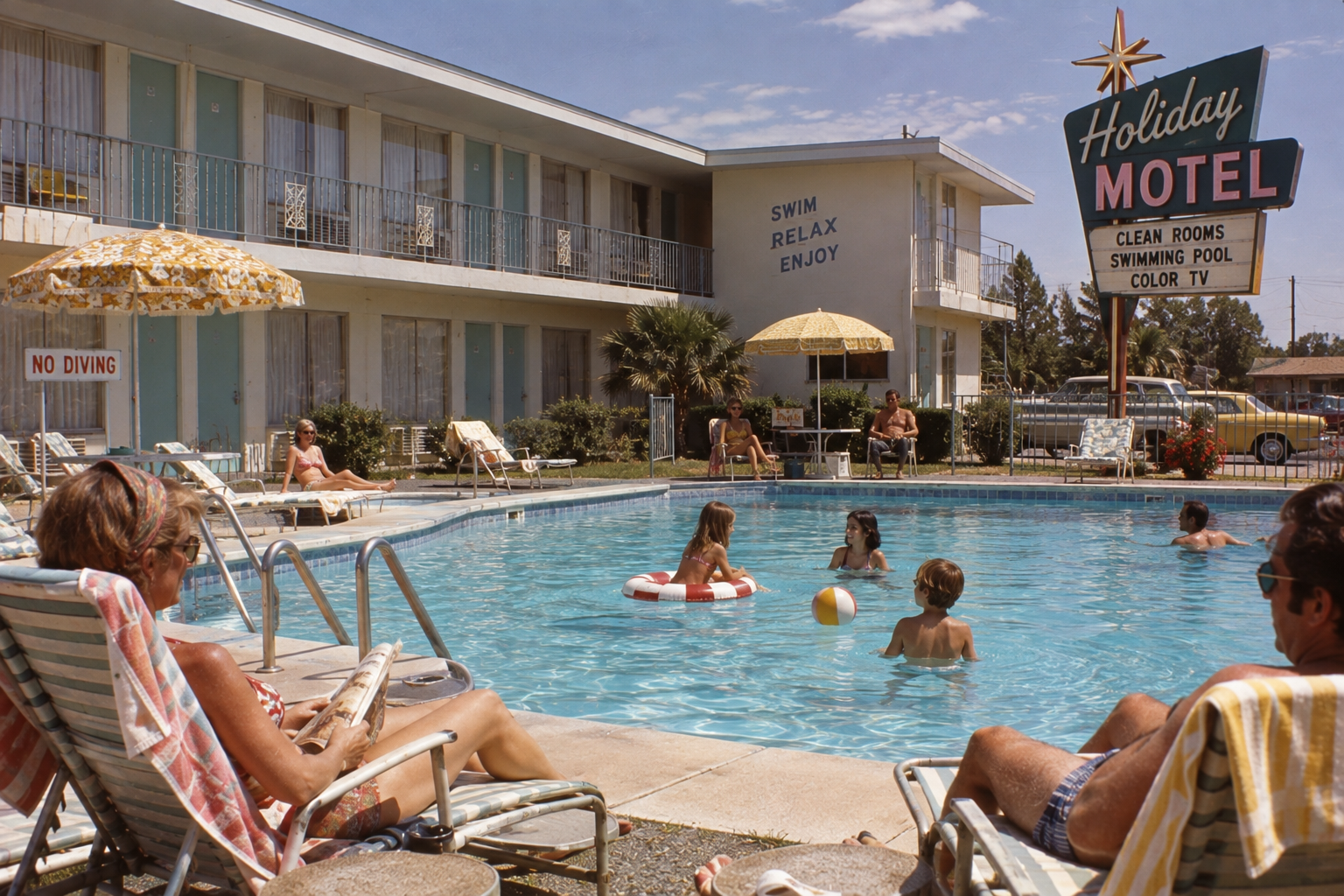
A roadside motel didn’t need room service or a fancy lobby to impress kids. It just needed a swimming pool. After hours spent squeezed into a hot car, the chance to jump into a motel pool could easily become the highlight of the day. When parents were choosing between two otherwise similar places to spend the night, the promise of a pool could be a very persuasive amenity.
Postcards From Every Stop
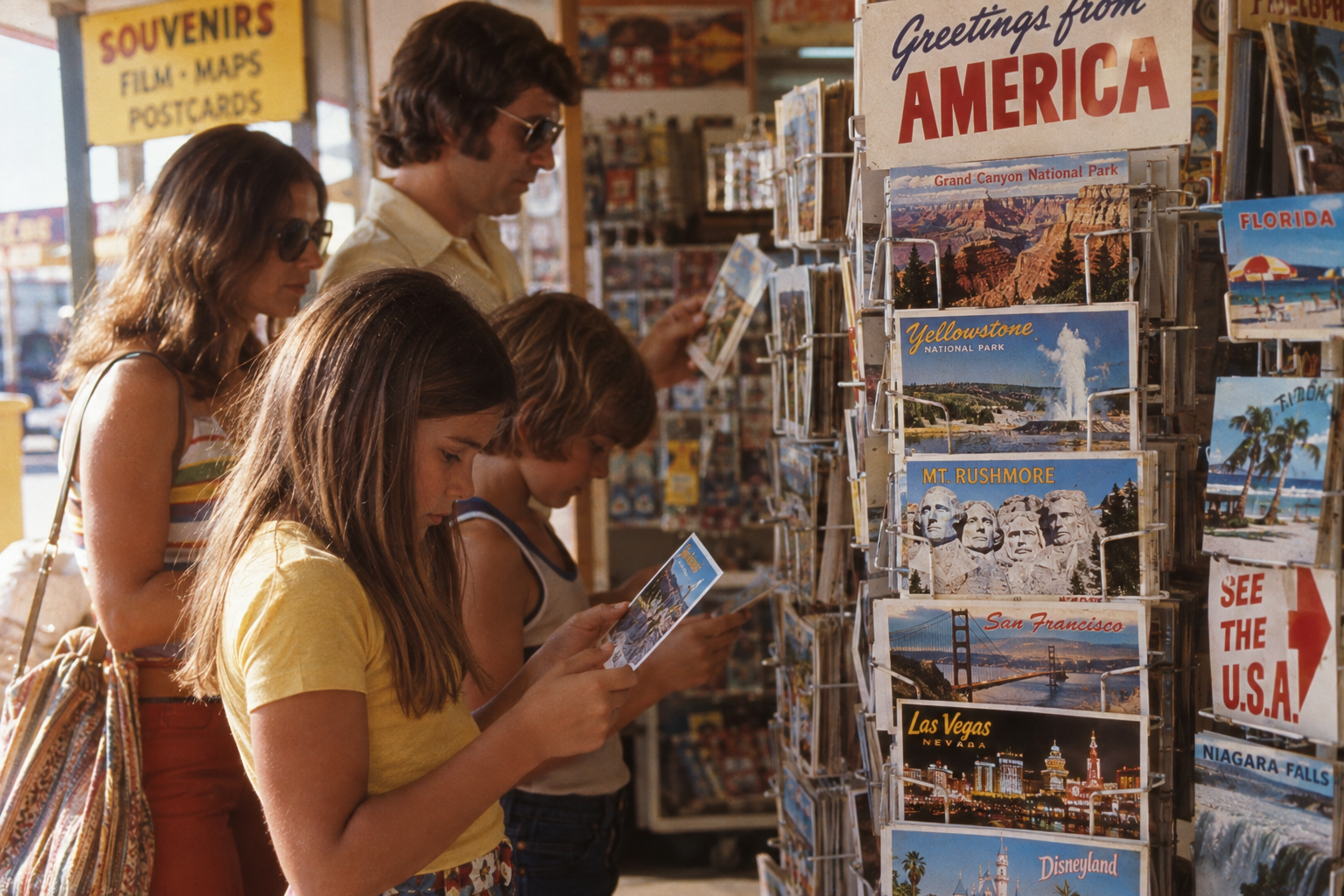
Long before vacation updates appeared instantly on social media, travelers sent postcards. Gift shops, motels, gas stations, and tourist attractions sold racks filled with colorful cards featuring scenic landscapes, state maps, landmarks, and oversized “Greetings From” lettering. They were cheap souvenirs, but they also gave kids an easy way to let grandparents, cousins, or friends back home know where the family had ended up.
Roadside Attractions You Had to Stop For
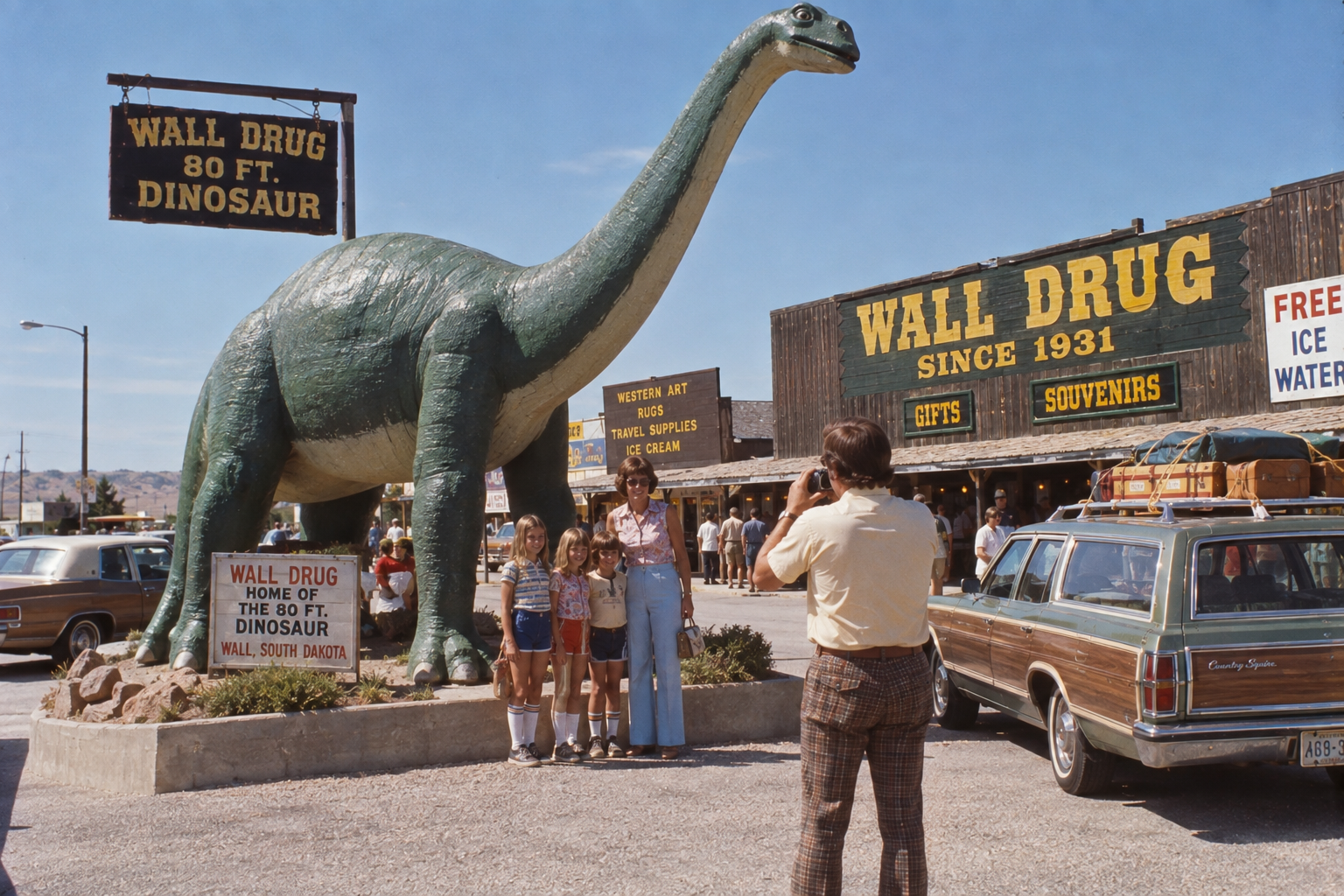
You might have been heading to a national park or famous city, but that didn’t mean you couldn’t pull over to see a giant statue along the way. Caves, reptile farms, mystery spots, oversized objects, and other roadside oddities broke up long stretches of driving. Even better was the buildup: Billboards could advertise an attraction for miles, giving kids plenty of time to beg their parents to take the exit.
Souvenir Pennants and Bumper Stickers
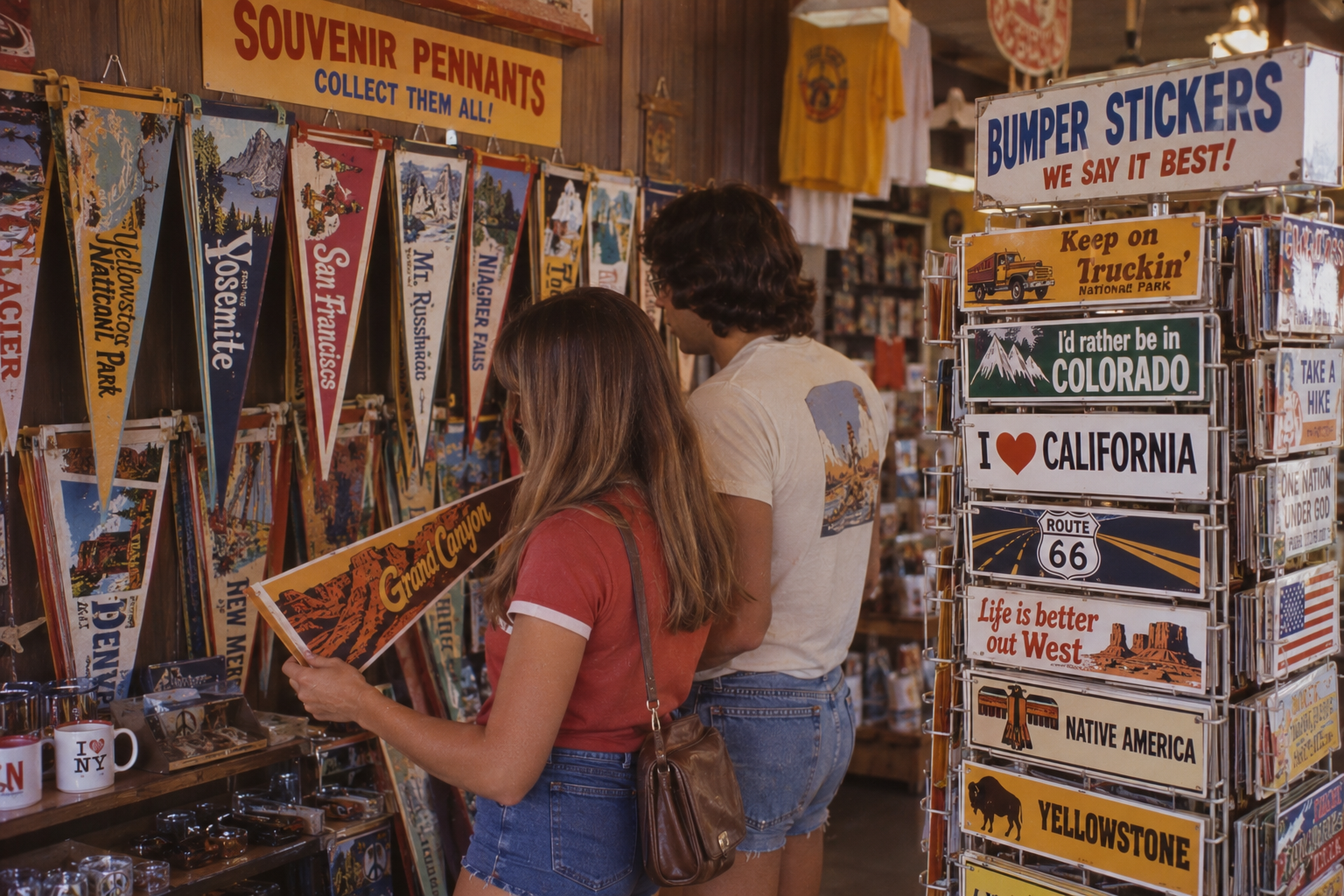
A vacation wasn’t complete without something inexpensive to prove you’d been there. Felt pennants, decals, patches, miniature license plates, and bumper stickers were easy souvenirs to pick up at national parks, tourist towns, and roadside attractions. Stick enough decals or bumper stickers on the family station wagon, and eventually the car itself became a rolling scrapbook of previous trips.
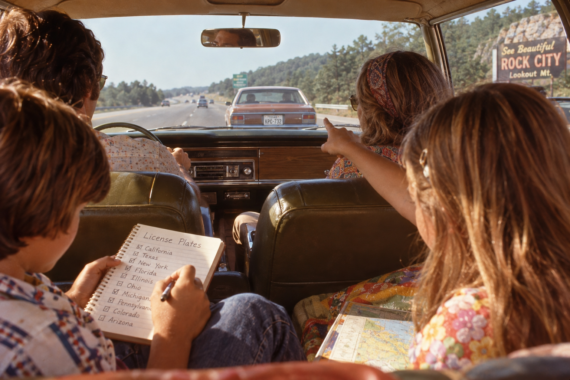
Playing License Plate Games
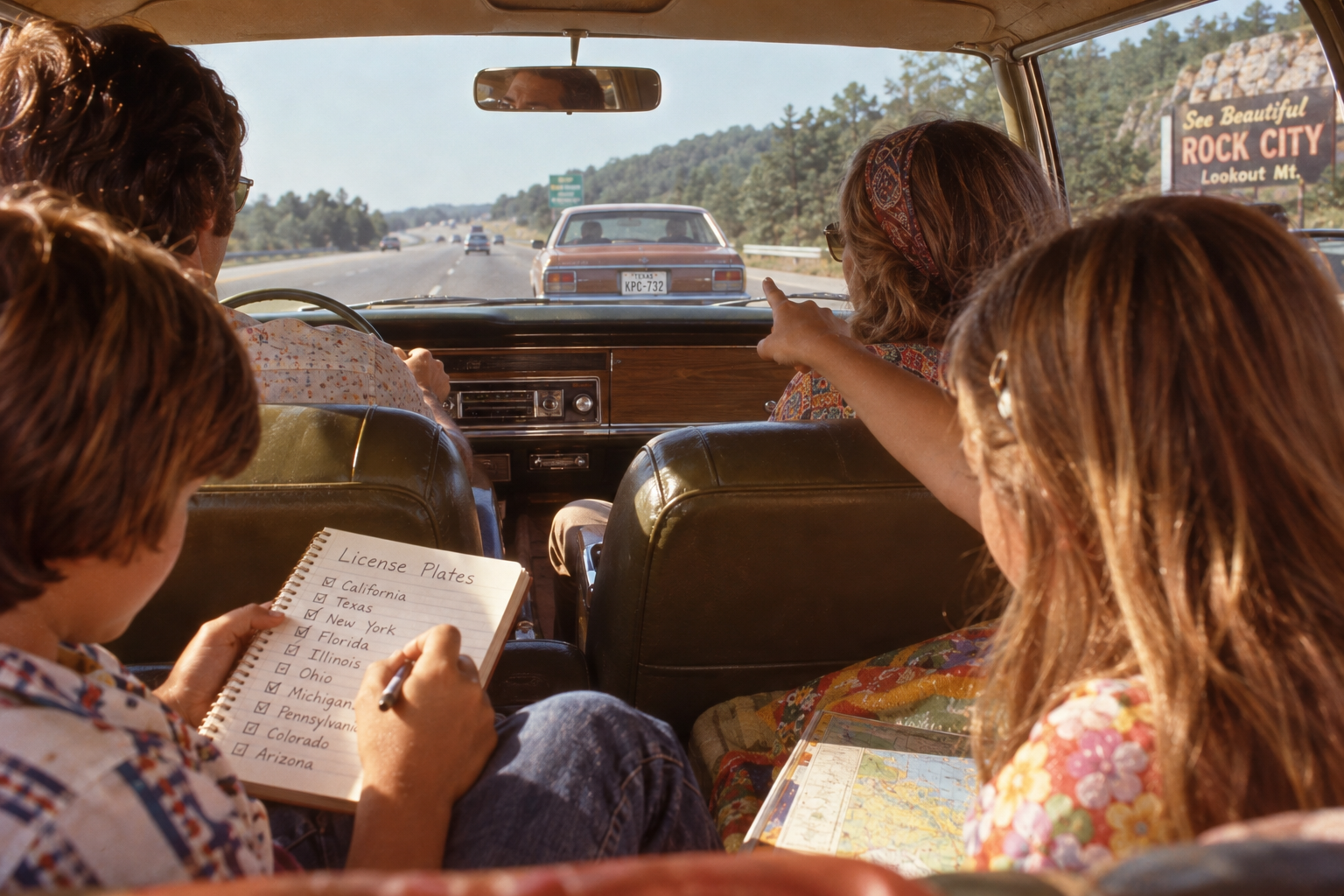
When staring out the window was the main entertainment option, passing cars became part of the fun. Kids could look for license plates from as many states as possible, search roadside signs for letters of the alphabet, count cars of a particular color, or invent games of their own. These required almost no equipment and, crucially, could occupy at least a portion of an otherwise endless afternoon on the highway.
Getting Lost and Asking for Directions
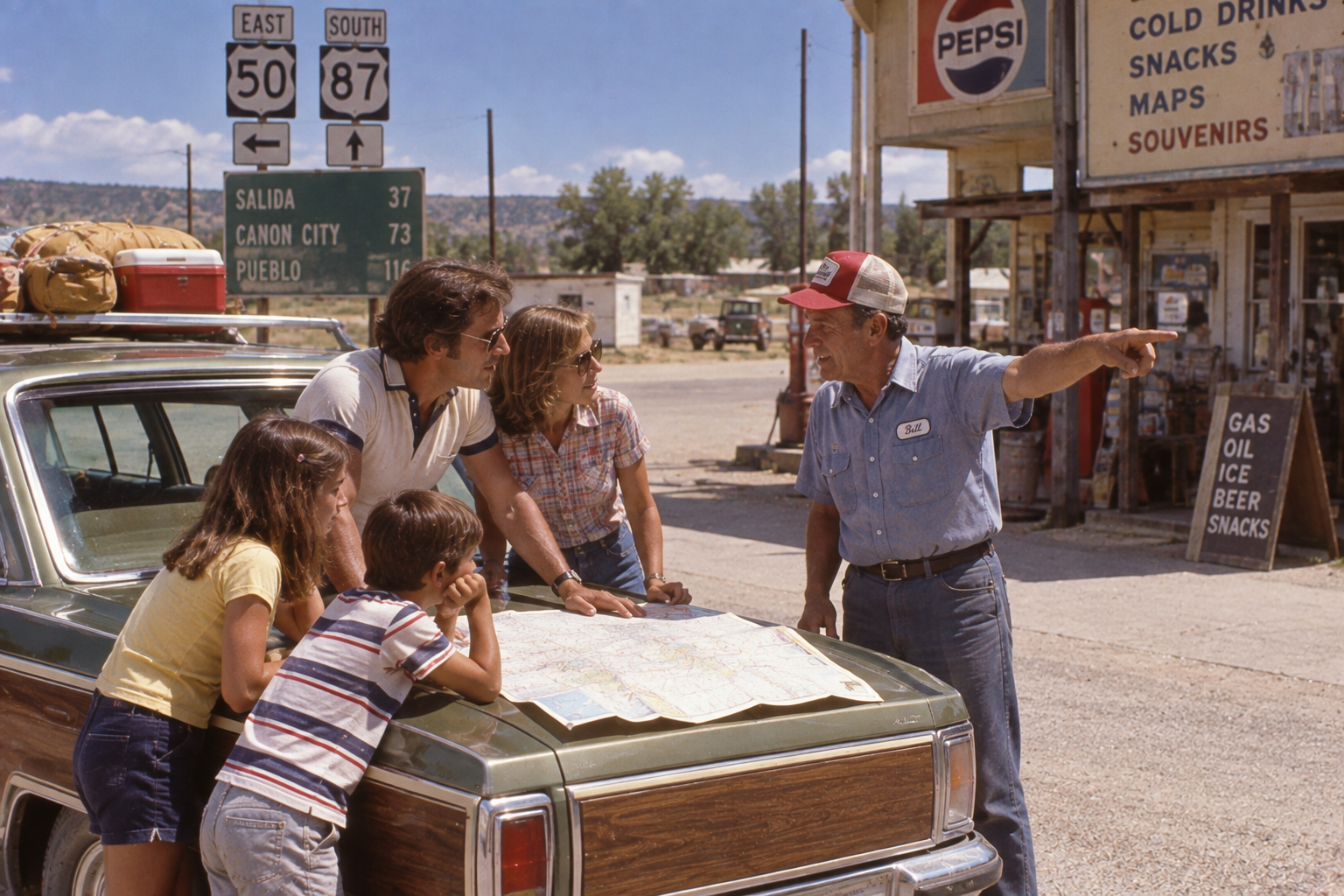
Taking a wrong turn wasn’t followed by an instant rerouting notification. Drivers had to consult the map, look for familiar road signs, or admit defeat and ask somebody for help. Gas station attendants, diner employees, motel clerks, and convenience store workers could all become unofficial navigators, sometimes offering directions based on landmarks rather than street names: Turn after the church, keep going past the red barn, and you’ve gone too far if you reach the bridge.
The Road Trip Was Part of the Vacation
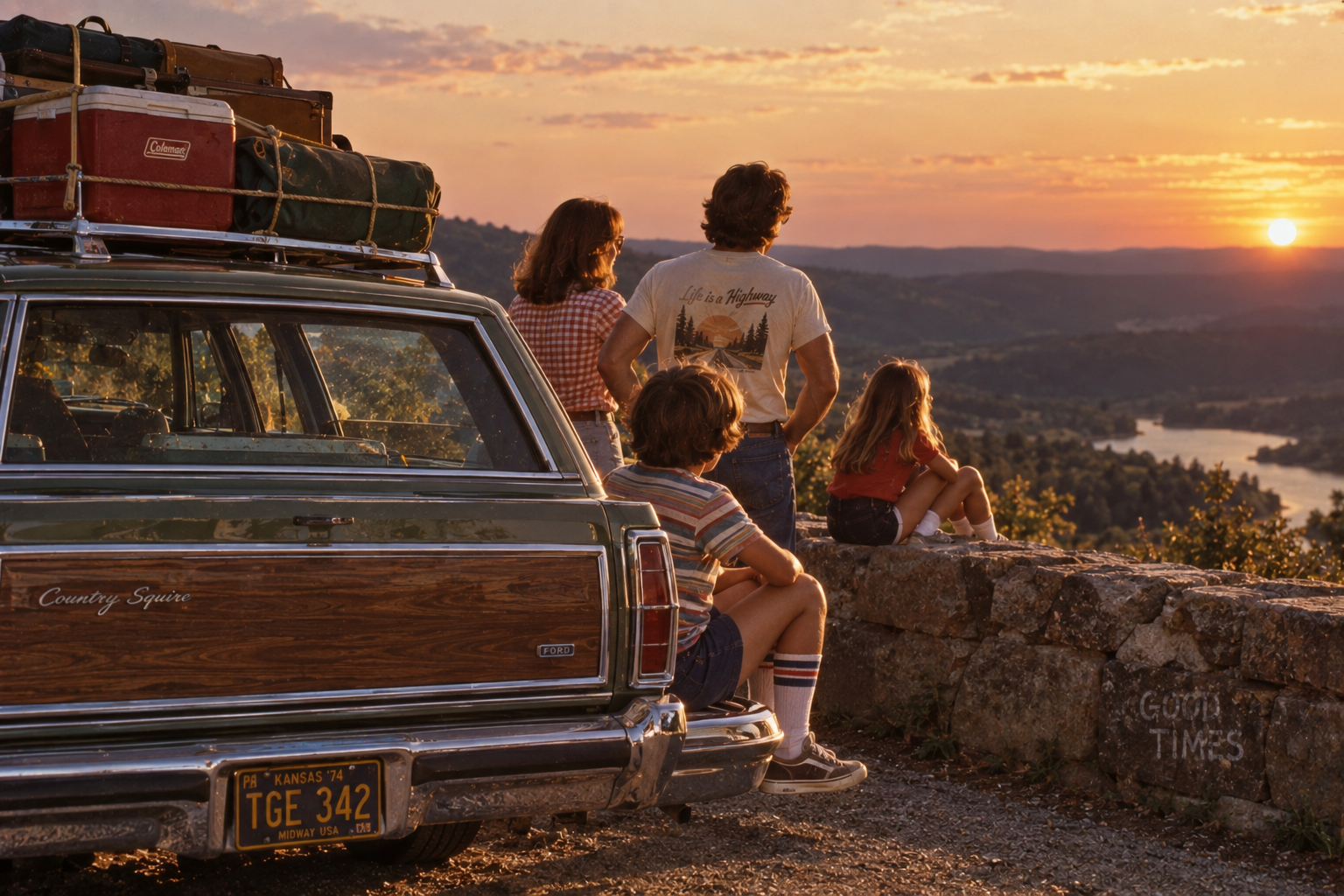
A 1970s road trip involved plenty of inconveniences that modern travelers can avoid with a few taps on a phone. Families got lost, listened to radio static, searched for motels at the end of a long day, and spent hours squeezed together in one enormous car.
But those inconveniences also created some of the memories that lasted. The folded maps, station wagons, 8-tracks, roadside attractions, motel pools, coolers, and unexpected detours made getting somewhere an experience of its own. Sometimes the stories everyone remembered weren’t about what happened at the destination at all — they were about everything that happened along the way.