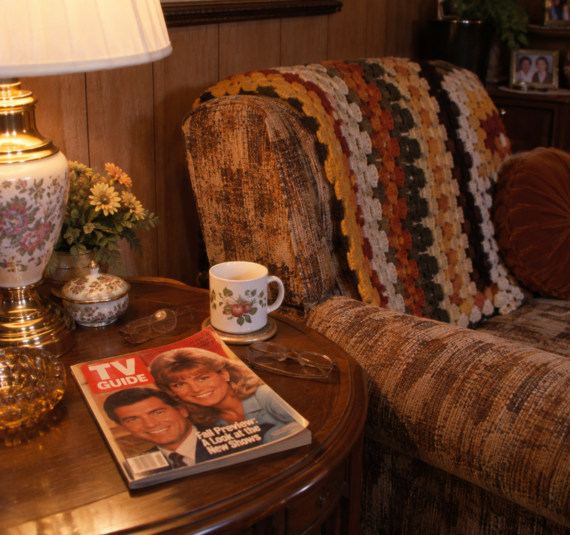
Step inside one of the many American homes in the 1950s and you’d find a household caught somewhere between old-fashioned routines and a shiny new consumer future. Radios and rotary phones were still everyday essentials, but televisions were rapidly taking over living rooms, while kitchens filled with colorful appliances and gadgets promising to make housework easier.
The postwar years also brought plenty of new materials, conveniences, and foods into the home. Tupperware offered an alternative to heavy glass containers, frozen TV dinners turned supper into something you could pull from the freezer, and pastel refrigerators and Pyrex bowls added plenty of color to the kitchen.
Not every family had every item, of course, but these 16 household staples offer a glimpse of what everyday life looked like in an American home during the 1950s.
A Big Wood-Cabinet Television
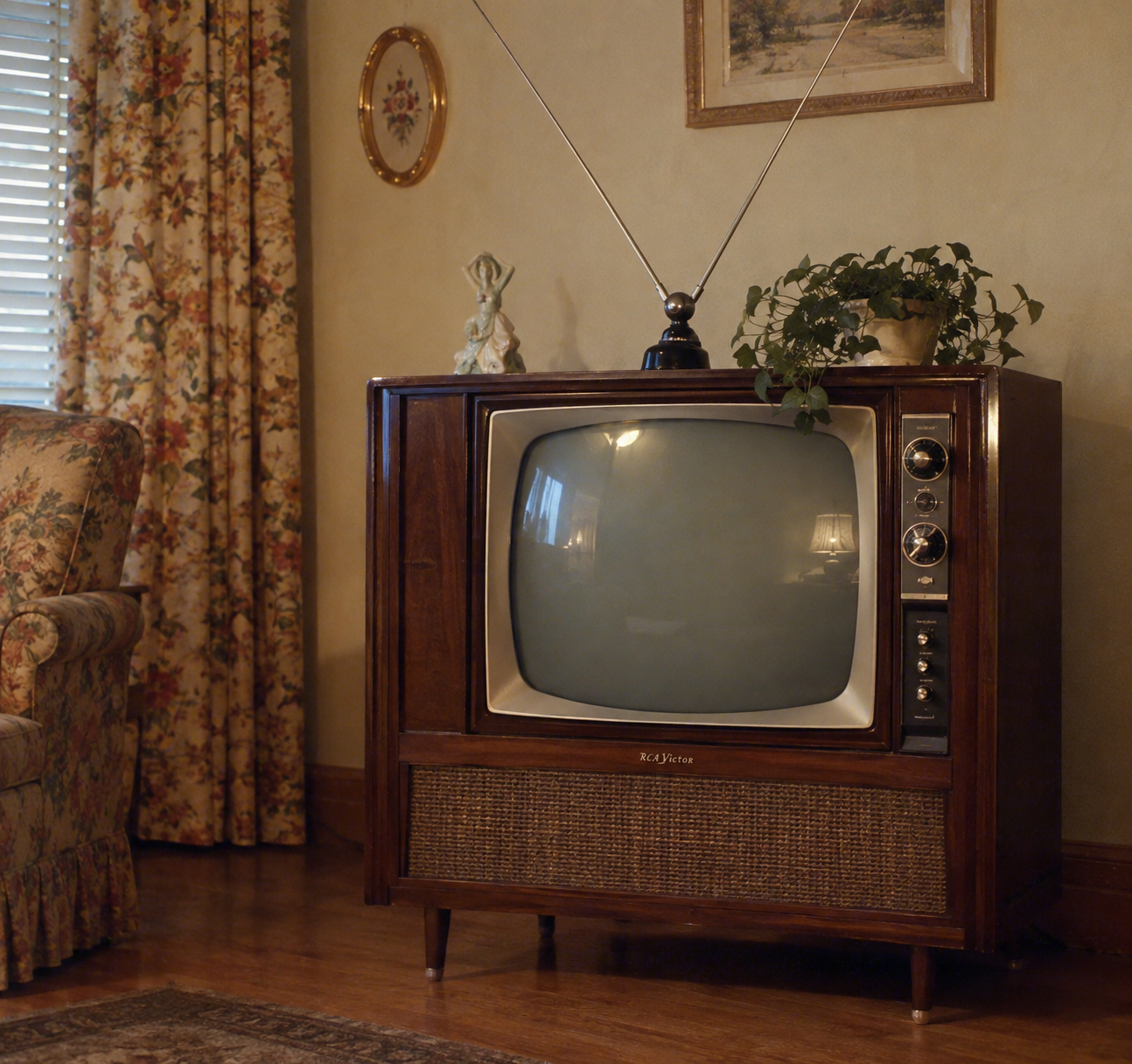
At the beginning of the 1950s, a television was still something of a novelty. By the end of the decade, it had transformed the American living room. Unlike today’s ultra-thin screens, early TVs were hefty pieces of furniture, often housed inside substantial wooden cabinets and topped with rabbit-ear antennas. And with typically just one set in the house, deciding what to watch was very much a family affair.
A Tabletop or Console Radio
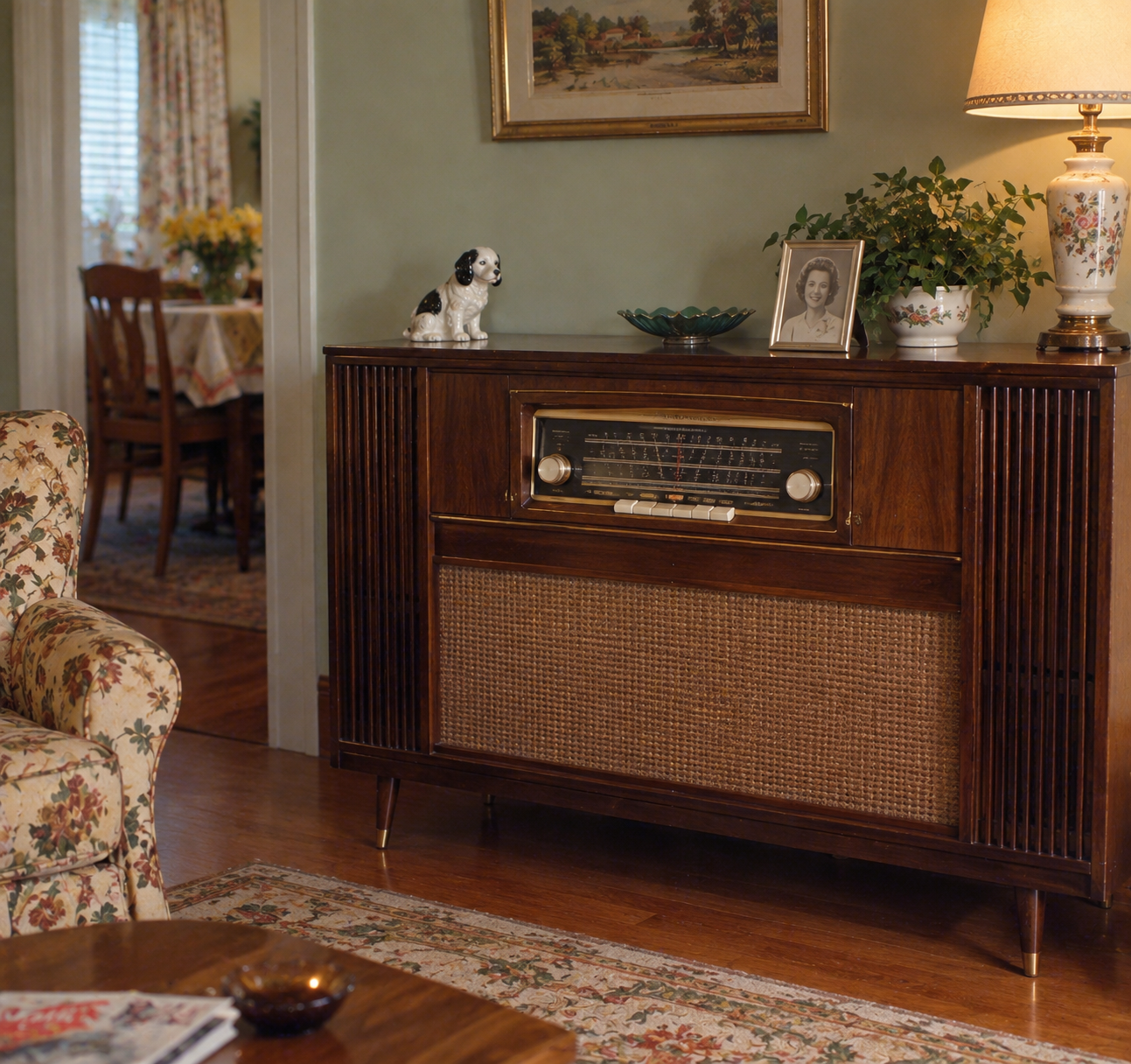
Television may have been the exciting newcomer, but radio wasn’t going anywhere just yet. At the beginning of the decade, radios were already fixtures in nearly every American household, delivering everything from music and baseball games to news and dramas. Some families had large wooden or Bakelite console models in the living room, while smaller radios could be found in kitchens and bedrooms.
A Heavy Rotary Telephone
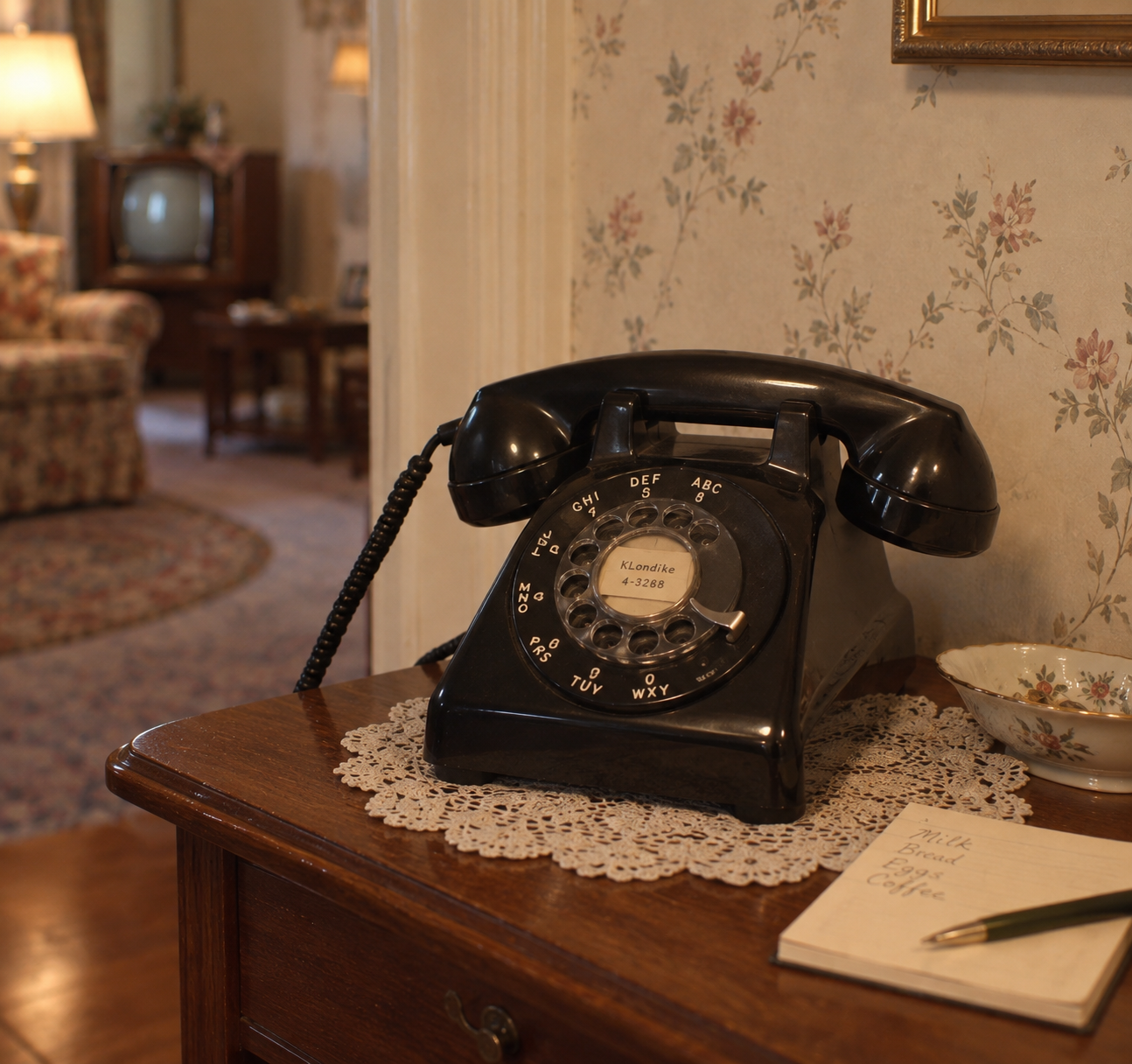
There was no checking your phone from bed in the 1950s. The household telephone usually lived in one permanent location, often in the hallway or kitchen, and everyone had to share it. Calling someone meant turning the rotary dial one number at a time and waiting for it to spin back. In some communities, families even shared a telephone line with their neighbors through a party-line system.
A Chrome-and-Formica Kitchen Table
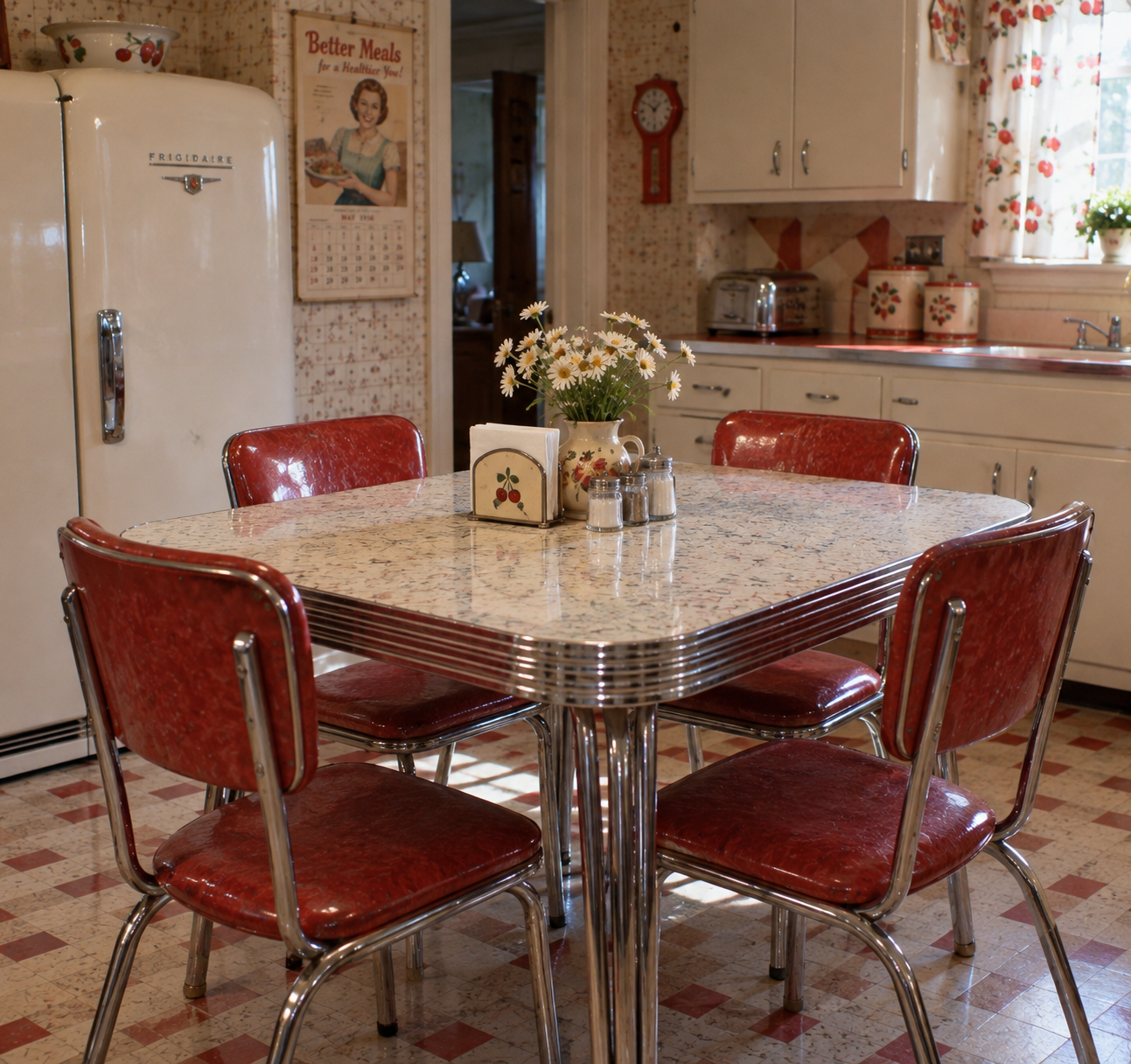
Few pieces of furniture scream “1950s kitchen” quite like a chrome dinette set. These tables paired shiny tubular metal legs with easy-to-clean Formica tops, often in cheerful shades of red, yellow, or aqua. Add matching vinyl chairs and a speckled or boomerang-patterned tabletop, and you had a dining set perfectly suited to the colorful suburban kitchens of the postwar years.
A Newer Electric Refrigerator
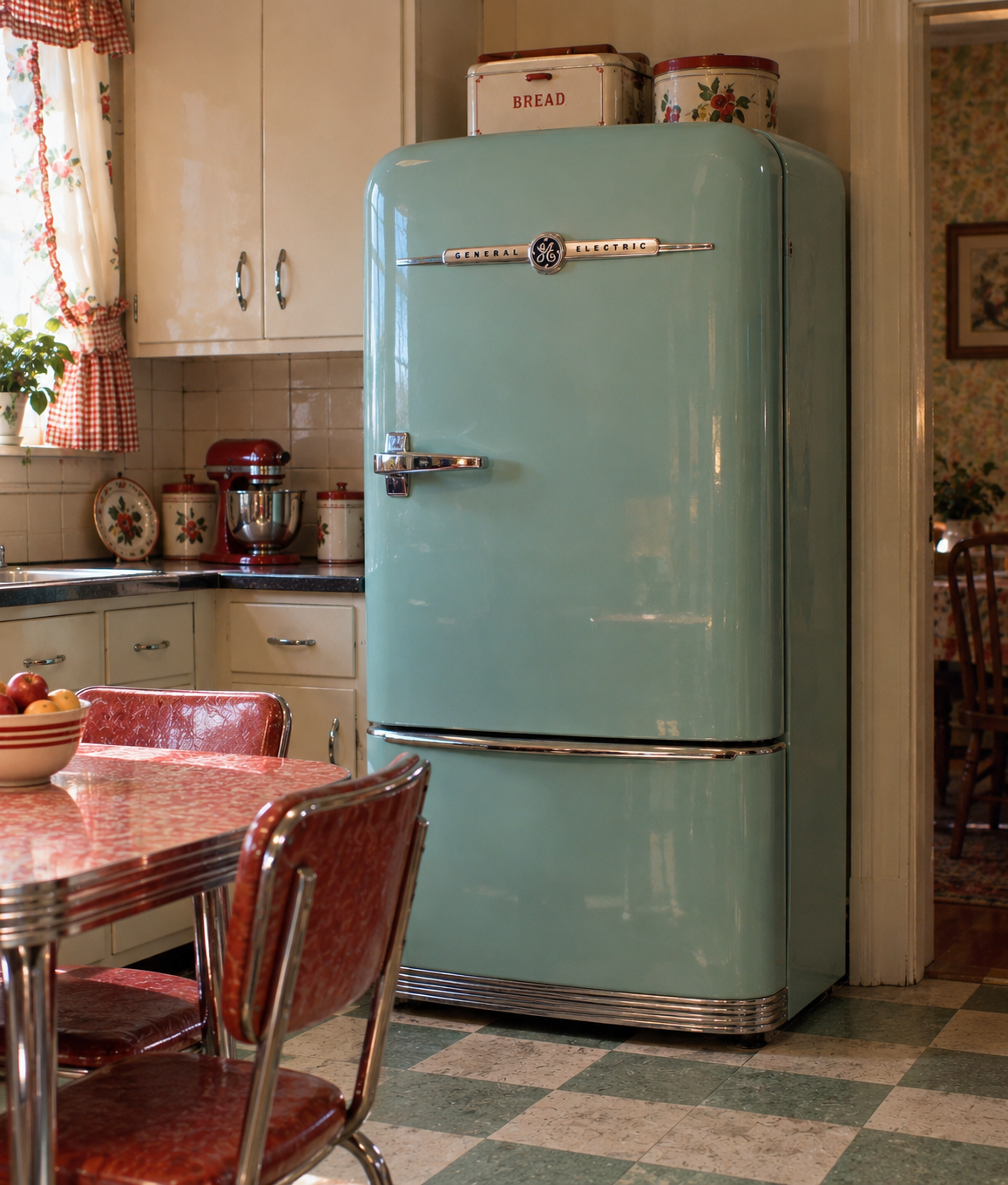
By the 1950s, the refrigerator had become an essential part of the American kitchen — and manufacturers were finding plenty of ways to make families want an upgrade. Newer models offered more freezer space for the growing selection of frozen foods, along with colorful finishes that went well beyond basic white. Rounded doors and chunky chrome handles gave these refrigerators a distinctly midcentury look.
Trending on Cheapism

Tupperware Containers
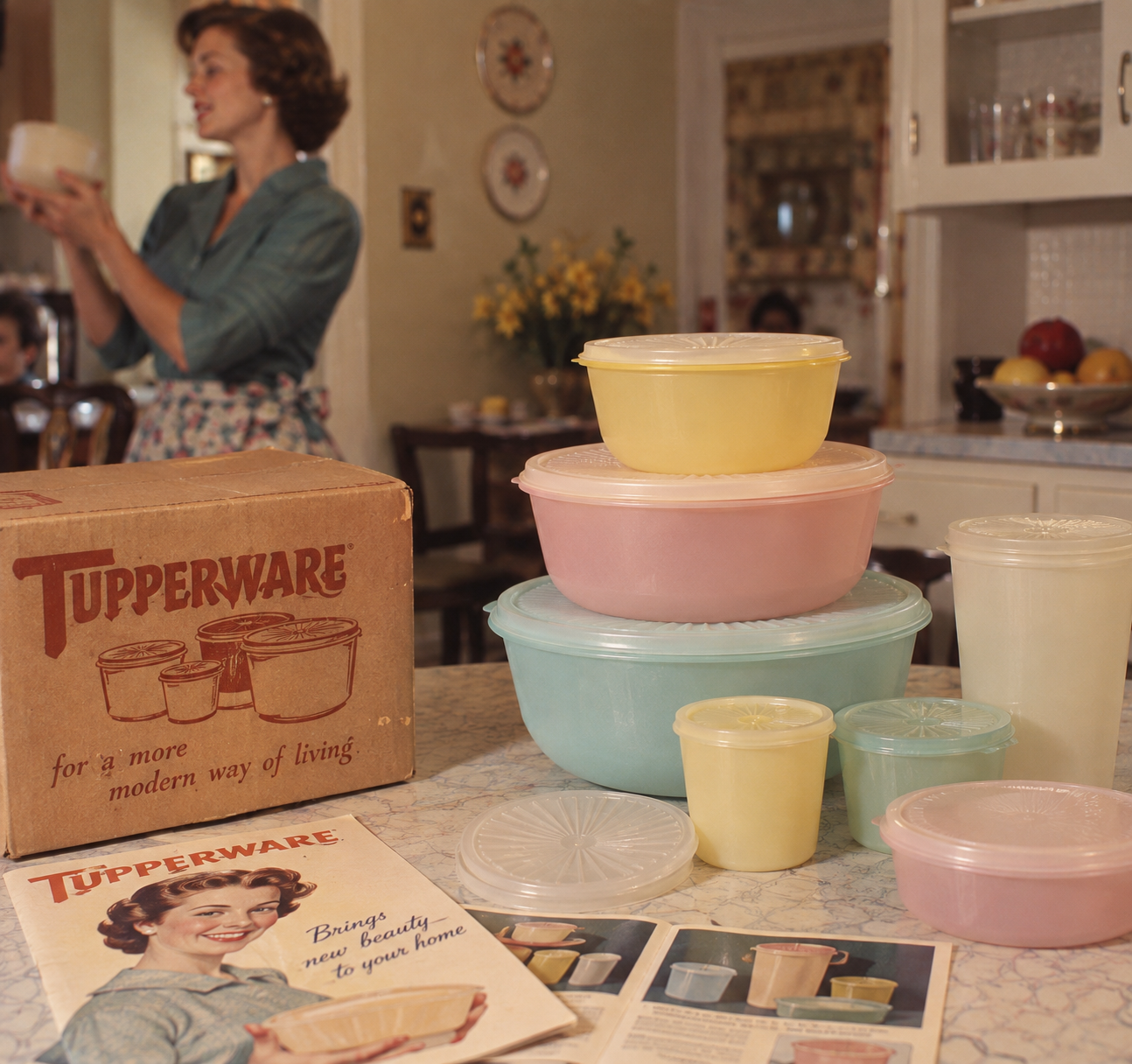
Plastic food-storage containers don’t seem particularly revolutionary today, but Tupperware was a genuine postwar phenomenon. Its lightweight, flexible containers offered families an alternative to glass storage, complete with airtight lids famous for their distinctive “burp.” Tupperware parties also became a social fixture during the 1950s, allowing women to demonstrate and sell the colorful containers from their homes.
Colorful Pyrex Bowls
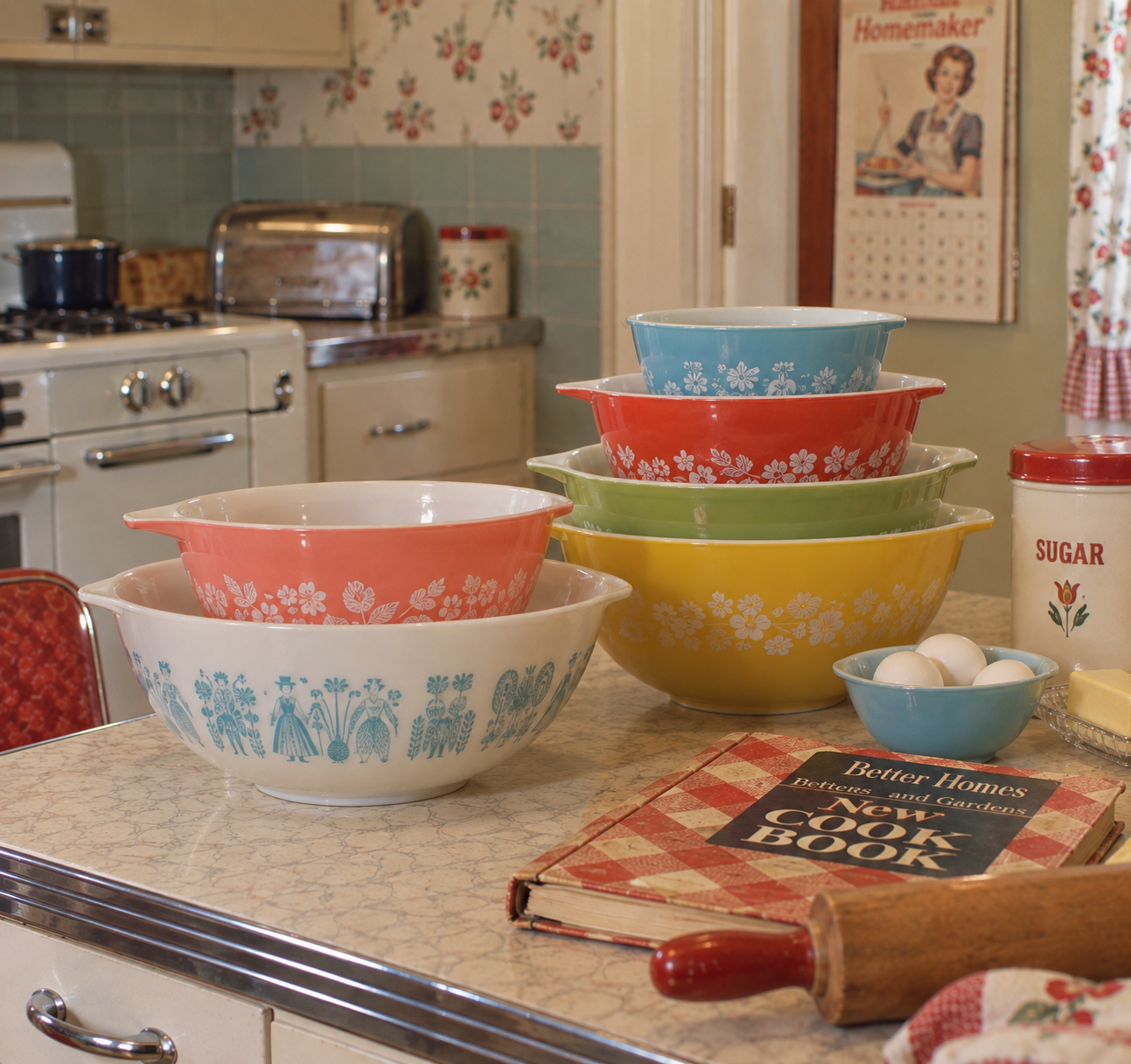
Open a 1950s kitchen cabinet and there was a good chance you’d find some colorful Pyrex inside. The decade brought shades including Lime and Flamingo Pink, along with now-iconic patterns such as Pink Daisy, Snowflake, Butterprint, and Gooseberry. Nesting mixing bowls were particularly practical, since they could be used to prepare food, serve it, and then stack neatly away when the cooking was done.
A Sunbeam Mixmaster
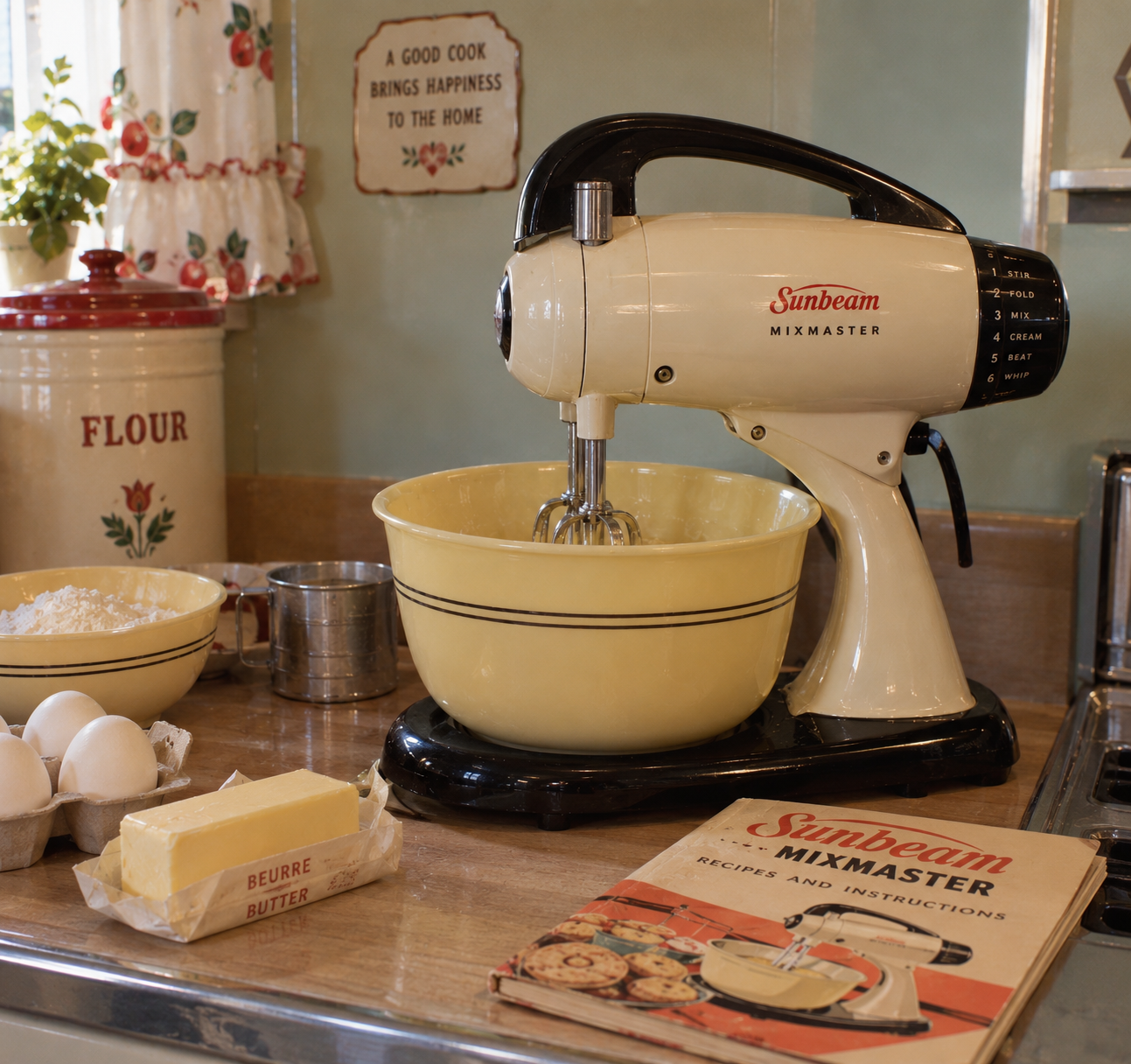
The promise of the modern 1950s kitchen was simple: Let electricity do more of the work. The Sunbeam Mixmaster fit right into that vision. The substantial countertop appliance, with its metal beaters and mixing bowl, could tackle everything from cake batter and whipped cream to mashed potatoes. It was the kind of shiny new kitchen gadget that made everyday cooking feel decidedly more modern.
Sign up for our newsletter
An Electric Coffee Percolator
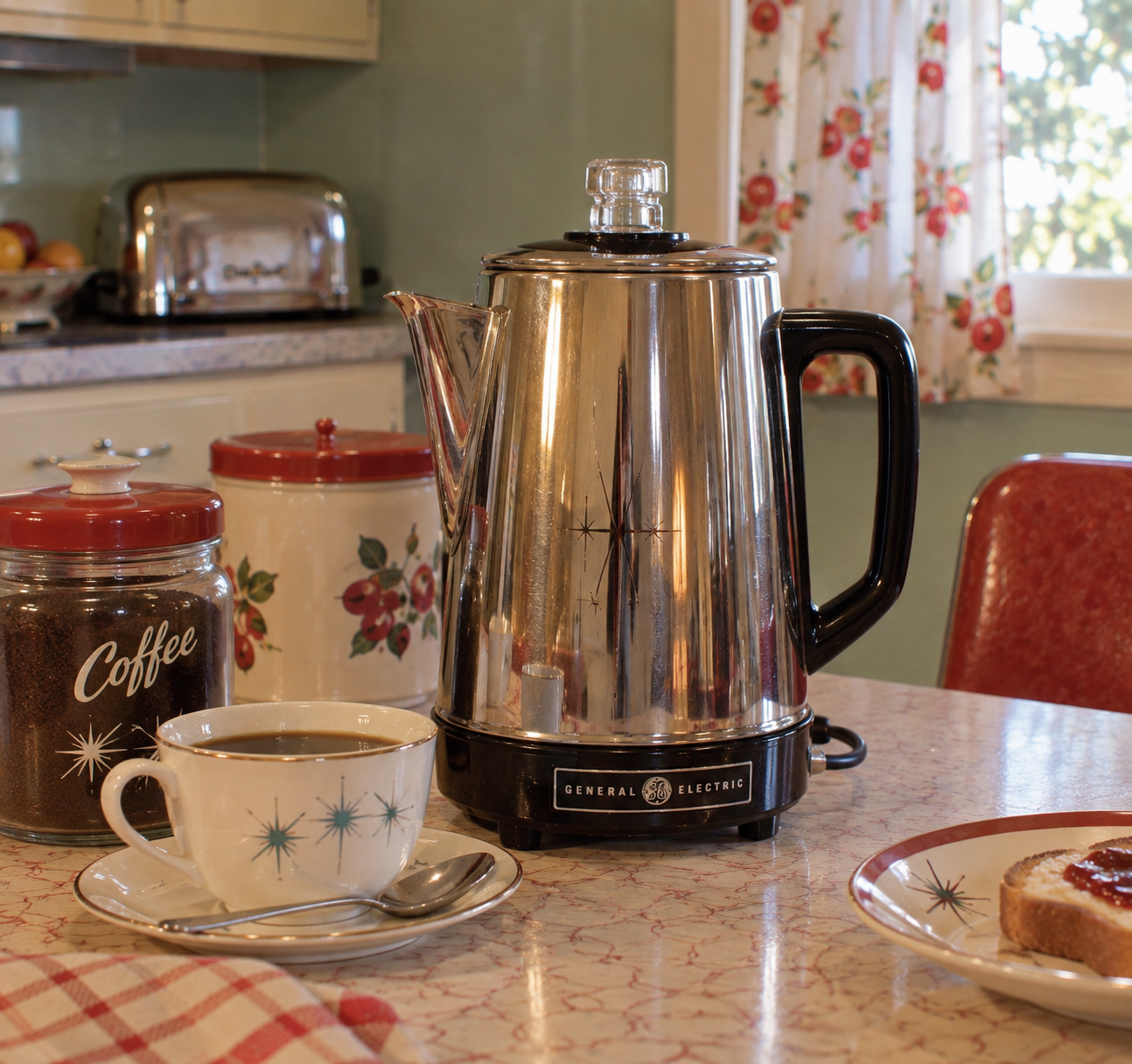
Long before pod machines occupied kitchen counters, there was the percolator. Electric models became increasingly common as kitchens filled with labor-saving appliances, though plenty of families still used stovetop versions. One of the most recognizable features was the little glass knob on top, where you could watch the coffee bubbling away as it brewed.
A Pop-Up Toaster
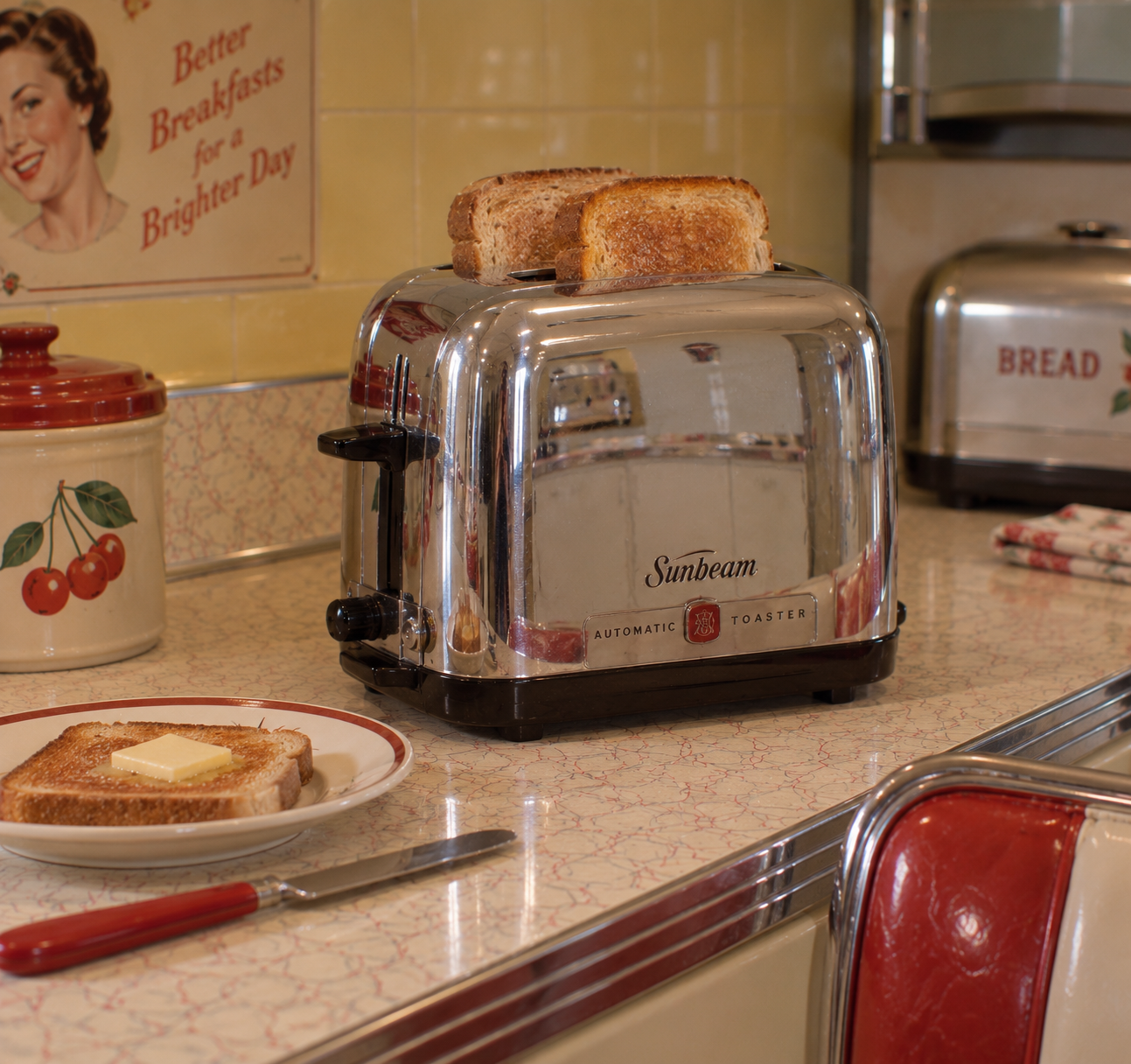
Breakfast was getting an electric upgrade, too. Shiny chrome pop-up toasters turned an everyday kitchen task into something almost automatic: Drop in a couple slices of white bread, push the lever, and wait for breakfast to spring back up. By the late 1950s, countertop appliances were increasingly being marketed as part of the streamlined, modern kitchen.
Swanson TV Dinners in Aluminum Trays
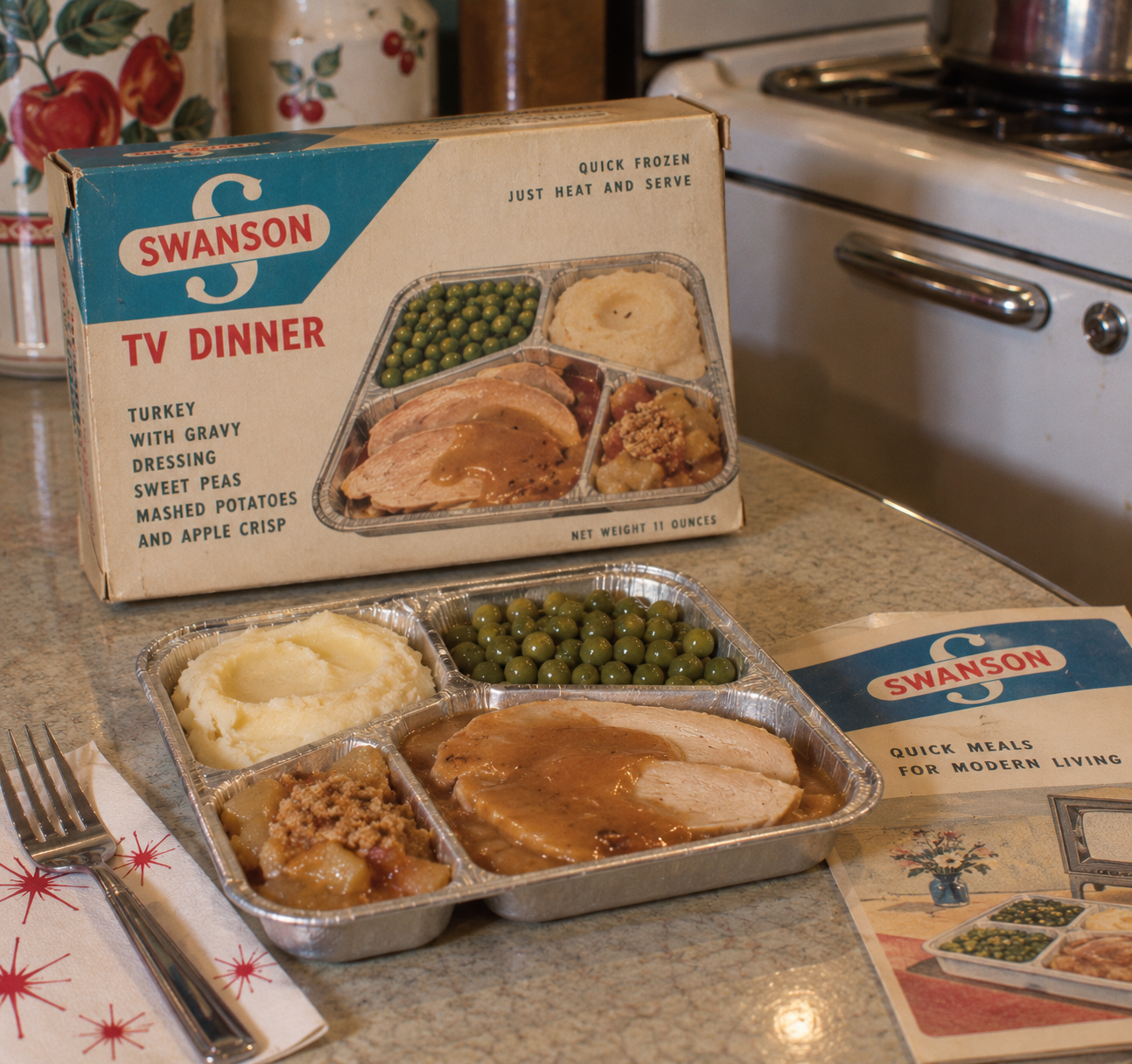
Few products captured the changing 1950s household quite like the TV dinner. Swanson introduced its version in 1954, combining a complete frozen meal with a divided aluminum tray that could go straight into the oven. Meat, vegetables, and even dessert each got their own little compartment. The name also conveniently tied the meal to another booming obsession: television.
A Wringer Washer or Early Automatic Washing Machine
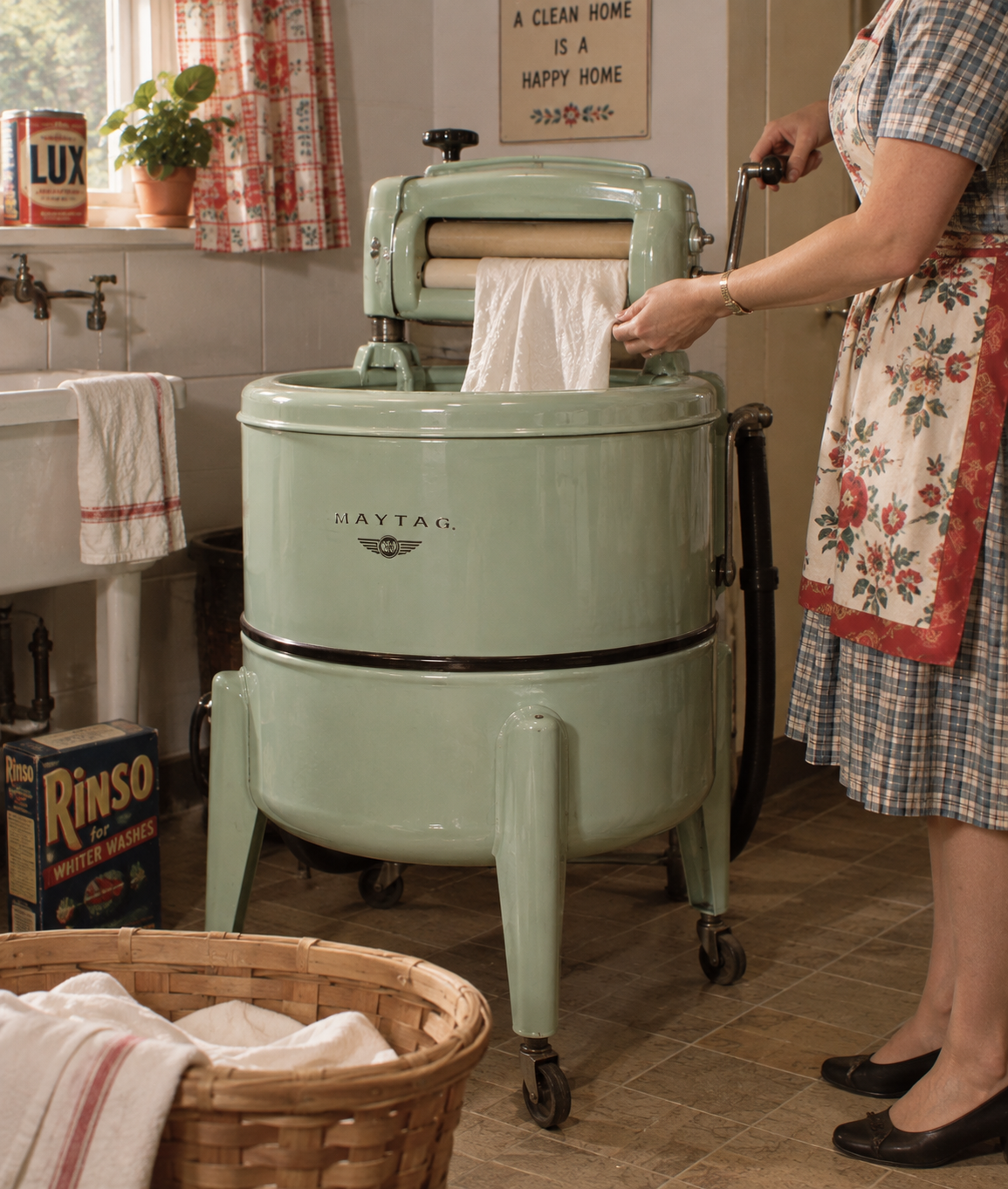
Laundry rooms were going through a technological transition. Some families had upgraded to automatic washing machines, while others were still feeding wet clothes through the rollers of a wringer washer. Either way, these machines tended to be large, practical appliances tucked into a basement or utility area — a far cry from today’s sleek matching washer-and-dryer sets.
A Backyard Clothesline
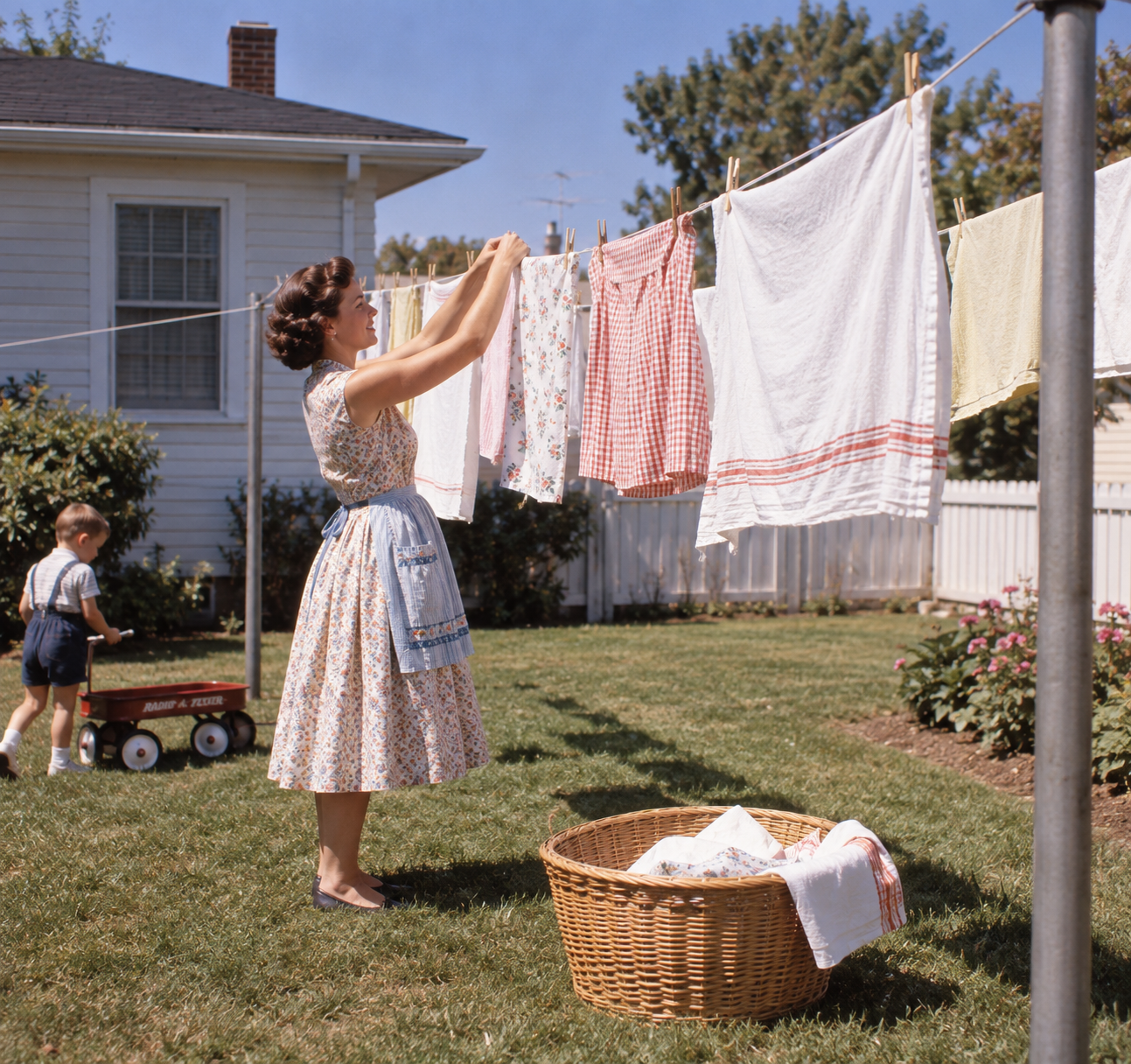
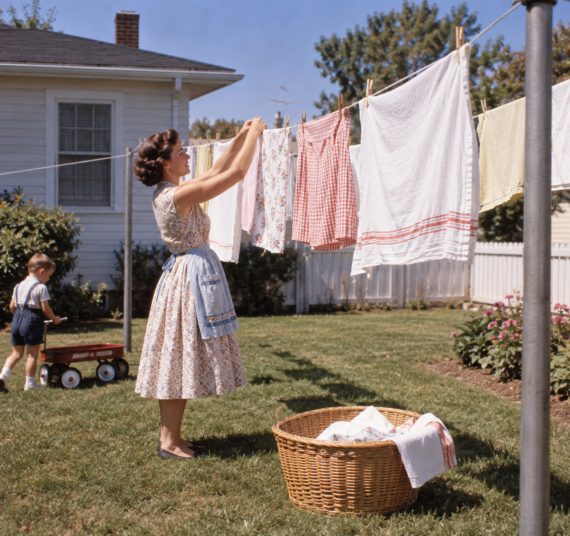
Owning a washing machine didn’t necessarily mean owning a dryer. For many families, freshly washed sheets, shirts, and towels still went straight outside to the backyard clothesline, secured with wooden clothespins and left to dry in the sun. When the weather didn’t cooperate, an indoor drying rack might have to take over.
A Sewing Machine in a Wooden Cabinet
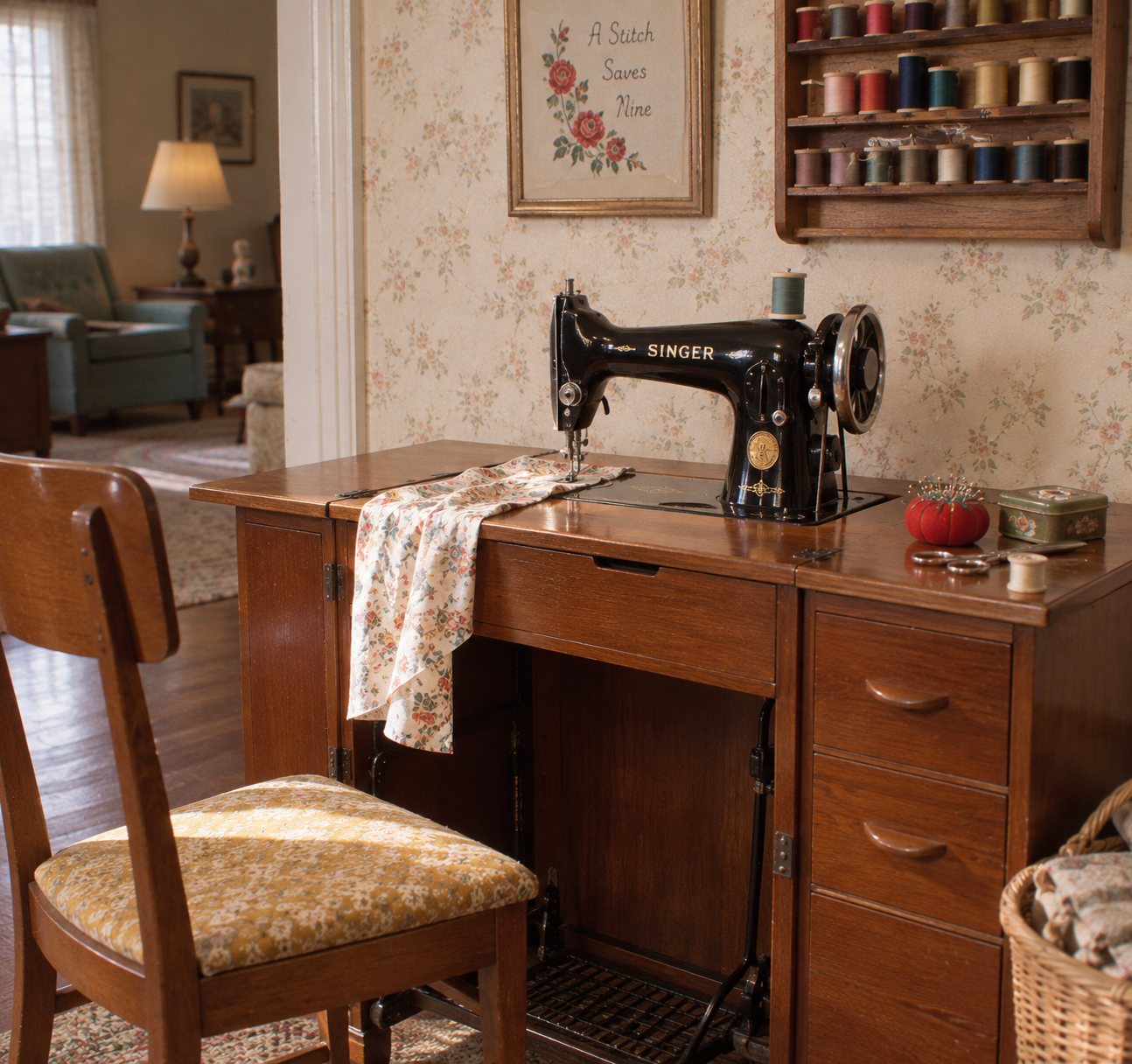
Mending clothes and sewing at home were still common skills, so a sewing machine was a practical piece of household equipment. Many were built into heavy wooden cabinets that looked almost like ordinary furniture when closed. Open the cabinet, lift the machine into position, grab a paper pattern, and the table transformed into a home sewing station.
Venetian Blinds
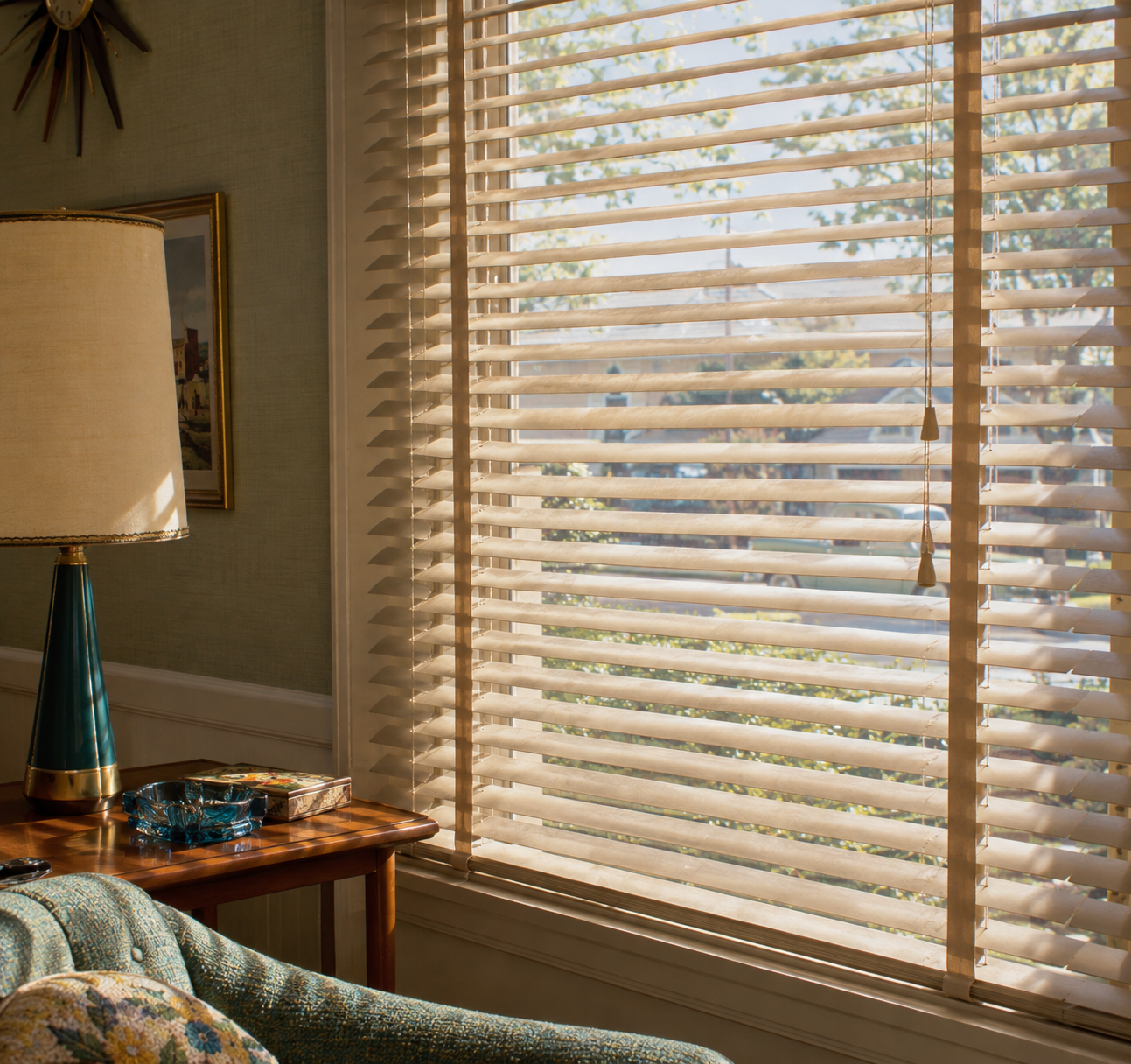
Before today’s roller shades and cordless blinds, midcentury windows were often covered with horizontal Venetian blinds. Metal versions were especially common and could be paired with curtains or boldly patterned drapes. Anyone who grew up with them might remember the long cords, rattling slats, and frustrating attempt to get every blind tilted at exactly the right angle.
A Pastel-Colored Bathroom
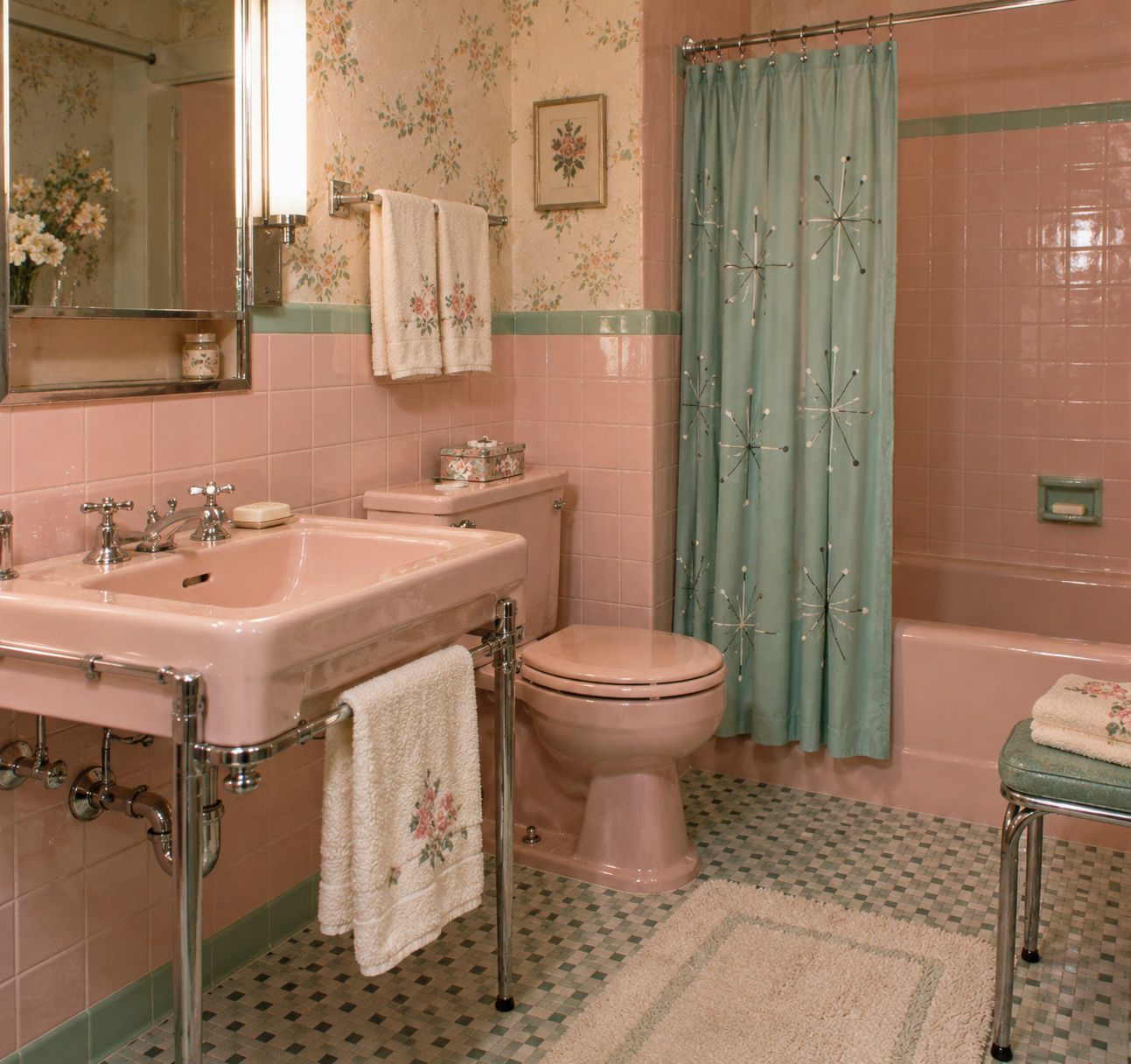
White wasn’t the only option for bathroom fixtures in the 1950s. Pink, pale blue, yellow, and green could cover everything from the bathtub and toilet to the sink and tile. Matching fixture suites created bathrooms that were unapologetically colorful — and a surviving pink bathroom today can instantly make a home feel like a midcentury time capsule.