Family road trips became a major part of American vacations during the 1950s as more families gained access to cars. Parents packed suitcases, picnic baskets, maps, and children into station wagons and convertibles before heading to beaches, campgrounds, and roadside attractions. The Smithsonian National Museum of American History explains how cars reshaped postwar family life. These vintage photos capture travel before GPS, smartphones, and modern car seats.
Packing the Car Was a Family Affair
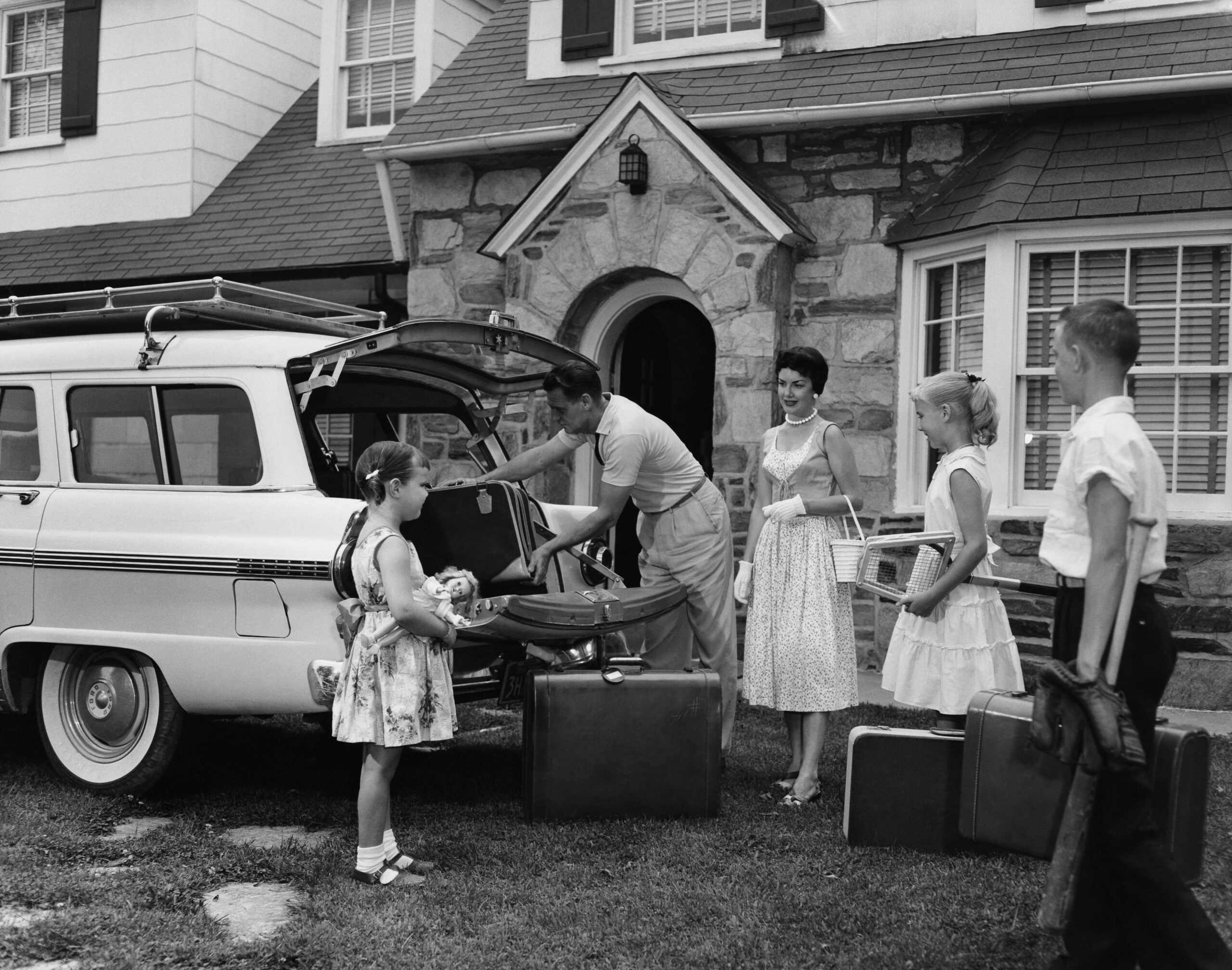
A mother, father, and their three children gather around the open trunk as they load luggage, toys, and sporting equipment for their trip. The neatly pressed clothing, short hairstyles, and large rounded car reflect the polished suburban style of 1956.
Even the Best Road Trips Had Tears
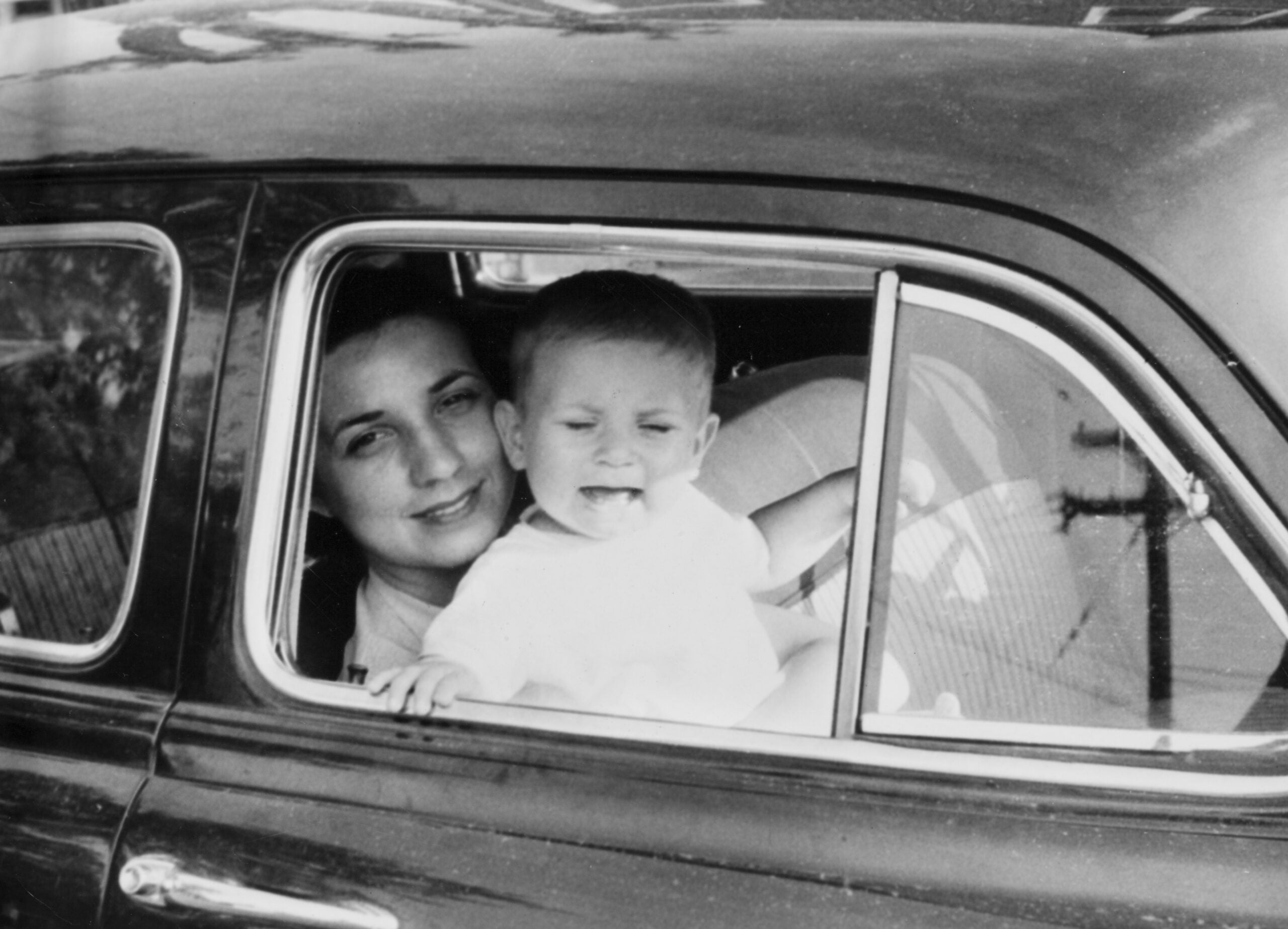
A mother holds her crying son on her lap inside the car during a family trip in 1954. Her curled hairstyle reflect common women’s fashion of the period.
Loading the Convertible for Vacation
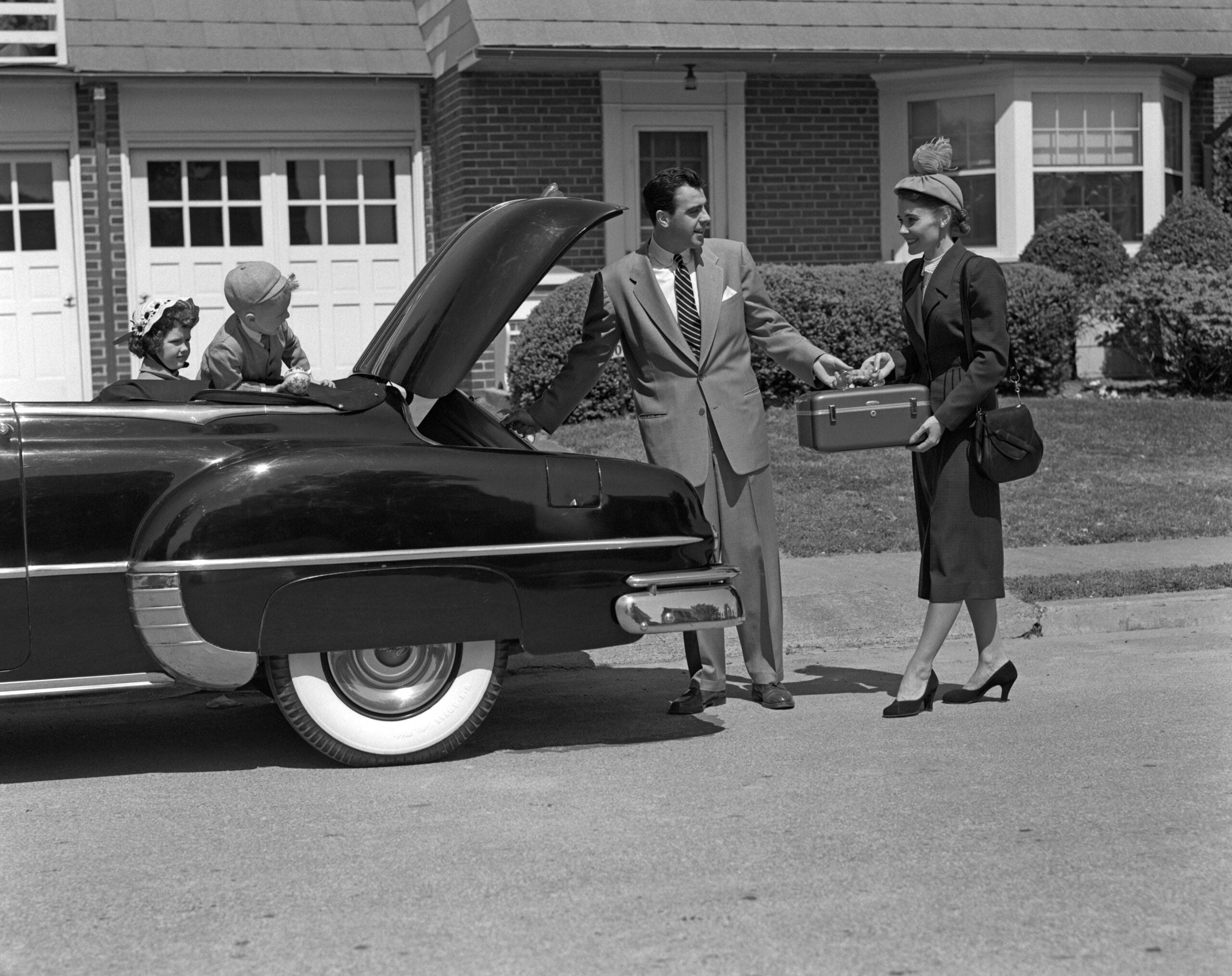
A husband and wife pack luggage into the trunk of a convertible while their two children wait in the back seat. The whitewall tires, open-top car, and neatly pressed clothing reflect the travel style of 1951.
Bringing a Junior Race Car Along
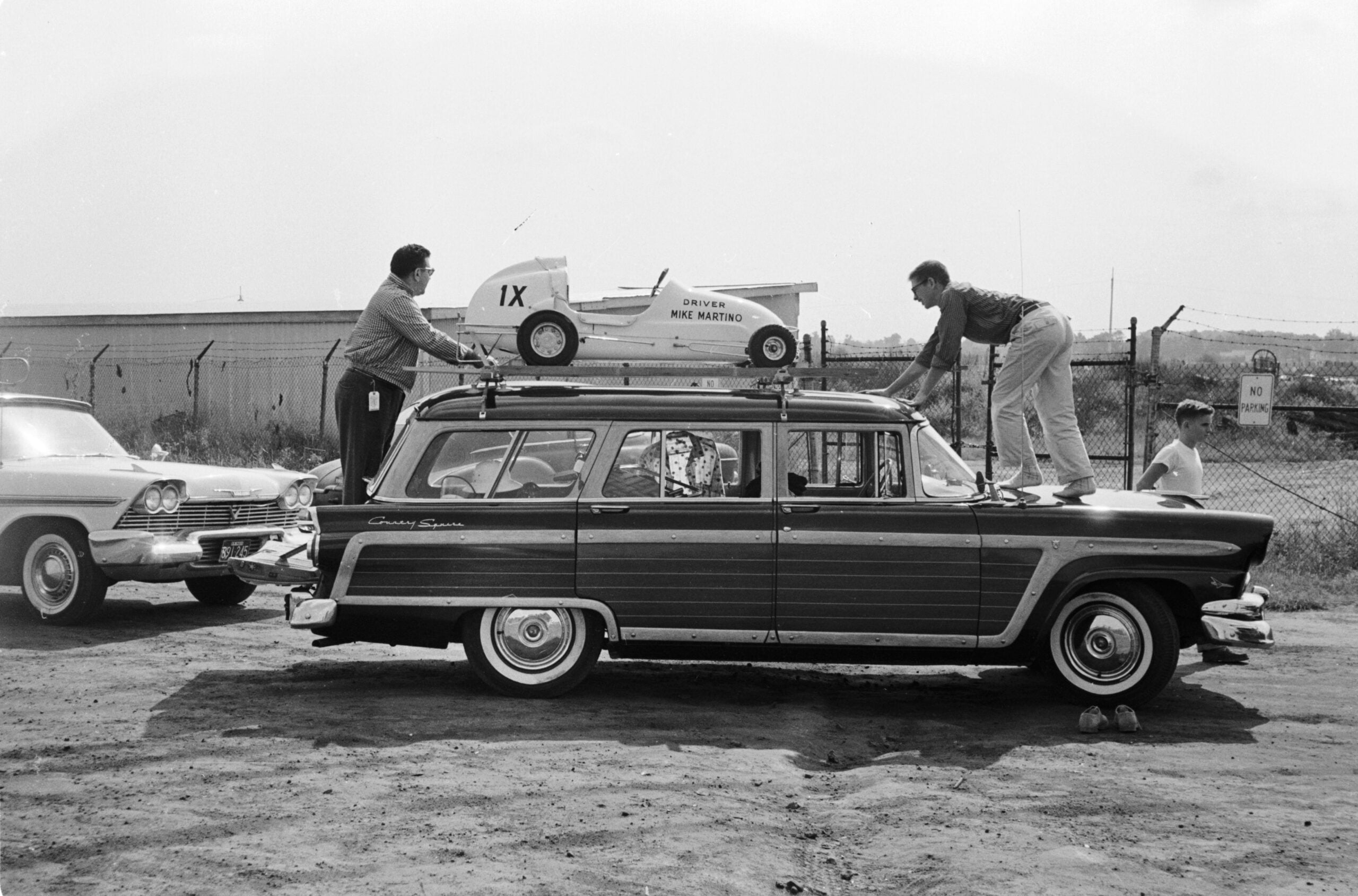
A father and son arrive at a junior motor race in 1955 with a miniature racing car strapped to the roof of their vehicle. The boy’s short trousers, knee socks, and neat jacket reflect children’s clothing commonly worn for outings during the period.
Three Generations Shared the Ride
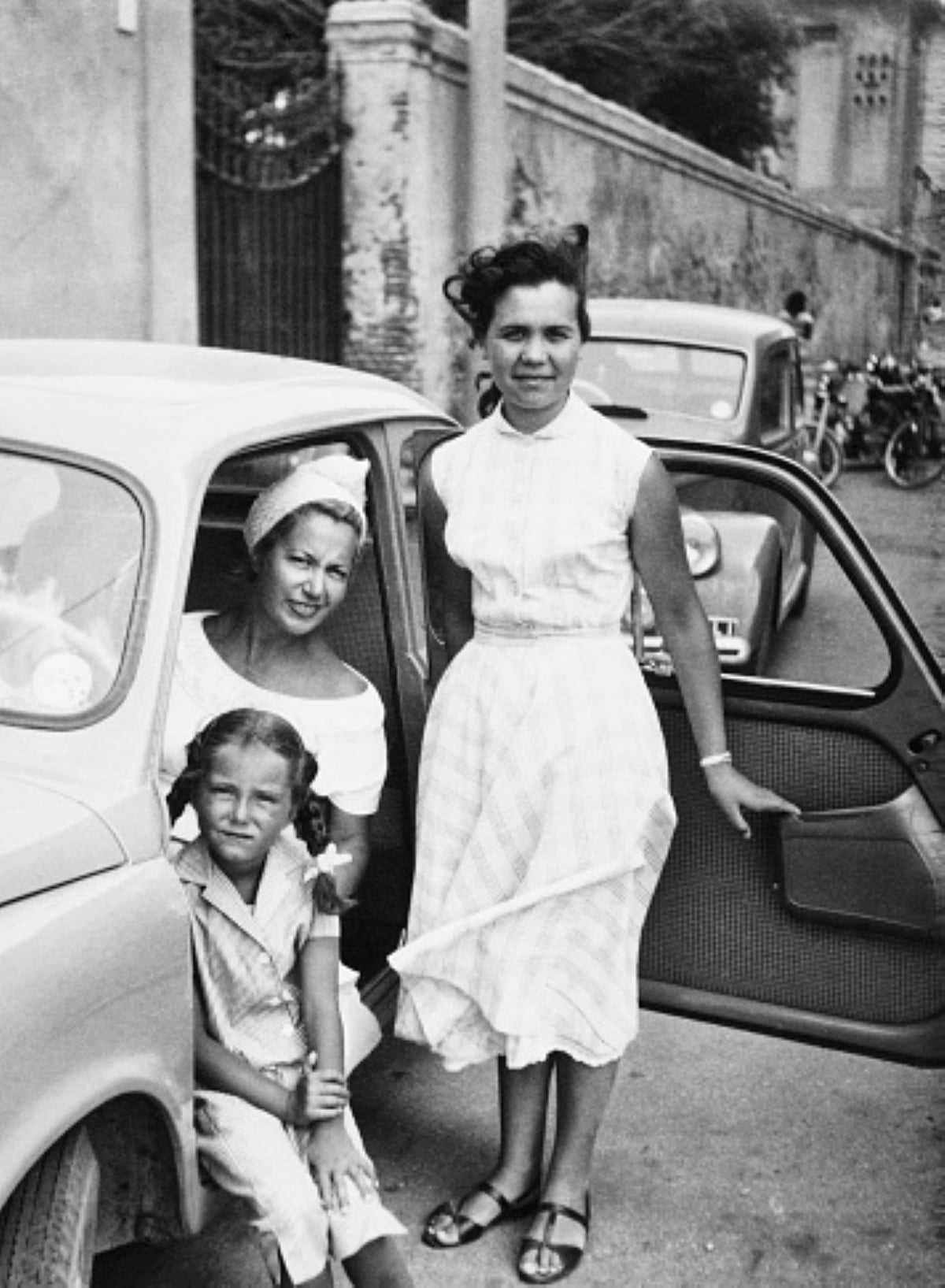
A young girl travels with her mother and aunt inside a car in 1951. The tightly framed photograph suggests how closely passengers sat during family journeys, especially when several relatives traveled together. Their dresses and styled hair show that even a day on the road could still involve dressing neatly.
Trending on Cheapism

Packing a Picnic for the Road
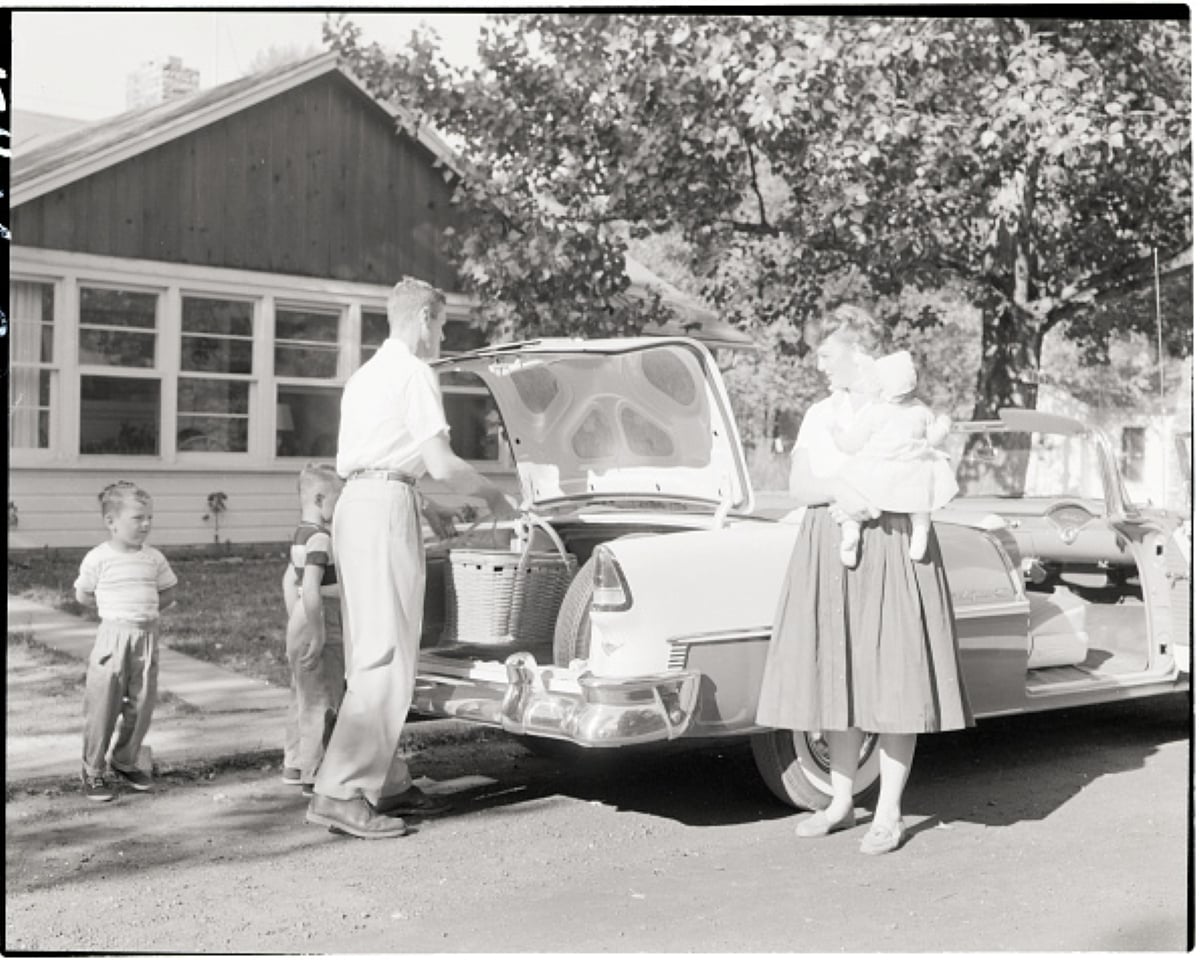
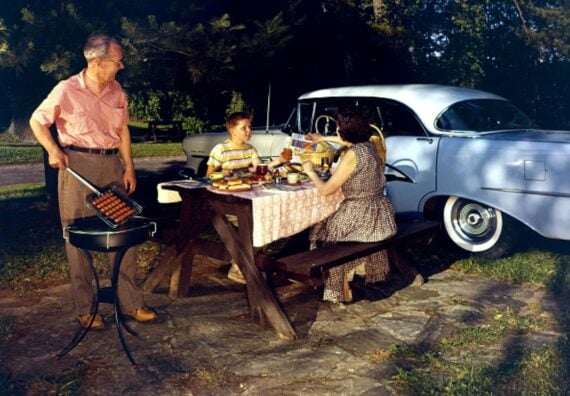
A family prepares a picnic beside its car, surrounded by the baskets and supplies needed for an outdoor meal. Roadside picnics gave travelers an affordable alternative to restaurants and allowed children to stretch their legs. Food, blankets, and serving items had to be packed alongside the family’s regular luggage.
Riding With the Top Down
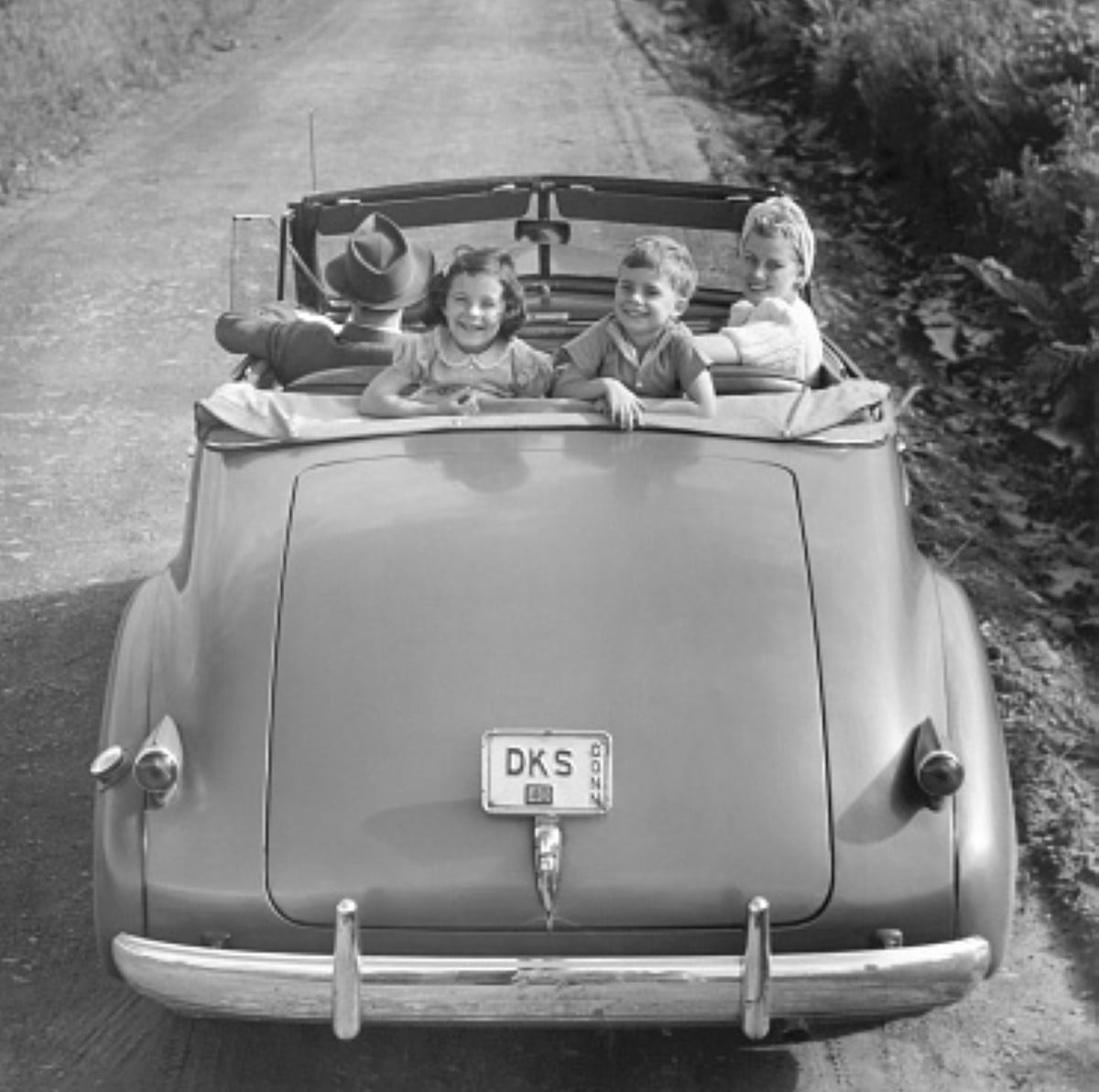
A smiling family rides together in a convertible with the roof lowered. Open-top cars made warm-weather journeys feel more exciting, although passengers had little protection from wind, sun, or sudden rain. The image captures the cheerful side of 1950s road travel, when the drive itself could become part of the vacation.
Breakfast Beside the Highway
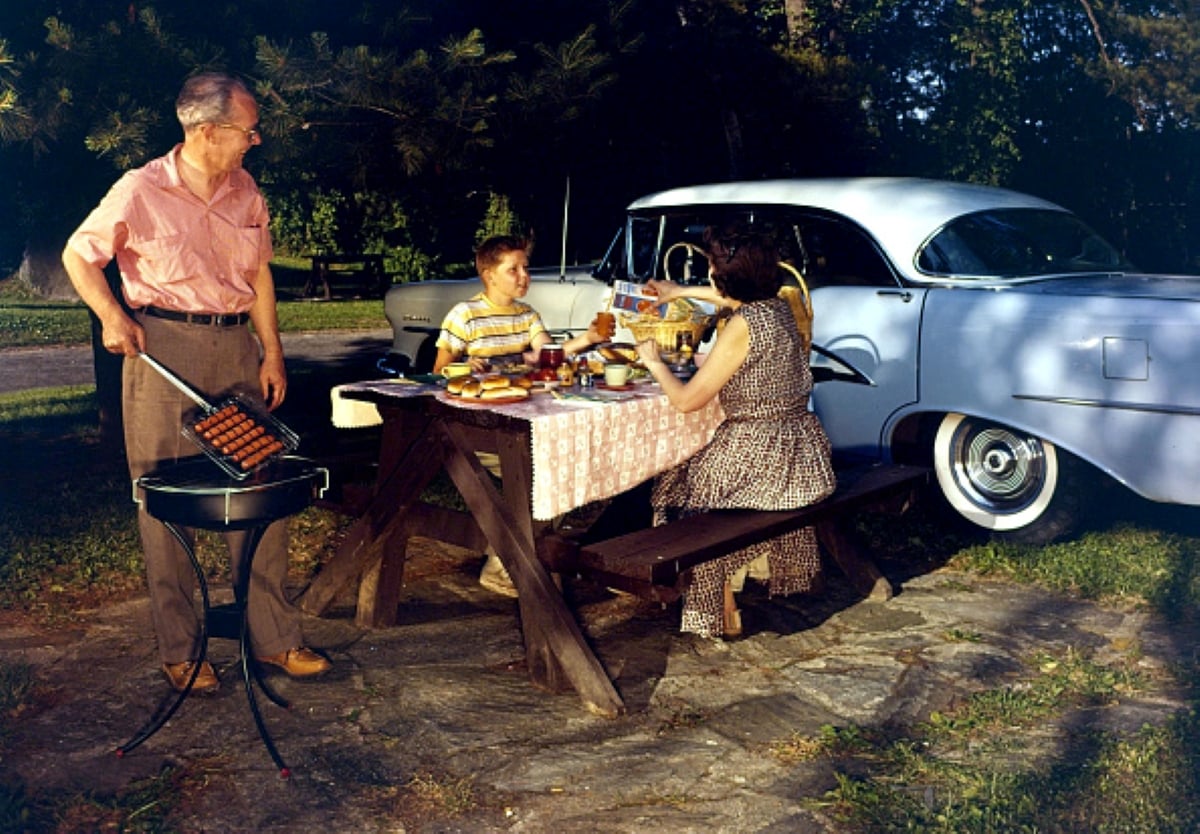
An American family stops beside the road to prepare a meal during a trip in the 1950s. Folding equipment and portable cooking supplies turned an open patch of land into a temporary dining area. Roadside meals helped families save money while adding another memorable stop to a long day of driving.
Sign up for our newsletter
The Station Wagon Became a Vacation Essential
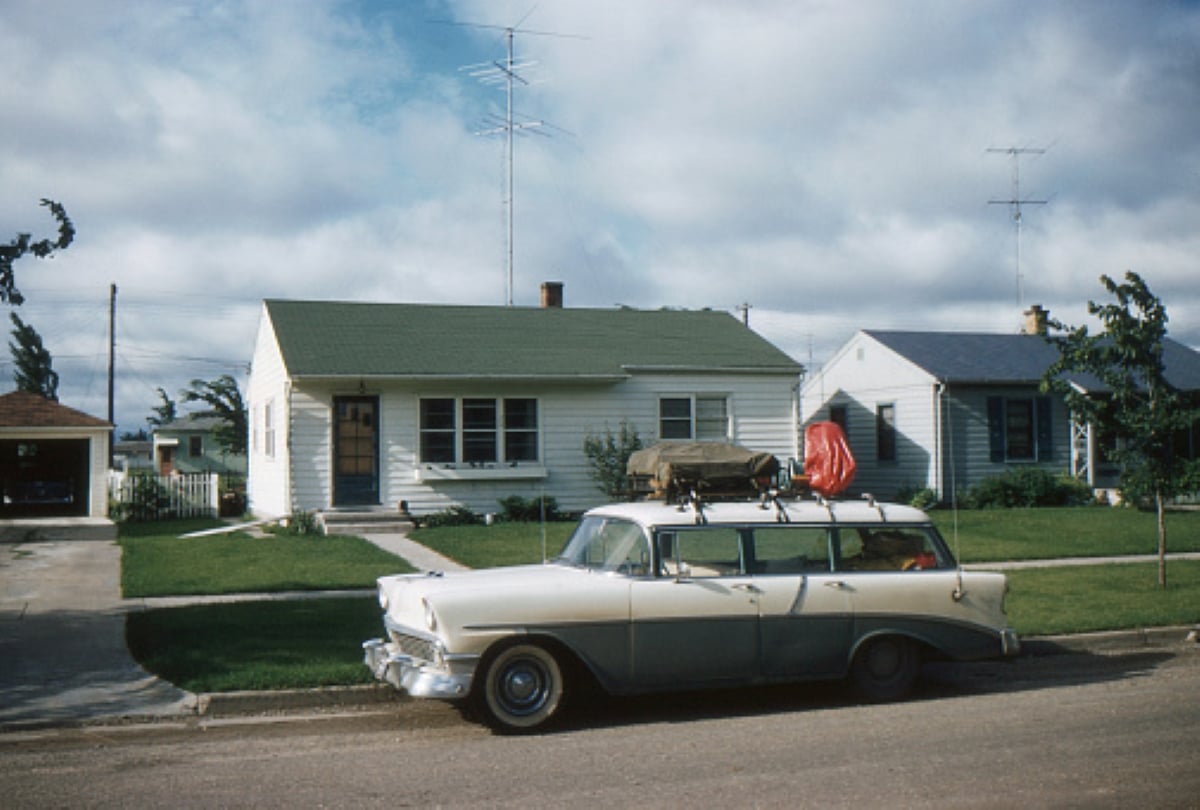
A Chevrolet station wagon waits outside a typical midcentury home, ready to carry passengers and luggage. Station wagons became practical choices for growing families because they offered more storage than a standard sedan. Their roomy interiors made them especially useful for vacations, camping trips, and visits to relatives.
Some Families Took the Bus
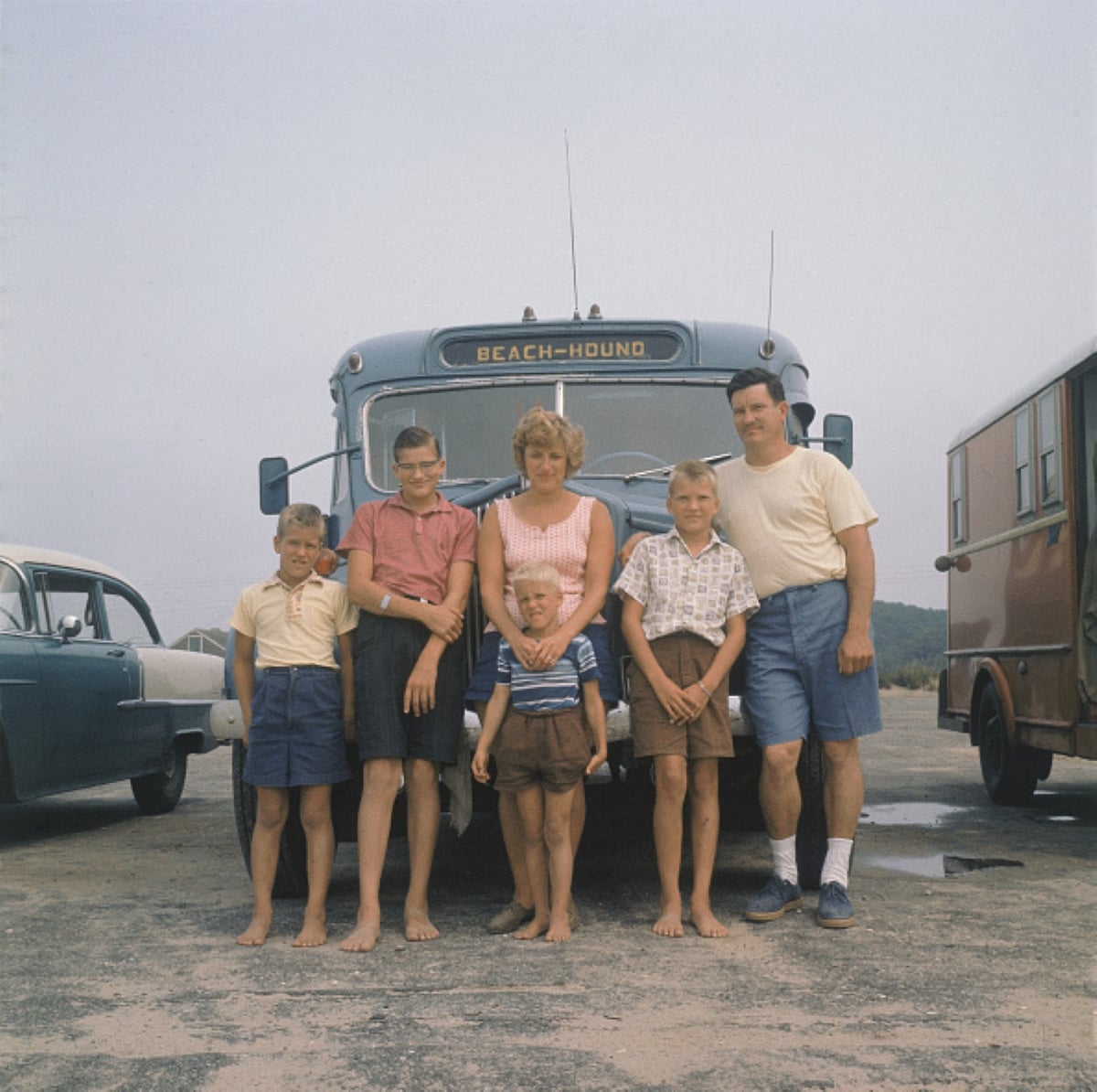
A family poses beside a bus before continuing toward a beach destination. Not every 1950s vacation happened in a privately owned car, and buses gave families another way to reach resorts and coastal towns. Matching luggage and carefully chosen travel clothes helped make the departure feel like a special occasion.
Children Documented Their Own Adventures
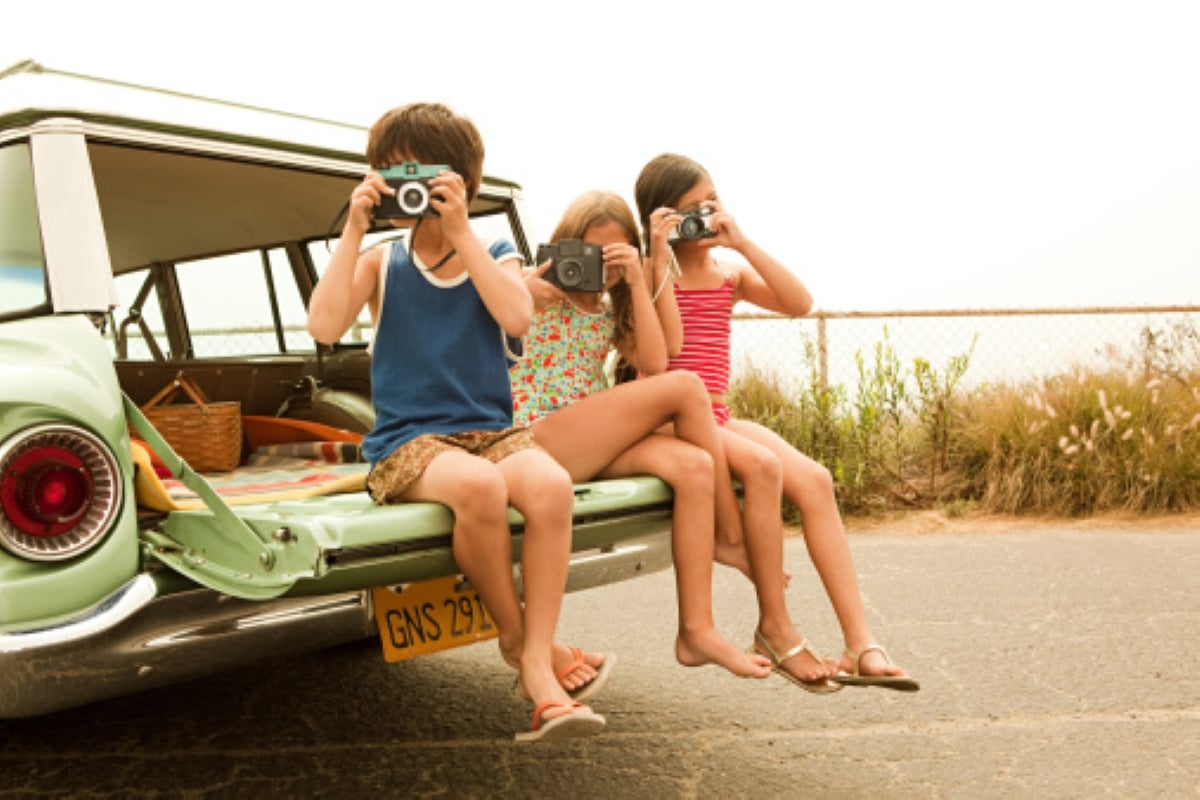
Three children sit at the back of a station wagon while taking photographs during a summer outing. Their cameras suggest that documenting vacation memories was already an important part of family travel. Unlike today’s instant phone photos, film pictures had to be taken carefully and developed after the trip.
Four People Traveled on One Motorcycle
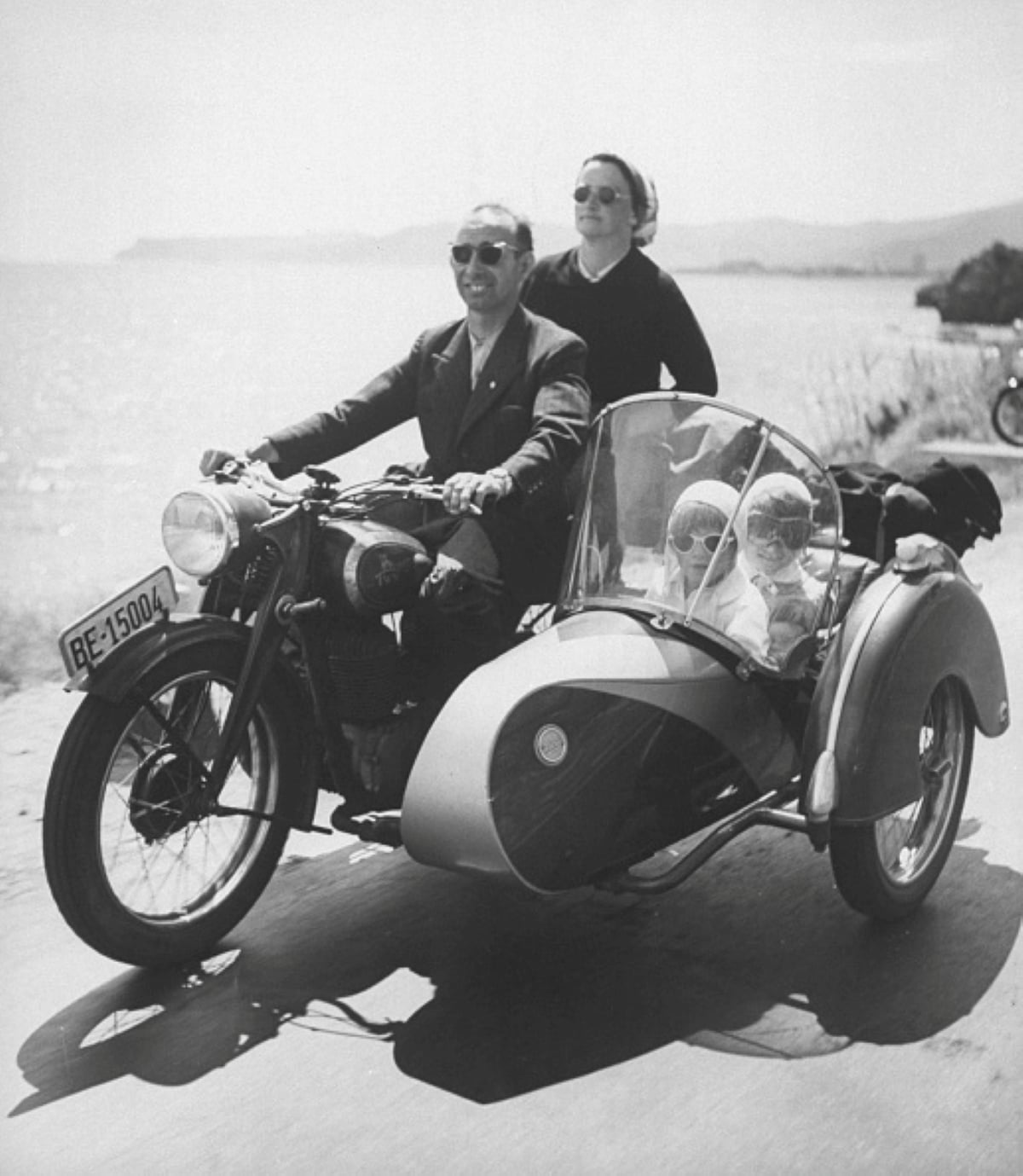
A mother, father, and two children travel together on a motorcycle in Italy in 1954. The crowded arrangement shows how differently families sometimes approached transportation during the decade. What appears surprising today was captured as part of everyday travel before modern safety expectations and protective equipment became widespread.
Beach Stops Made the Drive Worthwhile
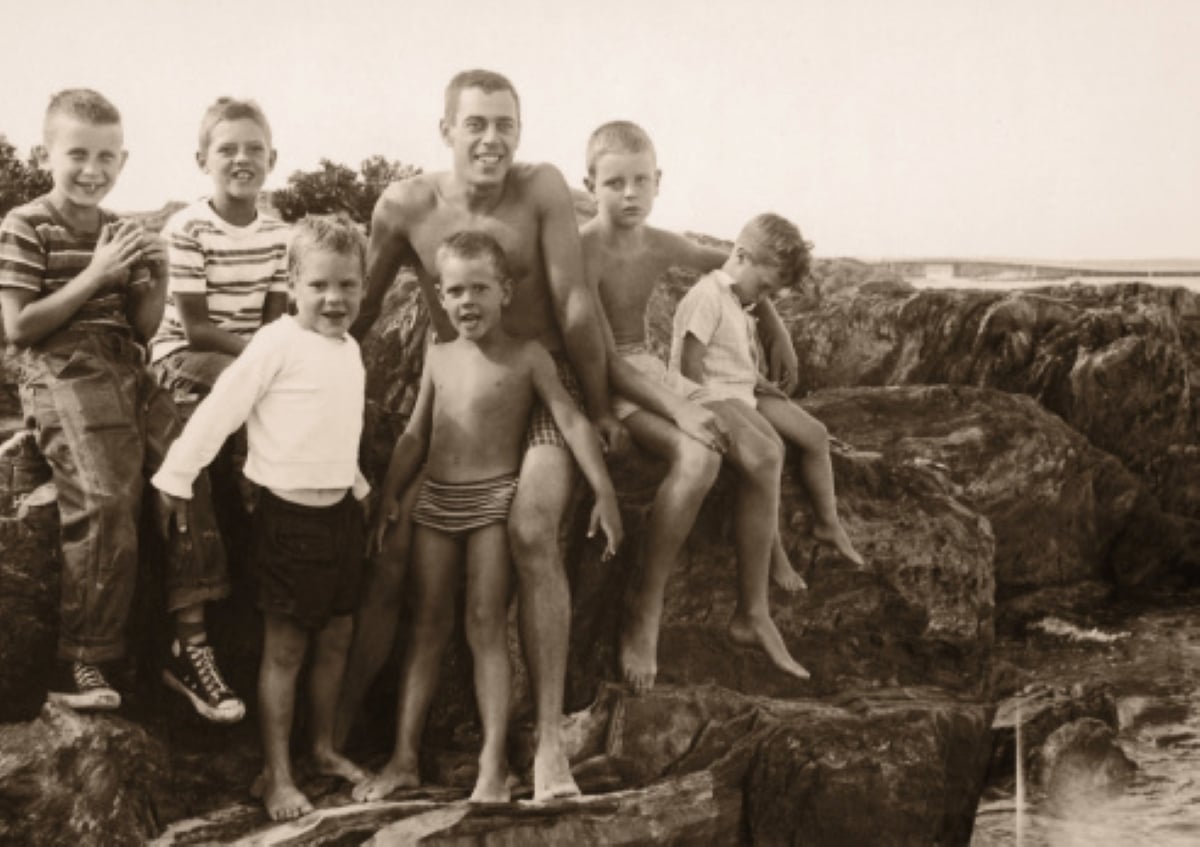
A father sits with his children on rocks beside the beach during a family outing. Coastal stops gave travelers a chance to rest after hours in the car while children explored the shore. Simple moments like sitting by the water often became some of the most memorable parts of a family vacation.
Convertibles Made Driving Look Glamorous
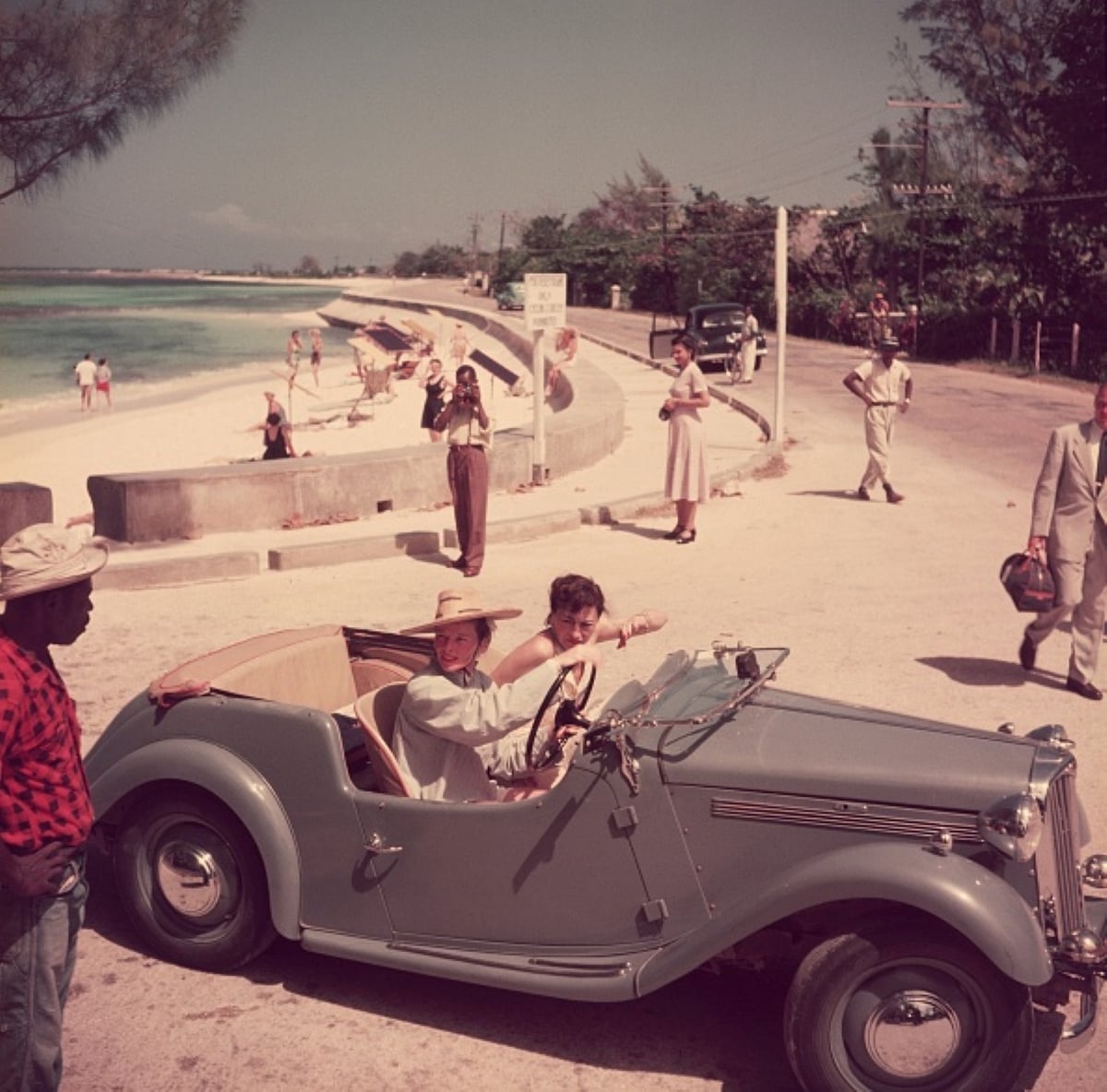
Katharine Hepburn drives an open roadster in Jamaica in 1953, capturing the glamorous image associated with convertible travel. Although most families experienced less polished journeys, open-top cars symbolized freedom and adventure. They also made scenic drives more enjoyable by giving passengers an unobstructed view of their surroundings.
Tiny Cars Left Little Room for Bags
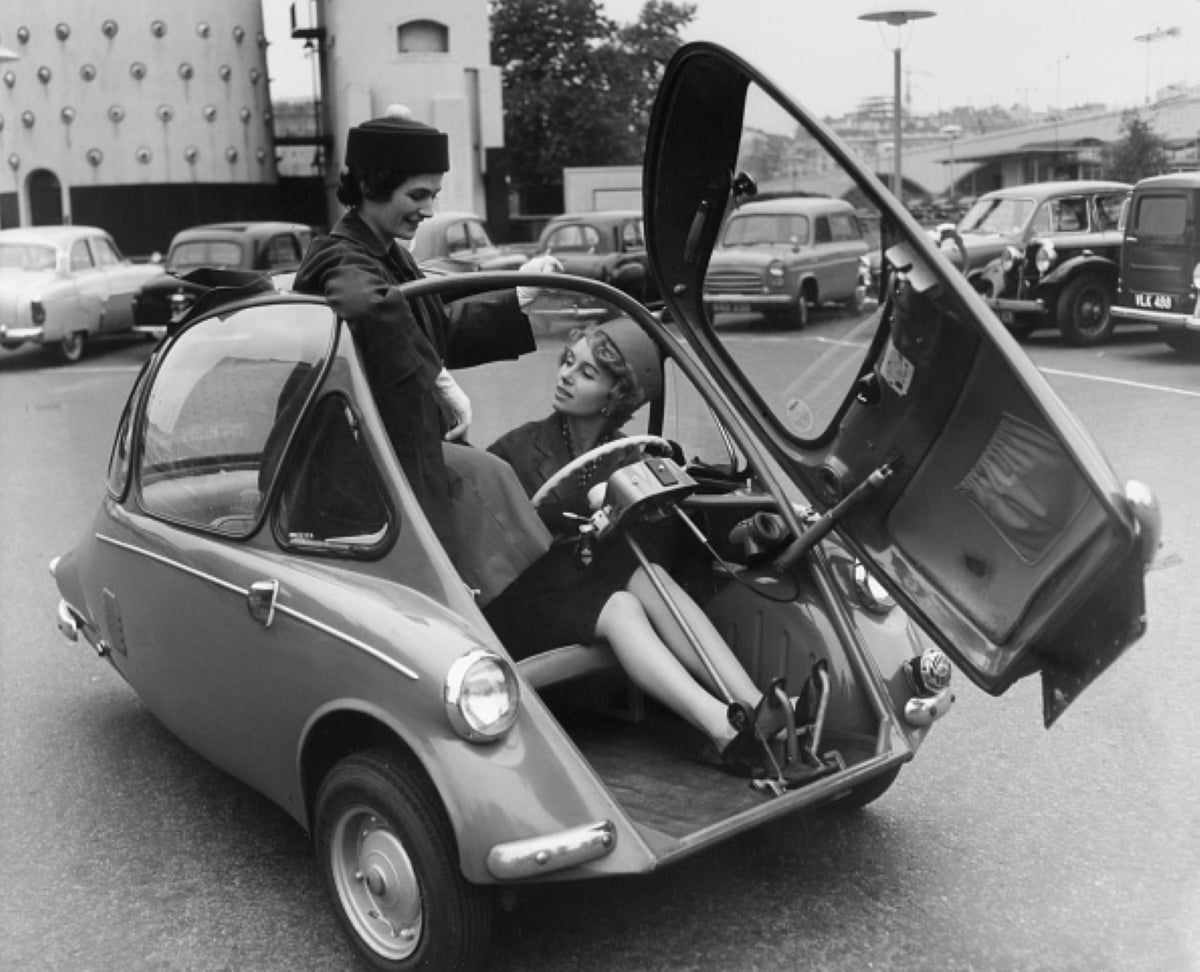
A Heinkel bubble car photographed in Germany in 1956 shows how compact some postwar vehicles could be. The tiny cabin offered economical transportation but left little space for passengers or vacation luggage. Families using small cars had to plan carefully, pack lightly, and make the most of every available inch.
Camper Vans Brought the Hotel Along
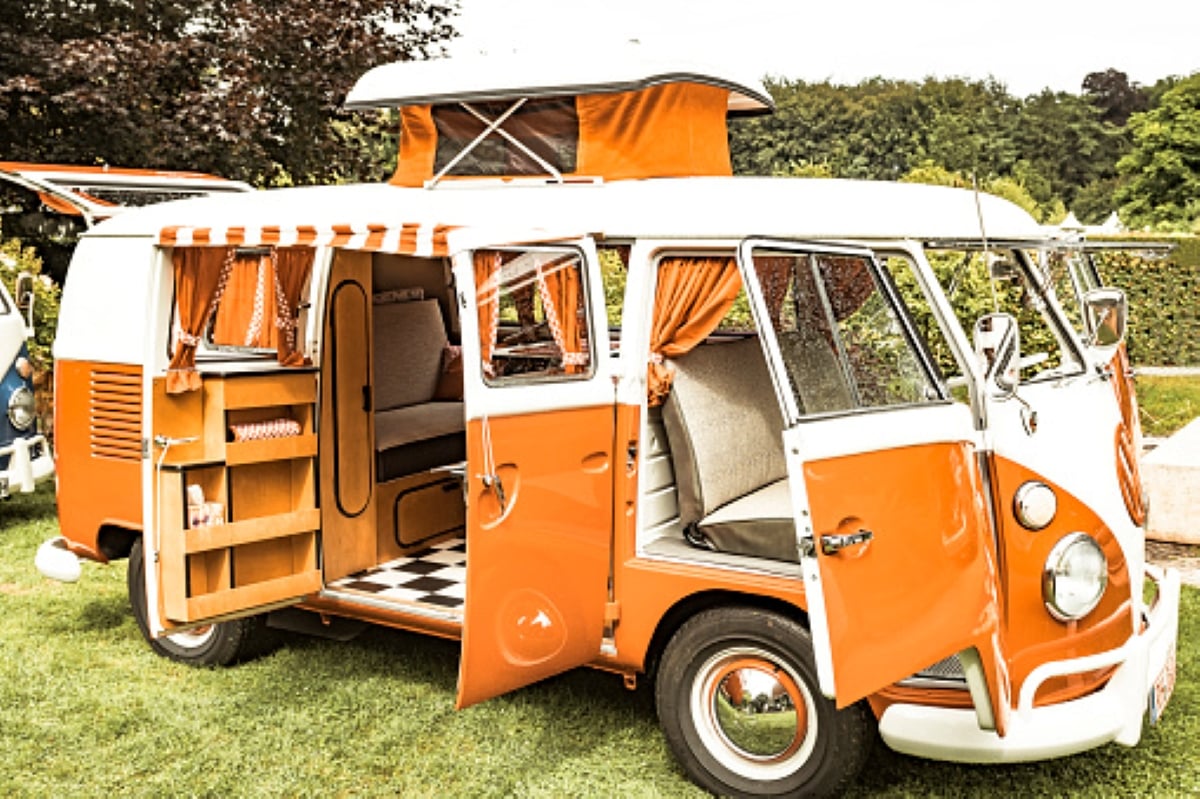
A Volkswagen Transporter camper van represents a new kind of flexible road travel that emerged during the 1950s. Families could carry sleeping supplies, food, and camping equipment in one vehicle. Camper vans made it easier to stay near beaches, parks, and scenic areas without depending entirely on roadside motels.
Fast Food Became a Roadside Attraction
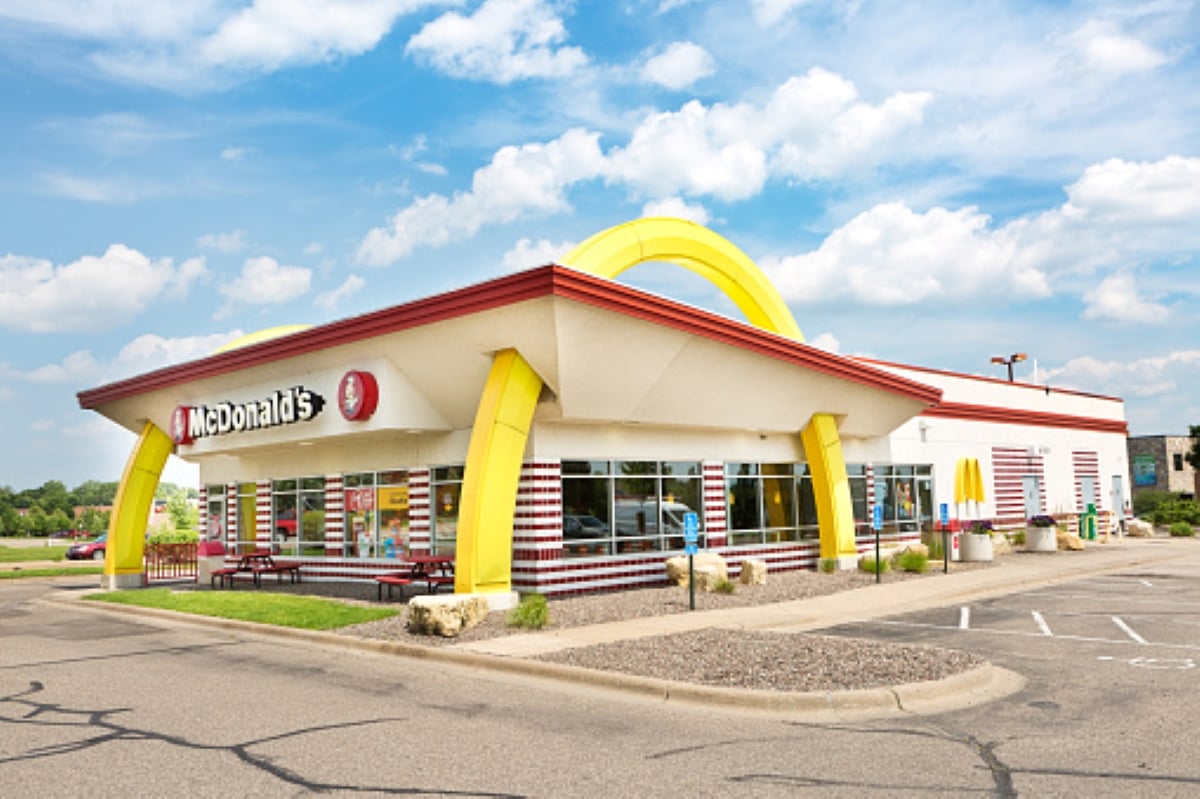
A vintage McDonald’s restaurant with its recognizable golden arches recalls the growth of roadside fast food during the 1950s. Quick counter service gave motorists an alternative to packing a picnic or waiting at a sit-down restaurant. Bright signs and easy parking made these businesses natural stops for traveling families.
Busy Border Towns Became Road Trip Destinations
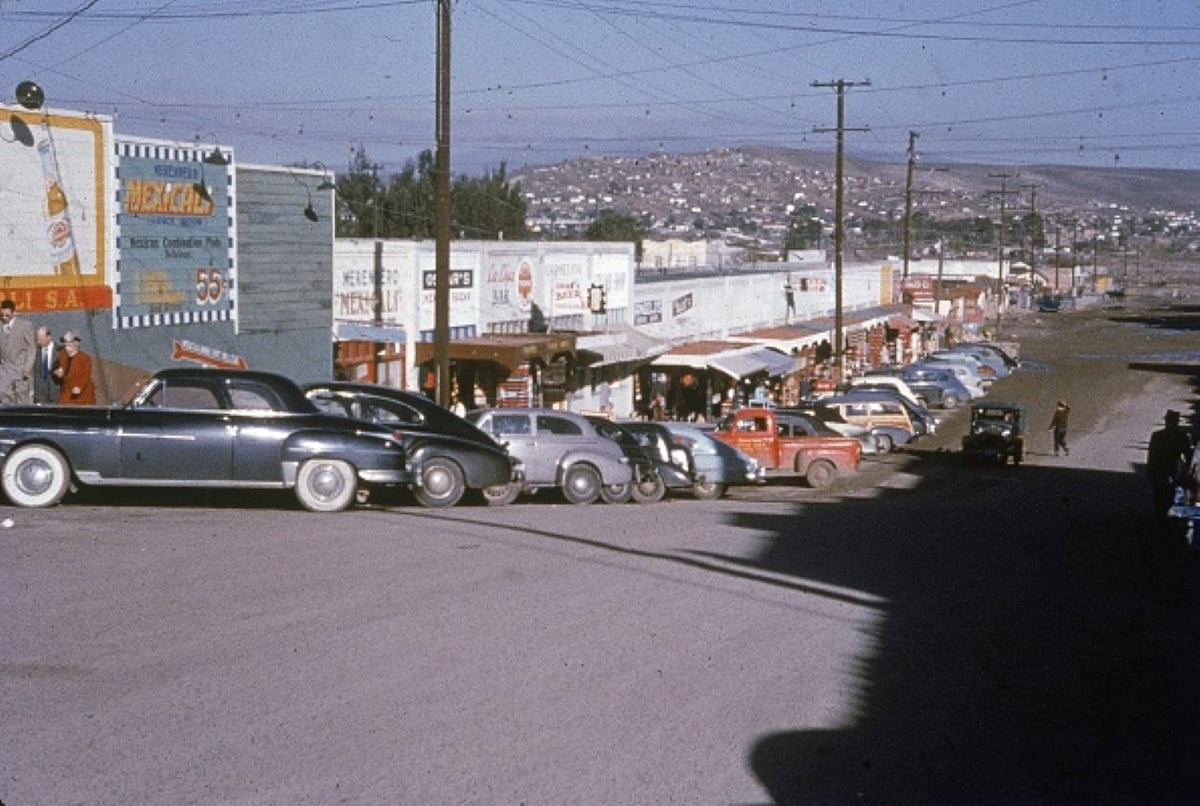
A street lined with parked cars in 1950s Tijuana shows the busy atmosphere travelers encountered after reaching the Mexican border city. Families driving through Southern California could cross into Mexico for shopping, food, and sightseeing. The rows of period vehicles help place the destination within the growing road trip culture of the decade.