If the Easter basket seems a little light on candy this year, don’t blame yourself. Blame the economy — or, better yet, blame capitalism for turning every holiday into a relentless spending marathon and leaving you a little broke afterward.
A new InvestorsObserver analysis found that shopping for Easter candy this year will cost you more than it did half a decade ago — and still fill only half the basket it used to. Since 2020, Easter candy prices have jumped about 67%, while shoppers have only increased their budgets by around 15%. Which sounds reasonable, until you realize it’s not even close to keeping up.
According to the study, a typical Easter budget — about $93 for a family — now buys roughly 40% less candy than it did six years ago. Well isn’t that just splendid?
The Boiling Frog Effect
The sneaky part is that candy prices didn’t spike overnight — they inched up. A few percent here, maybe 10% there, sometimes nothing at all. The kind of changes you notice, briefly register as annoying, and then move on from without adjusting much.
But over time, those small increases stacked on top of each other. And because most people track what they spend in total dollars, not price per ounce or package size, the real impact stayed mostly invisible.
“It’s the classic boiling frog scenario that actually shows up in groceries year-round,” explained Sam Bourgi, senior analyst at InvestorsObserver. “You don’t jump out of the pot because the water heats up one degree at a time. Each individual increase feels tolerable — annoying, maybe, but not catastrophic. So you adjust. By the time you realize how hot the water has gotten, you’ve already lost significant purchasing power.”
Your Easter Basket Didn’t Shrink —Your Money Did
For a while, most Easter candy kind cost roughly $4, so it was easy to tell what felt normal and what didn’t.
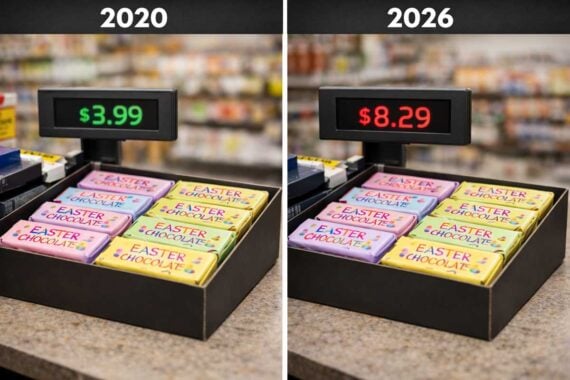
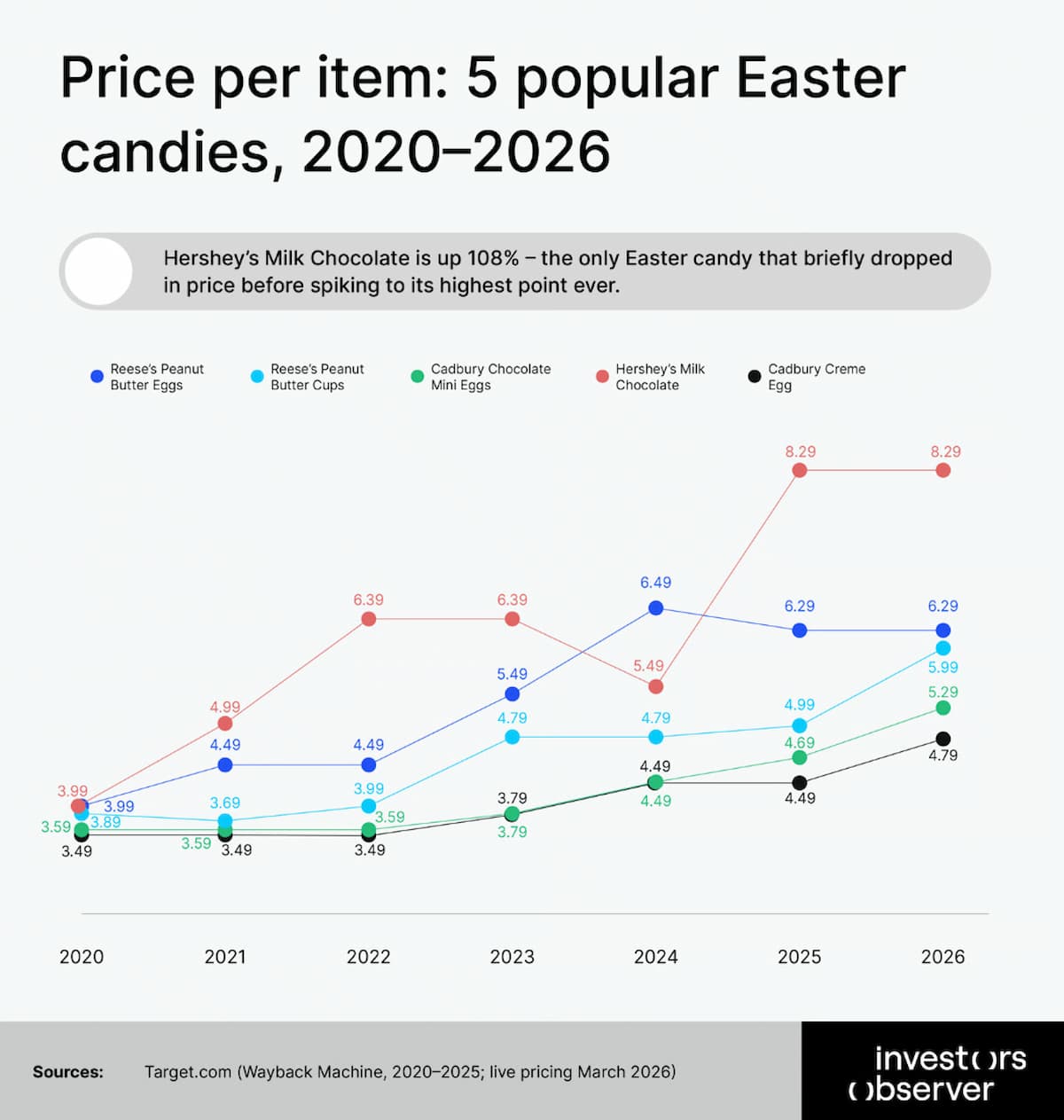
But recently things have gotten a little ridiculous. In 2020, Easter candy hovered between $3.49 and $3.99. By 2026, that range ballooned to between $4.79 and $8.29. Apparently even candy pricing now comes with premium tiers.
“People are terrible at noticing prices creeping up slowly,” said Bourgi. “A 12% increase one year, nothing the next, then 22% — each bump feels survivable. But add them up over six years, and suddenly you’re paying 67% more without ever feeling like you hit a breaking point.”
According to National Retail Federation data, the average American increased Easter candy spending from $23.30 per person in 2020 to about $26.82 in 2025. A modest bump that, on paper, looks like exactly what you’re supposed to do when prices rise.
“That 15% increase suggests consumers believed they were adjusting appropriately to market conditions,” said Bourgi.
And to be fair, that’s a pretty normal assumption. Prices go up, you spend a little more, problem solved. Except not really.
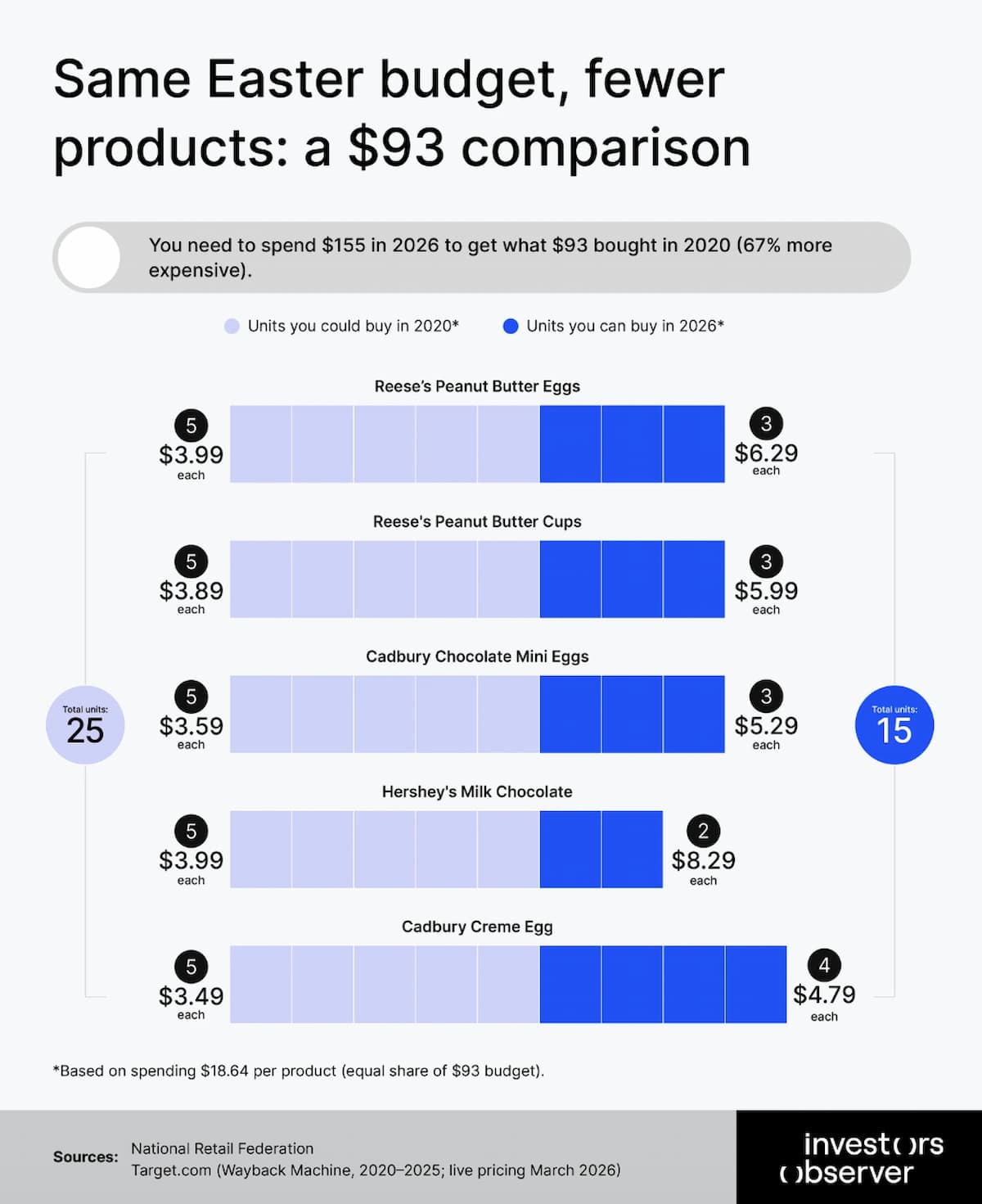
Because while budgets went up 15%, candy prices climbed 67% on a per-ounce basis. Which means that adjustment didn’t just fall short; it missed by a lot. In real terms, shoppers lost more than $50 in purchasing power.
“That’s how this happened without anyone noticing. Not because shoppers weren’t paying attention. Because the increases were designed — intentionally or not — to fly under the radar of how people track spending: in total dollars, not in what those dollars actually buy,” explained Bourgi.
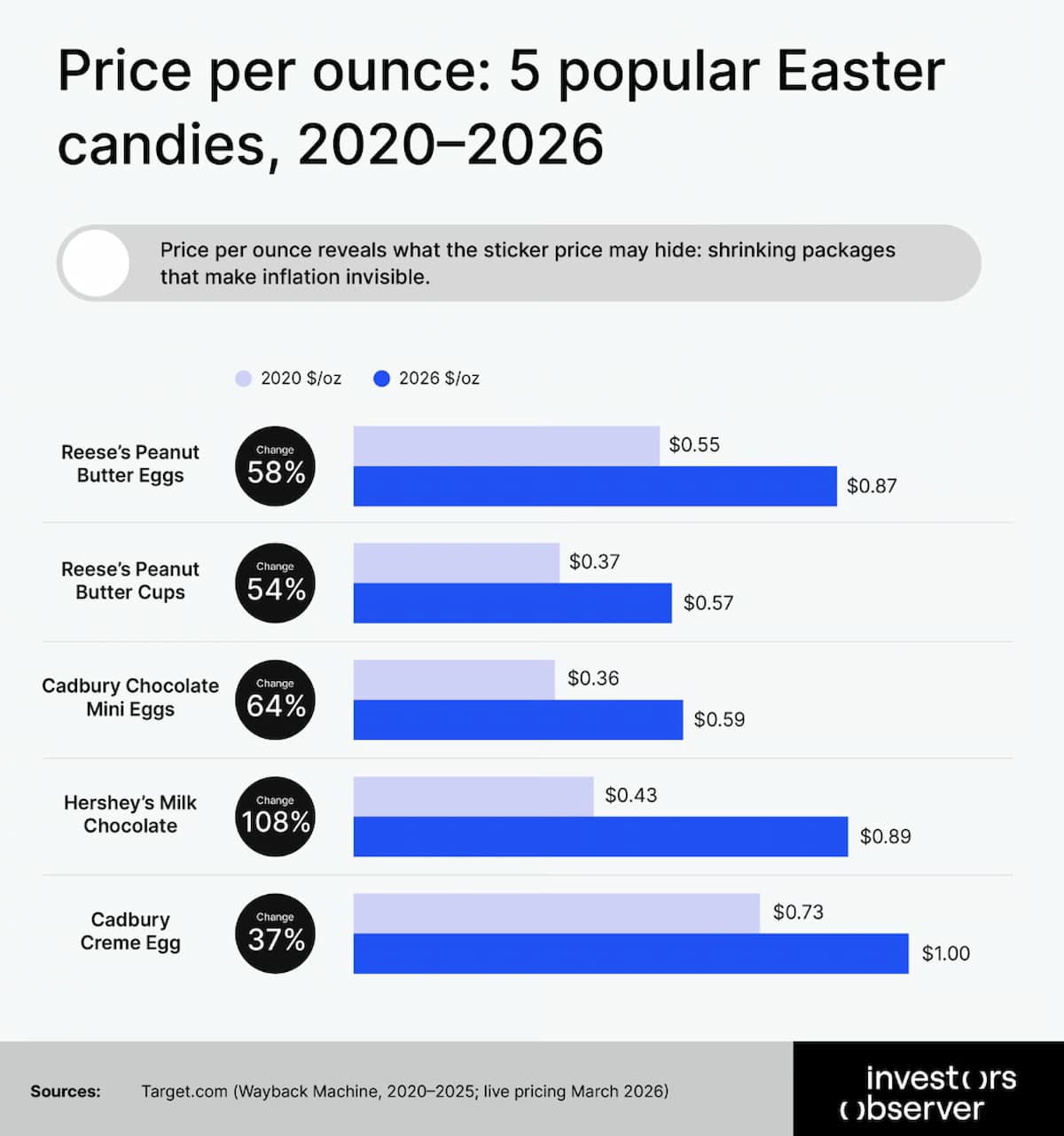
Hershey’s is probably the clearest example from the data, mostly because there’s no ambiguity about what changed and what didn’t. The bar itself stayed exactly the same the entire time: a 1.55-ounce milk chocolate bar, no shrinkflation, no redesign, nothing quietly downgraded. If anything, it’s the one product where you can’t blame the size. The price, though, is a different story.
In 2020, a Hershey’s bar cost $3.99. By 2022, it had climbed to $6.39, then in 2024, the price dropped to $5.49. Great right? Well, not so much. By 2025, the price had jumped again, this time to $8.29, wiping out the brief dip and pushing it past every previous high.
“When a price drops and then spikes even higher, it feels more unfair than a steady increase. The drop resets your expectations (you think things are getting better) which makes the spike feel manipulative rather than just market-driven,” said Bourgi.
What Does It Actually Take to Keep Up?
If you wanted to buy the same amount of candy you were getting in 2020, you’d have to spend about $155 today instead of $93. Stick to that original $93 budget, and you’re leaving with about 100 fewer ounces of candy.
“Six years of incremental price increases, shrinking packages, and shifting price ranges have reshaped what an American Easter tradition costs, not in one dramatic moment that might have prompted outrage, but in the slow, invisible way that leaves families spending more and getting less, year after year, without ever quite seeing it happen,” pointed out Bourgi.
Have you noticed the dramatic increase in Easter candy? Let us know in the comments.
More From Cheapism

- 10 Easter Candies You Can Grab at Dollar Tree for $1.25 — Dollar Tree has plenty of perfectly good candy for $1.25. Here are 10 ideas that work just fine for baskets, egg hunts, or candy bowls.
- 15 Easter Candy Treats You Can Buy at Aldi for Under $6 — Find 15 Easter candy options at Aldi for under $6, including chocolate bunnies, jelly beans, peanut butter eggs, and more.
- Here Are the Top 10 Worst Easter Candies — and the Best — While Cadbury Eggs and Peeps must have some fans, plenty of people don’t want them in their Easter baskets. Which do you think are the worst?