The average family kitchen in the 1980s and 1990s relied on practical products that could handle school mornings, weeknight casseroles, bake sales, and holiday gatherings. These 80s and 90s kitchen items were rarely luxurious, but many lasted for decades and became closely tied to family memories. The Smithsonian’s look at the evolution of the modern kitchen explains how products such as Tupperware and Pyrex helped reshape everyday food storage and cooking.
Tupperware Nesting Bowls
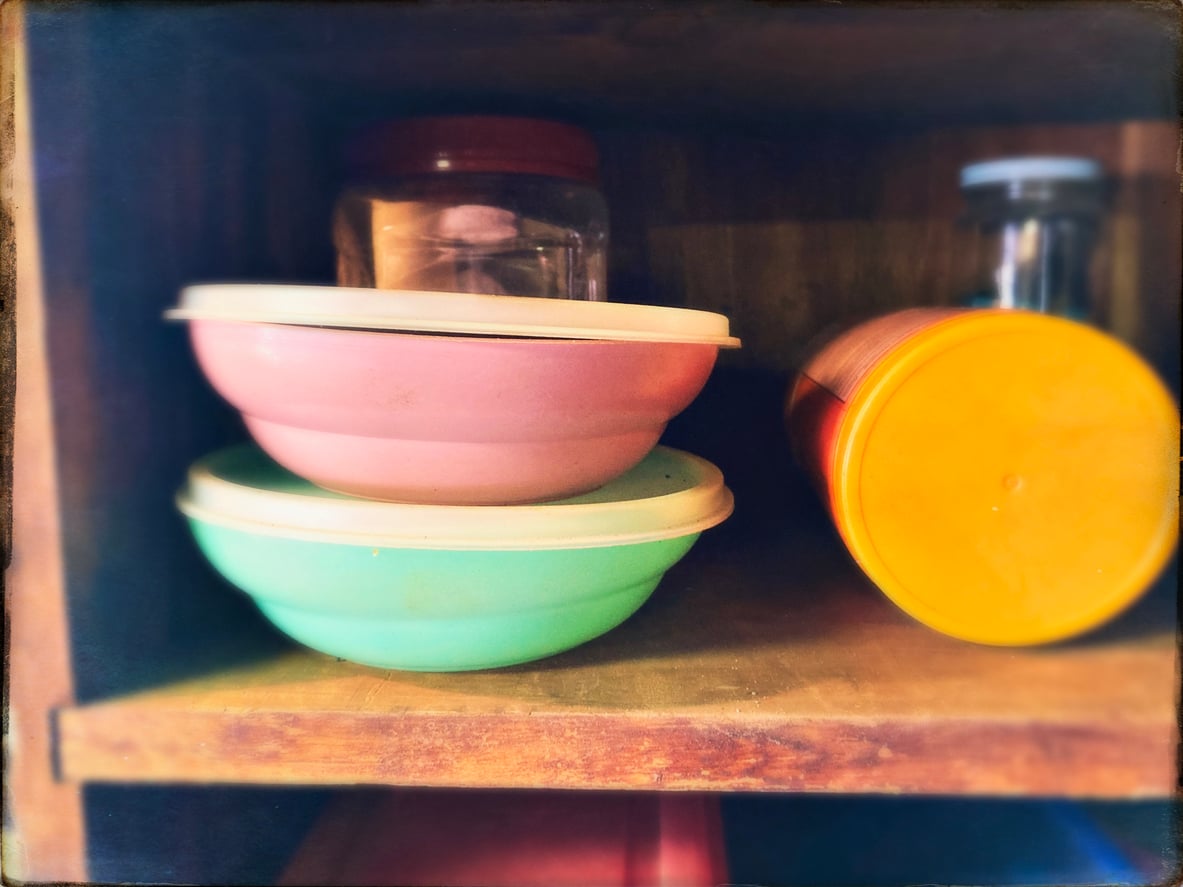
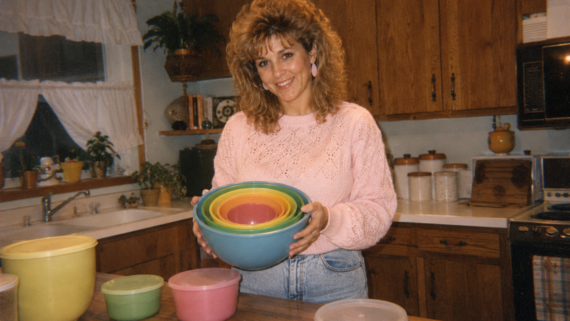
Opening the wrong cabinet could unleash an avalanche of brightly colored Tupperware bowls and unmatched lids. Families used the containers for leftovers, packed lunches, cookie dough, potato salad, and anything headed to a potluck. The famous seal was demonstrated at neighborhood Tupperware parties, where hosts showed shoppers how securely the containers closed. The bowls stacked neatly, but finding the correct mustard yellow, orange, pink, or pale blue lid was often another matter entirely.
CorningWare Casserole Dishes
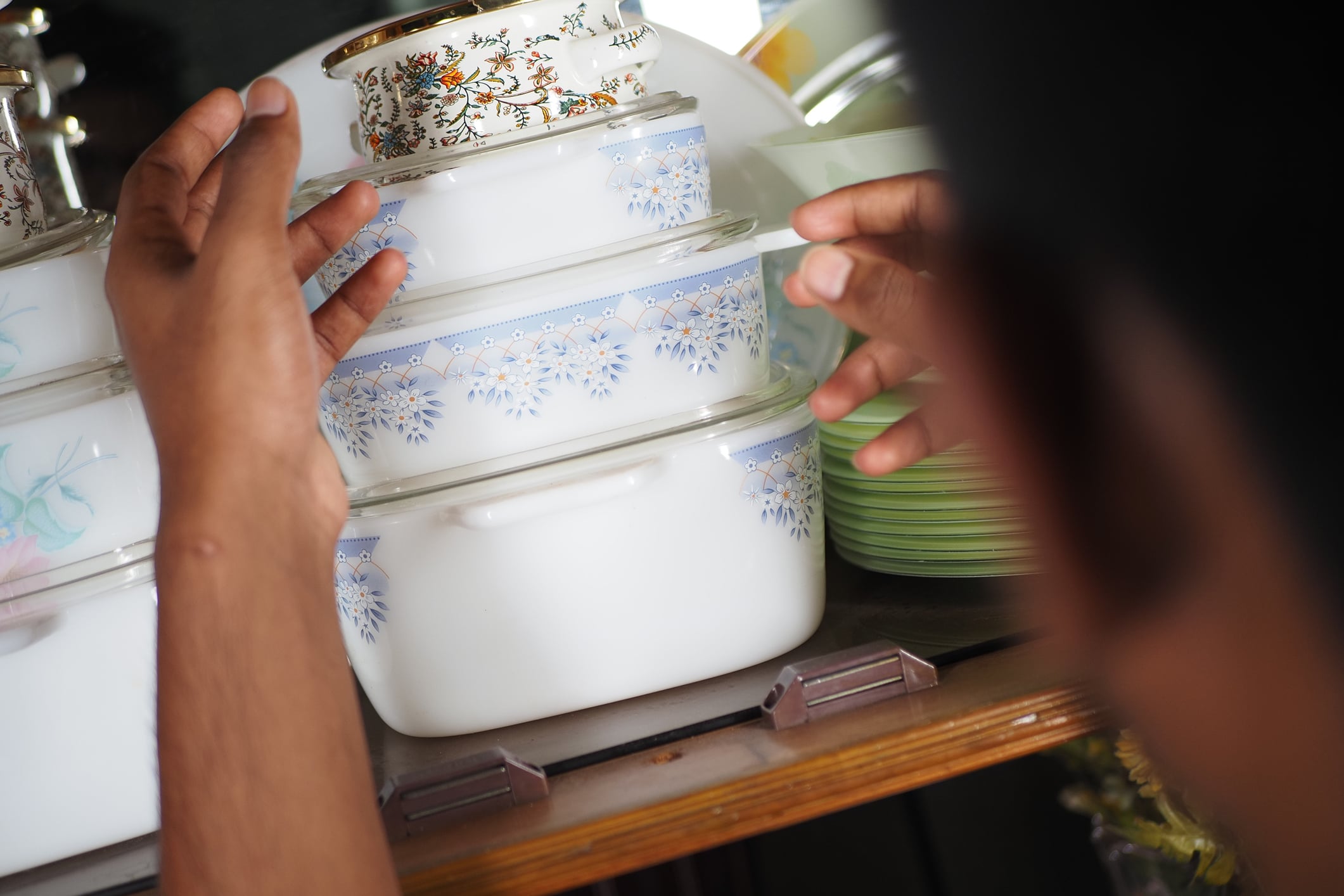
White CorningWare dishes decorated with blue flowers or country-style patterns moved easily from cooking duty to the dinner table. They held baked pasta, green bean casserole, scalloped potatoes, and meals prepared for neighbors during difficult weeks. Blue Cornflower became the classic look, while the simpler French White line suited kitchens moving away from busy patterns.
Corelle Plates With Floral Borders
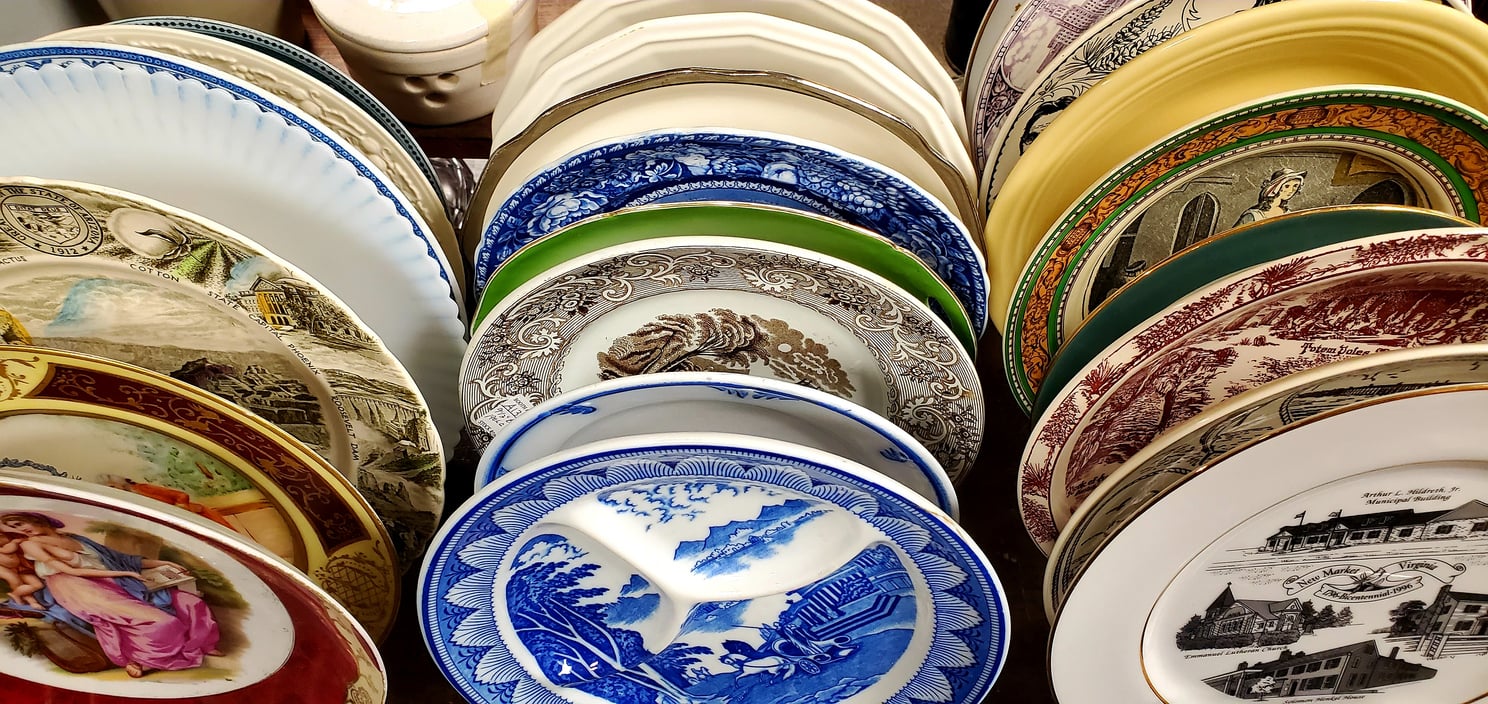
Lightweight Corelle plates were everyday dishes rather than special-occasion china. Patterns such as Butterfly Gold, Spring Blossom Green, Old Town Blue, and Woodland Brown appeared at breakfast, lunch, dinner, and nearly every family birthday. Their thin design allowed a large stack to fit into a small cabinet, while the laminated glass construction made them feel more practical than heavier stoneware.
A Pyrex Measuring Cup
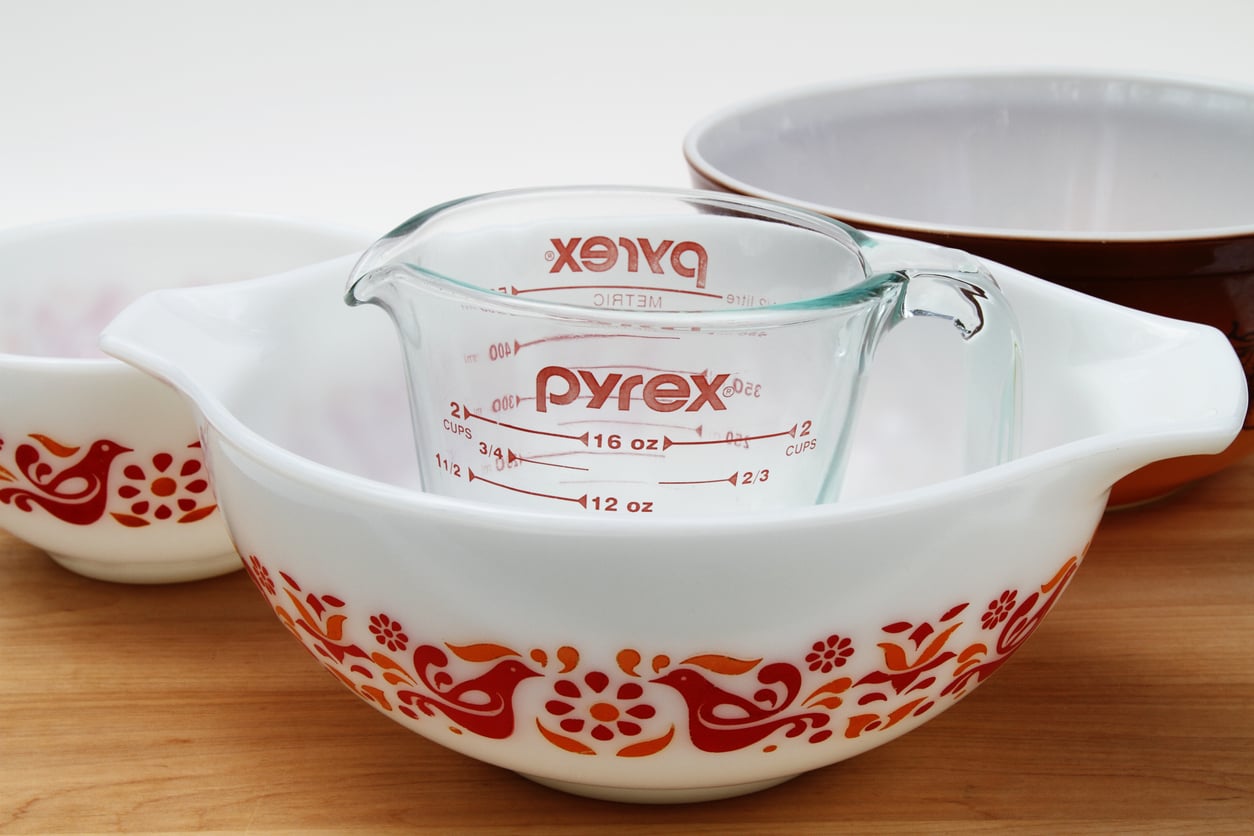
The clear Pyrex cup with red markings handled pancake batter, gravy, melted butter, boxed cake mix, and countless microwave reheating jobs. One-cup versions were useful for small recipes, while larger cups doubled as mixing bowls when nobody wanted another dish to wash. The glass usually remained sturdy for years, although the printed measurements could fade after repeated cleaning.
A Rival Crock-Pot
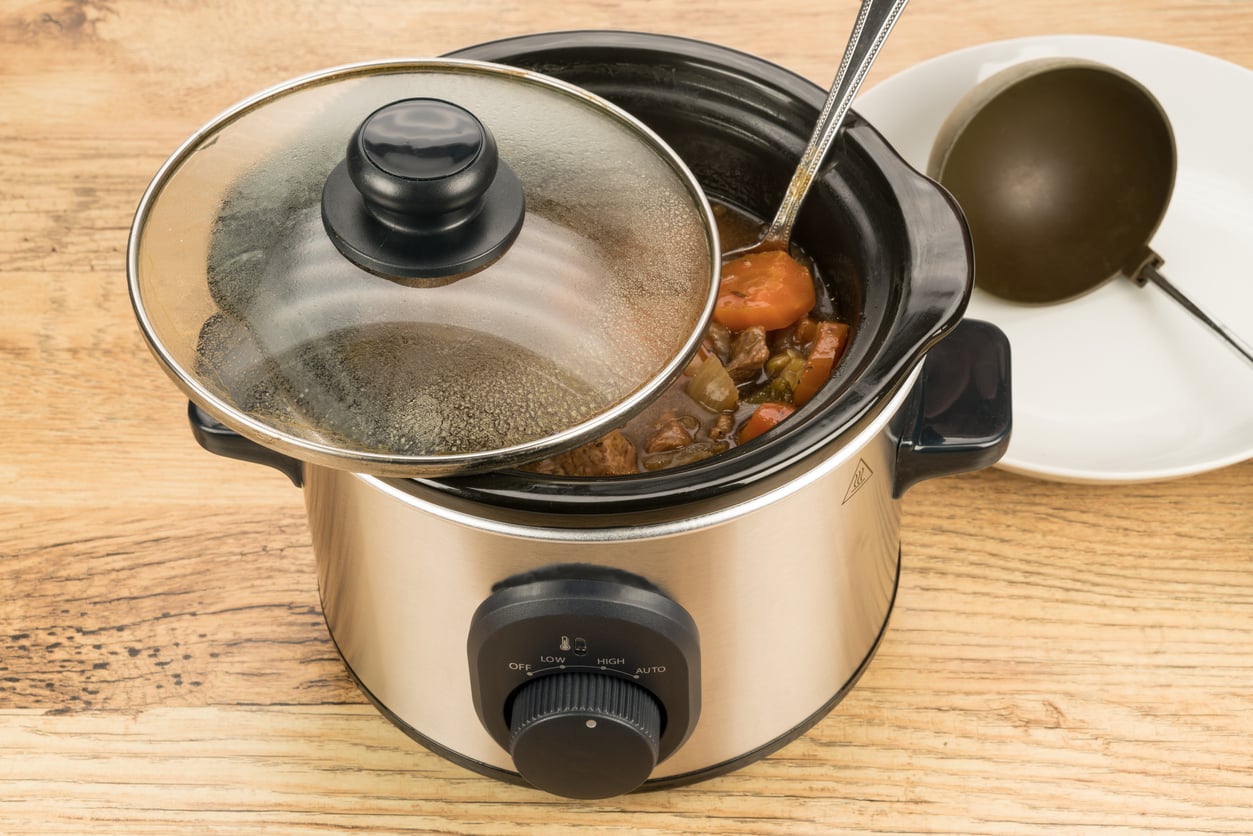
The Crock-Pot offered an appealing promise: put dinner together in the morning and return to a cooked meal. It became the home of chili, pot roast, stew, meatballs, inexpensive cuts of meat, and recipes involving canned soup. Older models had simple low, high, and off settings instead of timers or phone controls. Rival introduced the Crock-Pot in 1971, and its popularity grew among households that wanted a hot family dinner without spending the evening beside the stove.
Trending on Cheapism


A Mr. Coffee Drip Coffeemaker
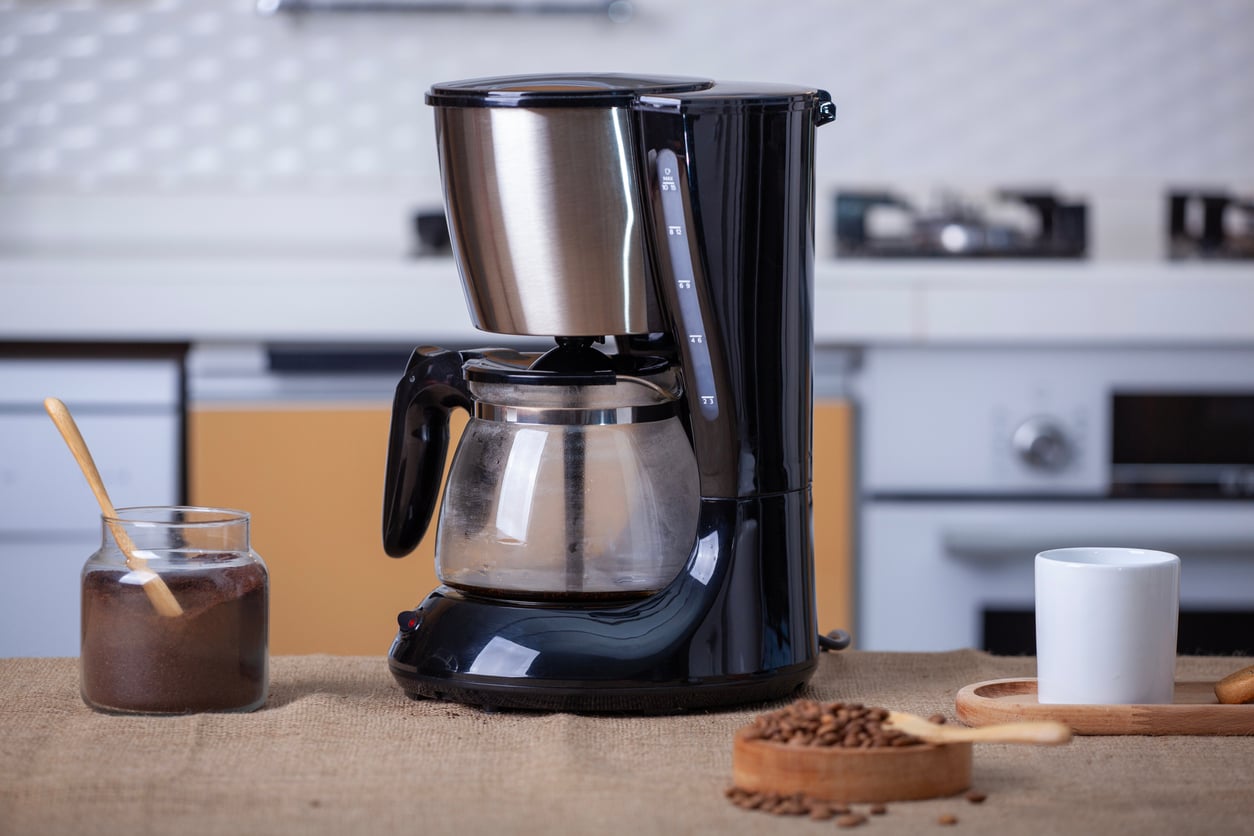
For many households, morning coffee came from a plastic drip machine with a glass carafe and a stack of paper filters nearby. The warming plate kept the pot hot while adults prepared lunches, found missing shoes, and tried to get everyone out the door. That convenience had a downside: coffee left on the burner for hours could taste considerably stronger and more bitter. The familiar full-pot routine now feels especially nostalgic in an era of pods, cold brew systems, and single-cup machines.
A Sunbeam Hand Mixer
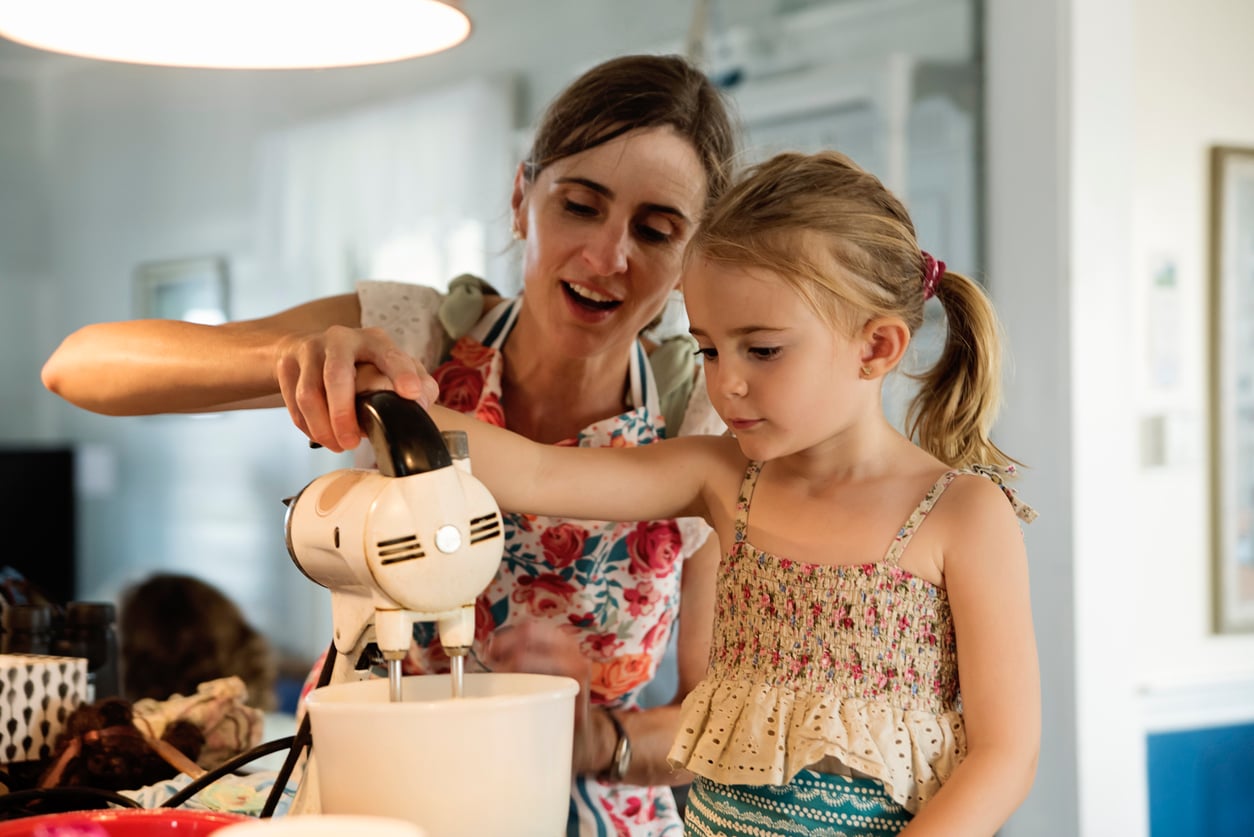
The beige or white hand mixer came out for mashed potatoes, birthday cakes, whipped cream, brownies, and Christmas cookies. Its detachable beaters were commonly stored loose in a drawer, while the stiff cord was wrapped around the appliance before it went back into a cabinet. Children often waited nearby for permission to taste the leftover frosting after the mixer was safely switched off.
A Countertop Electric Can Opener
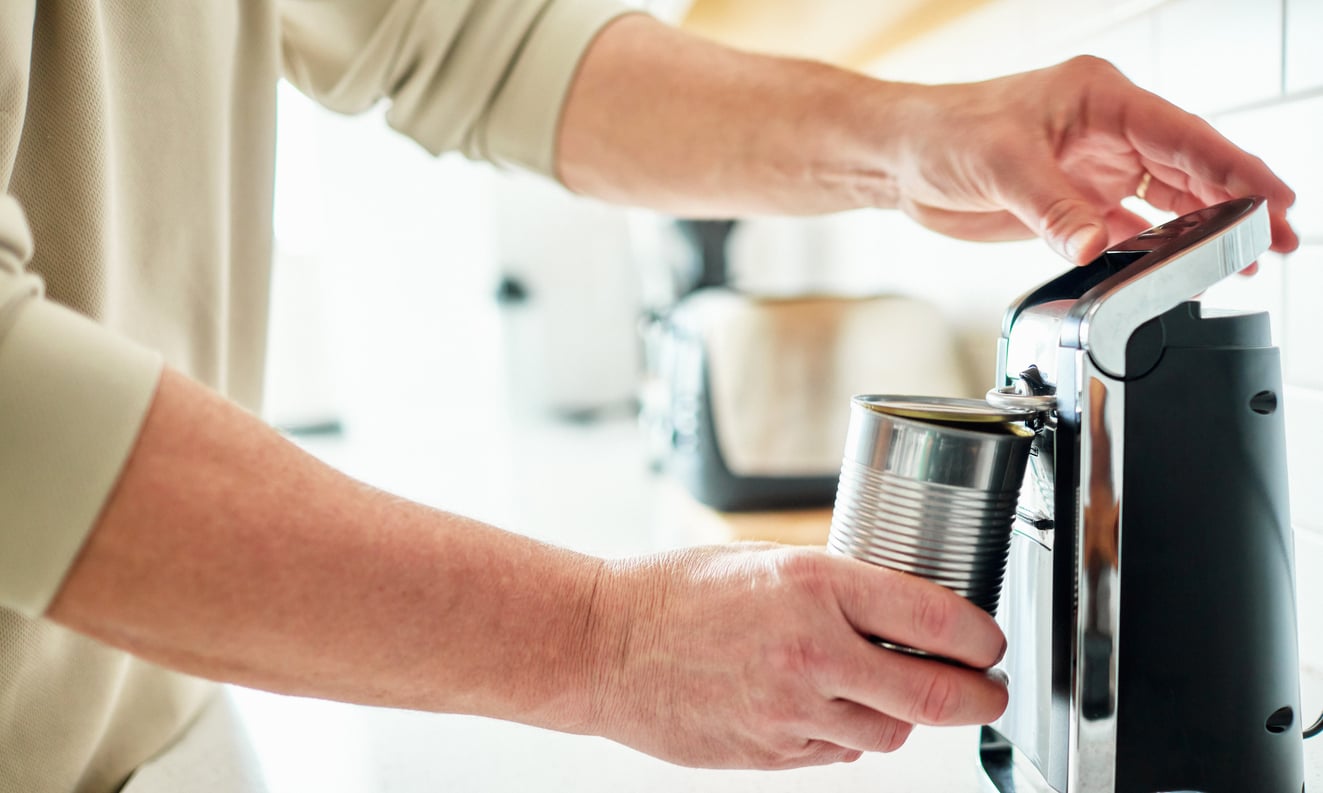
This bulky appliance claimed a permanent section of the counter. It was useful when casseroles required several cans of soup, vegetables, beans, or tomato sauce. Some models added a bottle opener or knife sharpener, creating a small food-preparation station in one machine. The grinding sound was unforgettable, as was the removable cutting wheel that never appeared completely clean. Smithsonian records show electric opener and sharpener combinations were marketed as modern conveniences.
Sign up for our newsletter
A Rubbermaid Drink Pitcher
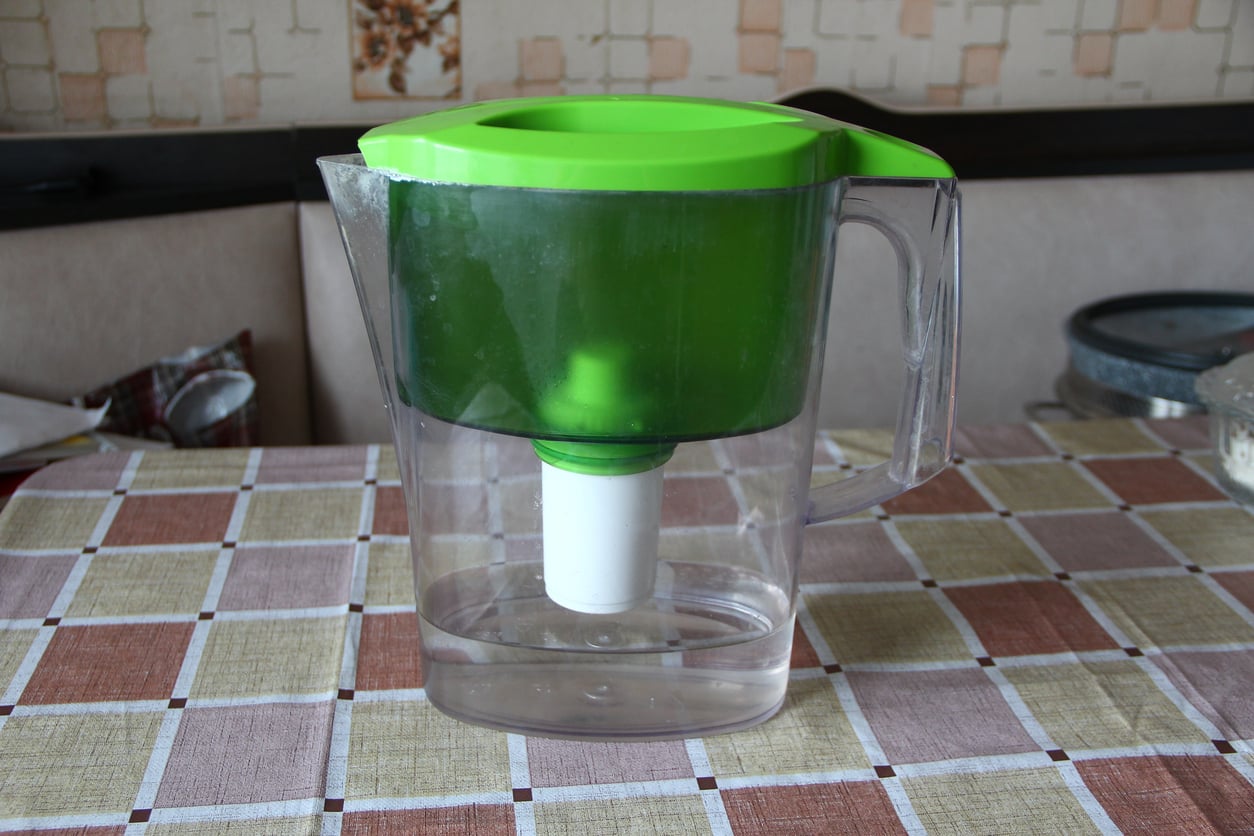
A large plastic pitcher might contain iced tea, lemonade, powdered fruit drink, or orange juice made from frozen concentrate. Plastic was easier for children to handle than a heavy glass jug, while the fitted lid reduced the chance of a refrigerator spill. Years of fruit punch or tea could leave permanent discoloration around the sides and bottom. The pitcher was rarely elegant, but it was affordable.
A Square Electric Skillet
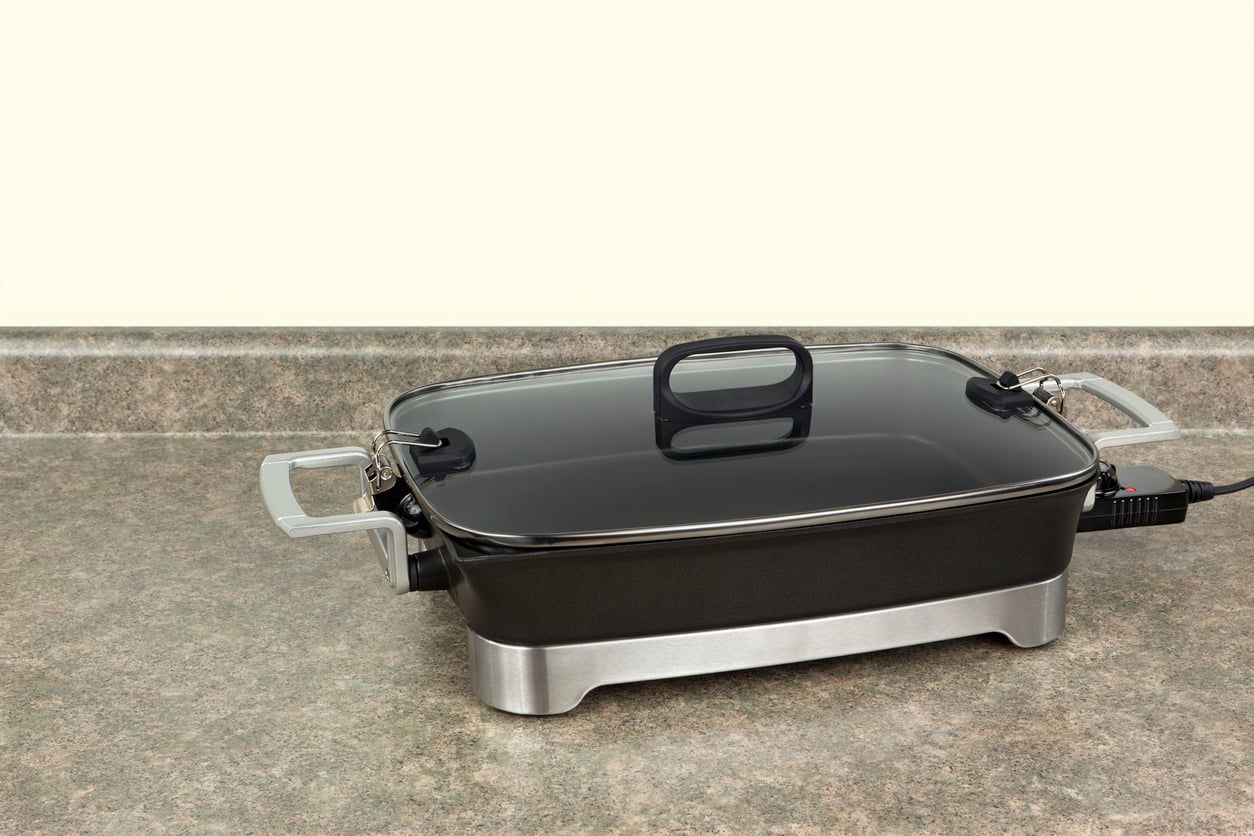
The electric skillet provided extra cooking space when the stovetop was crowded or a family needed to prepare a large batch. It could fry chicken, cook pancakes, brown hamburger meat, simmer sloppy joes, or keep food warm at a gathering. Most had a wide square pan, a domed lid, and a removable temperature-control cord that was surprisingly easy to misplace.
Microwave Cooking Trays and Gadgets
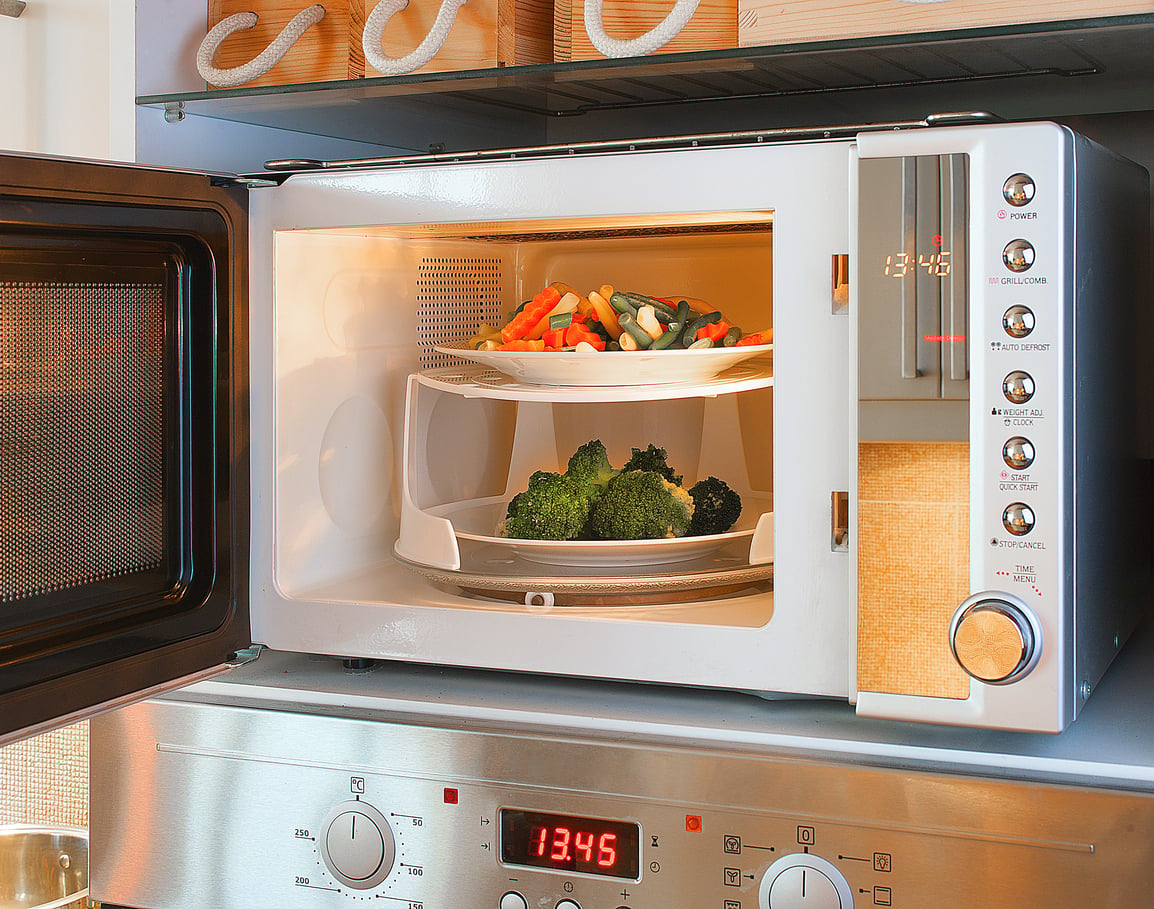
As microwave prices and sizes fell during the 1980s, kitchens filled with plastic accessories promising to cook nearly anything. There were ridged bacon trays, egg poachers, popcorn bowls, potato racks, splatter covers, and divided plates for reheating dinners. Some worked reasonably well, while others became stained, warped, or forgotten in the back of a cabinet.
A Bread Machine
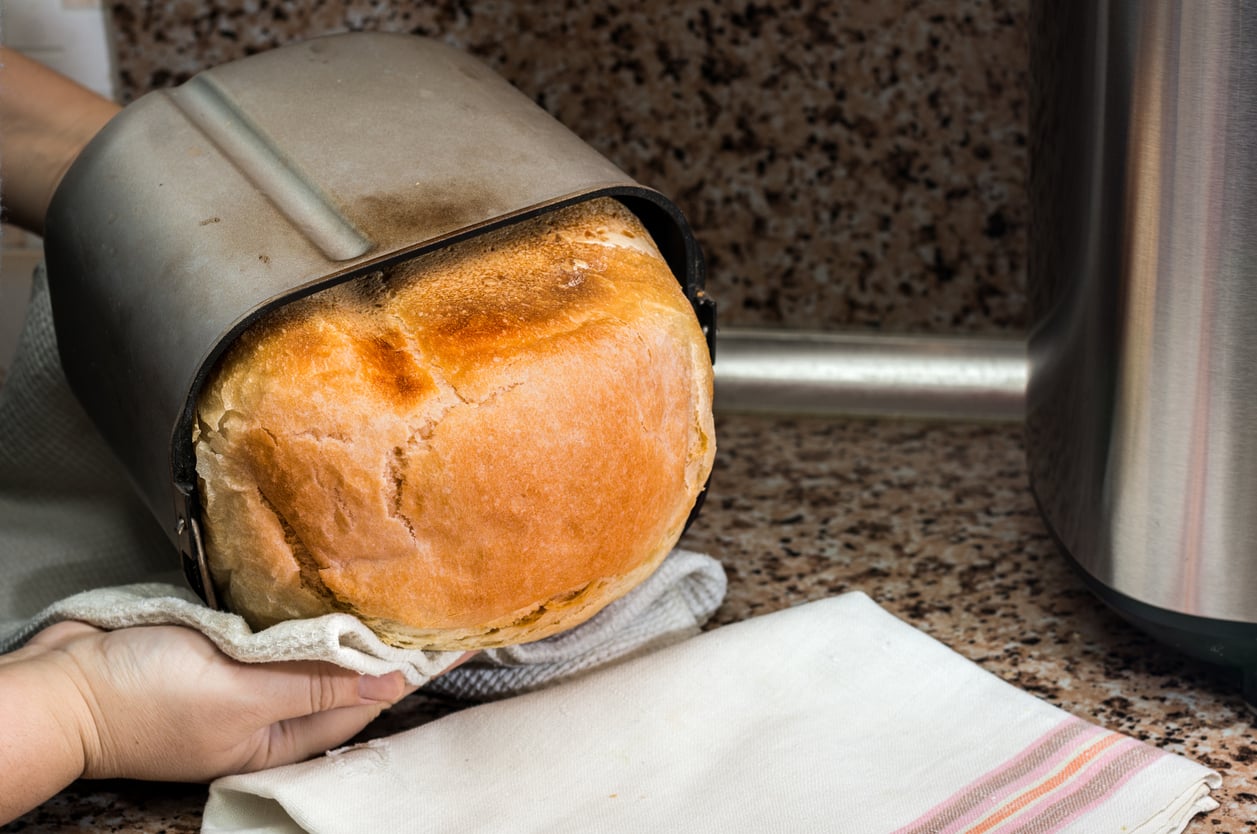
Few appliances represented 1990s kitchen optimism better than the bread machine. Owners poured ingredients into the pan, pressed a button, and expected the kitchen to smell like a bakery several hours later. Results varied from excellent sandwich bread to unusually tall, dense, or square loaves. Contemporary reporting from 1999 cited industry estimates that one in five American households had a machine.
Pampered Chef Stoneware
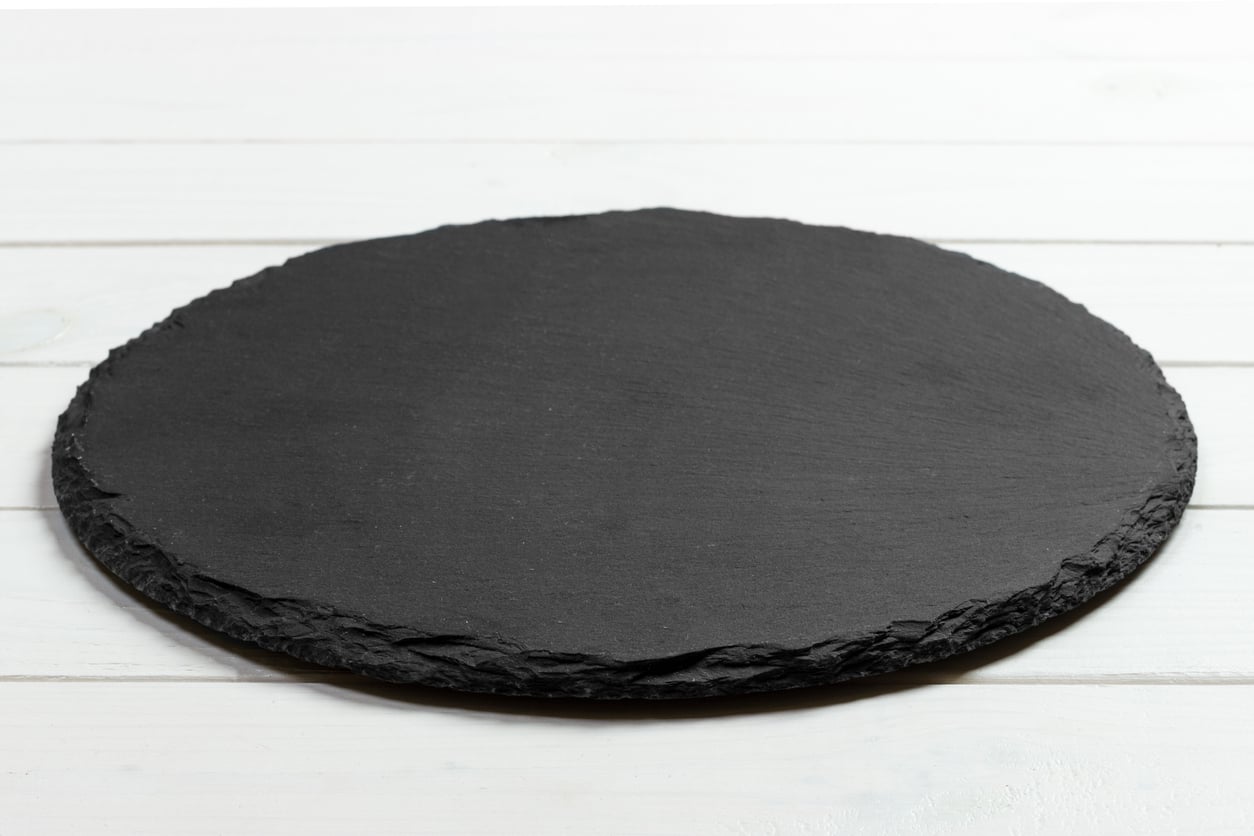
Pampered Chef pizza stones and rectangular baking pans became especially recognizable during the 1990s. They were sold through home parties where a consultant prepared food, demonstrated gadgets, and passed around a catalog. With repeated use, the pale stoneware became darker and more seasoned, which owners were encouraged to see as normal. The company began in 1980 and grew through direct selling.
A Wooden Knife Block
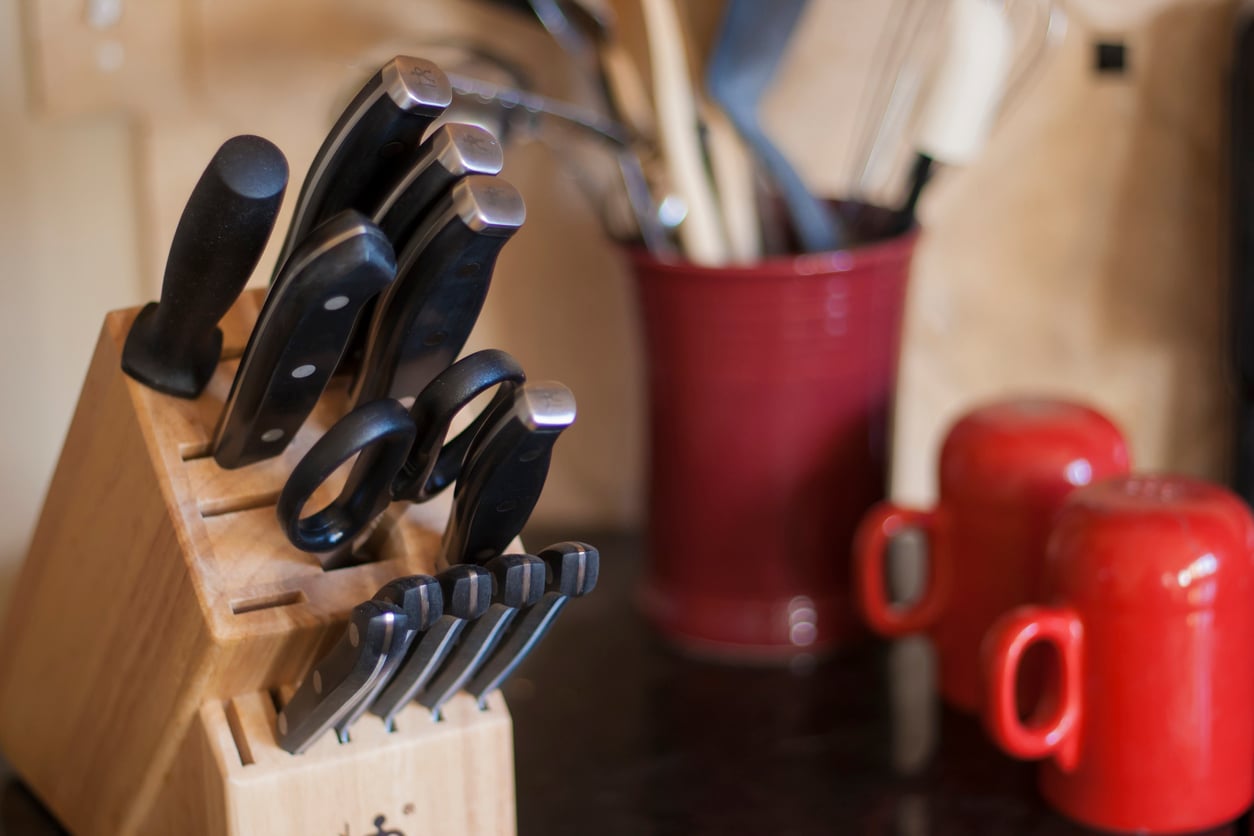
A matching set of knives in a wooden countertop block made a kitchen look organized and well equipped. In reality, families often relied on the same two or three pieces while the remaining slots held knives that were rarely touched. Sets commonly included small steak knives with wooden handles, a bread knife, kitchen shears, and a sharpening steel few people felt confident handling.
The Red Plaid Better Homes and Gardens Cookbook
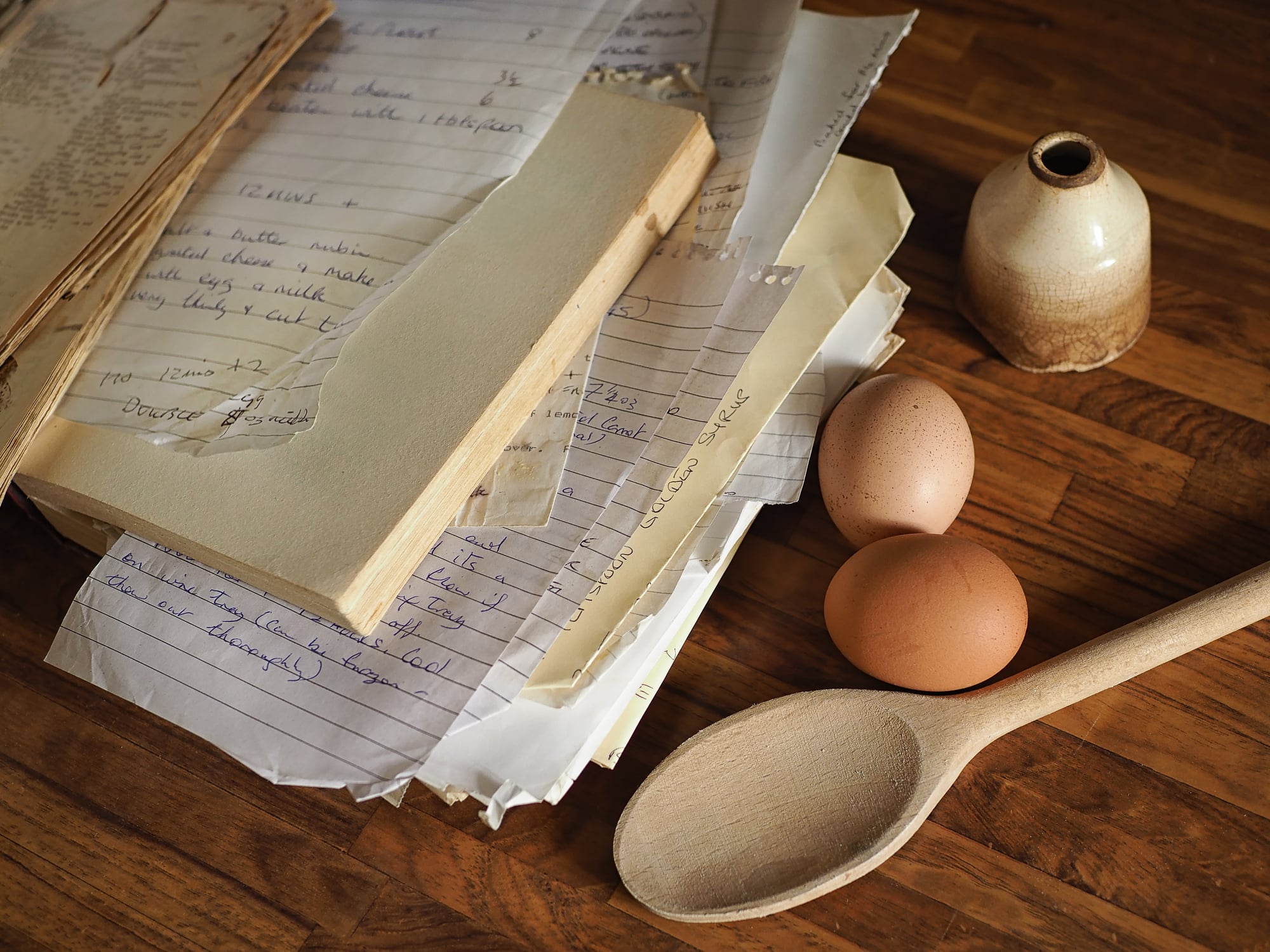
The thick, ring-bound cookbook was a dependable reference for cookies, cakes, casseroles, roasts, sauces, and ingredient substitutions. Its tabbed sections and lay-flat design made it practical for cooks working with messy hands. Family copies often contained handwritten adjustments, stained pages, supermarket recipes, and clippings tucked between chapters. Better Homes and Gardens says the New Cook Book was first published in 1930 and has sold approximately 38 million copies.
Decorative Kitchen Canisters
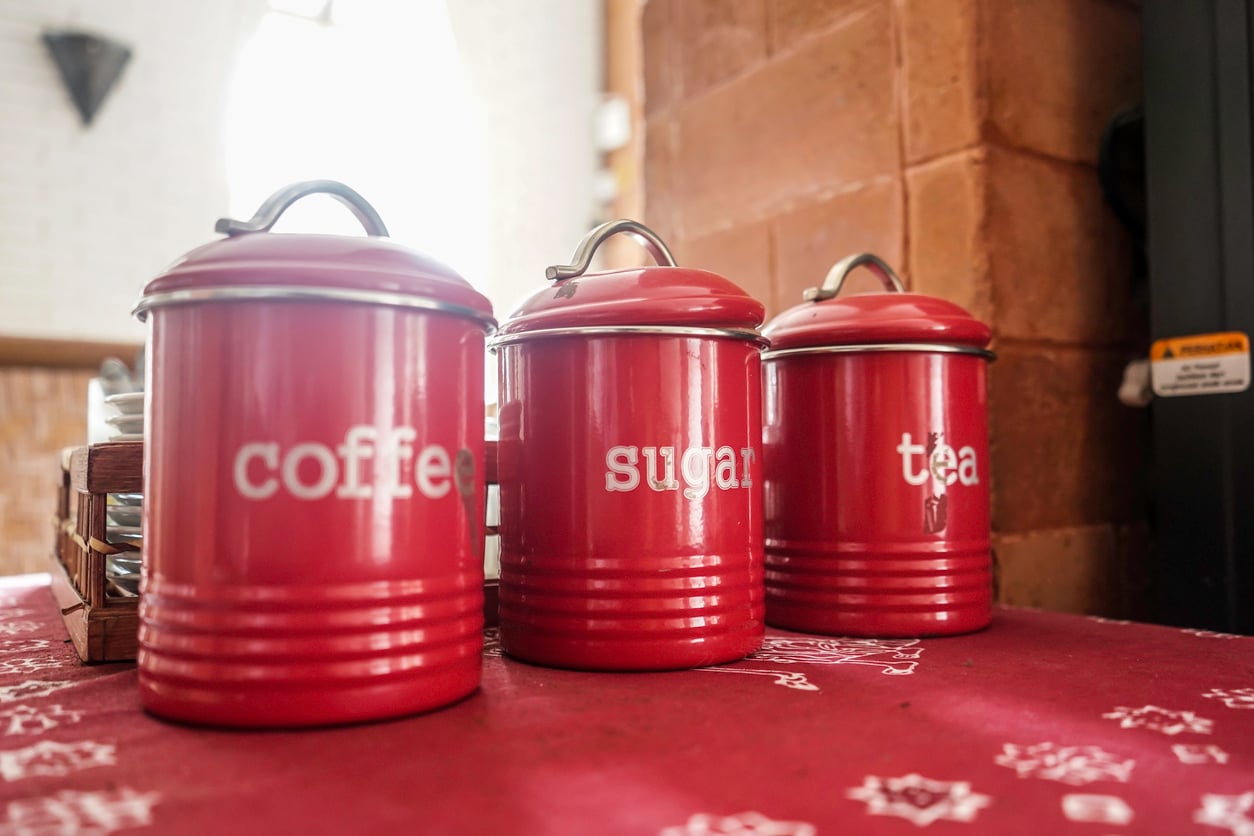
Matching flour, sugar, coffee, and tea canisters doubled as storage and countertop decoration. Sets featured mushrooms, apples, flowers, wooden lids, country geese, or farm scenes designed to coordinate with oak cabinets and earth-toned kitchens. Sears Merry Mushrooms pieces are strongly associated with the late 1970s and early 1980s, while goose-themed country decor became particularly noticeable in the 1990s.