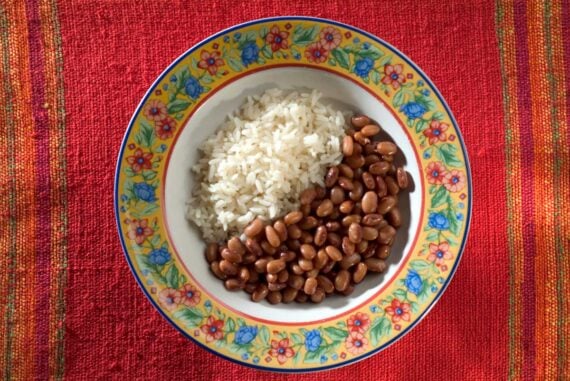
If you’ve ever looked for advice on how to survive a lean month or transition to a plant-based diet, you’ve undoubtedly heard the mantra: “Just eat rice and beans.” While it sounds like a cliché born of 1970s health food stores, there are profound scientific and historical reasons why this specific pairing has become the global gold standard for budget nutrition.
Why This Particular Pairing?
We’ve heard this combination mentioned time and time again, but … why? Why not potatoes and peas, or rice and … Nutella (as some adventurous Redditors have suggested)?
The answer lies in amino acids. Your body needs 20 different amino acids to function, nine of which are essential, meaning your body cannot produce them on its own. Most plant-based foods are incomplete, lacking one or more of these essential building blocks. Grains like rice are low in an amino acid called lysine, while legumes like beans are low in methionine.
When you eat them together, they form what nutritionists call a complementary protein. “Together, rice and beans provide all of the essential amino acids,” dietitian Isabel Vasquez Larson, RD, writes for EatingWell. “They help repair body tissue, build muscle, and produce hormones.”
Essentially, your body treats a bowl of rice and beans with the same biological respect it gives a piece of steak.
It’s About More Than Protein
While the protein gets all the headlines, the pairing offers a nutritional full house that many expensive meals lack. A single half-cup serving of beans provides up to 27% of your daily fiber. This isn’t just about digestion; fiber stabilizes blood sugar, preventing the crash often associated with cheap, carb-heavy meals.
Iron deficiency is one of the most common nutritional issues globally. Beans are a top-tier plant source of iron. You can add a squeeze of lime or some bell peppers (Vitamin C) to your beans to help your body absorb that iron more efficiently.
If you cook your rice, let it cool (or freeze it), and then reheat it, the starches physically change. This creates resistant starch, which has a lower impact on blood sugar and acts as a prebiotic for your gut health.
Why Beans and Rice are THE Cheap Meal
While some international shoppers point out that pork or liver can sometimes be found for similar prices per kilogram, rice and beans win on bulk and stability. Unlike potatoes (which sprout) or meat (which spoils), dry rice and beans are pantry gold. You can buy 20-pound bags when times are good and weather any financial storm as long as you have water and fire.
A pound of dry beans nearly triples in weight once cooked. A pound of pork … well, it usually shrinks. From Cajun Red Beans and Rice to Indian Dal over Basmati, or Caribbean-style stewed beans, the combo is a blank canvas. Redditors even suggest making big batches and then freezing individual portions to change the starches in rice and make it healthier (but still filling).
Have you perfected a rice and beans meal in your household? Share it with us in the comments!
More From Cheapism

- 15 Meals Middle-Class Moms Cooked in the 1980s — These familiar meals defined middle-class kitchens in the 1980s with comfort, convenience, and a little creativity.
- 20 Meals Middle-Class Kids Loved in the ’90s — We often reminisce about ‘90s boy bands, friendship bracelets, and movies, but the foods we ate while enjoying all of those things deserve some love, too. It was a time of convenience foods and microwave meals, and we all loved it.
- ‘We Live in Hell’: Millions of Americans Are Skipping Meals to Afford Health Care — Americans are going hungry so their health care doesn’t bankrupt them. According to new polling from the West Health–Gallup Center on Healthcare in America, one-third of U.S. adults are cutting back on basics — even skipping meals — to afford health care costs.