We’ve all wrapped our heads around the rising costs of coffee and chocolate by now, so we’re paying attention to those items while grocery shopping. But if you’re looking at your receipt, trying to find the hidden culprit for the higher total at the bottom, you might want to stop where the tomatoes are listed.
According to the latest Consumer Price Index data, tomato prices jumped 15.3% in March alone and are up a staggering 22.6% compared to this time last year. At the checkout, you’re likely seeing prices around $2.25 a pound — the highest level in eight years.
So why is the world’s most popular “vegetable” (yeah, we know, it’s botanically a fruit) suddenly so expensive? It’s a perfect storm of bad luck and global conflict.
The Hard Freeze and the Fog
The tomato supply chain just got hit by a two-front weather war. In Florida, farmers experienced their first hard freeze in 15 years this past January. Just five hours of sub-freezing temperatures is enough to kill a crop, and some Florida farms reported losing 70% of their entire output.
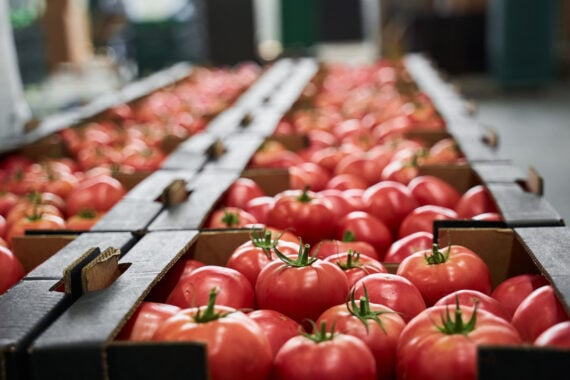
Meanwhile, Mexico — which provides about 70% of the tomatoes consumed in the U.S. — was hit by “extraordinary” rainfall and fog. Tomato plants are notoriously finicky; too much moisture makes them a playground for disease and pests. Produce buyers are seeing as little as one-eighth of their normal supply, and the price for a 25-pound wholesale box has tripled in just 30 days.
Struggles in the Greenhouse
Even if the weather had been perfect, your tomatoes would still be more expensive because of what it takes to grow and move them. Since the conflict with Iran escalated in February, diesel prices have jumped more than 50%. Farmers use diesel to run their machinery, and distributors use it to truck those perishables across the country.
Key components of fertilizer — such as ammonia and urea — are produced in large quantities in the Middle East. Prices have skyrocketed by over 50%, leaving 70% of farmers telling the American Farm Bureau Federation that they simply can’t afford to fertilize their crops this year.
There is, however, a sliver of hope for your summer barbecues. Florida farmers were able to get recovery crops into the ground almost immediately after the January freeze. Those tomatoes are expected to hit store shelves in the next two weeks, which should help ease the immediate shortage.
However, don’t expect prices to plummet back to 2024 levels. With oil staying above $90 a barrel, everything from the plastic packaging to the freight costs remains astronomical.
How to Cope With Rising Tomato Prices
Until the new harvests stabilize the market, there are a few smart ways to shop. Look for “seconds” or “imperfect” produce bins. They might not be Instagram-ready, but they taste the same in a sauce or a stew and usually come at a steep discount. For salsas and sauces, canned tomatoes remain a much more stable price point than fresh ones.
If you’re buying fresh, check for firmness. With supply low, some distributors are gambling on a lackluster product. If it feels soft or looks dull, it’s not worth the $2.25/lb premium. And, of course, you can always grow your own tomatoes. Even if you don’t have a yard, tomatoes can be grown in pots.
More From Cheapism
- These 5 Grocery Items Are Actually Getting Cheaper — Plenty of grocery items continue stressing our budgets, but there are a handful that are actually getting cheaper.
- ‘No More Chips’: 9 Grocery Items People Say Are Officially Not Worth It Anymore — Some grocery items will price shoppers right out of adding them to their carts.
- 30 Costco Grocery Items That Offer the Biggest Savings — If you’re looking to save on groceries, these are the items at Costco with the biggest savings.