Oh, good news: Your groceries aren’t just more expensive, they’re also smaller. So there’s that. Apparently paying more for less is now a thing that we just have to accept.
A new analysis by InvestorsObserver found that the exact same basket of popular grocery brands now costs the average family $741 more a year than it did six years ago. About $41 of that increase didn’t come from higher prices, but from getting less product in the same package.
The data tracked prices and sizes of well-known items like Frosted Flakes, Doritos, M&M’s, and Coca-Cola between 2020 and 2026. The result is a steady climb in cost, with some products not only getting more expensive but also smaller over time.
“No one is surprised by growing prices these days, but the issue with shrinkflation is the silence around it,” said Sam Bourgi, senior analyst at InvestorsObserver. “You can clearly see when gas prices grow or rent rises – but in this case, you don’t notice when you start to overpay for less. It lands hardest on those who can afford the least.”
A Can of Coke Is Now 126% More Expensive Than a Bottle
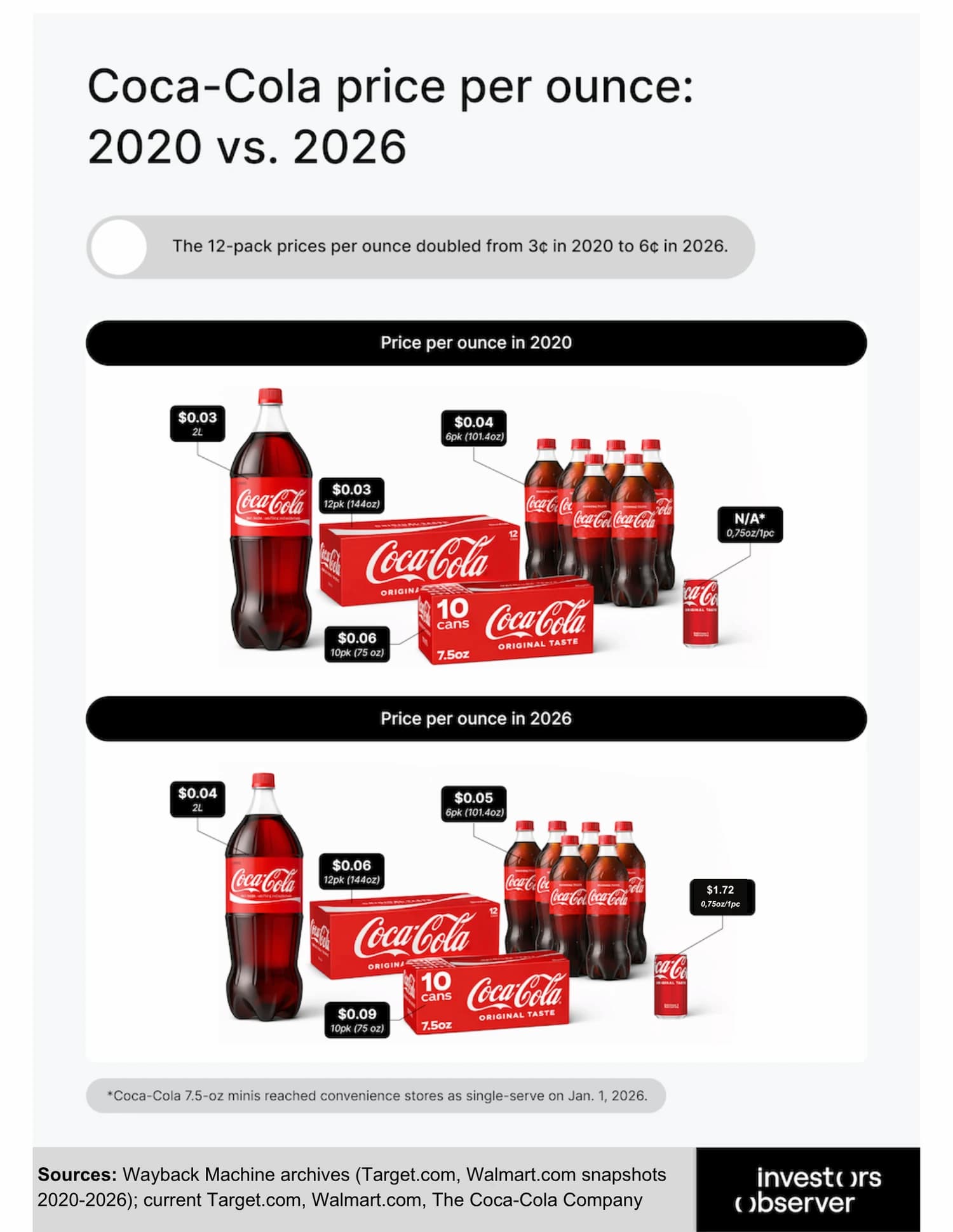
If you ever needed proof that size really does matter at the grocery store, Coca-Cola has you covered — and then some. Out of all the brands analyzed, Coke shows just how wide the price gap can get depending on how you buy it. The same drink, just packaged differently, now comes with wildly different costs.
A 2-liter bottle increased from $1.89 in 2020 to $2.79 today, which comes to a 48% increase. Not great, but fairly expected given everything else going on.
But most people don’t buy the 2-liter. They buy the 12-pack of cans — the convenient, fridge-friendly option — which has jumped from $4.89 to $8.89. That’s an 82% increase, turning what used to be a cheap staple into something noticeably pricier.
And then there are the mini cans, which Coca-Cola has been pushing as a smarter, “portion control” choice. In reality, they’re the most expensive way to drink Coke by a mile. Shoppers buying those 7.5-ounce cans are paying up to 126% more per ounce compared to the 2-liter bottle. Same soda, just a smaller can — and somehow more than double the cost per sip.
“The simplest advice we can give any Coca-Cola drinker right now: buy the 2-liter,” said Bourgi. “Our data shows it’s the best value format by a wide margin, and that gap has only grown since 2020. The mini can costs more than twice as much per sip. Most people had no idea.”
Frosted Flakes, Doritos, M&M’s and Cheerios Shrank Their Packages As Well
Price hikes are easy to spot. You see the number jump on the shelf, maybe sigh, and move on. The part that slips under the radar comes after.
“It is a lot more difficult to notice changes in size than in price. However, shrinkflation can have an enormous effect on low-income households, where every dollar, every ounce, and every serving matters. This phenomenon can easily further limit their ability to afford groceries,” said Bourgi.
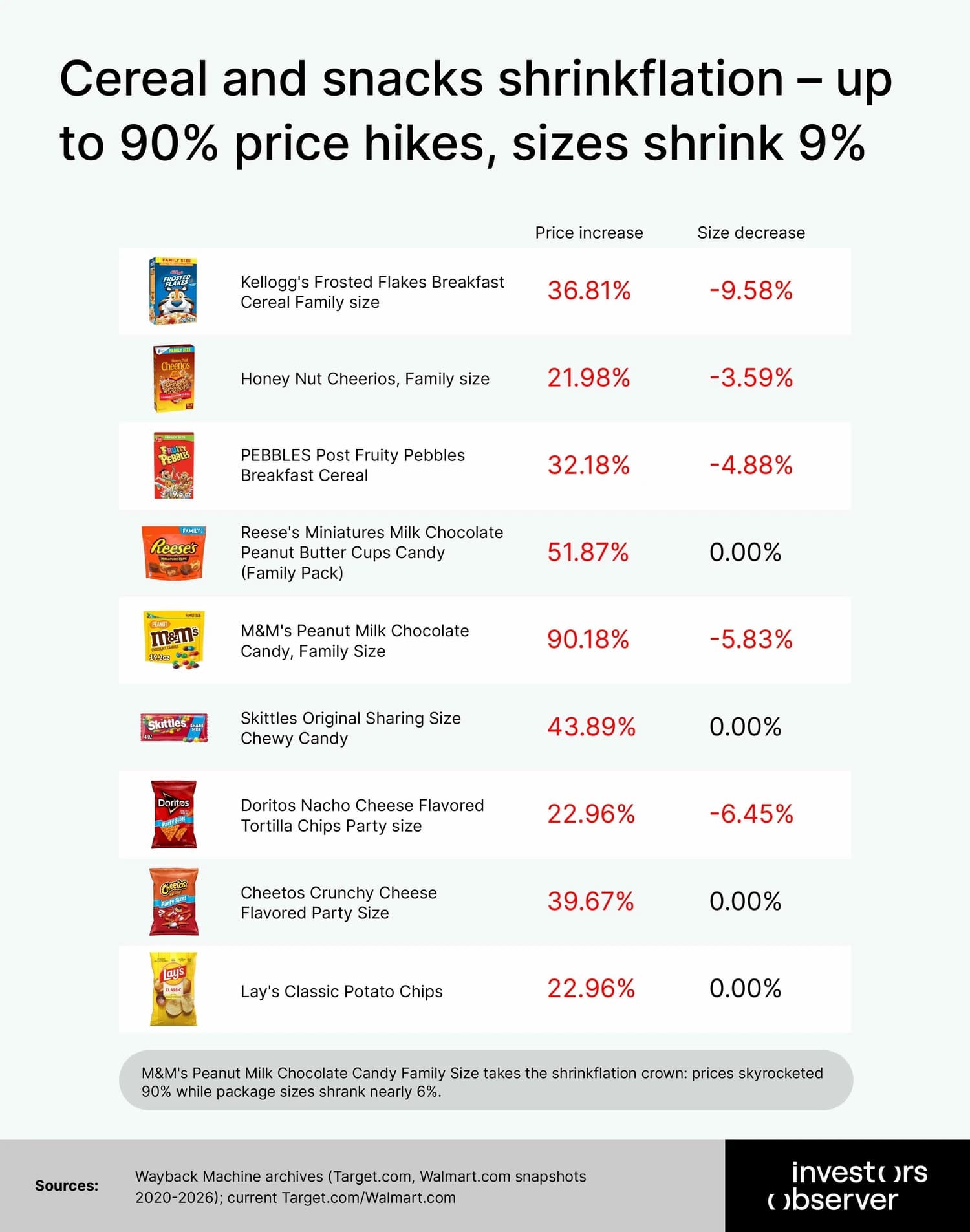
The price for a bag of Doritos jumped from $4.79 to $5.99 between 2021 and 2022 — pretty obvious. Then, once that new price settled in, the bag got smaller the following year. Now you’re paying $6.69 for less product than before.
The sneaky two-step pattern shows up elsewhere too. Frosted Flakes dropped from a 24-ounce box to 21.7 ounces while the price climbed from $3.98 to $5.48. The family-size box dropped by about 2.3 ounces in 2023, a year after prices had already gone up. Overall, the price per ounce is now 51% higher than it was before, even with a slight price dip in 2025.
M&M’s, however, took a slower approach. Prices kept rising year after year, and then the bag shrank in 2024. By 2026, you’re looking at $9.49 for less candy than you used to get for $4.99.
Prices Froze This Year, But They’re Still High
Prices finally stopped going up in 2026, but they haven’t come back down. Why would they?
Several major brands held prices flat, and a few dropped them slightly. Honey Nut Cheerios and Campbell’s soup both saw small decreases, but they’re still significantly more expensive than they were in 2020 — and in smaller packages.
So while prices look stable now, they stabilized at a much higher level.
Some brands didn’t slow down at all. Reese’s raised prices another 15% in 2026, and M&M’s added yet another increase on top of years of hikes. And the smaller packaging hasn’t changed. Any product that shrank in recent years is still the same reduced size today.
Ice Cream Brands Kept Sizes the Same
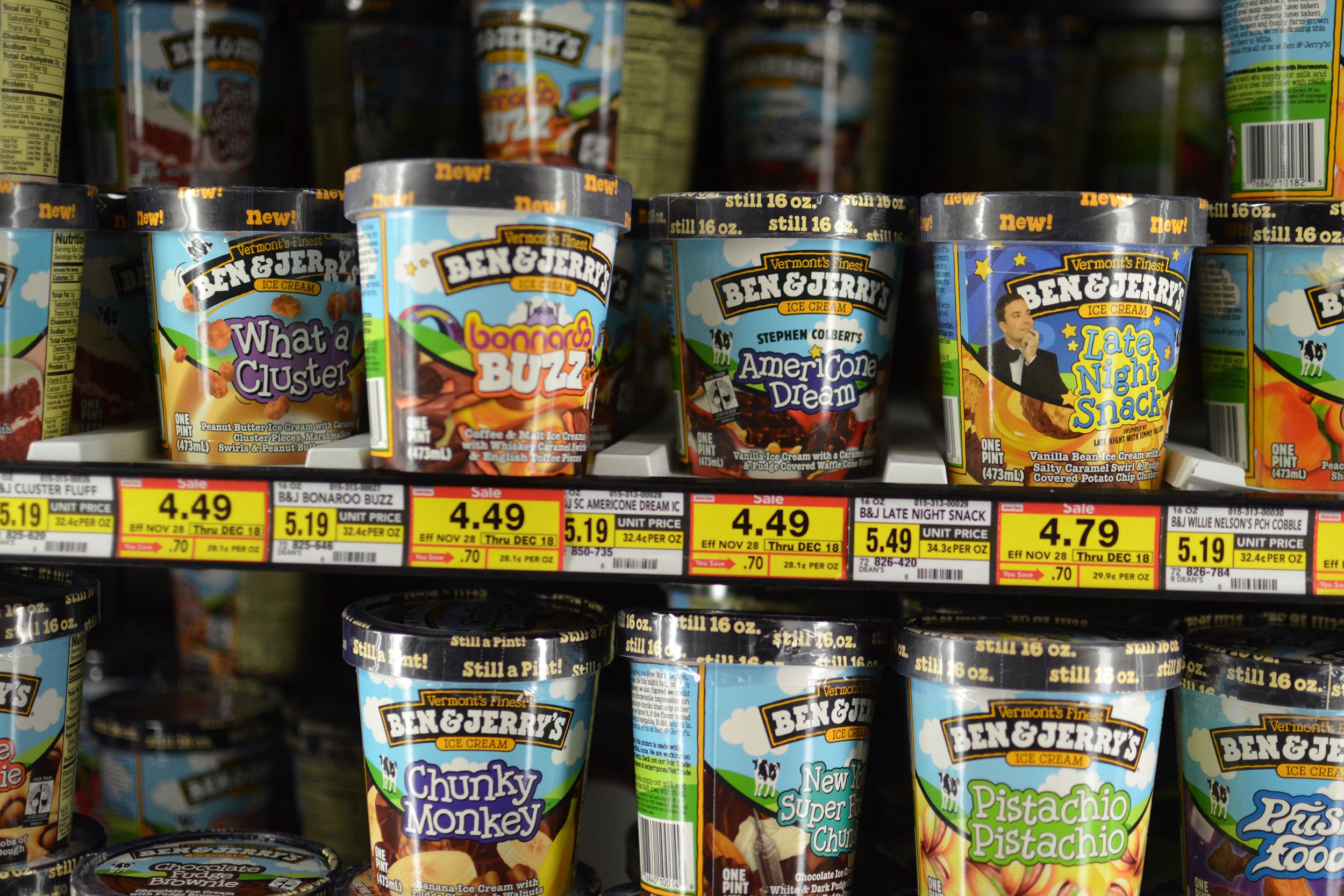
There are a few exceptions. Ice cream brands like Ben & Jerry’s, Breyers, and Häagen-Dazs raised prices more gradually and kept their packaging consistent. While other categories combined price hikes with smaller portions, these brands didn’t reduce sizes at all. The difference makes it clear that shrinking packages wasn’t the only option.
“That matters because it proves the shrinkflation strategy was a choice, not a necessity,” explained Bourgi. “If rising costs forced brands to shrink packages, every brand would have done it. They didn’t. Some held the line. Which means the ones that didn’t make a deliberate decision to give consumers less without telling them.”
That’s capitalism for ya.
More From Cheapism
- Don’t Fall for These 7 Grocery Store Packaging Tricks —Grocery shopping already feels expensive, but what many shoppers don’t realize is that some of the price increases are hidden in the packaging itself.
- ‘A Price Increase in Disguise’: New Panera Value Menu Is No Deal — This year is shaping up to be the death of the value menu. The latest culprit? Panera.
- These 14 ‘Fancy’ Menu Items Are Just Expensive Disappointments — Here are 14 restaurant menu items that often look impressive on paper but rarely live up to the hype (or the cost).